Rhipsalis Care: Light, Water, Soil & Tips
Rhipsalis spp.
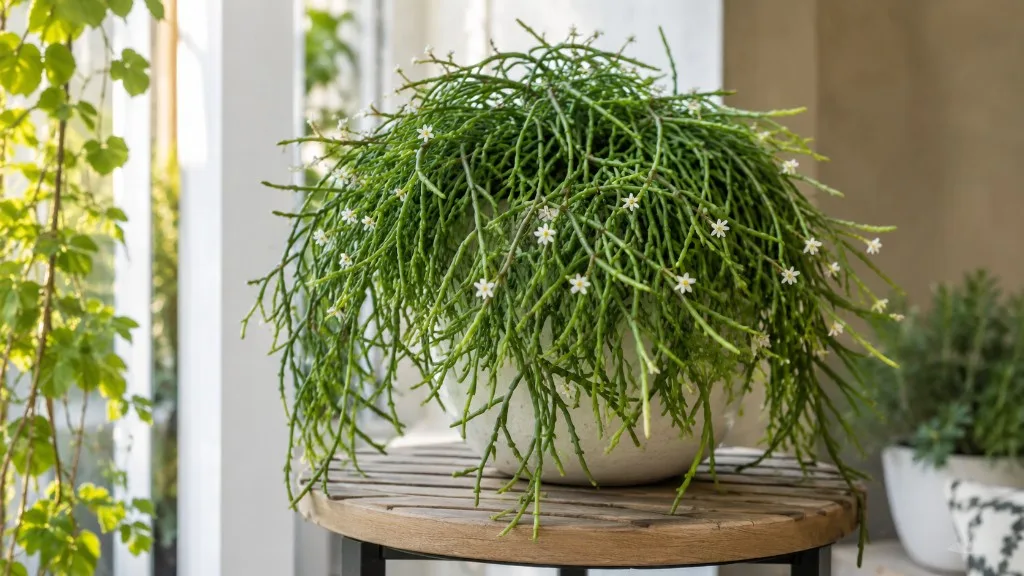
Rhipsalis is a pet-safe rainforest cactus needing medium indirect light and watering when the top half of soil dries. It trails beautifully from hanging baskets.
Rhipsalis Care: Light, Water, Soil & Tips
Start with wateringThe most common care mistake for RhipsalisWatering guide →Rhipsalis care essentials
Light
medium to bright indirect light
Water
More water than desert cacti-allow top half of soil to dry before watering. This is a rainforest epiphytic cactus.
Soil
Well-draining mix; more moisture-retentive than desert cactus mix but still well-aerated.
Humidity
40–60%
Temperature
15–24°C (60–75°F)
Fertilizer
Use balanced liquid fertilizer at half strength; low-nitrogen cactus fertilizer works well and stop if the plant is stressed, newly repotted, or not actively growing. Heavy feeding; fertilizing during winter rest.
About Rhipsalis
Rhipsalis is native to Tropical Americas (primarily Brazil); some species in Africa and Sri Lanka, typically reaches Trailing stems 30–90 cm or more depending on species indoors, with slow to moderate growth. Rhipsalis has a trailing growth habit and part of the Cactaceae family. It is also known as Mistletoe Cactus, Chain Cactus, and Coral Cactus.
| Detail | Information |
|---|---|
| Also known as | Mistletoe Cactus, Chain Cactus, Coral Cactus |
| Native region | Tropical Americas (primarily Brazil); some species in Africa and Sri Lanka |
| Mature size | Trailing stems 30–90 cm or more depending on species |
| Growth rate | Slow to moderate |
| Growth habit | Trailing |
| Scientific name | Rhipsalis spp. |
| Family | Cactaceae |
Rhipsalis Care: Light, Water, Soil & Tips
What Is Rhipsalis?
Rhipsalis is a genus of spineless, trailing cacti sold under common names like mistletoe cactus and jungle cactus. The stems cascade in long, jointed chains that make Rhipsalis one of the most sculptural hanging plants you can grow indoors, yet the care label on the pot often says “cactus” - and that single word sends thousands of new owners down the wrong path. Rhipsalis belongs to the family Cactaceae, yes, but its ancestors evolved in tropical rainforest canopies, not arid deserts. In nature, these plants grow as epiphytes, anchoring to tree bark and drawing moisture from humid air, filtered rain, and decomposing leaf litter. That ecological history defines everything: filtered light, regular moisture during growth, airy soil, and moderate humidity - not the parched, sun-blasted routine you would give a barrel cactus on a south-facing sill.
Most cultivated Rhipsalis develop pendulous stems 30 to 90 cm (12 to 36 inches) or longer, depending on species, age, and container size. Growth is slow to moderate in typical homes - faster when summer light and humidity align, noticeably slower in dim, cool winters. Stems vary dramatically by species: hair-thin threads in Rhipsalis capilliformis, flattened ribbons in Rhipsalis paradoxa, coral-like beads in Rhipsalis cereuscula, and smooth green chains in Rhipsalis baccifera. Despite the visual differences, the care contract stays consistent. Give Rhipsalis medium to Rhipsalis light guide, let the top half of the mix dry before watering again, and use a well-draining but slightly moisture-retentive potting blend - and you get years of soft, spineless trailing green. Treat it like a desert cactus that should go weeks without water, and the stems shrivel within days.
The most widely available species is Rhipsalis baccifera, named mistletoe cactus for the tiny white flowers that appear along stems in late winter into spring, sometimes followed by translucent white or pale pink berries. Botanically, R. baccifera holds a rare distinction: it is the only cactus species naturally occurring outside the Americas, found in the New World but also in parts of Africa and Sri Lanka, likely spread long ago by birds consuming the berries. Nursery tags often omit species names, so your plant may be a different Rhipsalis entirely. Keep any tag you receive, but do not worry if identification is vague - the guidance below applies across the genus with minor tweaks for stem thickness and light tolerance.
If you are deciding whether Rhipsalis fits your home: Rhipsalis rewards filtered light, a moisture rhythm between desert cactus and tropical foliage plant, and a hanging display - and it punishes harsh sun, calendar watering, and dense cactus soil. For pet owners, it is non-toxic to cats and dogs per the ASPCA mistletoe cactus listing - unlike poisonous true mistletoe (Viscum species), which is botanically unrelated.
Epiphytic Jungle Cactus, Not Desert Cactus
Within Cactaceae, Rhipsalis sits among the jungle cacti - epiphytic and lithophytic species from humid forests, alongside holiday cacti (Schlumbergera) and orchid cacti (Epiphyllum). The family connection matters because Rhipsalis shares baseline cactus traits: stems store water, roots need oxygen, and overwatering combined with poor drainage kills faster than underwatering kills slowly. But the rainforest origin overrides the desert stereotype on light, humidity, and how completely the soil should dry between drinks.
In the wild, Rhipsalis grows beneath dense canopy cover in tropical and subtropical regions of the Americas, primarily Brazil and surrounding areas, with species also documented across Central America and the Caribbean. Epiphytes in this niche receive dappled light, frequent mist and rain, and quick drainage as water runs off bark. Roots absorb moisture from humid air and accumulated organic debris; they are not designed to sit in saturated sand for days on end. BBC Gardeners’ World describes Rhipsalis as an epiphytic plant found in tropical jungles in South America - a framing that should guide your indoor setup more than any generic “cactus care” sticker on a nursery pot.
Rhipsalis stems are photosynthetic - they perform the leaf’s job - and lack the thick waxy cuticle and spines that help desert cacti conserve water. That is why direct afternoon sun scorches thin stems and why extended drought shrivels them visibly within days. The plant is not fragile, but it is adapted to a different contract than a saguaro. Understanding that contract - filtered light, consistent moisture during growth, never bone-dry for weeks - is the difference between a lush trailing specimen and a crispy hanging basket you assume was “just a sensitive cactus.”
Popular Rhipsalis Species for Indoors
Commerce mixes multiple Rhipsalis species under one common name, so knowing what you likely have helps you read growth signals accurately. Rhipsalis baccifera is the classic mistletoe cactus - smooth, cylindrical green segments, small white flowers, occasional berries. It is forgiving in average home humidity and tolerates lower light better than many trailing houseplants. Rhipsalis cereuscula (coral cactus) forms dense clusters of bead-like segments that look like underwater coral; it wants slightly brighter light and dries out faster in small pots because of the compact growth habit.
Rhipsalis paradoxa produces flattened, angular stems with notched edges - striking in a hanging basket but less tolerant of low light. Rhipsalis capilliformis (hair cactus) has thread-thin stems that desiccate quickly in hot, dry rooms and benefits from higher humidity. None of these require species-specific fertilizer or exotic setups indoors. The practical differences are how fast the pot dries, how much direct sun the stems tolerate, and how quickly shriveling appears. If your tag lists a species, use it to calibrate watering checks. If not, observe stem thickness and drying speed.
Ideal Growing Conditions for Rhipsalis
Rhipsalis performs best when your space approximates the warm, humid, filtered-light rhythm of a rainforest understory. The four variables that decide almost every outcome are light, water, soil, and temperature.
Light Requirements
Rhipsalis needs medium to bright indirect light for compact, healthy growth. A practical target is the kind of light you would find near an east-facing window, at a filtered west or south window, or several feet back from an unobstructed south exposure where sunbeams never strike the stems directly. North windows work for many species because Rhipsalis tolerates lower light better than most cacti, though growth slows and watering frequency must drop accordingly.
Direct sun is the main hazard. Unfiltered midday or afternoon sun bleaches, scorches, or wrinkles thin stems, especially on plants acclimated to nursery shade. BBC Gardeners’ World notes that Rhipsalis can tolerate an hour or so of morning or late-afternoon sun when acclimated, but too much direct exposure damages the stems. If you want to test a brighter spot, move the plant gradually over one to two weeks and read new growth, not old scars. Firm, evenly colored new segments mean the light level is workable. Long, thin internodes, pale green-yellow stems, or a one-sided lean mean the plant wants more light. Bleached patches, brown crispy sections, or midday limpness on the sun-facing side mean less direct exposure or slower acclimation.
Artificial light fills gaps in winter. A full-spectrum grow light on a 10–12 hour timer, positioned roughly 12 to 18 inches above the stems, prevents sparse, etiolated growth in dim rooms. The Spruce recommends at least six hours of bright indirect light daily for healthy growth - a useful benchmark when judging whether your room is bright enough.
Temperature and Humidity
Rhipsalis prefers stable indoor temperatures between 60 and 75°F (15 and 24°C) during active growth. It tolerates brief warmth above that range when moisture keeps pace, but it dislikes cold drafts and sudden drops below about 55°F (13°C), which can cause segment drop or stalled growth. Problem spots include winter window ledges where glass chills the pot overnight, air-conditioning vents that blast cold dry air in summer, and radiators that cook roots from below while stems desiccate above.
Humidity is more important for Rhipsalis than for desert cacti, though it remains secondary to light and water. Target 40 to 60% relative humidity if you can measure it; many species appreciate 50% or higher during active growth. Heated winter homes often fall below 30%, which does not usually kill Rhipsalis outright but invites spider mites and can accentuate stem tip browning. Grouping plants, using a pebble tray with the pot elevated above the water line, or running a small humidifier nearby all help more reliably than misting, which raises humidity briefly and can leave wet stem surfaces that encourage fungal spotting if airflow is poor.
Outdoor summer placement is possible in USDA zones 10 and 11 or during frost-free months in temperate climates. Choose shaded patio spots - never an open south-facing terrace. Bring plants in before nights drop toward 55°F.
Soil and Container Choice
Use a well-draining, airy mix that retains slightly more moisture than standard desert cactus soil while still drying within a reasonable interval. The principle matters more than a branded bag label: roots need oxygen, moderate moisture retention, and no days-long saturation. A workable home blend is roughly two parts quality potting mix or coco coir, one part perlite or pumice, and one part orchid bark or coarse horticultural charcoal - adjust toward more bark and perlite if your home runs hot and bright, or slightly more potting mix if you struggle to keep moisture even in small hanging pots.
Target acidic to neutral mix conditions (many coir- and bark-based blends fall near pH 5.0 to 6.5). Hobbyists rarely need to meter pH precisely for Rhipsalis; the bigger practical issues are compaction and salt buildup from hard tap water and over-fertilizing, which show up as crust on the soil surface and brown stem tips. Always plant in a container with a drainage hole. Hanging baskets with coir or plastic liners still need exit paths for water; a basket that holds runoff in a solid saucer behaves like an oversized cachepot and invites rot.
If your mix has collapsed into a waterlogged brick after a year or two, repot into fresh components. Rhipsalis grows well slightly root-bound - a pot only one size larger than the root ball prevents excess wet soil from lingering around sparse roots.
How to Water Rhipsalis Correctly
The general rule for Rhipsalis is: water more generously and more often than a desert cactus, but never keep the roots soggy. Allow the top half of the potting mix to dry before watering again during active growth - a deeper dry-down threshold than “wait until the whole pot is dust-dry” recommended for many succulents. As a starting guide, many indoor plants need water roughly every 7 to 14 days in spring and summer and every 3 to 4 weeks in winter, but your calendar should be a reminder to check, not a rule to follow blindly.
Water thoroughly until a modest amount runs from the drainage hole, then empty the saucer or drip tray so roots are not standing in stale water. Check moisture with a finger, a wooden skewer, or by lifting the pot - a light pot with dry top half means water; a heavy pot with damp center means wait. Because Rhipsalis stems are thin relative to their length, visible shriveling or flattening is a late drought signal; ideally you water before stems look raisin-like. Recovery after mild shriveling is usually fast. Repeated drought cycles damage fine roots and make the plant react poorly when water finally returns.
Active Season Rhipsalis watering guide
During the warm, bright months when new segments appear at stem tips, Rhipsalis uses water steadily. The goal is a consistent moisture band: the mix should feel like a wrung-out sponge through much of the root zone - not wet mud and not dusty throughout. In practice, that often means watering when the top 2 to 5 cm (1 to 2 inches) feel dry while the lower half still holds slight moisture, matching guidance from BBC Gardeners’ World and general jungle-cactus culture.
Hanging baskets in bright rooms dry faster than tabletop pots. Check the basket on its own schedule. If you just bought the plant, stabilize light first before compensating with extra water - greenhouse-grown Rhipsalis often arrives in peat-heavy mix accustomed to high humidity.
Winter Watering and Dormancy
In cooler, dimmer months, growth slows and the pot dries more slowly. Stretch the interval between waterings and reduce or pause fertilizer until new growth resumes in spring. The most common winter failure mode is continuing a midsummer watering schedule in lower light, which keeps the mix waterlogged and leads to yellow mushy stems, fungus gnats, and root rot on Rhipsalis. Rhipsalis is semi-dormant in winter, not dead - stems should still look plump, just grow less. A brief, slightly cooler and drier rest can even encourage flowering on mature specimens, though blooming is never guaranteed indoors.
Resume the normal rhythm only when you see active new segments and the pot dries on a predictable schedule again. If you run heat aggressively in winter, trust the pot, not the thermostat - light, not temperature, controls drying speed. The most damaging mistake is applying desert-cactus rules and waiting until the entire root ball is bone-dry for weeks. The second is watering on a fixed schedule without checking the pot. The third is letting the plant sit in a full saucer, which suffocates roots within days. If segments are mushy at the base and the mix smells off, stop watering, inspect roots, trim brown soft tissue, and repot into fresh mix.
Fertilizing Rhipsalis
Rhipsalis is a light feeder during active growth, not a heavy one. A balanced water-soluble fertilizer - for example 10-10-10 or 20-20-20 - diluted to one-quarter to one-half of the label rate is sufficient for most indoor plants. Apply to already-moist soil every four to six weeks from spring through early fall, or monthly if your potting mix already contains a slow-release starter charge. Overfeeding produces salt buildup and brown stem tips that look like drought stress but persist even when watering is correct.
Hold fertilizer entirely during the cool, low-light months, after a major repot until new growth appears, and while the plant is recovering from root rot or pest damage. Feeding a plant that cannot use nutrients adds salt without benefit. If tips brown despite good moisture, flush the pot with plain water at two to three times the pot volume and pause feeding for six to eight weeks.
Organic options like diluted fish emulsion work at low strength if odor indoors is acceptable. When in doubt, underfeed slightly rather than chase faster trailing length with nitrogen - soft, overly lush growth in dim conditions is more susceptible to rot.
Rhipsalis repotting guide and Managing Root Health
Repot Rhipsalis roughly every one to two years, or whenever roots circle drainage holes, the plant dries out within a day of watering despite adequate stem mass, or water runs straight through without soaking in. The best timing is early spring as active growth resumes, which gives the plant a full warm season to colonize fresh mix. Because growth is slow to moderate, many specimens stay comfortable slightly root-bound; repot on performance signs, not calendar anxiety alone.
Choose a pot only one size larger than the current root ball - typically 1 to 2 inches (2.5 to 5 cm) wider. Oversized pots hold excess wet mix around roots that cannot use it, which is the most common trigger for rot after repotting. Hanging baskets should be wide enough for stability but not so deep that the bottom stays wet while the top dries. Use fresh, well-draining mix with bark and perlite, plant at the same depth as before, and water lightly for the first week while cut roots heal. Keep the plant in bright indirect light and avoid fertilizer until you see new segment growth.
When to Repot
Physical signs include roots emerging from drainage holes, a top-heavy basket that wilts despite recent watering, or mix that has broken down into fine, water-retentive mud. Performance signs include stalled new growth for months during warm weather despite adequate light, or chronic tip burn that persists after you have corrected watering - sometimes indicating mineral-loaded old mix rather than current care errors.
Do not repot a plant actively collapsing from overwatering until you have inspected roots and trimmed rot. Moving a failing root ball into fresh mix without fixing the underlying moisture problem rarely saves Rhipsalis. After repotting, resist the urge to drown the plant “to help it settle” - a light drink and patience outperform sympathy watering. Healthy Rhipsalis roots are white or tan and firm; rotting roots are brown, black, or slimy and should be trimmed back to clean tissue with sterilized scissors before replanting.
How to Propagate Rhipsalis
The standard home propagation method for Rhipsalis is stem cuttings, taken from healthy trailing segments. Division works on multi-stemmed clumps that have filled a pot with separate crowns. Seed is rare in hobby culture and not necessary when cuttings root readily.
Take a 4- to 6-inch (10 to 15 cm) cutting of one to several segments using clean, sharp scissors or shears. Let the cut callus for 24 to 48 hours in dry air if the cut surface is large and wet - optional for thin stems but helpful for rot-prone setups. Root cuttings in plain water (change water every few days), moist well-draining mix, or sphagnum with perlite. Place in bright indirect light at warm room temperatures near 70°F (21°C). Roots typically form in two to four weeks; transplant water-rooted cuttings into mix once roots are 1 to 2 inches (2.5 to 5 cm) long.
If rooting directly in mix, keep the medium evenly slightly moist, not wet, and maintain stable humidity with a loose plastic bag or dome vented daily to prevent mold. Tug gently on the cutting after three weeks to feel resistance before treating it as established. Broken trailing pieces from routine handling often root if placed in moist mix - Rhipsalis is forgiving enough that propagation doubles as accident recovery.
Do not propagate stressed, diseased, or heavily pest-infested plants - cuttings inherit the parent’s problems. Multiple cuttings rooted in one hanging basket create a fuller display faster than waiting for a single stem to branch.
Pruning and Display Tips
Rhipsalis is grown almost exclusively for its cascading form, and pruning is less about shaping and more about maintaining density and removing damaged segments. Trim leggy or bare sections with clean scissors just above a healthy joint; new growth often emerges from remaining nodes. Pruned pieces root easily, so treat trimmings as propagation material rather than compost. Avoid heavy pruning in winter when the plant is semi-dormant - spring and summer cuts heal faster and branch more reliably.
Display options include hanging baskets, high shelves, and mixed trailing displays with pothos or string-of-hearts. Hanging stems dry faster in bright, warm rooms, so check moisture on the basket’s own schedule. Rotate the basket every week or two so stems do not lean permanently toward one window. For a sculptural look, aim for dense, evenly green stems - density comes from adequate light, occasional tip pruning, and starting with multiple rooted cuttings in one pot.
Common Rhipsalis Problems and Fixes
Most Rhipsalis problems are environmental, not mysterious diseases. The plant communicates through stem turgor, color, and segment drop long before the entire basket collapses. The useful habit is to check light, moisture, and temperature in that order before reaching for pesticide or extra fertilizer. Remember the desert-cactus misconception: many “sick” Rhipsalis are simply underwatered on a cactus schedule or overwatered in low light.
Stem Shriveling, Yellowing, and Pest Issues
Yellow, mushy stems with wet mix strongly suggest overwatering and root rot. Inspect roots - healthy Rhipsalis roots are white or tan and firm; rotting roots are brown, black, or slimy. Trim affected tissue, repot into fresh coarse mix, and reduce watering frequency. Shriveled, flattened, or wrinkled stems on a light, dry pot indicate underwatering - the classic desert-cactus-schedule error. Water thoroughly and adjust checks to the top-half-dry rule rather than full-pot drought.
Pale, stretched stems with wide internodes mean insufficient light. Move to a brighter filtered location or add a grow light, then trim leggy sections to encourage bushier regrowth from remaining nodes. Bleached or brown crispy patches on sun-facing sides mean too much direct sun - relocate or filter the window.
Brown dry tips on otherwise healthy stems may indicate low humidity, salt buildup, or fluoride/chlorine stress from tap water. Flush the pot periodically with plain water if salts are suspected, and consider filtered or settled tap water if tips persist despite correct watering. BBC Gardeners’ World flags drying stems and lack of growth as underwatering signals, and yellowing or dropping segments as overwatering signals - a simple diagnostic pair worth memorizing.
Watch for spider mites in dry winter air - fine webbing and stippled stems are the tell. Mealybugs hide in stem joints as white cottony clusters. Scale appears as immobile bumps along stems. Fungus gnats indicate overly wet surface mix; let the top layer dry slightly between waterings. Catch pests early with weekly inspection. A strong shower, manual removal, and insecticidal soap applied per label directions handle most infestations if you act before the population spreads.
Segment drop after a move is often transplant or light shock, not disease. Stabilize conditions for two to three weeks before escalating interventions. If drop continues with wet mix and foul smell, switch to the rot protocol instead.
Is Rhipsalis Safe for Pets?
Rhipsalis is listed as non-toxic to dogs, cats, and horses on the ASPCA’s mistletoe cactus page, which references the scientific name Rhipsalis cassutha - a spelling variant of names applied to mistletoe cactus in commerce, including Rhipsalis baccifera. That makes Rhipsalis a strong choice for pet-friendly hanging displays, especially compared with true mistletoe (Viscum species), which is poisonous and botanically unrelated despite the shared common name.
Non-toxic does not mean problem-free if eaten in quantity. The ASPCA notes that consumption of any plant material may cause vomiting or gastrointestinal upset in pets. Chewing trailing stems can also create mechanical irritation or mild stomach upset from fiber, even without systemic poison. Do not rely on “my pet never chews plants” as a safety plan if you have a cat that treats hanging baskets as toys - placement still matters.
If you suspect your pet ingested a large amount of any plant and shows persistent vomiting, lethargy, or loss of appetite, contact your veterinarian or the ASPCA Animal Poison Control Center at (888) 426-4435 (a consultation fee may apply). Bring a photo of the plant tag for identification. This is general information, not veterinary advice.
For households with curious pets, Rhipsalis belongs in the same low-risk category as many peperomias - generally safe, but better hung high if your cat is a climber.
Conclusion
Rhipsalis is a trailing epiphytic jungle cactus from tropical rainforests - not a desert cactus - that grows at a slow to moderate rate to 30 to 90 cm or more of pendant stems when light, moisture, and drainage align. Give it medium to bright indirect light, a watering rhythm that lets the top half of the mix dry while avoiding weeks-long drought, airy soil with more moisture retention than standard cactus mix, and stable warmth with moderate humidity, and it becomes one of the most elegant hanging plants you can grow indoors. Take stem cuttings when stems get too long, repot when roots outpace the container, and read shriveling versus yellow mush as drought versus rot before changing anything else.
When something looks wrong, interpret symptoms through the epiphyte lens: shriveled stems on a dry pot mean water sooner; yellow mush on a wet pot mean less water and root inspection; pale stretched stems mean more filtered light; bleached crispy patches mean less direct sun. Fix the environment first, adjust watering second, and treat pests before they spread. Accept that the label says cactus while the care says rainforest, and Rhipsalis rewards you with years of soft, spineless trailing green - safely, for most pet homes, without the guilt that comes from toxic holiday plants confused by name alone.
When to use this page vs other Rhipsalis guides
- Rhipsalis overview - Canonical hub for this species - care topics and problems branch from here.
- Rhipsalis problems - Symptom-first path when you already know something is wrong.
Related Rhipsalis guides
How to care for Rhipsalis?
How much light does Rhipsalis need?
medium to bright indirect light
- medium to bright indirect light - medium to bright indirect light.
When should you water Rhipsalis?
More water than desert cacti-allow top half of soil to dry before watering. This is a rainforest epiphytic cactus.
- Top half of soil dry before watering - More water than desert cacti-allow top half of soil to dry before watering.
- Drain excess water - More water than desert cacti-allow top half of soil to dry before watering.
What soil works best for Rhipsalis?
Well-draining mix; more moisture-retentive than desert cactus mix but still well-aerated.
- cactus mix - Well-draining mix; more moisture-retentive than desert cactus mix but still well-aerated.
- perlite - Light white granules that keep soil airy and help prevent compaction.
- orchid bark - Chunky bark pieces that create air pockets and mimic epiphytic growing conditions.
Grower notes for Rhipsalis
What matters most with Rhipsalis
Rhipsalis is easiest to grow when you judge the whole plant: new growth, root-zone moisture, light exposure, and how quickly the pot dries after watering. In practice, the care checkpoint is simple: medium to bright indirect light. Pair that with well-draining mix; more moisture-retentive than desert cactus mix but still well-aerated, and avoid changing water, pot size, and placement all at once.
Best placement in a real home
Rhipsalis belongs where medium to bright indirect light is realistic for most of the day, not only where the pot looks good. More water than desert cacti-allow top half of soil to dry before watering. This is a rainforest epiphytic cactus. If the pot stays wet longer than expected, move the plant into better light or reassess the mix before watering again. Humidity target: 40–60%. Temperature comfort zone: 15–24°C (60–75°F).
Before you buy this plant
Choose Rhipsalis with firm new growth, clean leaf undersides, and soil that does not smell sour or feel compacted. Be cautious if you see root-rot, sticky residue, collapsed crowns, or a pot that is wet in poor light. Cosmetic old-leaf damage is less worrying than weak roots or active pests.
First month after bringing it home
Do not repot Rhipsalis on day one unless the mix is failing or pests are obvious. Quarantine it, learn how fast the pot dries, and keep care boring while it adjusts. Watch especially for root-rot, slow-growth, and brown-tips. If problems appear, correct the condition first rather than stacking fertilizer, repotting, and pruning together.
Pet-aware note for Rhipsalis
Rhipsalis is a better choice for pet-aware homes than toxic ornamentals, but pet safe does not mean the plant should be chewed. Use hanging, shelf, or room placement if pets dig in soil or shred leaves, and choose sturdier plants for high-traffic pet zones.
How to tell Rhipsalis is settling in
Also sold as Mistletoe Cactus, Chain Cactus, and Coral Cactus, this plant should be judged by stable new growth rather than label names alone. If you plan to multiply it later, common methods include Stem cuttings and Seed (slow). Repot only when you see stems escaping pot heavily and rapid drying. If slow-growth shows up early, inspect light, watering, and roots before assuming the plant is permanently weak.
Is it pet safe?
Rhipsalis is generally considered pet safe.
Watering Rhipsalis
For Rhipsalis, top half of soil dry before watering and water every 7–14 days in growing season; every 3–4 weeks in winter. Reduce in winter; a brief dry cool rest encourages flowering.
| Detail | Information |
|---|---|
| How often | Every 7–14 days in growing season; every 3–4 weeks in winter |
| How to check | Top half of soil dry before watering |
| Seasonal changes | Reduce in winter; a brief dry cool rest encourages flowering |
Signs of overwatering
- mushy yellowing stems
- root rot
Signs of underwatering
- shrivelling or flattening of stems
Soil & potting for Rhipsalis
Use a mix of cactus mix, perlite, orchid bark for Rhipsalis. Good; sitting in water causes rot. Target soil pH around 5.0–6.0. Repot every 2–3 years, ideally in spring.
| Detail | Information |
|---|---|
| Recommended mix | cactus mix, perlite, orchid bark |
| Drainage | Good; sitting in water causes rot |
| Soil pH | 5.0–6.0 |
| Repotting frequency | Every 2–3 years |
| Best season to repot | Spring |
Signs it needs repotting
- stems escaping pot heavily
- rapid drying
Humidity & temperature for Rhipsalis
Rhipsalis prefers 40–60%, though normal home humidity is usually fine. Keep temperatures around 15–24°C (60–75°F).
| Detail | Information |
|---|---|
| Humidity | 40–60% - normal home humidity is fine. |
| Ideal temperature | 15–24°C (60–75°F) |
Fertilizer & pruning for Rhipsalis
Use use balanced liquid fertilizer at half strength; low-nitrogen cactus fertilizer works well and stop if the plant is stressed, newly repotted, or not actively growing. Heavy feeding; fertilizing during winter rest. for Rhipsalis.
| Detail | Information |
|---|---|
| Fertilizer type | Use balanced liquid fertilizer at half strength; low-nitrogen cactus fertilizer works well and stop if the plant is stressed, newly repotted, or not actively growing. Heavy feeding; fertilizing during winter rest. |
Common problems on Rhipsalis
Brown Tips
LowLikely cause: Too dry or direct sun exposure
Quick fix: Water more consistently; move from direct sun
Full fix guide →Root Rot
MediumLikely cause: Overwatering; sitting in water
Quick fix: Allow to dry more; repot if roots are rotten
Full fix guide →Slow Growth
LowLikely cause: Low light
Quick fix: Move to medium indirect light
Full fix guide →Aphids
MediumLikely cause: Aphids on Rhipsalis target tender new segment tips and flower buds on trailing epiphytic cacti-especially after outdoor summer hangs or new plant introductions. First step: isolate the basket and rins
Quick fix: See plant-specific guide for step-by-step fixes.
Full fix guide →Drooping Leaves
MediumLikely cause: Drooping on Rhipsalis usually means segments lost turgor from too-dry soil or roots that cannot take up water on wet soil. Before watering, check moisture halfway down the pot and squeeze a mid-stem s
Quick fix: See plant-specific guide for step-by-step fixes.
Full fix guide →Fungus Gnats
MediumLikely cause: Fungus gnats on Rhipsalis signal chronic surface moisture, not a primary stem disease. Let the top half of mix dry per the watering guide while keeping the surface dry between drinks, set yellow stick
Quick fix: See plant-specific guide for step-by-step fixes.
Full fix guide →Leggy Growth
MediumLikely cause: Leggy growth on Rhipsalis means thin, pale trailing stems with wide gaps between segments as the plant reaches for light. Move the basket to medium bright indirect light and rotate it weekly before fe
Quick fix: See plant-specific guide for step-by-step fixes.
Full fix guide →Low Humidity
MediumLikely cause: Low humidity dries Rhipsalis segment tips in heated winter rooms because this trailing rainforest cactus evolved in humid canopy air-not desert dryness. First step: measure humidity near the basket an
Quick fix: See plant-specific guide for step-by-step fixes.
Full fix guide →Mealybugs
MediumLikely cause: Mealybugs on Rhipsalis hide as white cottony clusters in stem joints, basket hangers, and sometimes roots. Isolate the plant, dab visible bugs with 70% alcohol on a swab, then inspect roots if segment
Quick fix: See plant-specific guide for step-by-step fixes.
Full fix guide →Mold on Soil
MediumLikely cause: White or gray fuzz on Rhipsalis potting mix is almost always harmless surface mold feeding on damp organic soil. The real problem is moisture: stop watering until the top half dries, scrape the mold,
Quick fix: See plant-specific guide for step-by-step fixes.
Full fix guide →Not Enough Light
MediumLikely cause: Not enough light makes Rhipsalis stretch toward windows, fade to pale green, and stall growth while potting mix stays wet too long. First step: move the hanging basket to medium bright indirect light-
Quick fix: See plant-specific guide for step-by-step fixes.
Full fix guide →Overwatering
MediumLikely cause: Overwatering on Rhipsalis means epiphytic roots sit in saturated mix too long-not that you poured too much in one drink. First step: stop watering, lift the pot for weight, and check whether segments
Quick fix: See plant-specific guide for step-by-step fixes.
Full fix guide →Spider Mites
MediumLikely cause: Spider mites on Rhipsalis attack thin trailing segments in dry, warm indoor air-especially hanging baskets near heating vents. First step: isolate the plant and rinse every stem joint and segment unde
Quick fix: See plant-specific guide for step-by-step fixes.
Full fix guide →Underwatering
MediumLikely cause: Underwatering on Rhipsalis shows as flattened, puckered stems on bone-dry, lightweight soil because this rainforest epiphyte needs regular dry-down watering-not desert-style drought. First step: confi
Quick fix: See plant-specific guide for step-by-step fixes.
Full fix guide →Wilting
MediumLikely cause: Wilting on Rhipsalis means water is not reaching the stems-but dry soil and wet soil need opposite fixes. First step: probe soil halfway down and lift the pot before you water or repot.
Quick fix: See plant-specific guide for step-by-step fixes.
Full fix guide →Yellow Leaves
MediumLikely cause: Yellow segments on Rhipsalis usually mean overwatering, root stress, or too little light-not hunger. Check soil moisture deep in the pot and stem firmness before changing fertilizer or watering more.
Quick fix: See plant-specific guide for step-by-step fixes.
Full fix guide →