How to Prune Rhipsalis: When, Where, and What to Cut
How to Prune Rhipsalis: When, Where, and What to Cut
How to Prune Rhipsalis: When, Where, and What to Cut
Quick Answer - What Rhipsalis Pruning Actually Is
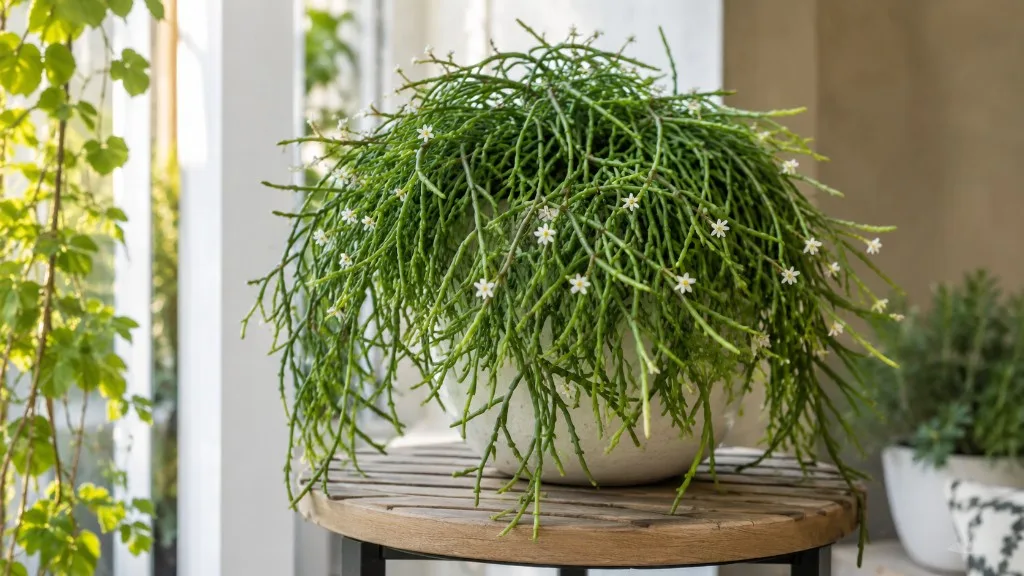
Rhipsalis pruning is optional maintenance on a trailing mistletoe cactus - a spineless, epiphytic member of Cactaceae that grows in tropical rainforest canopies, not desert sand. The Royal Horticultural Society notes that Rhipsalis baccifera needs no pruning, though its slender trailing stems can reach metres in length and may be trimmed when required. BBC Gardeners’ World adds that mistletoe cactus does not need to be pruned but can be cut back if stems become too long for their space.
You are not shearing a hedge. You are snipping segment joints on pendulous succulent stems to control length, remove declining tissue, and encourage branching - while keeping the plant’s natural cascade intact.
First action: remove only dead, shriveled, mushy, or pest-damaged stems with clean, sharp scissors, cutting at the joint just below healthy tissue. Do not start with cosmetic tip trimming until declining segments are gone and the base feels firm.
What to Check Before You Cut
Rotate the pot or hanging basket in good light and inspect the whole plant before choosing a goal. Note stem firmness at the soil line, whether new segments are forming, and whether one long runner dominates while shorter stems lag. Rhipsalis stores water in its stems; widespread shriveling usually points to underwatering, root stress, or rot - not a plant that needs aggressive shaping.
Stems, Joints, and Areoles
Rhipsalis stems are smooth, spineless, and succulent - cylindrical, flattened, or thread-thin depending on species. Visible joints (segment boundaries) are where one section meets the next; these are the natural breaking points and the reliable places to cut. Areoles - small bumps at junctions - are where branches, flowers, and roots can emerge. The plant branches from joint zones, not from random mid-segment points.
Species differ in segment shape: Rhipsalis baccifera and Rhipsalis cereuscula carry slender cylindrical chains; Rhipsalis paradoxa shows flattened, chain-like links; Rhipsalis capilliformis forms hair-thin threads. The cut placement rule is the same - at or just above a joint.
Signs the Plant Is Ready (or Not Ready) for Shaping
Ready for light shaping: plump stems, new side branches forming, mix drying on a predictable rhythm, no mushy tissue at the base. Delay heavy pruning: recent Rhipsalis repotting guide or shipping, waterlogged soil, black soft stems at soil level, or widespread shriveling across most of the plant. Pruning cannot fix root rot on Rhipsalis or chronic underwatering; stabilize care first, then shape.
Long, pale, widely spaced stems usually mean the plant is reaching for light. Trimming improves the silhouette temporarily, but without brighter indirect exposure, the next flush will stretch again.
When to Prune Rhipsalis
Timing splits into two categories. Sanitation - removing dried, brown, mushy, or pest-ridden segments - can happen whenever you see the problem. Decaying tissue holds moisture against healthy stems and invites fungus gnats; there is no benefit to waiting for spring.
Shaping, tip trimming, and rejuvenation belong in the active growing season. For most indoor growers, that means late spring through early summer, when daylight lengthens, room temperatures sit in the 18–27°C (65–80°F) range Rhipsalis prefers, and you are watering regularly because the mix dries predictably. NC State Extension notes that pruning is not required but stems can be trimmed to encourage bushy growth - work during visible active growth for the fastest response.
Avoid removing a large share of foliage in late fall and winter, when metabolism slows and lower light reduces the plant’s ability to replace what you removed. Light winter cleanup - one shriveled tip - is fine; a hard cutback on a plant in a dim, cool room is a common reason growth stalls until spring.
Year-Round Sanitation vs. Active-Season Shaping
Year-round cleanup covers individual dried segments, one broken tip after an accident, or a single stem with mealybug cotton. These low-risk cuts barely change the plant’s energy budget. Active-season shaping covers trimming many tips at once, shortening multiple long trails, thinning crowded interior growth, or removing up to one-third of living stem mass in a rejuvenation pass. Save that work for when you see new segments or side branches forming.
A practical rhythm: quick inspection every two to three weeks in spring and summer, monthly in slower months. Remove dead tissue on quick checks; schedule heavier thinning for one or two early-summer sessions if the plant actually needs it.
The First Cut to Make
Start every session with declining tissue, not healthy trailing growth. Trace a shriveled or mushy stem downward until you reach firm, green or healthy gray-green tissue. Cut at the joint just above the next sound segment below the damage.
If only one dry tip appears on an otherwise plump plant, that is often normal segment aging - snip it at the next healthy joint and stop. If many stems collapse at once, pause on heavy pruning and check soil moisture, drainage, light, and pests. Cutting off all thin tissue on a dehydrated plant removes photosynthetic area without fixing the cause.
Where to Cut - Joints, Not Mid-Segment Stubs
The most important technique rule: cut at a segment joint or just above it. Mid-segment stubs - long naked pieces left between the cut and the next joint - often dry brown, invite rot in humid conditions, and rarely branch as cleanly as joint cuts. Aim for a clean perpendicular or slight angled cut right at the boundary where segments meet.
When removing an entire leggy stem, cut it back to a lower joint with healthy side branches or remove it at soil level if it is bare and unbranched. Step back after each major removal and assess balance. Gardener’s Path recommends severing unwanted portions at the nearest joint so the remaining stem calluses and regrows - the same joint logic applies whether you are shortening one stem or thinning several.
How Much You Can Safely Remove
Follow the one-third rule: remove no more than one-third of the plant’s total living stem mass in a single session. Rhipsalis tolerates light, repeated tip trims very well but can stall after a hard cut - especially outside active growth or when the plant is already stressed.
For major reshaping on a neglected specimen, spread cuts across two or three sessions spaced two to three weeks apart during spring and summer. Let new shoots appear between rounds before removing more. Thin species like Rhipsalis capilliformis store less water per stem and recover more slowly - trim conservatively.
Tip Trimming for a Fuller Cascade
Tip trimming is the gentlest way to encourage bushiness. Identify the soft growing tip of a trailing stem and snip one to three segments from the end at the nearest joint below your target length. Where you cut, two or three new stems often emerge from the area just below within two to four weeks in warm weather - interrupting apical dominance at the chain tip.
Repeat every few weeks during active growth on plants you want dense. Focus on stems that are outpacing the rest so the basket stays balanced rather than lopsided. Do not strip every tip in one day on a stressed plant; spread aggressive trimming across sessions.
Shortening Long Trailing Stems
Mature Rhipsalis can produce impressively long stems - stunning in a high hanger, inconvenient when they tangle in traffic or collect dust at floor level. To shorten, follow a stem to your target length and cut at the joint one segment shorter than your visual target - new growth will extend the trail again within weeks.
Work one stem at a time rather than shearing all stems to identical length, which looks unnatural and removes too much tissue at once. If a stem is bare along its upper portion with branches only at the tip, shorten to a lower joint where side branches exist, or remove it at the base. Bare mid-length stems rarely refoliate; new growth comes from cut points and existing branches.
Rejuvenating Neglected or Woody Rhipsalis
A neglected plant - long bare woody stems, healthy growth only at tips, possibly root-bound - needs staged rejuvenation, not one heroic cut. Begin by removing all dead material and stems that are bare from base to tip with no useful side branches. That alone may open the plant enough.
Next, cut the longest stems back to lower joints with healthy side branches, prioritizing stems that cross through the center. Leave a mix of shorter stems to feed recovery. After new growth appears, repeat on remaining long stems if needed. Total rejuvenation may take two or three sessions over one growing season.
If stems are mushy at the soil line or the mix smells sour, cosmetic tip trimming will not save the plant. Inspect roots, repot into fresh airy epiphytic mix, and correct watering before cosmetic work. Woody basal stems on old plants may be cut back toward their origin in stages - still respecting the one-third volume limit per session.
Tools and Sterilization
Rhipsalis stems are soft enough for sharp scissors, floral snips, or bypass pruning shears. Match tool size to stem thickness. Keep 70% isopropyl alcohol nearby and wipe or dip blades before you start, between plants, and between cuts on diseased tissue.
Sterilize because overwatered Rhipsalis can carry fungal or bacterial issues, and dirty blades spread pathogens between shelf neighbors. Work in good light, remove dead material first to open sightlines, then shape live growth. You do not need wound sealant - clean, dry stem ends callus naturally in room air.
Handling Trimmed Material Around Pets
Rhipsalis is commonly described as pet-safe, and the ASPCA lists Rhipsalis as non-toxic to dogs and cats. That differs from true mistletoe (Viscum species), which is toxic - the common name refers to appearance, not botanical kinship. Non-toxic does not mean edible; detached stems on the floor invite chewing. Bag trimmings promptly and wash hands after handling cut segments.
Aftercare and Recovery Timeline
After pruning, return the plant to stable conditions - do not move from a stable shelf to harsh direct sun the same day. Hold fertilizer for two to three weeks after a moderate to heavy session; resume diluted balanced feeding only when new segments form at cut points.
Water based on soil moisture, not habit. The mix may dry slightly faster with less foliage or slightly slower if you removed top growth that transpired heavily - check before assuming the old schedule still applies. Rhipsalis is a jungle cactus: it wants consistent moisture in the root zone while regrowing, not the bone-dry desert-cactus routine some growers mistakenly apply after cutting.
Expect visible new shoots within two to four weeks during active season and fuller branching within six to eight weeks if light tip trimming continues. Out-of-season cuts can take much longer. Slightly dry, tan cut ends after a week are normal callusing. Black, mushy ends mean dirty tools, a cut on diseased tissue, or overwatering - remove back to healthy tissue with sterilized blades.
Pruning Mistakes to Avoid
Removing too much at once tops the list - cutting half the stem mass in a dry winter room removes photosynthetic capacity while roots still consume reserves. Cutting in the wrong place - mid-segment stubs, crushed joints, ragged tears - produces brown tips that die back without clean branching. Pruning without fixing light sends thin new side stems on a plant ten feet from a north window. Ignoring base health - black mushy stems at soil level mean rot, not a tip-trim problem.
Underwatering after heavy pruning is a jungle-cactus-specific error; overwatering immediately after pruning invites rot at cut faces when transpiring tissue is reduced. Shearing all stems to identical length fights the natural cascade. Pruning a stressed plant - just repotted, just shipped, sitting in waterlogged soil - compounds shock. Stabilize care first, then shape.
Using Healthy Trimmed Segments as Cuttings
Every healthy trim can become a cutting. Select segments two to four joints long from vigorous stems. Let fresh cuts callus one to two days in dry air before placing in moist perlite, orchid bark mix, or water. Keep cuttings in Rhipsalis light guide and avoid saturating the medium until roots form. Rooting is fastest in the same warm active-season window when pruning itself is safest.
Do not propagate from mushy, yellow, or pest-infested trimmings. Pruned material you are not rooting belongs in the bag and bin - especially in pet-aware homes where loose segments invite investigation.
Conclusion
Rhipsalis pruning is optional but powerful when it respects the plant as a trailing jungle cactus. Trim at joints during active growth, remove dead tissue anytime, follow the one-third rule for heavy reshaping, and pair scissors with stable light and consistent moisture. Most specimens reward light, repeated tip trims with a fuller cascade within one season - and every healthy cutting is a spare plant waiting to root. When cuts follow the plant’s rhythm rather than fight it, Rhipsalis stays tidy, balanced, and unmistakably itself.
When to use this page vs other Rhipsalis guides
- Rhipsalis overview - Start here for whole-plant context before deep-diving this topic.
- Rhipsalis problems hub - Jump to symptom-specific fix guides when this care topic does not resolve the issue.
- Slow Growth on Rhipsalis - Escalate here when pruning adjustments are not enough.
- Brown Tips on Rhipsalis - Escalate here when pruning adjustments are not enough.