Rhipsalis Light Needs: Bright Indirect, Not Desert Sun
Rhipsalis Light Needs: Bright Indirect, Not Desert Sun
Rhipsalis Light Needs: Bright Indirect, Not Desert Sun
Rhipsalis is sold beside spiny desert cacti in many shops, which leads to one of the most expensive mistakes you can make with it: parking a trailing mistletoe cactus in the same harsh window where an Echeveria or Barrel cactus would thrive. Rhipsalis is a rainforest epiphyte. In the wild it clings to tree branches and rock faces under a tropical canopy, receiving bright, filtered light-not the open, punishing sun of a desert slope. Indoors, that translates to bright indirect light as the default, with soft morning rays as the only direct exception worth considering. Treat Rhipsalis like a jungle cactus, not a desert one, and the stems stay plump, green, and gracefully pendant instead of bleached, crisp, or stretched.
Why Rhipsalis Is Not a Desert Cactus
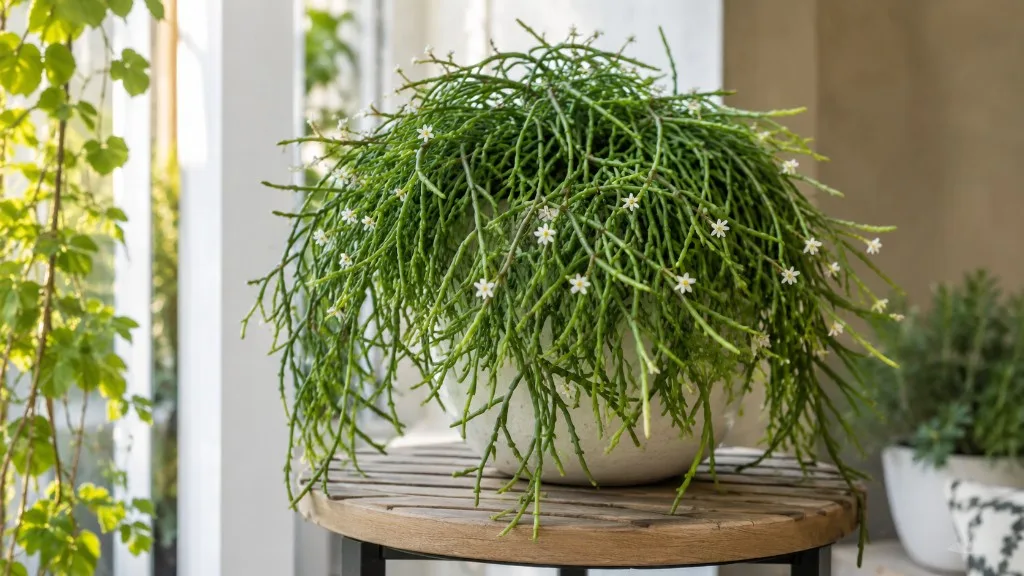
The word cactus on the label is technically correct-Rhipsalis belongs to the cactus family, Cactaceae-but the ecological niche is completely different from the iconic desert species most people picture. Rhipsalis baccifera, often called mistletoe cactus or mouse tail cactus, is the species most commonly sold, but dozens of Rhipsalis species share the same broad light logic because they evolved as epiphytes or lithophytes in humid tropical forests across the Americas, with R. baccifera also documented outside the Americas in parts of West Africa and Sri Lanka. They grow where roots anchor in moss, bark pockets, and leaf litter high above the forest floor, with stems hanging into moving air and dappled light.
Epiphytes Under the Rainforest Canopy
Under a closed canopy, light arrives in shifting patches. Midday sun rarely hits stems directly for long; instead, the plant receives high ambient brightness filtered through leaves and branches. That is why Rhipsalis stems are thin, spineless or nearly spineless, and optimized for photosynthesis at moderate intensity rather than for storing water through blistering exposure. Compare that to a Saguaro or Prickly Pear: thick stems, spines for shade and defense, and a physiology built to exploit full sun and long dry spells. The care mistake is assuming one cactus light rule fits both groups.
Humidity, airflow, and moisture availability also differ. A desert cactus in strong sun dries fast and wants infrequent deep watering. Rhipsalis in the same sun loses water through thin stems, heats up near glass, and still sits in a pot that may not dry evenly-setting up scorch on the foliage side and rot in the root zone. Bright indirect light keeps photosynthesis strong while respecting the stem structure Rhipsalis actually has.
What That Means for Indoor Placement
Indoors, your job is to mimic canopy brightness without canopy shade structure. You do not need a dim corner; Rhipsalis is not a low-light plant in the ZZ plant sense. You need a bright room where the stems never sit in a hot beam for hours. Hanging baskets and high shelves near a window often work better than floor placement because they catch ambient light while staying out of the direct path of south- or west-facing glass. If you remember one sentence: give Rhipsalis the brightest spot you have that does not sunburn it. That usually means an east window, a filtered west window, or a few feet back from strong south glass-not a desert-cactus sill.
The Ideal Light Level for Rhipsalis
The practical target for most homes is medium to bright indirect light, leaning bright when you want fuller stems, faster growth, and the best chance of flowers. RHS guidance notes that tropical rainforest-dwelling succulents such as Rhipsalis prefer more frequent watering and semi-shade, so an east or west facing window works well. Bright indirect light means the plant clearly illuminates the room side of the window but you do not see a hard sun patch sitting on the stems for most of the day. The stems should look evenly green, with new segments firm and closely spaced along the chain.
Bright Indirect Defined in Practical Terms
Use the shadow test if you are unsure. On a sunny day, hold your hand between the window and the plant. A soft, fuzzy shadow with recognizable fingers usually indicates indirect light suitable for Rhipsalis. A sharp, dark shadow with crisp edges means direct sun strong enough to scorch thin stems within days, especially in summer. At that intensity, pull the plant back, add a sheer curtain, or move it to an east exposure.
Another reliable check is the new-growth test, which matters more than how the oldest stems look. Old sun damage does not heal, but the newest segments tell the truth about current conditions. Healthy Rhipsalis under good light produces stems that match the species’ expected thickness-pencil-lead fine in R. baccifera, slightly thicker in R. cereuscula-with even color and no sudden narrowing between segments. If new growth is pale, thin, or reaching toward the glass, brightness is probably insufficient. If new tips redden, bleach, or wrinkle while the window-facing side crispens, intensity is too high or the move was too abrupt.
Light Intensity Benchmarks You Can Use
Exact numbers vary by species and season, but benchmarks help when you use a phone light meter app or a dedicated lux meter. Bright indirect for Rhipsalis often falls roughly in the 1,000–2,500 foot-candle range (about 10,000–25,000 lux), depending on meter placement and leaf orientation. That is bright enough to read comfortably near the plant without sunglasses, yet not the 5,000+ foot-candle direct-beam zone where desert succulents excel.
For supplemental LED grow lights, many growers succeed with 2,000–3,500 lux at the stem surface for 12–14 hours daily, mimicking a long tropical day without overheating the canopy. Numbers are guides, not commandments-your window glazing, outdoor shade trees, and latitude all shift the real exposure. Let new stem quality override the meter when the two disagree.
Best Window Placement for Rhipsalis
Window direction matters because it shapes heat load and beam duration, not just brightness. Rhipsalis tolerates gentle rays but not baking afternoons. The best placement also accounts for how far the pot sits from glass, whether a curtain diffuses the beam, and whether reflected heat from a wall or windowsill radiates onto hanging stems.
East-Facing Windows and Gentle Morning Sun
An east window is the sweet spot for many Rhipsalis setups. Low-angle morning sun is cooler and shorter than afternoon sun, giving stems a soft boost without the scorch risk of west or south glass. BBC Gardeners’ World notes that Rhipsalis can tolerate an hour or so of morning or late-afternoon sun when acclimated, but too much direct exposure damages the stems. Most species handle one to two hours of direct morning sun once acclimated, especially in spring and fall. In hot summers, even east exposure can intensify; watch the window-facing side of the stems after heat waves.
Place the basket or pot on the sill or within a foot of the glass on east exposures in temperate climates. If stems color up richly and stay firm, you have found a strong home. If tips bleach by mid-morning in July, shift the pot six inches back or filter with a thin sheer panel. East light plus bathroom humidity is a classic combination for mistletoe cactus because it pairs canopy-like moisture with canopy-like brightness.
North, West, and South Exposures
North windows can work when the view is open-no deep porch overhang, no adjacent building blocking sky-and the room reflects light well. Pure north light in a narrow room may slide into low-light tolerance territory: the plant survives, but stems grow slower and thinner. If new growth stretches toward the pane, north light alone is probably insufficient unless you supplement.
West windows demand caution. Afternoon sun carries heat and UV intensity that desiccate thin Rhipsalis stems fast. Use sheer curtains, slatted blinds, or place the plant three to five feet back from the glass so it lives in bright ambient light rather than a direct beam. South windows follow the same rule with even more margin in summer. A south sill is rarely appropriate for unacclimated Rhipsalis unless filtered heavily or shaded by outdoor trees equivalent to a forest canopy.
Seasonal shifts matter on every exposure. Winter sun is lower and weaker; a spot that was perfect in December may scorch in June. Re-check placement at the solstices instead of assuming a one-time decision lasts all year.
Bathrooms and bright kitchens deserve a special mention because they combine two rainforest cues-humidity and filtered window light-in one room. A Rhipsalis near a frosted bathroom window or a bright kitchen casement often outperforms the same plant in a dry living room at identical lux levels, simply because transpiration stress stays lower. The ceiling is still light: frosted glass reduces intensity, but a south-facing bathroom pane can still deliver a hot beam by afternoon. Treat frosted or high windows like any other exposure-confirm with the shadow test rather than assuming “bathroom” automatically means safe shade.
Species within the genus vary slightly in tolerance, though beginners can follow one rule for all common nursery species. Rhipsalis cereuscula (coral cactus) and Rhipsalis paradoxa (chain cactus) often accept slightly brighter ambient conditions than pencil-thin R. baccifera, but none belong on an unshaded desert-cactus sill. When in doubt, watch the thinnest stems in your basket; they scorch first and recover slowest.
Direct Sun Tolerance and Hard Limits
Rhipsalis is not a direct-sun plant in the desert-cactus sense. Harsh midday and afternoon rays are the primary cause of stem scorch, bleaching, and sudden segment collapse after an unacclimated move. That said, completely avoiding every photon of direct light is not necessary if exposure is gentle, brief, and introduced slowly.
Morning sun on an east sill is the most forgiving direct exposure. Some growers acclimate selected species-Rhipsalis paradoxa and thicker-stemmed forms-to slightly brighter conditions over several weeks, moving the pot a few inches closer every four to five days while watching new growth. Never jump from a dim office corner to a south window in one afternoon. Stems formed in low light lack the photoprotective capacity to handle sudden intensity, even if the species could tolerate brighter conditions long term.
Signs Your Rhipsalis Is Getting Too Much Sun
Sun stress shows on the window-facing side first. Watch for bleached or yellow-white patches on stems that were evenly green the week before. Reddish-brown discoloration, especially combined with dry, papery texture, indicates tissue damage rather than harmless blush. Crisp segment tips, shriveling on sun-exposed faces while the shaded side still looks hydrated, and sudden leaf or branch drop after a move are urgent signals to reduce exposure immediately.
Heat amplifies light damage. A stem touching hot glass or sitting above a radiators-adjacent sill can scorch even when the light level would be acceptable at a cooler distance. Move the plant back, add diffusion, and remove only fully dead segments once you know the exposure is stable-minor scorch marks on old growth are cosmetic; focus on protecting new segments.
Low-Light Tolerance and What You Give Up
Rhipsalis earns its beginner-friendly reputation partly because it tolerates lower light better than most cacti. That tolerance is real-and misleading. The plant may persist in a dim north room or far from a window, but it will not perform the way it does under bright indirect light. Low light is a survival mode, not the target.
In insufficient light, photosynthesis drops, stem internodes lengthen, and the plant invests energy in reaching brighter zones. Water use slows, which means the same Rhipsalis watering guide that worked near a window can leave roots soggy in a dark corner. Many “mysterious” Rhipsalis rot cases are light problems disguised as watering problems: the mix stays wet because the plant is not using it.
Recognizing Leggy, Weak Growth
Etiolation-the botanical term for stretchy, weak growth in low light-shows up as long, thin new segments with wider spacing between joints, sometimes angled sharply toward the nearest window. Color may fade to yellow-green or look dull rather than fresh. Older stems can remain dense while new growth at the tips reveals the deficit, so inspect the leading edges of each chain, not just the overall silhouette.
Flowering is another casualty of chronic low light. Mistletoe cactus can produce small white flowers and pale berries when conditions align, but bloom initiation typically requires many hours of bright indirect light through the growing season, plus appropriate temperature and dormancy cues. A dim shelf Rhipsalis may never flower despite years of care. If blooms matter to you, prioritize light before fertilizer.
Using Grow Lights When Natural Light Falls Short
Apartments with small windows, office desks, and north-facing rooms benefit from full-spectrum grow lights sized for the plant’s footprint. Rhipsalis responds well to artificial light when intensity, duration, and distance are balanced-unlike some foliage plants that tolerate weak desk lamps, it wants real brightness without heat stress.
Choose a full-spectrum LED fixture rated for horticulture rather than a warm household bulb with poor red/blue balance. Position the light 12–18 inches above the highest stems for moderate-output panels; closer setups need careful monitoring for heat at the canopy. Run 12–14 hours daily on a timer to approximate a tropical day length. In fall and winter, some growers shorten to 10–11 hours to respect natural dormancy patterns before returning to longer days in spring.
Distance, Duration, and Spectrum Basics
If new growth under lights looks compact and green, distance is likely correct. Pale, tight growth very close to the panel can indicate light burn combined with heat; raise the fixture. Stretching toward the bulb means raise intensity or lower distance incrementally, not both at once. Rotate hanging baskets weekly so all sides receive even exposure, mimicking the shifting patches of canopy light.
Grow lights pair well with humidity-another rainforest cue-but do not substitute misting for proper brightness. A humid dim corner still produces weak stems. Light first, then optimize moisture and airflow.
How Light Changes Watering and Flowering
Light and water are linked for every houseplant, but the link is especially easy to misread on Rhipsalis because it looks like a drought-tolerant cactus. Brighter light increases transpiration and metabolic demand, so the pot dries faster and the plant uses water more predictably. Dim light slows both, meaning the top half of the mix may stay wet long enough to trigger root rot on Rhipsalis if you water on a bright-window schedule.
After any light change, reset your watering instincts. Move to a brighter east window and check moisture two days sooner than before. Move to a dimmer shelf and extend dry-down time, often letting the top half of the pot dry rather than the top inch alone. The stems themselves are indicators: slight softness can mean thirst in bright conditions, but softness with dark, mushy base segments in low light usually means excess moisture, not drought.
Flowering ties to light indirectly. RHS mistletoe cactus guidance describes small white or greenish-white flowers along stems, usually from winter to spring, and notes that Rhipsalis needs bright indirect light with high humidity for healthy growth - commonly cited around six or more hours daily - plus cooler rest periods and controlled photoperiod to set buds. Indoor bloom is never guaranteed, but plants in bright filtered windows with seasonal temperature shifts have the highest odds. Nighttime interruption from room lights is a secondary factor for some jungle cacti; if you are chasing blooms, give the plant uninterrupted dark nights during the rest period after flowering.
Reflective surfaces subtly boost effective brightness without adding scorch risk. A light-colored wall opposite an east window, a mirror placed so it bounces ambient light onto the far side of a hanging basket, or a white shelf above the pot can increase usable photons for the shaded side of trailing stems. The gain is modest compared to moving the plant closer to a real window, but in tight apartments it can mean the difference between slow survival and steady, symmetric growth. Avoid mirrors that concentrate a direct sun beam onto stems-that creates hot spots as damaging as south glass itself.
Moving and Acclimating Rhipsalis Safely
Sudden moves cause more Rhipsalis casualties than gradual ones. Retail plants often arrive from greenhouse shade; your brightest window is still a shock if introduced instantly. Acclimate over 10–14 days when increasing light: shift the pot closer to the target window by a few inches every three to four days, or add one hour of gentle morning exposure before full sill placement.
When reducing light-moving indoors for winter or shifting away from a scorching west window-change quickly if sun damage is active, but expect temporary stress shedding of a few segments. Hold watering slightly until new growth stabilizes; the plant is recalibrating, not necessarily dying. Avoid stacking stressors: do not repot, fertilize heavily, and move windows the same week.
Hanging baskets add weight and height to moves. Support the pot when shifting hooks so stems are not yanked, and keep trailing chains away from hot glass contact. A few inches of air between stems and pane prevents conductive heat scorch even when ambient light levels look acceptable.
If you summer Rhipsalis outdoors, apply the same canopy logic. Dappled shade under a tree, a covered porch, or an east-facing patio spot mimics native conditions. A hanging basket on open deck railings in full afternoon sun will scorch faster outdoors than indoors because wind desiccates damaged tissue and there is no curtain to rescue you. Bring plants back inside before light intensity jumps in late spring, and quarantine them briefly so outdoor pests do not spread to your indoor collection.
Common Light Mistakes and How to Fix Them
The most common error is desert-cactus placement: treating Rhipsalis like it wants the same south sill as Aloe vera or Echinocactus. Fix by moving to bright indirect exposure and watching new segments for two weeks before judging success. The second error is chronic dim survival-keeping a pale, leggy plant because it “has not died yet.” Fix with a brighter east window or a grow light, and trim leggy tips only after conditions improve so you do not remove the plant’s only active growth points prematurely.
Unfiltered west or south exposure without acclimation is the third classic mistake, often after a well-meaning “give it more sun” recommendation from someone who grows desert succulents. Add sheer diffusion or distance, and accept that some old scorch marks will remain until new growth covers them. Fourth is ignoring seasonal intensity: a winter-perfect sill scorches in June. Shift back or filter when days lengthen. Fifth is watering on autopilot after a light change, causing rot in dimmer spots or chronic dryness in brighter ones. Re-tune moisture checks whenever the plant moves.
Quick diagnostic table in prose: bleaching and crisp window-side stems mean too much sun; long gaps between new segments mean too little; firm green new chains in bright shade mean you nailed bright indirect. Trust new growth over outdated labels.
Conclusion
Rhipsalis light needs boil down to a simple ecological truth dressed up in houseplant language: this is a rainforest epiphyte that wants bright indirect light, not desert sun. Give it the kind of brightness you would find under a tropical tree canopy-strong enough for dense, trailing stems, filtered enough to prevent bleaching and crisp scars on thin tissue. East windows, sheer-filtered west or south exposures, and quality grow lights cover most homes; harsh unfiltered afternoon beams do not.
Judge success by new segment quality, not by whether the plant merely clings to life in a dim corner. When light is right, watering becomes easier to read, growth stays compact, and you give flowers a fair chance if you also respect humidity and seasonal rest. Move plants gradually, re-check windows as seasons change, and resist the cactus label when it pushes you toward the wrong sill. Rhipsalis rewards canopy thinking-and punishes desert assumptions quickly enough that you will never forget the difference.
When to use this page vs other Rhipsalis guides
- Rhipsalis overview - Start here for whole-plant context before deep-diving this topic.
- Rhipsalis problems hub - Jump to symptom-specific fix guides when this care topic does not resolve the issue.
Related Rhipsalis guides
- Rhipsalis overview
- Rhipsalis watering
- Rhipsalis soil
- Rhipsalis propagation
- Rhipsalis fertilizer
- Rhipsalis repotting
- Rhipsalis problems
Related tool
Try the Plant Problem Diagnosis Tool with rhipsalis pre-selected to estimate needs for your setup.