Root Rot on Rhipsalis: Causes, Checks & Fixes
Quick answer
Root rot on Rhipsalis starts when epiphytic roots sit in waterlogged mix-often from watering like a desert cactus or leaving saucers full. Stop watering, unpot, trim mushy roots, and repot into fresh airy mix.
Root Rot on Rhipsalis: Causes, Checks & Fixes
This guide covers root rot on Rhipsalis. See also the general Root Rot guide, watering, and light pages for this plant.
Root Rot on Rhipsalis: Causes, Checks & Fixes
Quick answer
Root rot on Rhipsalis (Mistletoe Cactus) is a drainage and watering problem, not a mysterious disease. This trailing epiphyte succulent needs more moisture than desert cacti but still avoids overwatering in a gritty, well-drained mix. When roots sit in stagnant water-especially in dim light or oversized pots-oxygen drops and decay begins. Stop watering, unpot the plant, and inspect roots before doing anything else.
Why Rhipsalis gets root rot
Rhipsalis evolved in rainforest canopies where water drains instantly through bark and leaf litter. In pots, the usual triggers are watering on a calendar, saucers holding standing water, and dense peat-heavy mix that stays wet for days. Jungle cacti including Rhipsalis come from sub-tropical forests with more abundant moisture than deserts-but not saturated soil around roots. Overwatering in winter is especially dangerous when slow growth cannot use extra water. Cool rooms below about 15°C (60°F) slow metabolism further, so a summer Rhipsalis watering guide becomes excessive indoors.
What root rot looks like on Rhipsalis
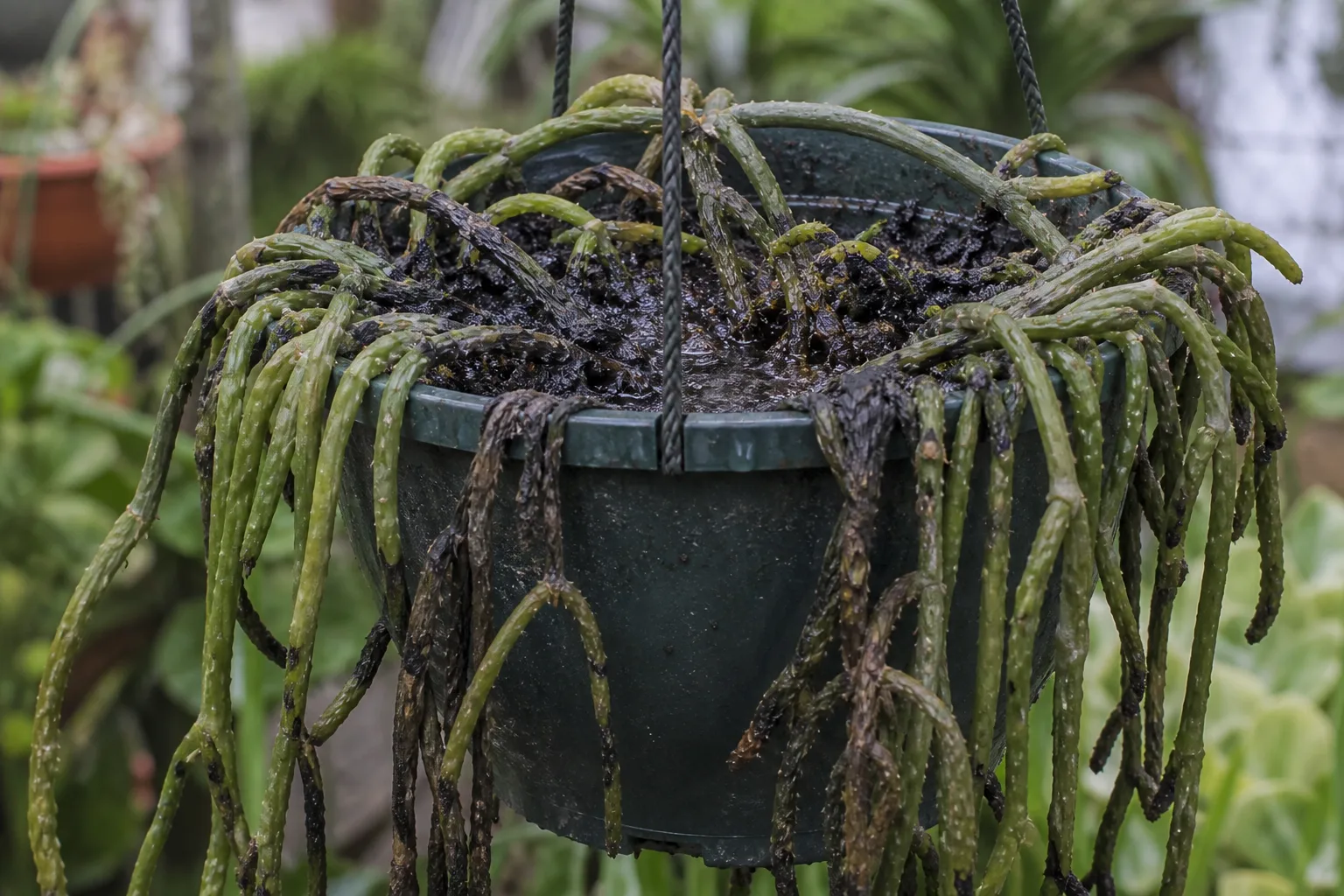
Early signs mimic thirst: segments yellow or droop even though soil is wet, because damaged roots cannot move water. Check stem segments-not just leaf-like cladodes-for mushiness. A healthy Rhipsalis stem feels firm and slightly plump. Soft, translucent, or yellowing segments at the base while the mix is moist is a red flag. Advanced rot may show blackening where stems meet soil and a sour or rotten smell from the pot.
Root Rot symptoms on Rhipsalis - compare with healthy tissue on the same plant.
How to confirm the cause
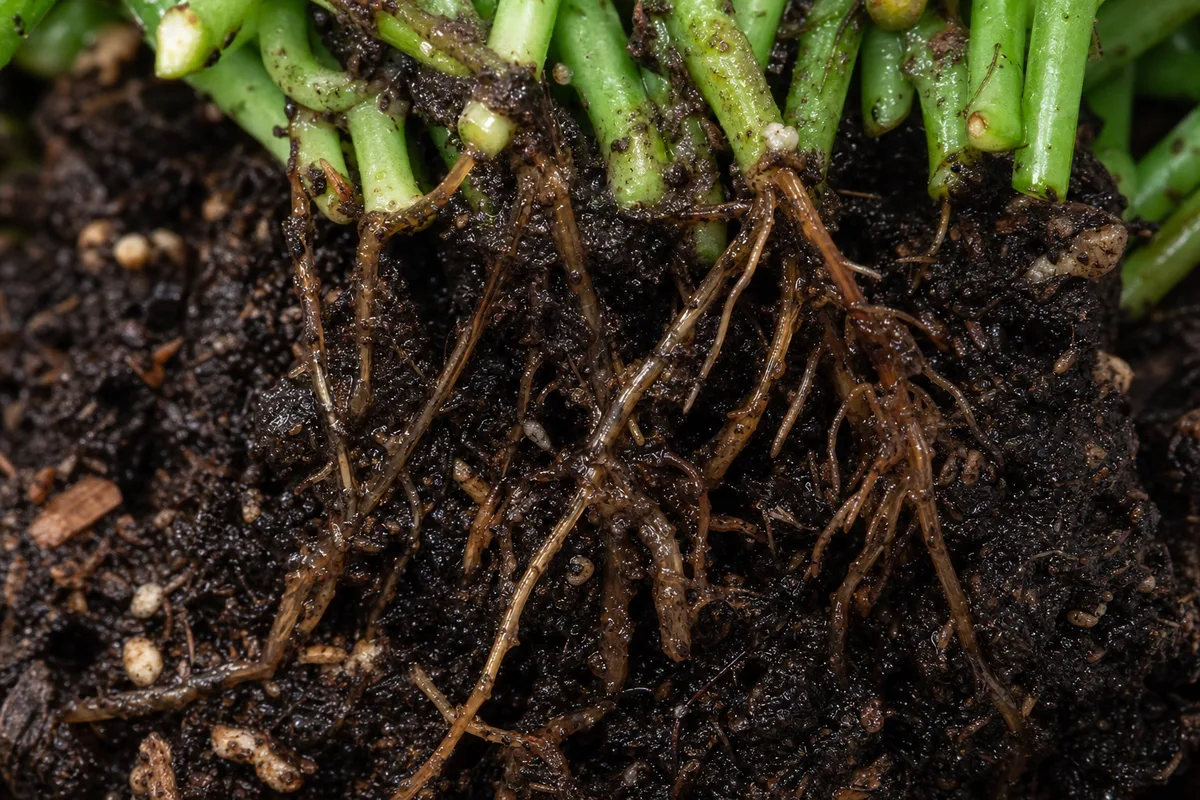
Knock the plant out of its pot. Healthy Rhipsalis roots are firm and pale; rotted roots are brown, translucent, or mushy. Wilted segments may indicate soil that is too dry or too wet-rotting roots cannot take up water even when the mix feels damp. If the pot is heavy, drainage is blocked, or the mix smells bad, treat root rot as confirmed. If the top half is dusty dry and segments only look slightly flattened, underwatering may explain the symptoms instead.
First fix for Rhipsalis
Stop all watering. Gently remove wet soil and cut away mushy roots with clean scissors. If most segments are still firm, let the root ball air-dry in Rhipsalis light guide for 24–48 hours before Rhipsalis repotting guide into fresh epiphytic mix with perlite and orchid bark. If stems are soft throughout, salvage firm tips for cuttings. Plants with partial rot may be salvaged by pruning out the rotted part.
Epiphytic mix that prevents repeat rot
Rhipsalis roots need air channels between waterings. A workable home mix combines roughly equal parts orchid bark, perlite, and quality potting soil—adjust toward more bark if your home runs humid. Avoid straight cactus grit with no organic matter; jungle cacti still need consistent moisture compared to desert species, just not saturation.
Terracotta pots help epiphytic cacti dry evenly. Plastic hanging baskets look great for trailing Rhipsalis but hold moisture longer—reduce watering frequency or add extra perlite when using non-porous containers. The pot should match the root mass; a 15 cm pot for a small starter plant, not a 25 cm bowl “to let it grow into.”
Salvaging cuttings from rotted plants
When the base is mushy but several inches of firm segments remain above the rot line, cut healthy tips with clean scissors. Let cut ends callus for 24–48 hours on a dry surface, then root in fresh airy mix or water changed weekly. Trailing epiphyte succulents root readily from firm segments when warmth and bright indirect light are steady.
Label salvaged cuttings and keep them slightly drier than a mature plant until roots form—new cuttings rot faster than established specimens if the medium stays wet.
Seasonal watering rhythm
| Season | Dry-down cue | Risk |
|---|---|---|
| Spring–summer | Top half of mix dry | Underwatering shows flattened segments |
| Fall | Top half to two-thirds dry | Transition—do not keep summer schedule |
| Winter | Top two-thirds dry or more | Overwatering in winter is the top rot trigger |
Growth slows below about 15°C (60°F). A drink that was correct in August can rot roots in January if the plant is not using water.
What not to do
Do not keep watering because segments look wilted when soil is already wet. Do not use straight desert-cactus grit with no organic matter-Rhipsalis still needs consistent moisture compared to other cacti, but not sogginess. Do not fertilize a rotting plant. Rhipsalis is non-toxic to cats and dogs, but wash hands after handling mushy tissue.
How to prevent root rot next time
Water when the top half of soil feels dry, not on a fixed schedule. Use a pot sized to the root mass with open drainage. Give bright, indirect light so the plant uses water predictably. Reduce watering in winter dormancy. Empty saucers after every drink.
When to use this page vs other Rhipsalis guides
- Rhipsalis watering guide - Use for routine moisture checks before assuming root rot is the main issue.
- Rhipsalis problems hub - Browse all 3 common issues on this species.