Brown Tips on Rhipsalis: Causes, Checks & Fixes
Quick answer
Brown tips on Rhipsalis usually mean underwatering, low humidity, direct sun on thin segments, or spider mites-not a fungal disease. First step: check soil moisture deep in the pot and segment firmness. Water thoroughly when the top half dries if stems are puckered; raise humidity or move out of harsh sun if stems stay firm with only crisp tips.
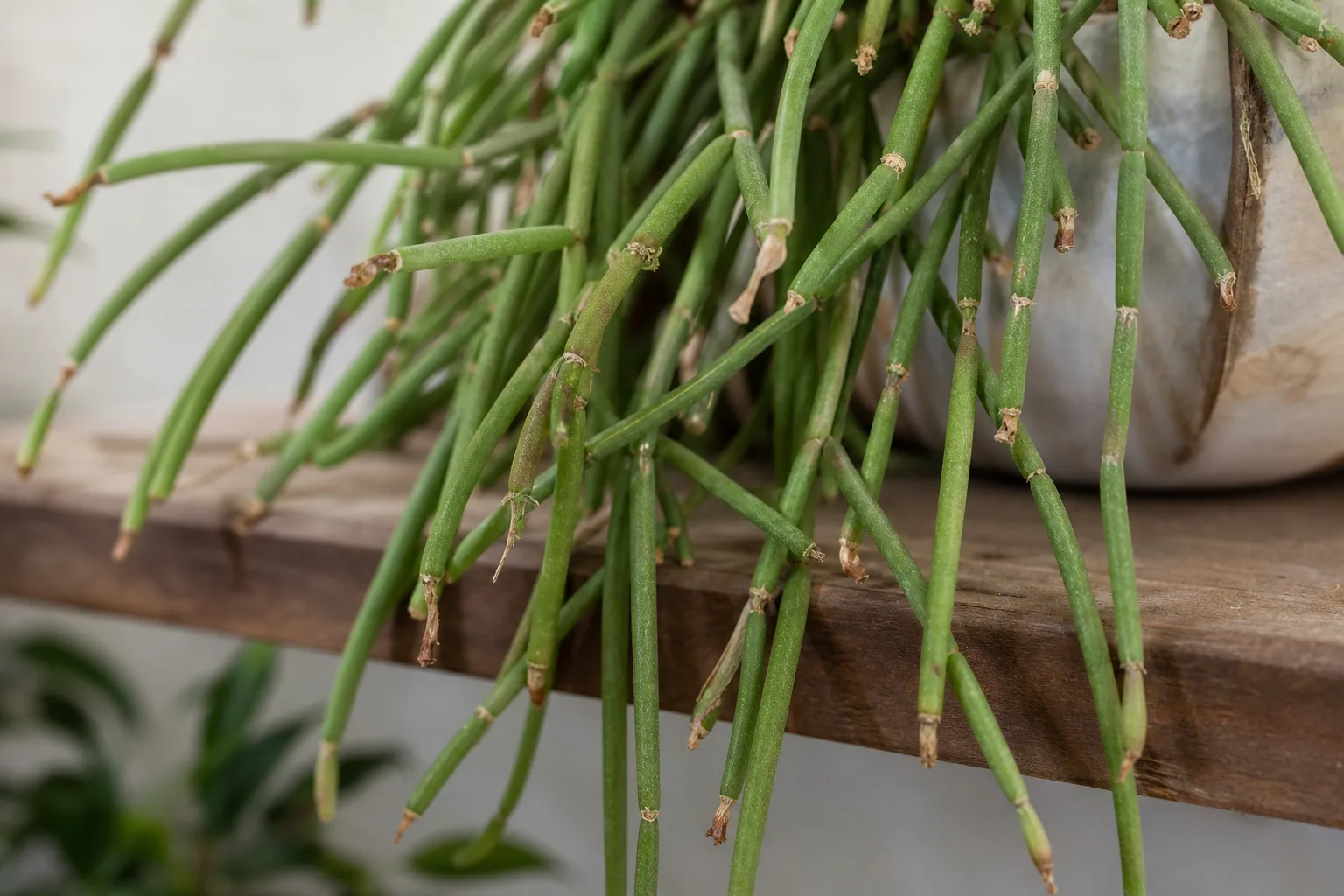
Brown Tips on Rhipsalis: Causes, Checks & Fixes
This guide covers brown tips on Rhipsalis. See also the general Brown Tips guide, watering, and light pages for this plant.
Brown Tips on Rhipsalis: Causes, Checks & Fixes
Quick answer
Brown tips on Rhipsalis are almost always environmental stress on thin, jointed segments-not a fungal infection. This trailing rainforest epiphyte evolved in humid canopy air with filtered light, so a hanging basket above a radiator or in afternoon sun loses moisture from segment tips long before the whole plant wilts.
First step: push your finger into the top half of the mix and pinch a marked segment. Bone-dry soil with puckered, flat stems means underwatering-water thoroughly per the Rhipsalis watering guide. Firm stems with only crisp tips on the window-facing side mean dry air or sun scorch-see low humidity on Rhipsalis or move the basket out of direct beams.
What brown tips look like on Rhipsalis
Rhipsalis shows tip damage on segments-the pencil-thin, jointed cladodes that trail from the crown-not broad leaves.
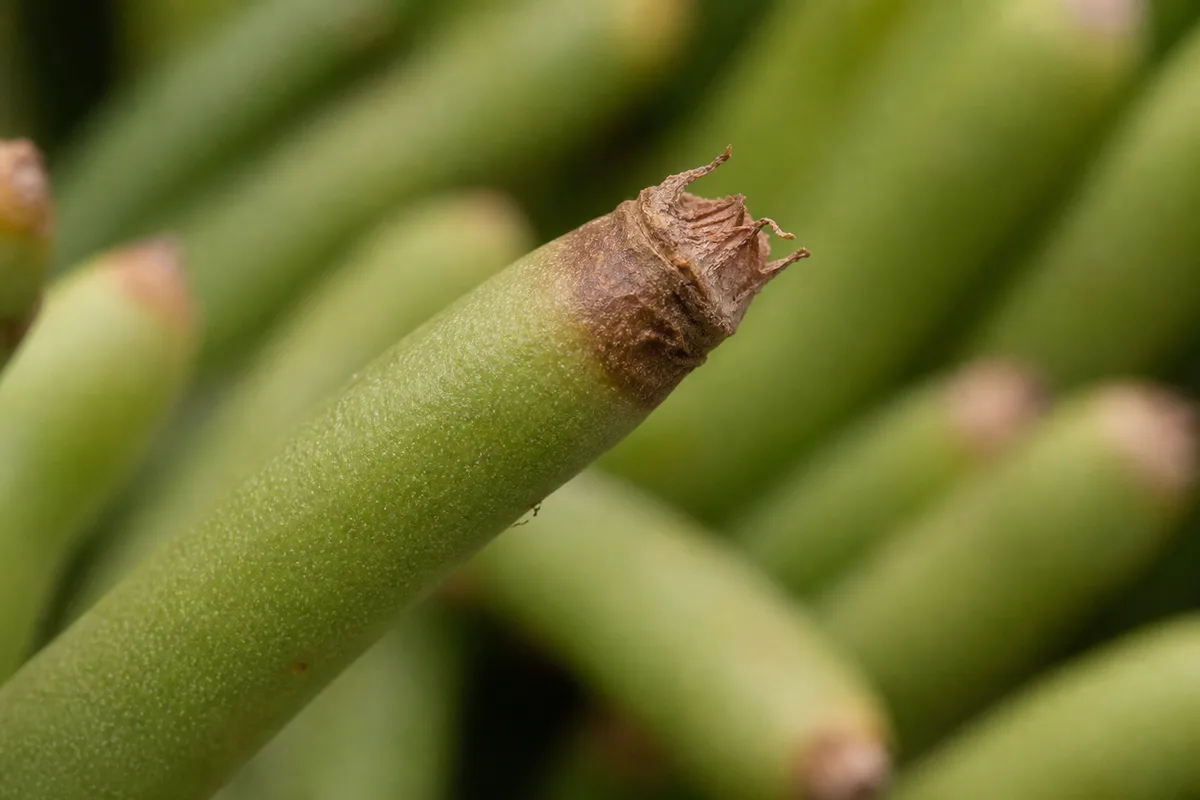
Brown Tips symptoms on Rhipsalis - compare with healthy tissue on the same plant.
Typical brown-tip patterns:
- Dry tan or brown crisp ends on otherwise green segments, often worst on outer stems closest to a vent, window, or heat source
- Asymmetric browning on the sun-facing side of a hanging cascade while shaded inner stems stay green
- Dull, slightly gray-green segments with only the last few millimeters desiccated
Progressive signs:
- Tip browning spreading along multiple trailing branches over several weeks
- New crown growth stalling or emerging thinner than earlier segments
- Fine yellow stippling at joints if spider mites follow dry indoor air
What brown tips do not look like:
- Mushy yellow segments with sour-smelling soil-that is overwatering or root rot
- Uniform puckering and flattening along the full segment length on bone-dry soil-that is underwatering
- White cottony masses or immobile brown bumps-that is mealybugs or scale, not tip burn
NC State Extension notes that lack of humidity or under-watering can cause browning at the tips of the stems, and direct sunlight can cause scorching-the two most common indoor triggers after inconsistent watering.
Why Rhipsalis gets brown tips
Unlike desert cacti, Rhipsalis cannot tolerate long drought or dry indoor air without showing edge damage on exposed segments. Four causes cover most home cases.
Underwatering and uneven dry-down
Rhipsalis prefers consistent moisture compared to other cacti. When the pot goes too long without a full soak-especially in bright hanging windows-tendrils pucker and lose their rigidity when thirsty. Extended dryness progresses from segment flattening to brown, crisp tips. Growers who fear root rot and treat this genus like a barrel cactus often underwater by accident.
Low humidity and winter heating
Thin segments transpire faster than thick desert pads. Central heating, radiators, and forced-air vents drop relative humidity sharply indoors during winter around a hanging basket to the driest zone in the room. Jungle cacti, including Rhipsalis, require higher humidity than typical succulents and brown at the tips when air stays dry even if soil moisture is adequate. Winter tip burn without segment puckering often traces here.
Direct sun on trailing segments
Outer cascade stems catch afternoon sun through glass while inner stems stay shaded. Direct sunlight can scorch stems on epiphytic cacti adapted to partial shade. Sun-facing tip burn keeps tissue firm along the segment length-unlike thirst, which puckers the whole stem.
Spider mites and dry-air stress
Spider mites thrive in warm, dry indoor conditions. Dry air weakens Rhipsalis defenses and invites mites whose stippling mimics drought browning. Fixing humidity alone will not cure an active infestation-see spider mites on Rhipsalis if webbing or moving dots appear.
How to confirm the cause
Work through these checks in order before you repot, fertilize, or trim heavily:
- Soil moisture depth - Push a finger into the top half of the mix. Bone-dry soil with puckered, soft segments means underwatering is primary. Evenly moist soil with only crisp tips means humidity, sun, or pests are more likely.
- Segment firmness - Pinch a marked segment. Thirsty segments feel flat and wrinkled along their length. Dry-air or sun damage keeps tissue firm but crisp at the tip. Mushy segments mean rot.
- Damage pattern - Note whether browning concentrates on the window-facing cascade, above a heat vent, or evenly across all trailing stems. Asymmetric sun-side burn differs from room-wide dry air.
- Hygrometer at basket height - Measure relative humidity where the plant hangs, not at the center of the room. Below 40% with firm stems and crisp tips strongly suggests dry air-see the low humidity guide for full correction.
- Watering rhythm cross-check - Compare your schedule to season and light. Bright hanging baskets dry faster than a shaded shelf. Skipping winter drinks entirely can brown tips even during slow growth.
- Pest scan - Hold white paper under a stem and tap. Moving specks, fine webbing at joints, or pinprick stippling mean spider mites have joined the problem.
If soil is appropriately moist, stems stay firm, humidity reads low at basket level, and no pest signs appear, you have confirmed dry-air tip burn. If soil is dusty dry with puckering, underwatering is confirmed regardless of humidity.
The first fix to try
Match the fix to what you confirmed-do not stack every remedy on day one.
If soil is dry and segments are puckered: Water thoroughly until excess drains from the hole, wait ten minutes, empty the saucer, then resume the top-half dry-down rhythm. That single deep soak is the first fix for thirst-not extra misting.
If soil moisture is fine and stems stay firm with crisp tips: Move the basket out of direct sun beams and run a humidifier or pebble tray until readings at plant level reach 40–60%. Do not increase watering frequency to compensate for dry air-that invites root rot on epiphytic cacti.
If stippling or webbing appears: Stabilize humidity first, then follow the spider mite treatment guide-dry-air recovery and pest control run together but are not interchangeable.
Hold repotting, fertilizer, and heavy pruning until segments look stable for two to three weeks.
Step-by-step recovery
After the first fix matches your confirmed cause:
- Relocate away from heat vents and harsh glass while conditions stabilize. Even a good humidifier struggles against a register blowing dry air across the cascade.
- Maintain normal watering rhythm - water when the top half of soil dries, letting excess drain fully. Consistent root moisture plus corrected air humidity addresses both stress layers.
- Run humidity equipment through heating season if dry air was part of the problem. Pebble trays or a room humidifier near the basket raise local moisture without soaking roots.
- Rinse trailing stems monthly with lukewarm water during dry months. This removes dust, raises local humidity briefly, and lets you spot early mite stippling.
- Trim only fully crisp dead tips if they bother you cosmetically. Wait until new crown growth looks plump before cutting back larger sections-damaged tissue will not regreen.
- Add spider mite treatment only if stippling, webbing, or moving dots persist after humidity and placement correction.
- Hold repotting and fertilizer until new tips look firm for two to three weeks. Stressed Rhipsalis does not need root disturbance or fresh nitrogen while recovering from environmental shock.
Recovery timeline
Expect browning to stop spreading within one to two weeks once the confirmed cause is corrected-whether that is a proper soak for thirst, stable 40–60% humidity, or shade from harsh sun. New crown tips should look plumper within two to four weeks; full cosmetic recovery of the cascade takes a full growing season because old browned tips do not regreen.
If tips continue browning despite verified humidity above 45% and appropriate watering, recheck light exposure and rule out mites before assuming the humidifier is failing. Persistent stippling after environmental correction means pests need direct treatment.
Lookalike symptoms
Underwatering puckers and flattens segments along their length on bone-dry soil. Humidity correction alone will not plump them-a deep watering when the top half dries is required. See underwatering on Rhipsalis.
Low humidity browns crisp tips on firm stems in heated winter rooms with fast surface drying but without deep puckering. Hygrometer readings below 40% at basket height confirm it. See low humidity on Rhipsalis.
Direct sun scorch bleaches or browns the sun-facing side of outer segments while inner shaded stems stay green. Moving away from harsh glass fixes scorch without a humidifier if room humidity is already adequate.
Spider mites leave fine stippling, webbing at joints, and moving dots on paper taps. Dry air invites mites but does not cause stippling by itself.
Overwatering turns segments mushy yellow with sour soil smell. Never raise watering to combat dry tips when the pot stays wet-that accelerates root rot on epiphytic cacti.
Normal aging occasionally dries the oldest basal segments while new crown growth stays firm. Limited tip browning on old stems at the soil line without spread to new growth may need no intervention.
Brown tips vs. low humidity on Rhipsalis
These two pages overlap because dry air browns segment tips-but they answer different primary questions.
This page (brown tips) is the multi-cause hub: thirst, dry air, sun scorch, mites, and aging all desiccate segment ends. Start here when you see crisp tips and are not sure which stress layer failed.
The low humidity page goes deeper on dry-air correction-hygrometer placement, pebble trays, humidifiers, and winter heating microclimates-when you already know humidity is the main gap.
If a hygrometer at basket height reads below 40%, firm stems show only crisp tips, and soil moisture is appropriate, jump to the low-humidity guide for equipment and seasonal prevention detail.
Rhipsalis care cross-check
Tip burn often signals a wider care mismatch. Quick audit:
- Light - Bright indirect is ideal; harsh afternoon sun through glass scorches outer cascade stems. See the Rhipsalis overview for placement basics.
- Water - Top half of mix dry before soaking; never let the pot sit in standing water. Desert-cactus drought habits cause thirst browning.
- Humidity - Target 40–60% at basket height through heating season, not occasional misting.
- Soil and pot - Epiphytic mix with bark and perlite in a basket with drainage; chronic wetness causes mushy segments, not crisp tips.
- Pests - Rinse cascades monthly when indoor air is driest; stippling needs mite treatment beyond humidity fixes.
Mistakes to avoid
Do not flood the pot daily to fix dry tips-that risks root rot on a plant that needs moisture in the air, not soggy roots.
Do not mist once daily and assume humidity is fixed. UMN Extension notes that misting is generally ineffective for raising humidity and can encourage foliar issues on crowded trailing stems.
Do not apply leaf shine sprays on delicate segments-they block transpiration and worsen tip burn.
Do not repot as a first response to cosmetic crisp tips. Fix water, humidity, and light first; repot only if roots are rotting or soil has failed.
Do not ignore widespread stippling-mites mimic drought damage and spread across touching trailing stems.
Do not trim heavily before new crown growth looks plump. Cosmetic dead tips are harmless; aggressive cutting during stress slows recovery.
How to prevent brown tips
Maintain high relative humidity at basket height through heating season. Keep a consistent dry-down rhythm: water when the top half of soil dries per the watering guide. Hang away from heating vents, fireplaces, and direct afternoon sun through glass.
Run a humidifier or pebble tray in rooms where multiple trailing plants share dry air. Rinse cascades monthly when indoor air is driest. Quarantine new plants before mixing them with your collection-pests arrive on dry-stressed specimens.
Rhipsalis is listed as non-toxic to cats and dogs by the ASPCA, so humidifiers and pebble trays can run safely in shared living spaces-still keep pets from chewing wet segments or knocking over trays.
When to worry
Escalate care when tip browning races through most of the cascade within a week, stems soften at the base despite corrected watering, or fine stippling and webbing follow the browning-those patterns suggest combined drought, mite infestation, or advancing root decline.
A basket reduced to papery stems with rot smell at the base is beyond cosmetic tip correction-inspect roots for rot and consider propagating firm upper cuttings if the base is lost. See root rot on Rhipsalis.
Slow, localized crisp tips on firm stems with stable roots are cosmetic-not an emergency. Fix the environment and judge by new crown growth.
Conclusion
Brown tips on Rhipsalis trace the gap between rainforest canopy conditions and dry, bright living rooms. Crisp segment ends on firm stems, asymmetric sun-side burn, or puckering on dry soil each point to a different first fix. Confirm with soil depth, segment firmness, and basket-level humidity before you repot or trim. Judge recovery by plump new crown tips-not old browned ends that will never regreen.
Related Rhipsalis care and problem guides
- Rhipsalis watering - top-half-dry rule, pot weight, and seasonal rhythm
- Low humidity on Rhipsalis - hygrometer checks, humidifiers, and winter dry air
- Underwatering on Rhipsalis - puckered chains on bone-dry mix
- Spider mites on Rhipsalis - stippling differential and treatment
- Root rot on Rhipsalis - mushy segments, sour mix, and rescue protocol
- Rhipsalis overview - light, soil, and hanging-basket basics