Slow Growth on Rhipsalis: Causes, Checks & Fixes
Quick answer
Slow growth on Rhipsalis is often low light, winter dormancy, or a pot that stays too wet-not a disease. Move to medium bright indirect light and resume spring watering only when new segments appear.
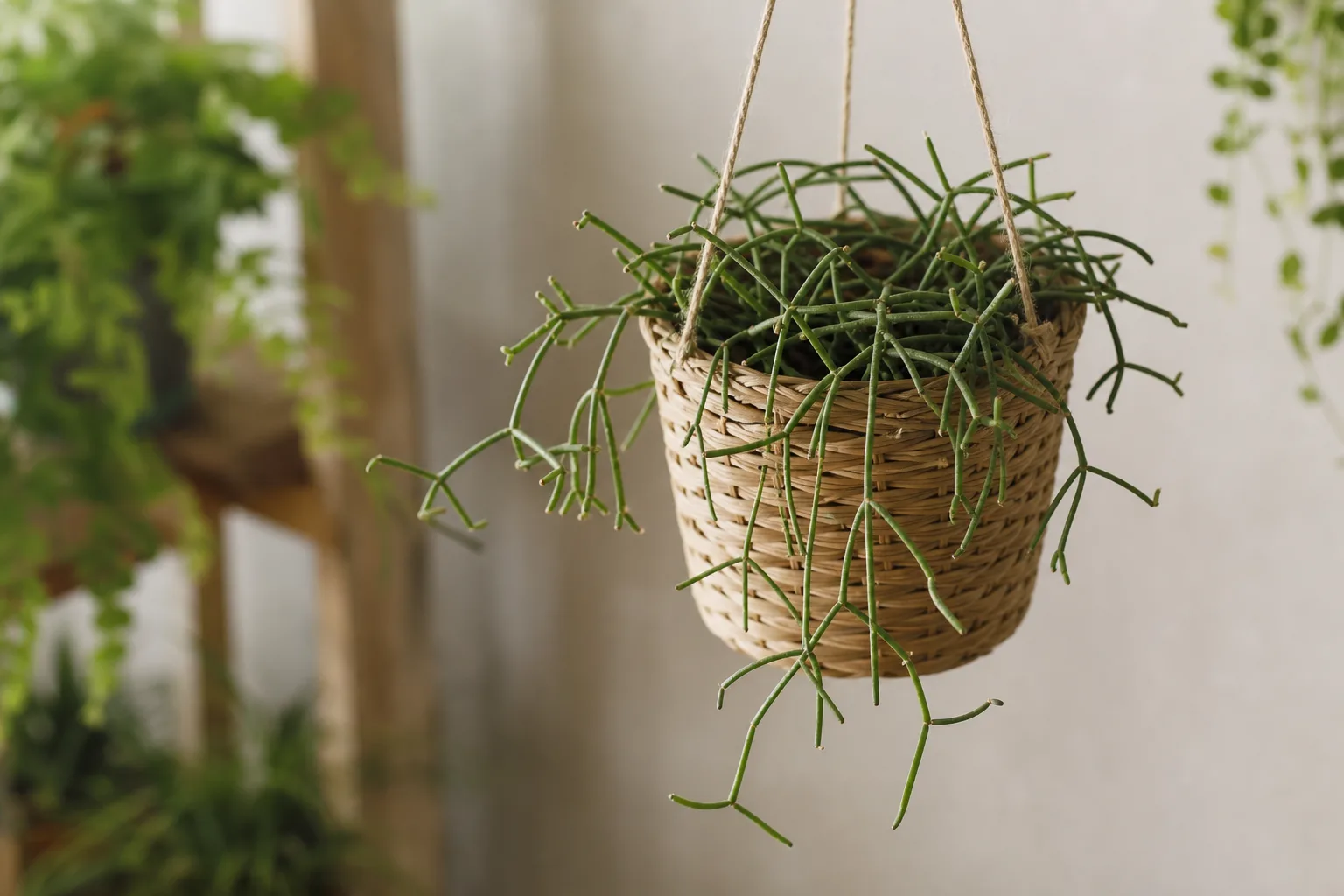
Slow Growth on Rhipsalis: Causes, Checks & Fixes
This guide covers slow growth on Rhipsalis. See also the general Slow Growth guide, watering, and light pages for this plant.
Slow Growth on Rhipsalis: Causes, Checks & Fixes
Quick answer
Rhipsalis trails slowly by design. This trailing epiphytic cactus puts energy into long cascading stems, not constant leaf bursts, and NC State lists its growth rate as slow even in good conditions. A few new segment tips through a warm summer is normal trailing pace-not a crisis.
Problem slow growth means no new tips through an entire warm spring despite firm stems, pale thin segments that never fill out, or a basket that has not lengthened meaningfully in over a year. The usual causes are too little usable light at stem level, chronic overwatering stalling roots in dim corners, winter dormancy mistaken for failure, or a root-bound pot that dries in a day.
First step: move the hanging basket to medium bright indirect light-an east window or several feet back from south or west glass-and run the hand-shadow test at midday. Hold your hand an inch above the stems. You want a soft blurred shadow, not almost no shadow at all. Confirm stems are firm, check whether the top half of mix has dried before you water again, and hold fertilizer until new spring growth appears.
Slow growth vs. leggy growth vs. not enough light
These three problems overlap on Rhipsalis because all three involve light and pace-but they are not the same diagnosis. Use this table before you repot, fertilize, or blast the plant with direct sun.
| What you see | Likely problem | First branch |
|---|---|---|
| Few new tips; firm green segments; even spacing; basket lengthens slowly year over year | Normal slow growth | No rescue needed-adjust expectations vs. pothos |
| No new tips through warm spring; pale thin segments; pot stays wet for days; no stretch toward window | Slow growth stall (light ± wet soil) | Improve light; dry-down check-this page |
| Thin pale stems; wide gaps between joints; strong lean toward one window | Leggy etiolation | See leggy growth |
| Uniform pale color; stretched chains; wet soil slow to dry; hand-shadow test fails | Not enough light (primary photon deficit) | See not enough light |
| Mushy base; sour wet soil; yellow segments spreading | Root stress / rot | See root rot or overwatering |
Scope note: This page covers pace stalls-when growth is abnormally limited compared with your plant’s own history. If the main issue is stretch and wide segment gaps, start with leggy growth. If the basket is uniformly pale and leaning with failed hand-shadow tests, not enough light goes deeper on placement and grow lights.
What slow growth looks like on Rhipsalis
Normal epiphytic trailing pace
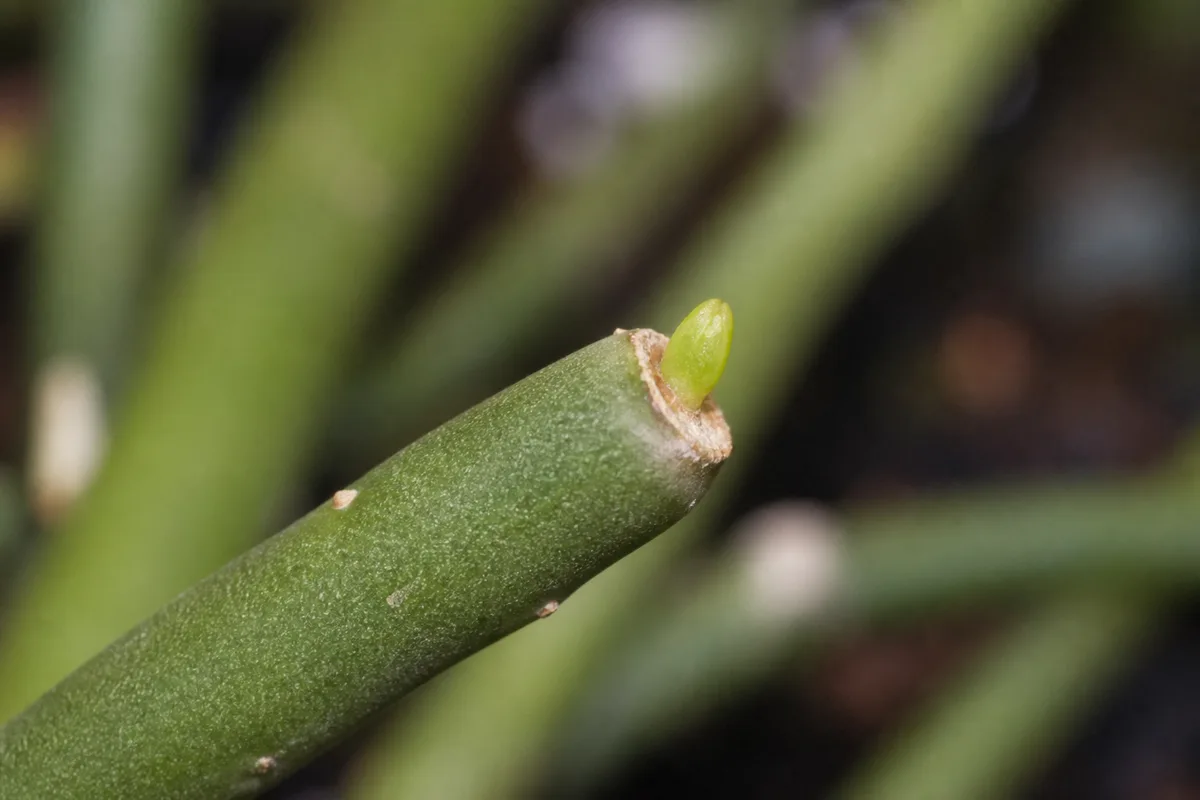
Slow Growth symptoms on Rhipsalis - compare with healthy tissue on the same plant.
Healthy slow growth on mistletoe cactus looks like this:
- Firm cylindrical segments with consistent pencil-lead thickness along new chains
- One to two new branch tips every two to four weeks through late spring and summer in a bright room-slower in winter
- Gradual lengthening year over year without sudden spurt or collapse
- Minimal extension November through February when room light drops and you reduce watering-quiet rest, not decline
Compare year over year, not to fast-growing pothos in the same room. Rhipsalis will never match a pothos trailing rate; that comparison creates false alarms.
Signs growth is abnormally limited
Problem slow growth shows a different pattern:
- No new tips through an entire warm spring despite temperatures above about 60°F (15°C) and regular care
- Pale, thin segments that never plump up even when watering seems correct
- No meaningful lengthening in 12+ months while stems stay firm-not just winter pause
- Wet heavy pot for days after watering with zero new tips-suggests root stall from chronic moisture in low light
- Post-repot silence beyond six weeks in spring when you expected recovery-may mean root damage or still-too-dim placement
Hanging-basket placement adds a nuance: the crown near the hook often sits in shadow while trailing tips reach brighter air. A basket can look “fine” from across the room while the growth zone at the soil line receives almost no usable light. Check light at stem level where new tips emerge, not where the decorative hook hangs.
Why Rhipsalis grows slowly
Normal baseline: trailing segments, not leaf bursts
Rhipsalis evolved as a jungle cactus epiphyte in tropical forest understories-clinging to bark with filtered light and seasonal moisture, not racing upward like a vine. BBC Gardeners’ World describes it as an epiphytic plant from tropical jungles in South America; indoors, that history means steady segment production in good light, not constant visible change every week.
Insufficient light at stem level
The top limiter for abnormal stalls is bright, indirect light that never reaches the stems. Rhipsalis tolerates lower light better than desert cacti, but tolerance means survival-not active growth. North rooms, interior shelves, and baskets hung high in dim corners often fail the hand-shadow test while the room feels adequately lit to human eyes.
Light intensity drops sharply with distance from the window. A basket three meters from glass may sit in the same photon poverty that makes other houseplants spindly or leggy-on Rhipsalis the first signal is often quiet tips, not dramatic stretch.
Chronic overwatering and root stall
Low light slows photosynthesis; the plant uses less water. Growers who keep summer watering rhythm through winter-or who water on a calendar because growth “looks slow”-end up with chronically wet mix. Epiphytic roots need oxygen; sitting wet in dim light stalls root function without full rot. The pot stays heavy, new tips never appear, and stems may stay firm for months-easy to misread as “just a slow cactus.”
Winter dormancy
From late autumn through early spring, shorter days and cooler rooms trigger reduced metabolism. Reduce watering through winter dormancy and expect little visible lengthening-that is normal rest, not a care failure. Panic fertilizing or overwatering during quiet months worsens wet-soil stall when light returns in March.
Root-bound pot and fast dry-down
When roots fill the pot and mix dries within a day of watering, the plant may pause new tips while it waits for moisture stability. Thin-stemmed species like Rhipsalis capilliformis dry fastest; thicker R. baccifera chains hold moisture longer. A spring repot into slightly larger airy epiphytic mix often restarts segment push after two to four weeks-unless light is still inadequate.
Hidden pests and repot shock
Mealybugs at stem joints and spider mites on thin segments can weaken growth without obvious collapse. Recent repotting, cold drafts below about 55°F (13°C), or a move from bright greenhouse to dim retail shelf can pause tips for several weeks-normal adjustment, not permanent stall. Inspect joints and soil surface before assuming the plant needs more fertilizer.
How to confirm the cause
Work through these checks in order before changing fertilizer, repotting, or pruning.
- Season context. No new tips December through February with reduced watering and firm stems is often dormancy. No new tips May through July after warm weather arrives is a true stall.
- Hand-shadow test. At midday, hold your hand one inch above the lowest stems. Almost no shadow means too dim for active growth. A sharp dark shadow means direct sun-risk of scorch on thin epiphytic stems.
- New vs. old segment quality. If the last two segments are paler, thinner, or farther apart than earlier growth, light is contributing-even if you are on the “slow growth” page rather than the leggy guide.
- Pot weight and soil moisture. Lift the basket. Heavy wet pot for four or five days after watering with zero new tips suggests root stall. Light pot with puckered segments points to underwatering instead.
- Stem firmness at the base. Firm segments with quiet tips differ from soft mushy bases on sour wet soil-see root rot.
- Year-over-year length. Mark where the longest chain ended last summer. Less than an inch of new length over a full warm season in a bright room confirms abnormal stall.
Confirmation test: Move to medium bright indirect light and change nothing else for two weeks. If a new tip appears plumper than the segment before it, light or wet-soil-in-dim-light was the limiter.
First fix for Rhipsalis
Move the hanging basket to medium bright indirect light-an east-facing window or a spot several feet back from south or west glass where direct midday sun never strikes the stems.
That single placement change addresses the most common stall without stacking stress. East windows deliver steady filtered brightness; south or west exposures need sheer curtain or distance so direct sun does not scorch thin segments.
After moving:
- Water when the top half of mix dries-not on autopilot because growth looks slow. See the watering guide for seasonal rhythm.
- Hold fertilizer until you see a firm new tip; feeding stressed roots in dim corners salts the mix without producing growth.
- Repot in spring only if roots circle the pot, mix dries within a day, or inspection shows healthy white roots needing more space-use repotting guidance and epiphytic bark-perlite blend.
Do not jump a dim basket onto an unfiltered south sill to “force” speed. Sudden intense sun damages jungle cacti adapted to canopy shade faster than slow light weakened them.
Step-by-step recovery
Once light and watering align with active season, recovery is measured by new tips, not old chain length.
Week 1–2: Rotate the basket a quarter turn every few days. Dust on thin stems blocks light from an already marginal window-rinse gently or wipe with a soft damp cloth. Do not fertilize, repot, or prune heavily.
Week 3–4: Watch for the first new segment. Success looks like a plumper tip with closer spacing than the quiet period before the fix.
Week 5–8: If new tips look firm and evenly green, apply quarter-strength balanced fertilizer monthly during active growth only-see the fertilizer guide. Optional: trim one bare chain if appearance bothers you; old stalled segments do not lengthen retroactively.
If no improvement: The new spot may still be too dim-move six inches closer, add a full-spectrum grow light 12 to 18 inches above stems for 12 to 14 hours daily, or inspect for mealybugs and root health before blaming patience alone.
If wet soil persisted: Let the top half dry fully, empty saucers, and confirm drainage. Chronic wet stall may need root inspection in spring-firm roots stay white; mushy brown tissue needs root rot protocol.
Recovery timeline
Expect the first new tip within two to four weeks after a meaningful light increase during warm months. The first segment after a severe dim period may still look slightly thin-judge the second and third tips for the true trend.
Winter quiet after a autumn move may mean no visible tip until March even when light is correct-that is dormancy, not failed fix.
Post-repot pause of three to six weeks is normal in spring; if no tips appear by week eight with confirmed bright indirect light and healthy roots, reassess placement or pests.
Old pale or thin segments do not revert to plump green. They remain as evidence of the stall until you trim them or they age out. Recovery success means new tissue looks better than old tissue-not that old chains magically fill in.
Signs of improvement: firm new tips, faster dry-down cycle in brighter light, gradual lengthening you can measure month to month.
Signs of worsening: base softness, sour smell on wet mix, spreading yellow segments, or shriveling on a heavy wet pot-escalate to root inspection.
Lookalike symptoms to rule out
Leggy growth produces thin pale stems with wide gaps and strong lean toward windows-stretch is the headline. Slow growth stall can precede legginess in the same dim corner; if stretch is obvious, read leggy growth for rotation and acclimation detail.
Not enough light as a primary diagnosis fits uniform pale color, failed hand-shadow tests, and wet soil slow to dry-even before long bare gaps form. This slow-growth page focuses on pace; the not enough light guide goes deeper on grow lights and hand-shadow workflow.
Overwatering and root rot stall tips while soil stays wet and may yellow segments. Difference: sour smell, mushy base, brown roots on inspection. Slow stall from mild chronic wetness keeps stems firm longer-both need drier rhythm and better light.
Underwatering causes segments to pucker and lose rigidity on light dry pots-not quiet firm chains. Always check moisture depth before assuming thirst.
Too much direct sun bleaches or scorches the window-facing side while the shaded side stays green. Slow growth from low light fades the whole plant uniformly without crispy patches.
Pest-related stall from mealybugs or spider mites weakens new tips with stippling or cottony joints-inspect before fertilizing.
Mistakes to avoid
Do not blast the plant with direct afternoon sun to force speed-acclimate over seven to fourteen days if moving substantially brighter. Do not overwater because growth is slow; wet soil in low light deepens root stall. Do not apply heavy fertilizer; jungle cacti have fine root systems easily damaged by strong solutions or salt buildup. Do not repot on day one unless roots are circling or rot is confirmed-unnecessary disturbance pauses tips further. Do not compare to pothos pacing and assume failure. Do not panic during winter dormancy when stems are firm and watering is reduced.
Rhipsalis care cross-check
Slow growth often means one pillar of the normal care contract is out of range-not that the plant needs a mystery tonic.
| Care pillar | Check | Link |
|---|---|---|
| Light | Hand-shadow test passes at stem level; east or filtered south/west | Light guide |
| Water | Top half dries before rewet in summer; longer interval in winter | Watering guide |
| Soil | Airy bark-perlite mix; not dense peaty sod | Soil guide |
| Roots | White firm roots; pot not oversized; repot every 2–3 years | Repotting guide |
| Feed | Quarter-strength monthly only in active growth | Fertilizer guide |
How to prevent slow growth next time
Hang Rhipsalis where bright, indirect light reaches the stems most of the day-not just where the basket looks decorative. Run the hand-shadow test seasonally; winter shortens effective day length even when you never moved the pot.
Match watering to season: more frequent when spring tips appear and mix dries faster in brighter windows; reduced through winter dormancy when growth naturally pauses. Repot every two to three years when roots fill the pot and soil dries too quickly. Rotate monthly so one side does not dominate growth toward a single window.
Track segment pace in a phone note once a month in summer-”two new tips in July” becomes your personal baseline so next year’s quiet spell is measurable, not guessed.
When to worry
Slow cosmetic pace with firm stems and seasonal winter quiet is low urgency.
Escalate promptly when stems soften at the base, the mix smells sour while staying wet, yellow segments spread through multiple branches, or quiet tips pair with shriveling on a heavy pot-that is root stress, not patience. See root rot and overwatering.
Reassess after four weeks if no new tips appear in confirmed bright indirect light during warm weather-inspect roots, pests, and whether the hand-shadow test was passing at stem level or only near the ceiling hook.
When the only available spot fails the hand-shadow test year-round, commit to a grow light on a timer rather than accepting permanent stall.
Conclusion
Slow growth on Rhipsalis starts with honest pacing expectations-trailing epiphytic cacti lengthen gradually even in ideal care-then separates normal winter rest from warm-season stalls caused by dim light, wet soil in low photosynthesis, or crowded roots. Use the comparison table to route stretch and pale lean to sibling guides, fix light first, judge recovery by new tips, and measure year over year instead of against faster vines.
Related tool
Use the Plant Problem Diagnosis Tool to narrow causes for slow growth on this plant before changing multiple variables at once.