Rhipsalis Repotting: When, How, and Mistakes to Avoid
Rhipsalis Repotting: When, How, and Mistakes to Avoid
Rhipsalis Repotting: When, How, and Mistakes to Avoid
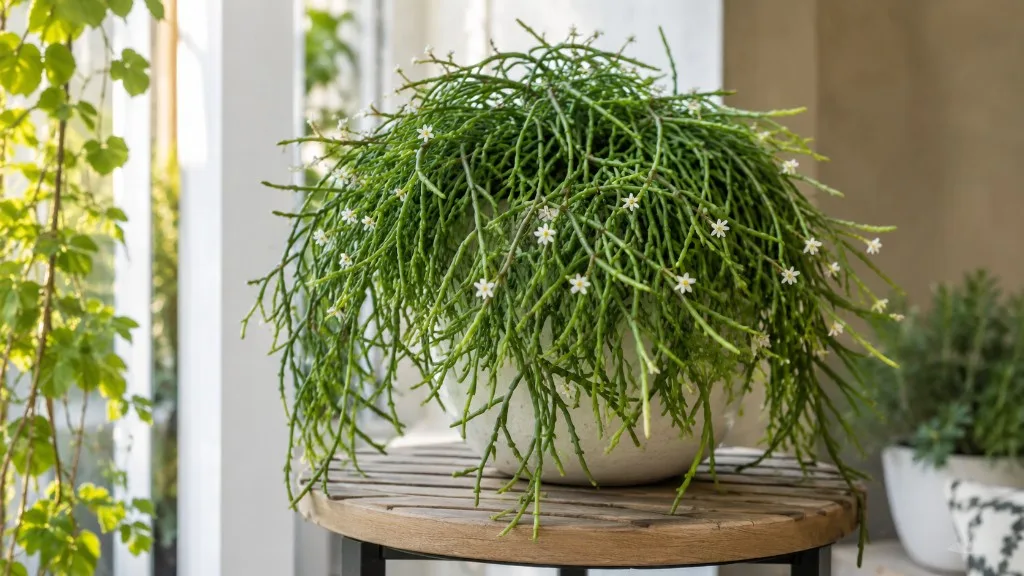
A Rhipsalis that wilts for weeks after a pot change, sheds stems at the soil line, or sits in soggy mix while the trailing growth above still looks fine is usually not a difficult plant. It is a plant that was repotted like a desert cactus when it is actually an epiphytic jungle cactus with shallow, air-loving roots. Rhipsalis species - often sold as mistletoe cactus or jungle cactus - grow on tree branches in humid tropical forests, not in deep desert sand. They want an airy, organically rich mix that drains fast but holds moisture briefly, a container only slightly larger than the root ball, and a repotting window that catches active spring growth. Get those variables right and the same plant that looked stressed after transplant will push new segments within a month.
This guide covers every decision that matters: when repotting is actually necessary, the spring timing that minimizes stress on fragile trailing stems, how to choose a pot one size up (or refresh soil in the same pot), the soil blend that mimics a rainforest branch crevice, the step-by-step procedure that keeps roots intact, and the post-repot care that determines whether the plant recovers cleanly. Guidance is grounded in botanical references and established houseplant educators including BBC Gardeners’ World and the Royal Horticultural Society.
Why Rhipsalis Repotting Is Different From Desert Cacti
Most people reach for a bag labeled “cactus mix” and assume all cacti want the same thing: bone-dry soil, aggressive root teasing, and a pot big enough to “let it grow.” Rhipsalis breaks all three assumptions. In the wild, species such as Rhipsalis baccifera, R. pilocarpa, and R. paradoxa cling to mossy bark and decaying leaf litter in rainforest canopies across Central and South America, where their roots experience frequent moisture followed by rapid drying in moving air. The USDA PLANTS database and RHS classify these plants as epiphytic members of the Cactaceae family - related to desert cacti by taxonomy, but not by ecology.
That biology changes every repotting decision. You are not trying to recreate a desert. You are trying to recreate a thin, airy root zone on a tree limb: enough organic matter to hold moisture between waterings, enough coarse material to let excess water drain immediately, and a container small enough that the roots stay concentrated rather than swimming in unused wet soil. Applying desert cactus repotting habits - bare-rooting, aggressive root pruning, oversized pots, and pure gritty mix - is one of the fastest ways to set a Rhipsalis back for months.
Rhipsalis as an Epiphytic Jungle Cactus
Epiphytic plants do not parasitize their host trees. They use them as scaffolding. Rhipsalis roots in nature are shallow, fibrous, and constantly exposed to moving air. Rain arrives, soaks the moss and bark debris for a few hours, then the canopy dries. The roots breathe again. Indoors, the closest analogue is a well-structured potting mix in a container with drainage holes, not a deep bed of heavy peat that stays saturated for days or a pure perlite mix that holds no moisture at all.
The trailing stems store water, which is why Rhipsalis can tolerate brief droughts even though it is not drought-tolerant in the way a barrel cactus is. But those same stems are also why overwatering after repotting is so dangerous: the visible plant can look plump and green while the roots below are suffocating in soggy mix. Repotting is your chance to reset that root environment before rot becomes the bigger problem. It is also the right moment to inspect for salt buildup, compacted old mix, and circling roots that have displaced most of the functioning soil volume.
Shallow Roots and the Snug-Pot Advantage
Here is the counterintuitive part that separates Rhipsalis care from most other houseplants: these plants often perform better when their roots are somewhat snug in the pot. BBC Gardeners’ World notes that Rhipsalis does better when slightly pot-bound and recommends moving it into a bigger pot only one size up every three or four years. Experienced epiphytic cactus growers echo this: a dense root mat in a modest container mimics the limited root zone on a tree branch, and the plant establishes faster after repotting when it is not asked to colonize a large volume of unused soil.
That does not mean you should never repot. It means you should repot less often, into only slightly larger pots, and with a clear reason - not because the calendar says so. Jumping two sizes up because you want the trailing stems to grow faster usually backfires: the extra soil holds moisture the small root mass cannot use, establishment slows, and the plant may lose segments while it waits for roots to catch up. Many experienced growers refresh the soil in the same pot every two to three years, trimming only clearly dead or circling roots, rather than sizing up at all.
When to Repot Rhipsalis: Signs You Actually Need It
Rhipsalis is patient. It can look healthy on top while the soil below has quietly degraded for years. The signs below are worth checking every spring, especially if your plant has not been repotted in two or more years.
Roots emerging from drainage holes in significant numbers. A single white root tip exploring the hole is normal. Several thick roots curling out of multiple holes, or a dense mat of roots visible when you lift the plant, means the container is full.
Water runs straight through the pot within seconds. When the root mass displaces most of the soil volume, irrigation has nowhere to linger. The plant may wilt or shrivel between waterings even though you are watering on schedule.
The mix dries out within one to two days of a thorough soak. Same underlying problem viewed from the other direction: too little functioning soil for the root mass you have.
Growth has stalled during spring and summer. If stems are not lengthening, new segments are not forming, and the plant has good light and reasonable temperatures, depleted or compacted soil may be the limit.
The soil has broken down. Pull back the top layer. If the mix smells sour, looks like fine mud, has white salt crust, or has collapsed into a dense brick that repels water, it is time for fresh substrate regardless of how the stems look.
The pot has no drainage holes, or is clearly oversized. A sealed decorative container or a pot with several inches of empty space between the root ball and the wall keeps the mix waterlogged and invites root rot on Rhipsalis.
Visible mold, algae, or fungus gnats tied to constantly wet surface soil. These point to poor drainage and degraded mix, not a surface-only problem.
Root-Bound and Degraded Soil Indicators
Two signs deserve a closer look because beginners misread them. A wobbly plant in a hanging basket is not always root-bound - trailing stems are top-heavy and mature specimens sway even in fresh soil. Lift the pot after watering: unusually light weight suggests decomposed mix; normal weight points to a hanger or balance issue instead.
Shriveled stems can mean underwatering or a root mat too dense to absorb water efficiently. If stems stay shriveled despite regular watering and the pot dries within a day, unpot and inspect. A root ball that is mostly roots with almost no visible soil is a clear repotting signal even when trailing growth still looks fine from across the room.
Emergency Repots That Cannot Wait for Spring
The ideal window is spring through early summer, just before or as new growth begins. Two situations override that schedule.
Active root rot. Soft, mushy stems at the soil line, a sour smell from the mix, or black, slimy roots when you probe the surface mean you need to unpot immediately, trim damaged tissue with sterilized scissors, and repot into fresh, dry mix - regardless of season. Delaying lets rot climb the stem and destroy segments that would otherwise recover.
A pot with no drainage or severe overpotting. If the plant sits in a sealed decorative container or a vessel so large that the mix never dries, treat it as an emergency. The seasonal ideal matters less than stopping chronic waterlogging. Move it to a properly sized, drained container with an airy mix as soon as you can.
Best Time of Year and How Often to Repot
Rhipsalis usually needs repotting every two to three years, with mature specimens sometimes going three to four years between full repots if you top-dress annually. Young plants in small starter pots may need annual upgrades for the first year or two, but once the trailing habit is established, less frequent repotting is safer than repotting on a rigid schedule.
Spring is the best time to repot Rhipsalis - roughly March through May in the Northern Hemisphere, or whenever your local temperatures stabilize above 60°F (15°C) and you see the first signs of new growth. RHS recommends propagating and repotting Rhipsalis in spring or summer when growth resumes, which gives roots time to settle into fresh mix as daylight lengthens and watering frequency naturally increases.
Early summer remains acceptable if you missed spring, but avoid late summer repots when growth is slowing and autumn dormancy is approaching.
Avoid winter repotting unless you have an emergency. Rhipsalis slows in cooler, shorter days. Roots that are disturbed in winter sit in moist mix without the metabolic activity needed to repair damage, which extends transplant shock and raises rot risk. If you must repot in winter for rot or drainage failure, keep the plant warm (above 65°F / 18°C), in Rhipsalis light guide, and water sparingly until spring growth resumes.
Do not repot while the plant is flowering or setting berries if you can wait - repotting during bloom redirects energy and increases bud or berry drop.
Choosing the Right Pot: Size, Material, and Hanging Baskets
Pot choice controls how fast mix dries and how much oxygen reaches shallow roots. Most Rhipsalis grow in hanging baskets or on elevated shelves because trailing stems can reach 30–90 cm (12–36 inches) or more. Choose a container that suits your display; a wider, shallow basket often beats a deep pot because unused wet soil below shallow roots increases rot risk.
The One-Size-Up Rule and Same-Pot Refresh
Go only one pot size up - about 2–5 cm (1–2 inches) wider in diameter than the current pot. This is the single most important sizing rule for Rhipsalis. A larger jump gives roots a large volume of moist soil they cannot colonize quickly, which keeps the mix wet longer and delays establishment. BBC Gardeners’ World explicitly recommends moving Rhipsalis one size up every three or four years, not whenever you find a prettier pot.
Same-pot refresh is often the smarter move. If the container still fits the root ball comfortably but the mix has degraded, remove the plant, trim circling or dead roots lightly, wash or scrub the pot, and replant with fresh mix at the same size. You get the soil reset without the moisture penalty of an oversized pot. This approach works especially well for specimens that are already trailing beautifully and do not need more root room.
Depth matters less than width for most species. A pot that is too deep relative to the shallow root ball keeps a column of mix beneath the roots that stays wet longest. Shallow bowls or standard hanging baskets with adequate drainage match the natural root profile better than tall nursery pots.
Terracotta, Plastic, and Drainage Essentials
Terracotta and unglazed clay are widely recommended for Rhipsalis because they wick moisture through the walls, helping shallow roots dry evenly between waterings. BBC Gardeners’ World and multiple specialist growers favor terracotta for epiphytic cacti for exactly this reason. The trade-off is faster drying: you may need to water slightly more often in terracotta, especially in warm or airy rooms.
Plastic pots work fine if you adjust watering. Many commercial Rhipsalis are sold in plastic nursery pots and thrive for years. Plastic retains moisture longer, which can be an advantage in dry indoor air but a liability if you tend to water heavily. If you keep Rhipsalis in plastic, be especially strict about the one-size-up rule and use an airy mix - never standard heavy potting soil alone.
Drainage holes are non-negotiable. Every pot or hanging basket must have holes that let water exit freely. Decorative cache pots without drainage are display-only; the grow pot inside them must drain, or you are repotting into a rot trap. Do not rely on a layer of gravel at the bottom as a substitute for holes - research consistently shows gravel layers do not improve drainage in closed-bottom containers and can shorten the effective soil column.
Hanging basket specifics: replace degraded moss or coir liners that no longer drain, and confirm the hook supports the added weight of fresh mix after watering.
The Best Soil Mix for Rhipsalis Repotting
Soil is where most Rhipsalis repotting attempts succeed or fail. The mix needs to drain fast enough that roots never sit in stagnant water, but retain enough moisture and organic structure that fine epiphytic roots do not desiccate between waterings. Pure desert cactus grit on one end and standard indoor potting soil on the other both miss the mark.
Why Standard Cactus Mix Often Falls Short
Desert cactus mixes are designed for plants with thick taproots and water-storage tissue that tolerate extended dry periods in mineral-heavy soil. Rhipsalis roots are fine, shallow, and adapted to organic debris in tree crevices - more like orchid roots than saguaro roots. RHS cacti houseplant guidance notes that rainforest-dwelling succulents such as Rhipsalis prefer free-draining, peat-free gritty compost with more frequent watering than desert types.
That does not mean you should use straight peat-based potting soil from a big-box store. Those mixes compact within a year, hold too much water in a snug pot, and break down into anaerobic mud - exactly the conditions that cause Rhipsalis root rot. The goal is a custom blend: organic base plus coarse amendments for airflow.
Signs your current mix failed: water sits on the surface, the pot feels heavy for days after watering, fungus gnats persist, stems turn yellow or translucent at the base, or roots are brown and mushy when you inspect.
A Practical DIY Epiphytic Blend
You do not need a laboratory-grade recipe. You need a mix you can reproduce every time you repot. These three blends work for most indoor Rhipsalis:
Beginner blend (simple and reliable):
- 2 parts peat-free houseplant potting mix or coco coir-based mix
- 1 part orchid bark (medium grade, roughly ½-inch chunks)
- 1 part perlite or pumice
Balanced epiphytic blend (recommended for most growers):
- 40% coarse orchid bark
- 30% peat-free potting mix or pre-moistened coco coir
- 20% perlite or pumice
- 10% horticultural charcoal (optional but helps with odor and microbial balance)
Fast-drain blend (for overwaterers or humid rooms):
- 1 part commercial cactus or succulent mix
- 1 part orchid bark
- 1 part perlite
Mix ingredients dry until uniform and pre-moisten slightly before planting. BBC Gardeners’ World recommends peat-free cactus compost for mistletoe cactus; amending it with orchid bark and perlite brings it closer to the epiphytic profile Rhipsalis prefers indoors. Fresh mix contains enough baseline nutrition - do not fertilize immediately after repotting.
Step-by-Step: How to Repot Rhipsalis
Repotting Rhipsalis is gentle work. The goal is to refresh the root environment without breaking trailing stems or stripping the fine root hairs that absorb water. Set aside twenty to thirty minutes, work over a table where you can lay stems out without tangling, and accept that minimal disturbance beats a “perfectly combed” root ball every time.
Preparing the Plant and Handling Fragile Stems
Water the day before repotting, not the hour before. A lightly hydrated root ball holds together when you slide the plant out, but is not so wet that mix smears into a muddy mess. If the plant is badly dehydrated, give one moderate drink two days ahead so tissues plump slightly without saturating rotting roots.
Gather materials: new pot or cleaned same-size pot, fresh mix, clean scissors or pruning shears, a chopstick or pencil for settling mix, rubbing alcohol for sterilizing blades, and a soft surface to rest trailing stems.
Clear space for stems. Rhipsalis stems snap easily when pulled at awkward angles. Hang the basket at waist height or lay the pot on its side on a towel and drape stems outward before you attempt removal. Work slowly; a broken stem is propagatable, but losing half the display is avoidable with patience.
Remove the plant from its pot by tipping gently and supporting the root ball with your hand. If it resists, squeeze flexible plastic pots or run a dull knife around the inside edge. Never yank by the stems. On hanging baskets, unhook first and lower the whole unit to a stable surface before extraction.
Root Inspection With Minimal Disturbance
This is where Rhipsalis repotting diverges most sharply from desert cactus advice. Do not aggressively tease, bare-root, or wash healthy roots. RHS epiphyllum guidance warns that epiphytic cactus roots are easily damaged and that repotting should disturb the root ball as little as possible. Keep most of the original soil attached to the root ball when roots are healthy.
Inspect visually. Healthy Rhipsalis roots are firm and white to tan. Dark, mushy, or foul-smelling roots are rot - trim them back to clean tissue with sterilized scissors until you see firm white interior. Let severe cuts air-dry for an hour before replanting if you removed significant rotted material.
Address circling roots gently. If roots wrap densely around the bottom, loosen only the outer bottom third with your fingers or a chopstick. Remove clearly dead, papery roots. Leave the interior root ball intact.
Plant at the same depth as before. Burying stems deeper invites rot at the base; exposing roots on the surface dries them out. The transition line between stem and root should match where it was in the old pot.
Fill and settle mix. Add a small mound of mix at the bottom of the new pot, set the root ball on it, and fill around the sides in stages. Tap the pot lightly and use a chopstick to settle mix into gaps without compacting it. Leave about 1 cm (½ inch) below the rim for watering space.
Do not fertilize at repotting. Fresh mix and disturbed roots do not need immediate nutrients. Hold all feeding for at least four weeks; many growers wait until active new growth appears in spring.
Post-Repotting Recovery: Watering, Light, and Feeding
The first two to three weeks after repotting determine whether your Rhipsalis settles quickly or sits in limbo. Your job is to reduce stress while roots re-establish contact with fresh mix - not to force growth with fertilizer or heavy watering.
Water lightly once after repotting if the mix is dry. Use a narrow-spout watering can and moisten the top half of the mix without saturating the entire pot. RHS recommends watering moderately when in growth and keeping compost just moist in winter - a useful post-repot benchmark for the first week. If you repotted because of rot, wait three to seven days before the first light drink so cut tissue can callus.
Resume normal watering gradually. Check moisture with your finger or a skewer in the top 3–5 cm (1–2 inches). Water when that zone feels dry, not on a fixed calendar. In the first month, err slightly dry rather than wet. Rhipsalis stems show underwatering early (slight shrivel) and overwatering late (yellowing, mushy base) - use stem texture as feedback.
Light: bright indirect, no direct sun. Keep the plant in the same light level it had before repotting, or slightly shadier for the first week. Direct sun on a stressed root system accelerates dehydration in stems while roots cannot yet replace lost water. A north or east window, or filtered light through a sheer curtain, is ideal during recovery.
Hold fertilizer for four to six weeks minimum, then resume at quarter strength during active growth. Over-fertilizing stressed roots causes salt burn and delays recovery.
Recovery timeline: mild wilting or slight stem dullness for one to two weeks is normal. New segments or visible lengthening within three to six weeks in spring confirms roots have re-established. Damaged stems do not un-shrivel - watch for new tissue instead.
Common Repotting Mistakes and Fixing Transplant Shock
Most post-repot problems trace back to a handful of repeatable errors. Recognizing them early saves a plant that looks like it is failing when it is actually sitting in the wrong conditions.
Mistake: jumping to a much larger pot. The most common error. Extra soil holds moisture the root system cannot use, establishment stalls, and rot develops in the wet center while you think you are being generous. Fix: if you already overpotted, unpot, allow the root ball to dry slightly, and replant into a properly sized container with airy mix. Trim any mushy roots first.
Mistake: bare-rooting or aggressive root washing. Stripping all old mix and combing roots destroys fine root hairs and opens wounds across the root surface. Fix: if you already bare-rooted, treat the plant like a propagation cutting - minimal water, bright indirect light, and patience for three to four weeks. Do not fertilize until new growth appears.
Mistake: using heavy potting soil or unamended cactus grit alone. Heavy mix suffocates; pure grit desiccates fine roots. Fix: repot again into a proper epiphytic blend. A second repot within weeks is stressful but less damaging than leaving the plant in rotting or non-functional mix.
Mistake: watering heavily immediately after repotting. Flooding fresh mix around damaged roots eliminates oxygen and invites rot. Fix: let the top half dry, then water lightly. If rot smell develops, unpot, trim, and dry the root ball before replanting.
Mistake: repotting in winter without cause. Slow metabolism plus disturbed roots plus cool, wet mix equals extended shock. Fix: keep the plant warm and bright, water sparingly, and wait for spring rather than escalating with more interventions.
Mistake: breaking stems through rough handling. Trailing Rhipsalis tangles easily. Fix: propagate broken healthy segments (let cuts callus one to two days, then root in moist mix or water) and continue caring for the parent plant normally.
Transplant shock symptoms and responses: sustained wilting beyond two weeks, progressive yellowing from the base upward, or soft stem segments at the soil line mean something in the root zone is wrong - usually moisture, not “adjustment.” Unpot, inspect roots, trim rot, and replant dry into a smaller pot if needed. If roots are healthy and the plant simply looks dull, maintain bright indirect light, light watering, and patience; spring growth will confirm success or reveal a hidden problem.
Conclusion
Rhipsalis repotting is not a calendar chore - it is a targeted reset for an epiphytic jungle cactus whose shallow roots want airy, organically rich mix, a snug pot, and minimal disturbance at the right season. Repot every two to three years in spring when roots circle the container, water runs straight through, or mix has broken down - not because the trailing stems look long (they are supposed to). Go one size up or refresh soil in the same pot, use a blend of potting base plus orchid bark and perlite, handle stems gently, inspect roots without bare-rooting healthy plants, water lightly after the move, and hold fertilizer until new growth confirms recovery.
When in doubt, less intervention beats overcorrection. Rhipsalis tolerates being slightly root-bound far better than it tolerates an oversized pot full of wet soil. Match the repot to the plant’s actual root condition, give it a stable bright window and a restrained Rhipsalis watering guide for the first month, and let spring do the rest.
When to use this page vs other Rhipsalis guides
- Rhipsalis overview - Start here for whole-plant context before deep-diving this topic.
- Rhipsalis problems hub - Jump to symptom-specific fix guides when this care topic does not resolve the issue.
- Root Rot on Rhipsalis - Escalate here when repotting adjustments are not enough.
Related Rhipsalis guides
- Rhipsalis overview
- Rhipsalis watering
- Rhipsalis light
- Rhipsalis soil
- Rhipsalis propagation
- Rhipsalis fertilizer
- Root Rot on Rhipsalis
- Rhipsalis problems
Related tool
Try the Pot Size Calculator with rhipsalis pre-selected to estimate needs for your setup.