Rhaphidophora Tetrasperma Care: Complete Guide
Rhaphidophora tetrasperma
Rhaphidophora Tetrasperma needs bright indirect light and well-draining soil. Water when the top 2–3 cm is dry. Provide a moss pole for best leaf development.
Rhaphidophora Tetrasperma Care: Complete Guide
Start with wateringThe most common care mistake for Rhaphidophora TetraspermaWatering guide →Rhaphidophora Tetrasperma care essentials
Light
bright indirect light
Water
Water when the top 2–3 cm of soil is dry; fast-growing and thirsty in summer.
Soil
Well-draining aroid or chunky potting mix.
Humidity
50–70%
Temperature
18–27°C (65–80°F)
Fertilizer
Use balanced liquid fertilizer at half strength and stop if the plant is stressed, newly repotted, or not actively growing. Fertilizing in winter; heavy slow-release granules for small pots.
About Rhaphidophora Tetrasperma
Rhaphidophora Tetrasperma is native to Southern Thailand and Malaysia, typically reaches Up to 3–4 m as a climber; 60–120 cm as trailing houseplant indoors, with fast during growing season growth. Rhaphidophora Tetrasperma has a climbing growth habit and part of the Araceae family. It is also known as Mini Monstera, Piccolo Monstera, and Ginny Philodendron.
| Detail | Information |
|---|---|
| Also known as | Mini Monstera, Piccolo Monstera, Ginny Philodendron |
| Native region | Southern Thailand and Malaysia |
| Mature size | Up to 3–4 m as a climber; 60–120 cm as trailing houseplant |
| Growth rate | Fast during growing season |
| Growth habit | Climbing |
| Scientific name | Rhaphidophora tetrasperma |
| Family | Araceae |
Rhaphidophora Tetrasperma Care: Complete Guide
What Is Rhaphidophora Tetrasperma?
Walk into most plant shops and you will find Rhaphidophora tetrasperma sold as mini monstera, Monstera Ginny, or Philodendron Piccolo. The split leaves sell the fantasy: a compact Swiss-cheese plant for a small apartment. Botanically, the fantasy stops at the genus level. Rhaphidophora tetrasperma is a climbing aroid in the Araceae family - related to Monstera and Philodendron, but not interchangeable with either. It is native to the Thailand and Malaysia peninsula, where it grows as an epiphyte on tree trunks in filtered tropical light.
That native habit is the key to everything that follows. Epiphytes root in pockets of bark and leaf litter, not waterlogged ground soil. They climb toward brighter canopy gaps. They breathe through roots that expect air as much as moisture. Indoor care works when you replicate that logic - Rhaphidophora Tetrasperma light guide, airy potting mix, vertical support, and watering tied to how fast the mix actually dries - rather than treating the plant like a tabletop succulent or a shade-tolerant pothos.
With a moss pole or trellis, Rhaphidophora tetrasperma can reach 8 to 12 feet (2.4 to 3.6 m) indoors within a few growing seasons. Left to trail from a shelf, it often tops out around 2 to 4 feet (60 to 120 cm) with smaller, less fenestrated leaves. Growth is rapid in warm, bright months and slows in cooler, dimmer winter conditions without fully stopping in most heated homes. NC State Extension notes a rapid growth rate and low maintenance rating when cultural needs are met - which is accurate, but “low maintenance” assumes you are not fighting dark corners or soggy soil.
Before you buy, know the non-negotiables: calcium oxalate crystals make every part of the plant toxic if ingested by humans, cats, and dogs according to the NC State Extension Gardener Plant Toolbox. If you have chewers in the house, placement matters as much as watering.
Botanical Background and Why Common Names Mislead
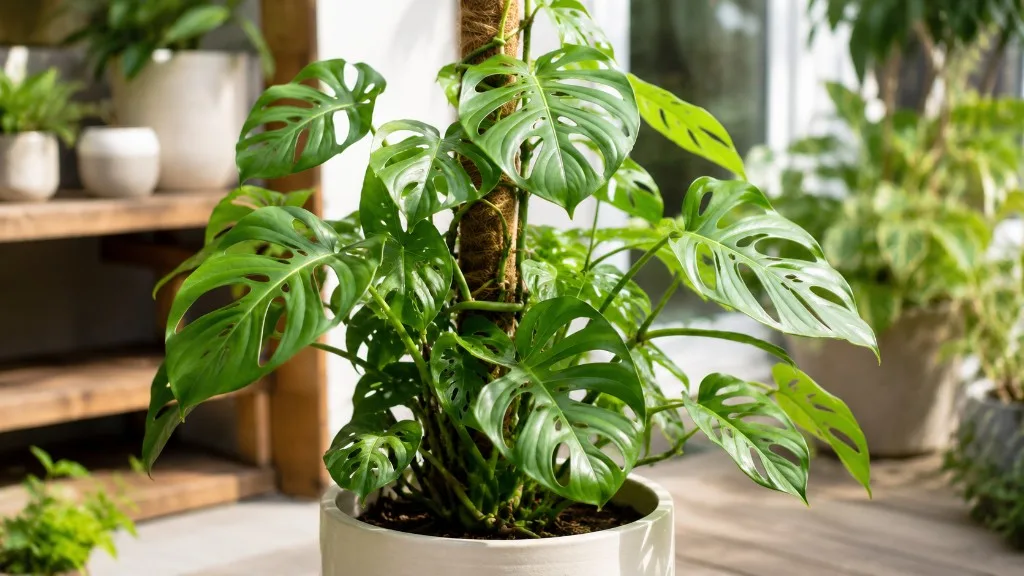
Rhaphidophora tetrasperma is an herbaceous perennial vine classified as an epiphyte - a plant that uses another structure for physical support while gathering its own nutrients from organic debris and rain. In the wild it clings and climbs rather than spreading as a self-supporting shrub. Indoors, that means a moss pole is not decorative fluff; it is a stand-in for the tree trunk the plant evolved to scale.
The Araceae family connection explains shared traits: most members prefer well-drained, organic-rich soil, dislike cold drafts, and carry insoluble calcium oxalate crystals as a defense against herbivory. Family membership does not mean identical care. Rhaphidophora tetrasperma leaves are thin and flexible, lacking the thick waxy cuticle of Monstera deliciosa. Thin tissue photosynthesizes efficiently in filtered light but burns quickly under harsh direct sun - a difference that catches owners who successfully grow a true Monstera in the same window and assume the mini version wants identical exposure.
Naming confusion is structural, not accidental. Retail tags use Philodendron Ginny and Monstera Minima because those names move product. Two pots labeled identically can differ in age, batch, or actual species. Identify your plant by slender vining stems, relatively early leaf splits, and thin (not leathery) foliage rather than by the sticker. The species name tetrasperma refers to four seeds per berry - relevant botanically, irrelevant indoors where flowering and fruiting are rare in typical home conditions.
NC State Extension assigns USDA Hardiness Zones 9a through 12b for outdoor planting in frost-free climates, with mature dimensions up to 15 feet (4.5 m) tall and 4 feet (1.2 m) wide when supported. In temperate regions, keep it as a container houseplant or move patio pots indoors before nights drop below 55°F (13°C), which is a practical indoor minimum for steady growth.
Mini Monstera vs Monstera Deliciosa
Assuming identical care because the leaves look similar is the most common setup error. Monstera deliciosa climbs large trees with thick, leathery leaves that can exceed 2 feet (60 cm) wide at maturity. Rhaphidophora tetrasperma produces 6 to 12 inch (15 to 30 cm) split leaves on finer stems - apartment-scale foliage that still demands vertical room once the vine takes off.
Both species fenestrate, but Rhaphidophora tetrasperma often splits leaves at a younger, smaller size. That early fenestration drives demand. It reflects genetics and adequate light, not proof that the plant has reached full maturity. A young vine on a pole in a bright room may split leaves within months; the same vine trailing in a dim hallway may produce small solid leaves on long bare internodes indefinitely.
| Trait | Rhaphidophora tetrasperma | Monstera deliciosa |
|---|---|---|
| Genus | Rhaphidophora | Monstera |
| Leaf texture | Thin, flexible | Thick, leathery |
| Typical indoor leaf size | 6–12 in (15–30 cm) | 12–24+ in (30–60+ cm) |
| Direct sun tolerance | Low - scorches easily | Moderate when acclimated |
| Growth speed indoors | Very fast | Moderate to fast |
| Fenestration timing | Often early | Often later |
| Mature size with support | 8–12 ft (2.4–3.6 m) | Can exceed 10 ft indoors |
Choose Rhaphidophora tetrasperma when you want fast vertical growth and early splits in a bright room with space for a pole. Choose Monstera deliciosa when you want large sculptural leaves and can provide more room per leaf. Neither belongs in a permanently dark corner - but the mini version will leggify faster because its growth engine barely idles.
Best Growing Conditions for Rhaphidophora Tetrasperma
Think in terms of native-range logic: warm air, filtered light, roots that breathe, and a surface to climb. When those four align, feeding, Rhaphidophora Tetrasperma repotting guide, and propagation become straightforward. When one fails - usually water or light - symptoms show on leaves while roots suffer silently. The sections below translate outdoor cultural data from extension sources into indoor decisions you can act on today.
Light Requirements
Rhaphidophora tetrasperma needs bright, indirect light. NC State Extension lists partial shade outdoors - direct sun only part of the day, roughly two to six hours. Indoors, that translates to strong daylight without prolonged harsh sun on thin leaves.
East-facing windows often hit the sweet spot: gentle morning direct sun, then bright indirect light all afternoon. South- and west-facing windows work when the plant sits several feet back or behind a sheer curtain that softens midday intensity. North-facing rooms may need supplemental lighting unless you are in a very bright space with large unobstructed glass.
Read new growth, not nostalgia for old leaves. Healthy signals include short internodes, firm stems, and increasing fenestration as the vine matures on support. Long gaps between leaves, small unsplit foliage, and stems leaning toward the glass mean insufficient light. Bleached patches, brown scorch, or crisp curling mean too much direct sun - often within days on an unacclimated plant moved to a south sill.
For rooms that fail the “comfortable reading without a lamp” test at midday, add a full-spectrum grow light 12–18 inches (30–45 cm) above the canopy on a 10–12 hour timer. Cool-white or balanced spectra in the 5000–6500K range support vegetative growth without the red-heavy bloom profiles designed for flowering plants.
Acclimate over one to two weeks when upgrading light. Leaves formed in low light lack the structural tolerance for sudden intensity, even when the plant ultimately needs brighter conditions.
Temperature and Humidity
NC State Extension recommends 65 to 80°F (18 to 27°C) with protection from drafts. Most homes already land in that band. Failures cluster at edges: AC vents blasting cold air, single-pane winter windows chilling leaves that rest against glass, and entry doors that admit cold bursts. Sustained exposure below 55°F (13°C) stalls growth and can yellow foliage even when the room average looks fine.
Humidity is a secondary lever - helpful for leaf margins and mite resistance, not a substitute for correct watering. NC State Extension notes the plant thrives around 60% humidity. 40–50% typical indoor air supports healthy plants, though dry winter heating may produce brown tips on thin leaf edges. A small humidifier, grouped plants, or a pebble tray (pot elevated above water, never submerged) raise local humidity more reliably than misting, which evaporates in minutes and can wet foliage long enough to encourage spotting.
If spider mites appear every winter, treat humidity as part of the fix alongside inspection and early intervention - dry air favors mite outbreaks on thin-leaf aroids.
Soil and Drainage
Rhaphidophora tetrasperma wants moist, well-drained potting mix with high organic matter and acid to neutral pH, per NC State Extension. “Moist” does not mean “wet.” It means a mix that holds water in chunky particles while draining freely - mimicking bark pockets in the wild.
A reliable home blend:
- 2 parts quality potting mix or coco coir
- 1 part perlite or pumice
- 1 part orchid bark or coarse coconut chips
After watering, water should exit the drainage hole within seconds. A day later, material an inch down should feel lightly moist and airy, not dense and soggy. Roots on Rhaphidophora Tetrasperma overview are more delicate than many thick-rooted aroids; dense peat-heavy bagged soil compacts, suffocates roots, and extends dry-down times unpredictably.
Drainage holes are mandatory. Cache pots without holes trap water at the root zone while the surface looks dry. Water in the sink, drain completely, then return the nursery pot to its decorative cover.
How to Water Rhaphidophora Tetrasperma
Water when the top 1 to 2 inches (2.5 to 5 cm) of mix is dry, then soak until a small amount runs from the drainage hole and empty the saucer. NC State Extension specifies checking dryness at the top 1 inch. Treat every 5 to 7 days in warm, bright active growth and every 10 to 14 days in cooler, dimmer winter as starting points - then calibrate to your pot, mix, and room.
Three checks beat a calendar: finger or chopstick in the mix, pot weight (light pot means dry; heavy means wet), and new leaf output (regular unfolding usually means active uptake). A fast-growing plant in a small pot under a grow light may need water twice weekly in midsummer; the same genetics in a large pot by a north window in January may go three weeks between drinks.
Water thoroughly when you water. Daily partial sips create a damp surface over a unpredictably dry or waterlogged core. One full soak followed by a real dry-down cycle matches how epiphytic roots breathe.
Rhaphidophora Tetrasperma watering guide and Seasonal Adjustments
During active growth - spring through early fall when leaves open regularly - Rhaphidophora tetrasperma consumes water quickly. Slight softness or droop when dry, followed by perking within hours after a soak, is a normal cue. Learn it on your plant; do not copy a influencer’s Tuesday schedule.
In winter, lower light and cooler room edges slow both growth and evaporation. Maintain the same dry-top rule but expect longer intervals. Pause fertilizer when no new leaves appear for weeks. Resume normal feeding and watering frequency only when growth visibly restarts.
In very chunky, airy mixes, some experienced growers let the pot dry nearly completely between waterings. Rhaphidophora tetrasperma tolerates brief drought better than chronic sogginess. Beginners should aim for dry top 1–2 inches, not a fully desiccated root ball - especially in dense soil that turns hydrophobic when too dry. If water channels down the pot sides, bottom-water 20 minutes, then top-water once to rewet the center.
Rainwater or filtered tap may reduce tip browning in municipalities with heavy chlorine or fluoride, though many plants thrive on tap when technique and humidity are sound.
Common Watering Mistakes
Scheduled watering without checking moisture kills more mini monsteras than honest neglect. Other frequent errors: no drainage hole, full saucers, watering droopy leaves without confirming wet mix (both over- and underwatering droop), and increasing water when leaves yellow without inspecting roots.
Overwatering presents as soft yellow leaves, blackening stems at the soil line, fungus gnats, and musty mix. Underwatering presents as crisp brown edges, curling dry leaves, and feather-light pots. When yellow leaves meet wet soil, unpot and inspect before the next pour - rotting roots cannot recover from more moisture.
How to Feed Rhaphidophora Tetrasperma
Fast growth burns through nutrients faster than a snake plant or ZZ. A balanced water-soluble fertilizer (such as 20-20-20) at half label strength, applied monthly during active growth, is a safe baseline. Fertilize moist soil only - dry roots plus concentrated salts invite burn.
Skip supplemental feeding for four to six weeks after repotting if the mix includes starter fertilizer. Slow-release organic granules at half container rate suit growers who prefer fewer applications.
Stop feeding during dormancy, immediately after repotting until new growth resumes, during root-rot recovery, and through the dimmest winter weeks. Salt buildup mimics drought stress as crisp brown tips; flush the pot with plain water until it runs clear if you suspect accumulation.
Climbing Support and Fenestration
In nature, Rhaphidophora tetrasperma clings to bark and grows toward light. Indoors, a moss pole, coco coir pole, or trellis substitutes for that trunk. Without vertical support, you get a trailing vine with smaller, often unsplit leaves - still alive, but not the plant pictured on the tag.
Install the pole during repotting when possible. Moss and coir retain moisture, encouraging aerial roots to attach - a signal that often correlates with larger, more fenestrated foliage. Tie stems loosely with soft velcro or plant ties; tighten only until the vine self-anchors.
Fenestration unfolds in stages. Juvenile leaves may be entire (no splits) - normal, not a defect. As the vine climbs in adequate light, splits typically deepen. Persistent small solid leaves on a mature-looking vine usually trace to low light, no climbing surface, or recent repotting redirecting energy to roots. Dust blocks light on thin leaves; wipe with a damp cloth every few weeks.
Prune for shape and propagation stock. Cut just below a node with clean shears. The vine often branches from nearby nodes, creating a fuller base after a long single-runner phase. Avoid heavy pruning during repot stress, active pest pressure, or root recovery.
Repotting and Root Health
Repot every one to two years, or when roots exit drainage holes, water runs straight through dry mix, or the plant wilts within a day of watering despite moist surface soil. Early spring, as growth resumes, is ideal timing - one warm season to colonize fresh mix. Vigorous young plants may need two repots in year one.
Move up one pot size only - 1 to 2 inches (2.5 to 5 cm) wider. Oversized pots hold excess wet soil the root system cannot use, inviting post-repot rot. Refresh with chunky aroid mix, extend or replace the moss pole, and water lightly the first week while cut roots callus.
Signs It Is Time to Repot
Beyond visible roots, watch for top-heavy vines that dry out overnight, mix degraded into fine mud, and stalled leaf size during warm bright weather despite good light and feeding - sometimes old, mineral-loaded substrate rather than current care is the limiter.
Never repot an actively rotting plant straight into fresh mix. Inspect, trim mushy roots, let the ball dry slightly, then repot into airy mix with adjusted watering.
Propagation Methods for Rhaphidophora Tetrasperma
NC State Extension lists stem cuttings as the recommended propagation method. The rule is simple and absolute: include at least one node. A leaf without a node will not root.
Take a 4- to 6-inch (10 to 15 cm) section just below a node with one or two leaves remaining at the top. Strip lower leaves that would sit submerged or buried. Aerial roots at the node improve odds but are not required.
- Water: Submerge the node in a clean jar; keep foliage above water. Bright indirect light. Change water every 5 to 7 days. Roots in 2 to 4 weeks are typical.
- Sphagnum moss: Nest the node in damp moss in a ventilated container. Balances oxygen and moisture; open periodically to prevent mold.
- Direct soil: Insert the node into moist chunky mix under a humidity dome at ~70°F (21°C). Less visibility, less transplant shock if successful.
Transplant water-rooted cuttings when roots reach 2 to 3 inches (5 to 7.5 cm). Propagate healthy stock only - pests and rot travel with cuttings. Spring and early summer root fastest; winter succeeds under grow lights and warmth.
Common Rhaphidophora Tetrasperma Problems
When something looks wrong, diagnose in order: light, then moisture, then roots, then pests. Fertilizer and pesticides rarely fix environmental mistakes.
Yellow Leaves, Brown Tips, and Pests
Yellow leaves: Wet mix + soft yellow foliage suggests overwatering/root rot. Light dry pot + crisp yellow suggests drought. One lower yellow leaf on an otherwise healthy vine is often normal senescence. NC State Extension links yellowing to overwatering and inadequate light. Cold below ~55°F (13°C) yellows leaves quickly.
Brown tips and margins: Usually low humidity, underwatering, fertilizer salts, or tap-water minerals. Flush salts if suspected. Old tips stay brown; judge by new leaves.
Drooping and curling: NC State Extension associates droop with lack of water, but rotten roots also wilt because they cannot transport moisture - feel the mix and inspect if wilt persists after a thorough soak.
Leggy small unsplit leaves: Insufficient light and/or no pole. Brighten, support, prune if needed.
Pests: NC State Extension lists spider mites, fungus gnats, and scale. Mites favor dry winter air (stippling, fine webbing). Gnats mean wet surface mix. Mealybugs hide in leaf axils. Inspect weekly; shower, manually remove, and use insecticidal soap per label before populations explode.
Advanced root rot: Foul mix and mushy stems - salvage cuttings above healthy tissue and restart rather than nursing a collapsed base.
Is Rhaphidophora Tetrasperma Safe for Pets?
No - Rhaphidophora tetrasperma is toxic to cats, dogs, and humans if ingested. NC State Extension rates poison severity low but lists symptoms including mouth irritation, excessive drooling, difficulty swallowing, stomach upset, and difficulty breathing in severe cases. All parts - leaves, stems, roots, sap - carry calcium oxalate crystals that penetrate soft tissue on contact.
Pet Poison Helpline groups Araceae oxalate plants among common household toxics; typical signs include drooling, oral pain, pawing at the mouth, vomiting, and decreased appetite. Airway swelling is rare but serious. The ASPCA treats calcium oxalate aroids as frequent poison-control concerns.
Sap can irritate skin; NC State Extension suggests gloves if you react to plant juices. This is general information, not veterinary advice. If ingestion is suspected, call your veterinarian or ASPCA Animal Poison Control at (888) 426-4435 (fee may apply).
Toxic is not the same as “my pet ignores plants.” Trailing vines bring leaves to dog height and cat swat range. Use hanging baskets, high shelves, or pet-safe alternatives when chewers live in the home.
Conclusion
Rhaphidophora tetrasperma is a fast Thai-Malaysian climbing aroid that delivers early fenestration in a compact footprint - if you treat it as an epiphyte, not a miniature Monstera deliciosa. Anchor care around bright indirect light, chunky well-draining mix, water when the top 1–2 inches dry, 65–80°F draft-free warmth, and a moss pole or trellis the vine can climb. Feed lightly during active growth, repot on a one- to two-year rhythm, propagate from node-bearing cuttings, and keep the plant away from pets that chew.
When leaves tell a story, read them in context: bare stems and tiny unsplit leaves ask for light and a pole; scorch patches ask for less direct sun; wilt on a light pot asks for water; wilt on wet soil asks for root inspection. Fix environment first, watering second, pests before they spread. Do that consistently and Rhaphidophora tetrasperma earns its reputation as one of the most rewarding climbing houseplants available - split leaves, rapid height, and propagation simple enough to share with anyone who will take a cutting.
When to use this page vs other Rhaphidophora Tetrasperma guides
- Rhaphidophora Tetrasperma overview - Canonical hub for this species - care topics and problems branch from here.
- Rhaphidophora Tetrasperma problems - Symptom-first path when you already know something is wrong.
Related Rhaphidophora Tetrasperma guides
- Rhaphidophora Tetrasperma watering
- Rhaphidophora Tetrasperma light
- Rhaphidophora Tetrasperma soil
- Rhaphidophora Tetrasperma propagation
- Rhaphidophora Tetrasperma fertilizer
- Rhaphidophora Tetrasperma repotting
- Rhaphidophora Tetrasperma pruning
- Leggy Growth on Rhaphidophora Tetrasperma
- Spider Mites on Rhaphidophora Tetrasperma
- Yellow Leaves on Rhaphidophora Tetrasperma
- Rhaphidophora Tetrasperma problems
How to care for Rhaphidophora Tetrasperma?
How much light does Rhaphidophora Tetrasperma need?
bright indirect light
- bright indirect light - bright indirect light.
When should you water Rhaphidophora Tetrasperma?
Water when the top 2–3 cm of soil is dry; fast-growing and thirsty in summer.
- Top 2–3 cm finger test - Water when the top 2–3 cm of soil is dry; fast-growing and thirsty in summer.
- Drain excess water - Water when the top 2–3 cm of soil is dry; fast-growing and thirsty in summer.
What soil works best for Rhaphidophora Tetrasperma?
Well-draining aroid or chunky potting mix.
- potting mix - Well-draining aroid or chunky potting mix.
- perlite - Light white granules that keep soil airy and help prevent compaction.
- orchid bark - Chunky bark pieces that create air pockets and mimic epiphytic growing conditions.
Grower notes for Rhaphidophora Tetrasperma
What matters most with Rhaphidophora Tetrasperma
Rhaphidophora Tetrasperma is easiest to grow when you judge the whole plant: new growth, root-zone moisture, light exposure, and how quickly the pot dries after watering. In practice, the care checkpoint is simple: bright indirect light. Pair that with well-draining aroid or chunky potting mix, and avoid changing water, pot size, and placement all at once.
Best placement in a real home
Rhaphidophora Tetrasperma belongs where bright indirect light is realistic for most of the day, not only where the pot looks good. Water when the top 2–3 cm of soil is dry; fast-growing and thirsty in summer. If the pot stays wet longer than expected, move the plant into better light or reassess the mix before watering again. Humidity target: 50–70%. Temperature comfort zone: 18–27°C (65–80°F).
Before you buy this plant
Choose Rhaphidophora Tetrasperma with firm new growth, clean leaf undersides, and soil that does not smell sour or feel compacted. Be cautious if you see yellow-leaves, sticky residue, collapsed crowns, or a pot that is wet in poor light. Cosmetic old-leaf damage is less worrying than weak roots or active pests.
First month after bringing it home
Do not repot Rhaphidophora Tetrasperma on day one unless the mix is failing or pests are obvious. Quarantine it, learn how fast the pot dries, and keep care boring while it adjusts. Watch especially for yellow-leaves, leggy-growth, and spider-mites. If problems appear, correct the condition first rather than stacking fertilizer, repotting, and pruning together.
Safety note for Rhaphidophora Tetrasperma
Rhaphidophora Tetrasperma is not a plant to keep within reach of pets or children. The database flags it for cats and dogs. Use gloves if sap or plant tissue is irritating, and pick a pet-safe alternative for floor pots or low shelves.
How to tell Rhaphidophora Tetrasperma is settling in
Also sold as Mini Monstera, Piccolo Monstera, and Ginny Philodendron, this plant should be judged by stable new growth rather than label names alone. If you plan to multiply it later, common methods include Stem cuttings in water and Stem cuttings in soil. Repot only when you see roots circling pot and very rapid drying. If leggy-growth shows up early, inspect light, watering, and roots before assuming the plant is permanently weak.
Is it pet safe?
Rhaphidophora Tetrasperma is toxic to cats and dogs.
Contains calcium oxalate crystals; causes oral irritation, drooling, and GI upset if ingested.
Watering Rhaphidophora Tetrasperma
For Rhaphidophora Tetrasperma, top 2–3 cm finger test and water every 7 days in summer; every 10–14 days in winter. Reduce in winter when growth slows.
| Detail | Information |
|---|---|
| How often | Every 7 days in summer; every 10–14 days in winter |
| How to check | Top 2–3 cm finger test |
| Seasonal changes | Reduce in winter when growth slows |
Signs of overwatering
- yellowing lower leaves
- root rot
- soggy soil
Signs of underwatering
- drooping
- dry curling leaves
Soil & potting for Rhaphidophora Tetrasperma
Use a mix of potting mix, perlite, orchid bark for Rhaphidophora Tetrasperma. Good; fast-draining to prevent root rot. Target soil pH around 5.5–7.0. Repot every 1–2 years; fast grower may need annual repotting, ideally in spring.
| Detail | Information |
|---|---|
| Recommended mix | potting mix, perlite, orchid bark |
| Drainage | Good; fast-draining to prevent root rot |
| Soil pH | 5.5–7.0 |
| Repotting frequency | Every 1–2 years; fast grower may need annual repotting |
| Best season to repot | Spring |
Signs it needs repotting
- roots circling pot
- very rapid drying
Humidity & temperature for Rhaphidophora Tetrasperma
Rhaphidophora Tetrasperma prefers 50–70%, though normal home humidity is usually fine. Keep temperatures around 18–27°C (65–80°F).
| Detail | Information |
|---|---|
| Humidity | 50–70% - normal home humidity is fine. |
| Ideal temperature | 18–27°C (65–80°F) |
Fertilizer & pruning for Rhaphidophora Tetrasperma
Use use balanced liquid fertilizer at half strength and stop if the plant is stressed, newly repotted, or not actively growing. Fertilizing in winter; heavy slow-release granules for small pots. for Rhaphidophora Tetrasperma.
| Detail | Information |
|---|---|
| Fertilizer type | Use balanced liquid fertilizer at half strength and stop if the plant is stressed, newly repotted, or not actively growing. Fertilizing in winter; heavy slow-release granules for small pots. |
Common problems on Rhaphidophora Tetrasperma
Leggy Growth
LowLikely cause: Insufficient light
Quick fix: Move to brighter indirect light; add a moss pole for vertical growth
Full fix guide →Spider Mites
MediumLikely cause: Dry air
Quick fix: Wipe leaves; treat with neem; increase humidity
Full fix guide →Yellow Leaves
MediumLikely cause: Overwatering or nutrient deficiency in fast-draining mix
Quick fix: Check soil; reduce watering or fertilize monthly
Full fix guide →Aphids
MediumLikely cause: Aphids on Rhaphidophora Tetrasperma cluster on soft new growth and leaf undersides, leaving sticky honeydew and curled unfurling leaves. First step: move the plant away from neighbors and rinse growin
Quick fix: See plant-specific guide for step-by-step fixes.
Full fix guide →Brown Tips
MediumLikely cause: Brown tips on Rhaphidophora Tetrasperma usually mean leaf margins are drying faster than roots can replace moisture-most often from low humidity at the canopy, inconsistent watering, or salt buildup.
Quick fix: See plant-specific guide for step-by-step fixes.
Full fix guide →Drooping Leaves
MediumLikely cause: Drooping leaves on Rhaphidophora Tetrasperma usually mean uneven watering or recent environmental shock. First step: Check whether soil is too dry or too wet at 2–3 cm depth, then make one correction-
Quick fix: See plant-specific guide for step-by-step fixes.
Full fix guide →Fungus Gnats
MediumLikely cause: Fungus gnats on Rhaphidophora Tetrasperma almost always mean the top of the potting mix stays too wet. First step: pause watering until the top 2–3 cm is dry, then apply a Bti soil drench to knock dow
Quick fix: See plant-specific guide for step-by-step fixes.
Full fix guide →Low Humidity
MediumLikely cause: Low humidity on Rhaphidophora Tetrasperma shows as brown leaf edges, stuck unfurling, and spider mites in dry winter air. First step: place a humidifier near the plant and aim for roughly 50–60% humid
Quick fix: See plant-specific guide for step-by-step fixes.
Full fix guide →Mealybugs
MediumLikely cause: Mealybugs on Rhaphidophora Tetrasperma show up as white cottony clusters in leaf axils, at stem nodes, and on new unfurling split leaves-often hidden on the moss-pole side before top foliage looks cle
Quick fix: See plant-specific guide for step-by-step fixes.
Full fix guide →Mold on Soil
MediumLikely cause: Surface mold on Rhaphidophora Tetrasperma is usually harmless saprophytic fungus feeding on damp organic mix-not a leaf disease. First step: scrape off the top 1–2 cm of moldy soil and pause watering
Quick fix: See plant-specific guide for step-by-step fixes.
Full fix guide →Not Enough Light
MediumLikely cause: Rhaphidophora Tetrasperma is a fast climber that needs bright indirect light-not a dim corner. First step: move the pot within a few feet of an east or filtered south/west window, or add a full-spectr
Quick fix: See plant-specific guide for step-by-step fixes.
Full fix guide →Overwatering
MediumLikely cause: Overwatering on Rhaphidophora tetrasperma shows as yellow lower leaves and a heavy pot while the top 2–3 cm of mix stays wet, with drooping that does not improve after watering. First step: stop water
Quick fix: See plant-specific guide for step-by-step fixes.
Full fix guide →Root Rot
MediumLikely cause: Root rot on Rhaphidophora Tetrasperma means mushy brown roots after chronic wet soil-not just yellow leaves on damp mix. First step: unpot, trim all rotted tissue, repot in fresh chunky aroid mix, and
Quick fix: See plant-specific guide for step-by-step fixes.
Full fix guide →Slow Growth
MediumLikely cause: Slow growth on Rhaphidophora Tetrasperma means almost no new nodes for six or more weeks in warm months-not vines that keep reaching with long gaps. First step: check light at the leaf canopy and move
Quick fix: See plant-specific guide for step-by-step fixes.
Full fix guide →Underwatering
MediumLikely cause: Underwatering on Rhaphidophora Tetrasperma shows as drooping split leaves on a feather-light pot with dry soil 2–3 cm (about 1 inch) down. First step: water thoroughly until drainage runs, then reset
Quick fix: See plant-specific guide for step-by-step fixes.
Full fix guide →Wilting
MediumLikely cause: Wilting on Rhaphidophora Tetrasperma means water is not reaching the leaves-either the mix is too dry or roots cannot absorb moisture in wet soil. First step: feel soil moisture at 2–3 cm depth and li
Quick fix: See plant-specific guide for step-by-step fixes.
Full fix guide →