Rhaphidophora Tetrasperma Light Requirements: Windows, Grow
Rhaphidophora Tetrasperma Light Requirements: Windows, Grow Lights & Signs
Rhaphidophora Tetrasperma Light Requirements: Windows, Grow Lights & Signs
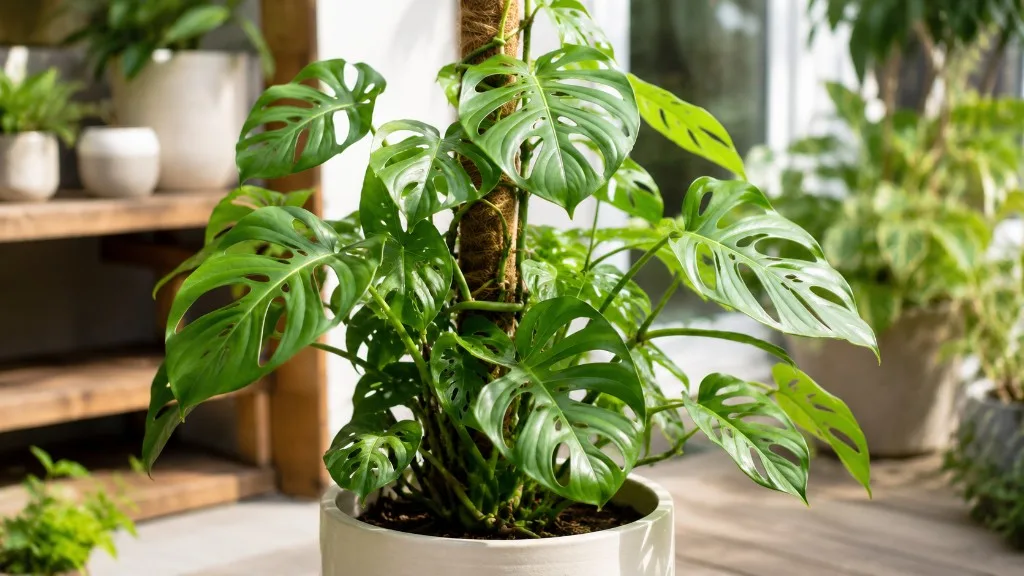
Rhaphidophora tetrasperma is sold under nicknames like Mini Monstera, Monstera Ginny, and Philodendron Ginny - labels that describe the split-leaf look, not the plant’s actual identity. It belongs to the Araceae family as a climbing aroid from southern Thailand and Peninsular Malaysia, where it scales tree trunks beneath broken canopy light rather than baking on open ridge lines. That origin sets the indoor ceiling and floor: Rhaphidophora Tetrasperma overview wants bright, filtered brightness for fast growth and fenestrated foliage, tolerates a modest slice of direct morning sun when acclimated, and declines slowly but visibly in dim corners that feel acceptable to human eyes.
North Carolina State Extension lists bright indirect light as the preferred exposure, with partial shade defined as direct sunlight for only part of the day - roughly two to six hours - and notes that while a small amount of direct sun may be tolerated, too much bright sun causes leaf burn. (NC State Extension) Extension also links yellowing leaves to overwatering or inadequate light, a pairing worth remembering before you repot, fertilize, or rewrite your entire watering calendar. This guide focuses on the light decisions that keep Rhaphidophora tetrasperma compact, vigorous, and progressively fenestrated: how much brightness it needs, where to place it by window direction, when direct sun helps versus hurts, how to supplement with grow lights, how to acclimate without scorch, and how to read warning signs on new growth before problems become permanent habit.
How Much Light Rhaphidophora Tetrasperma Needs
In practical home terms, Rhaphidophora tetrasperma light requirements center on bright indirect light for most of the day - strong ambient illumination on the leaf surface without sustained harsh rays beating the foliage for hours. Think of the light quality on a bright overcast day, or on a windowsill behind a sheer curtain when the sun is up but softened. That baseline supports the rapid growth rate Extension documents for this species and the leaf splitting most people buy it to achieve.
Duration matters alongside intensity. Rhaphidophora tetrasperma evolved as a tropical climbing evergreen that intercepts shifting sunflecks as it ascends toward brighter gaps in the canopy. It is not a deep-shade specialist like some Calathea or a low-light survivor like a ZZ plant; it is a climbing epiphyte that allocates energy toward stem length and larger leaf blades when photons are plentiful. People buy this species for split leaves - fenestrations and tip splits that resemble a miniature Monstera deliciosa. Light does not guarantee splits on every leaf at every age, but it is the main environmental lever you control; under dim conditions the plant prioritizes stem elongation and smaller entire leaves because fenestration costs more carbon than the plant can spare in deficit.
Bright Indirect Light in Plain Language
Bright indirect light means the plant casts a soft, fuzzy shadow at midday - you can read nearby, but the shadow edges are not knife-sharp. Medium indirect light means a readable shadow is weak or absent much of the day; the plant is still visibly illuminated but not energized. Low light is a corner that relies on reflected room glow; the plant may stay green for a while but loses vigor. Rhaphidophora tetrasperma performs best in the bright band and tolerates medium only when you accept slower growth, smaller leaves, and fewer splits as a deliberate trade-off.
If you are unsure whether a spot qualifies, use the new-growth test rather than room aesthetics. After two weeks in a candidate location, inspect the youngest leaf or active shoot. Firm stems, moderate internode length, and new blades that match or exceed the size of the prior leaf mean the placement is working. Stretching, tiny new blades, or a vine leaning hard toward the glass mean the spot is too dim regardless of how sunny the room feels to you.
Foot-Candles, Lux, and What to Measure at Home
Quantified loosely, many experienced aroid growers target roughly 1,000 to 2,500 foot-candles at the leaf canopy - equivalent to a bright east windowsill, a spot three to five feet back from an unobstructed south or west window with diffusion, or directly beside a north window that receives open sky but not direct sun. Below about 500 foot-candles, growth often shifts into survival mode: longer spaces between leaves, smaller blades, and delayed fenestration even when the plant is otherwise healthy. You do not need expensive gear to apply this; a free lux meter app on your phone, averaged at plant height across morning, midday, and late afternoon, gives a usable directional reading. If averages stay under roughly 8,000 lux (about 750 foot-candles) and new growth looks stretched, brighter placement or a grow light is warranted.
Measure at canopy height, not at the floor in front of the plant. Light falls off quickly with distance, and a spot that reads adequate on a windowsill may read marginal two feet lower where your pot actually sits. Log readings at three times of day once when troubleshooting; a location that peaks at noon but stays dim morning and evening may still underperform compared with steady east exposure. Treat numbers as decision support, not gospel - leaf response on new growth remains the final judge.
Native Habitat Logic: Why This Aroid Wants Filtered Brightness
In its native range, Rhaphidophora tetrasperma grows on tree trunks and branches with aerial roots that attach and pull the vine upward through humid forest air. Light there is dappled and shifting - bright when a gap opens in the upper canopy, softer when cloud cover or overlapping foliage closes the sky - but rarely the sustained blast of midday sun on open rock or pavement. Humidity runs high; temperatures stay warm year-round. Your home will not replicate that perfectly, but the placement lesson transfers cleanly: bright without brutal, with protection from the hottest direct rays.
Houseplant culture adds constraints the forest does not have. Dryer air, smaller root volumes, window glass that amplifies afternoon heat, and winter day-length collapse all change how the same compass label behaves season to season. The species is genuinely adaptable - Extension notes it is easy to grow in a container with a trellis or moss pole - but adaptability is not the same as thriving in a hallway with no window. Match the habitat logic and fenestration follows more reliably than chasing splits in a dim living room while hoping genetics override physics.
Taxonomy matters for expectations. Despite the Mini Monstera nickname, this plant is not Monstera deliciosa and not a Philodendron. It shares the general aroid appetite for filtered brightness, but its leaves are smaller, its internodes can elongate faster under deficit, and variegated selections like ‘Variegata’ - smaller, serrated, variegated leaves per Extension cultivar notes - carry less chlorophyll per blade and therefore less margin for error in medium light. (NC State Extension)
Dappled Canopy Light vs Window Glass
Forest dappled light mixes direct sunflecks with shade in rapid alternation over the day, which limits heat buildup on any single leaf surface. Window glass converts that pattern into sustained beams that can park on the same tissue for hours, especially on south and west exposures in summer. That is why “a little direct sun” in nature behaves differently from “a little direct sun” through a west pane at 3 p.m. Indoors, recreate dappled conditions with sheer curtains, three to five feet of setback from the glass, or external shade on a balcony rather than assuming brief forest sunflecks translate to brief indoor scorch risk.
Rotation matters for an asymmetric climber. Vines lean toward windows; leaves on the shaded side stay smaller. A quarter turn every few days keeps growth even and prevents one hard-facing leaf from taking all the scorch risk on a marginal west exposure. On a moss pole, slight rotation also keeps the growing tip from permanently facing away from the room you actually live in.
Bright, Medium, and Low Light Compared
Rhaphidophora tetrasperma performs best in bright indirect conditions. Medium indirect can maintain a trailing shelf plant or slow climber when humidity stays near 50 to 70 percent, temperatures remain in the 18 to 27°C (65 to 80°F) comfort zone Extension recommends, and the potting mix is a chunky aroid blend that dries at a sane pace. (NC State Extension) Low light is a poor long-term strategy: internodes lengthen, new leaves shrink, fenestration stalls, and the soil stays wet longer because transpiration drops - inviting root stress that further weakens the vine and produces yellow foliage that looks like overwatering.
The gap between “alive” and “thriving” is wider on this species than marketing copy suggests. Rhaphidophora tetrasperma can stay green in medium light for months while silently sacrificing leaf size and split development. By the time the vine looks obviously leggy, it has often been under-lit since the last repot. Treat medium light as a temporary holding pattern or a conscious display choice, not as the default for a fenestration-focused specimen on a moss pole.
Variegated ‘Variegata’ plants have less forgiving medium-light tolerance because white sectors lack chlorophyll. They may look striking initially near a window, then develop slow growth, pink or pale stress coloration, and thin leaves as photon flux falls. Green-leafed plants sometimes compensate by stretching; variegated plants often cannot compensate indefinitely without reverting or declining.
When Low Light Is Temporarily Acceptable
Low light can work for short periods - a two-week guest room stay, a dim corner during renovation, or winter in a north room before you install a grow light - without killing the plant. Expect smaller new leaves, longer internodes, and plain entire foliage during the stint. That is acceptable if you plan to return the plant to bright indirect exposure within weeks and you adjust watering to match reduced transpiration.
Low light is a poor permanent home if you bought the plant to mature into a split-leaf pole specimen. It is also a poor choice for propagation trays you intend to push into fast growth; cuttings root in moderate light but establish much faster once rooted under brighter conditions. If low light is your only option without reconstruction, pair it with a full-spectrum LED running 10 to 12 hours daily rather than hoping cultivar hype overrides physics.
Direct Sun Tolerance: Safe Hours, Burn Risk, and Acclimation
Yes - conditionally. NC State Extension states the plant may tolerate a small amount of direct sunlight but warns that too much bright sun will cause leaf burn. (NC State Extension) Direct sun is least risky when it is cool and brief and most risky when it is hot and sustained through west or south afternoon glass. Any time you increase flux - new window, closer to south glass, outdoor summer, or a stronger bulb - treat it as a multi-day project. Begin with one to two hours in the gentlest part of the day, then increase over 7 to 14 days until the plant stays full-time. If you see pale halos or slight curl, hold at the current level until a healthy new leaf opens before pushing further.
Morning Sun on an East Window
Morning sun from an east window delivers photons without the heat load of afternoon exposures. For many homes, east is the best default: enough direct minutes to boost vigor, then bright indirect for the rest of the day. East minimizes the scorch risk that west exposures carry while still supplying enough energy for fenestration on mature vines. If your east exposure is partially blocked by neighboring buildings or trees, move the plant closer to the glass or supplement with a short burst of LED morning extension rather than compensating with risky west sun.
Acclimation still applies on east sills. A plant grown under a nursery shade cloth may burn on an east window if moved in one step during a heat wave. Increase exposure over 7 to 14 days and watch the youngest leaf after each step. Healthy acclimation shows firm new tissue without pale halos; rushed moves show damage on the most sun-facing leaf surface within 48 to 72 hours.
Why Afternoon West and South Sun Burns
Afternoon sun through west or south glass stacks radiation plus heat on leaves and pots; even acclimated plants may show curling, marginal crisping, or pale halos during heat waves. Glass lacks the forest’s moving shade; a leaf that would receive a brief sunfleck in Malaysia may receive two continuous hours of focused beam indoors. If afternoon sun is unavoidable, sheer curtains, three to five feet of setback from the pane, or external shade cloth on a balcony converts direct to the dappled pattern this species expects.
Pot and media heat amplify scorch. Dark containers on a west sill can heat root zones even when foliage looks fine initially, then collapse after repeated hot afternoons. Elevating the pot slightly, using lighter containers, or pulling the plant back during July and August heat reduces compound stress. Remember that crispy tips from dry air near an HVAC vent can mimic sun burn; check whether damage is directional toward the window (light) or uniform on margins (humidity and airflow).
Best Window Placement for Indoor Rhaphidophora Tetrasperma
Compass labels are starting guesses, not verdicts. A “south window” buried behind a deep porch roof may deliver less usable light than an open east pane. Success comes from canopy-level brightness at the leaves for enough hours - measured by growth response, not room aesthetics. Place the pot so light lands on foliage, not just on the floor in front of the plant. For a moss pole specimen, the top of the vine must sit inside the brightest cone; lower leaves naturally shade each other on a dense pole, but the growing tip cannot be stuck in secondary shadow behind a furniture silhouette.
If the only bright wall is west-facing, treat it as a seasonal asset - excellent in cool months, risky in summer - rather than as a year-round fenestration factory. If the only bright wall is north-facing, assume supplement territory unless you live in a high-latitude room with enormous unobstructed sky exposure. Apartment dwellers with one window should prioritize hours of usable brightness at leaf height over perfect compass alignment; a slightly imperfect east placement beats a theoretically ideal south spot blocked by a balcony above.
North, East, South, and West Windows Compared
An east-facing window is the most reliable indoor default for Rhaphidophora tetrasperma. Morning sun is bright but relatively cool; the plant receives strong indirect light through midday. East minimizes the scorch risk that west exposures carry while still supplying enough energy for fenestration on mature vines. Place within 12 to 24 inches of the glass unless summer morning intensity on your latitude produces pale patches - then add sheer fabric.
A south-facing window is excellent in fall and winter at northern latitudes when the sun angle is lower and day length shrinks. In summer, south glass can overheat leaves; use a sheer curtain or pull the plant back slightly when you see pale sun-facing patches. South pairs well with a supplemental LED in winter for all-day consistency without leaning the vine hard toward the pane.
A west-facing window supplies strong afternoon rays - high reward in cool seasons, high risk in summer. If west is your brightest option, diffuse peak hours and favor plants already acclimated to brighter exposures. Watch for one-sided damage on leaves facing the pane and for sudden scorch after spring moves closer to glass.
A north-facing window rarely provides enough flux for vigorous fenestration without help. Treat north as supplement territory if split leaves are the goal, not just survival foliage.
Seasonal Light Adjustments Through the Year
Light is not static indoors. Winter shortens photoperiod and lowers sun angle; a placement that was bright indirect in June may read as medium by December. In late fall and winter, move the plant closer to the glass if temperature allows - avoid cold drafts below the 65°F (18°C) lower comfort threshold Extension cites - or add 10 to 12 hours of LED supplementation. (NC State Extension) In spring, reintroduce diffusion on south and west windows before scorch appears. Summer air conditioning can desiccate leaves near vents even when light is adequate; check whether damage is directional toward the window (light) or uniform on margins (humidity and airflow).
Grow Light Protocol When Natural Light Falls Short
When windows cannot deliver bright indirect flux - basement apartments, north-only rooms, office desks, winter at high latitude - a full-spectrum LED grow light is the cleanest fix. Rhaphidophora tetrasperma does not need blistering high-intensity horticultural rigs; it needs consistent, broad-spectrum brightness across enough hours to replace missing sunflecks. Cheap red/blue-only bulbs distort leaf color and provide incomplete spectra; choose white full-spectrum panels marketed for foliage houseplants.
Start with a quality fixture positioned roughly 12 to 18 inches (30 to 45 cm) above the top leaves, running 10 to 12 hours daily on a timer. Watch leaf temperature at the canopy; if leaves feel warm to the touch or fade toward yellow-green, raise the fixture two to four inches or reduce hours. Increase intensity gradually like natural acclimation. The first week at a new distance should produce firm new growth without bleaching. If internodes still lengthen under the bulb, the light is too dim or too far - lower the fixture slightly rather than jumping straight to maximum output.
Distance, Hours, and Spectrum for Aroids
Aroids share a similar photosynthetic appetite for indoor culture. For Rhaphidophora tetrasperma, aim for the lower half of high-intensity recommendations used for large Monstera - enough PPFD to support fast growth without leaf bleach. Practical success markers are behavioral, not numeric: new leaves match or exceed the size of the prior leaf, internodes stay one to three inches on a well-fed pole plant in bright conditions, and color stays deep green without yellowing from light alone. Run lights on a consistent schedule; chaotic timing stresses less than scorch but still slows growth compared with steady photoperiod.
If you are calibrating by measurement, many growers find 10,000 to 20,000 lux at the canopy under supplementation a useful starting band when combined with modest natural ambient light - adjust by leaf response rather than chasing numbers alone.
Warning Signs Your Rhaphidophora Tetrasperma Has the Wrong Light
Symptoms overlap with watering and humidity problems, so read patterns before diagnosing. Light issues are usually directional, progressive on new growth, and correlated with placement - whereas sudden uniform collapse often points to roots. Extension explicitly links yellowing to both overwatering and inadequate light, so compare soil dry-down speed with exposure when leaves pale. (NC State Extension) Use the new-growth test as your primary gauge: old damaged leaves are historical records, but the youngest leaf or active shoot tells you whether today’s placement works.
Too Little Light: Leggy Nodes, Small Leaves, Few Splits
Insufficient light produces a recognizable suite that persists until flux improves. Watch for long internodes (stretched gaps between leaves), smaller new blades compared with older ones grown in better conditions, plain entire leaves where splits once appeared, lean toward the window, and slow dry-down because the plant transpires less. Lower leaves may yellow and drop as the vine reallocates energy upward toward photons. Legginess is not fixed by fertilizer; moving brighter or adding a lamp is the correction.
After improvement, consider pruning the bare stretch once new growth firms up below the cut - the vine branches from nodes and presents better on a pole. Expect 10 to 14 days of adjustment before you judge the move. Soil that stays wet five to seven days after watering in a dim spot mimics overwatering stress - yellow leaves, soft stems - even though your schedule never changed. Compare dry-down speed with exposure before assuming roots are rotting. When troubleshooting, change light first or watering first - not both simultaneously - and wait for the next unfurling leaf.
Too Much Light: Bleach, Scorched Patches, Curling
Excess light and heat show on the sun-facing leaf surface: bleached yellow-white zones, especially between veins; crisp brown patches that feel dry; translucent scorched areas that never green up; upward curling or folding during peak hours; and sudden damage after a relocation without pest or rot signs. Variegated sectors bleach first where chlorophyll is already sparse. When scorch appears, reduce intensity before reducing total daylight when possible - add shear, move back from glass, shift from west to east - rather than plunging the plant into a dim corner that trades burn for etiolation.
Compare directional sun-facing bleach against uniform yellowing with wet soil before diagnosing. Heat stress through glass can escalate quickly in heat waves; temporary pullback for one to two weeks beats permanent relocation to a hallway with insufficient brightness. Hold the gentler exposure until two new leaves open clean. Humidity modulates symptom appearance without replacing photons - Extension notes 60 percent humidity as a thrive target, and while humidity does not substitute for brightness, it reduces marginal crisping that can masquerade as sun burn on leaf edges. (NC State Extension)
Conclusion
Rhaphidophora tetrasperma light requirements become straightforward once you anchor them to habitat logic: bright indirect exposure as the default, brief gentle direct sun only when acclimated, and supplemental full-spectrum LEDs when windows fall short. Place the plant where leaves receive real brightness - not just where the pot looks good on a shelf - and judge success on new internodes, new leaf size, and progressive fenestration, not on how green the room feels at a glance.
Light and water stay coupled: brighter correct light speeds transpiration and shortens dry-down cycles, while dim light keeps soil wet longer and mimics overwatering stress. Extension recommends watering when the top inch of mix is dry - a rhythm that shifts with exposure. (NC State Extension) East and filtered south or west windows cover most homes; north and dim interiors need artificial help. Move brighter in small steps, protect afternoon glass, read the youngest leaf before rewriting the whole care routine, and avoid changing light, watering, and pot size in the same weekend. When light is right, growth on a moss pole accelerates, watering gets easier, and the split leaves that sold you on this species arrive far more reliably than in a dim corner where the plant merely survives.
When to use this page vs other Rhaphidophora Tetrasperma guides
- Rhaphidophora Tetrasperma overview - Start here for whole-plant context before deep-diving this topic.
- Rhaphidophora Tetrasperma problems hub - Jump to symptom-specific fix guides when this care topic does not resolve the issue.
- Leggy Growth on Rhaphidophora Tetrasperma - Escalate here when light adjustments are not enough.