Spider Mites on Rhaphidophora Tetrasperma: Causes, Checks &
Quick answer
Spider mites on Rhaphidophora Tetrasperma thrive in dry indoor air. First step: Shower or wipe leaf undersides, then treat with insecticidal soap while boosting humidity.
Spider Mites on Rhaphidophora Tetrasperma: Causes, Checks & Fixes
This guide covers spider mites on Rhaphidophora Tetrasperma. See also the general Spider Mites guide, watering, and light pages for this plant.
Spider Mites on Rhaphidophora Tetrasperma: Causes, Checks & Fixes
Quick answer
Spider mites on Rhaphidophora Tetrasperma thrive in dry indoor air. First step: Shower or wipe leaf undersides, then treat with insecticidal soap while boosting humidity.
NC State lists Mini Monstera as susceptible to spider mites indoors, and UC IPM notes that dry indoor conditions favor outbreaks of these pests on houseplants through faster buildup and plant stress around heating season houseplant problems. If your leaves are stippled but you are unsure whether pests or dry air is the main driver, compare this guide with your humidity pattern and our low-humidity page at /plants/rhaphidophora-tetrasperma/low-humidity/.
Why Rhaphidophora Tetrasperma gets spider mites
Dry air is usually the trigger on Rhaphidophora Tetrasperma overview. Rhaphidophora tetrasperma is a climbing aroid that performs best with high humidity around 60%, but many homes run much lower in winter. When air is dry, leaves lose moisture faster and stressed foliage becomes easier for mites to exploit.
This plant’s growth habit also matters. Long vines, moss poles, and many leaf nodes create hidden undersides where mites and webbing can build before damage is obvious from the front of the plant. If your plant is near vents, radiators, or a sunny dry window, spider mite pressure can escalate quickly.
Care stress compounds the issue. Underwatering episodes, dust buildup on leaf undersides, and inconsistent checks on neighboring plants all increase the chance that a small colony turns into a visible infestation.
What spider mites look like on this plant
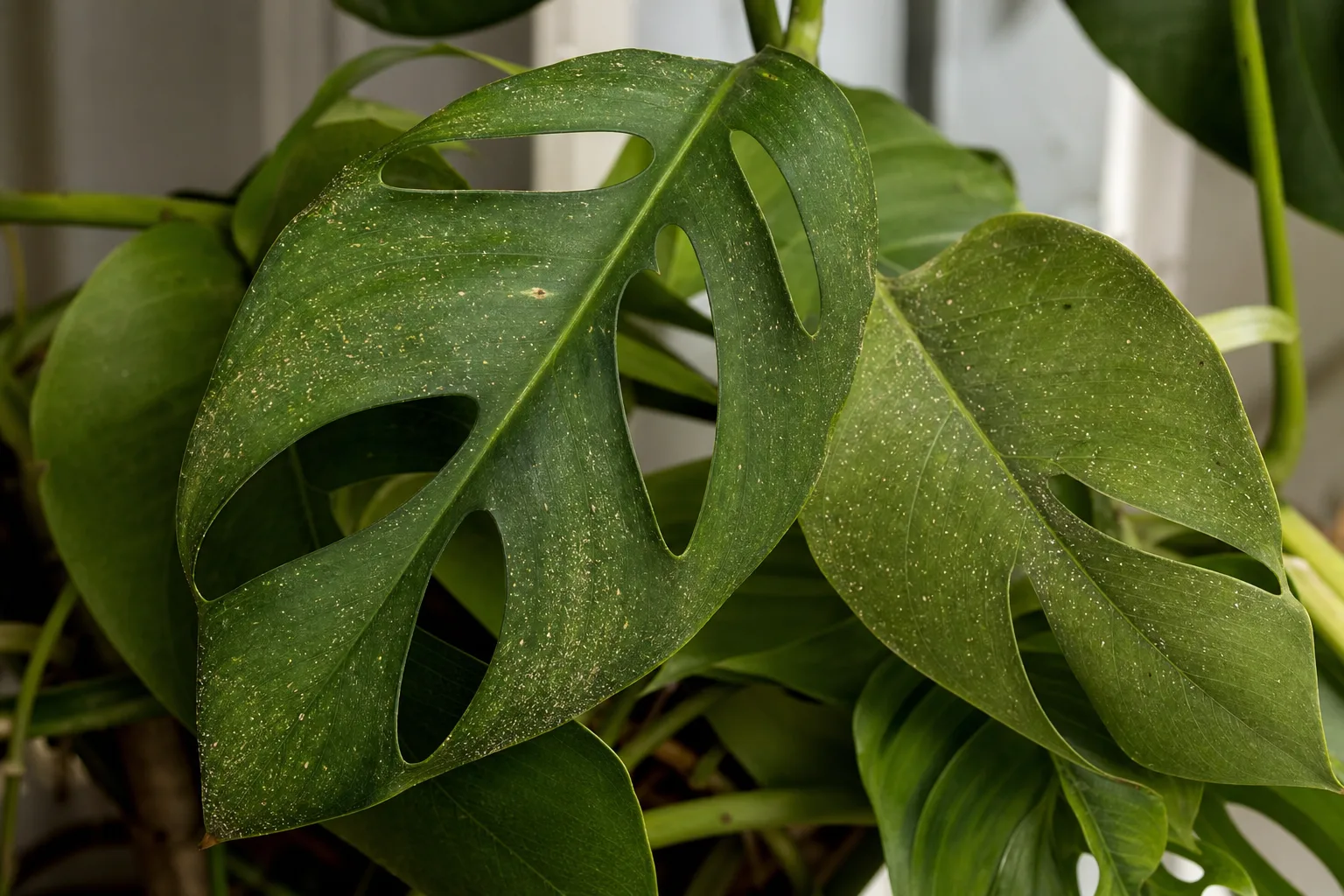
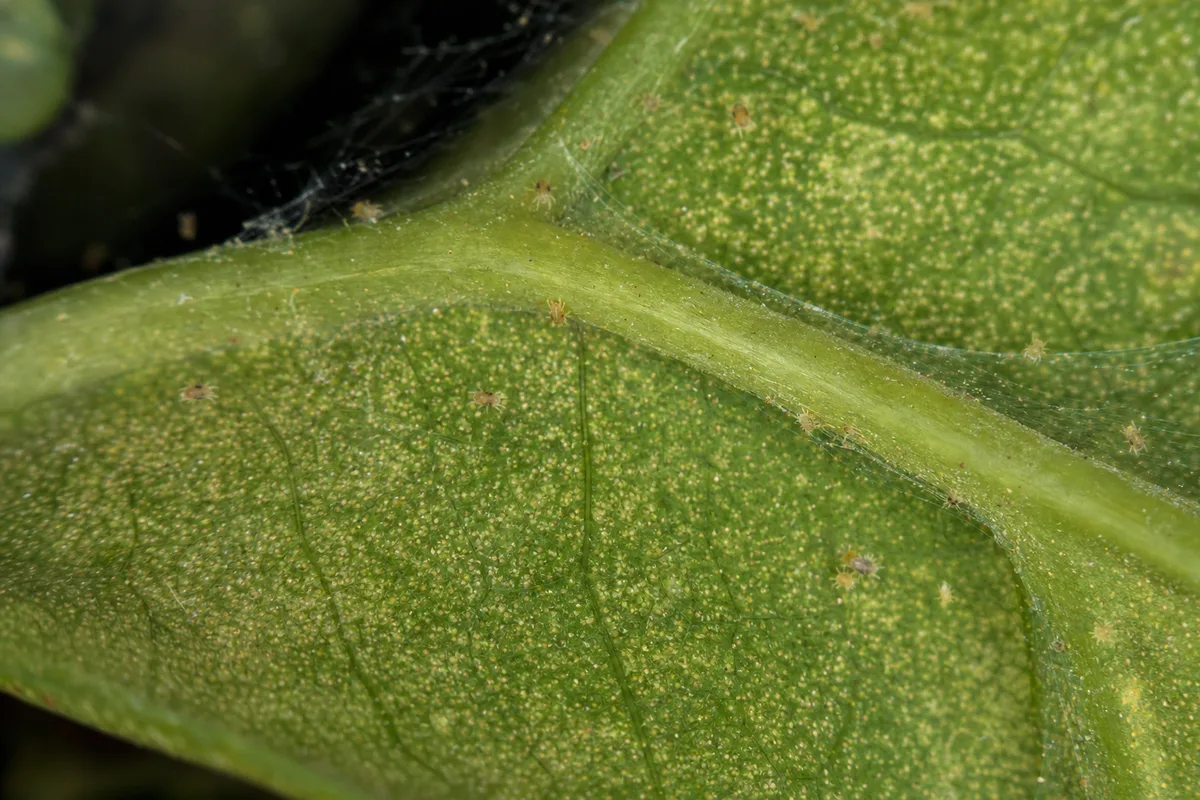
On Rhaphidophora tetrasperma, the first signs are often tiny pale speckles on upper surfaces and fine silk near petiole joints or split sections of leaves. University of Maryland Extension describes this as stippling from cell-feeding damage, which can progress from pale flecks to bronzing and drying tissue stippling damage.
Spider Mites symptoms on Rhaphidophora Tetrasperma - compare with healthy tissue on the same plant.
In heavier infestations, you may see:
- fine webbing around nodes, undersides, and leaf axils
- bronzed or dull leaves that lose shine
- faster yellowing and leaf drop on older leaves
UC IPM emphasizes that colonies are commonly concentrated on leaf undersides, so top-only checks can miss early stages.
How to confirm the cause
Use this order so you do not over-treat the wrong problem:
- Check undersides first. Inspect the back of several leaves from top, middle, and lower vine sections.
- Do a paper-tap test. Tap a suspect leaf over white paper; moving pepper-like specks support a mite diagnosis.
- Look for silk. Fine webbing around nodes or undersides strongly supports spider mites over simple dryness.
- Compare symptom pattern. Spider mites usually create stippling and bronzing; dry air alone more often causes edge crisping without silk.
- Scan nearby plants. Spider mites spread easily across adjacent foliage.
- Measure room conditions. Record foliage-level humidity and heat sources to identify recurring triggers.
If symptoms remain unclear, hold treatment until you confirm active mites. Treating for pests when the main issue is dry air or irrigation stress can delay recovery.
Lookalikes to rule out before spraying
Low humidity stress
Low humidity can brown leaf edges and tips on this species, especially near vents, but it does not usually create active moving mites or fine pest webbing. Use your humidity readings and visual checks together. For prevention context, see /plants/rhaphidophora-tetrasperma/low-humidity/.
Thrips feeding
Thrips can also scar leaves, but webbing is typically absent. Check for elongated insects and darker feeding marks rather than fine silk networks.
Underwatering stress
Underwatered plants often look limp with lighter pot weight and may crisp, but they do not produce mite colonies. Cross-check moisture management with /plants/rhaphidophora-tetrasperma/watering/.
First fix for Rhaphidophora Tetrasperma
First action: isolate the plant and physically knock down the population with a thorough rinse, especially on leaf undersides and node junctions. This reduces pressure before any spray program.
After that first rinse, apply a labeled insecticidal soap or horticultural oil with full underside coverage; Clemson Extension notes these products work by contact and are most effective when they directly hit mites insecticidal soap or horticultural oil.
For climbing vines on poles or supports:
- move the plant where runoff can drain safely
- rinse both leaf faces, then petiole-node areas
- avoid blasting tender unfurling leaves
- allow foliage to dry with good airflow, out of hot direct sun
Do not overwater the pot to compensate for dry air. Root-zone saturation and low ambient humidity are different problems and should be corrected separately.
Step-by-step recovery
UF/IFAS notes that many miticides have limited egg control, so repeat applications are usually needed on a schedule to catch hatch-outs most miticides are not effective on eggs. A practical indoor plan:
- Day 1: Isolate, rinse thoroughly, then apply labeled soap/oil.
- Day 5-7: Reinspect undersides and nodes, then reapply if live mites remain.
- Day 10-14: Third check and treatment if activity persists.
- Each round: Clean nearby leaf surfaces, reduce dust, and keep humidity steadier.
If infestation remains active after multiple complete, label-compliant rounds, escalate to another labeled mite-control product and verify coverage quality before changing everything else.
Recovery timeline
Expect old stippled leaves to stay scarred. Recovery is judged by cleaner new growth, reduced webbing, and fewer moving mites on undersides.
Under warm indoor conditions, spider mites can complete development quickly and overlap generations, which is why single sprays often fail five to twenty days under favorable conditions. Many plants show visible stabilization in about 2 to 4 weeks when treatment coverage, timing, and humidity correction are consistent.
What not to do
Do not treat only the top leaf surface. Most active colonies stay below the leaf and around node crevices.
Do not use dish soap as a substitute for insecticidal soap on foliage. Product formulation matters for plant safety and effectiveness.
Do not spray oils or soaps during hot conditions or on drought-stressed tissue; extension guidance warns this increases phytotoxicity risk phytotoxic under heat or drought stress.
Do not assume one clean-looking day means eradication. Recheck on schedule until you confirm no active mites or new webbing.
How to prevent spider mites
Target 50-70% humidity around foliage and avoid hot dry drafts. Keep leaves clean so early stippling is easier to spot, and quarantine new plants before they join your main group.
Build a seasonal routine:
- weekly underside checks in dry months
- monthly leaf cleaning
- airflow without blasting warm dry air directly at the plant
- quick isolation of any plant showing stippling or webbing
This plant responds best when humidity, watering consistency, and monitoring stay steady together.
Practical checks
Urgency check
Treat as urgent if webbing spans multiple nodes, stippling is spreading leaf-to-leaf in days, or leaves are dropping quickly. Urgent cases need immediate isolation and strictly timed follow-up applications.
Best inspection order
Start with leaf undersides and node webbing, then inspect neighboring plants, then confirm humidity and recent care changes. This sequence prevents missing an active pest focus.
Care cross-check
Spider mites on Rhaphidophora tetrasperma are usually a pest-plus-environment issue, not just a spray issue. The plant recovers faster when treatment, humidity correction, and stable moisture management are all aligned.
When to use this page vs other Rhaphidophora Tetrasperma guides
- Rhaphidophora Tetrasperma watering guide - Use for routine moisture checks before assuming spider mites is the main issue.
- Rhaphidophora Tetrasperma problems hub - Browse all 3 common issues on this species.