Yellow Leaves on Rhaphidophora Tetrasperma: Causes, Checks
Quick answer
Yellow leaves on Rhaphidophora Tetrasperma usually mean overwatering, too little light, or normal aging on a long vine-not a nutrient crisis. First step: lift the pot, check whether the top 2–3 cm is wet or dry, and pause watering until you confirm the pattern.
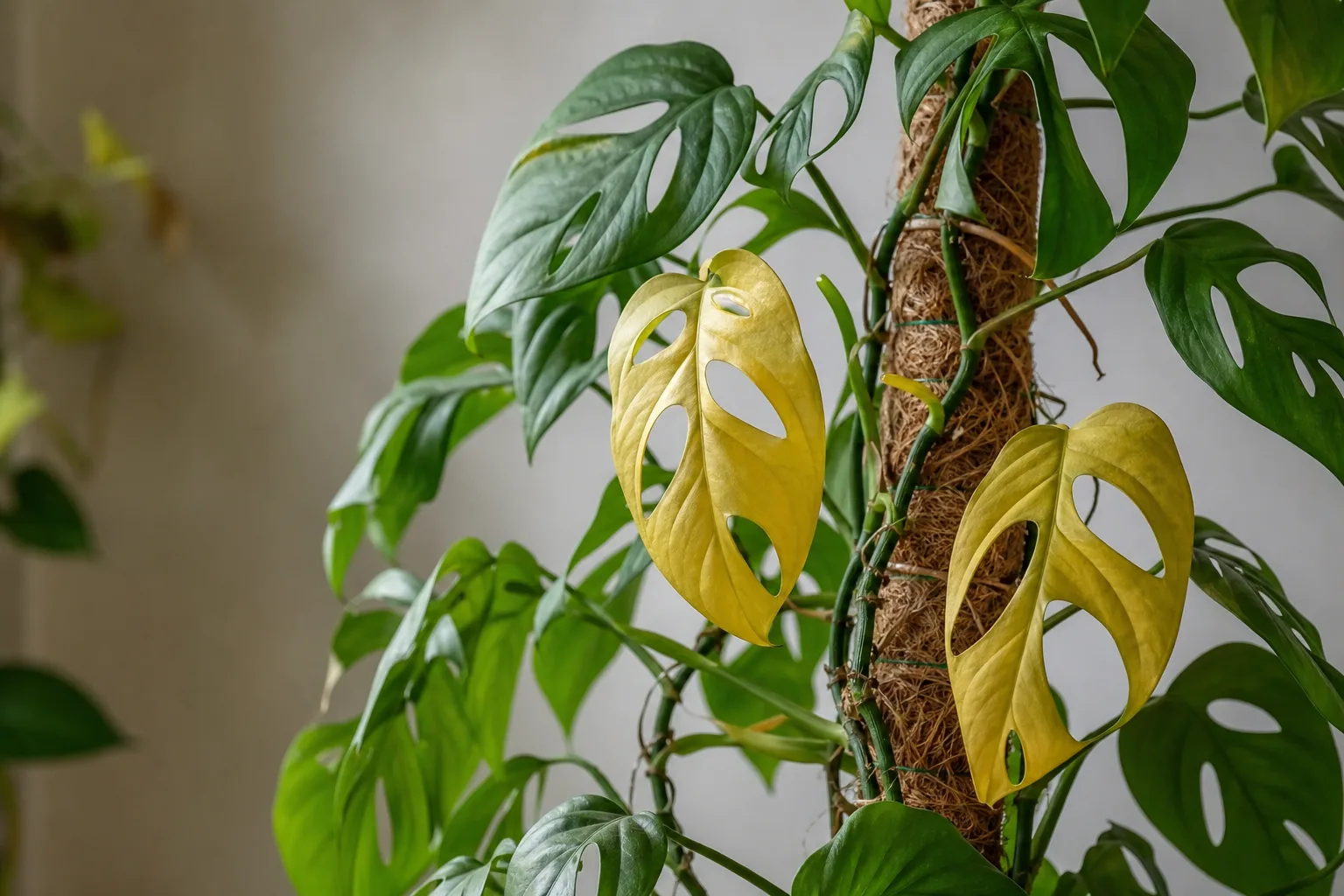
Yellow Leaves on Rhaphidophora Tetrasperma: Causes, Checks & Fixes
This guide covers yellow leaves on Rhaphidophora Tetrasperma. See also the general Yellow Leaves guide, watering, and light pages for this plant.
Yellow Leaves on Rhaphidophora Tetrasperma: Causes, Checks & Fixes
Quick answer
Yellow leaves on Rhaphidophora Tetrasperma (Rhaphidophora tetrasperma, Mini Monstera) usually trace to overwatering, too little light, cold drafts, or normal aging on a long vine-not a sudden nutrient emergency. This fast-growing Araceae climber drinks heavily in summer but still needs oxygen at the roots; when a pot stays wet-especially in a dim shelf or oversized container-lower leaves turn chartreuse first while stems may still feel firm.
First step: lift the pot and press your finger into the top 2–3 cm of mix. A heavy, cool pot with wet surface soil points toward overwatering; a feather-light pot with crispy yellow edges points toward underwatering. Judge recovery by new splits on upper leaves, not by old yellow tissue greening up.
What yellow leaves look like on Rhaphidophora Tetrasperma
Mini Monstera yellowing has distinct patterns once you know this plant’s vining habit.
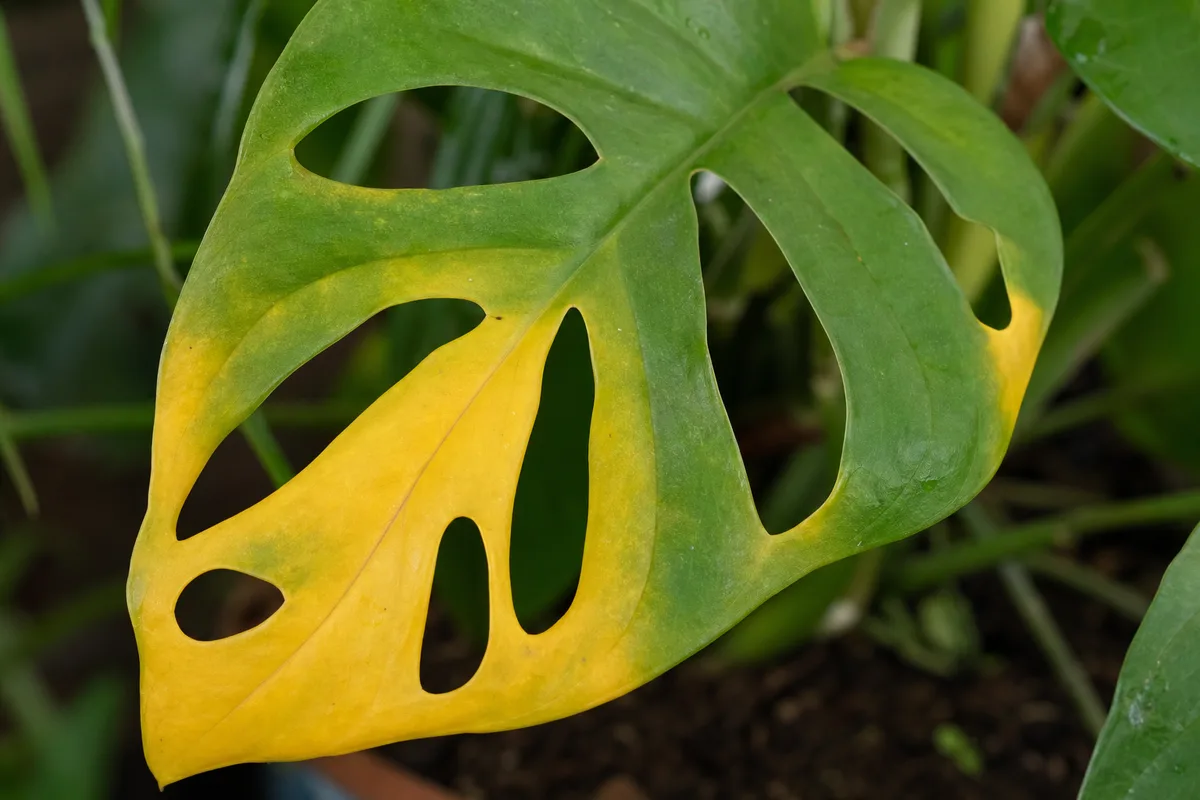
Yellow Leaves symptoms on Rhaphidophora Tetrasperma - compare with healthy tissue on the same plant.
Classic overwatering / root stress:
- Bottom leaves on the lowest vine sections turn chartreuse or solid yellow while mix feels heavy and cool
- Pot weight stays high for many days after the last soak
- New growth may stay small with few fenestrations if light is also weak
- Stems stay firm at first, then soften at the soil line as rot advances
- Fungus gnats or sour smell from the pot surface
Low-light cascade (often paired with wet soil):
- Lower leaves yellow while top vines stretch toward a window
- Long gaps between leaves and shrinking new blades with fewer splits
- Soil in a dim corner stays wet two weeks or more-see the not-enough-light guide for the full light-to-wet-soil chain
Underwatering (less common on this species):
- Yellow appears after long dry spells, often with brown crispy edges
- Pot feels very light; soil may pull away from the pot wall
- Leaves droop, then recover within hours of a thorough soak
Normal senescence:
- One or two old leaves yellow at the base of a long vine while the rest of the plant looks vigorous
- No widespread failure climbing the stem; firm roots and normal dry-down rhythm
Nutrient stress (secondary, after water and light are ruled out):
- Pale yellow-green new leaves on a plant in bright light with very fast drainage and months without feed
- Firm roots, dry topsoil, and no sour smell-different from rot
Cold-draft damage:
- Yellow or translucent patches on leaves touching cold window glass or sitting in an AC blast
- Often appears within days of a furniture move or first winter cold snap
- NC State Extension recommends keeping this species out of drafts in the 65–80°F (18–27°C) band; sustained exposure below the 65–80°F (18–27°C) band NC State recommends can yellow foliage quickly
Why Rhaphidophora Tetrasperma gets yellow leaves
NC State Extension notes that yellowing may occur from overwatering or inadequate light on this species. On Mini Monstera, the two problems often overlap: wet soil in low light dries slowly, so roots suffocate while the plant keeps looking thirsty. Growers who follow a summer watering calendar through winter slowdown pour into mix that never dries-a pattern the watering guide breaks down by season and pot weight.
This species evolved as a climbing epiphyte in wet tropical forests on the Thailand–Malaysia peninsula. Indoors it wants moist, well-drained mix in bright filtered light-not stagnant mud in a dark hallway. Because Rhaphidophora tetrasperma is a rapid grower when conditions are right, an oversized pot plus dim placement is especially dangerous: excess mix holds water around roots long after the surface looks merely damp.
Nutrient deficiency is a secondary cause on plants pushed in bright light with chunky aroid mix and infrequent feeding. Pale new leaves with firm roots and dry topsoil fit that pattern better than rot-but do not reach for fertilizer until you correct water and light first.
Repot shock, direct-sun scorch after a sudden window move, and spider mites-a pest this species is susceptible to as a houseplant-can also yellow foliage. Mites show fine stippling and webbing on undersides before whole leaves fade; scorch shows bleached tan patches on the sun-facing side, not symmetrical lower-leaf chartreuse on wet mix.
Lookalike symptoms to rule out
| What you see | Most likely cause | First routing step |
|---|---|---|
| Lower chartreuse leaves, heavy wet pot, dim shelf | Overwatering + low light overlap | Dry top 2–3 cm; move to bright indirect light; see overwatering |
| Crispy yellow edges, light pot, pulled-back soil | Underwatering | Soak thoroughly; see underwatering guide |
| Long stretch, tiny unsplit new leaves, slow dry-down | Insufficient light | Bright indirect placement trial; see not-enough-light guide |
| Yellow patches on leaves against cold glass | Cold draft | Move 15 cm from glass; check HVAC vents |
| One old yellow leaf at vine base, healthy tip growth | Normal senescence | Remove leaf if mostly yellow; no other changes |
| Pale new leaves, firm roots, dry topsoil, bright window | Nutrient exhaustion | Light feed only after water rhythm is stable |
| Stippling on undersides, fine webbing | Spider mites | Rinse undersides; see spider mites guide |
| Several leaves yellow in a week, soft stems, sour soil | Root rot | Unpot immediately; see root-rot guide |
How to confirm the cause
Work through these six checks before repotting, fertilizing, or pruning heavily:
- Pot weight - Lift before and after your last watering. A pot that stays heavy for 10+ days in a heated room usually means roots are not using water-common with overwatering or low light slowing evaporation.
- Top 2–3 cm moisture - Press your finger in. Wet surface with yellow lower leaves confirms you should pause watering. Bone-dry mix with limp yellow foliage points to drought.
- Stem firmness - Pinch stems at the soil line and mid-vine. Soft, mushy tissue at the base on wet mix is an escalation signal toward root rot.
- Leaf pattern - Note whether yellowing is isolated to the lowest one or two leaves (senescence) or climbing multiple nodes (stress). Compare new leaf size and fenestration to growth from six months ago-shrinking unsplit new blades suggest light is part of the problem.
- Light and draft placement - Measure distance from the nearest window. More than 6–8 feet from glass in a typical room is often marginal for this species. Check for cold glass contact and AC vents; see the light guide for placement targets.
- Root spot-check (if soil smells sour or stems soften) - Slide the plant partly out of the pot. Firm white or tan roots with slight moisture fit healthy epiphytic roots; brown mushy roots on wet mix need the root-rot workflow, not another soak.
Most houseplant problems stem from improper care like too much water or not enough light. Match your pattern to the table above before stacking fixes.
First fix for Rhaphidophora Tetrasperma (by confirmed cause)
Make one correction first-do not stack repotting, fertilizer, and heavy pruning on the same day.
Wet soil + yellow lower leaves (most common)
Let the top 2–3 cm dry, then water thoroughly until drainage runs clear and empty the saucer. Move the pot to bright, indirect light if it has been on a dim shelf. Leave pot size and fertilizer alone for two weeks and watch the next leaf, not the old yellow ones.
Dry soil + crispy yellow edges
Water until the full root ball is moist and the pot feels noticeably heavier. Confirm drainage holes are open. If dry-down now happens in under three days in bright light, your interval was simply too long-use the watering guide pot-weight method going forward.
Low light + wet soil overlap
Move to bright indirect light first, then adjust watering to match faster dry-down in the brighter spot. Light correction often fixes yellowing without any other change-the cascade is documented in depth on the not-enough-light page.
Normal senescence only
Remove the single mostly yellow leaf at the vine base with clean shears. Wear gloves-sap contains calcium oxalate crystals and the plant is toxic to cats and dogs if ingested. No watering or light changes needed if all other checks pass.
Confirmed root rot
Stop watering, unpot, trim mushy roots, and repot into fresh chunky aroid mix-follow the root-rot guide step by step. Dry-down alone is not enough once stems soften and soil smells sour.
Recovery timeline
Yellow leaves will not revert to deep green. Judge success by stopped spread and new growth quality.
Mild (one to two lower leaves on wet mix, firm stems):
- Yellowing stops within 1–2 weeks after corrected dry-down and light
- First new leaf with normal splits may appear in 2–3 weeks in warm active growth
Moderate (several lower leaves, heavy pot, dim placement):
- Expect 3–4 weeks before new fenestrated growth looks healthy
- Old yellow tissue can be removed once the next two new leaves emerge firm and green
Severe (soft stems, sour soil, widespread yellowing):
- Root rescue per the root-rot guide-recovery may take 4–8 weeks or longer if much root mass was lost
- Some vines may not recover; prioritize firm sections with healthy nodes
Signs you are on track: pot weight swings normally between waterings, new leaves show splits, yellowing does not climb the vine, stems stay firm at the soil line.
Signs the problem is worsening: more leaves yellow each week on unchanged wet mix, wilting on soggy soil, blackening at the crown-unpot immediately.
What not to do
- Do not keep watering because leaves look limp when soil is already wet-overwatering can result in root rot on container plants.
- Do not fertilize a yellowing plant sitting in soggy mix; salts can burn stressed roots.
- Do not assume nutrient deficiency before fixing water and light-especially in winter when growth slows.
- Do not remove every yellow leaf in one session if more than a third of foliage is affected; the plant still needs photosynthetic surface while roots recover.
- Do not leave trimmed leaves within reach of pets; calcium oxalate sap irritates mouths on contact.
How to prevent yellow leaves
- Water when the top 2–3 cm is dry per extension guidance for this species and seasonal rhythm in the watering guide-often weekly in bright summer growth, longer in winter.
- Keep bright filtered light on the leaf canopy most of the day; dim corners need a grow lamp or a move closer to glass.
- Use chunky aroid mix with perlite and bark in a pot only slightly larger than the root ball-oversized pots prolong wet cores.
- Empty saucers after every soak; never let the pot sit in standing water.
- Feed monthly at half strength only during active growth, after water rhythm is stable.
- Keep vines away from cold window glass and HVAC vents in winter.
- Provide a moss pole or trellis so aerial roots climb toward light instead of sprawling across a dark shelf.
When to worry
Escalate beyond simple dry-down when:
- Several leaves yellow within a week on wet soil with softening stems-open the root-rot guide
- Wilting on soggy mix that does not improve after one corrected dry-down cycle
- Sour or musty smell from the pot surface even when top leaves look fine
- Yellowing continues four weeks after a confirmed move to bright indirect light and proper watering-inspect for pests or hidden rot
A single old yellow leaf on an otherwise vigorous long vine is not an emergency-it is normal aging on a fast climber.
Conclusion
Yellow leaves on Rhaphidophora Tetrasperma reward systematic routing: wet heavy pot in a dim corner needs light and dry-down together; dry light pot with crispy edges needs a thorough soak; one basal leaf on a healthy vine is senescence. Measure pot weight, confirm the top 2–3 cm before every drink, and judge recovery by the next fenestrated leaf-not by old chartreuse tissue. When stems soften or soil turns sour, skip the wait-and-see cycle and follow the root-rot guide before more water makes the damage worse.
Related Mini Monstera guides
- Rhaphidophora tetrasperma overview - full care profile and toxicity
- Watering guide - seasonal rhythm and pot-weight checks
- Light requirements - placement and grow-lamp targets
- Overwatering - wet-soil rescue
- Root rot - mushy root triage
- Not enough light - stretch, fenestration loss, and wet-soil cascade
- Underwatering - drought yellowing