Slow Growth on Polka Dot Plant: Causes, Checks & Fixes
Quick answer
Slow growth on polka dot plant usually means insufficient bright filtered light, flower spikes stealing energy, or roots sitting in wet soil-not natural dormancy. First step: move to brighter filtered light, snip every flower spike, and check whether the top 1–2 cm of mix dries before you water again.
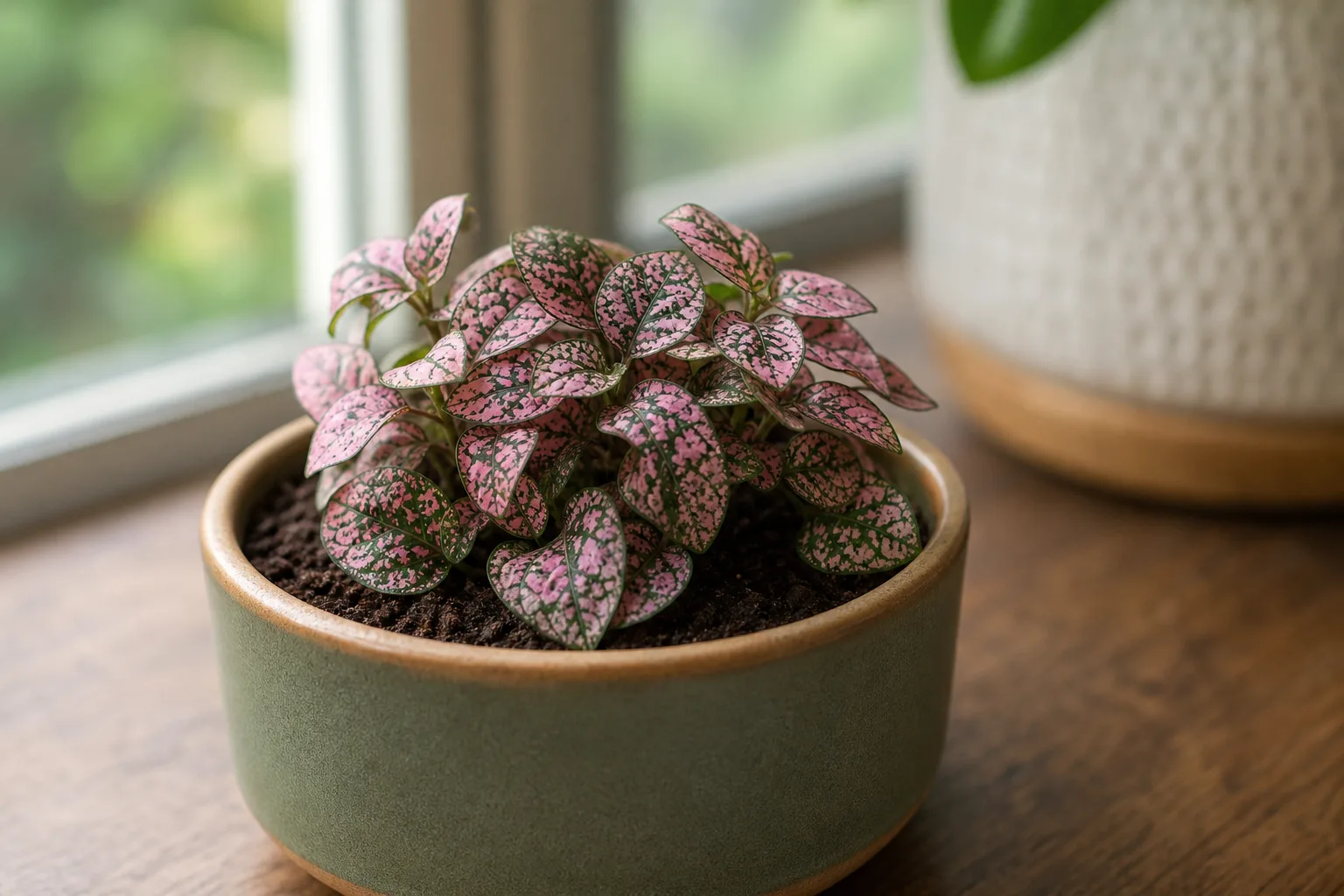
Slow Growth on Polka Dot Plant: Causes, Checks & Fixes
This guide covers slow growth on Polka Dot Plant. See also the general Slow Growth guide, watering, and light pages for this plant.
Slow Growth on Polka Dot Plant: Causes, Checks & Fixes
Quick answer
Polka dot plant (Hypoestes phyllostachya) is a naturally moderate to rapid grower that should push new spotted leaves steadily through warm months-typically reaching 12–20 inches as a houseplant. When growth stalls for weeks, the cause is almost always fixable culture: too little light, flower spikes redirecting energy, chronic wet soil limiting roots, or cool drafts-not a mysterious disease.
First step: move the pot to brighter filtered light, remove every flower spike, and confirm the top 1–2 cm of mix dries before you water again. Do not reach for fertilizer or a bigger pot until light, blooms, and root-zone moisture are ruled in or out.
This page covers growth pace stall-weeks without new spotted foliage while the plant otherwise looks upright. If your main problem is long bare internodes and a stretched silhouette, see leggy growth on polka dot plant. If washed-out spotting and strong window lean dominate in a dim room, start with not enough light on polka dot plant. Slow growth can overlap both, but the first fix here targets energy and roots before shape work.
What slow growth looks like on Polka Dot Plant
On a healthy polka dot plant, progress shows up as fresh ovate leaves with vivid pink, red, or white splashes emerging from pinched nodes along multiple short stems. Slow growth looks different:
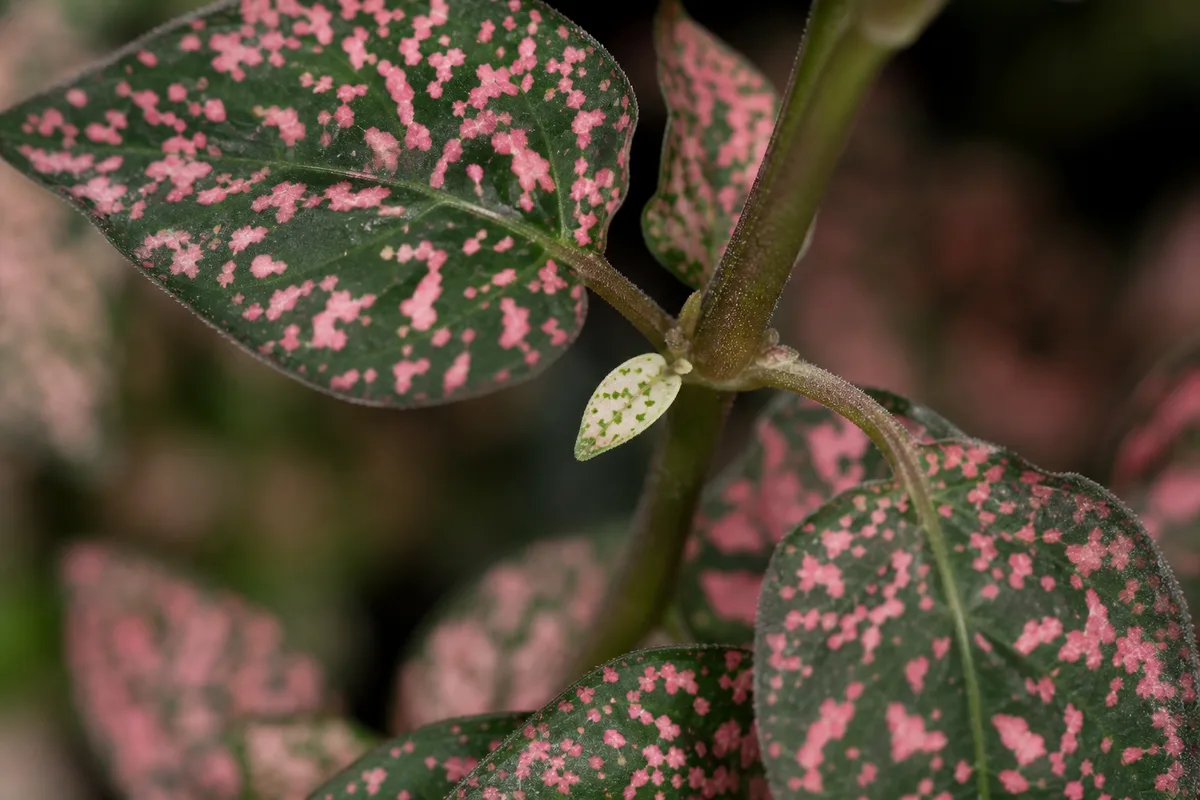
Slow Growth symptoms on Polka Dot Plant - compare with healthy tissue on the same plant.
- No new spotted leaves for three to five weeks during spring or summer, while older foliage stays unchanged
- Static pot weight-the mix feels heavy and cool long after watering, even though the plant barely drinks
- Flower buds forming while vegetative tips stop extending-lilac spikes at stem apexes while side shoots stall
- Faded spotting toward plain green without dramatic stretch-color loss often tracks insufficient bright, filtered light
- Smaller, paler new leaves when they do appear-thin tissue compared with older growth below
- Winter pause only-minimal new growth from late fall through early winter with firm existing leaves
Slow growth on polka dot plant rarely arrives with sudden collapse. The plant often looks merely “fine”-upright, not obviously wilted-while failing to add the bushy spotted mass you expected. That quiet stall is why owners fertilize or repot when light, flower removal, and root moisture are the real brakes.
Normal vs. concerning: Two to three weeks of minimal growth after repotting, after a room move, or during short winter days is common. Concern is warranted when no new spotted foliage appears through a full warm season despite stable care, or when slow growth pairs with yellowing, sour soil, or soft stem bases.
Why Polka Dot Plant gets slow growth
Polka dot plant shares a compact, bushy growth habit that depends on bright filtered light, regular pinching, and consistent-but not soggy-moisture. Because it is often sold as a short-lived bedding annual or houseplant renewed from cuttings, lifecycle timing matters as much as daily care.
Insufficient light (most common)
Hypoestes needs bright, filtered lighting for best leaf color. In too little light, leaves fade and plants become leggy as they reach for brighter conditions-but growth can also stall entirely in dim north rooms before obvious stretch appears. Photosynthesis drops, transpiration slows, and the same watering rhythm that worked in a brighter spot leaves roots sitting in stale moisture.
Interior shelves more than a meter from glass, terrariums in windowless rooms, and pots kept for decoration rather than light often produce the pattern: faded spotting, no new leaves for weeks, and soil that never dries on schedule.
Flower spikes and post-flowering decline
Polka dot plant is grown for foliage, not its small lilac blooms. NC State Extension recommends cutting off flowers so more energy goes to the leaves. Indoors, flowering may occur sporadically through the year or in late summer and fall as day length shifts. Once a plant commits to bloom, vegetative growth often stops; after a heavy flowering cycle, Wisconsin Extension notes houseplants may need to be replaced-stem cuttings rooted early are the practical backup.
This flowering-decline pattern is the key differentiator on polka dot plant versus generic slow-growth articles. Snipping spikes early is not optional maintenance-it is how you keep a foliage-focused plant growing.
Root stress and chronic overwatering on Polka Dot Plant
Polka dot plant prefers organically rich, medium-moisture, well-drained soil and moist compost with slight surface dry-down between waterings. Chronic overwatering does not always kill quickly. Mild root damage often presents first as weeks without new growth, dull foliage, or a pot that stays heavy while the plant barely drinks. Root rot can occur when drainage fails-see our root rot and overwatering guides if soil smells sour or stems soften.
Cool temperatures and seasonal pause
Polka dot plant grows best when temperatures stay at least 12 °C (54 °F) and above about 60 °F for active growth. Drafty winter windows, unheated porches, and air-conditioning blasts can stall new leaves for months even when light is acceptable.
Seasonal slowdown is also normal. From late fall through early winter, growth naturally eases in shorter days. That pause can look like a problem in January but often resolves when days lengthen-without heroic intervention-provided stems stay firm and you are not overwatering a plant that is barely drinking.
Nutrient exhaustion and overcorrection
Depleted mix in a small pot that has not been refreshed for two or more years can produce pale, small new leaves. But fertilizer is a poor first fix for a stressed plant in dim light or wet soil-salts accumulate without improving growth. RHS recommends feeding every two to three weeks only during the April–September growing season, and overfeeding can produce tall, spindly shoots rather than bushy spotted foliage.
Low-level pests
Aphids, mealybugs, and whiteflies can affect polka dot plant, especially indoors under stressed conditions. Sap loss can stall growth before obvious leaf damage appears. Inspect leaf undersides and stem joints if growth is slow despite good light and appropriate dry cycles.
How to confirm the cause
Work through these checks in order. You are separating normal seasonal rest from fixable bottlenecks-and ruling out root rot masquerading as sluggish growth.
- Season and temperature - Is it late fall or winter? Is the plant above roughly 12–18 °C? Sustained cool explains slow growth even with decent light.
- Light at the leaf surface, not the room - Hold your hand between the plant and the window at midday. A soft, diffused shadow for several hours daily suggests usable light. No shadow or only a faint outline means the plant is too far from glass. Faded pink or white spotting strengthens a light deficit-see pale leaves on polka dot plant when color loss is the main signal.
- Flower spikes - Scan every stem tip for lilac bud clusters on racemes. Any visible spike while vegetative growth is flat confirms energy diversion-remove blooms before other fixes.
- New leaf quality - Are emerging leaves spotted and firm, just infrequent? That may be winter rest or recent repot shock. Are they small, pale, and sparse? That fits low light or root stress.
- Pot weight and dry-down speed - Lift the pot one week after watering. Heavy, cool soil that still feels damp points to overwatering, poor drainage, or slow transpiration from dim light.
- Stem bases and smell - Press where stems meet the mix. Firm is reassuring. Soft tissue or a sour smell from drain holes suggests root stress-not a simple light issue.
- Root peek if unsure - Tip the plant out gently. Healthy roots are pale and firm. Brown mushy roots need root-zone correction before growth resumes.
Confirmed low light: Faded spotting, no new leaves for weeks, wet soil persisting, growth only on the window-facing side. Pair with our light guide for placement.
Confirmed flowering stall: Lilac spikes present, vegetative tips static, plant otherwise upright. Remove spikes first.
Confirmed root or pot problem: Sour smell, soft crown, yellowing lower leaves, or roots circling a sour brick of old mix.
Confirmed seasonal rest: Firm leaves, appropriate winter watering reduction, no new growth in short days but plant otherwise stable.
First fix to try
Move polka dot plant to brighter filtered light and remove every flower spike just above the top leaf pair below the buds.
Practical placements that work:
- An east-facing windowsill or west-facing spot with gentle afternoon light
- One to three feet back from a south window behind a sheer curtain
- A bright bathroom or kitchen where humidity is higher-Hypoestes tolerates steamier rooms well
If the plant lived in deep shade, shift it gradually over seven to ten days to avoid scorching colorful leaves. At the same time, check whether the top 1–2 cm of mix dries before the next watering-see our watering guide for the full rhythm.
Do not repot, fertilize, or upsize the container on day one. Light correction plus flower removal are the safest first interventions for slow growth without rot symptoms.
Step-by-step recovery by cause
Once light and flower spikes are addressed, work through secondary fixes based on what your inspection showed.
If light was the main limit
After the move, wait two to four weeks through spring or summer before judging results. New spotted leaves should emerge from pinched nodes. Pinch extending shoot tips along with any flowers to encourage bushiness-see our pruning guide for node placement.
If natural windows are inadequate in winter, add a full-spectrum LED grow lamp 30–45 cm above the canopy for 10–12 hours daily.
If flower spikes triggered the stall
Snip every spike immediately. Within one to two weeks in warm bright conditions, you should see vegetative buds swelling at nodes. If the plant has already finished a heavy bloom cycle and lower stems look tired with sparse spotting, take softwood stem-tip cuttings before decline spreads-our propagation guide covers water-rooting and potting steps. Starting fresh from healthy tips is normal care on this species, not failure.
If the pot stays wet too long
Stop watering until the top half of the mix dries. Confirm drainage holes are open and the saucer is emptied after each drink. If soil smells sour or roots are mushy, repot into fresh airy mix after trimming damaged roots-follow the root rot guide. Never add fertilizer to a stalled plant in wet soil.
If roots were damaged but stems are firm
Trim mushy roots to firm tissue, air-dry bare roots briefly, and repot into fresh well-drained mix. Hold fertilizer until new spotted growth appears. Recovery is slower than a simple light fix-expect several weeks, not days.
If the mix is depleted but roots are healthy
During active growth from spring to early fall, feed with balanced liquid fertilizer at half strength every two to three weeks. Pale new leaves that green up and speckle after feeding confirm a nutrient gap. If leaves stay pale despite good light and dry cycles, refresh mix at the next appropriate repotting window.
If pests are present
Isolate the plant, rinse leaf undersides, and treat the specific pest before expecting growth to resume. Stressed plants should not be fertilized until pest pressure drops and new leaves look firm.
Recovery timeline
Polka dot plant responds quickly when the bottleneck is light and flower spikes. After a brighter placement and bloom removal in warm months, the first new speckled tips often appear within 7–14 days. Meaningful bushy fill-in-multiple new side shoots with normal spotting-usually takes three to five weeks during active growth.
Winter improvements may take longer even after better placement, because day length and indoor temperatures still limit metabolism. Repotting or root trimming can add two to four weeks of pause before new growth counts.
Post-flowering old plants may never regain full vigor after a heavy bloom cycle. Judge those cases by cutting quality from healthy upper stems rather than waiting for the parent to become lush again.
Signs recovery is working: Fresh spotted leaves at nodes, brighter color on new foliage, faster surface dry-down after watering, and firm stem bases.
Signs the problem is worsening: Continued yellowing from the base upward, soft stem tissue, sour soil despite less frequent watering, or new leaves smaller and paler after a light move-possible scorch or unresolved root damage.
Lookalike symptoms
| Pattern | Likely issue | Where to go |
|---|---|---|
| Long bare internodes, top-heavy stretch, blooms on weak apexes | Leggy form from missed pinching or co-factor light | Leggy growth |
| Washed-out spotting, strong window lean, dim shelf placement | Primary light deficit | Not enough light |
| Limp leaves, sudden wilt, very light dry pot | Thirst stress | Drooping leaves or underwatering |
| Yellow lower leaves, sour wet mix, soft stems | Root stress or rot | Root rot |
| Pause for 2–3 weeks after repot, then resumes | Transplant adjustment | Wait; keep light steady |
| Minimal growth Dec–Feb, firm leaves, dry cycles normal | Winter seasonal rest | Brighten placement; resume pinching in spring |
Leggy growth overlaps with slow growth when light is borderline-both improve with brighter filtered light. Leggy plants emphasize stretched form; slow growth emphasizes weeks without any new spotted foliage. Fix light and flowers first on this page; move to the leggy guide if internodes stay long after growth resumes.
Normal species pace: Polka dot plant is not a pothos. A compact pot adding a few well-spotted leaves per month in good summer light may simply be meeting realistic expectations.
What not to do
- Fertilizing first to “push” growth while light is dim or soil is wet-this burns shallow roots and rarely speeds spotted foliage.
- Leaving flower spikes for decoration-blooms redirect energy and often precede decline on this foliage plant.
- Assuming slow growth means more water-check roots and pot weight before adding moisture to an already heavy mix.
- Repotting into a larger container because the plant looks small-oversized wet zones stall roots on this species.
- Judging progress daily instead of tracking new leaf frequency over two to three weeks.
- Moving from deep shade straight to harsh south-window sun-colorful leaves scorch, and stress pauses growth further.
- Expecting summer growth rates in December without supplemental light or warmth.
How to prevent slow growth
Place polka dot plant where bright, indirect light reaches the foliage-east window, filtered south exposure, or supplemental winter lighting. Pinch shoot tips regularly to keep plants bushy. Remove flower spikes the moment bud clusters form. Water when the surface begins to dry; repot every one to two years when roots circle the pot.
Track new spotted leaf count monthly rather than overall height-a few firm speckled leaves each month in summer signal healthy progress. When a plant approaches its first bloom cycle, take tip cuttings as insurance-see our propagation guide.
Cross-check baseline culture in our overview, light, watering, and fertilizer guides.
When to worry
Slow growth alone is low urgency if leaves are firm, stems are hard at the base, and soil dries appropriately between waterings. Escalate when:
- Stem bases soften while soil stays damp
- Yellowing spreads from lower leaves upward
- Soil smells sour or roots are mushy on inspection
- New leaves keep shrinking after light improvement and spike removal
- Pests are active on an already-weak plant
If the plant has finished flowering and looks tired despite corrected care, propagate firm tip cuttings-the parent may not recover once post-bloom decline sets in.
Best inspection order
Light level and window distance → flower buds → pot weight and surface moisture → stem base firmness → root peek if wet stall persists → pest scan on leaf undersides.
Urgency check
Higher urgency: wet soil stall with sour smell, soft stems, or spreading yellow. Lower urgency: winter dimness with firm leaves and appropriate reduced watering.
Conclusion
Slow growth on polka dot plant is usually a culture signal-light, flower spikes, or root moisture-not a mystery disease. This short-lived perennial wants bright filtered light, regular pinching, and blooms removed before they steal energy from spotted foliage. Fix those basics before fertilizer or bigger pots. Judge recovery by new speckled leaves over two to three weeks, accept a winter pause, and take cuttings when post-flowering decline appears. When stretch and bare internodes dominate after growth resumes, pair this page with leggy growth; when color fade and dim placement are the main story, use not enough light.
Related problems: leggy growth, not enough light, root rot, pale leaves. Care guides: overview, light, pruning, propagation, repotting.
When to use this page vs other Polka Dot Plant guides
- Polka Dot Plant watering guide - Use for routine moisture checks before assuming slow growth is the main issue.
- Polka Dot Plant problems hub - Browse all 17 common issues on this species.
- Not Enough Light on Polka Dot Plant - Different entry point when symptoms overlap with slow growth.
- Leggy Growth on Polka Dot Plant - Different entry point when symptoms overlap with slow growth.
- Yellow Leaves on Polka Dot Plant - Different entry point when symptoms overlap with slow growth.