Yellow Leaves on Polka Dot Plant: Causes, Checks & Fixes
Quick answer
Yellow leaves on polka dot plant usually trace to wet roots, drought after wilt, or dim light fading spots-not random aging. First step: press the top 1–2 cm of mix, lift the pot, and match the pattern in the comparison table before changing anything.
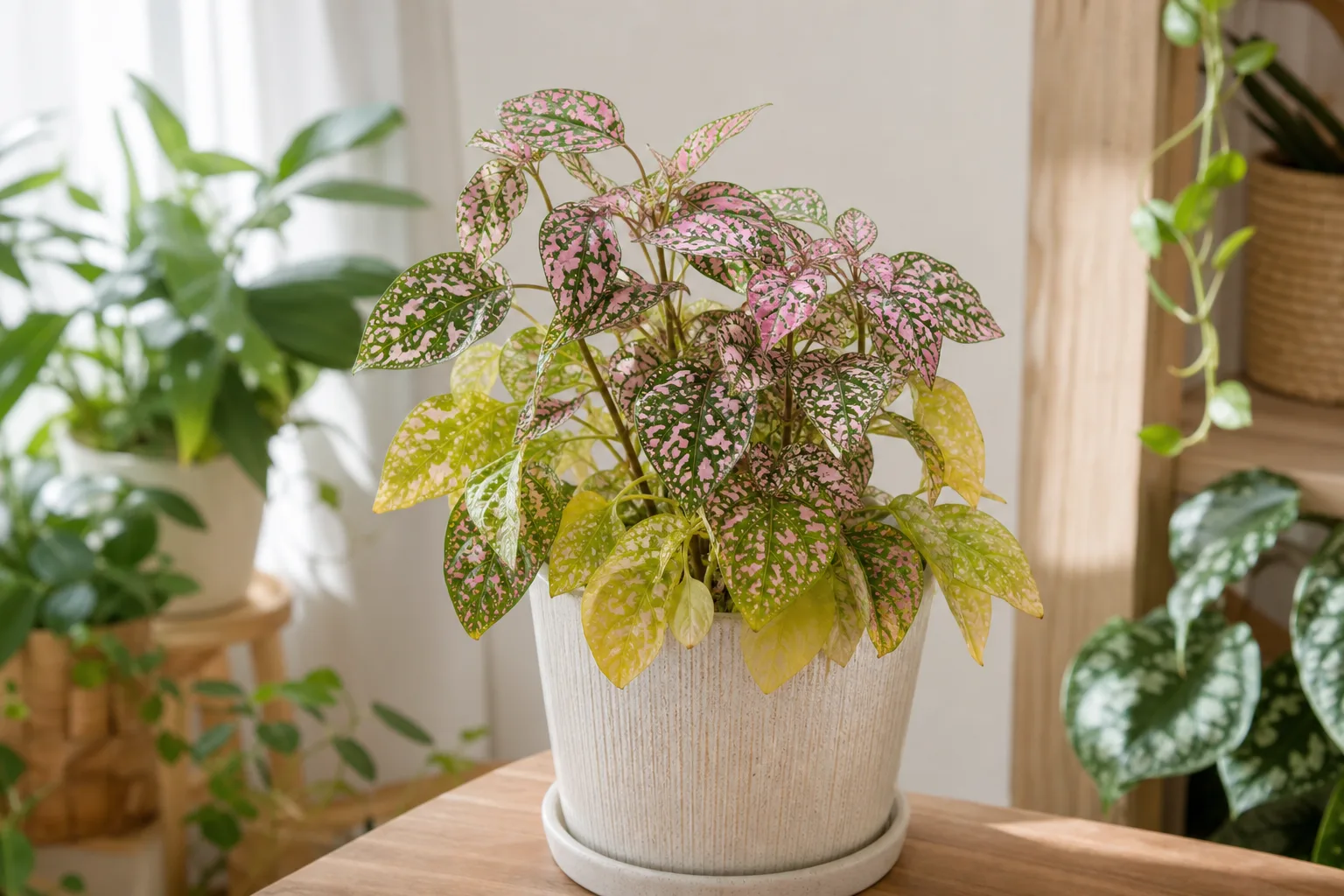
Yellow Leaves on Polka Dot Plant: Causes, Checks & Fixes
This guide covers yellow leaves on Polka Dot Plant. See also the general Yellow Leaves guide, watering, and light pages for this plant.
Yellow Leaves on Polka Dot Plant: Causes, Checks & Fixes
Quick answer
Your polka dot plant’s lower leaves are turning chartreuse-yellow while the pot either stays heavy and damp for days or feels feather-light after a wilt cycle-that split is the fastest way to separate soggy-root stress from drought shed on Hypoestes phyllostachya. Polka Dot Plant overview carries a relatively fine root mass in containers in containers; it wants medium moisture in well-drained soil, not saturated mix or bone-dry cycles.
First step: press the top 1–2 cm of mix, lift the pot, and read the symptom table below. Do not fertilize, repot, and move light on the same day-pick the one fix that matches your pattern.
This page is the yellow-leaf diagnostic hub for polka dot plant. Wet soil with spreading lower yellow? See overwatering on polka dot plant. Light pot after wilt? See underwatering. Spots fading without true sickly yellow? See pale leaves and not enough light. Mushy roots or soft stem bases? Escalate to root rot.
Why polka dot plant gets yellow leaves
Overwatering and shallow roots in humid rooms
Polka dot plant roots sit close to the pot surface and lose oxygen when mix stays wet too long. Lower leaves yellow first while the container stays heavy-classic prelude to rot in steamy bathrooms, terrariums, or peat-heavy mixes without perlite. RHS notes compost should stay moist with slight surface dry-down, and less frequent watering in terrariums because enclosed setups dry slowly. A calendar that works on an open windowsill can overwater the same plant in a glass jar.
Underwatering after repeated wilt cycles
This plant wilts dramatically when dry, then perks up after a drink-owners often interpret that as “it likes to dry out.” Chronic underwatering yellows lower leaves as the plant sheds tissue it cannot support after several wilt-and-recover cycles. The pot feels light, mix pulls from the edge, and yellowing follows obvious limp leaves rather than sour wet soil.
Low light with spot-fade overlap
Dim rooms weaken Hypoestes and can produce pale yellow inner leaves as chlorophyll shifts and decorative spotting fades. Unlike true water-stress yellowing, this pattern often spares stem firmness and pairs with greener new growth or stretch toward windows-see not enough light when fade dominates over chartreuse sickly yellow.
Normal aging on a seasonal bloomer
Polka dot plant is a seasonal bloomer that naturally declines after flowering unless pinched and refreshed. One or two oldest leaves yellowing at the base while new spotted tips stay firm is usually aging, not crisis-especially after lilac flower spikes form. NC State Extension recommends cutting off flowers so more energy goes to foliage; snipping spikes and pinching tips redirects energy before lower leaves shed en masse.
What yellow leaves look like on polka dot plant
Whole leaves or sections turn chartreuse to lemon yellow. Lower leaves often go first. Overwatered plants show yellow plus limp stems on heavy pots; drought-stressed plants yellow after obvious wilt on light pots. True yellowing differs from pale leaves-pale is mostly spot wash toward green without the same sickly yellow tone. Unlike wilting alone, sustained yellowing usually means the plant is shedding damaged tissue, not just temporarily thirsty.
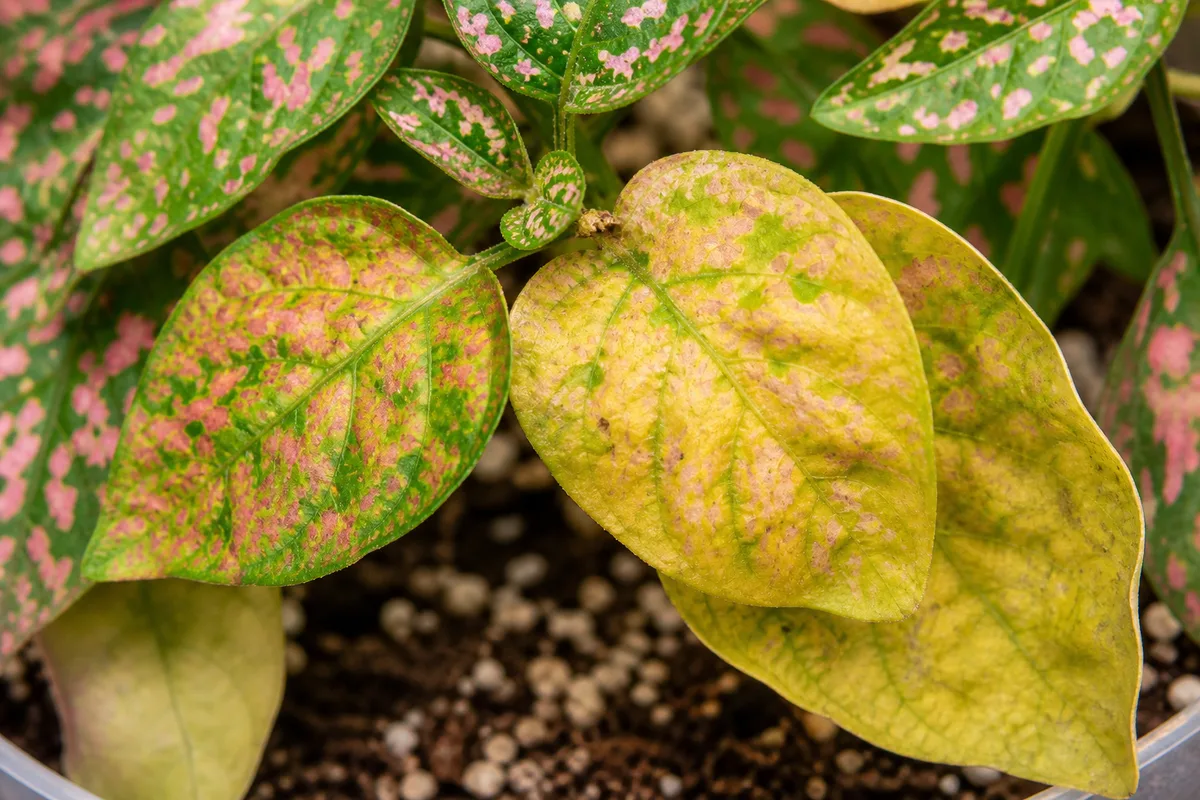
Yellow Leaves symptoms on Polka Dot Plant - compare with healthy tissue on the same plant.
Compare with pale leaves, wilting, and root rot
| What you see | Soil / pot | Stem / roots | Likely cause | Read next |
|---|---|---|---|---|
| Chartreuse-yellow lower leaves, pot stays heavy days | Top 1–2 cm damp; sour smell possible | Limp stems; mushy roots if advanced | Overwatering → rot risk | Overwatering or root rot |
| Yellow after obvious wilt; pot very light | Dry, pulling from edge | Firm stems; roots pale when checked | Underwatering | Underwatering or drooping leaves |
| Pale yellow + faded pink/white spots; no sour smell | Moisture may be normal | Stems firm; plant leans to window | Low light fade overlap | Pale leaves or not enough light |
| One to two oldest base leaves only | Any; rest of plant healthy | Firm; new spotted growth active | Normal aging / post-bloom decline | Pruning to refresh |
| Fine bronze stippling + webbing underside | Often dry edge stress | No mushy rot smell | Spider mites | Spider mites |
| Uniform pale new leaves on old depleted mix | Normal watering rhythm | Firm roots | Possible nitrogen gap | Fertilizer guide after ruling out light |
How to confirm the cause
Work in this order-soil before scissors:
- Top-depth moisture - Press the top 1–2 cm. Still damp several days after watering on a heavy pot confirms wet-root stress; dusty dry surface on a light pot confirms drought path.
- Pot weight - Lift against memory of a healthy dry cycle. Heavy + yellow lower leaves → water stress from excess. Light + post-wilt yellow → underwatering.
- Stem bases - Soft, darkening tissue at soil line with spreading yellow on wet mix needs urgent unpot-see root rot.
- Spot pattern on newest leaves - Fading spots without true yellow redirect to pale leaves; chartreuse sickly yellow on lower leaves with normal spotting above usually means roots, not light alone.
- Pest scan - Hold leaves to light; spider mite stippling and fine webbing mimic stress yellowing-see spider mites and aphids if insects are present.
Confirmed overwatering: heavy pot, lower yellow first, limp leaves on wet soil, optional sour odor. Confirmed underwatering: light pot, wilt history, firm roots if you peek. Confirmed low-light overlap: pale yellow with spot fade, firm stems, window lean-pair with light guide. Confirmed aging: single or double oldest leaf only, flower spikes or post-bloom tired lower stems.
First fix for polka dot plant
Match watering to the pattern you confirmed-one change only.
For wet-soil yellowing: stop watering until the top 1–2 cm dries, empty saucers, and improve air around the pot. University of Minnesota Extension notes overwatering can result in root rot; do not fertilize stressed roots. If roots are mushy when you unpot, trim damage and repot into fresh airy mix-full protocol in root rot.
For drought yellowing: water thoroughly once so excess runs from drainage holes, then resume when the top 1–2 cm dries-see our watering guide for terrarium vs. open-pot rhythm.
For light-related pale yellow: move to bright filtered light over seven to ten days; do not soak the plant to “fix” fade. Cross-check not enough light.
For aging only: pinch tips, remove flower spikes, and let one yellow base leaf drop naturally-no emergency repot.
Recovery timeline
Damaged yellow leaves will not green up. Expect yellowing to stop spreading within a few days once the real stressor is removed. New firm spotted leaves should appear within 7–14 days in warm bright conditions if enough healthy roots remain. Judge recovery by new growth and stem firmness, not by old yellow tissue.
Signs improvement: fresh speckled leaves from nodes, pot weight cycling normally between waterings, no new lower yellow after the first correction week.
Signs worsening: spreading yellow on continuously wet soil, soft stem bases, multiple leaves collapsing in a week-re-unpot immediately and follow root rot workflow.
What not to do
Do not fertilize yellow leaves hoping for recovery-feeding stressed roots on wet soil worsens damage. Do not remove all yellow leaves at once if the plant is already weak; each cut costs energy. Do not repot into a larger pot during recovery. Do not stack repot + fertilizer + dramatic light move on the same day. Do not assume yellow always means more water-check the table first.
How to prevent yellow leaves
Use well-draining mix with perlite, pots with open drainage holes, and bright filtered light at the leaf canopy-baseline culture in our soil and light guides. Water when the top 1–2 cm dries in open pots; reduce frequency in terrariums per RHS terrarium guidance. Avoid repeated wilt cycles. Pinch and refresh tired plants before post-flowering decline spreads yellow through the lower stem. Repot before mix breaks down and stays soggy-see repotting guide.
Practical checks
Urgency check
High urgency: spreading yellow on wet soil, soft stems, sour smell, several leaves failing within a week.
Lower urgency: one oldest base leaf yellowing with healthy new spotted tips and firm stems.
Best inspection order
Soil moisture at top 1–2 cm → pot weight → stem firmness at base → newest leaf spotting → light exposure at canopy → pest underside scan.
Lookalike symptoms
Nitrogen deficiency can pale entire new leaves on depleted mix, but polka dot yellowing from water stress usually hits lowers first with a wet-or-dry pot story. Rule out light and water before feeding-fertilizer guide.
Spider mites cause bronze stippling and fine webbing, not uniform chartreuse lower yellow on wet soil-see spider mites.
Cold drafts below comfortable indoor tropical range can yellow edge tissue suddenly; check vent proximity if water and light checks are normal.
Flowering decline: lilac spikes on leggy stems often precede lower yellow shed-pinch spikes early and start fresh tip cuttings if the base looks tired.
What to read next on polka dot plant leaf problems
- [Overwatering on Polka Dot Plant](/plants/polka-dot-plant/overwatering/) - wet-wilt triage before rot advances
- [Underwatering on Polka Dot Plant](/plants/polka-dot-plant/underwatering/) - light pot and wilt history
- [Root rot on Polka Dot Plant](/plants/polka-dot-plant/root-rot/) - mushy roots and soft stem bases
- Pale leaves - spot fade without true yellowing
- [Not enough light on Polka Dot Plant](/plants/polka-dot-plant/not-enough-light/) - fade, stretch, and slow growth
- Watering guide - open pot vs. terrarium rhythm
- Light guide - placement when yellow pairs with spot loss
When to use this page vs other Polka Dot Plant guides
- Polka Dot Plant watering guide - Use for routine moisture checks before assuming yellow leaves is the main issue.
- Polka Dot Plant problems hub - Browse all 17 common issues on this species.
- Overwatering on Polka Dot Plant - Different entry point when symptoms overlap with yellow leaves.
- Underwatering on Polka Dot Plant - Different entry point when symptoms overlap with yellow leaves.
- Not Enough Light on Polka Dot Plant - Different entry point when symptoms overlap with yellow leaves.