Underwatering on Polka Dot Plant: Causes, Checks & Fixes
Quick answer
Underwatering on Polka Dot Plant is usually tied to shallow roots drying faster than expected. First step: Water thoroughly when the top 1–2 cm is dry and shorten your check schedule to every 2–4 days. If the pot is heavy and soil is wet, stop watering and inspect roots-that is not thirst.
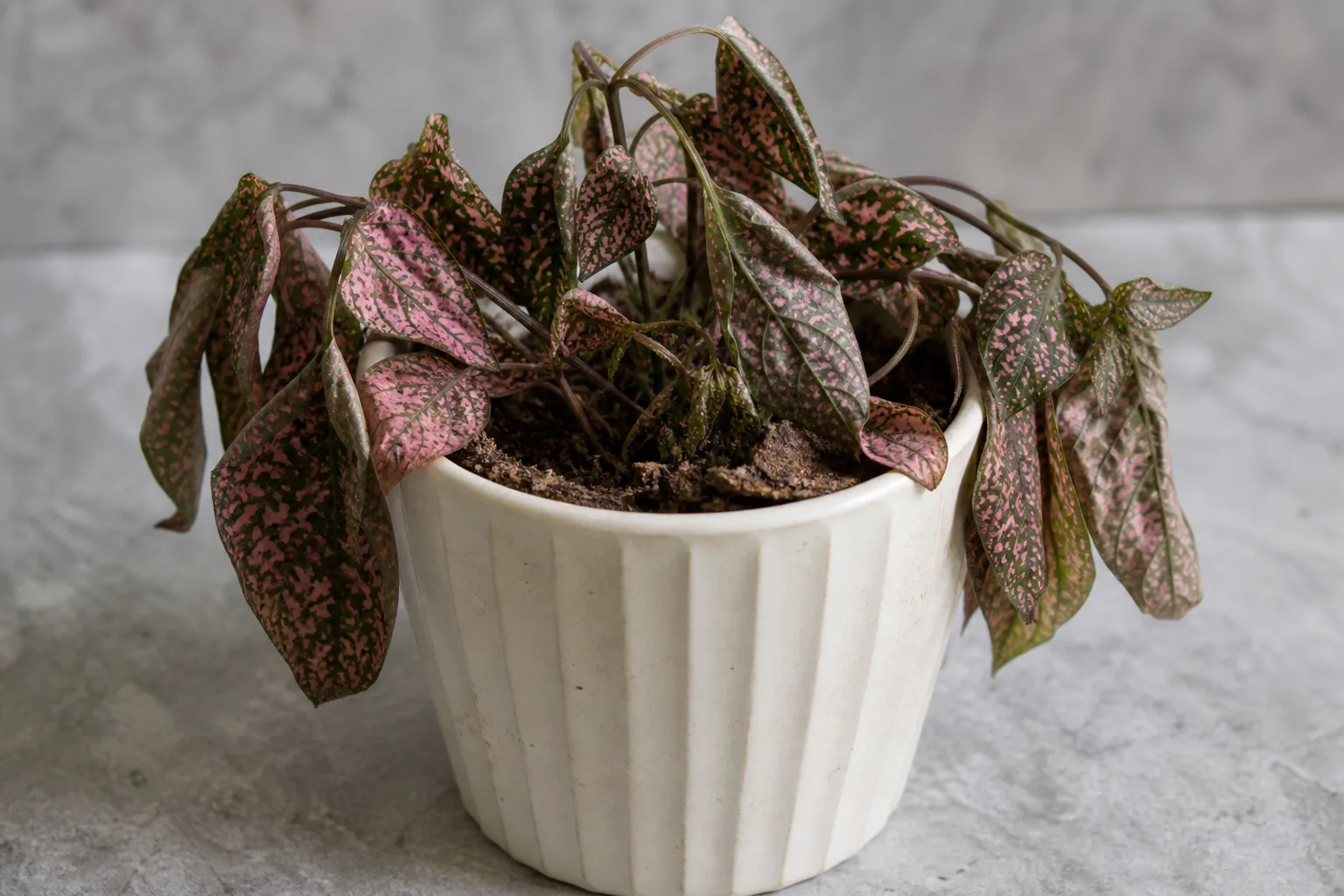
Underwatering on Polka Dot Plant: Causes, Checks & Fixes
This guide covers underwatering on Polka Dot Plant. See also the general Underwatering guide, watering, and light pages for this plant.
Underwatering on Polka Dot Plant: Causes, Checks & Fixes
Quick answer
Underwatering on Polka Dot Plant (Hypoestes phyllostachya) shows up as limp spotted leaves on bone-dry soil in a noticeably light pot-with firm stems, not mushy bases. First step: soak slowly at the sink until water runs from drainage holes, drain fully, and empty the saucer. Most healthy plants perk within 2–6 hours.
If the mix is wet and the pot feels heavy, do not add water. That pattern is overwatering or root damage, not drought-see our wilting guide for the full dry-vs-wet fork.
Scope on this page: Dry-soil thirst diagnosis and rehydration. For all collapse causes including wet-soil paradoxical wilt, see wilting on polka dot plant. For limp foliage without confirmed dry soil, see drooping leaves.
Why Polka Dot Plant dries out faster than you expect
Polka dot plant is a compact tropical with thin, soft leaves and a relatively shallow root mat. It prefers medium moisture in organically rich, well-drained soil and moist compost with slight surface dry-down between waterings-not long drought spells between rare drinks. When the upper root zone dries, turgor collapses fast on colorful foliage.
Shallow roots and upper-soil dry-down
Most feeder roots occupy the top few centimetres of mix. In a 10 cm nursery pot on a bright bathroom sill, that layer can go from moist to dusty within a day or two in bright, dry conditions when indoor humidity dips or airflow increases. The centre of a larger pot may still feel cool while the surface is desert-dry-classic post-repot dry-core mismatch.
Home conditions that accelerate dry-down
- Small store pots in bright light - Bright, filtered light drives transpiration through thin leaves; tiny containers have little water reserve.
- Heating vents and sunny glass - Hot drafts pull moisture from leaves faster than roots replace it, especially above radiators or in afternoon sun (which also fades spotting).
- Terracotta and porous cachepots - Unglazed clay wicks water from the mix; plastic nursery pots dry more slowly but still crash in 2–4 days under strong light.
- Calendar watering - Watering every Sunday ignores seasonal light swings and humidity changes that alter dry-down speed week to week.
Rot-scare underwatering swing
Because polka dot plant is sensitive to soggy soil-root rot can occur when drainage fails-many growers overcorrect after one root rot scare. They wait until leaves wilt before watering again-turning a moisture window into a repeated crash cycle that weakens shallow roots and crisps pink or white leaf margins.
Terrarium humidity vs. root moisture
High humidity in a terrarium or steamy bathroom slows leaf water loss but does not replace soil moisture. Condensation on glass can look reassuring while the compost surface is dry. RHS notes hypoestes need high humidity for foliage yet still require regular watering-humid air and wet roots are separate needs.
Post-repot dry-core trap
Upsizing into a much larger container without adjusting checks leaves the shallow zone dry while the centre stays wet. Owners water less often by habit, miss the dry top inch, and wonder why a “bigger pot” wilted faster. Probe the surface, not the calendar.
What underwatering looks like on Polka Dot Plant
Classic thirst pattern:
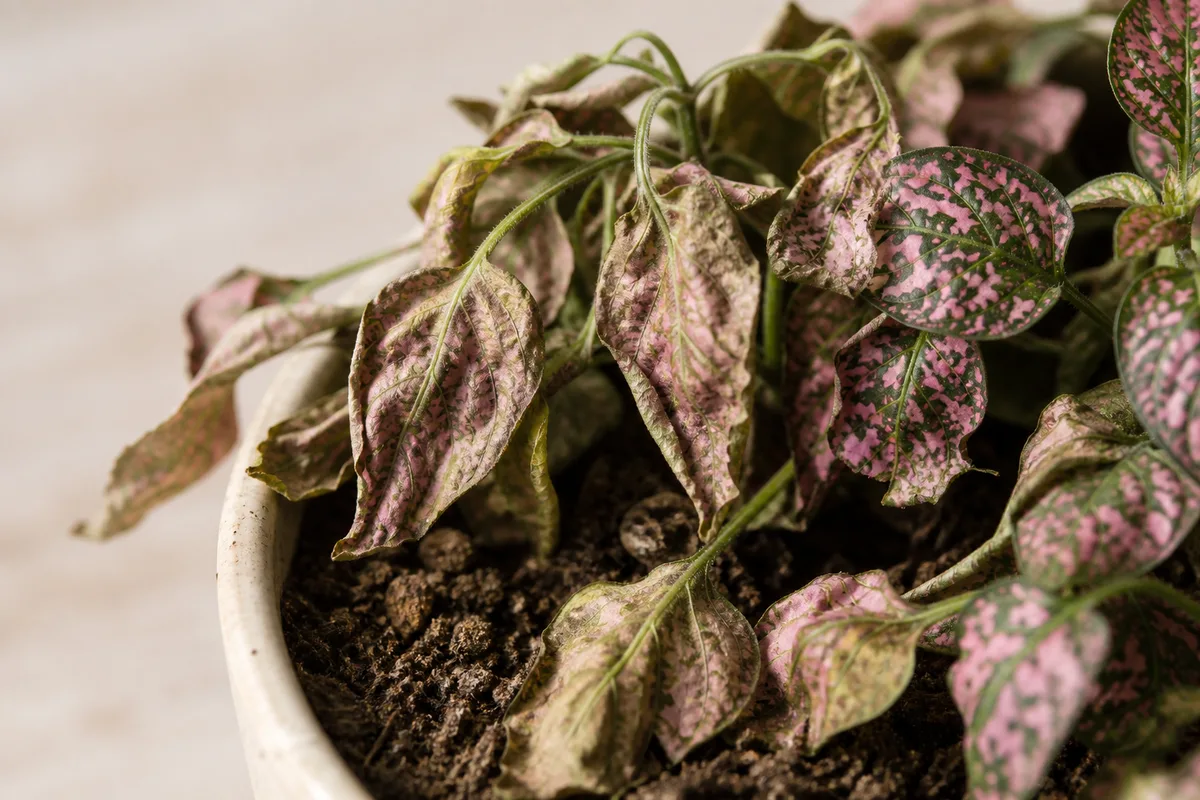
Underwatering symptoms on Polka Dot Plant - compare with healthy tissue on the same plant.
- Whole plant slump-spotted leaves hang limply but stems stay firm at the base
- Top 1–2 cm of mix feels dry; pot lifts noticeably light
- Soil may shrink and pull slightly from the pot wall
- Leaf tissue feels thin; pink, red, or white spotting looks dull before rehydration
- Neutral soil smell-no sour or swampy odor
After repeated dry cycles:
- Crispy brown margins on older leaves, often worse when room humidity is low
- Faded or greener new leaves on cultivars like ‘Confetti’ and ‘Splash’ as stress dulls color
- Bare lower stems where dropped leaves left gaps
- Smaller new leaves than earlier growth flushes
What underwatering does not look like:
- Yellow lower leaves on wet, heavy soil-that points to overwatering
- Soft, mushy stem bases at the soil line-rot, not drought
- Wilt that persists hours after thorough watering on previously dry soil-damaged roots cannot take up water
- Firm, well-watered plants with brown edges only-often low humidity, not thirst alone
The key tell is speed: dramatic droop on dry soil, then visible firming within a few hours after a proper soak when roots are still healthy.
How to confirm the cause
Work through these checks in order before you change anything else:
- Pot weight test - Lift the container. A thirsty polka dot feels light. A heavy pot with wilted leaves suggests the opposite problem.
- Finger probe at 1–2 cm - Dry, cool, crumbly mix confirms drought. Damp, dark, clinging soil means do not add water yet.
- Stem base texture - Firm stems on dry soil fit thirst. Mushy bases on wet soil do not.
- Soil gap check - Daylight between mix and pot rim suggests prolonged dryness or hydrophobic peat.
- Recovery preview - If you already watered lightly, wait two hours, then soak thoroughly. Stems that regain stiffness within a few hours confirm thirst. No response after 24 hours with moist soil suggests root damage-unpot to inspect.
- Environment scan - Note heat vents, sunny glass, and room humidity. Dry air can crisp edges even between waterings-that is compounded stress, not thirst alone.
Dry-soil thirst vs. wet-soil root damage
| What you see | Soil check | Pot weight | Stem bases | Response to one deep soak |
|---|---|---|---|---|
| Limp spotted leaves, dull color | Top 1–2 cm bone dry | Light | Firm | Perks within 2–6 hours |
| Limp leaves, yellow lower foliage | Wet 1+ inches down | Heavy | May be soft | No perk; may worsen |
| Crispy margins only, otherwise firm | Dry or moist | Variable | Firm | Margins permanent; new growth normal after soak if dry |
| Wilts every 3–4 days after soak | Moist briefly, then dry fast | Light between soaks | Firm | Check pot size and root binding-not pure neglect |
| Collapsed plant overnight | Dry top inch | Very light | Firm, not mushy | Strong perk same day if roots intact |
If the mix is wet throughout, the pot is heavy, and lower leaves yellow, switch to overwatering or root rot instead of adding more water.
First fix for Polka Dot Plant
Take the pot to a sink and water slowly until water runs freely from every drainage hole. Let it drain completely, then empty the saucer.
That single deep soak rehydrates the root zone and tells you within hours whether drought was the problem. Water thoroughly until it runs from the bottom of the pot, then empty the saucer. Move the plant off hot drafts while it recovers. Do not mist leaves as a substitute for soil moisture-roots need water in the mix, not a brief surface film.
Do not fertilize a drought-stressed plant. Do not repot on the same day unless mix has gone hydrophobic and will not absorb water after two soak attempts.
If water runs straight through
When peat-heavy mix has dried completely, water may channel down the gap along the pot wall:
- Water once from the top until runoff appears.
- Set the pot in a basin so mix is submerged halfway up the pot for 20–30 minutes.
- Remove when the surface feels moist, drain fully, and empty the saucer.
- Place the pot in a sink or bucket of water until the surface is moist, then drain completely if water still beads on the surface after a top pour. Poke a few shallow holes in a dry crust with a chopstick before soaking again.
Do not leave the pot sitting in standing water overnight-that invites the rot you are trying to avoid.
Step-by-step recovery
After the first deep soak, support recovery in this order:
- Wait for the perk - Most plants show noticeable lift within 2–6 hours; full turgor often returns by the next morning. Resist watering again until the top 1–2 cm dries.
- Raise humidity for 48 hours - A pebble tray or humidifier reduces further edge crisping while roots recover. High humidity keeps foliage looking good on hypoestes.
- Trim only after firming - Wait until leaves re-turgidify before snipping crispy margins. Cut brown edges with clean scissors; green tissue will not turn brown back to green.
- Adjust your check routine - Mark how many days until the top 1–2 cm dries again in your home. That interval becomes your personal cue, not a calendar date.
- Inspect roots only if wilt persists - Slide the plant out if it stays limp on moist soil after 24 hours. Firm, pale roots mean keep diagnosing. Mushy brown roots mean rot treatment, not more water.
Recovery timeline
Mild dehydration on an otherwise healthy polka dot plant often shows visible firming within 2–6 hours of a thorough soak-and-drain. Leaves that were only limp-not crispy-usually look normal by the next morning.
Crispy brown leaf margins from repeated drought do not green up again. Judge success by upright new growth at stem tips and restored spotting on fresh leaves, not by old damaged edges.
A plant left dry for weeks with bare stems may take several weeks to push new leaves, if it recovers at all. Repeated daily wilt-recovery cycles stress shallow roots even when the plant survives each time.
If collapse happens daily despite moist soil, the problem is not underwatering-check for root rot, compacted mix, or an oversized pot staying wet in the centre while the surface looks dry.
Lookalike symptoms to rule out
Overwatering - Limp leaves on wet, heavy soil; yellowing lower leaves; sour smell from the mix; fungus gnats at the surface. Wilt plus wet soil is not thirst.
Root rot - Wilt that does not resolve after one proper soak. Roots are brown, mushy, and smell bad. Wilting is not always a sign to water-root injury from overwatering can cause the same look.
Low humidity alone - Firm, well-watered plants with brown leaf edges but no dramatic whole-plant flop. Humidity below 50% causes margin browning even when soil moisture is fine. Underwatering and low humidity often overlap.
Direct sun scorch - Bleached or burned patches on leaves in afternoon sun. Too much direct sunlight can crinkle and curl leaves and increase water loss.
Heat drafts - Wilt and edge browning when hot air hits leaves near radiators or heating vents. Move off the draft before soaking.
Wilting on wet soil - Same limp look, opposite fix. Always confirm moisture before you pour.
What not to do
Do not panic-water every morning because the plant wilted once yesterday. Check soil first-soggy roots kill polka dot plant as surely as drought.
Do not rely on misting to fix dry soil. A few minutes of leaf moisture does not replace root-zone water.
Do not flood daily to “make up” for drought-that shocks roots and invites rot.
Do not let a collapsed plant bake in a sunny window while you wait to water tonight. Move it to Polka Dot Plant light guide, soak it, then return once firm.
Do not ignore repeated wilt; each cycle weakens shallow roots and fades cultivar color.
How to prevent underwatering
Touch-test the surface every 2–4 days during spring and summer growth. Water when the top 1–2 cm just begins to dry-not when the whole plant has already collapsed. Polka dot plant uses wilt as a late warning, not an early one.
Keep ambient humidity high with a humidifier, pebble tray, or terrarium grouping. Dry air increases water loss through thin leaves and worsens edge browning between waterings.
Match pot size to the plant. A dense mat in a tiny pot dries fast; upsize only when roots circle the container, not preemptively into a much larger pot without adjusting checks.
Use a moisture-retentive but well-draining peat-free mix. Avoid letting peat-heavy soil dry to dust-once hydrophobic, it resists rewetting.
Review seasonal rhythm in our watering guide if your schedule keeps swinging between drought and soggy soil.
In winter, reduce watering slightly but never let the plant go fully dry for days. Central heating dries pots faster than many owners expect.
Practical checks
Urgency check
Higher urgency after multiple hard wilts in one week, extensively crispy foliage, or soil dusty dry several inches down with the pot in hot direct sun. Mild limpness on a light dry pot is routine-soak and wait for perk.
Best inspection order
Surface dryness → pot weight → stem firmness → soil smell → heat sources → root check only if wet wilt appears.
Recovery case study
Editorial observation - LeafyPixels review, March 2026.
A 10 cm ‘Pink Splash’ polka dot in a plastic nursery pot sat on a west-facing bathroom windowsill (~55% RH). Top 2 cm was desert-dry; pot weight was noticeably light; spotted leaves hung flat but stem bases stayed firm. Full soak-and-drain at 9 a.m.: water ran freely after ~90 seconds of slow pouring; saucer emptied within 10 minutes. Leaves began lifting by 11:30 a.m.; full turgor by 2 p.m. Crispy pink margins on two older leaves were trimmed after 48 hours once new growth looked firm-margins did not green up.
Related Polka Dot Plant problems
- [Overwatering on Polka Dot Plant](/plants/polka-dot-plant/overwatering/) - wet heavy pot, yellow lower leaves, sour soil
- Root rot - mushy roots, wilt that outlasts a soak
- [Wilting on Polka Dot Plant](/plants/polka-dot-plant/wilting/) - full dry-vs-wet collapse fork (start here if unsure)
- [Drooping leaves on Polka Dot Plant](/plants/polka-dot-plant/drooping-leaves/) - early limp foliage before full collapse
- Low humidity - brown edges on otherwise firm, watered plants
- Watering guide - top-1–2-cm rhythm and seasonal adjustment
- Overview - light, soil, cultivars, and baseline culture
Conclusion
Underwatering on polka dot plant looks alarming and usually is not fatal when roots are sound. The species’ dramatic flop on dry soil is a moisture alarm-not a death sentence-when stems stay firm and the pot is light. Soak thoroughly, drain well, and adjust your check rhythm so you water when the top 1–2 cm dries, not after repeated collapse. If wilt outlasts the soak, stop watering and inspect roots instead. That single fork saves healthy plants from drowning and dying ones from one more mistaken drink.
When to use this page vs other Polka Dot Plant guides
- Polka Dot Plant watering guide - Use for routine moisture checks before assuming underwatering is the main issue.
- Polka Dot Plant problems hub - Browse all 17 common issues on this species.
- Wilting on Polka Dot Plant - Different entry point when symptoms overlap with underwatering.
- Brown Tips on Polka Dot Plant - Different entry point when symptoms overlap with underwatering.
- Yellow Leaves on Polka Dot Plant - Different entry point when symptoms overlap with underwatering.