Wilting on Polka Dot Plant: Causes, Checks & Fixes
Quick answer
First check the potting mix and pot weight. If the top layer is dry and the pot is light, water deeply; if the mix is wet and the pot stays heavy, stop watering and inspect roots because overwatering can cause wilt too.
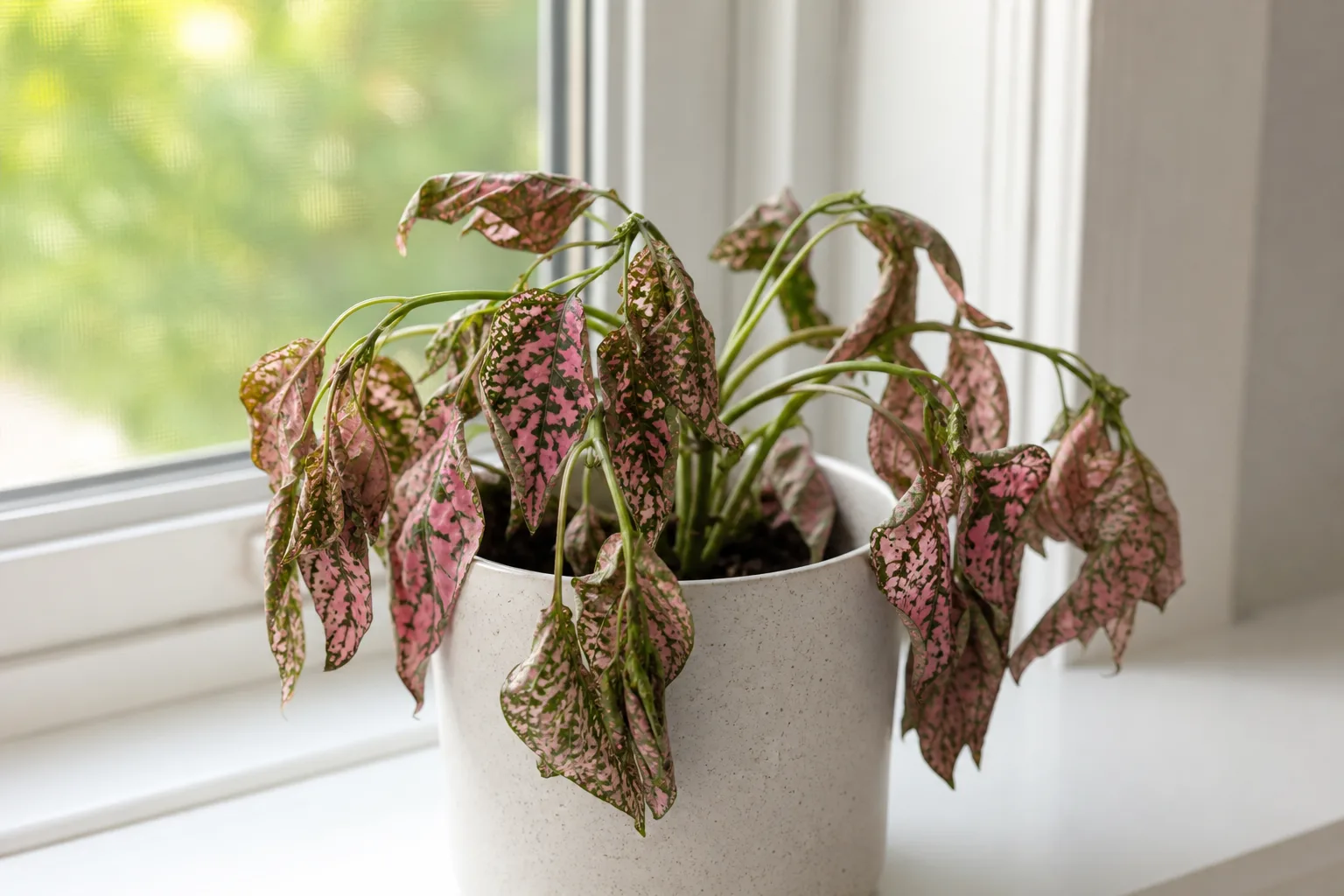
Wilting on Polka Dot Plant: Causes, Checks & Fixes
This guide covers wilting on Polka Dot Plant. See also the general Wilting guide, watering, and light pages for this plant.
Wilting on Polka Dot Plant: Causes, Checks & Fixes
Quick answer
Polka dot plant (Hypoestes phyllostachya) wilts when roots cannot keep up with leaf water demand-usually from dry soil, but also from oxygen-starved roots on wet mix, heat stress, or recent repot shock. The species has thin spotted foliage and a compact root ball, so turgor drops fast when moisture swings too far in either direction.
First step: probe the top inch of mix and lift the pot. A light dry pot gets one thorough soak until water runs from drainage holes, then full saucer drainage. A heavy wet pot with limp stems means stop watering and inspect roots-see overwatering and root rot. Full species context: polka dot plant overview.
Persistent wet-wilt with sour smell or soft stem bases is urgent-roots may already be failing.
What wilting looks like on Polka Dot Plant
Polka dot plant communicates stress through limp spotted leaves and drooping petioles that flatten the canopy. Unlike a slow-building light problem, thirst wilt often hits the whole plant within a day when a small nursery pot dries out in bright light.
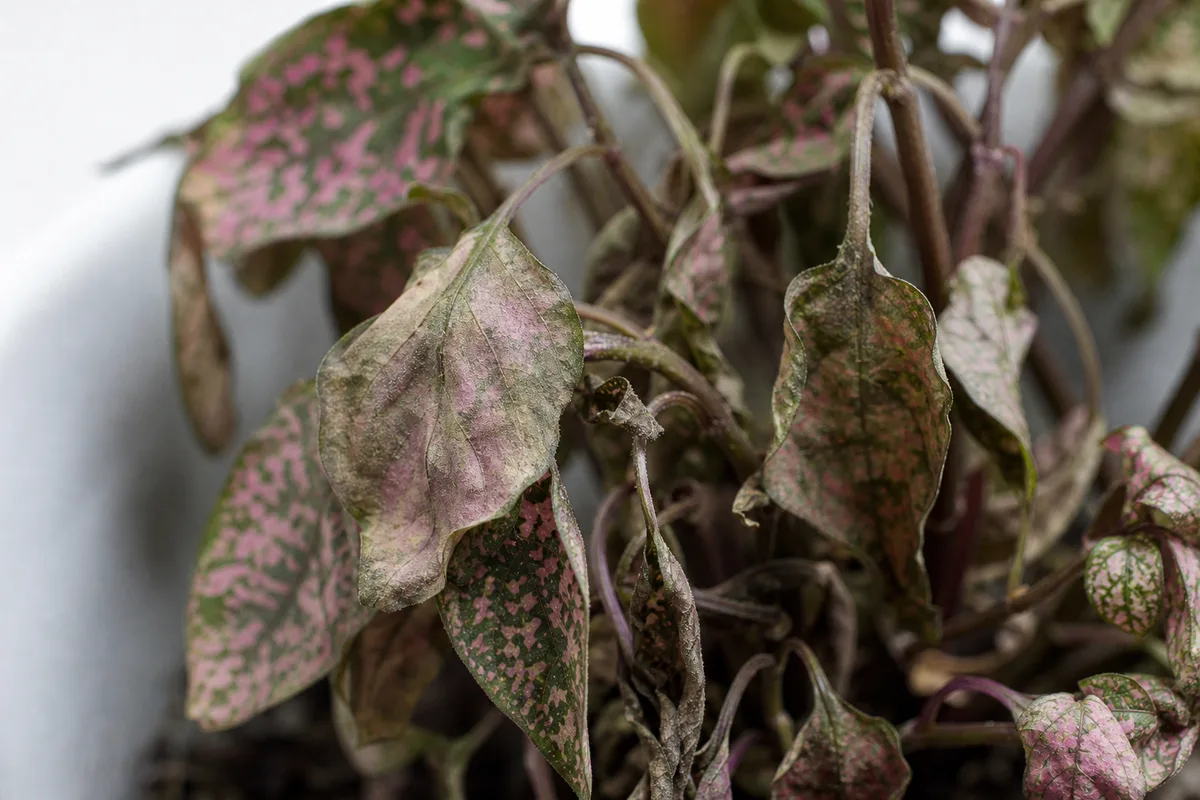
Wilting symptoms on Polka Dot Plant - compare with healthy tissue on the same plant.
Classic dry wilt (most common):
- Leaves lose their crisp spotted pattern and hang limply
- Pot feels light; top inch of mix is dusty dry
- Stems stay firm at the soil line
- Often after a hot windowsill day, missed watering, or a terrarium lid left off too long
Wilt on wet soil (root failure):
- Same limp collapse but pot feels heavy and mix clings when probed
- Lower leaves may yellow; stem bases can feel soft
- Plant stays limp hours after you watered
- Sour or swampy smell when you lift the pot
Heat and transpiration wilt:
- Afternoon slump on a bright sill even when mix was moist that morning
- Leaves recover overnight if root moisture is adequate
- Common when hot drafts from radiators or AC vents raise water loss
Post-repot shock:
- Temporary wilt for 2–5 days after root disturbance
- More likely if you upsized too far or switched to dense peat that stays wet
Wilting vs. other polka dot plant problems
| Pattern | Pot weight | Top inch of mix | Recovery after water | Likely cause |
|---|---|---|---|---|
| Limp spotted leaves | Light | Dry, dusty | Perks in hours | Underwatering / thirst |
| Limp collapse | Heavy | Wet, clings | No recovery in hours | Root rot / overwatering |
| Afternoon flop | Normal | Moist | Recovers overnight | Heat + transpiration |
| Slow limp new growth | Normal | On schedule | N/A | Low light (see not enough light) |
| Limp after repot | Normal | Moist | 2–5 days | Repot shock |
For the dry-pot branch in detail, see underwatering on polka dot plant. For wet-soil rescue, see overwatering.
Lookalike symptoms to rule out
Drooping leaves without full collapse - Often humidity or light stress rather than a root-zone crisis. Stems may stay partly upright while petioles sag. Use this page when the whole canopy goes limp and pot weight tells a clear dry-or-wet story. For partial droop patterns, see drooping leaves.
Chronic underwatering - Repeated dry spells with crispy leaf edges and faded pink spotting. The wilt fork is the same, but recovery needs a rhythm change, not one emergency soak. See underwatering.
Overwatering and root rot - Limp leaves on wet heavy soil; yellowing lower leaves; fungus gnats at the surface; sour smell. If mix is moist but the plant wilts, roots may be failing to take up water-inspect roots before watering again. See root rot.
Low humidity alone - Brown leaf tips or margins while mix is moderately moist and stems stay mostly firm. Dry winter air above radiators can crisp edges without full wilt. Overlap is common; see low humidity.
Why Polka Dot Plant wilts
Hypoestes phyllostachya is native to Madagascar and evolved in warm, humid understory conditions. Indoors it has thin leaves with little water storage and a shallow root system in the small pots most growers buy. When roots lag behind transpiration, turgor collapses within hours-not days.
Fast dry-down in bright light. Small 4-inch nursery pots in east or west windows can go from moist to dry in 24–48 hours when indoor humidity drops below 40%. Calendar watering ignores how fast your room dries the mix.
Fear of overwatering. Because polka dot plants need steady moisture, some growers wait too long between drinks. The dramatic wilt triggers panic daily watering-which swings into root rot.
Wet-root paradox. Dense peat, oversized pots, and saucers left full keep roots anaerobic. Saturated media displaces oxygen; roots decline and the plant appears wilted even though soil feels wet.
Terrarium overwatering. Sealed glass slows surface dry-down, so growers often add water when condensation still looks high. Terrarium-grown hypoestes need watering less frequently because humidity slows compost dry-down-but the bottom layer can still stay soggy while glass looks foggy. Always probe near roots, not the glass.
Heat and drafts. Hot window sills and forced-air vents raise transpiration faster than shallow roots can replace moisture, even when mix felt adequate that morning.
How to confirm the cause
- Lift the pot before you pour water. A light pot indicates dry soil; heavy means wet-soil branch.
- Probe the top inch (about 2–3 cm). Dusty dry throughout means underwatering. Wet clinging soil means do not add water.
- Check stem firmness at the soil line. Firm stems on dry mix confirm thirst. Soft bases on wet mix escalate to root inspection.
- Smell the mix when lifting the pot. Sour odor on wet mix means anaerobic root zone.
- Run the recovery test - Water thoroughly only if dry; wait 4–8 hours in a warm room. Perked stems confirm thirst. No change on wet mix means unpot and inspect roots.
- Note environment - Terrarium vs open pot, heating season, window exposure, and days since last repot.
Wet soils can produce the same wilt look as drought stress-the pot-weight fork prevents opposite treatments.
The first fix to try
If the pot is light and dry: soak until water runs from drainage holes, then drain the saucer completely. Use room-temperature water. Do not repot or fertilize before the recovery test.
If the pot is heavy and wet: stop watering. Move to bright indirect light with airflow. Unpot only if stems stay limp more than 12–24 hours on damp mix-trim mushy roots and repot into fresh airy mix per the root rot guide.
If mix is moist but the plant wilted in afternoon heat: move off the hot sill and away from vents. Water only if the top inch actually dries.
Do not water and repot on the same day unless wet-root failure is confirmed.
Step-by-step recovery
After you confirm the cause and apply the first fix:
- Deep-water if dry - Soak until runoff, then lift and drain fully. Hydrophobic old peat may need a second pass the same day.
- Start the recovery clock - Note the time. Thirst wilt should show firmer stems within 4–8 hours in a warm room.
- Move off heat sources temporarily - Shift away from radiators, sunny south glass, and AC vents while the plant rehydrates.
- Raise humidity for 48 hours - A pebble tray, terrarium lid, or clear bag tent helps reduce further crisping while roots recover. Remove cover once stems stand upright.
- Trim only after firming - Wait until leaves re-turgidify before snipping damaged tissue. Brown crispy margins will not green up.
- Inspect roots only if wilt persists - Slide the plant out if it stays limp on moist soil after 24 hours. Firm pale roots mean keep diagnosing heat or humidity. Mushy brown roots mean rot treatment.
- Adjust your check routine - Mark how many days until the top inch dries again. Align with the watering guide.
Recovery path for wet-root wilt
- Remove plant from pot and shake off wet mix.
- Trim mushy roots with sanitized scissors-cut back to firm white tissue.
- Repot into airy, well-draining mix in a pot with drainage sized to the root ball.
- Water lightly once to settle mix, then wait for partial dry-down before the next drink.
- Hold fertilizer until new growth appears.
Recovery timeline and what to watch
Dry wilt: visible improvement often within 4–8 hours; fuller reset in 1–3 days. Underwatered polka dot plants recover quickly once watered thoroughly, provided you do not leave them dry for days.
Wet wilt after root cleanup: 7–14 days before clear stabilization; judge progress by firm new growth at stem tips, not damaged old leaves.
Severe root loss: expect leaf drop; propagate healthy tips if the base stays soft after two weeks.
Improvement signs: stems stand upright; spotted leaf color brightens; new center leaves emerge firm within a week.
Worsening signs: limp stems past 24 hours on wet soil; soft crown tissue; sour smell intensifies; repeated daily collapse even with consistent watering.
Documented recovery scenarios
Dry-stress recovery (bright east window, 4-inch nursery pot): Top inch went dusty dry over a warm weekend. By Monday afternoon the spotted leaves hung flat and the pot felt noticeably light. One thorough soak until runoff, saucer drained, plant moved off the sill edge. Stems firmed within five hours; full canopy turgor returned by the next morning. No pruning needed.
Wet-root recovery (sealed terrarium, 6-inch pot): Condensation looked healthy but lower mix stayed soggy for two weeks. Whole plant wilted despite wet surface soil; stem bases felt soft and mix smelled sour. Unpotted, trimmed roughly 40% of dark mushy roots, repotted into fresh airy mix in a slightly smaller pot with drainage. Held water for ten days except one light settle-in drink. First firm new leaf pair appeared on day 12.
These timelines assume warm room temperatures (18–24°C / 65–75°F) and bright indirect light-not cold drafts or dark corners.
When to worry
Treat as urgent when wilt continues on wet heavy soil with soft stem bases, sour smell, or fungus gnats hovering at the surface. Roots may already be failing-delay risks total collapse.
Same-day root inspection when stems feel soft at the soil line on wet mix, or wilt persists more than 12–24 hours on a heavy pot after prior watering.
Moderate concern: repeat afternoon wilt that recovers overnight. Manageable heat stress-not an emergency-but move off the hot sill.
Likely unsalvageable: more than half the root mass is mushy, the stem base is hollow and brown, and no firm new growth appears after two weeks of corrected care. Propagate from healthy stem tips while tissue is still firm-polka dot plant roots easily from cuttings.
When to contact local extension: if multiple plants in the same setup wilt simultaneously, or if you suspect chemical exposure, pesticide drift, or unusual spotting beyond moisture stress.
Mistakes to avoid
- Do not water automatically when you see collapse-confirm dry vs wet first
- Do not add more water when wilt persists on a heavy wet pot
- Do not fertilize a collapsed plant before confirming root health
- Do not keep the pot standing in collected runoff
- Do not place in direct harsh sun to “dry it faster”-that increases transpiration
- Do not water and repot simultaneously unless wet-root failure is confirmed
How to prevent wilting next time
Keep compost moist but allow the surface to dry slightly between waterings. Water when the top inch just begins to dry-not on a fixed weekly calendar. Use good-drainage media and pots with drainage holes sized to the root ball.
Open-pot homes: Check mix every 2–3 days in bright light during active growth. Winter heating dries air fast-pair moisture checks with a pebble tray or humidifier if edges crisp.
Terrarium culture: Hypoestes suits humid terrarium setups but needs less frequent irrigation than open pots. Probe near roots; condensation on glass is not a watering cue.
Bright window sills: Move back from hot afternoon sun. Heat wilt mimics thirst-confirm dry soil before soaking.
Dry HVAC rooms: Raise ambient humidity above 50% when possible. Thin leaves lose turgor fast when air is dry even if mix is moist.
Cross-check your baseline rhythm with the watering guide.
Conclusion
Wilting on polka dot plant is usually a moisture alarm, not a death sentence-when you split dry wilt from wet wilt before acting. Lift the pot, probe the top inch, and run the recovery test on dry soil only. Branch to root inspection when the mix is wet and stems stay limp. That single fork saves healthy plants from drowning and dying ones from one more mistaken drink.
When wet-wilt persists past root cleanup, route to the root rot workflow rather than repeating emergency soaks.