Root Rot on Polka Dot Plant: Causes, Checks & Fixes
Quick answer
Root rot on Polka Dot Plant means roots have decayed from chronic wet soil - common in bathrooms and sealed terrariums. First step: unpot, rinse shallow roots, and trim every brown mushy section before repotting into fresh airy mix.
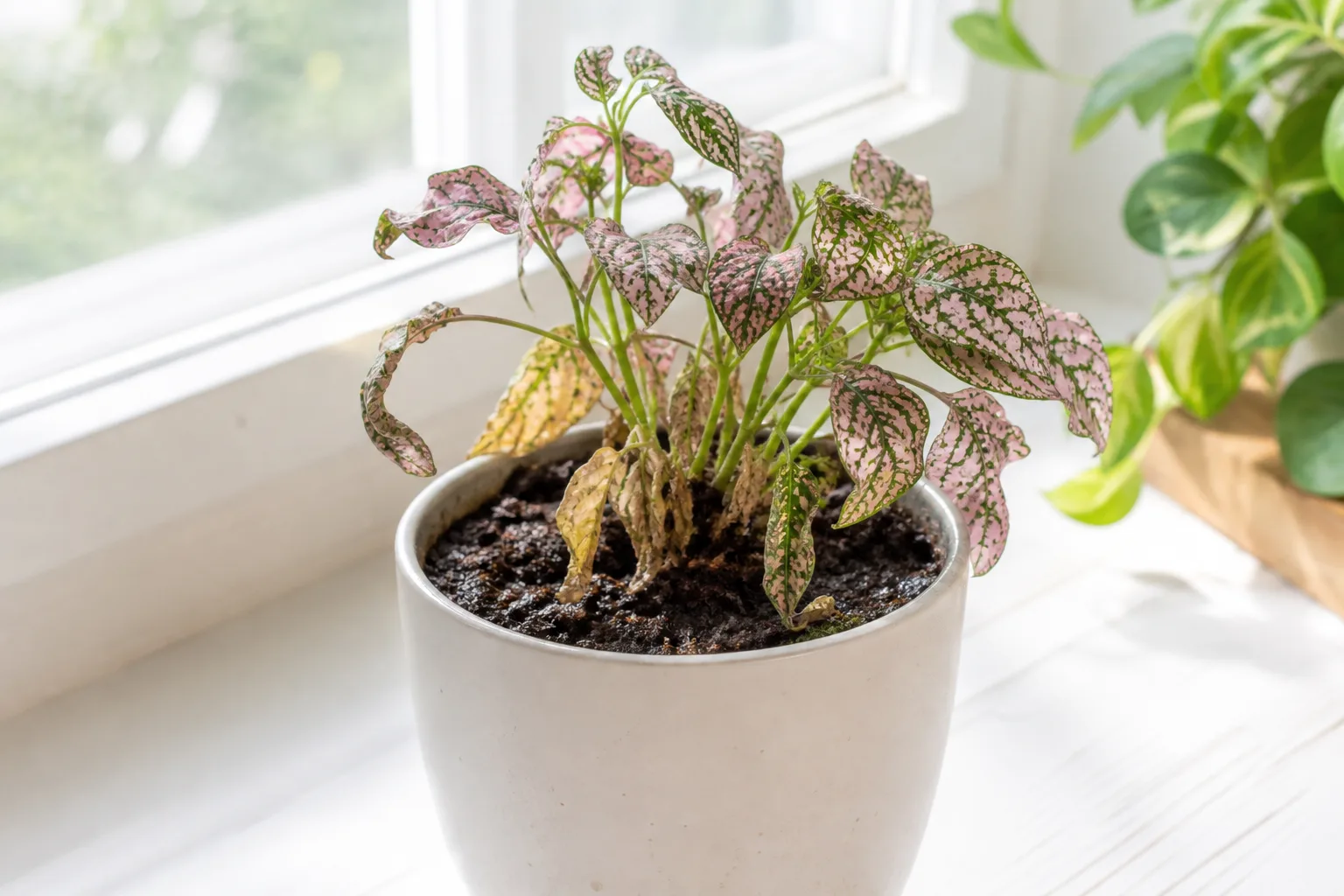
Root Rot on Polka Dot Plant: Causes, Checks & Fixes
This guide covers root rot on Polka Dot Plant. See also the general Root Rot guide, watering, and light pages for this plant.
Root Rot on Polka Dot Plant: Causes, Checks & Fixes
Quick answer
This page is for confirmed root decay - sour-smelling mix, mushy brown roots, wilt on wet soil, or soft stem bases on your Polka Dot Plant (Hypoestes phyllostachya). If the top 1–2 cm is merely wet but roots are still firm, start with the overwatering guide instead; that page covers early triage before tissue dies.
Root rot here almost always traces to chronic saturation in the very places polka dots thrive: steamy bathrooms, closed terrariums, and dense peat mix under dim light. Shallow fibrous roots sit in the wettest layer and fail faster than deeper-rooted houseplants in the same pot. Medium moisture in well-drained soils is the target - not a root zone that never breathes.
First fix: unpot, rinse shallow roots under lukewarm water, and trim every brown, translucent, or mushy section with clean scissors. Repot only the firm tissue into fresh mix with perlite, in a right-sized pot with open drainage. Do not water again until the top 1–2 cm begins to dry.
| Situation | Root inspection | First action | Use this page? |
|---|---|---|---|
| Wet heavy pot, firm pale roots, no sour smell | Not needed yet | Dry down 1–2 cm, fix rhythm | No - overwatering guide |
| Wet pot, yellow lower leaves, limp speckled foliage | Optional if decline continues | Stop watering, check drainage | Start overwatering; return here if roots turn mushy |
| Sour smell, brown mushy roots, soft stem base | Required | Unpot, trim, repot, propagate backup | Yes - this guide |
When to use this page vs. sibling guides
The overwatering guide covers early wet-soil rescue when roots are still firm and pale - you stop watering until the top 1–2 cm dries and correct your rhythm. This page is for confirmed root rot: you have inspected roots and found brown, translucent, or mushy tissue, often with sour-smelling mix and softening at the stem base.
| Symptom pattern | Best guide | Why |
|---|---|---|
| Limp leaves, dry top 1–2 cm, light pot | Underwatering | Roots are thirsty, not rotting |
| Limp leaves, wet heavy pot, firm roots on check | Overwatering | Wet habit before tissue dies |
| Limp leaves, wet pot, mushy roots, sour smell | This page | Confirmed decay - trim and repot |
| Wilt fork before you unpot | Wilting | Dry-vs-wet decision tree |
| Dull green leaves, firm stems, normal moisture | Not enough light | Color loss from low light, not rot |
| Wilt 3–5 days after recent repot, firm roots | Repotting | Transplant stress, not active decay |
| Gnats or surface mold on firm stems | Fungus gnats or mold on soil | Wet-soil alarm - confirm roots before assuming rot |
If you are unsure, unpot once. Firm pale roots with a dry-down fix point to overwatering. Mushy roots with a sour odor point here.
Why Polka Dot Plant gets root rot
Polka Dot Plant is built for warm, humid air - terrariums, bathrooms, and grouped humidity trays are ideal for foliage. That same environment slows evaporation from the pot and traps moisture at the soil line where this species’ compact, shallow root mass lives. Root rot can occur on Hypoestes when drainage fails or mix stays saturated too long.
Terrarium and bathroom moisture traps
In a steamy bathroom, condensation on walls does not replace checking the pot. Mix can stay saturated at the surface while glass fogs, especially on a north-facing sill with slow transpiration. In a sealed terrarium, compost dries much slower because humidity recycles - owners often water less frequently, yet the root zone can still sit anaerobic if setup used too much substrate or no drainage layer. Condensation on glass is not proof the roots are safe; probe the soil surface.
Shallow roots in dense peat mix
Fine roots explore the top few inches. When that layer stays wet for days, oxygen-starved roots cannot function and pathogens spread through wet, poorly drained soils. Polka Dot Plant wilts dramatically when dry - many growers pour at the first limp leaf even when soil is already wet, deepening the cycle.
Oversized pots, blocked drainage, and calendar watering
A cachepot without a drain hole, a saucer left full, or a pot twice the rootball’s size keeps the shallow zone swampy. Watering every Sunday instead of when the top 1–2 cm dries is a common trigger in humid rooms where the surface never cues thirst. Good drainage and right-sized containers matter as much as humidity. Dim corners slow water use - see not enough light when variegation fades while the pot stays heavy.
What root rot looks like on Polka Dot Plant
Early signs: yellowing, wilt on wet soil, sour smell
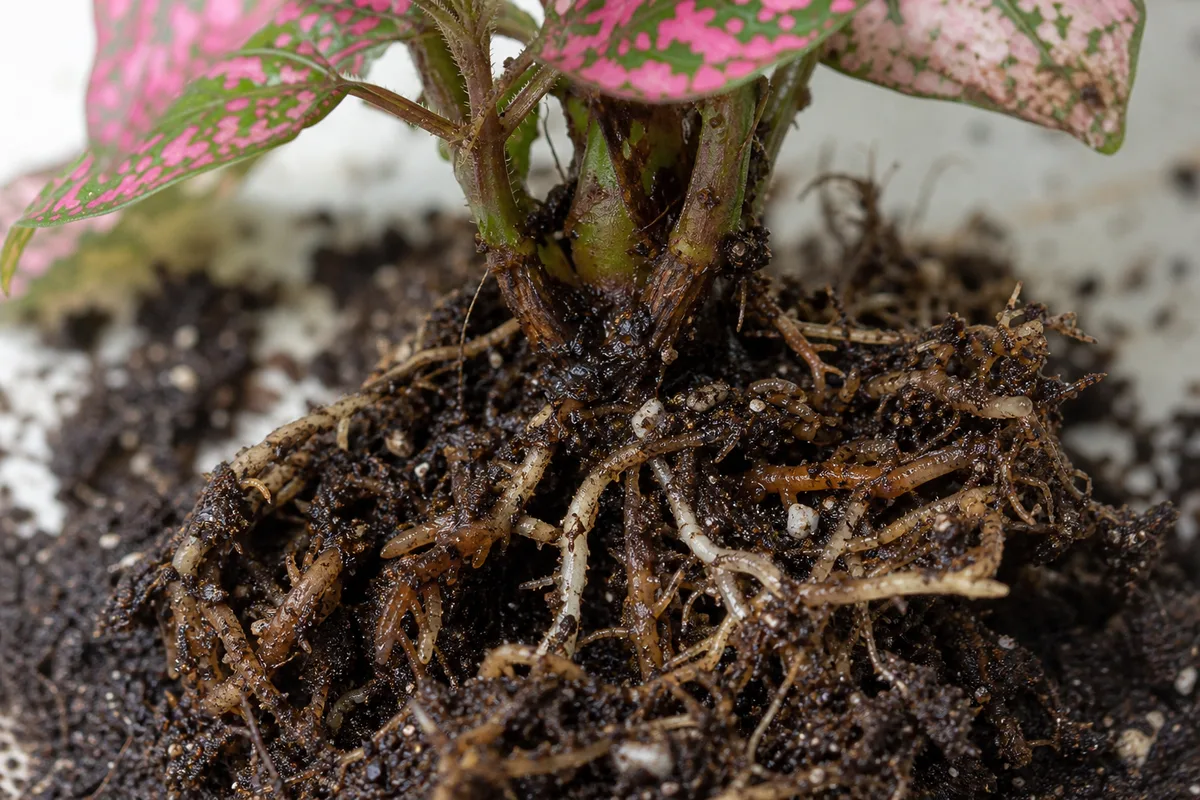
Root Rot symptoms on Polka Dot Plant - compare with healthy tissue on the same plant.
Lower spotted leaves yellow while the pot feels heavy and cool. Stems may still feel firm, but the mismatch matters: limp foliage on wet mix is rot suspicion, not thirst. Lift the pot - a sour or swampy odor from drainage holes often appears before stems soften. Fungus gnats and white mold on the surface frequently share the same chronically wet habitat.
Advanced signs: soft stems and blackened bases
Stem tissue softens where it meets the mix. Blackening can climb upward from the crown. Growth stalls; new speckled leaves stop emerging. Do not confuse this with loss of leaf colouring from insufficient light - that pattern pairs with a firm stem, neutral smell, and normal dry-down between drinks, not sour wet mix.
Root condition reference (what you should see on inspection)
Use this table when you rinse roots after unpotting. Descriptions match what growers report on rescue - pale firm tissue vs. brown mush is the decisive fork.
| Root appearance | Texture | Smell | Verdict |
|---|---|---|---|
| Firm, white or pale cream | Springy, holds shape when rinsed | Neutral earthy | Healthy - dry-down fix may be enough |
| Brown tips only, core still firm | Slightly soft at tips | Slight mustiness | Early decay - trim tips, repot fresh |
| Dark brown, translucent, stringy | Mushy, slips off when pulled | Sour or rotten | Active rot - full trim-and-repot |
| Black, hollow at crown | Stem base soft when pressed | Strong foul smell | Severe - stem-tip cuttings as backup |
Root rot vs. overwatering vs. underwatering vs. lookalikes
| What you see | Soil / roots | Stems | Likely cause | Where to go |
|---|---|---|---|---|
| Yellow lower leaves, heavy wet pot | Wet days; roots still firm and pale when checked | Firm at base | Overwatering habit, early stage | Overwatering |
| Wilt, sour smell, mushy brown roots | Wet throughout; roots pull away brown | Soft or dark at soil line | Confirmed root rot | This page - trim and repot |
| Dramatic wilt, light pot, dry top 1–2 cm | Dry, pulls from pot sides | Firm | Underwatering | Underwatering |
| Dull green leaves, firm stems, neutral smell | Cycles normally between drinks | Firm | Low light or reversion | Not enough light |
| Brown leaf tips, firm stems | Normal moisture rhythm | Firm | Low humidity stress | Low humidity - not rot |
The wet-wilt paradox is the signature panic moment on polka dots. Speckled leaves look thirsty - limp, drooping - but the pot is heavy and mix at depth is cool and damp. Plants with root rot are often wilted even though the soil is wet - roots cannot transport water, not that the plant needs another drink.
How to confirm root rot (6-step inspection)
Work through these checks in order. This single block replaces scattered urgency and inspection notes elsewhere on the page.
- Pot weight and surface moisture - Heavy, cool pot with wet top 1–2 cm after several dry days suggests poor drainage or low light, not thirst.
- Stem pinch at soil line - Springy green tissue is reassuring. Mushy or dark bases mean crown involvement; act same day.
- Smell at drainage holes - Sour, anaerobic odor confirms decay in the mix, not harmless surface mold alone.
- Unpot and rinse shallow roots - Slide the plant out gently. Healthy roots are firm and white or pale; rotted roots are soft, brown, and may smell bad.
- Damage threshold - If more than one-third of the root mass is mushy, or the crown is soft, treat as urgent and prepare propagation backup.
- Wilt context - Wilt that does not recover within hours after a thorough drink on dry soil points to damaged roots, not underwatering.
Severity decision table
| Finding | Diagnosis confidence | First action |
|---|---|---|
| Firm roots, wet surface only | Overwatering likely | Pause water; improve light and drainage |
| 10–30% mushy roots, firm crown | Mild rot | Trim damage; repot same day |
| 30–60% mushy roots, some firm stems | Moderate rot | Trim aggressively; smaller pot; cuttings backup |
| Mushy crown, >60% dead roots | Severe rot | Cuttings only; discard saturated mother if crown fails |
Rescue plan by severity
Work through this ladder after you unpot and rinse roots. Thresholds are practical inspection guides, not lab measurements.
Mild - less than one-third of roots mushy, firm stem base
Trim affected root tips, let cut surfaces air for thirty to sixty minutes on paper towel, repot into fresh organic mix with roughly 15% perlite per the soil guide, in a pot only slightly larger than the trimmed rootball. Water lightly once to settle mix, then wait until the top 1–2 cm dries. Bright filtered light speeds recovery without scorching speckled leaves.
Moderate - large share of roots mushy, foul smell, firm upper stems
Cut all mushy tissue back to firm white tissue. Discard saturated old mix entirely. Repot at the same depth in a clean pot sized to remaining roots - not the full bushy canopy spread. Take 5 cm soft stem-tip cuttings from healthy shoots as backup per the propagation guide.
Severe - stem base soft or blackened, most roots collapsed
Treat as a propagation case. Cut the plant back to healthy tissue above any soft line. Save only firm upper stem sections; discard rotted base and any tissue that feels wet, blackened, or smelly. Repot the stub with minimal mix only if any firm roots remain; otherwise treat cuttings as the primary salvage.
Terrarium cases: evacuate, replace substrate, improve ventilation
Do not attempt rescue inside a sealed jar. Evacuate the plant to an open nursery pot with drainage:
- Remove all saturated substrate from roots - do not reuse wet terrarium mix.
- Trim rot as above. Let trimmed roots air for thirty to sixty minutes on a paper towel if the crown was very wet (not sun exposure).
- Rebuild the terrarium with a drainage layer (LECA or pebbles plus mesh) and fresh substrate before returning the plant - only after firm new roots form if damage was moderate.
- Vent the lid several hours daily until the surface loses constant wet sheen. Terrarium specimens need less frequent watering - but less water is not the same as saturated anaerobic soil.
Hydrophobic peat after rescue
Old saturated peat can repel water after it dries - water may run down the pot sides while the center stays dry. After repotting into fresh mix, water slowly in two passes ten minutes apart, or bottom-water once to rewet evenly. If water channels out instantly, replace outer mix rather than drowning the crown daily.
Recovery timeline and failure triggers
Yellowed leaves will not re-green - judge success by new roots and fresh speckled growth at the crown.
- Days 1–3: Plant may look worse after trim; slight wilt is normal post-repot stress if stems stay firm. Keep bright indirect light; avoid direct sun on stressed foliage.
- Days 7–10: Look for firm white root tips when you gently lift the edge of the rootball. Stems should stop softening. Odor should fade.
- Days 10–14: New pink or white spotted leaves at growing tips mean the shallow root mass is stabilizing.
- Beyond 14 days: If wilt returns on barely moist mix, stems re-soften, or sour smell comes back - escalate to cuttings rather than repeated heavy repotting.
When rescue has failed - escalation protocol
Shift from mother-plant rescue to cuttings-first salvage when any of these appear after day fourteen:
- Stem base softens again after a brief stabilization pause
- Sour odor returns despite dry-down discipline
- Wilt persists on barely moist mix with no new white root tips
- More than half the trimmed root mass turns mushy on a gentle re-check
At that point, take fresh stem-tip cuttings from the healthiest firm shoots, discard the saturated mother if the crown is collapsing, and root cuttings in humid bright conditions per the propagation guide. Do not fertilize stressed plants; salts in wet mix add injury. Severe crown rot rarely reverses - backup cuttings often outperform a repeatedly trimmed mother plant.
If symptoms appeared only three to five days after a recent repot with firm roots on inspection, consider repotting stress before assuming active rot spread.
Field notes from rescue attempts
These observations come from documented home rescues - not guaranteed outcomes, but realistic markers for what mild vs. severe cases look like in practice.
Mild case - sealed 2-litre jar, March 2026: Pink Splash cultivar in a closed terrarium showed yellow lower leaves and a heavy pot after three weeks without opening the lid. Evacuated to a 10 cm nursery pot, rinsed roots - roughly 20% brown tips on otherwise firm white tissue. Trimmed tips, repotted with 15% perlite. Firm white root tips visible at day eleven; first new speckled leaf at day sixteen. Mother plant recovered without cuttings.
Severe case - bathroom shelf, January 2026: Confetti in a cachepot with no drain hole, watered weekly on a calendar. Sour smell at drainage holes after lifting from the decorative outer pot; crown base soft when pressed. Unpot revealed more than 70% mushy roots. Trim-and-repot failed by day twelve - stem base re-softened. Two 5 cm stem-tip cuttings from upper firm shoots rooted in water by day eighteen; mother discarded. Cuttings became the salvage.
What not to do
Do not keep watering because leaves look limp when soil is already wet - that is how rot advanced. Do not repot into garden soil, a pot without holes, or a much larger container “to help drying” - extra wet mix around shallow roots worsens decay. Do not leave the plant in a sealed terrarium with saturated substrate while hoping humidity will heal roots.
Do not fertilize stressed plants; salts in wet mix add injury. Do not compost mushy roots or reuse sour mix. After a rot scare, avoid swinging to chronic underwatering - that cracks shallow roots on the next flood cycle; follow the watering guide rhythm instead.
How to prevent root rot
Prevention on Polka Dot Plant is surface dry-down in a right-sized, well-draining pot - not fear of all moisture.
- Check the top 1–2 cm every 2–4 days in open pots; probe terrarium soil even when glass fogs.
- Use organic mix with ~15% perlite and empty saucers after every drink.
- Give bright filtered light so the pot cycles between waterings - dim corners keep peat damp for a week.
- In terrariums, water small amounts at the edge; include a drainage layer; vent regularly.
- Treat fungus gnats and surface mold as early wet-soil alarms, not isolated pest problems.
Polka Dot Plant care cross-check
| Factor | Rot-friendly mistake | Target after rescue |
|---|---|---|
| Watering | Pour at first wilt without checking wet soil | Top 1–2 cm dry between drinks |
| Pot | Oversized, no drain hole, full saucer | Right-sized with open drainage hole |
| Mix | Aged straight peat, no perlite | Fresh airy blend per soil guide |
| Light | Dim bathroom shelf | Bright filtered light |
| Terrarium | Sealed jar, saturated substrate | Drainage layer + venting |
| Post-rot swing | Stop all water for weeks | Even moisture without sogginess |
Related Polka Dot Plant guides
- Overwatering - early triage when roots are still firm
- Underwatering - dry pot wilt exclusion
- Wilting - dry-vs-wet fork before you unpot
- Watering - prevention rhythm for open pots vs. terrariums
- Not enough light - color fade vs. rot confusion
- Repotting - post-repot stress vs. ongoing decay
- Propagation - stem-tip cuttings when roots fail
- Fungus gnats - wet-soil companion pest
- Mold on soil - surface fungus sharing the same cause
- Polka Dot Plant overview - full care hub
Conclusion
Polka Dot Plant root rot begins with waterlogged mix in humid setups - bathrooms, terrariums, and dense peat under dim light - not mysterious wilt. Confirm by inspecting roots: firm pale tissue with a dry-down fix means overwatering; brown mushy tissue means trim, repot, and possibly propagate stem tips. Escalate to cuttings if stems re-soften or sour smell returns after fourteen days. One new firm speckled leaf at the crown and predictable pot weight are the signs your Hypoestes is back on track.