Fungus Gnats on Polka Dot Plant: Causes, Checks & Fixes
Quick answer
Fungus gnats on Polka Dot Plant mean the soil surface stays wet too long - common when growers keep mix moist for humidity-loving foliage in bathrooms or sealed terrariums. First fix: let the top 1–2 cm dry before the next drink, then add yellow sticky traps and BTI if adults persist.
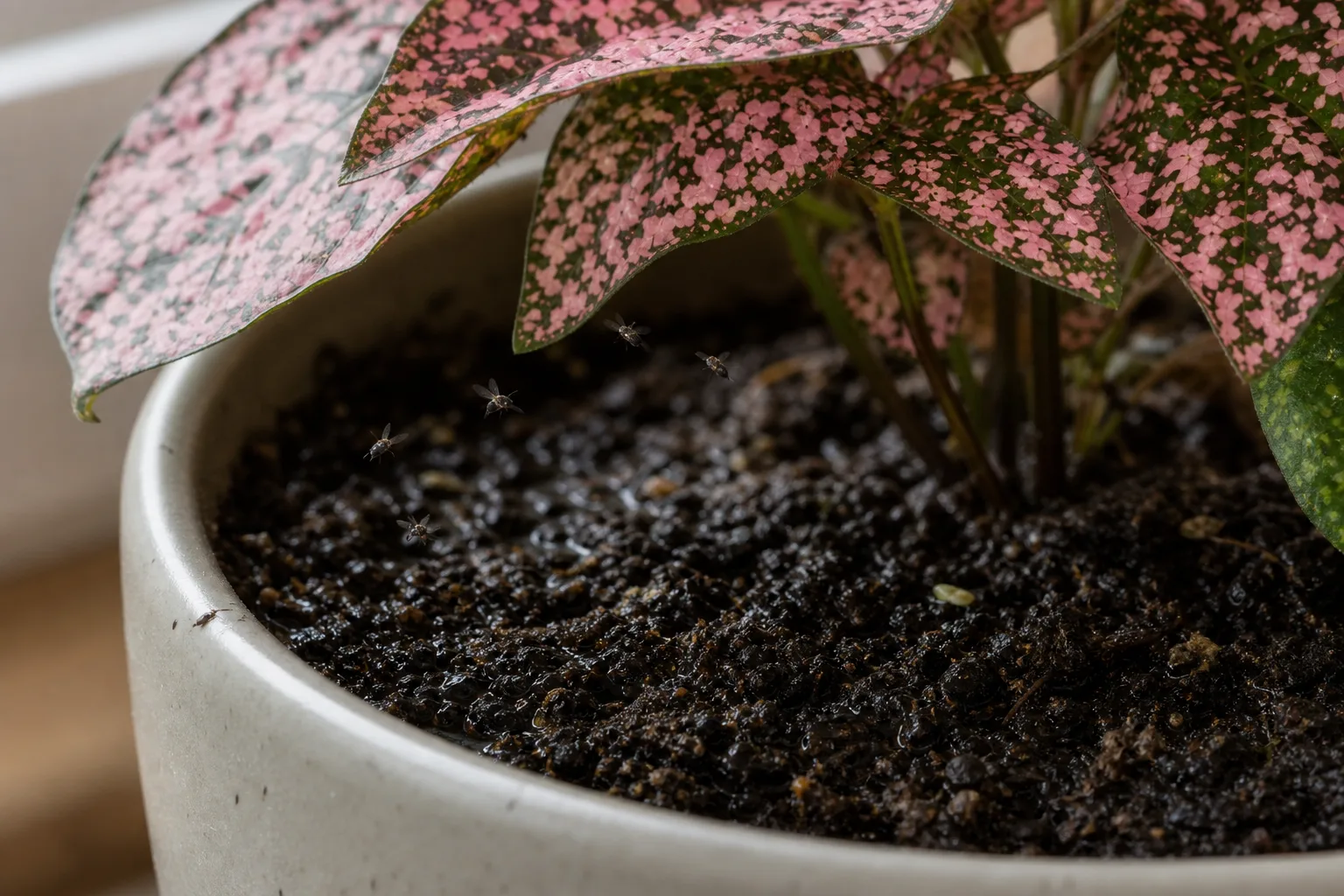
Fungus Gnats on Polka Dot Plant: Causes, Checks & Fixes
This guide covers fungus gnats on Polka Dot Plant. See also the general Fungus Gnats guide, watering, and light pages for this plant.
Fungus Gnats on Polka Dot Plant: Causes, Checks & Fixes
Quick answer
Fungus gnats on Polka Dot Plant (Hypoestes phyllostachya) are almost always a moisture warning, not a random fly invasion. These tiny insects breed when the top layer of potting mix stays damp for days - exactly what happens when growers keep soil wet for spotted foliage in humid bathrooms, sealed terrariums, or cachepots without drainage. Polka Dot Plant has a shallow, fibrous root mass close to the surface; it wants evenly moist compost with the top allowed to dry slightly between drinks, not a permanently soggy surface that breeds larvae.
First fix: let the top 1–2 cm of mix dry before you water again. That breaks the gnat life cycle because larvae cannot survive in dry soil. Only after the surface dry-down rhythm is stable should you add yellow sticky traps for adults or a BTI drench for larvae. Gnats on this species often arrive before visible root rot - treat them as an overwatering alarm and cross-check the overwatering and root-rot guides if stems soften or mix smells sour.
What fungus gnats look like on Polka Dot Plant
The clearest sign is behavioral: small dark flies that flutter up when you water, bump the pot, or open a terrarium lid. Adults are roughly mosquito-sized but weaker fliers - they hover near the soil line, bathroom mirrors, and windows rather than biting you. On a compact polka dot in a 4-inch nursery pot or a sealed jar, you may notice them only when you disturb the substrate or bring the plant to the sink.
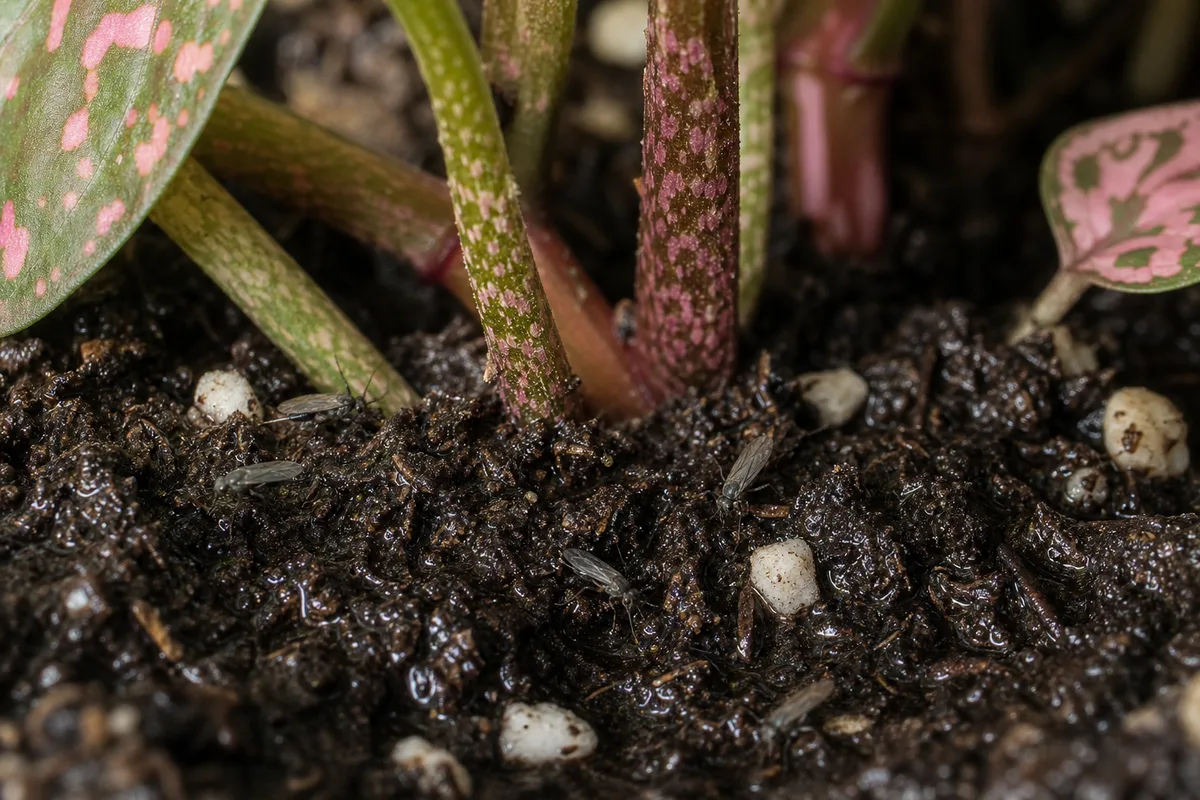
Fungus Gnats symptoms on Polka Dot Plant - compare with healthy tissue on the same plant.
Polka Dot Plant leaves usually look fine at first. Unlike spider mites or mealybugs, fungus gnats do not leave stippling, webbing, or cottony clusters on the spotted foliage. The problem sits in the mix:
- Translucent, worm-like larvae in the top inch when you scrape the surface onto white paper
- Soil that never dries on top even a week after watering in a dim bathroom
- Yellow sticky traps at soil level catching dozens of tiny flies within days
- White fuzzy mold on the surface - often shares the same wet-soil cause; see mold on soil
If pink or white spotting fades toward plain green while lower leaves yellow and stems stay limp on wet mix, treat that as chronic moisture stress - gnats and root problems share the same habitat on this shallow-rooted species.
Why Polka Dot Plant gets fungus gnats
Fungus gnats need persistently moist organic soil to reproduce. Their larvae feed on fungi and decaying organic matter in the top layer - and on tender feeder roots when populations are high. Overwatered houseplants with peat-heavy mix are especially vulnerable because wet media supports both fungal growth and continuous egg-laying.
Polka Dot Plant is prone to this pattern for plant-specific reasons:
The humidity paradox. Owners mist leaves or keep mix constantly moist because Hypoestes loves humidity and wilts dramatically when the shallow root zone dries. That habit keeps the surface wet indefinitely - perfect gnat habitat - even though the plant needs medium moisture in well-drained soils, not saturation at the crown.
Bathrooms and dim corners. Warm, steamy rooms slow evaporation. A polka dot on a frosted window ledge may hold surface moisture for days while transpiration drops in low light. Gnats and faded spotting often appear together in that setup.
Terrariums and sealed jars. Condensation on glass masks how saturated the substrate became. The RHS notes terrarium-grown Hypoestes needs less frequent watering because humidity stays high - but without a drainage layer or airflow at the soil line, the surface never dries and larvae breed for weeks unnoticed.
Shallow roots in a wet top layer. NC State describes rapid growth and fibrous roots that occupy the upper soil. Larvae chewing in that zone stress fine roots faster than on a deep-rooted succulent. Heavy infestations on chronically wet peat can overlap with the same conditions that cause root rot on this species.
Dense peat mix and oversized pots. Nursery soil without enough perlite holds moisture at the surface. A decorative pot two sizes too large leaves a wet ring around a small root ball that dries slowly for weeks.
Bottom-watering without surface checks. Roots hydrate from below while the top inch stays damp enough for egg-laying - useful during recovery only if you also let the surface dry between cycles.
Gnats rarely arrive on a plant whose top 1–2 cm dries on schedule. They mean habitat is wrong, not that polka dot is inherently gnat-prone.
How to confirm gnats vs. fruit flies, shore flies, and root rot
Work through these checks before reaching for sprays:
- Fly behavior - Do insects rise from the pot when disturbed? Fungus gnats fit. Fruit flies cluster near ripening produce in kitchens. Whiteflies erupt from leaf undersides, not soil.
- Surface moisture - Is the top 1–2 cm damp to the touch days after watering? A dry surface with occasional flies may mean a nearby infested pot instead.
- Pot weight and drainage - Lift the container. Heavy pot plus slow dry-down confirms excess moisture. Saucer still holding water?
- Larva check - Scrape the top centimeter onto white paper or press a potato slice into the mix overnight. Tiny white or translucent larvae confirm breeding in this pot.
- Stem bases - Press where stems meet soil. Firm is good; soft or mushy means moisture damage beyond gnats alone - see root rot.
- Room context - Bathroom terrarium, new plant from a humid shop, or winter with unchanged watering often triggers both gnats and yellow lower leaves.
If the mix is dry throughout, leaves are firm, and flies appear only near the kitchen, fruit flies are more likely - clean counters and remove produce rather than drying an already-thirsty polka dot.
First fix to try
Let the top 1–2 cm of potting mix dry before the next watering.
That single change targets the root cause. Fungus gnat larvae in the upper soil die when the surface stays dry long enough, and adult females lose favorable egg-laying sites. For Polka Dot Plant, “dry at the surface” means the top layer feels crumbly at a finger knuckle, the pot is noticeably lighter than right after a soak, and you are following the watering guide rhythm - water when the surface begins to dry, not when the whole root ball desiccates. Do not panic-water at the first gnat sighting if the top inch is still cool and clingy.
Hold repotting and heavy fertilizer until moisture rhythm is stable. Stressed roots from wet soil need consistency, not extra interventions on day one.
Step-by-step recovery
Once surface drying is underway, add controls in this order based on severity:
Light infestation (a few flies, firm stems, surface dries within your normal cycle)
- Maintain the 1–2 cm dry-down check every two to four days in open pots - longer in terrariums.
- Place yellow sticky traps just above soil level or pegged to the terrarium rim. Replace when coated. Count flies weekly; numbers should fall within two weeks.
- Empty saucers and confirm cachepot drainage holes are not blocked.
Moderate infestation (daily flies, surface wet for days, no stem rot yet)
- Move to brighter filtered light if the plant sits in deep shade - faster dry-down without sun-scorching leaves.
- Apply BTI for persistent larvae - Products containing Bacillus thuringiensis subsp. israelensis (Mosquito Bits, Gnatrol) target larvae in moist soil. Prepare a drench per label, water through the mix, and repeat every five to seven days for several weeks because BTI does not kill eggs or pupae.
- Bottom-water selectively - Set the pot in a tray so roots drink from below while the surface stays drier during recovery.
- Scrape and top-dress if needed - Remove the top inch of old wet mix and replace with dry, airy soil. A thin layer of coarse sand can discourage new egg-laying on soggy peat in terrariums.
Heavy infestation (swarms, larvae visible, yellow leaves on wet soil, sour smell)
- Inspect shallow roots - Slide the plant out. Trim brown mushy roots, discard saturated outer mix, and repot into fresh fast-draining blend with perlite in a right-sized pot - not oversized for vanity.
- Terrarium evacuation - If the sealed jar never dries at the surface despite traps, temporarily move the polka dot to an open nursery pot with drainage, treat the mix, and rebuild the terrarium with a drainage layer before returning it.
- Cross-check overwatering - Gnats plus soft crowns on wet mix is a root-health emergency, not a fly problem alone.
Skip hydrogen peroxide drenches as a default - they can stress fine roots and do not replace drying plus BTI for a sustained infestation.
Recovery timeline
Expect one to two weeks for adult counts to drop noticeably as the surface dries and sticky traps work. Full clearance often takes three to four weeks because egg hatch staggers across life stages.
Improvement signs:
- Fewer flies on traps each week
- Topsoil dries within your normal two-to-four-day check cycle in open pots
- Firm stem bases and new speckled leaves at the crown
- Pot weight drops predictably before you water again
Worsening signs:
- Swarms increase despite a dry surface - check nearby pots or a saturated inner liner in a cachepot
- Yellow lower leaves spreading while soil stays wet
- Soft stem bases or sour smell - shift focus to root rot treatment, not traps alone
Adult gnats are mostly a nuisance; the wet soil habit is what threatens Polka Dot Plant long term on shallow roots.
Lookalike symptoms
| Pest or problem | How it differs on Polka Dot Plant | Same fix? |
|---|---|---|
| Fruit flies | Rounder body; near kitchen fruit or compost; less tied to constantly wet pot soil | Clean food sources; still dry surface if pot soil is wet |
| Shore flies | Stouter body, shorter antennae; also breed in wet media | Dry the surface |
| Drain flies | Often from sink or shower drains, not rising from the pot when watered | Clean drains; separate from plant treatment |
| Whiteflies | Tiny white insects on leaf undersides; not emerging from soil when watered | Different pest protocol |
| Mold on soil | White fuzzy growth on damp mix; often appears with gnats | Dry surface; see mold on soil |
| Overwatering without gnats | Yellow leaves, limp foliage on wet mix, no flies yet | Overwatering guide |
Mistakes to avoid
Do not drench daily trying to flush gnats - that worsens breeding and stresses shallow roots sitting in saturated mix. Avoid watering on a calendar without the top 1–2 cm check; polka dot in a bright bathroom may need water every two days while a terrarium specimen needs seven to fourteen. Do not seal a terrarium tighter to raise humidity while the substrate stays soggy - evacuate and dry the surface instead.
Resist misting the crown or leaving decorative moss on wet soil; both extend surface moisture. Do not spray only flying adults with soap or neem while soil stays wet - eggs keep hatching. Stopping treatment after a few days when adults briefly decline leaves larvae in the mix.
Do not compensate for yellow leaves with extra water while fighting gnats - that deepens the moisture trap. Do not confuse kitchen fruit flies with pot gnats and underwater a thirsty plant as a result.
Polka Dot Plant care cross-check during treatment
Gnats often appear when other care drifted. Use this table against the watering guide:
| Factor | Gnat-friendly mistake | Polka Dot Plant target during recovery |
|---|---|---|
| Surface moisture | Stays wet for days | Top 1–2 cm begins to dry between drinks |
| Watering trigger | Calendar or wilt-only | Finger or skewer check every 2–4 days (open pot) |
| Light | Dim bathroom corner | Bright filtered light to speed dry-down |
| Humidity | Mist leaves instead of checking soil | 50–70% RH at canopy; soil surface still dries |
| Pot | Oversized cachepot, no drainage | Right-sized pot with open drain hole |
| Mix | Straight peat, no perlite | Organic, well-draining blend per soil guide |
| Terrarium | Flood substrate; no drainage layer | Small edge watering; confirm surface dry-down |
How to prevent fungus gnats next time
Quarantine new polka dots and nursery pots with their own sticky trap for two to three weeks before grouping them in a terrarium display. Water from below occasionally if your home keeps topsoil damp. Keep dead leaves off the surface so larvae have less organic debris. Monitor one trap per shelf when outdoor plants move inside in fall - eggs often ride in on humid shop mix.
Prevention on this plant is mostly correct surface dry-down in a right-sized, well-draining pot - not constant pesticide rotation. The Polka Dot Plant overview links full culture for bathrooms, terrariums, and open shelves.
When to worry - root rot inspection and terrarium evacuation
Escalate beyond basic drying and BTI if seedlings or fresh cuttings collapse (larvae damage tender shallow roots quickly), flies swarm multiple rooms despite dry pots (audit the whole collection), or polka dot shows soft crowns and sour soil alongside gnats. Unpot, trim decay, and repot dry per the root-rot guide rather than relying on traps alone.
For persistent gnats in a sealed terrarium where the surface never dries after two weeks of corrected watering and BTI cycles, move the plant to an open pot temporarily, replace the wet top layer, add a drainage stratum, and improve rim airflow before re-enclosing.
For a mature specimen with firm bases, stable dry-down rhythm, and falling trap counts, gnats are manageable. They are telling you the mix was too wet at the surface for too long - fix that habit, and polka dot usually outgrows the problem without lasting damage to its shallow root mass.
Related Polka Dot Plant guides
- Watering - top 1–2 cm check, bathroom vs. terrarium rhythm
- Overwatering - early triage when gnats signal chronic wet soil
- Root rot - escalation when stems soften on wet mix
- Mold on soil - white fuzz sharing the same moisture cause
- Polka Dot Plant overview - full care hub