Polka Dot Plant Watering: Schedule, Soil Checks & Mistakes
Polka Dot Plant Watering: Schedule, Soil Checks & Mistakes
Polka Dot Plant Watering: Schedule, Soil Checks & Mistakes
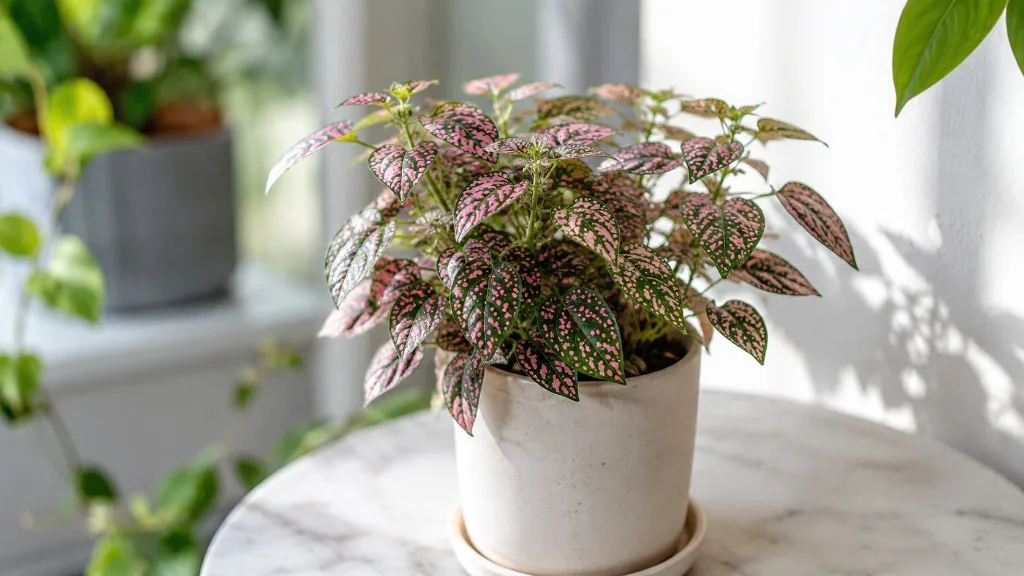
Polka dot plant watering is one of the few houseplant routines where the plant itself performs the drama. Hypoestes phyllostachya can look completely dead on dry soil-stems flopped, leaves limp, crown collapsed-then stand back up within hours after a thorough soak. That recovery trick makes beginners think the plant loves drought. It does not. Polka dot plant wants evenly moist soil, not a swamp and not a boom-and-bust drought cycle. The Royal Horticultural Society instructs growers to let the top of the compost dry out before watering again, which both prevents rot and keeps you from watering into already-wet mix. NC State Extension lists the species with a rapid growth rate and shallow, fibrous roots that stress quickly when the surface dries too far or stays wet too long.
The main mistake is treating a 2–4 day calendar as law instead of checking whether the top 1–2 cm of mix has actually begun to dry. Light, humidity, pot material, and season change that interval every week. A plant in a bright east window at 45% room humidity may need water every three days in summer; the same cultivar in a sealed terrarium may stretch to seven to ten days if condensation keeps the substrate damp. This guide covers check-first rhythm, dry-wilt versus wet-wilt diagnosis, rescue soaking after collapse, humidity and terrarium adjustments, and the mistakes that turn a vivid speckled plant into a chronically stressed one.
Why Polka Dot Plant Watering Confuses Growers
Polka dot plant is a Madagascar-native herbaceous perennial in the Acanthaceae family, sold as a compact houseplant, terrarium filler, and bedding annual in warm climates. The Missouri Botanical Garden describes ovate leaves spotted with rose, pink, or lavender on a plant that prefers organically rich, medium-moisture, well-drained soils in part shade outdoors. Indoors, that biology translates to a fine line: roots need steady access to moisture and oxygen at the same time. Let the mix go too dry and the plant loses turgor pressure fast because its root mass is shallow and close to the surface. Keep the mix saturated in dim light and roots suffocate-yellow lower leaves, soft stems, and eventually root rot.
Three factors stack the confusion. First, dramatic wilt looks like a death sentence even when the roots are still alive on dry soil. Second, recovery within hours trains growers to wait for collapse instead of checking proactively-a habit that weakens fine roots over repeated cycles even when the plant bounces back visually. Third, humidity and enclosure change dry-down speed without changing the plant’s moisture preference. A bathroom with a frosted window slows evaporation; a terrarium traps humidity so the substrate stays damp longer. The watering interval shifts; the evenly moist goal does not.
The Short Answer for Busy Growers
Check the top 1–2 cm of potting mix before every watering. When the surface begins to dry, water deeply until excess drains, then empty the saucer. In active growth, many indoor polka dot plants in small plastic pots need water roughly every 2–4 days-but only when the check says so. In winter, stretch the interval as growth slows. If the plant collapses on dry, light soil, soak thoroughly once; it often stands back up within hours. If leaves are limp on wet, heavy soil, stop watering and inspect roots- that is not thirst. Target 50–70% relative humidity where possible; dry air speeds pot dry-down and crisp leaf edges per RHS high-humidity guidance. Never let the pot sit in drained runoff inside a cachepot.
How Often to Water Polka Dot Plant (Check, Not Calendar)
There is no honest universal schedule for how often to water polka dot plant. A fixed “every Tuesday” fails because pot size, mix composition, light intensity, room temperature, humidity, and season all change how fast the root zone dries. What works as a starting framework during active warm growth in a typical 4-inch nursery pot looks like every 2–4 days, checking whether the top 1–2 cm has begun to dry before adding water. The RHS growing guide and LeafyPixels care data point the same direction: water when the surface starts to dry, not on autopilot.
During winter, the same plant in the same pot may need water once every 7–14 days, sometimes longer in cool, dim rooms. Growth slows, transpiration drops, and mix holds moisture longer. Resume more frequent checks only when new speckled leaves appear consistently in spring. A plant under supplemental grow lights that keeps growing through winter may still need the shorter interval-let new growth and pot weight decide, not the month on the calendar.
Track two full wet-dry cycles in your home. Note the date you watered, when the pot felt light, and whether any wilt appeared before you checked. Within a month you will know your container’s rhythm better than any generic blog interval. If you recently moved the plant to a brighter light position, expect faster dry-down and more frequent checks. If you moved it to a dim corner, slow down-wet soil plus low light is the classic overwatering on Polka Dot Plant setup on Polka Dot Plant overview.
Best Moisture Checks (Finger, Skewer, Pot Weight)
Surface color lies. Mix can look pale on top while staying damp near the roots, especially in peat-heavy blends. Use at least one of these checks every time before you water.
Finger or knuckle test: Push your index finger into the mix to the first knuckle-roughly 2–3 cm in a standard small pot. Cool, clingy moisture means wait. Dry at the surface with a noticeably lighter pot means proceed. This is the fastest check at the sink and the one most growers should learn first.
Skewer or chopstick test: Insert a dry wooden skewer toward the pot bottom. Darkening or soil sticking means moisture remains. Clean, dry wood at depth confirms the root zone has dried enough for the next drink.
Moisture meters can help if calibrated to your mix, but they misread in very chunky blends. Treat them as one signal among several.
Finger and Knuckle Test Depth
For polka dot plant in a 3–4 inch nursery pot, the first knuckle usually reaches the zone where shallow roots actively pull water. In a 6-inch pot, combine the knuckle test at the surface with a skewer to mid-depth-roots may not colonize the entire volume yet if the plant was recently repotted. The goal is not bone-dry throughout the column; it is dry at the top, slightly cool but not soggy below, matching the RHS “top dries, then water” model. If your finger hits compacted, dusty mix that repels water, the plant has been dry too long-soak thoroughly and adjust your check frequency upward.
Pot Weight Training
Lift the container before and after several watering sessions until you can judge moisture by heft alone. A freshly watered plastic pot feels heavy and cool. As the mix dries, weight drops sharply even when the surface still looks acceptable. Experienced growers often rely on weight more than touch because it reflects moisture through the whole column. Compare weight to your finger reading for two weeks; when they disagree, trust the heavier signal-if the pot is still heavy, do not water even if the top looks pale.
Quick-Reference Dry-Down Table (Pot Size × Light × Humidity)
Use this table as a starting range only. Your home will differ. Always confirm with finger or weight checks.
| Setup | Typical active-growth check interval | Notes |
|---|---|---|
| 4-inch plastic pot, bright east window, 45–55% RH | Every 2–4 days | Baseline for many nursery pots |
| Same pot, dim interior shelf | Every 5–8 days | Slower transpiration; rot risk if overwatered |
| 4-inch terracotta, bright light, dry winter air (~30% RH) | Every 2–3 days | Clay pulls moisture; watch leaf edges |
| Sealed terrarium, bright indirect light | Every 7–14 days | Check condensation and substrate, not glass alone |
| Steamy bathroom, frosted window, moderate light | Every 5–10 days | High humidity slows dry-down |
| Recently repotted into larger pot | Stretch 30–50% longer | Extra mix holds water until roots fill it |
If your interval falls outside these bands but the plant pushes firm new speckled leaves without chronic wilt or yellowing on wet soil, your checks are working-keep observing rather than forcing a calendar.
Signs You Are Watering Too Much
Polka dot plant overwatering announces itself more quietly than underwatering, which makes it easy to miss until roots are damaged.
Watch for yellowing lower leaves that are soft rather than crisp, especially when the mix stays dark and cool for many days after watering. Soft stems at the base, a sour or musty smell from the mix, and fungus gnats hovering over the surface often mean the top layer never dries-gnats breed in perpetually moist organic matter. Slow or absent new growth during warm bright months, combined with a pot that feels heavy week after week, points to a chronically wet root zone.
If several signs appear together, pause watering, confirm drainage holes are open, improve light if the plant sits in dim conditions, and inspect the root zone before feeding or Polka Dot Plant repotting guide. Chronic wet soil in low light is the most common path to root rot on this species. Do not “give it a little drink to perk it up” when leaves yellow on wet mix-that deepens the problem.
Signs You Waited Too Long (Including Dramatic Wilt)
Underwatering on polka dot plant is hard to miss because the whole plant collapses. Stems flop, leaves lose turgor, and the crown can look flattened against the soil. On dry, light soil, that is thirst-not rot. Soak the pot until water runs from drainage holes, empty the saucer, and place the plant in bright indirect light out of hot direct sun while it rehydrates. The plant often stands back up within a few hours, sometimes overnight for a severely dry root ball.
Other underwatering signs include crispy leaf margins in very dry air, mix pulled away from pot walls, and a container that feels feather-light. A single dry episode is recoverable. Repeated wilting is not harmless just because the plant bounces back-each cycle damages fine root hairs and makes the plant react badly when water returns, producing more wilt sooner next time.
If leaves are limp and the mix is wet, you are not underwatered. See the dry-wilt versus wet-wilt section below and read drooping leaves on polka dot plant for the full diagnostic workflow.
Dry-Wilt vs Wet-Wilt: Which Problem Do You Have?
This fork saves more polka dot plants than any fixed schedule. Run it before you touch the watering can.
| Signal | Dry wilt (thirst) | Wet wilt (root trouble) |
|---|---|---|
| Pot weight | Light | Heavy, cool |
| Surface mix | Dry, sometimes dusty | Dark, clings to finger |
| Leaf texture | Thin, limp, may crisp at edges | Soft yellowing, sometimes mushy stems |
| Smell | Neutral | Sour or rotten |
| Recent watering | Days since last deep soak | Watered within 48 hours |
| Fix | Soak thoroughly, drain, adjust check frequency | Stop watering, inspect roots, improve drainage and light |
When in doubt, weigh the pot and feel the mix at depth before you water. Limp leaves plus wet soil is a warning to diagnose, not an invitation to soak. Limp leaves plus dry, light soil is the rescue-soak scenario. Mixing these two conditions is the fastest way to kill an otherwise healthy plant.
How to Rescue a Collapsed Polka Dot Plant
If the diagnostic table points to dry wilt, follow this sequence:
- Move the pot to a sink or outdoors if weather allows. Avoid leaving a collapsed plant in a hot south window while dry-it adds heat stress on top of water stress.
- Water slowly and evenly across the surface until excess runs freely from drainage holes. Dry, peat-heavy mix may repel the first pass; pause thirty seconds and water again until the root ball accepts moisture.
- Let the pot drain 15–30 minutes, then empty the saucer or cachepot completely.
- Return the plant to bright indirect light and wait. Turgor often returns within two to six hours; a severely desiccated root ball may need until the next morning.
- Adjust your check frequency so the plant wilts less often. One dramatic recovery does not license waiting for collapse every time.
If the plant does not perk up within 24 hours on soil that is now moist, or if stems stay soft while the mix is wet, unpot and inspect roots. Trim black mushy tissue, repot into fresh well-draining mix in a pot with holes, and withhold water until new growth confirms recovery. See underwatering and root rot guides for extended workflows.
Seasonal Watering Changes
Polka dot plant metabolism follows light and temperature, not your watering app. During warm months with longer days, the plant may produce new speckled leaves faster and use water more quickly. The pot dries sooner; you check more often.
As fall transitions to winter, growth slows even indoors. Cooler rooms, shorter days, and lower light all reduce water uptake. The same volume that worked in August can waterlog the root zone in January. This is when many growers lose polka dot plants to rot: they maintain summer frequency through winter without noticing the mix stays wet for two weeks.
Treat roughly October through February (adjust for your hemisphere) as a lower-water season. Check less often, water less often, and prioritize dryness at the surface over generosity. The RHS genus guide lists a minimum temperature around 12°C (54°F); below that, growth stalls and wet soil lingers dangerously long. Keep plants away from cold window ledges where the root zone chills overnight while the room feels warm.
Resume more frequent checks when consistent new growth appears in spring and indoor temperatures rise. Do not fertilize on a wet winter schedule-unfed and slightly dry beats fed and soggy on this species.
Humidity, Terrariums, and Watering Rhythm
Polka dot plant expects humid air. The RHS states that Hypoestes need high humidity to keep foliage looking good; in dry air, leaf edges brown. LeafyPixels targets 50–70% relative humidity, which matches what most successful indoor growers report. The RHS genus guide lists 18–27°C (65–80°F) as the comfort band indoors-ordinary room temperature for most homes.
Humidity and watering interact directly. In very dry air (~30% RH or lower), the plant loses water through leaves faster and the pot dries sooner-you may water slightly more often while also raising humidity with a pebble tray, grouping, or small humidifier. In a steam-forward bathroom with moderate light, the pot may dry slowly; water less to avoid rot. Misting alone gives only a brief humidity bump and can leave wet foliage that encourages mildew-treat misting as cosmetic, not structural.
Terrarium culture is explicitly recommended for this genus by the RHS. Enclosed glass traps humidity and slows substrate dry-down. Water when the soil surface begins to dry, not when glass fog appears-condensation can mask dry pockets near the crown. Open terrariums and bottle gardens behave between closed systems and open pots; still check the mix, not the calendar. A worked example: a 4-inch plastic pot in 45% room humidity at an east window may need water every three days in summer; the same plant in a sealed terrarium may stretch to 7–10 days if the substrate stays evenly moist and condensation cycles daily.
How to Water Cleanly (Drainage and Cachepots)
Water the mix evenly until excess drains, then empty any saucer or cachepot within thirty minutes. Avoid leaving the roots sitting in runoff-that recreates anaerobic conditions at the bottom of the pot where fine roots die first. The goal is a full drink followed by an appropriate dry-down, not permanently damp soil.
Use room-temperature water when possible; cold tap water shocks warm roots in heated rooms. If hard water leaves white crust on the rim, occasional flushing with plain water until runoff runs clear reduces salt stress that mimics drought damage on leaf tips.
Cachepots-decorative outer pots without holes-are a common failure point. Either remove the inner nursery pot, water in the sink, drain fully, then replace, or never add enough water for free drainage into the outer shell. If you cannot lift the inner pot easily, the better fix is a proper draining setup. Blocked drainage holes from roots or debris trap water the same way; check holes before blaming the plant.
Because the ASPCA lists Hypoestes phyllostachya as non-toxic to cats, dogs, and horses, you have flexibility placing pots in pet-aware homes-but stagnant saucer water still breeds gnats and smells; empty it for plant health, not just pet safety.
Common Watering Mistakes
Watering on a fixed calendar regardless of soil moisture is the top mistake. Fix: delete the “water Tuesday” reminder; keep a “check the pot” reminder instead.
Waiting for dramatic wilt because the plant always bounces back. Fix: wilt is a stress signal, not a moisture gauge. Check at the top 1–2 cm before collapse.
Tiny daily sips instead of one thorough soak. Fix: partial top watering keeps upper roots wet and lower roots dry, encouraging uneven stress. One deep drink, then dry-down.
Leaving the plant in a full saucer or cachepot after watering. Fix: empty twice if needed-once immediately and again after ten minutes.
Using dense, moisture-retentive mix without perlite in dim light. Fix: see the soil guide and improve porosity or light before adjusting water volume alone.
Repotting into a much larger pot and watering on the old schedule. Fix: extra mix holds water until roots fill the volume-stretch intervals 30–50% after upsizing.
Stacking fixes-repotting, fertilizing, and moving windows all the same week when wilt appears. Fix: change one variable, observe three to five days, then adjust again.
Practical Checks: Fast Decision and Pot-Size Reality
Before every watering, run this ten-second check: lift the pot, feel the top 1–2 cm, look at the newest leaves. Firm speckled growth plus dry surface equals water. Heavy pot plus yellowing lower leaves equals wait and diagnose.
After repotting, expect slower dry-down until roots explore the new mix-often one to two weeks of adjustment. A larger pot changes the schedule immediately; if you moved from a 3-inch to a 5-inch container, the old three-day rhythm may become five to seven days even in the same window.
If problems repeat despite correct watering checks, compare this page with the overview, light, soil, and propagation guides before changing several conditions at once. Watering sits in the middle of the care system-it rarely fails alone.
When to use this page vs other Polka Dot Plant guides
- Polka Dot Plant overview - Start here for whole-plant context before deep-diving this topic.
- Polka Dot Plant problems hub - Jump to symptom-specific fix guides when this care topic does not resolve the issue.
- Overwatering on Polka Dot Plant - Escalate here when watering adjustments are not enough.
- Underwatering on Polka Dot Plant - Escalate here when watering adjustments are not enough.
- Root Rot on Polka Dot Plant - Escalate here when watering adjustments are not enough.
Related Polka Dot Plant guides
- Polka Dot Plant overview
- Polka Dot Plant light
- Polka Dot Plant soil
- Polka Dot Plant propagation
- Polka Dot Plant fertilizer
- Polka Dot Plant repotting
- Overwatering on Polka Dot Plant
- Underwatering on Polka Dot Plant
- Root Rot on Polka Dot Plant
- Wilting on Polka Dot Plant
- Drooping Leaves on Polka Dot Plant
- Mold on Soil on Polka Dot Plant
Conclusion
Polka dot plant watering succeeds when you treat moisture as a check-first habit, not a calendar. Let the top 1–2 cm begin to dry, then water deeply and drain fully. Expect roughly every 2–4 days in active growth as a starting range, stretching longer in winter, terrariums, and dim rooms. Learn the dramatic wilt tell on dry soil-and stop using it as your primary moisture gauge. Separate dry wilt from wet wilt before you soak. Raise humidity toward 50–70% so leaf edges stay clean and pots do not desiccate overnight in heated air.
When the plant collapses on dry mix, rescue-soak once, adjust your check frequency, and do not let repeated wilting become normal just because turgor returns within hours. Fix cachepots, saucers, and oversized pots before blaming the species. Get the rhythm right and polka dot plant stays the vivid, speckled showpiece you bought-not a chronically stressed prop that only looks alive after a crisis drink.