Overwatering on Polka Dot Plant: Causes, Checks & Fixes
Quick answer
If your Polka Dot Plant is wilting in wet soil, stop watering first. Then check root firmness and smell: firm pale roots usually mean early overwatering, while mushy foul-smelling roots mean rot and urgent repotting.
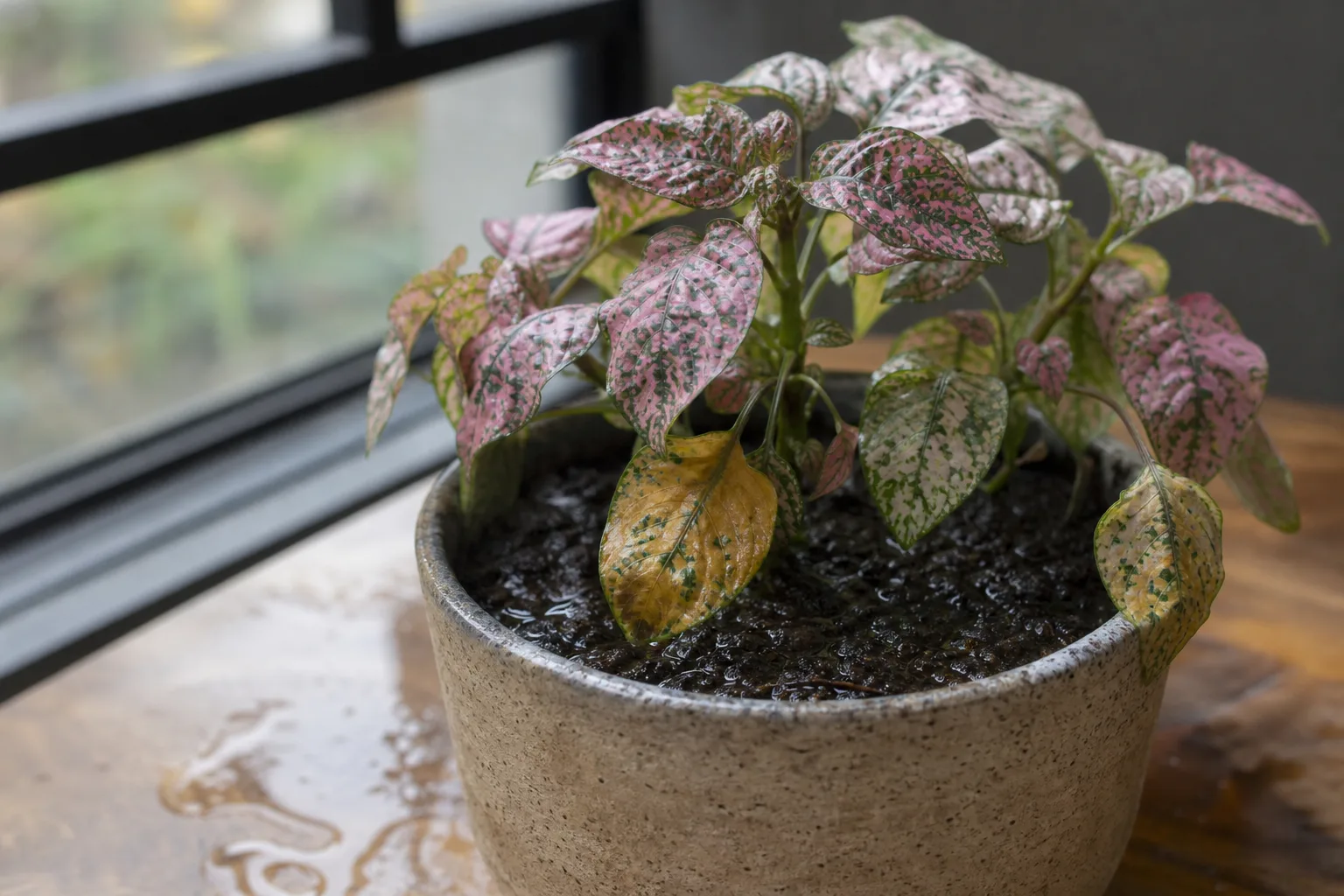
Overwatering on Polka Dot Plant: Causes, Checks & Fixes
This guide covers overwatering on Polka Dot Plant. See also the general Overwatering guide, watering, and light pages for this plant.
Overwatering on Polka Dot Plant: Causes, Checks & Fixes
Quick answer
Polka Dot Plant (Hypoestes phyllostachya) likes moisture, but it still needs oxygen around the roots. Missouri Botanical Garden describes Polka Dot Plant overview in medium moisture, well-drained soil, not constantly saturated mix. Your first move is simple: stop watering, then inspect whether this is early overwatering (recoverable) or advancing rot (needs immediate root work).
This page is for early and moderate overwatering triage. If you confirm mushy, collapsing roots or soft blackening stem bases, move to your root-rot rescue workflow: /plants/polka-dot-plant/root-rot/.
What overwatering looks like on Polka Dot Plant
Common early pattern:
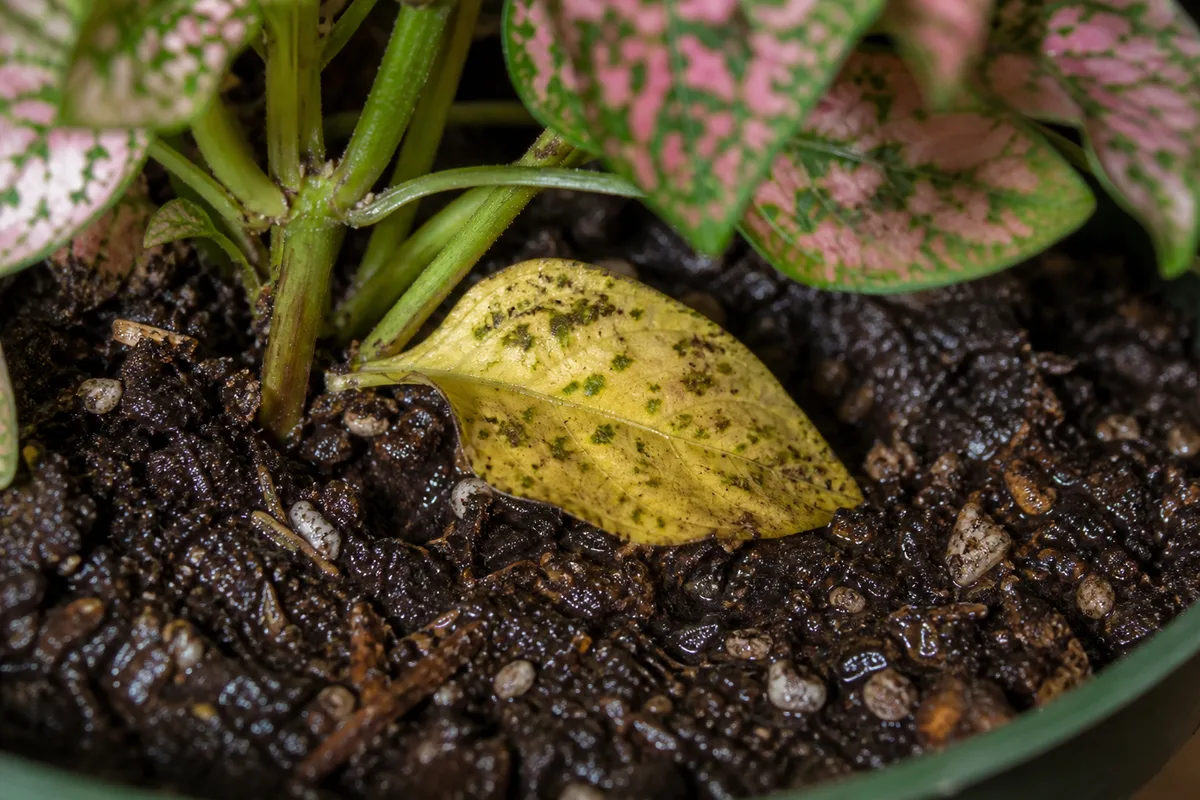
Overwatering symptoms on Polka Dot Plant - compare with healthy tissue on the same plant.
- lower leaves yellow first while the pot stays heavy
- leaves droop even though the top layer is still moist
- leaf spotting color fades in stressed foliage
- growth slows and internodes get weak
As stress advances, you may see sour soil odor, fungus gnat activity, and soft stem bases. University of Maryland Extension notes that excess moisture reduces root-zone oxygen and can cause wilting or yellowing that mimics drought stress even though the plant is wet (excess water reduces oxygen).
Why this happens on Polka Dot Plant
Humid rooms and terrariums dry slowly
RHS guidance for Hypoestes says to keep compost moist but let the surface dry slightly, and to water less often in terrariums because compost dries more slowly (RHS Hypoestes watering guidance). That means a schedule that works in an open pot can overwater the same plant in a steamy bathroom or enclosed glass setup.
Shallow root mass plus dense mix
Polka Dot Plant roots are relatively fine and compact in containers. In peat-heavy mixes without enough aeration, water can linger in the lower root zone after the surface looks “almost dry.” Wisconsin Horticulture notes that chronically wet media favor root-rotting pathogens and produce soft brown roots with odor (root rots in wet soils).
Calendar watering
Iowa State Extension emphasizes watering by plant need rather than routine calendar timing and checking roots/media when wilt appears (water by need, inspect roots). On this plant, fixed “every X days” watering is a common trigger.
How to confirm overwatering (before you fix)
Use this sequence:
- Top-depth check: top 1-2 cm still damp several days after last watering.
- Pot weight check: container remains heavy compared with a normally dry cycle.
- Drainage check: little or blocked drainage through holes.
- Root check (if wilt on wet soil): unpot gently and inspect.
Healthy roots are firm and pale. Problem roots are brown, soft, or mushy with swampy odor (root appearance guide).
Lookalikes you must rule out
| Symptom pattern | Most likely issue | What confirms it |
|---|---|---|
| Droopy leaves + heavy wet pot | Overwatering | Soil stays wet too long; roots still mostly firm |
| Droopy leaves + very light dry pot | Underwatering | Mix pulls from pot edge; roots firm, not mushy |
| Droopy leaves + wet soil + sour smell + soft roots | Root rot | Brown mushy roots and/or soft stem base |
If your plant matches the second pattern, use /plants/polka-dot-plant/underwatering/ instead of adding more wet-soil interventions.
First fix to try (one action first)
Stop watering immediately and let the upper root zone dry slightly.
Do not fertilize, do not repot into a larger pot, and do not “flush” the pot repeatedly. University of Maryland Extension also recommends emptying saucers so roots are not left standing in water (empty saucers after watering).
Step-by-step recovery
Mild case (no mushy roots)
- increase Polka Dot Plant light guide
- improve air movement around the pot
- wait for top 1-2 cm to dry before next watering
- resume deep watering only when needed
Moderate case (some root damage)
- Unpot and remove loose wet media.
- Trim only clearly mushy roots with clean scissors.
- Repot into fresh airy mix (houseplant mix plus perlite).
- Use a pot with clear drainage holes.
- Water once to settle mix, then wait for partial dry-down before watering again.
Severe case (soft stem base, widespread rot)
Escalate to root-rot rescue quickly: /plants/polka-dot-plant/root-rot/. Some plants are not recoverable if most roots and lower stems have collapsed.
Recovery timeline and success signs
Expect improvement in 7-14 days if enough healthy roots remain. New growth should appear firmer and better colored first; damaged yellow leaves usually do not turn green again. If yellowing spreads on continuously wet soil, reassess roots and drainage immediately.
What not to do
- do not water because leaves droop without checking soil depth
- do not keep decorative cachepots full of runoff
- do not add rocks at pot bottoms to “improve drainage” (this can worsen perched water behavior in container systems and is not recommended in extension guidance) (avoid gravel layer practice)
- do not move to a much larger pot during recovery
How to prevent overwatering next time
RHS recommends moist compost with slight surface dry-down between waterings, and less frequent watering in terrariums (RHS moisture rhythm). Build your routine around that:
- check moisture every 2-4 days, but water only when needed
- keep using an airy, free-draining mix
- adjust frequency for season, light, and room humidity
- pair watering decisions with pot weight and soil-touch checks
For baseline watering cadence and setup, cross-check /plants/polka-dot-plant/polka-dot-plant-watering/.
When to use this page vs other Polka Dot Plant guides
- Polka Dot Plant watering guide - Use for routine moisture checks before assuming overwatering is the main issue.
- Polka Dot Plant problems hub - Browse all 17 common issues on this species.
- Root Rot on Polka Dot Plant - Different entry point when symptoms overlap with overwatering.
- Yellow Leaves on Polka Dot Plant - Different entry point when symptoms overlap with overwatering.
- Wilting on Polka Dot Plant - Different entry point when symptoms overlap with overwatering.
Related Polka Dot Plant guides
- Polka Dot Plant overview
- Polka Dot Plant watering
- Polka Dot Plant light
- Polka Dot Plant soil
- Root Rot on Polka Dot Plant
- Yellow Leaves on Polka Dot Plant
- Wilting on Polka Dot Plant
- Fungus Gnats on Polka Dot Plant
- Mold on Soil on Polka Dot Plant
- Drooping Leaves on Polka Dot Plant
- Polka Dot Plant problems