Red Leaves on Philodendron Birkin: Causes, Checks & Fixes
Quick answer
Red leaves on Philodendron Birkin usually mean genetic reversion toward Rojo Congo, cold-draft stress, or too much direct sun-not normal variegation. First step: decide whether the red leaf still has white pinstripes or is solid burgundy, then adjust light and temperature before repotting or feeding.
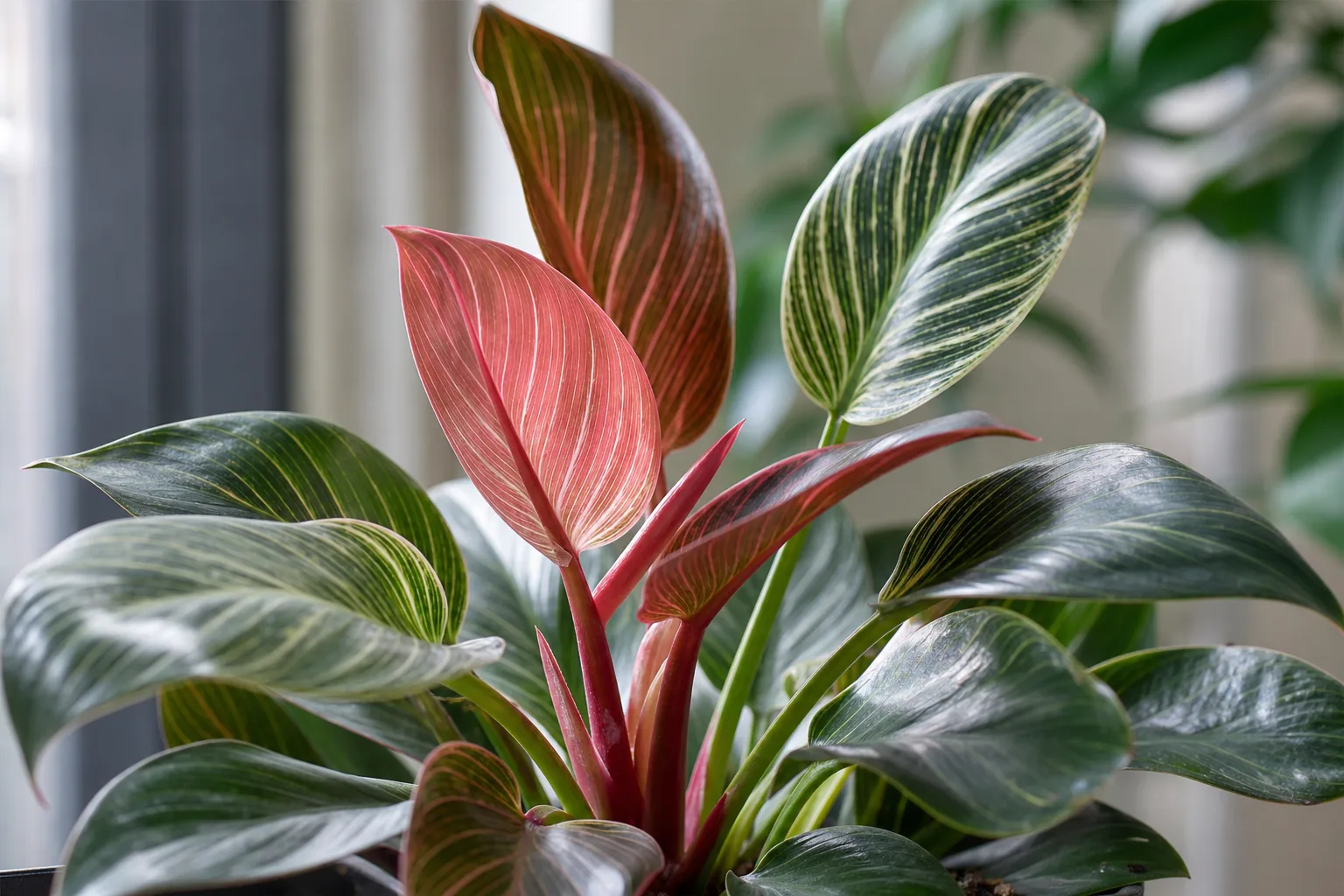
Red Leaves on Philodendron Birkin: Causes, Checks & Fixes
This guide covers red leaves on Philodendron Birkin. See also the general Red Leaves guide, watering, and light pages for this plant.
Red Leaves on Philodendron Birkin: Causes, Checks & Fixes
Quick answer
Red leaves on Philodendron Birkin are rarely part of the plant’s normal look. This compact self-heading aroid is bred for glossy dark green leaves with creamy white pinstripes-not the burgundy foliage of its Rojo Congo parent. When red shows up, the most common explanations are genetic reversion, cold-draft anthocyanin flush, or direct-sun stress. Orange-red spots on undersides point to rust fungus-a separate problem covered on our rust disease guide.
First move: examine the newest leaf. If it unfurls solid red or bronze with no pinstripes, treat reversion before you change watering or fertilizer. If pinstripes remain but margins reddened after a cold night, correct placement and temperature first. For species context and chimeric variegation biology, see our Philodendron Birkin overview.
| Pattern you see | Start here | If instead… |
|---|---|---|
| Solid burgundy new leaf, stripes gone | Reversion - prune + brighter filtered light | Margins purple on striped leaves → purple leaves guide |
| Red margins, pinstripes intact | Cold or sun stress - relocate | Whole plant shifting burgundy over weeks → overview reversion section |
| Orange powdery pustules on undersides | Rust disease guide | Uniform red wash without pustules → stay on this page |
Red leaves vs. purple leaves on Birkin
Birkin owners often land on the wrong slug because both problems involve reddish pigments. Use this quick routing:
- Red leaves (this page): New foliage opens solid burgundy, bronze, or dark red with little or no white pinstriping-classic reversion toward Rojo Congo parent genetics. Also covers red-purple sun tint before brown scorch and orange rust pustules as lookalikes.
- Purple leaves: Stripes stay visible but margins, undersides, or interveinal areas flush purple-red, often after cold glass or dim corners-see our purple leaves guide for margin-flush and anthocyanin buildup detail.
One random dark leaf among pinstriped neighbors can appear on either page; the deciding question is whether the pinstripe pattern survived on the newest leaf. Stripes gone = reversion first. Stripes present with colored edges = environmental stress or purple-leaves territory.
What red leaves look like on Philodendron Birkin
Birkin red color falls into distinct patterns, and mixing them up leads to wrong fixes.
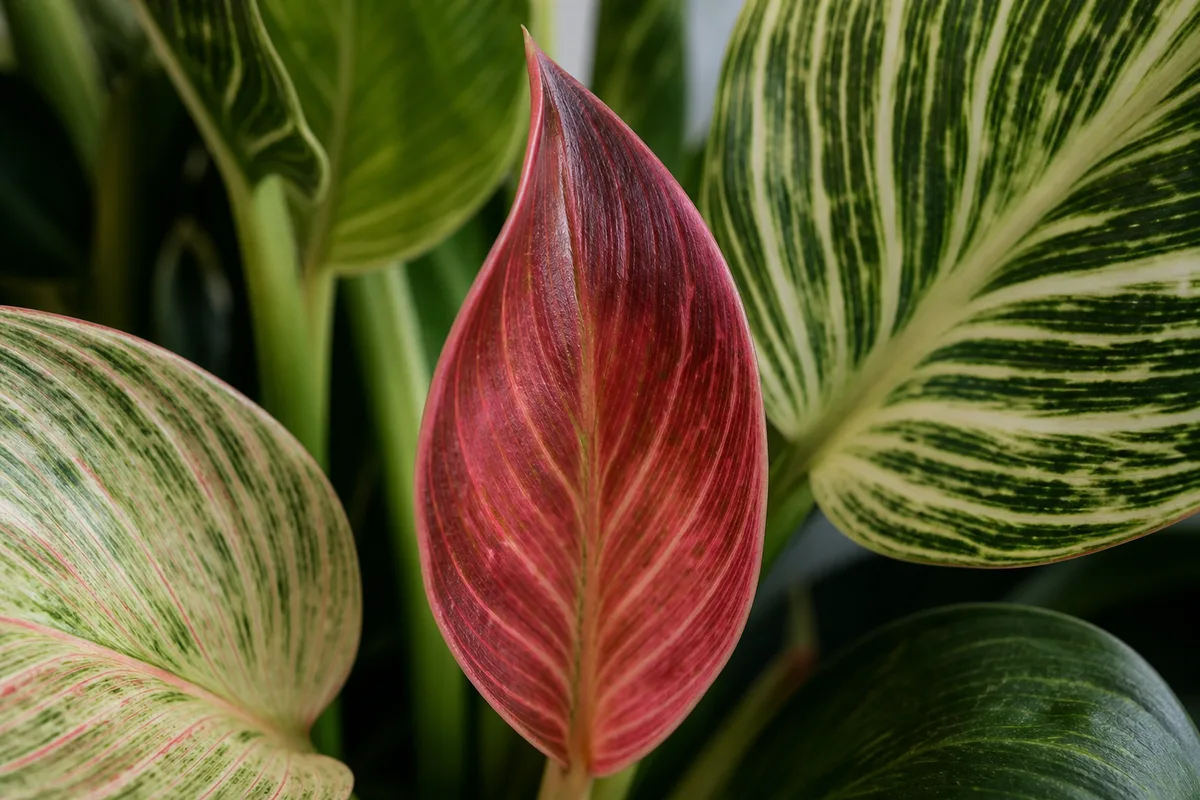
Red Leaves symptoms on Philodendron Birkin - compare with healthy tissue on the same plant.
Reversion (most common on Birkin). A new leaf opens solid burgundy, bronze, or dark red with little or no white pinstriping. The stem above that leaf may keep producing non-variegated foliage. This matches Rojo Congo-the cultivar Birkin is believed to have mutated from. One random red leaf on an otherwise striped plant is often the first sign the chimeric variegation is slipping.
Cold-stress flush. Existing striped leaves develop red or purple margins, sometimes a faint blush between veins, after nights near a cold window or an AC vent. Tissue stays firm; pinstripes remain visible. Plants produce anthocyanin pigments as a protective response to low temperature-cool conditions increase anthocyanin accumulation on many houseplants.
Sun-stress reddening. Leaves facing harsh direct sun may show red-purple tinting before brown scorch patches appear. Birkin needs bright, filtered sunlight; too much direct sun scorches the glossy surface and can fade the white stripes. Placement detail lives on our light guide.
Rust disease (routing only). Small orange, red-brown, or rust-colored pustules on leaf undersides-not a uniform leaf wash. Spots may yellow on top. This is infectious and unlike reversion or environmental flush. Isolate, remove affected leaves, and follow our rust disease guide for confirmation, disposal, and prevention-do not treat pustules as a lighting problem.
Not red leaves: Birkin’s normal cream, yellow, or pale green pinstripes on a green background are variegation, not a problem. Do not confuse them with stress red.
Why Philodendron Birkin gets red leaves
Reversion toward Rojo Congo
Birkin variegation is unstable. Under stress-or sometimes at random-the plant switches back toward its parent’s dark red or bronze leaf genetics. Insufficient light is a common trigger for loss of variegation on this cultivar; dim corners favor chlorophyll over pale stripe tissue. Repotting shock, temperature swings, and pest damage can also push reversion. Once a stem produces several solid red leaves, that stem usually will not return to pinstripes without pruning-see our pruning guide for node cuts above the last striped leaf.
Cold drafts and low room temperature
Birkin prefers room temperatures from 65 to 85 °F and is not frost-tolerant-cold drafts should be avoided. When air drops below that comfort zone, especially near glass in winter, leaf edges may redden as anthocyanins accumulate. This is often reversible if you move the plant before tissue dies. Overlap with cold damage when margins turn black or mushy below about 55°F (13°C).
Too much direct sun
Filtered light keeps pinstripes crisp. Direct midday sun forces photoprotective pigments and can scorch leaves brown, starting with red-purple stress color on exposed surfaces. Birkin’s thick glossy leaves burn faster than trailing philodendrons because the self-heading rosette catches more light on one face-weekly rotation helps even exposure per our light guide.
Rust fungus
Warm, humid, stagnant air around wet foliage can favor rust. Spots spread slowly compared with reversion, which is confined to new leaves on one stem. Rust needs isolation and leaf removal-not brighter light alone. Full diagnostic and treatment workflow is on the dedicated rust disease page.
How to confirm the cause
Use this order-adapted for Birkin’s upright rosette, not a generic houseplant checklist:
- Newest leaf pattern - Solid red or bronze without stripes = reversion. Striped leaf with red margins only = environmental stress; compare with purple leaves if the flush is marginal rather than whole-blade.
- Recent placement changes - Cold window, heat vent, or new south-facing sill in the last week?
- Light intensity - Can you see sun beams hitting leaves between 11 a.m. and 3 p.m.? That favors sun stress; dim corners favor reversion instead-see not enough light when new leaves arrive smaller and greener before turning red.
- Leaf undersides - Raised orange pustules that rub off as powder = rust → rust disease guide. Clean undersides with firm tissue favor reversion or temperature.
- Stem continuity - Follow the red leaf up the stem: if every new leaf above a node is reverting, prune below that point per our pruning guide.
- Soil moisture - Wet sour soil with soft stems is rot, not typical red-leaf reversion; inspect roots if stems collapse-see root rot.
Worked example: A tabletop Birkin near a winter window produced one solid burgundy new leaf with no pinstripes while older striped leaves showed only faint red margins. Pruning to the last striped node and moving 60 cm (2 ft) back from the glass yielded a pinstriped new leaf five weeks later-margin flush faded within ten days after the move.
First fix for Philodendron Birkin
If the newest leaf is solid red or bronze without pinstripes: prune the stem back to the node below the last fully striped leaf. Move the plant to bright, filtered light-east window or filtered south/west-without direct midday sun. Wait for the next leaf to unfurl before repotting or fertilizing.
If striped leaves show red margins after cold exposure: move Birkin away from the cold window or draft, keep room temperature in the 65–85 °F range, and avoid watering with cold tap water on stressed foliage.
If orange rust pustules are present: stop here and follow the rust disease guide-isolate, bag infected leaves for trash disposal, and improve airflow. Do not prune for reversion until pustules are ruled out.
Pick one primary fix before stacking interventions. Do not repot, prune heavily, and feed on the same day.
Step-by-step recovery
- Classify the pattern: reversion, cold flush, sun stress, or rust (route to rust guide if pustules present).
- Apply the matching first fix above.
- Watch the next one to two new leaves-recovery on Birkin is judged by new pinstriped foliage, not old red tissue re-greening.
- For reversion, repeat pruning if the stem above the cut still opens red leaves.
- Rotate the pot weekly once conditions stabilize so variegation stays even on the self-heading rosette.
Recovery timeline
Environmental red flush often fades within one to two weeks after temperature and light stabilize. Reversion pruning may take three to six weeks before a well-striped leaf unfurls-Birkin is a slow grower. Rust recovery depends on how many leaves you remove; expect four to eight weeks before you trust the plant is clean when following the rust disease workflow. Fully reverted red leaves never regain stripes; only new growth can.
Lookalike symptoms
| What you see | Likely cause | Key difference |
|---|---|---|
| Solid burgundy new leaf, no stripes | Reversion | Pattern repeats on same stem |
| Red leaf margins, stripes intact | Cold or sun stress | Follows draft or direct sun - see purple leaves |
| Orange raised spots on undersides | Rust fungus | Spots do not cover whole blade - rust guide |
| Pale yellow-white stripes on green | Normal variegation | Present since purchase |
| Brown crispy patches | Sun scorch | Dry texture, not uniform red |
| Yellow lower leaves, wet mix | Overwatering / root stress | Soft base - root rot |
Mistakes to avoid
Do not assume red leaves mean phosphorus deficiency and dump fertilizer on a stressed Birkin. Do not increase watering because leaves look off-soggy roots cause yellowing, not classic reversion red; see overwatering when mix stays wet. Do not leave a reverted stem intact hoping it “returns”; that stem allocates energy away from striped growth. Keep the plant away from pets-Philodendron contains calcium oxalate crystals toxic to cats and dogs if chewed. Contact your veterinarian or ASPCA Animal Poison Control at (888) 426-4435 if ingestion is suspected.
How to prevent red leaves next time
Hold bright filtered light and stable warmth year-round per our light guide. In winter, pull Birkin back from glass or add a thin curtain. Prune reverted stems early while one red leaf is easier to catch than an entire burgundy branch-technique on our pruning guide. Water when the top 3–5 cm of mix is dry so roots stay healthy without leaf splash that encourages fungus. Rotate the pot so the upright rosette does not lean toward one light source-a common setup that triggers uneven stress color on one side.
When reversion dominates most of the plant, salvage may require propagating a firm striped cutting rather than saving every burgundy stem-overview propagation notes cover backup cuttings before the last variegated node fails.
When to worry
Treat as urgent if red leaves turn black or water-soaked, stems soften at the base, or rust spots multiply across the plant in a week-follow root rot or rust disease guides respectively. A single solid-red new leaf on an otherwise striped Birkin is not an emergency, but prune within days before the reverted section dominates the plant.
Judge long-term success by the next pinstriped leaf, not by old burgundy tissue re-greening.
Related Philodendron Birkin guides
- Philodendron Birkin overview - Chimeric variegation, reversion biology, and daily care rhythm
- Light - Filtered sun placement to protect pinstripes
- Pruning - Node cuts above the last striped leaf
- Purple leaves - Margin flush and anthocyanin on striped foliage
- Rust disease - Orange pustules and isolation workflow
- Root rot - Soft stems and sour soil vs. cosmetic red
- Not enough light - Dim corners that trigger reversion
- Cold damage - Black mushy tissue below 55°F (13°C)
- Overwatering - Wet mix mistakes when leaves look “off”