Wrong Soil Mix on Maranta leuconeura: Causes, Checks & Fixes
Quick answer
Wrong soil mix on Maranta leuconeura means the pot either stays soggy for days or dries almost instantly-cactus mix, pure peat, garden soil, and old compacted blends all fail fine prayer plant roots. First step: slide the plant out and check whether the root ball is dense and sour or dusty and hydrophobic, then repot into moisture-retaining, well-draining mix with perlite and coco coir.
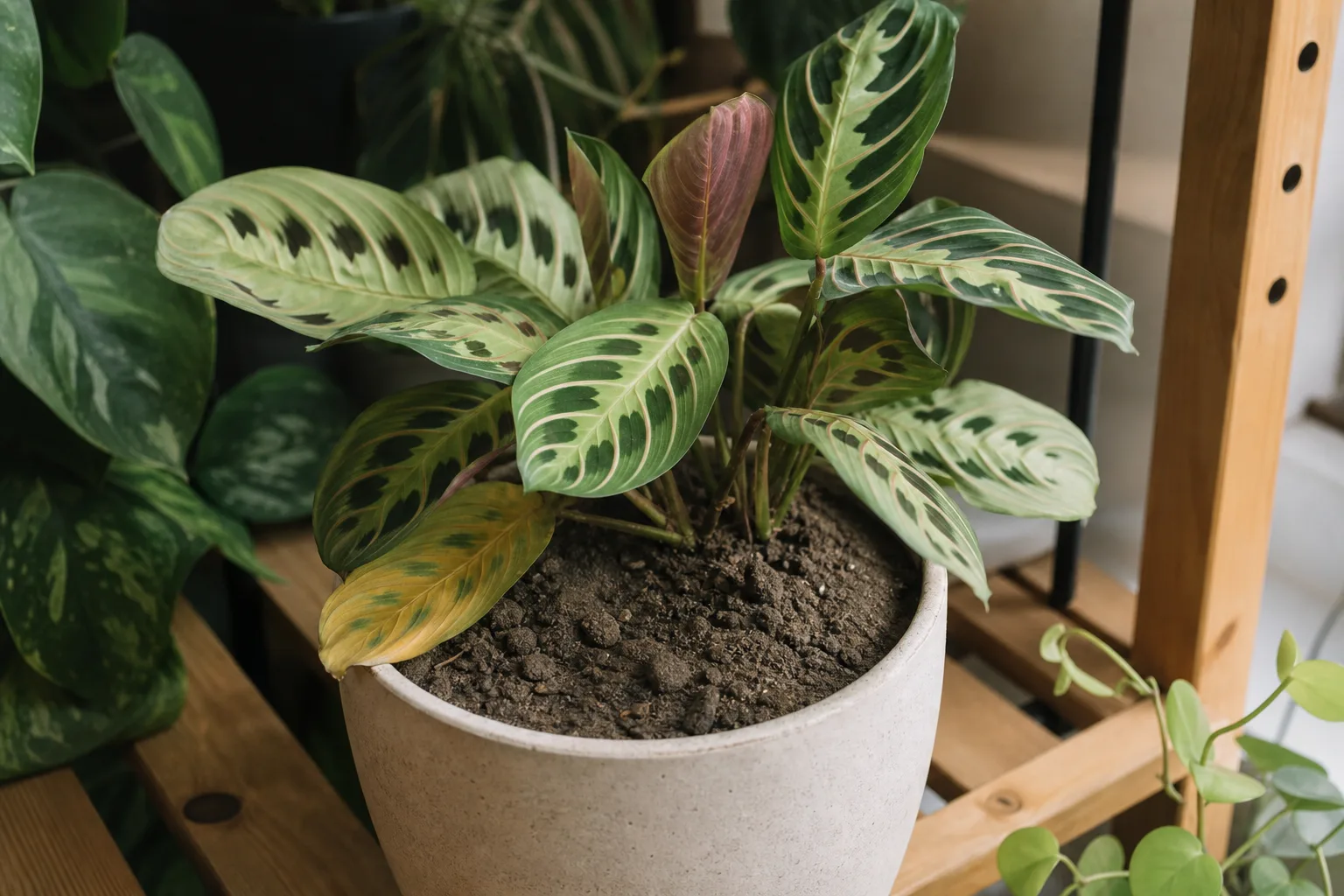
Wrong Soil Mix on Maranta leuconeura: Causes, Checks & Fixes
This guide covers wrong soil mix on Maranta Leuconeura. See also the general Wrong Soil Mix guide, watering, and light pages for this plant.
Wrong Soil Mix on Maranta leuconeura: Causes, Checks & Fixes
Quick answer
Maranta leuconeura needs a paradox most houseplants do not: consistently moist soil that still drains freely. Prayer plants evolved on the humusy, well-drained forest floor of tropical Brazil-not in desert grit and not in waterlogged peat muck.
First step: slide the plant out and inspect the root ball. If the mix stays damp and clumped for many days, or dries to dust within hours while leaves wilt, repot into a fresh blend of peat- or coir-based potting compost with perlite. Do not stack fertilizer, misting, and a bigger pot on the same day.
Scope note: This page troubleshoots active mix failure on a plant already in the wrong substrate. If you are building a fresh blend, running drainage tests, or choosing store-bought bags, start with the prayer plant soil guide-then return here when symptoms suggest the current mix is the bottleneck, not your watering rhythm alone.
Wrong soil is one of the most overlooked reasons prayer plants yellow, curl, and stop their nightly leaf folding-even when watering looks correct on paper.
What wrong soil mix looks on Maranta leuconeura
Soil problems rarely announce themselves as “bad mix.” You see what the root zone does to a moisture-loving tropical plant with fine, shallow rhizomatous roots:
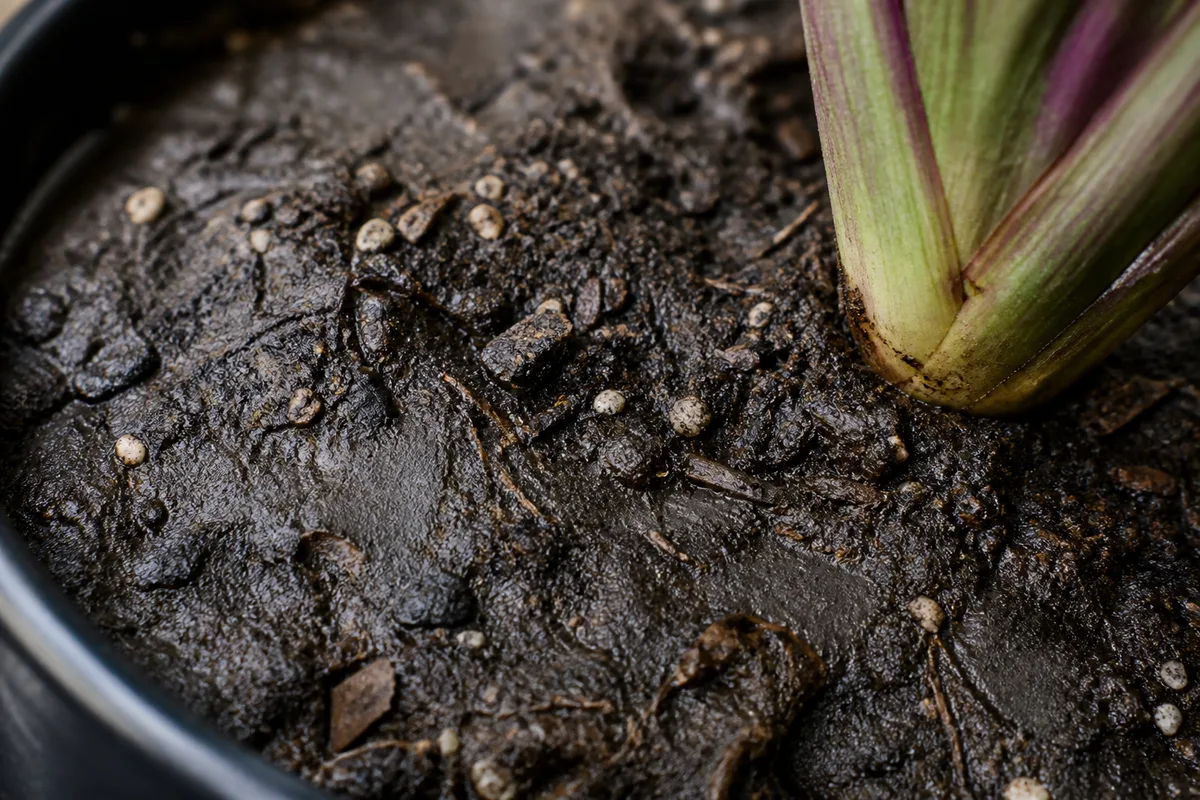
Wrong Soil Mix symptoms on Maranta Leuconeura - compare with healthy tissue on the same plant.
Mix that holds too much water
- Pot stays heavy three to five days after one watering while leaf edges yellow from the bottom up
- Water sits on the surface or runs down the sides without soaking in evenly
- Leaves curl inward and feel limp even though the soil center is wet
- Root rot may occur in poorly drained soil-black mushy roots and a sour or swampy smell when you unpot; escalate to root rot if mush dominates
- Fungus gnats hover over a surface that never dries
- New rolled leaves stay small or fail to open cleanly
Mix that drains too fast
- Pot feels light within hours of watering while leaves wilt by afternoon
- Top inch looks dry but you watered yesterday-the mix will not hold moisture evenly; overlap with dry hydrophobic soil when aged peat repels water
- Leaf margins crisp and brown despite your best watering efforts
- Prayer plant leaves may stop their daily folding movement when chronic drought stress hits the root zone
- Water runs straight through the pot without wetting the center
During cool winter when growth slows, Maranta may look less dramatic while soil problems persist-do not assume dormancy explains chronic yellowing on constantly wet or bone-dry mix.
Recovery case: cactus mix to balanced blend
A red-veined prayer plant repotted into leftover cactus grit wilted within 48 hours of every soak-the pot weighed almost nothing by afternoon despite morning watering. Unpotting showed dusty, brittle fine roots in a mix that shed water instantly. After repot into roughly 60 % peat-based compost, 20 % perlite, and 20 % coco coir (an editorial starting point, not a single extension recipe), new rolled leaves emerged clean in about three weeks and nightly folding returned on undamaged foliage. Old wilted leaves never fully recovered cosmetically-progress showed in new tissue and restored nyctinastic movement.
Wrong mix vs. hydrophobic soil vs. overwatering on correct mix
| What you observe | Top 2 cm dry-down | Unpot inspection | Likely issue | Next step |
|---|---|---|---|---|
| Heavy pot, sour smell, gnats | 5+ days indoors | Clumping wet peat, mushy brown roots | Dense wrong mix → rot risk | Stay here; see root rot if mush spreads |
| Wilting, water runs down pot sides | Hours in summer | Firm roots, dusty repelling mix | Hydrophobic aged peat or cactus grit | Dry hydrophobic soil or repot here |
| Yellow lower leaves, firm roots | Normal 2–4 day cycle | White firm roots in crumbly blend | Schedule too wet on OK mix | Overwatering |
| Outer soil wet, small root ball | Very slow | Firm roots, little root mass | Oversized pot + wrong mix | Repot to fit roots; see repotting guide |
| Crispy tips, even moisture in mix | Normal | Firm roots | Humidity or fluoride | Low humidity or brown tips |
Callout: Soggy center + wet surface for many days = dense or compacted mix. Dusty roots + light pot hours after watering = fast-draining or hydrophobic failure-not the same fix.
Why Maranta leuconeura fails in the wrong mix
Prayer plants sit between two common houseplant camps. They are not succulents that want to dry out completely, and they are not bog plants that tolerate stagnant water. NC State Plant Toolbox notes that root rot may occur with poorly drained soils and that the species requires high humidity with evenly moist potting mix during the growing season.
Standard mix failures indoors:
- Cactus or succulent blend - drains in minutes; fine Maranta roots cannot access steady moisture between waterings.
- Pure peat or moisture-control houseplant soil without perlite - holds water long after the surface looks acceptable; compacts within a season and reduces oxygen at the roots.
- Garden soil or topsoil in containers - too fine and dense; often leads to poor drainage and root diseases indoors.
- Old, broken-down mix - even a once-good blend turns to muck or hydrophobic dust after one to two years without repotting.
- Oversized pot plus wrong mix - extra soil volume holds extra water around roots that cannot use it, mimicking chronic overwatering.
- Chunky orchid bark only - great for epiphytes; too airy for Maranta unless balanced with moisture-retentive components.
Cultivar note: Lemon Lime and Kerchoveana types share the same moisture paradox but show drought stress on patterned new leaves fastest-fine red-veined cultivars often display tip burn before older foliage signals mix failure.
Cachepot trap: A decorative outer pot without drainage can make even decent mix behave like chronic overwatering. Rule out standing water in the shell before blaming composition alone.
Maranta tolerates brief uneven watering on healthy roots far better than weeks in a mix that is always too wet or always too dry. Dense soil turns normal watering into root rot; fast-draining soil turns careful watering into chronic drought stress.
How to confirm the mix is the problem
Work through these checks before blaming spider mites, fluoride, or low humidity alone:
- Unpot test - Slide the root ball out gently. Crumbly mix with white firm roots and even moisture suggests the blend is acceptable. Clumping wet peat, black mushy roots, or dusty hydrophobic roots confirm failure.
- Dry-down pattern - After a full watering, the pot should feel lighter within several days in warm growth, but the top 2 cm should not turn to dust while the center stays soggy-or vice versa.
- Drainage speed vs. retention - Water should exit drainage holes within seconds, yet the mix should feel evenly damp-not dripping-24 hours later in active growth.
- Mix recipe audit - List what went into the pot. Straight cactus mix, garden dirt, supermarket peat plugs, or “all-purpose” blend without perlite is almost always wrong for prayer plants.
- Pot and saucer check - Standing water in a sealed decorative pot makes even decent mix behave badly; rule out drainage blockage before blaming composition alone.
- New growth check - Inspect the newest rolled leaves. Soil stress often shows there first-small, curled, or yellow tips while older leaves look temporarily fine.
- Nyctinastic folding - Undamaged leaves should fold upward at night. Chronic loss of nightly movement on otherwise healthy-looking foliage often tracks root-zone drought from fast-draining or hydrophobic mix.
If the mix drains evenly, smells fresh, and roots are firm but leaf tips brown, test humidity and water quality before repotting again.
First fix for Maranta leuconeura
Repot into fresh, moisture-retaining, well-draining mix in a pot with drainage holes-only one size larger than the root ball if upsizing.
That single root-zone correction matters more than adjusting water by a day while the plant sits in muck or dust. Use a blend close to 60 % peat-based potting compost, 20 % perlite, and 20 % coco coir as an editorial starting point-adjust perlite up in humid homes or coir up in dry heated rooms. Illinois Extension recommends regular potting mix kept moist with diffused light and high humidity; the exact percentage is a practical home blend, not a single published ratio.
Store-bought shortcuts: African violet mix works when lightened with extra perlite if the bag looks dense. Generic tropical houseplant mix often needs the same perlite bump. Avoid straight cactus mix, pure orchid bark, and unamended garden soil.
Timing: late winter or early spring as new growth starts is ideal-details in the repotting guide. Emergency repot is justified if the mix smells sour or roots are turning mushy-saving firm tissue beats waiting for perfect season.
After repotting, water thoroughly once, then let the top 2 cm guide the next drink per the watering guide. Do not fertilize until new growth looks healthy. Do not move the plant to a darker corner the same week.
Step-by-step repot into the right mix
If most roots are still firm:
- Water lightly the day before if the old mix is bone dry-slightly moist mix releases the root ball more easily.
- Unpot and shake off old mix - remove as much failed blend as you can without tearing healthy white roots.
- Inspect roots - trim black or mushy sections back to firm tissue with sterilized pruners; let cut surfaces air briefly if rot was present.
- Choose a pot only slightly wider than the root ball-prayer plants rot in excess wet soil volume around fine roots.
- Fill with balanced mix, set the plant at the same depth, and firm lightly without compacting.
- Water thoroughly until excess runs from holes; discard saucer water after one hour.
- Resume even moisture - keep the mix consistently damp at 2 cm depth without letting the pot sit in standing water.
If more than half the root mass is mushy, trim aggressively, repot into fresh airy mix, and hold fertilizer until new rolled leaves appear clean. Severe cases may need propagation from firm stem tissue.
Recovery timeline
Proper mix shows firmer new leaf rolls within one to two weeks in warm growth. Chronic rot on dense soil may need trimmed roots and a full month before the plant looks bushy again. Old yellow or curled leaves rarely revert fully-judge recovery by unstressed new growth and stable nightly leaf movement, not cosmetic repair of damaged foliage.
Lookalike symptoms to rule out
Low humidity causes brown leaf tips and margins without sour soil or mushy roots-the pot dries evenly and roots stay white when you unpot.
Fluoride or chlorine in tap water can cause tip burn that mimics drought; Penn State Extension lists fluoride toxicity among causes of prayer plant tip burn. Switch to filtered or overnight tap water before assuming the mix failed.
Spider mites cause stippling and fine webbing on undersides, not typically a swampy root smell. Confirm with a lens before repotting for pests.
Overwatering on correct mix happens when light is too low or the pot has no drainage holes-fix placement and drainage before changing blend again.
Cold drafts below 18°C yellow leaves quickly; soil can feel correctly moist while temperature stress dominates.
Mistakes to avoid
Do not repot into straight cactus mix hoping to “prevent rot”-Maranta will wilt and crisp in days.
Do not add gravel at the bottom instead of perlite in the mix-it does not improve root-zone aeration.
Do not jump to a pot much larger than the root ball; going up only one size at a time prevents chronic wet soil around small root systems.
Do not compost heavily rotted root tissue near other houseplants.
Do not increase fertilizer on a stressed plant in bad soil-that pushes tender growth the roots cannot support.
How to prevent soil mix problems next time
Repot every one to two years or when the mix collapses, salt crust builds on the surface, or watering becomes unpredictable. Replace depleted indoor soil regularly and flush salts once or twice a year.
Premix batches using three parts sphagnum peat, one part vermiculite, and one part perlite as a Missouri Extension starting point, then adjust coco coir for your home’s drying speed.
Test a new blend before repotting: saturated mix in a small pot should drain freely yet feel spongy-not muddy-when squeezed.
Match pot material to your watering style-plastic retains moisture longer than unglazed terracotta, which can dry prayer plant mix too fast in heated rooms.
When to worry
Treat as urgent when the mix smells sour while still damp, stems soften at the crown, fungus gnats swarm constantly, or yellowing spreads through new growth within days. Root rot in poorly drained conditions can advance quickly on fine prayer plant roots.
Replace severely declining plants if more than half the root mass is mushy and new growth fails after one careful repot-propagate healthy stem cuttings from firm tissue rather than fighting endless rot in the same failing blend.
Borderline slow growth on a firm plant with acceptable moisture patterns can wait for a planned spring repot rather than mid-winter root surgery.
Related Maranta guides
- Soil guide - DIY blend, drainage tests, and African violet mix notes
- Dry hydrophobic soil - when aged peat repels water instead of holding it
- Root rot - mushy roots and sour smell on dense mix
- Overwatering - firm roots in OK mix but chronic wet surface
- Yellow leaves - multi-cause hub when color change is the main symptom
- Curling leaves - drought vs. rot curl patterns
- Repotting - timing, division, and aftercare
- Prayer plant overview - baseline culture and cultivar IDs
Author: sai-ananth. Reviewed by: LeafyPixels Review Board (2026-06-17). Cross-checked against NC State Plant Toolbox, Illinois Extension prayer plant care, Missouri Botanical Garden PlantFinder, Missouri Extension G6510 houseplant potting mixes, Penn State Maranta diseases, Royal Horticultural Society prayer plant profile, and LeafyPixels soil, dry hydrophobic soil, and root rot guides. Factual claims in the body were validated with inline extension citations; see the validatedClaims block below for the audit trail.