Dry Hydrophobic Soil on Maranta Leuconeura: Causes, Checks
Quick answer
Hydrophobic soil on prayer plant means mix repels water while the root ball stays dry inside-often after lost night folding signals dehydration before tips crisp. First step: bottom-soak the pot in lukewarm water until the top 2 cm feels moist, then drain fully before resuming normal care.
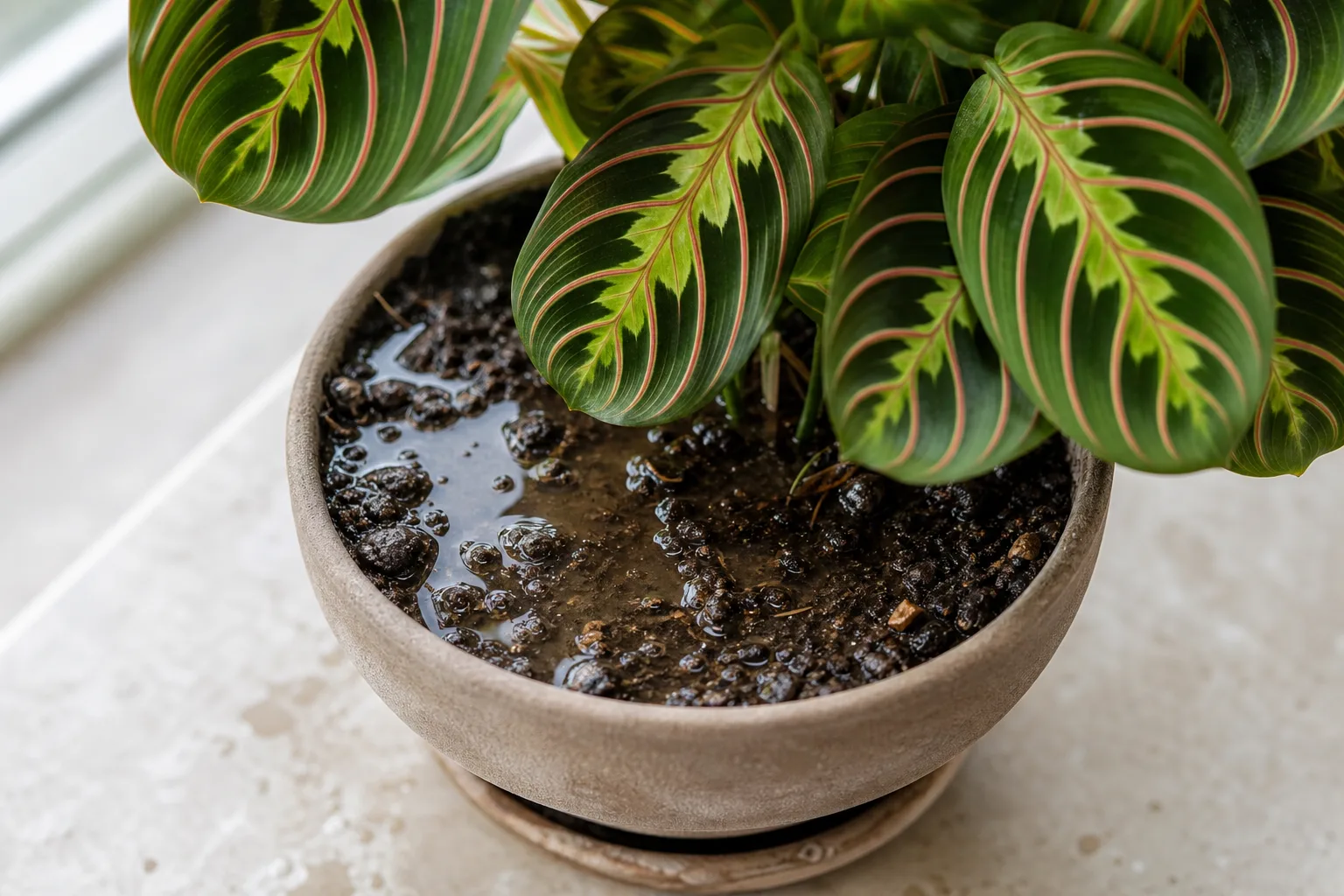
Dry Hydrophobic Soil on Maranta Leuconeura: Causes, Checks & Fixes
This guide covers dry hydrophobic soil on Maranta Leuconeura. See also the general Dry Hydrophobic Soil guide, watering, and light pages for this plant.
Dry Hydrophobic Soil on Maranta Leuconeura: Causes, Checks & Fixes
Quick answer
When Maranta leuconeura stops folding its leaves at night for several evenings while you have been “watering,” suspect dry hydrophobic soil before you blame pests or disease. The mix has dried so far that it repels water instead of absorbing it. You pour from the top, water races out the drainage holes, and you assume the prayer plant drank-while the center of the root ball stays dead dry. That mismatch is especially risky on Maranta because Maranta Leuconeura overview expects moist but well-drained mix and fine, shallow rhizomatous roots that cannot tolerate long drought in the middle of the pot.
First step: set the pot in a basin of lukewarm water so the mix wicks up through the drainage holes until the top 2 cm feels moist. This bottom watering method slowly re-wets hydrophobic mix. Lift the pot out, let it drain completely, and empty the saucer. Do not keep adding top water to crusted soil; it will keep running off the sides. If leaves look drought-stressed but mix still accepts a slow pour, read underwatering instead-same wilt, different first fix.
What dry hydrophobic soil looks like on Maranta leuconeura
Hydrophobic soil shows up in the pot before it fully shows on every leaf. On prayer plants, leaf stress often follows within a day or two because the root system is small and close to the surface.
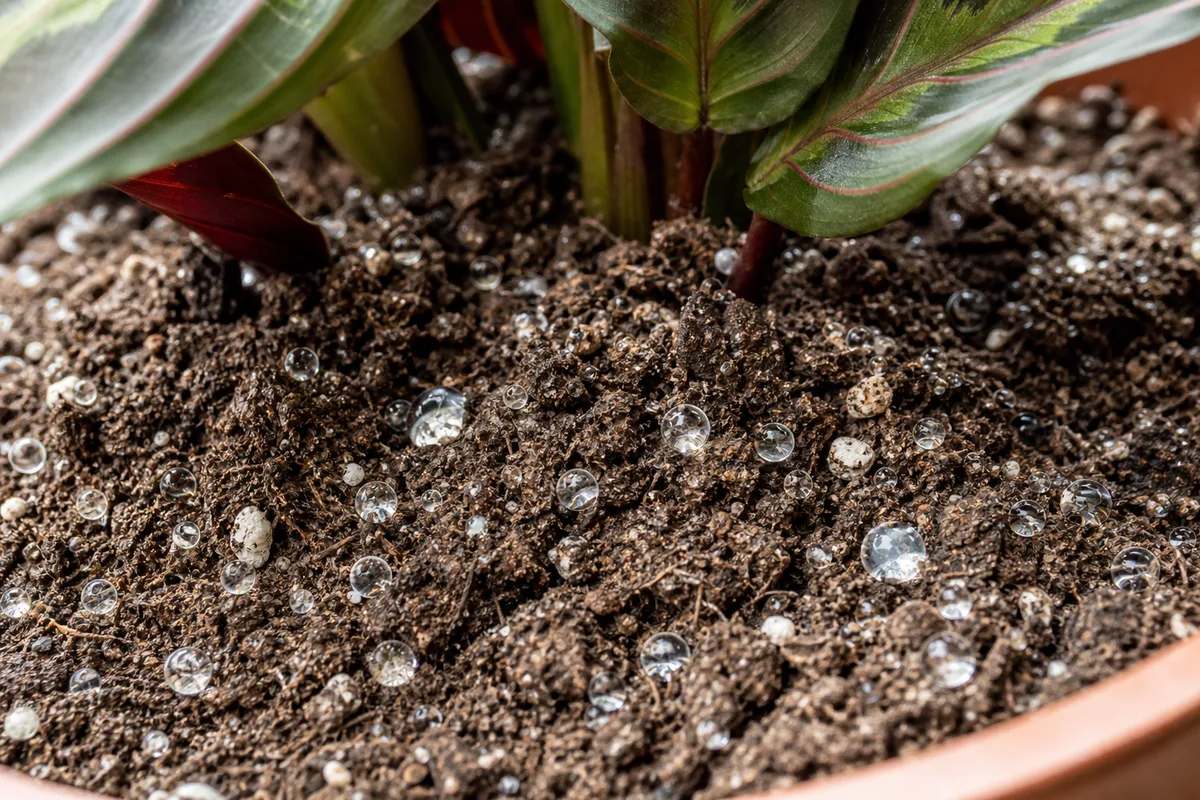
Dry Hydrophobic Soil symptoms on Maranta Leuconeura - compare with healthy tissue on the same plant.
Pot and mix signs:
- Water pools on the surface or races through in seconds with little absorption
- Dry mix has shrunk and pulled away from the pot wall, leaving a gap where water runs down
- Surface looks dusty, pale, or cracked while you have been “watering” regularly
- Pot feels light when lifted despite recent watering
- A finger at 2 cm depth stays dry right after a top-water session
Leaf signs on prayer plant:
- Limp, drooping patterned leaves that resemble underwatering
- Leaf curl inward and crispy brown tips or margins
- New leaves opening smaller or already tan at the edges
- Reduced or absent nyctinastic folding at night when dehydration is severe-often days before widespread yellowing
- Older leaves yellowing if the dry spell lasted more than a week
The key distinction: with simple underwatering, dry mix still accepts water when you pour slowly. With hydrophobic soil, water does not penetrate the root ball even when you try. Our wilting guide walks the full branch when drought and rot both seem possible.
A real recovery timeline
A red-veined prayer plant in a 6-inch peat nursery pot returned from a two-week winter vacation with mix shrunk from the plastic walls and leaves flat day and night. One cup of top water exited the drainage holes in under thirty seconds; the top 2 cm probe stayed dry. After a fifty-five-minute bottom-soak and one slow top pass with filtered water, stems firmed within five hours. Night folding returned on the second evening. Two oldest leaves kept crispy margins until a clean new leaf opened three weeks later-typical once rhizomes rehydrate.
Hydrophobic soil vs. underwatering on Maranta - when runoff is the problem
Prayer plants wilt from both drought and repelling mix. The pot tells you which guide to open.
| What you notice | Likely cause | First move |
|---|---|---|
| Light pot, dusty-dry at 2 cm, mix accepts slow top water | Underwatering | Thorough top water until a little drains; empty saucer |
| Light pot, water runs through in seconds, dry at 2 cm after “watering” | Hydrophobic dry core (this page) | Bottom-soak until top 2 cm is moist, then drain |
| Heavy pot, wet at 2 cm, yellow lower leaves, sour smell | Overwatering / rot | Stop watering; inspect roots if decline continues |
| Moist soil at 2 cm, crispy tips only, firm stems | Low humidity or water quality | Raise humidity; do not flood roots |
| Limp leaves after repot, firm stems, normal moisture | Transplant stress | Stable light and even moisture; hold fertilizer |
If drought and hydrophobic both seem possible, run the runoff test first: pour one cup slowly. Channeling to the sides within a minute confirms repelling mix even when leaves look merely thirsty.
Why prayer plant gets hydrophobic soil
Prayer plant mixes are usually peat- or coir-based with perlite for drainage. Peat retains moisture beautifully when evenly damp-but when it dries completely, peat moss is very difficult to re-wet. Bags of potting soil can even dry out on the shelf. Maranta is more vulnerable to the consequences than many houseplants because it is not built for full dry-down cycles.
Shallow rhizomes and a dry core
Maranta leuconeura spreads by short rhizomes just below the soil surface. Fine roots occupy the upper ball. When the center dries hard, those roots lose uptake first-while a damp-looking crust or wet saucer can fool you into thinking the job is done. That is why lost night folding often precedes obvious tip burn on prayer plants.
Vacation dry-out and the winter watering trap
Many growers hold back on watering in winter while heating dries the pot surface faster than roots can recover. One overwatering scare teaches caution; the fix becomes waiting too long between drinks until the whole ball goes hard-not just the top layer beginning to dry. Winter means stretch intervals, not depth of drying. Full seasonal rhythm lives in our Maranta watering guide.
Common triggers in real homes:
Letting the pot go too dry. Maranta leuconeura should stay evenly moist during active growth. A vacation, a busy week, or backing off water after a rot scare can leave the whole ball dry hard.
Watering too quickly from the top. A fast pour on crusted mix runs between the root ball and pot wall. You see drainage and think the job is done.
Old, compacted mix. Peat breaks down after one to two years, reducing air pockets and creating dense zones that dry into water-repellent clumps. Rootbound prayer plants in nursery peat are especially prone-refresh per our soil guide and repotting guide.
Salt and mineral crust vs. hydrophobic crust. Tap water and fertilizer leave white surface salts that crust over and shed water. Leaves burn with high fluorides on Maranta margins at the same time, which can distract from the soil issue. Hydrophobic crust feels dusty and dry through at 2 cm after watering; salt crust often sits on mix that is still cool-moist below.
Oversized or wrong pots. Too much unused mix at the edges can dry into a hydrophobic ring while roots stay in a small dry core.
How to confirm the cause
Work through these checks before repotting or changing your whole routine:
- Runoff test - Add one cup of water slowly. If it channels to the sides or exits in under a minute, suspect hydrophobic mix.
- Gap check - Look for daylight between dry mix and the pot wall.
- Depth probe - After your normal watering, press a finger 2 cm deep. Still dry? The root ball did not hydrate.
- Weight check - A well-watered Maranta pot should feel noticeably heavier than a dried-out one.
- Night movement - Leaves that stopped folding for several evenings with repelling mix fit hydrophobic soil; folding with only afternoon limp may be humidity instead.
- Smell and roots - Sour, swampy odor or black mushy roots mean overwatering or rot, not drought alone. Firm pale roots support a dry-core diagnosis. Neutral dry smell without sourness fits hydrophobic only.
- Leaf pattern - Widespread limp leaves with repelling mix fits hydrophobic soil. Spotty crisp tips with moist soil at 2 cm may be humidity or water quality instead.
If top watering failed the probe test, hydrophobic soil is confirmed-move to bottom soaking.
First fix for Maranta leuconeura
Bottom-soak the pot until the top 2 cm of mix feels moist, then drain fully.
- Choose a basin, sink, or bucket that holds the pot and enough lukewarm water to reach halfway up the pot sides.
- Set the pot in the water so it enters through drainage holes. Small pots may float at first; that is normal as air escapes.
- Soak until the top 2 cm feels moist when pressed-often 20 to 40 minutes for a 4-inch pot, 45 to 90 minutes for a standard 6-inch houseplant pot, and up to two hours for a dense rootbound 8-inch container. Check hourly rather than leaving it submerged overnight.
- Lift the pot, let excess water drain for 15 to 30 minutes, and empty the saucer-and any cachepot it sits inside.
- Resume your normal rhythm: water when the top 2 cm begins to dry, using filtered or overnight tap water to protect leaf margins per our watering guide.
For severely repelling mix, a full pot submerge until bubbling stops works faster-acceptable for a healthy plant without a sour root smell. Do not let Maranta sit in standing water for days; crowns and rhizomes rot easily when water pools on stems.
Step-by-step recovery
After the initial soak:
- Verify hydration - Probe at 2 cm depth six hours later. If still dry, repeat a shorter bottom soak.
- One slow top pass - After the ball is moist, a gentle top watering helps settle the surface without flooding the crown.
- Raise humidity - Run a humidifier or pebble tray while roots recover so leaves lose less moisture through dry winter air. Prayer plants are intolerant of low humidity.
- Trim only dead tissue - Remove fully brown leaves after the plant stabilizes, not during the first soak.
- Refresh mix if needed - If the same pot repels water again within two weeks, repot into fresh airy mix matched to Maranta: moisture-retaining compost with perlite and coir, not straight dense peat-recipes in our soil guide. Do not reuse hydrophobic peat clumps from the old ball.
- Scrape heavy salt crust - If white mineral crust covers the surface, scrape the top centimeter and flush with plain water at the next soak, or repot if buildup is thick.
Hold off on fertilizer until new growth looks firm and the folding habit returns.
Recovery timeline and what to expect
Leaves often perk within a few hours to one day once the root ball is truly wet. Night folding may return within one to two evenings if stems stayed firm. Crispy edges on existing foliage remain until replaced by new prayer-plant leaves over two to four weeks. Severe dry-down may drop older leaves over one to two weeks even after a successful soak.
Improvement signs: firmer stems, restored night folding, new leaves opening with cleaner margins, and mix that accepts water from the top again. Worsening signs: crown softness, sour smell after soaking, or continued wilt with wet surface but light pot-inspect roots per our overwatering guide.
Causes to rule out (lookalike matrix)
| Symptom pattern | Likely cause | Why it differs from hydrophobic soil |
|---|---|---|
| Dry mix accepts slow top water | Simple underwatering | Runoff channeling is not the main problem; bottom-soak still helps |
| Heavy pot, sour smell, wet at 2 cm | Overwatering / root rot on Maranta Leuconeura | Repelling, light mix fits drought-not swampy weight |
| Crispy tips, moist at 2 cm, no channeling | Low humidity / fluoride | Fix air moisture and water quality first |
| Translucent patches after cold draft | Cold damage | Soil moisture may be normal |
| Limp after recent repot | Transplant stress | Mix often accepts water; stabilize care |
Mistakes to avoid
- Pouring more top water onto crusted mix and trusting the saucer fill level
- Leaving the pot in a water basin for a full day-oxygen loss stresses fine Maranta roots
- Misting leaves instead of rehydrating the root zone
- Repotting immediately into a much larger pot, which holds extra wet mix around a small root ball
- Fertilizing a drought-stressed plant to “wake it up”
- Assuming wilting means overwatering and withholding water further when mix is light and repelling
- Leaving the nursery pot inside a cachepot full of drain water after bottom-soaking
How to prevent hydrophobic soil next time
- Check moisture at 2 cm depth before every drink; test the soil with your finger rather than relying on a calendar alone
- Never let the entire pot go bone dry for extended periods during active growth
- Use a Maranta-appropriate mix: moisture-retaining but airy, with perlite and coir in the blend-see soil guide
- Refresh tired peat-heavy soil every one to two years or when water runs through too fast
- Bottom-soak at the first sign of repelling mix rather than after leaves collapse
- In winter, reduce frequency-not depth of drying; allow the top layer to begin drying, not the whole ball to harden-details in watering guide
- Keep prayer plants away from heat vents that bake the surface while roots stay neglected below
When to worry / when to repot instead
Repot and inspect roots if:
- Mix smells sour after soaking (rot, not drought)
- Stems soften at the crown
- Rehydration fails twice with continued collapse
- Mix repels water again within two weeks of a successful soak
Follow our repotting guide in spring when possible: gently loosen the root ball, discard hydrophobic peat clumps, and replant in fresh airy mix. A plant that loses most leaves but keeps firm rhizomes can recover over several weeks. Discard only when roots are mostly mush and the crown is soft.
About this guide
This guide was written by sai-ananth and reviewed by the LeafyPixels Review Board against botanical references including the University of Illinois Extension prayer plant page, Missouri Botanical Garden PlantFinder entry for M. leuconeura, NC State Extension Plant Toolbox, Royal Horticultural Society Maranta leuconeura details, UC Master Gardeners hydrophobic soil guidance, and LeafyPixels watering, soil, repotting, underwatering, and wilting guides. The sample recovery timeline and pot-size soak heuristics are editorial diagnostics synthesized from prayer plant growth habit and extension moisture guidance-not a single published case study from one lab.
Conclusion
Dry hydrophobic soil on Maranta leuconeura is a root-zone hydration failure, not a mysterious wilt-water ran somewhere, but not through the root ball. Bottom-soak until the top 2 cm is moist, drain well, restore even moisture, and refresh compacted peat before the next vacation dry-out turns your prayer plant’s mix into a water-repellent shell.
Escalation checklist: sour smell → stop soaking and inspect for rot; repels again within two weeks → repot with fresh mix from the soil guide; still limp after two proper soaks → unpot and check rhizomes. When drought and rot both seem possible, start with the wilting guide; when mix still accepts water but the pot is dry, use underwatering instead.
When to use this page vs other Maranta Leuconeura guides
- Maranta Leuconeura watering guide - Use for routine moisture checks before assuming dry hydrophobic soil is the main issue.
- Maranta Leuconeura problems hub - Browse all 40 common issues on this species.