Slow Growth on Dwarf Umbrella Tree: Causes, Checks & Fixes
Quick answer
Dwarf umbrella tree is a moderate grower-new umbrella whorls every few weeks in bright conditions, slower in winter. First step: count weeks since the last new whorl at the canopy tip, then check whether light reaches the top leaf clusters and soil dries on a normal rhythm.
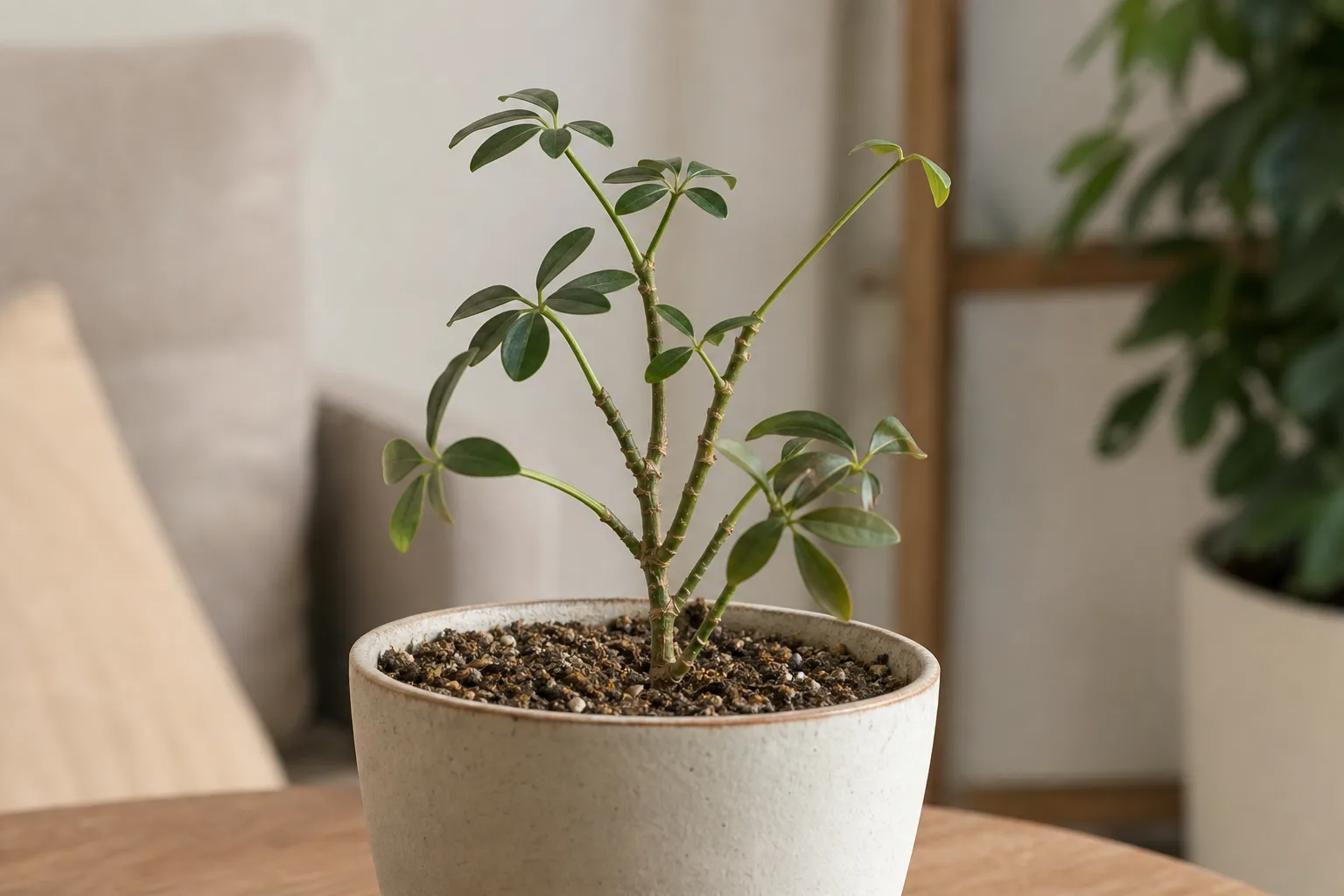
Slow Growth on Dwarf Umbrella Tree: Causes, Checks & Fixes
This guide covers slow growth on Dwarf Umbrella Tree. See also the general Slow Growth guide, watering, and light pages for this plant.
Slow Growth on Dwarf Umbrella Tree: Causes, Checks & Fixes
Quick answer
Slow growth on dwarf umbrella tree (Schefflera arboricola) is often normal moderate pace mistaken for a problem-or a true stall when new umbrella whorls stop appearing at the canopy tip for months during warm bright weather. This species is a moderate, upright grower that typically reaches 3 to 6 feet indoors over years, not inches per week like a pothos.
First step: count weeks since the last new whorl at the stem tip. If you are in active summer with bright indirect light and no fresh whorl for eight or more weeks, treat that as a stall. If it is winter and the plant looks firm with stable older leaves, slower metabolism is expected. After establishing season context, check light at the canopy and whether the top inch of mix dries within a normal window for your home.
Why dwarf umbrella tree grows slowly (and when that is normal)
Schefflera arboricola evolved as an edge-to-understory shrub in Taiwan and Hainan-bright but filtered, not deep shade. Indoors it tolerates softer light longer than many tropicals, but tolerance shows up as fewer whorls, smaller leaflets, and longer gaps between flushes rather than obvious wilt. That makes slow growth easy to misread as “fine” until a whole warm season passes with no new umbrellas at the tip.
Normal slow periods include:
- Winter quiet. Short days and cooler room temperatures slow whorl output even in a decent window. A plant that holds green foliage, loses no clusters in waves, and simply waits until longer days return is behaving normally-not stalling.
- Recent repotting. After upsizing, the plant often redirects energy into roots for two to four weeks before pushing a new whorl. That pause is normal, not failure.
- Species pace indoors. NC State Extension classifies H. arboricola as a medium growth-rate plant that reaches 3 to 6 feet as a houseplant. Even in good light, container growth is slower than the same plant in frost-free ground outdoors.
Abnormal slow growth - the kind this page addresses - means no meaningful new whorls through an entire spring and summer while the plant sits in moderate or dim light, chronically wet soil, cold drafts, or a root-bound pot. That pattern differs from a winter rest or a two-week post-repot pause.
What slow growth looks like on dwarf umbrella tree
On S. arboricola, growth is measured at the canopy tip, where compound leaves emerge in whorls-clusters of 7 to 9 glossy leaflets radiating from a central point on each stem. Slow growth has a recognizable signature:
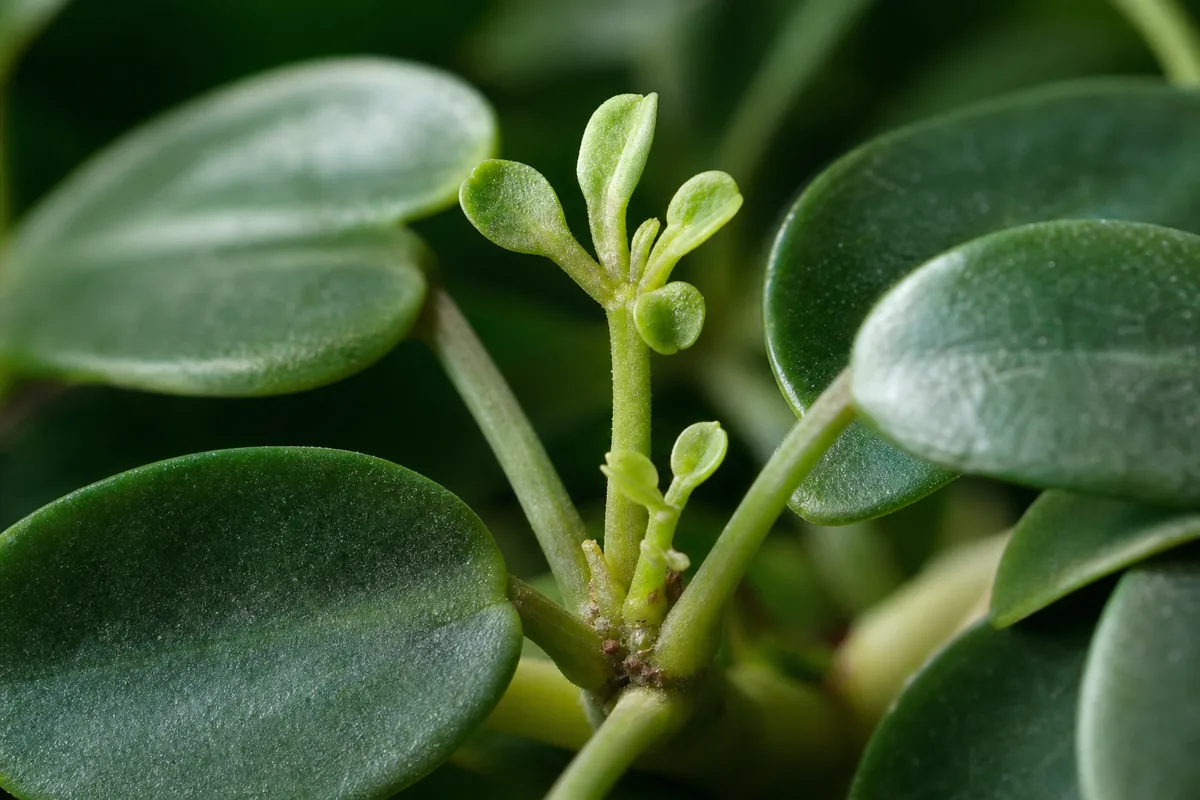
Slow Growth symptoms on Dwarf Umbrella Tree - compare with healthy tissue on the same plant.
- No new whorl for many months during warm bright weather despite firm, upright existing foliage
- Only one or two whorls per warm season in a dim room-far below what the same plant produces at a bright window
- Smaller or paler new leaflets on the rare whorls that do appear
- Stable pot weight and predictable dry-down when light alone is the limiter; heavy wet pot when overwatering in dim conditions compounds the stall
- Tight whorl spacing with simply fewer flushes - not long naked stem sections (that is leggy growth, not slow pace alone)
This differs from decline: yellowing whorls dropping in clusters, soft stems at the base, or sour soil with damp mix point to overwatering or root rot, not species-normal rhythm. It also differs from not enough light when stretch and lean dominate the stem-though insufficient light is usually the root cause of both slow and leggy growth indoors.
Green vs. variegated growth expectations
The cultivar on your windowsill changes what “normal” looks like. Mixing them up leads to false alarms.
Solid-green S. arboricola typically produces a new whorl every two to four weeks at the active tip in bright indirect light during warm months. Leaflets on mature dwarf forms run roughly 1 to 2 inches long with firm, glossy tissue. In a dim interior spot, zero to one whorl every two months is common even when the plant looks green.
Variegated cultivars - Gold Capella, Trinette, Dazzle, and Variegata - grow slower because pale leaf sectors photosynthesize less efficiently. Variegated schefflera cultivars need brighter exposure near windows than solid-green plants in the same spot. Expect longer gaps between whorls on variegated specimens unless light is a step brighter. A green neighbor that looks merely slow while your Gold Capella stalls completely is a cultivar light-budget signal, not a mystery disease.
Neither form is a true long-term low-light plant. Both need bright indirect light for several hours daily at the canopy for steady whorl production.
How this differs from related problems
| Pattern | Likely issue | Where to read next |
|---|---|---|
| Long bare stem between whorls, crown lean, tiny top tuft | Leggy stretch from low light | Leggy growth |
| No new whorls, firm plant, dim room, winter months | Normal dormancy or light limit | This page + light guide |
| No new whorls, wet heavy pot, yellow mid-canopy clusters | Overwatering / root stress | Overwatering |
| No new whorls after spring repot, slight pause only | Transplant pause | Repotting guide |
| Small pale new leaflets in bright window, no feed all year | Under-fertilization in active season | Fertilizer guide |
| Stippling + webbing on undersides, static canopy | Spider mite stress | Spider mites |
Slow growth is the baseline hub question: “Is my Schefflera pace normal?” Leggy growth owns stem architecture - wide internode gaps and stretch toward glass. This page owns whorl frequency and stall diagnosis. Both often share the same first fix - brighter light at the canopy - but read the stem before you decide whether patience or placement is the answer.
Why dwarf umbrella tree growth stalls abnormally
Insufficient light at the canopy
Light is the primary indoor growth throttle. NC State Extension lists partial shade and dappled sunlight as suitable exposures outdoors; indoors that translates to bright indirect light for several hours daily at the top whorls. Dim offices and far-from-window shelves keep the plant alive but reduce whorl frequency to near zero.
Low light also slows soil dry-down - plants in dim rooms grow more slowly and use less water. Owners who keep a summer watering rhythm in a dim corner invite wet roots, which further limits new whorl production - a cycle documented on the watering guide for this species.
Overwatering and root decline
Schefflera roots need dry-down between waterings. Clemson HGIC advises letting soil dry to half an inch deep before watering again. Chronic wetness in low light silently reduces root function before obvious rot appears. A stalled plant with heavy damp mix, soft lower leaflets, and sour soil smell overlaps overwatering and root rot - unpot and inspect before assuming simple impatience.
Root-bound pot limiting uptake
After two to three years in the same container, circling roots can stall whorl emergence even when light and water look correct. Check drainage holes for white root tips circling the pot. See repotting for timing and mix guidance.
Nutrient deficiency after long pot life
Pale, small new leaflets on an otherwise stable plant that has not been fed in years may reflect depleted mix - but do not fertilize a plant in too little light expecting faster whorls. Plants growing in reduced light need less frequent fertilization than those in bright exposure. Fix placement first; then a dilute active-season feed supports whorl quality.
Cold drafts and temperature swings
Clemson HGIC links schefflera leaf problems to chilling below 50°F. Sustained exposure below about 55°F (13°C) stalls growth and triggers drop. AC vents, winter window ledges, and entry doors create microclimates that pause whorl production for weeks after exposure.
How to confirm the cause
Work through these checks in order:
- Season and whorl timeline - Note the date of the last new whorl. Winter pause with firm leaves is normal; summer silence is not.
- Shadow test at canopy height - Light intensity decreases rapidly with distance from the window. Bright indirect light casts a clear but soft shadow at the top whorls without hot sunbeams hitting leaflets directly.
- New leaflet quality - Compare the newest whorl to one from six months ago. Smaller, paler, or widely spaced leaflets suggest light or nutrition limits.
- Soil dry-down rhythm - If the top inch stays wet for two weeks while growth is flat, reduce watering frequency and review light together.
- Root-bound check - Lift the pot or peek at drainage holes for circling roots or roots matted at the surface.
- Temperature scan - Feel for cold drafts at night near the pot; move off winter glass if leaves touch cold pane.
- Pest scan - Stippling on leaf undersides or fine webbing from spider mites can stall vigor in dry heated air - confirm before repotting.
If the plant is firm, pest-free, and stable with no new whorls only in winter or for two weeks after repotting, slow growth is likely expected behavior. If zero warm-season whorls appear in moderate light, light correction is the first hypothesis.
First fix for dwarf umbrella tree
If no new whorl has appeared for months during warm weather and the pot is not waterlogged: move the plant to the brightest safe indirect spot - typically within one to three feet of an east window or filtered south or west glass.
Raise the canopy into the light cone; a plant on the floor below a high window often stalls while upper leaves look fine. Add a full-spectrum LED six to twelve inches above the top whorls for 10 to 12 hours daily if natural light is weak.
Hold everything else steady while you test the move:
- Do not repot on the same day.
- Do not fertilize a stressed or stalled plant.
- Do not increase watering because leaves look tired - brighter light will increase water use over the following weeks.
If soil stays wet in that dim spot, skip the next scheduled watering and let the top inch dry before resuming a check-first rhythm from the watering guide. Do not fertilize until new whorl production resumes.
If roots clearly circle the pot and light is already adequate, repot one size up in spring with well-draining mix - never jump to an oversized container expecting faster growth.
Make this one change, wait three to six weeks through the active season, then reassess whorl emergence before stacking other fixes.
Step-by-step recovery
After the initial light or water correction:
- Rotate the pot a quarter turn weekly so all sides of the whorled canopy receive even brightness.
- Adjust watering to dry-down speed in the new spot - brighter rooms use water faster; dim rooms slower.
- Feed lightly once after the first healthy new whorl appears if the plant has not been fertilized in a year.
- Repot if root-bound in early spring; firm mix around the root ball and water once to settle.
- Pinch the tip after two compact whorls if you want a bushier silhouette - optional, not required for stall recovery.
- Move off cold ledges and keep temperatures above 55°F for steady metabolism.
- Treat mites if stippling appears - stressed scheffleras in dry air are susceptible.
Make one care change at a time so you can read the plant’s response in the next whorl.
Recovery timeline
Two to four weeks after a light upgrade in spring or summer: The next emerging whorl should open with firmer, fuller leaflets than the most recent pale flush.
Three to six weeks: Many healthy specimens in corrected light produce a second new whorl where they previously added one per season - or resume a every-few-weeks pace at a bright east window in peak summer.
One full growing season: Judge success by total whorl count and leaflet size versus the prior year, not by old leaves enlarging. Existing whorls do not expand retroactively.
Winter: Expect little to no new growth even after a successful light fix. That pause is normal; do not force growth with fertilizer or extra water.
Post-repot: Mild transplant pause of two to four weeks is common; full recovery to regular whorl production may take four to six weeks in warm bright conditions.
Worsening signs: Yellowing with wet soil, soft stem base, or whorls rotting before opening mean escalate to root inspection - not more light alone.
Lookalike symptoms to rule out
Normal winter rest. Firm green foliage, dry-down slows, zero new whorls for months. Resume normal spring care when days lengthen.
Leggy stretch. Long internodes between whorls with sparse leaves; stems lean toward glass. Same underlying light deficit, but the fix path includes reading stem architecture - see leggy growth.
Overwatering stall. Growth stops while soil stays wet and heavy; lower leaflets yellow. Roots may be failing - dry-down and inspect before assuming dormancy.
underwatering on Dwarf Umbrella Tree stress. Very light pot, dry mix throughout, wilt with firm leaf tissue except at margins. Deep soak once, then resume rhythm.
Transplant shock. Temporary stall for two to three weeks after repot without mushy roots.
Spider mite stress. Fine webbing and stippling on undersides; growth slows secondary to pest damage.
What not to do
Do not fertilize heavily to “speed up” a plant in too little light - that salts stressed roots without producing whorls. Do not increase watering during a winter pause out of impatience; wet cold soil stalls roots further.
Do not repot into an oversized pot expecting faster growth - excess wet mix around a small root ball invites rot. Do not confuse leggy stretch with healthy slow pace; stretched stems need light and optional pinching, not patience alone.
Do not ignore variegated cultivar light needs - Gold Capella in a dim hall will stall faster than solid green forms in the same spot. Do not judge recovery by old leaflet size; watch the canopy tip for new umbrella clusters only.
How to prevent slow growth next time
Place green cultivars where the canopy receives several hours of strong indirect light daily; give variegated forms a step brighter. Repot every two to three years before roots circle aggressively. Feed lightly during active whorl months only. Expect slower whorls in winter and resist the urge to overwater or overfeed during the pause.
Check the canopy tip monthly during growing season - a new whorl every few weeks means care is aligned. Silence through a bright summer is the early warning, not the old leaf size.
When to worry
Slow growth alone is low severity when foliage is firm and green. Escalate if:
- No new whorls appear for three or more months in warm bright weather despite corrected placement
- Soil stays wet and sour while growth is zero - possible root rot
- Soft stem bases or collapsing leaf clusters accompany the stall
- Yellow whorls drop while soil stays wet - not one aged leaflet at a time
A firm plant with stable foliage through winter and resumed whorls in spring is low urgency. Pale tiny new leaflets on an otherwise green plant in dim light need a light fix within weeks, not months of waiting.
Dwarf umbrella tree care cross-check
Slow growth usually means one core input is below what this species uses best. Before adding treatments, align the basics from our cluster guides:
- Overview - species baseline, cultivar differences, normal indoor size
- Light - window placement, grow lights, variegated rules
- Watering - dry-down trigger, winter reduction
- Fertilizer - active-season feed only
- Repotting - one-size-up timing before severe binding
Dwarf umbrella tree rewards bright indirect light at the canopy, dry-down watering, and restrained intervention more than frequent repotting or heavy feeding in dim conditions. Get the window right, match water to the new metabolism, and judge every fix by new umbrella whorls at the tip - not by whether older leaflets suddenly enlarge. If stems stretch between whorls, pair this page with leggy growth for stem-specific recovery.
When to use this page vs other Dwarf Umbrella Tree guides
- Dwarf Umbrella Tree watering guide - Use for routine moisture checks before assuming slow growth is the main issue.
- Dwarf Umbrella Tree problems hub - Browse all 17 common issues on this species.
- Not Enough Light on Dwarf Umbrella Tree - Different entry point when symptoms overlap with slow growth.
- Leggy Growth on Dwarf Umbrella Tree - Different entry point when symptoms overlap with slow growth.
- Yellow Leaves on Dwarf Umbrella Tree - Different entry point when symptoms overlap with slow growth.