Spider Mites on Dwarf Umbrella Tree: Causes, Checks & Fixes
Quick answer
Spider mites on dwarf umbrella tree colonize the undersides of compound leaflet whorls in warm, dry indoor air-especially near south windows and heating vents in winter. First step: isolate the plant and rinse every leaflet underside with lukewarm water, working from the crown downward.
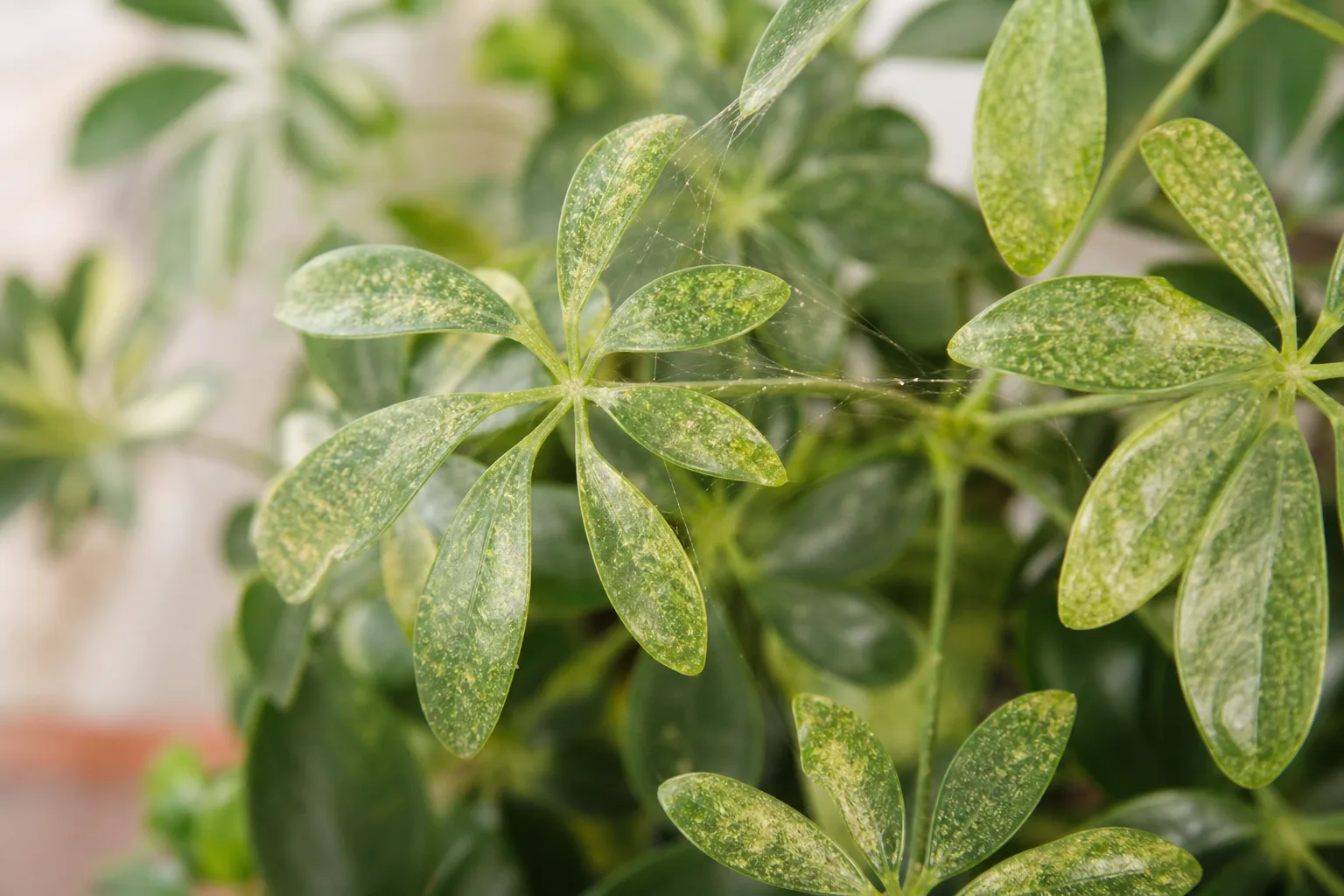
Spider Mites on Dwarf Umbrella Tree: Causes, Checks & Fixes
This guide covers spider mites on Dwarf Umbrella Tree. See also the general Spider Mites guide, watering, and light pages for this plant.
Spider Mites on Dwarf Umbrella Tree: Causes, Checks & Fixes
Quick answer
Spider mites on dwarf umbrella tree (Schefflera arboricola, also sold as parasol plant or dwarf schefflera) thrive in the warm, dry microclimates this species often occupies indoors-south-facing winter sun, forced-air heat, and the sheltered undersides of its compound leaves. Each leaf carries seven to nine glossy leaflets arranged in a whorl; mites feed on sap from the lower surfaces and along petiole bases where whorls overlap, causing fine stippling, bronzing, and delicate webbing that is easy to miss from a top-down glance.
First step: isolate the plant and rinse every leaflet underside with lukewarm water, working from the crown downward and targeting petiole joints. Confirm live mites with the white-paper tap test before adding sprays. For baseline care context, see the dwarf umbrella tree overview and the low-humidity guide if dry winter air is your main environmental stress.
Why dwarf umbrella tree gets spider mites in winter rooms
Schefflera arboricola is native to warm, humid subtropical Taiwan and Hainan Province, yet it tolerates average home humidity better than many true rainforest species. That tolerance creates a common trap: owners assume the plant is fine in dry air until mites explode on leaf undersides. Spider mites thrive in dry, warm conditions-exactly what forced-air heating delivers between November and March.
Missouri Botanical Garden notes spider mites in dry indoor conditions as a primary pest watch on dwarf schefflera, alongside mealybugs, aphids, and thrips. The plant’s dense, whorled crown gives mites protected feeding sites on lower leaflet surfaces invisible from above. Compact specimens on a bright windowsill lose leaf moisture faster than owners realize; watering on schedule does not replace the humidity mites need to stay suppressed.
Typical outbreak triggers on this species:
- South- or west-facing winter sun plus heating vents-hot dry air at the leaf surface while soil moisture looks normal
- Grouped plant displays where mites walk from an infested neighbor onto shared leaf contact points
- Summer outdoors, fall indoors without quarantine-mites hitchhike on leaf undersides
- Recent move near a radiator after repotting or pruning, when new soft leaflets open in a dry microclimate
Spider mites are not breeding in your potting soil; focus treatment on foliage, not drenches.
What mite damage looks like on compound leaflet whorls
Damage on dwarf umbrella tree follows its palmately compound architecture. Look at individual leaflets within each whorl, not just the overall canopy color.
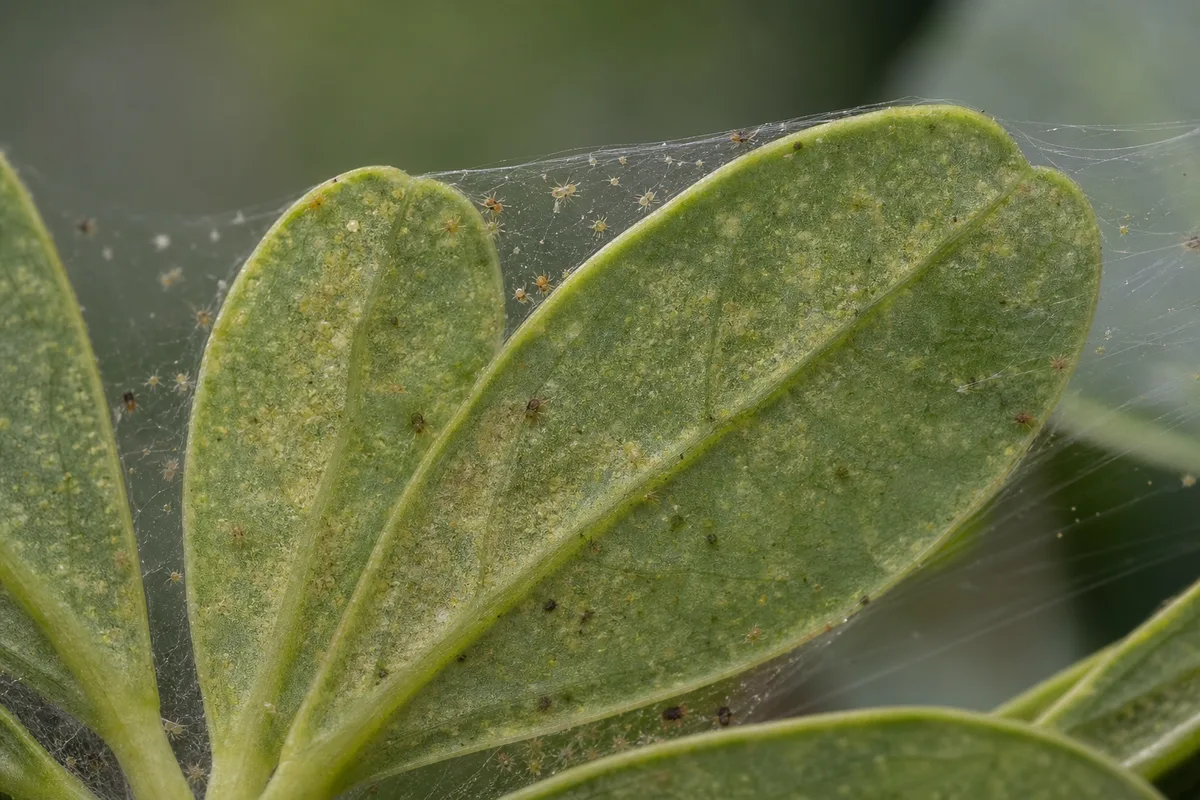
Spider Mites symptoms on Dwarf Umbrella Tree - compare with healthy tissue on the same plant.
Typical mite patterns:
- Fine yellow or white stippling scattered across one or more leaflets in a whorl-looks like someone pricked the glossy surface with a pin
- Bronzing or dulling as feeding continues; heavily hit leaflets may crisp and drop rather than re-green
- Silvery webbing at petiole bases, between overlapping leaflets, or spanning short distances along stems-often visible only when backlit
- Vent-side or window-side clustering on whorls nearest heat sources or glass, while interior foliage on the same stem still looks clean
Variegated cultivars such as Trinette and Gold Capella can hide early stippling on cream or gold leaflet sections until bronzing spreads across the whorl. Check variegated plants from below with a hand lens, not just from the top.
Stippling vs. tip crisping: Low-humidity stress browns outer leaflet margins while most of each compound leaf stays green-often on whorls closest to a vent. Mite stippling is scattered dots across the leaflet face, frequently paired with webbing. If only tips are crisp and soil moisture is normal, see brown tips or low humidity before treating for pests.
Indoor outbreaks on houseplants are often the two-spotted spider mite (Tetranychus urticae). Under magnification, adults may show two dark spots on a pale body-useful confirmation when stippling alone could be humidity or mineral spray residue.
Dwarf S. arboricola vs full-size umbrella tree (S. actinophylla)
Both species share the umbrella-plant common name and compound-leaf whorl architecture, but inspection and rinse logistics differ. Dwarf umbrella tree (S. arboricola) is the compact windowsill form this guide targets-typically 3–6 feet indoors with smaller glossy leaflets you can tilt and rinse in a sink or shower. Full-size Queensland umbrella tree (S. actinophylla) grows taller with larger, thicker leaflets on woody trunks; floor specimens still need underside rinsing, but you may need a handheld sprayer on an extension wand to reach upper whorls. Mite biology is the same-warm dry air, stippling, webbing at petiole joints-but actinophylla’s scale means longer drying time after a heavy rinse. If you grow the larger species, see the Schefflera spider mites guide for genus-level checks; this page remains the primary reference for S. arboricola compound-whorl diagnosis and treatment.
Spider mites vs. low humidity, cold stress, thrips, and scale
| Pattern | Likely cause | Key check | Next step |
|---|---|---|---|
| Scattered yellow dots on leaflet faces + fine webbing | Spider mites | White-paper tap test shows moving specks | Isolate; rinse undersides; oil or soap on schedule |
| Crisp brown tips on vent-side leaflets only; no webbing | Low humidity / draft | Firm stems; normal soil moisture; no moving dots | Move pot; pebble tray-see low-humidity guide |
| Whole whorls yellow and drop after cold move below ~55°F | Cold stress | Recent exposure to AC blast or winter window chill | Stabilize temperature; not a miticide problem |
| Silvery streaks or scratches without webbing | Thrips | Streaks follow rasping damage; insects visible with lens | Different contact treatment; scout neighbors |
| Immobile brown bumps on woody stems | Scale / mealybugs | Bumps scrape off or cottony wax; no stippling dots | See mealybugs-not mite oil alone |
| Yellow whorls + wet heavy soil | Overwatering | Soft crown; fungus gnats | See overwatering |
Thrips scrape leaf tissue leaving irregular silvery marks without the fine webbing mites produce. Scale insects sit as immobile bumps on stems and leaflet veins-quite different from moving stippling damage.
How to confirm spider mites (six-step checklist)
Work through these checks in order before stacking treatments:
- White-paper tap test - Hold white paper under a suspect leaflet and tap the top surface firmly. Slow-moving orange, green, or red specks confirm live mites. Dust does not crawl.
- Webbing check - Inspect petiole bases and leaflet undersides with a hand lens or phone macro mode. Fine silk threads at whorl joints distinguish mites from thrips or mineral residue.
- Pattern across the plant - Mites often start on one side nearest heat or glass, then spread along overlapping leaf contact points. Uniform tip burn on every vent-facing whorl without dots suggests humidity, not mites.
- Season and placement - Outbreaks that appear when heat turns on fit mite biology. Damage after a cold draft fits leaf drop patterns instead.
- Neighbor plants - Scan ficus, palms, and other mite-prone species on the same shelf. Shared infestations mean isolation is mandatory.
- Soil moisture - Wet soggy mix with yellow whorls points to overwatering or root rot, not spider mites alone.
Two consecutive weekly checks with no new stippling and no webbing on fresh growth mean you can call the active infestation controlled.
Severity decision table
Use this table after the six checks to choose treatment intensity-not every stippled whorl needs the same response.
| Severity | What you see on S. arboricola | Urgency | First action | Treatment path |
|---|---|---|---|---|
| Light | Stippling on one to two whorls; webbing visible only with a lens; few moving specks on tap test | Monitor within days | Isolate; one thorough underside rinse | Repeat rinse every 5–7 days × 3; add soap/oil only if mites persist; raise humidity to 40–60% |
| Moderate | Webbing across multiple whorls; early leaflet drop; stippling spreading along one stem | Act this week | Isolate; rinse all undersides; confirm live mites | Rinse plus insecticidal soap or horticultural oil every 5–7 days for three full weeks; treat neighbors; hold fertilizer |
| Heavy | Canopy-wide bronzing; webbing on most stems; plant already weakened by root stress | Act immediately; protect collection | Isolate; consider discard vs. save | Weekly rinse-and-spray cycles; prune only unreachable webbed whorls; if stippling returns within a week after three to four cycles on a stressed plant, discard rather than risk the collection |
| Not mites | Uniform tip crisping without dots; cold-draft yellow drop; wet soil with soft crown | Fix environment, not sprays | Re-run tap test and humidity check | See low humidity, brown tips, or root rot as appropriate |
First fix for dwarf umbrella tree
Move the plant away from healthy neighbors and rinse every compound leaf underside with lukewarm water-one clear action before any spray.
Use a sink sprayer, handheld shower, or gentle hose stream. Tilt each whorl and direct water at the lower leaflet surfaces and petiole joints where mites congregate. Washing plant foliage with a forceful spray of water knocks down populations immediately. Glossy S. arboricola leaflets tolerate this contact; the risk on this species is leaving the whorled crown wet overnight in a stagnant, cool corner, not water spotting on fuzzy foliage.
After the first thorough rinse, let the plant dry in bright indirect light the same day. Then confirm live mites with the tap test. If specks still move, add treatment on a schedule-not all at once on day one.
Treatment cadence after the first rinse
Light infestation (stippling on one or two whorls, minimal webbing):
- Rinse undersides every five to seven days for three cycles.
- Apply insecticidal soap or horticultural oil labeled for spider mites after each rinse once foliage is dry-cover every leaflet underside until the product runs off.
- Raise humidity around the plant with a pebble tray or humidifier; target 40–60% relative humidity. Mites reproduce faster in warm dry air.
Moderate infestation (webbing across multiple whorls, early leaf drop):
- Keep the plant isolated in a cooler room if possible-mites spread faster in warm dry conditions.
- Continue rinse-plus-spray cycles every five to seven days for three full weeks (three to four treatment rounds minimum).
- Inspect and treat neighboring plants on the same display before returning the schefflera to the group.
- Hold fertilizer until new whorls open clean-feeding stressed plants pushes soft tissue mites prefer.
Heavy infestation (canopy-wide bronzing, webbing on most stems):
- Repeat weekly rinse and oil or soap cycles while isolated.
- Prune only whorls so heavily webbed you cannot reach undersides; sterilize scissors between cuts.
- If stippling returns within a week after three to four full cycles on an already weakened plant, weigh discarding it against risking your entire collection-severely infested houseplants are sometimes better replaced than repeatedly treated.
Neem oil vs. horticultural oil: Both are contact treatments that must coat leaflet undersides. Read the label for spider mite activity, apply in shade or evening so wet leaves are not hit by harsh window sun, and test one whorl first on variegated cultivars. Regular insecticides usually do not kill spider mites-confirm the product targets mites, not insects only.
Recovery timeline and what clean new growth looks like
Expect active stippling to stop spreading within one to two weeks of consistent rinse-and-spray cycles if you cover leaflet undersides thoroughly each time. Mite eggs hatch on staggered schedules indoors, so a single treatment is rarely enough-plan three to four weekly passes before calling the plant clear.
Recovery signal: new compound leaves at the crown open with glossy, unstippled leaflets and no fresh webbing at petiole bases. Older damaged leaflets will not re-green; schefflera often drops them and replaces whorls over time. On this moderately slow grower, one to two clean new whorls may take several weeks after humidity and watering stabilize-follow the watering guide dry-down rhythm rather than compensating with extra drinks.
Signs the problem is worsening: webbing spreads to new whorls within days of treatment; leaflets drop in clusters while stems stay firm; neighboring plants develop stippling. If wilting appears on wet soil, escalate to root rot-that is not a mite-only pattern.
What not to do
- Spraying insecticides labeled for insects only - Mites are arachnids; insecticidal soap and plant oil extracts target spider mites when applied to undersides, but many broad insecticides miss mites or kill predatory mites and worsen outbreaks.
- Treating without isolating - Mites walk short distances across touching leaves on shared plant stands.
- Soaking the whorled crown overnight - After rinsing, let glossy compound leaflets dry the same day in ventilated bright indirect light. Stagnant wet crowns in cool corners invite fungal issues on stressed plants.
- Assuming humidity alone clears an active infestation - Raising humidity helps prevent flare-ups but does not replace contact treatment on existing colonies.
- Misting only the tops of leaflets - Mites feed on undersides; top-only misting misses the colony and can leave crowns wet without reaching pests.
- Returning the plant to the collection after one clean check - Two consecutive weekly inspections with no new stippling is a safer minimum.
Because dwarf umbrella tree is toxic to cats and dogs, keep treated plants where pets cannot chew leaflets during recovery. Ventilate the room when applying neem oil or insecticidal soap indoors, and wear gloves when handling heavily infested stems or wet foliage.
Prevention: humidity, scouting, and quarantine
- Scout leaflet undersides weekly during winter heating season-especially whorls nearest windows and vents.
- Quarantine new or outdoor-returned plants for two to four weeks before placing them near your schefflera.
- Use a pebble tray or humidifier to keep local humidity in the 40–60% range; place containers on a tray of wet pebbles with the water line below the pot bottom.
- Keep plants off radiator ledges and away from heat-vent blasts that dry leaflet surfaces while soil moisture looks fine.
- Inspect before you group - Mites spread across touching canopies on open shelves.
Prevention on this species is mostly about catching the first stippled whorl before webbing spans the crown. Mealybugs and aphids share the same sheltered petiole joints-weekly underside checks cover multiple pests at once.
When to escalate or call it quits
Most established dwarf umbrella trees recover from early mite outbreaks when rinsed and treated on schedule. Escalate or consider discarding the plant if:
- Webbing covers most whorls and persists after three to four weekly rinse-and-spray cycles
- The plant was already severely weakened by root rot, chronic overwatering, or massive leaf drop
- Mites have spread to many plants in one room and you cannot isolate or treat all hosts
- New growth stays stippled despite correct coverage-inspect for resistant populations or misidentified thrips
When repeated home treatments fail after three to four full cycles, contact your local cooperative extension office for mite identification and product selection rather than stacking unlabeled mixes. Severely infested specimens on a shared windowsill are sometimes better discarded than risking the rest of the collection.
FAQs
Is leaf stippling spider mites or low humidity on Schefflera arboricola?
Low humidity browns crisp outer leaflet margins on vent-side whorls while the rest of each compound leaf stays green. Spider mites leave fine yellow or white dots scattered across individual leaflets, often with silvery webbing at petiole bases. Tap a suspect leaf over white paper; moving specks confirm mites. Stippling without webbing or moving dots usually means dry air-see the low-humidity guide before spraying.
How do I rinse spider mites off overlapping leaflet whorls?
Tilt each compound leaf and direct lukewarm water at the underside, starting at the crown and working down. A handheld shower or sink sprayer works on compact plants; larger floor specimens may need a gentle hose in the shower. Focus on petiole joints where whorls overlap. Let foliage dry in bright indirect light the same day.
Will damaged dwarf umbrella tree leaflets recover after spider mites?
Stippled or bronzed leaflets do not re-green. S. arboricola typically sheds heavily damaged leaflets rather than repairing them. Judge recovery by clean new compound leaves at the crown without fresh stippling or webbing. One to two new whorls may take several weeks after treatment and humidity stabilize.
When is a spider mite outbreak urgent on dwarf umbrella tree?
Act within days if webbing spreads across multiple whorls, leaflets drop in clusters, or neighboring plants show stippling. Escalate immediately if the plant was already weakened by root rot or mass leaf drop. A few stippled leaflets on one whorl with firm stems is manageable; canopy-wide bronzing on a stressed specimen is not.
Are neem oil and insecticidal soap safe around pets on dwarf umbrella tree?
Schefflera is toxic to cats and dogs if chewed. Keep treated plants out of pet reach and ventilate during sprays. Neem and insecticidal soap are contact mite treatments, not pet poisons, but wet leaflets plus plant toxicity mean pets should not access the plant until foliage dries. Wear gloves when handling heavily infested stems.
Is stippling on my Trinette schefflera mites or variegation?
Variegation follows a stable pattern on each leaflet. Mite stippling appears as random pinprick dots that spread across green and pale tissue alike, often with fine silk at petiole bases. Inspect from below with a hand lens and run the tap test on any suspect whorl before treating.
Can I use the shower on a large dwarf umbrella tree for spider mites?
Yes when the specimen fits in the stall. Tilt the pot and rinse every compound leaf underside with lukewarm water for several minutes. Let the crown drain fully and dry in bright indirect light the same day-do not leave a wet whorled crown in a cool stagnant corner overnight.
Related dwarf umbrella tree guides
- Dwarf umbrella tree overview - species biology and troubleshooting hub
- Watering dwarf umbrella tree - dry-down rhythm during recovery
- Light for dwarf umbrella tree - bright placement without baking foliage against glass
- Low humidity on dwarf umbrella tree - stippling lookalike and prevention
- Mealybugs on dwarf umbrella tree - cottony pests in the same petiole joints
- Spider mites on Schefflera - genus-name companion for the same taxon