Dwarf Umbrella Tree Soil: Mix, Drainage, and Pot Setup
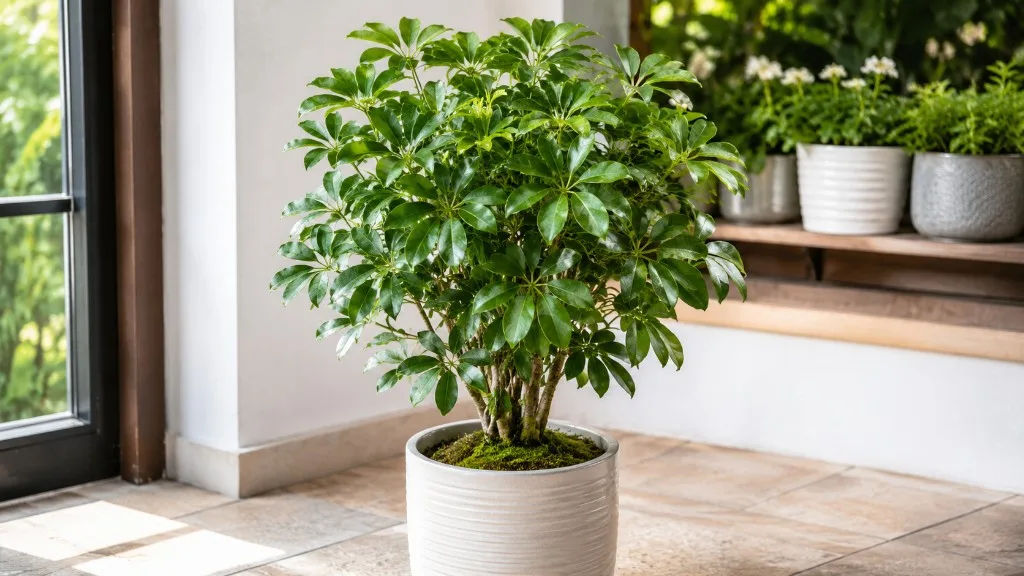
Dwarf Umbrella Tree Soil: Mix, Drainage, and Pot Setup
Dwarf Umbrella Tree Soil: Mix, Drainage, and Pot Setup
Dwarf umbrella tree soil is not a minor detail you can delegate to whatever bag sits in the garage. Schefflera arboricola - the compact umbrella plant most people grow indoors - builds its entire health on a root zone that holds moisture briefly, drains freely, and stays open enough for oxygen to reach fine roots between waterings. Get the mix wrong and the plant tolerates underwatering on Dwarf Umbrella Tree better than most houseplants tolerate soggy peat. Get the container wrong - no hole, an oversized pot, or a cachepot holding runoff - and even a good mix behaves like swamp soil within weeks.
The practical baseline for most homes is a well-draining peat-perlite blend: roughly 2 parts peat moss or coconut coir, 1 part perlite, and 1 part quality indoor potting mix, targeting a slightly acidic pH around 6.0–6.5. Pair that with a pot that has at least one functional drainage hole, a size only 2–5 cm (1–2 inches) larger than the root ball when Dwarf Umbrella Tree repotting guide, and a habit of emptying saucers after every thorough watering. Soil is the system that decides how much air, moisture, and recovery time the roots get after each drink - not just a recipe to fill a container.
This guide covers why drainage matters for dwarf schefflera, how to build or buy the right mix, what container setup actually works, how to test whether your current soil is failing, and the mistakes that cause root rot on Dwarf Umbrella Tree long before yellow leaves make the problem obvious.
Why Soil Matters for Schefflera arboricola
Dwarf Umbrella Tree belongs to Araliaceae, the same family as ginseng and English ivy, and it evolved in the humid forests of Taiwan and Hainan - environments where roots breathe in loose, organic forest floor material that never sits waterlogged for long. Indoors, you are asking those roots to live in a small plastic or ceramic cylinder with no natural drainage layer beneath them. The potting mix becomes the entire habitat: it stores water, releases it to roots, holds nutrients, and either preserves pore space for oxygen or collapses into a dense plug that suffocates fine root hairs.
Missouri Botanical Garden notes that scheffleras prefer rich, well-draining, acidic potting soil and warm temperatures above 60°F (16°C) when grown indoors (Missouri Botanical Garden - Schefflera). That combination - organic richness plus fast drainage - is the tension every dwarf umbrella tree mix must resolve. Pure peat holds too much water in a deep pot. Pure perlite dries too fast and holds almost no nutrients. A balanced blend gives roots a stable moisture gradient: damp at the center after watering, approaching dry at the surface within a few days in normal indoor conditions.
Soil also mediates everything else in your care routine. A Schefflera in heavy, compacted mix under low office light may stay wet for two weeks after one thorough watering, making “water when the top half dries” impossible to follow without rotting roots. The same plant in a bright window with 25–30% perlite in the blend might need water every seven to ten days in summer and still drain cleanly. When leaf drop, yellowing, or spider mite flare-ups appear, the mix and container are the first variables to audit because they control how forgiving your watering habits can be.
What Dwarf Umbrella Tree Roots Actually Need
Schefflera arboricola roots are fibrous and relatively fine compared with succulents or woody trees trained as bonsai. They spread outward and downward in search of air pockets and consistent moisture, not permanent saturation. In a healthy container, white or cream-colored root tips indicate active growth; brown, mushy, or sour-smelling roots indicate the opposite - anaerobic conditions where pathogens thrive.
The plant’s tolerance profile matters for soil decisions. NC State Extension lists drought tolerance among Dwarf Umbrella Tree overview’ attributes - umbrella plants tolerate underwatering better than overwatering on Dwarf Umbrella Tree - a signal that the root zone should lean slightly toward fast dry-down rather than moisture retention. That does not mean you should let the pot bake to dust. It means the mix should never hold a water table at the bottom of the pot days after a single watering event.
Oxygen, Moisture, and the Tropical Root Zone
Healthy dwarf umbrella tree soil maintains three simultaneous properties: moderate moisture retention in the organic fraction, rapid drainage through inorganic pores, and structural stability so the mix does not collapse after six months of watering and root pressure. Peat moss and coconut coir supply the organic water-holding capacity. Perlite, coarse sand, or pine bark fines supply non-compacting pore space. A base of commercial potting mix adds starter nutrients and a familiar texture that roots colonize quickly after repotting.
Oxygen access is non-negotiable. Roots respire. When pore spaces fill with water and stay full, root cells die, decay spreads, and the plant above shows delayed symptoms - yellow lower leaves, sudden leaf drop, soft stems at the soil line. Oklahoma State Extension emphasizes that proper soil drainage is crucial for preventing common houseplant diseases and keeping roots healthy in container culture. For Schefflera, that translates to a mix you can squeeze in your hand when moist: it should hold together loosely but crumble when you open your fist, not form a tight mud ball.
Best Soil Mix for Dwarf Umbrella Tree
The best soil for dwarf umbrella tree indoors is a peat-based, perlite-amended potting blend that drains within minutes of a full watering yet still feels lightly damp an inch below the surface two to three days later in active growth. You can buy a modified commercial mix or blend your own from three components you likely already have.
Avoid reaching for straight garden soil, heavy topsoil, or pure cactus mix unless you amend it substantially. Garden soil compacts in pots, introduces pathogens and weed seeds, and rarely drains predictably indoors. Straight cactus mix drains well but may dry so fast in a large Schefflera that you chase constant underwatering stress unless you increase the organic fraction.
The Peat-Perlite-Potting Mix Formula
The most reliable DIY dwarf umbrella tree soil mix for standard indoor containers uses equal parts by volume of three ingredients:
- Peat moss (or coconut coir as a more sustainable substitute) - holds moisture and nutrients without becoming mud when blended with perlite.
- Perlite - white volcanic glass expanded into lightweight particles; creates permanent air pockets and speeds drainage.
- Commercial indoor or tropical houseplant potting mix - provides a balanced starting point with trace nutrients and a texture roots recognize.
A widely recommended ratio is 2 parts peat or coir : 1 part perlite : 1 part potting mix. For a 30 cm (12-inch) pot refresh, that might mean 4 liters peat, 2 liters perlite, and 2 liters bagged mix - adjust to your container volume. Mix thoroughly in a tub or on a tarp until perlite is evenly distributed; streaky blends drain unevenly and create wet pockets.
If your home runs hot and dry, or the plant sits in strong indirect light, bias slightly toward more peat (moisture retention). If the plant lives in a cool, dim office where pots dry slowly, increase perlite to 30–40% of total volume rather than the baseline 25%. The goal is predictable dry-down, not a universal recipe frozen across every room.
| Component | Role in the mix | Typical proportion |
|---|---|---|
| Peat moss or coir | Moisture and nutrient holding | 40–50% |
| Perlite | Drainage and aeration | 25–35% |
| Indoor potting mix | Structure and starter fertility | 25–35% |
| Optional pine bark fines | Long-term pore stability | 10–15% (substitute for part of peat) |
Coir, Pine Bark, and Ready-Made Alternatives
Coconut coir behaves similarly to peat but rewets more easily after drying and is often sold compressed in bricks. Hydrate coir fully before blending; dry coir repels water and creates dry channels in an otherwise wet pot. Pine bark fines or orchid-grade bark add longevity - bark decomposes slowly and keeps mix open years longer than peat alone, which is why some growers use equal parts peat, perlite, and pine bark for long-lived specimens.
Ready-made tropical houseplant potting mix from a reputable brand is a legitimate shortcut. Clemson HGIC recommends a foliage-plant blend of 2 parts pine bark, 1 part peat, and 1 part sand adjusted to pH about 6.0 - most general houseplant mixes suit Schefflera with additional perlite mixed in to improve drainage. A practical store-bought upgrade: one part bagged tropical or indoor mix to one part perlite by volume. Test drainage before repotting an entire collection - brands vary, and some “indoor” mixes skew heavy.
Clemson HGIC also notes that a supplemental 20-20-20 water-soluble fertilizer applied every seventh watering works well with this bark-peat-sand mix for foliage plants. Indoors, skip the garden soil and lime unless you have tested pH; the peat-perlite-potting mix above is safer for containers.
How Drainage Speed Should Behave After Watering
Drainage speed is the behavior you can observe, and it tells you more than any label on a soil bag. After a full, even watering until water runs from the drainage hole, excess water should exit the pot within minutes, not pool at the bottom for hours. Within 24–48 hours in a typical bright indoor room during active growth, the top 2–3 cm (1 inch) should feel dry to the touch while the deeper mix remains lightly moist - matching the common guidance to water Schefflera when the top layer dries.
If water sits on the surface and beads without soaking in, you have hydrophobic, compacted, or severely dry mix - a separate problem from mix composition but often related to aged peat or salt crust. If water rushes through in seconds and the pot feels light again the next day, drainage is too fast or the root ball is too small for the container. Healthy dwarf umbrella tree soil occupies the middle: absorbs water evenly, drains freely, dries on a steady rhythm that aligns with your watering checks.
Pair drainage behavior with pot weight. Lift the container after watering when fully drained, then lift it again when you think the plant needs water. Over a few cycles you learn the weight difference between “moist throughout” and “ready to water” for that specific pot - far more reliable than a calendar schedule.
Container and Drainage Hole Requirements
Does dwarf umbrella tree need a drainage hole? Yes - for long-term indoor care, a functional drainage hole is essential. Schefflera roots cannot survive indefinite saturation. A hole (or several small holes) at the lowest point of the pot allows the perched water table to exit instead of rising to engulf the root ball. Decorative pots without holes are display sleeves only; the plant itself should live in a nursery pot inside them, or you accept elevated root-rot risk.
Drainage holes must be open, not blocked. Roots growing through holes, salt crust, or a mat of old peat can slow exit flow. Before repotting, check that new pots have clean holes; poke clogged ones with a chopstick during routine care. Mesh screens over holes are fine to prevent mix loss; gravel layers are not a substitute for holes or good mix - more on that under mistakes below.
Pot Materials: Plastic, Terracotta, and Ceramic
Plastic nursery pots are lightweight, inexpensive, and retain moisture longer - useful in dry, bright rooms where Schefflera drinks quickly. Terracotta breathes through porous walls and pulls moisture outward, which speeds dry-down and reduces overwatering risk in dim or cool rooms; the trade-off is more frequent watering in hot summers. Glazed ceramic behaves closer to plastic unless it is unglazed terracotta.
Material choice does not replace mix quality or holes, but it modifies the drying curve. A dwarf umbrella tree in terracotta with 30% perlite in a bright window may need water every five to seven days in July. The same mix in glazed ceramic in a north-facing office might stretch to fourteen days. Adjust your blend or watering checks when you change pot type - do not assume the old rhythm still applies.
Cachepots, Saucers, and Runoff Management
Many growers display Schefflera in a cachepot - a decorative outer container without drainage. That works only if the inner nursery pot has holes and you remove it to water, let it drain completely, then return it to the sleeve. Never let the inner pot sit in accumulated runoff; standing water wicks back into the mix and recreates anaerobic conditions within hours.
Saucers catch drips but must be emptied after every watering. A saucer left full “to increase humidity” is one of the most common hidden causes of root rot on umbrella plants. If you want humidity, use a humidifier or pebble tray with the pot above the water line, not sitting in it.
pH, Minerals, and Salt Buildup in the Mix
Schefflera arboricola prefers a slightly acidic pH between 6.0 and 6.5 - NC State Extension lists acid (<6.0) to neutral (6.0–8.0) soil pH among suitable cultural conditions. Hobbyists rarely need a pH meter; fresh peat-perlite blends and quality bagged mixes typically sit near this window. Problems arise when alkaline tap water, limestone-heavy components, or long-term salt accumulation push the root zone out of balance.
Soluble salts from hard water and fertilizers collect in container mix over months, especially in small pots watered from the top without occasional flushing. Symptoms include white crust on the soil surface, brown leaf tips despite adequate moisture, and stunted new growth. If you see crust, flush the pot by running lukewarm water through the mix until it flows clear from the bottom, draining fully afterward - or refresh the mix entirely at the next repot.
Do not add lime, wood ash, or crushed eggshell to Schefflera mix aiming for “better nutrition” unless you have tested pH and confirmed acidity is too low - which is uncommon with peat-based blends indoors.
Choosing the Right Pot Size for Drainage Balance
Pot size directly controls how much wet mix surrounds roots that are not yet large enough to use it. Oversized pots are a leading cause of chronic soggy soil on dwarf umbrella trees. When you repot, move up only 2–5 cm (1–2 inches) in diameter - enough room for one season of root growth, not a multi-year reserve. NC State Extension recommends good drainage and moist (not waterlogged) soil conditions for this species indoors.
Undersized pots create the opposite problem: the mix dries in a day or two, roots circle tightly, and water runs down the gap between root ball and pot wall without rewetting the center. Root-bound Schefflera with hydrophobic old peat benefits from repotting into fresh mix at the correct size, not from a giant upgrade “so I won’t have to repot again.”
Depth matters less than width for most upright indoor specimens, but very shallow decorative bowls reduce the volume of well-aerated mix below the root crown - avoid them unless you are deliberately training bonsai with a grittier, faster-draining substrate.
When to Refresh or Replace the Soil Mix
Peat-based dwarf umbrella tree soil degrades even when the plant looks fine above ground. Organic matter decomposes, perlite floats upward with repeated watering, and fine roots pack pore space. Plan a full repot with fresh mix every 18–36 months for actively growing plants, or sooner when you see clear triggers:
- Water runs straight through without rewetting the root ball - hydrophobic, exhausted mix.
- Water sits on the surface for minutes before soaking - compaction or peat breakdown.
- Sour or swampy smell from the pot - anaerobic decay starting.
- Salt crust that returns quickly after flushing.
- Roots circling densely or emerging from drainage holes - root-bound plus old mix.
- Growth stalls in good light with appropriate watering and feeding - sometimes nutrition and structure, not light, is the limit.
Top-dressing - scraping and replacing the top 2–3 cm of mix in spring - helps between full repots but does not fix a compacted root ball. Use top-dressing for minor refresh; use full repot when two or more triggers appear together.
Repotting With the Correct Soil
When you repot, treat soil replacement as the main event, not a side note. Water lightly the day before so the root ball holds together. Choose the next pot size up with drainage holes. Pre-moisten your peat-perlite blend so it is evenly damp but not dripping - dry mix pulled into wet roots creates air pockets that delay establishment.
Slide the plant out, tease circling roots at the bottom and sides without bare-rooting the entire ball, and remove clearly dead, black, mushy roots with clean scissors. Place the plant so the soil line stays at the same level on the stem - burying the crown deeper invites stem rot. Backfill with fresh mix, firm gently to eliminate large voids, water thoroughly once, drain fully, and hold fertilizer for four to six weeks while roots colonize new substrate. Keep the plant in Dwarf Umbrella Tree light guide, not direct sun, during recovery.
The same mix rules apply at repotting as at initial planting: well-draining peat-perlite blend, hole in the pot, no gravel false bottom, no garden soil shortcut.
Soil for Bonsai and Compact Training Forms
Dwarf umbrella tree is a popular bonsai and compact training subject because Schefflera arboricola tolerates pruning and develops woody stems with age. Bonsai pots are shallow, which changes soil requirements dramatically. Standard peat-heavy indoor mix holds too much water relative to the shallow volume and leads to root rot in training pots.
For bonsai or shallow training containers, shift toward a grittier, faster-draining blend: equal parts pine bark fines, perlite or pumice, and organic potting component, or a modified succulent-bonsai mix with extra bark and lava rock. The pH target remains 6.0–6.5, but drainage speed should be noticeably faster than a floor specimen in a deep nursery pot - water should exit almost immediately, and the shallow mix should reach dry surface conditions within one to two days in growth season.
Shallow pots still require drainage holes - often multiple holes in bonsai containers. Never use standard undiluted peat mix in a 3 cm deep training pot and expect the same Dwarf Umbrella Tree watering guide as a 25 cm deep floor planter.
Signs the Current Soil Is Wrong
Your Schefflera communicates root-zone problems through leaves and stems, but the soil itself gives earlier clues if you look:
- Persistent surface wetness three or more days after watering in normal indoor heat - mix too heavy, pot too large, or blocked drainage.
- Cracked, pulled-away dry edges on the pot wall with a hydrophobic center - aged peat, underwatering damage, or salt-bound mix.
- Yellow lower leaves on a plant you have been “careful” not to overwater - often chronic slight overwatering in slow-draining mix, not kindness.
- Sudden leaf drop after the pot felt heavy for weeks - root failure progressing below visible symptoms.
- Fungus gnats in large numbers - surface stays moist too long; organic mix breaking down.
- New growth small and pale despite good light - possible nutrient lockout from pH drift or salt buildup, not always fertilizer deficiency.
- Musty or sour smell when you slip the plant from the pot - anaerobic mix; inspect roots immediately.
One symptom alone can mislead. Wet soil plus yellow leaves plus no new growth in spring strongly points to substrate and drainage failure. Fix the mix and container before stacking fertilizer, pesticide, or relocation changes.
How to Test Drainage in One Minute
You do not need laboratory equipment to evaluate dwarf umbrella tree soil. Run this quick test before repotting or when diagnosing chronic wetness:
The pour test: Dry the surface slightly if it is already soggy (wait until the plant is due for water). Water slowly with a liter (about a quart) of room-temperature water. Good mix absorbs within seconds, water exits the hole within a minute, and no pooling remains on the surface after five minutes. Poor mix ponds on top, drains in uneven spurts, or leaves the pot noticeably heavier at the bottom with a still-dry top - channeling.
The squeeze test: Scoop a handful of moist (not dripping) mix from mid-pot. Squeeze firmly. It should hold shape briefly then crumble when you poke it. A tight mud sausage that smears on your palm is too dense for Schefflera.
The chopstick test: Insert a dry wooden chopstick 8–10 cm deep, wait ten minutes, pull it out. Slight dampness with no clinging mud suggests healthy moisture. Saturated clinging peat days after you thought the plant was dry confirms slow drainage or oversized pot volume.
If the pour test fails, add perlite and repot rather than waiting for root rot to confirm the diagnosis.
Common Dwarf Umbrella Tree Soil Mistakes
The same errors appear repeatedly on struggling umbrella plants, and most are preventable once you understand container physics.
Using a gravel or pottery shard “drainage layer” at the pot bottom. This does not improve drainage; it raises the perched water table closer to the root ball and creates an interface where fine particles clog. Good mix and a hole beat gravel every time.
Planting directly in decorative pots without holes. Cachepots are for display; roots need an exit path. If aesthetics require a solid vessel, keep the plant in a holed inner pot and lift it to water.
Jumping two or more pot sizes at repotting. Extra wet mix volume without matching root mass is the classic path to rot after an otherwise “successful” repot.
Reusing old, compacted peat from the previous pot when backfilling around fresh roots - you inherit the drainage problems you were trying to escape.
Adding garden soil or compost alone for “richness” without perlite or bark - richness without pore space becomes mud indoors.
Ignoring salt crust and compensating with more fertilizer - accelerates burn and worsens soil structure.
Using straight cactus mix without organic amendment in large pots - roots dry unevenly and fine tips die between irregular waterings.
Repotting into dry mix with a dry root ball - water passes around the ball; the center stays dry while you think you overwatered the surface.
Each mistake shares a theme: treating soil as filler instead of as the engineered environment that determines whether your watering and light decisions actually work.
Conclusion
Dwarf umbrella tree soil succeeds when three decisions align: a peat-perlite-amended mix that holds moisture briefly and drains within minutes, a container with open drainage holes sized only slightly larger than the root ball, and a refresh cycle every year or two before compaction and salt buildup steal pore space from the roots. Schefflera arboricola is forgiving of missed waterings and imperfect humidity, but it is unforgiving of soggy, airless mix - root problems start quietly and show up in leaves only after damage is underway.
Build or buy toward 2 parts peat or coir, 1 part perlite, 1 part indoor potting mix, test with a one-minute pour and squeeze check, empty saucers after every watering, and repot when water behavior changes or roots circle the pot. If yellow leaves or leaf drop appear despite careful watering, inspect the mix and holes before changing light or fertilizer. Good soil does not guarantee a perfect plant, but bad soil guarantees you will fight the same symptoms no matter how carefully you schedule water. Get the root zone right and the rest of dwarf umbrella tree care becomes simpler, steadier, and far less reactive.
When to use this page vs other Dwarf Umbrella Tree guides
- Dwarf Umbrella Tree overview - Start here for whole-plant context before deep-diving this topic.
- Dwarf Umbrella Tree problems hub - Jump to symptom-specific fix guides when this care topic does not resolve the issue.
- Root Rot on Dwarf Umbrella Tree - Escalate here when soil adjustments are not enough.
- Mold on Soil on Dwarf Umbrella Tree - Escalate here when soil adjustments are not enough.
Related Dwarf Umbrella Tree guides
- Dwarf Umbrella Tree overview
- Dwarf Umbrella Tree watering
- Dwarf Umbrella Tree light
- Dwarf Umbrella Tree propagation
- Dwarf Umbrella Tree fertilizer
- Dwarf Umbrella Tree repotting
- Root Rot on Dwarf Umbrella Tree
- Mold on Soil on Dwarf Umbrella Tree
- Dwarf Umbrella Tree problems
Related tool
Try the Soil Mix Calculator with dwarf-umbrella-tree pre-selected to estimate needs for your setup.