Underwatering on Dwarf Umbrella Tree: Causes, Checks & Fixes
Quick answer
Underwatering on dwarf umbrella tree shows as limp compound leaf clusters on a very light pot with dry top 1–2 inches of mix-not soggy soil. First step: confirm dryness with a finger probe and pot weight, then water deeply until runoff and empty the saucer.
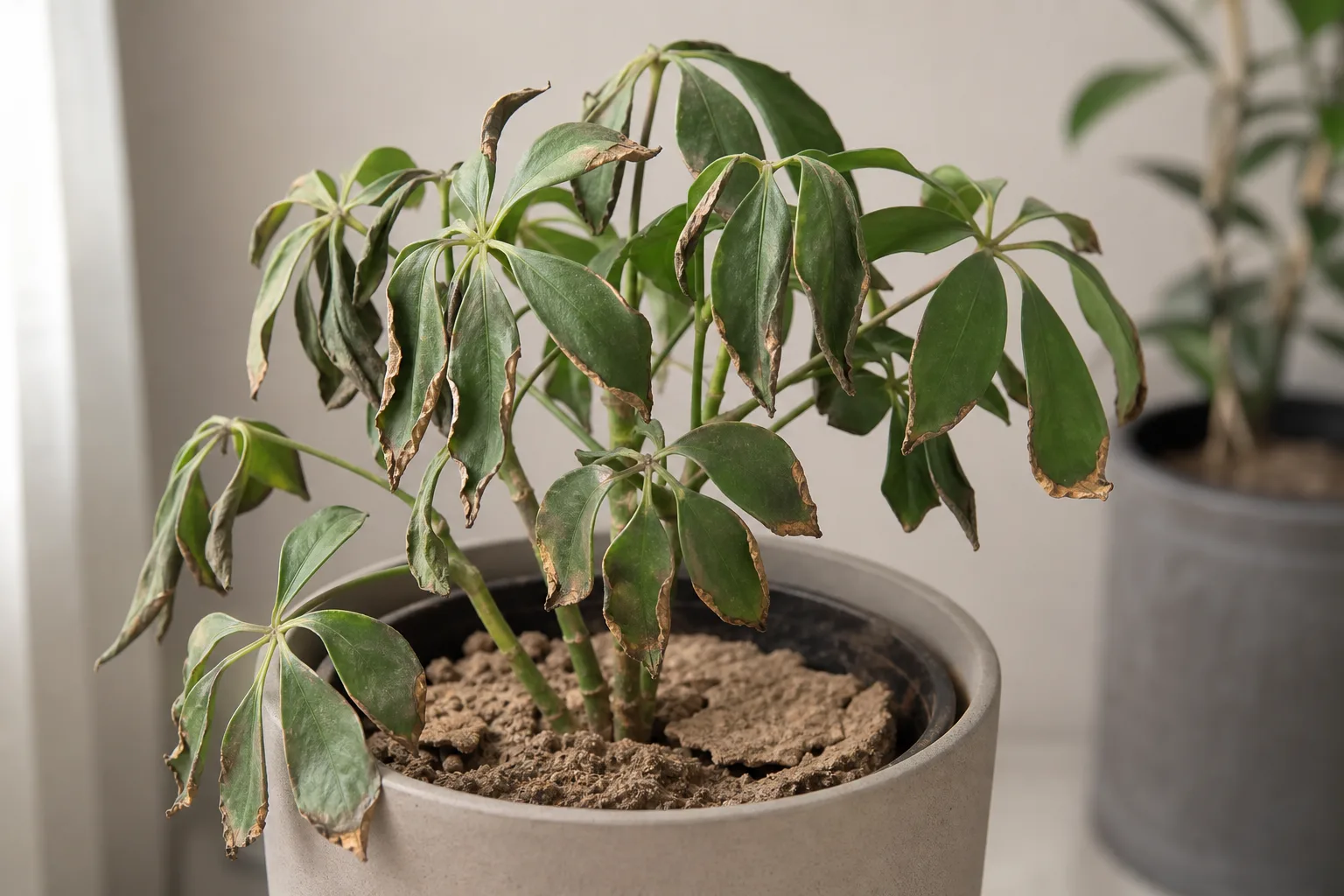
Underwatering on Dwarf Umbrella Tree: Causes, Checks & Fixes
This guide covers underwatering on Dwarf Umbrella Tree. See also the general Underwatering guide, watering, and light pages for this plant.
Underwatering on Dwarf Umbrella Tree: Causes, Checks & Fixes
Quick answer
Underwatering on dwarf umbrella tree (Schefflera arboricola) is a root-zone moisture failure that shows up in the foliage before the mix looks obviously dusty. Compound leaf clusters-the hand-shaped whorls of glossy leaflets at each stem node-lose turgor and hang limp when fine roots cannot supply water fast enough. On this Araliaceae species, the entire umbel usually wilts as a unit before individual leaflets yellow, which is different from slow gradual sag you might see over weeks on an otherwise healthy plant.
The trap is assuming every limp umbrella cluster means thirst. First step: lift the pot and probe the top 1–2 inches of mix. A feather-light pot with dry crumbly soil at depth confirms underwatering-water deeply until runoff and empty the saucer within 30 minutes. A heavy wet pot with limp leaflets on damp mix means root stress from overwatering, not drought-pause watering until the top inch dries. See wilting on dwarf umbrella tree for the full wet-vs-dry emergency fork.
For baseline soak-dry rhythm, see the dwarf umbrella tree watering guide.
What underwatering looks like on Dwarf Umbrella Tree
Dwarf umbrella tree signals drought through its whorled compound leaves. The pattern and pot context matter more than any single leaflet color.
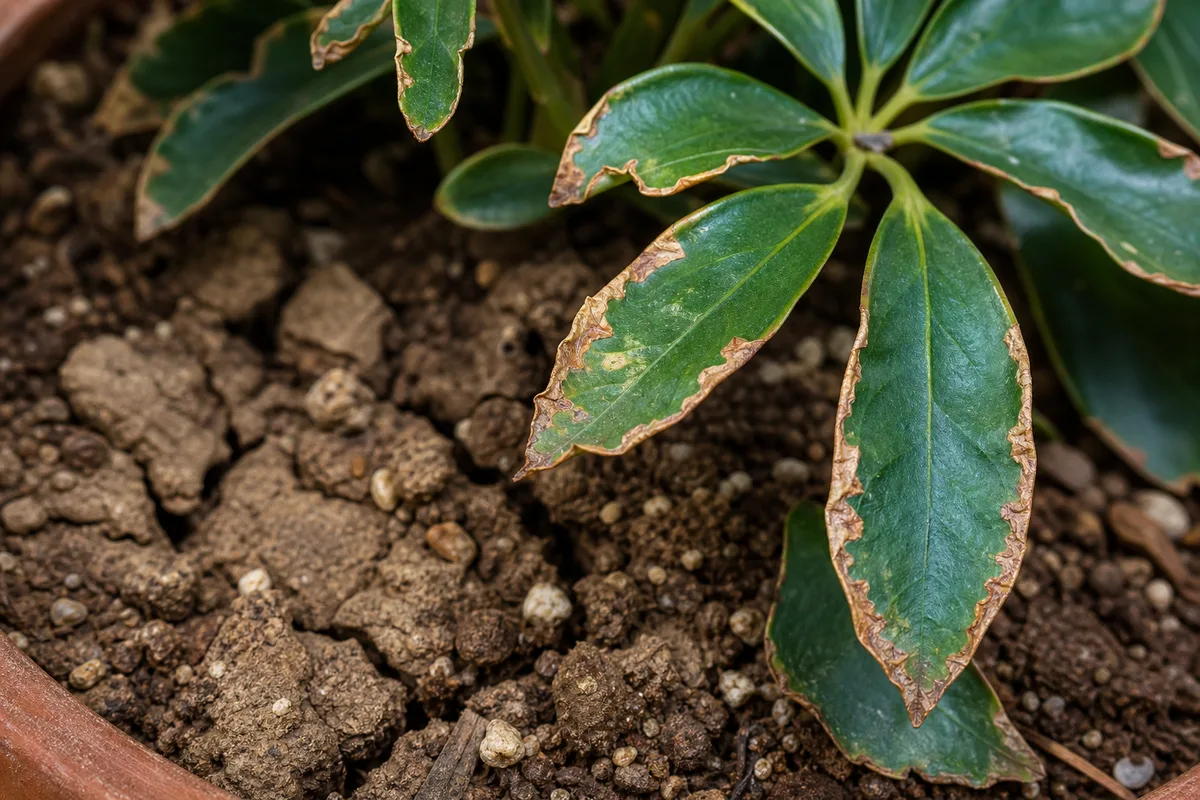
Underwatering symptoms on Dwarf Umbrella Tree - compare with healthy tissue on the same plant.
Early underwatering:
- Compound leaf clusters hang limp while stems still feel firm and woody
- The pot feels noticeably lighter than it did after your last thorough watering
- Top 1–2 inches of mix are dry to a finger or skewer probe; soil may pull slightly away from the pot wall
- Individual leaflets may show slight upward curl or crispness at edges rather than soft mushy tissue
- New whorled growth slows or stops despite bright light-often because roots are too dry to support expansion
Moderate to advanced underwatering:
- Entire canopy wilts in a day or two in bright summer windows-faster than many succulents because glossy compound leaves transpire steadily
- Sudden leaf drop after a prolonged dry spell-Schefflera arboricola is drought tolerant but dramatic about moisture extremes
- Brown crispy margins on older leaflets that do not re-green after watering
- Dust-dry mix several inches down; surface water may bead and run off if peat has gone hydrophobic
Missouri Botanical Garden notes that leaves will drop if soils become too moist or too dry on this species-chronic underwatering triggers the dry-soil side of that pattern. NC State Extension lists drought tolerance among landscape attributes for Heptapleurum arboricola, but container-grown plants in active growth still need periodic full soaks followed by dry-down-not indefinite neglect.
Photo reference for growers: Compare limp compound umbels on a light dry pot (slightly curled firm leaflets, crumbly top inch) against limp umbels on a heavy wet pot (soft leaflets, dark cool soil). The wilt looks similar; pot weight and moisture depth tell them apart.
Why Dwarf Umbrella Tree gets underwatered
Dwarf umbrella tree tolerates a missed drink better than a soggy week, which makes underwatering easy to misread as “being careful.” Several species-specific factors push S. arboricola into chronic dryness indoors.
Fear of overwatering after leaf drop
Schefflera arboricola sheds large portions of its canopy after moisture shock-one heavy drink on already-wet mix, repot into saturated soil, or keeping summer frequency through a dim winter. Owners who panic after that episode often stop watering entirely. The mix dries through the root ball while they wait for leaves to return, and underwatering stress compounds the original problem. See overwatering on dwarf umbrella tree for the wet-soil side of that swing.
Small nursery pots in bright summer light
A four- to six-inch plastic nursery pot on a warm windowsill can lose usable moisture through the top 1–2 inches in four to seven days during active growth. Schefflera’s compound leaf area transpires steadily in bright indirect light. Calendar watering every two weeks in July underwatering is common even when winter habits felt safe.
Hydrophobic peat and surface-only sips
Peat-based mixes that dry completely can repel water at the surface while the center stays dust-dry. Owners who dribble a quarter-cup when leaves wilt may wet only the top crust while roots starve below. That pattern mimics underwatering even when you “watered” recently.
Winter heated-room neglect
Heated dry air pulls moisture from leaves faster, but shorter days slow visible growth-so owners forget to check. A small pot near a heating vent can desiccate in a week while a large floor pot in a dim corner may go three weeks. Winter underwatering and winter overwatering both happen; the fix is always probe-first, not calendar-first.
Reduced watering taken too far
Reduce watering somewhat from fall to late winter is correct advice for dwarf umbrella tree-but it means longer intervals between full soaks, not skipping water until the root ball desiccates. Clemson HGIC recommends watering scheffleras thoroughly, then letting the soil dry to half an inch deep before watering again-the dry-down target, not permanent drought.
Underwatering vs. overwatering on Dwarf Umbrella Tree
Schefflera wilts on both wet and dry extremes. Use this matrix before you reach for the watering can.
| Signal | Underwatering (dry soil) | Overwatering (wet soil) |
|---|---|---|
| Pot weight | Very light, easy to lift | Heavy, hard to lift days after watering |
| Top 1–2 inches | Dry and crumbly | Cool, clings to finger, often dark |
| Leaflet texture | Slightly curled or crisp edges; tissue often firm | Soft, limp, sometimes yellow at base |
| Leaf drop pattern | After prolonged drought; may be sudden | Often lower whorls yellow first; mass drop after moisture shock |
| Crown at soil line | Firm and woody | May soften if rot has started |
| Smell | Neutral or dusty dry | Sour or anaerobic when advanced |
| First response | Deep soak until runoff | Stop watering; let top inch dry |
Wilting with moist soil often means roots cannot absorb water because they are damaged-not because the plant needs another drink. If your plant matches the wet-soil column, go to overwatering or root rot instead of soaking again.
How to confirm the cause
Work through these checks in order before you treat thirst:
- Pot weight - Lift immediately after you know the plant was last watered well. Feather-light with limp umbels supports drought. Heavy with limp umbels rules thirst out.
- Top 1–2 inch probe - Press a finger or wooden skewer near the pot wall, not against the stem. Dry throughout at depth on a light pot confirms underwatering. Damp or cool at depth on a heavy pot means wait.
- Crown firmness - Gently press where woody stems meet soil. Firm crown with dry mix = safe to soak. Soft crown with wet mix = root problem, not drought.
- Leaflet texture - Crisp or slightly curled firm leaflets on dry mix vs. soft limp tissue on wet mix.
- Smell and gnats - Sour odor or fungus gnats at the soil line point to overwatering, not underwatering.
- Care timeline - Recent fear-of-overwatering pause, vacation neglect, repot into very airy mix, or move to a brighter hotter window?
- Hydrophobic check - Does water pool on the surface and run down the pot sides while the center stays dry? That is drought at the roots even if you poured recently.
If steps 1–3 point to dry soil and firm crown, underwatering is confirmed. If wet soil and soft crown appear together, escalate before soaking-see root rot on dwarf umbrella tree.
First fix for Dwarf Umbrella Tree
Water deeply until moisture exits the drainage holes, then empty the saucer within 30 minutes. That single thorough soak is the correct first response for confirmed underwatering on S. arboricola-not daily sips, not fertilizer, and not repotting on day one.
Deep top-watering (default)
Place the pot in a sink or tub. Water slowly until the full root ball rewets and excess drains freely. Allow the soil to dry out and then thoroughly soak it with water-that dry-then-soak cycle is what NC State Extension describes for this species indoors. Discard saucer water so the plant never sits in standing liquid. Clemson HGIC advises never letting a schefflera sit with water in its saucer.
When to bottom-soak hydrophobic mix
If water beads on the surface and runs down the pot sides while the center stays dust-dry, bottom-soak for 20–30 minutes: set the pot in a tray of room-temperature water until the surface moistens, then lift, drain fully, and confirm the root ball gained weight. Follow with a light top-water to rinse salts if needed. Bottom-soaking alone is a bridge for repelling peat-not a replacement for learning top-inch dry checks going forward.
What not to do on day one
- Do not panic-water daily after one dry spell-that swings straight to overwatering and can trigger another round of dramatic leaf drop
- Do not fertilize a stressed dry plant-roots need moisture and oxygen first
- Do not repot unless the mix is completely collapsed and hydrophobic beyond a single soak; unnecessary disturbance can drop more leaves
- Do not assume cold water shock-S. arboricola has glossy compound leaves, not fuzzy foliage; focus on draft exposure if wilt appeared after a cold night near glass
Step-by-step recovery
Once you have confirmed dry soil and delivered one full soak:
- Empty the saucer completely after drainage stops.
- Move out of direct hot sun for 24–48 hours while turgor returns-rehydrating leaves in blazing window sun can scorch tissue.
- Wait for the top inch to approach dry before the next drink. Resume the soak-dry rhythm from the watering guide, not a daily schedule.
- Remove only fully crisp brown leaflets if they detach easily; do not strip green tissue still connected to firm stems.
- Watch stem tips for new whorled clusters-that is your recovery signal, not old damaged leaflets re-firming.
- Adjust check frequency in bright summer light-many small pots need probe checks twice a week during active growth.
If mass leaf drop occurs during rehydration but stems stay firm, hold steady on corrected watering. Schefflera often sheds stressed foliage rather than re-greening it.
Recovery timeline
Mild underwatering-one missed cycle on firm roots-often shows visible perk within hours to one day after a proper soak. Leaflets regain firmness while stems were never soft.
Moderate cases with some brown leaflet edges and partial leaf drop usually stabilize over two to four weeks once soak-dry rhythm returns. Old crisp margins typically stay crisp; new umbrella whorls at stem tips confirm success.
Severe desiccation with most of the canopy dropped but firm woody stems may need four to eight weeks or a full growing season before consistent new growth. Roots that were repeatedly dried to dust may need repot into fresh airy mix only after hydration stabilizes-not on day one.
Signs improvement is working: lighter wilt each morning until clusters hold upright by afternoon; new terminal whorls unfolding; pot weight cycling predictably between light-dry and heavy-wet; no sour smell at the soil line.
Signs the problem is worsening or misdiagnosed: wilt persists into the next morning on wet heavy soil; crown tissue softens at the base; lower whorls yellow while mix stays damp; fungus gnats surge after you increased watering. Those patterns point to overwatering or root rot, not continued drought treatment.
Lookalike symptoms to rule out
- Wilting on wet soil - Paradoxical collapse from root oxygen loss; pot is heavy and mix is damp. Do not soak again.
- Overwatering - Yellow lower whorls on chronically wet mix, mass drop after a watering mistake, soft stems at the base.
- Drooping leaves - Gradual posture sag over weeks, often from low light or slow decline-not acute feather-light pot thirst.
- Cold-draft wilt - Sudden limp clusters after a cold night near glass; soil moisture often looks normal. S. arboricola languishes below about 55°F (13°C) and prefers stable indoor warmth.
- Low-humidity tip burn - Crisp brown leaflet tips on otherwise firm upright clusters with normal pot weight and moisture; see low humidity if edges crisp without whole-umbel collapse.
- Spider mites in dry heat - Fine stippling and webbing at petiole bases with gradual decline, not sudden umbrella-cluster collapse on a light pot.
Mistakes to avoid
- Watering every limp cluster without a probe - Schefflera’s most common misdiagnosis is soaking a plant that is actually drowning.
- Daily sips after one drought event - Surface wetness without root-ball rewetting causes alternating stress; one full soak beats seven dribbles.
- Keeping summer fear-of-overwatering habits in a bright hot window - Active growth increases transpiration; the same two-week interval that was safe in winter underwatering in July.
- Ignoring hydrophobic peat - If water runs off the surface, bottom-soak once, then fix your top-watering technique.
- Judging recovery by old leaves - Crisp edges and dropped clusters rarely revert; watch new whorls instead.
- Repotting immediately - Fresh disturbance on a drought-stressed plant can drop more foliage unless mix is truly collapsed.
How to prevent underwatering next time
Build a probe-first routine tied to S. arboricola biology, not a calendar.
Check twice a week in active growth, weekly in winter slowdown. Run the top 1–2 inch finger test and pot-weight lift before every major watering. Deeply water and then allow soils to nearly dry before applying an additional deep watering-that MOBOT rhythm matches how dwarf umbrella tree uses moisture indoors.
Seasonal starting points (always confirm with probes):
- Active warm growth: roughly every 7 to 10 days for many indoor pots in bright light
- Cooler winter slowdown: roughly every 14 to 21 days for many indoor pots in dimmer rooms
A plant near a heating vent or in a small nursery pot may dry faster than those bands. A large floor pot in a cool corner may go longer. The watering guide covers pot size, light, and humidity adjustments in full.
After any leaf-drop episode, resume soak-dry checks rather than withholding water entirely. Fear-driven drought is a common second mistake after overwatering.
Use well-drained mix in a pot with drainage holes. NC State notes good drainage as a basic requirement-air between soaks matters as much as the soaks themselves.
When to worry
Escalate beyond a simple soak if:
- Wilt persists on wet heavy soil after you watered-treat as root failure, not thirst
- Crown tissue softens at the soil line with damp mix and sour smell
- Mass leaf drop continues for more than two weeks after corrected soak-dry rhythm with no new terminal whorls
- Stems blacken or feel hollow when pinched-inspect roots per root rot guide
- Whole-plant collapse in hours on normal moisture after a cold night-move to stable temperatures before adjusting water
Dwarf umbrella tree is toxic to cats and dogs if chewed. Sweep dropped leaflets during recovery and keep the plant out of pet reach while you rehydrate and prune crisp debris.
Related Dwarf Umbrella Tree guides
- Dwarf umbrella tree overview - baseline care and growth habits
- Watering dwarf umbrella tree - soak-dry rhythm, seasonal schedules, pot-weight technique
- Overwatering - wet-soil wilt lookalike
- Wilting - emergency wet-vs-dry fork
- Drooping leaves - gradual sag vs acute wilt
- Root rot - when soft crown meets wet mix
- Yellow leaves - lower whorl yellowing patterns
- Leaf drop - dramatic shedding after moisture shock