Wilting on Dwarf Umbrella Tree: Causes, Checks & Fixes
Quick answer
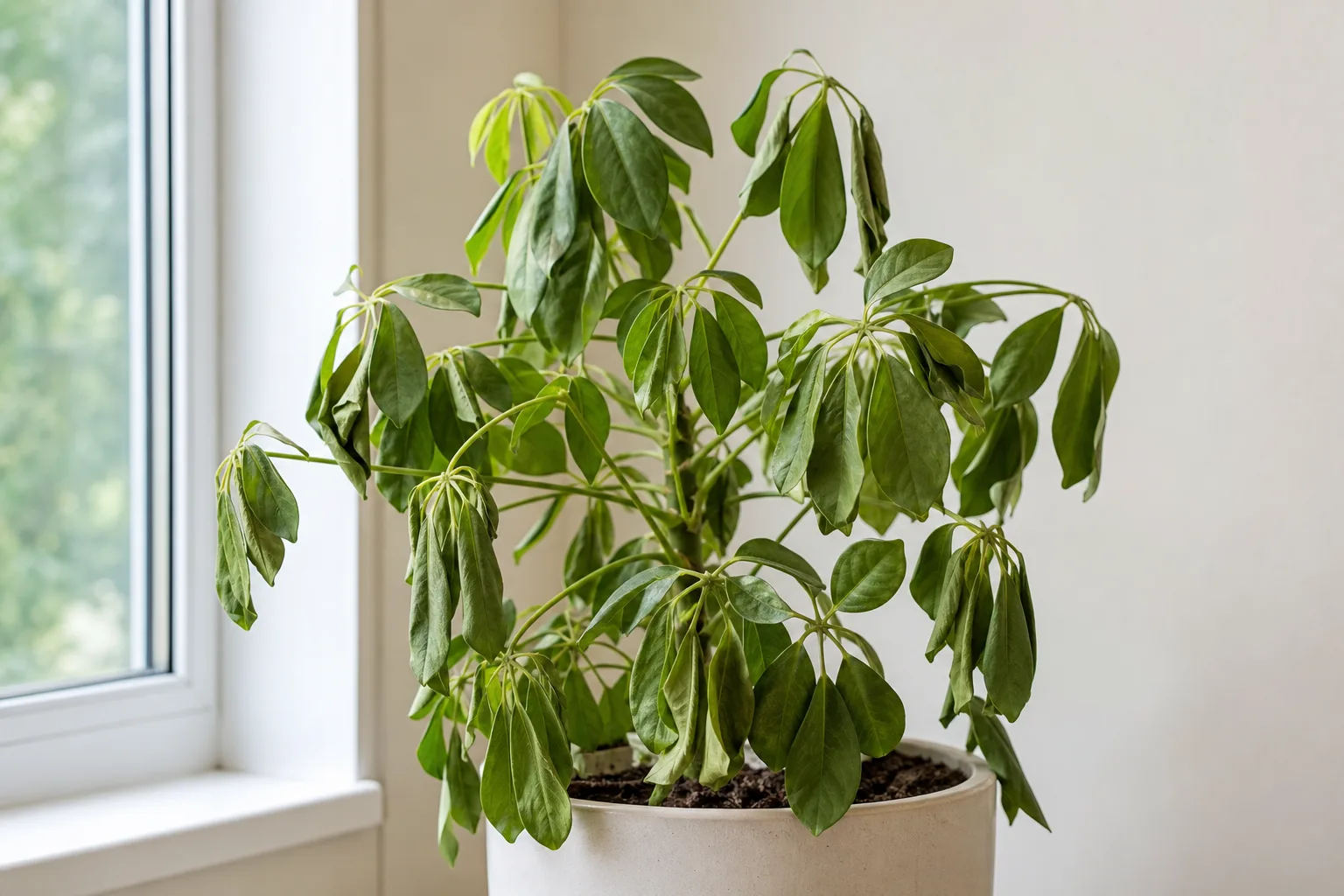
Wilting on dwarf umbrella tree usually means compound leaf clusters lost turgor from underwatering, overwatered root failure, cold drafts, or repot shock-not a single generic stress. First step: lift the pot and probe the top 1–2 inches of mix. A heavy wet pot with limp umbels means stop watering; a light dry pot with slightly curled leaflets means soak thoroughly.
Wilting on Dwarf Umbrella Tree: Causes, Checks & Fixes
This guide covers wilting on Dwarf Umbrella Tree. See also the general Wilting guide, watering, and light pages for this plant.
Wilting on Dwarf Umbrella Tree: Causes, Checks & Fixes
Quick answer
Wilting on dwarf umbrella tree (Schefflera arboricola) is almost always lost turgor in compound leaf clusters-the hand-shaped umbels of 7 to 9 leaflets hang limp when the plant cannot move water into cells fast enough. On this Araliaceae species, the entire cluster usually wilts as a unit before individual leaflets yellow, which is different from slow gradual droop you might see over weeks on an otherwise healthy specimen.
The mistake most owners make is watering immediately because leaves look thirsty. First step: lift the pot and check moisture at root depth. A heavy wet pot with limp umbels means damaged or oxygen-starved roots-pause watering until the top inch dries. A light dry pot with slightly curled but firm leaflets means underwatering-soak thoroughly and empty the saucer. Cold drafts below about 55°F (13°C) can wilt healthy plants within hours even when soil moisture looks normal.
What wilting looks like on Dwarf Umbrella Tree
On Schefflera arboricola, each leaf is a compound cluster radiating from a central petiole like umbrella spokes. When turgor drops, the whole umbel hangs rather than one random leaflet sagging alone. Stems may still feel firm while leaf clusters look limp-a pattern that confuses owners who expect wilt to start at the base.
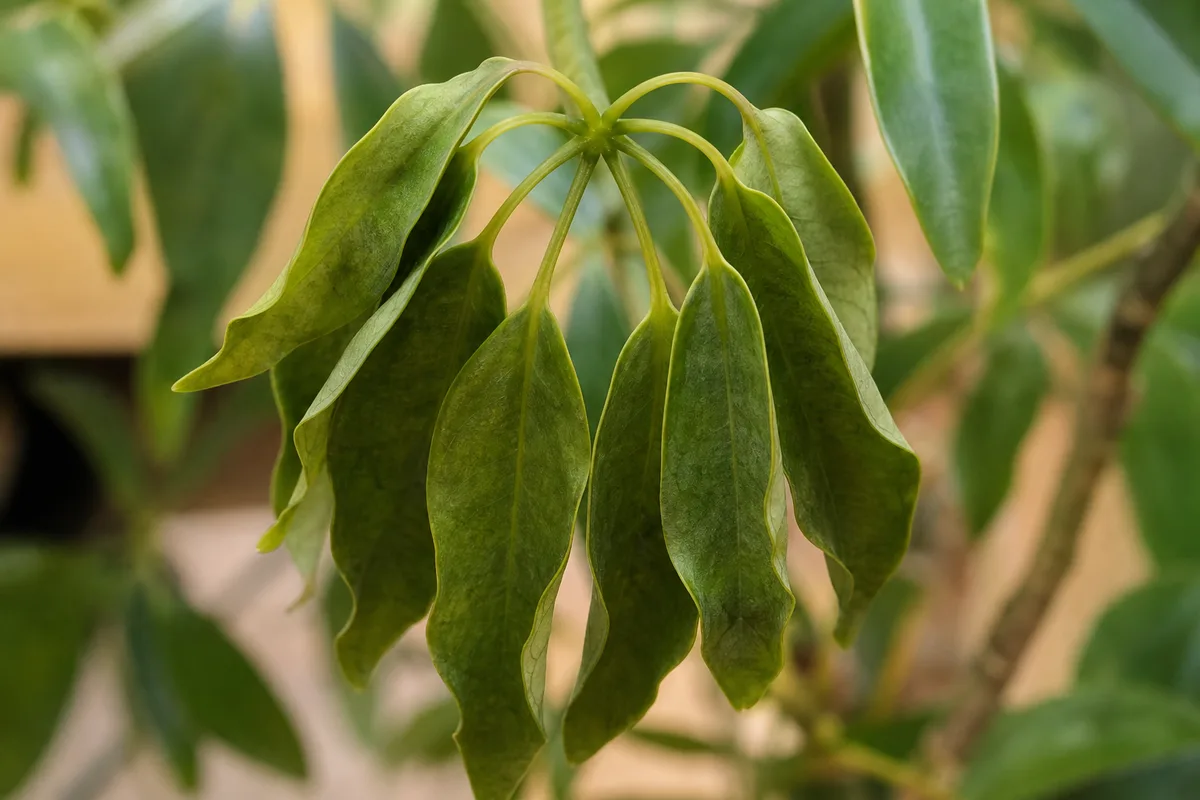
A wilted compound umbel with limp hanging leaflets while the central petiole and stem stay firm - typical turgor loss on Schefflera arboricola before individual leaflets yellow.
Limp compound clusters on wet, heavy soil
The pot feels noticeably heavy when lifted. Surface mix stays dark and cool for many days after the last watering. Leaf clusters are soft and limp while soil is clearly moist-classic paradoxical wilt from root oxygen loss or early rot. Lower leaflets may yellow at the same time. Fungus gnats hovering when you disturb the soil often appear when mix stays wet too long. This overlaps heavily with overwatering on dwarf umbrella tree but wilting here emphasizes acute collapse rather than slow yellowing.
Slightly curled leaflets on dry, light soil
The pot feels light. The top 1 to 2 inches (2.5 to 5 cm) of mix are dry to a finger or skewer probe. Leaf clusters hang limp but individual leaflets may show slight upward curl or crispness at edges rather than soft mushy tissue. Stems stay firm. After a missed watering cycle in bright summer light, the whole canopy can wilt in a day-faster than many succulents because schefflera leaf area transpires steadily. See underwatering on dwarf umbrella tree for the full dry-soil recovery path.
Rapid wilt after cold draft or window chill
Wilting appears suddenly after a cold night near glass, an AC vent blast, or moving the plant from a warm shop to a cool room. Leaf clusters droop within hours; some may yellow and drop within days. Soil moisture at probe depth often looks normal because the problem is temperature shock on a Taiwan-native subtropical species that prefers stable indoor temperatures above about 50°F and languishes below about 55°F (13°C) in practice.
Whole-plant wilt after repot shock
After repotting, division, or a rough move, multiple umbels wilt at once even when you watered correctly at transplant. Roots were disturbed and cannot supply the canopy immediately. Mix may feel evenly moist but not waterlogged. Recovery is gradual if crown tissue stays firm-unlike rot, where softness spreads at the base.
Photo reference for growers: Compare a wilted compound umbel on a heavy wet pot (soft leaflets, dark soil) against a wilted umbel on a light dry pot (slightly curled firm leaflets). Cold-draft wilt often shows limp clusters pressed against cold window glass while inner clusters stay firmer briefly.
Wilting vs. drooping on Dwarf Umbrella Tree
Use this page when turgor collapses quickly-umbels go limp within hours to a few days and the plant looks suddenly “thirsty” or “collapsed.” Use drooping leaves on dwarf umbrella tree when stems and clusters gradually sag over weeks without an acute event, often from chronic low light or slow root decline. Both symptoms share causes, but wilting search intent is usually wet vs. dry vs. cold emergency diagnosis, not long-term posture change.
Why Dwarf Umbrella Tree wilts
Overwatering and root oxygen loss
Dwarf umbrella tree is somewhat drought-tolerant once established but far less tolerant of chronic soggy soil. Calendar watering in a dim winter room keeps mix wet at the center while the surface looks merely damp. Roots in saturated media lose oxygen and function, so leaflets wilt despite abundant soil water-the plant cannot uptake what roots cannot breathe for.
Underwatering and missed dry-down
In bright warm conditions, a small pot can dry through the top 1–2 inches in a few days. Schefflera’s glossy compound leaves transpire steadily; the canopy wilts when fine roots desiccate. Brief drought tolerance does not mean indefinite skips-repeated wilt cycles weaken roots over time.
Cold drafts and rapid temperature drop
Because S. arboricola evolved in warm subtropical conditions, sudden cold triggers stress responses faster than on temperate houseplants. Winter window ledges, leaky patio doors, and direct AC airflow are common indoor failure points. Wilt and leaf drop can precede obvious yellowing.
Repot shock and root disturbance
Fresh nursery peat, air pockets after repot, or root trimming during division temporarily reduce uptake. The canopy wilts while roots re-establish-especially if the plant was moved to stronger light or colder air at the same time.
Low light slowing winter dry-down
In dim corners, evaporation slows. Owners who keep summer watering frequency in winter overwater without realizing it-wet soil and wilt follow. Variegated cultivars such as Trinette in dim offices are especially prone because reduced photosynthesis pairs with slow dry-down.
Lookalike symptoms to rule out
- Yellow leaves - Yellowing often follows or accompanies wilt but is not the same signal; yellow with firm stems may precede full turgor loss.
- Root rot - Soft crown, black mushy roots, and sour soil with advancing wilt on wet mix; escalate beyond a simple dry-down pause.
- Spider mites in dry heat - Fine stippling and webbing at petiole bases with gradual decline, not sudden umbrella-cluster collapse; inspect undersides before assuming water stress.
- Leggy stretch from low light - Long sparse stems with small pale umbels may look “weak” but tissue is often firm; fix light before watering more.
- Normal lower-leaf drop - Single old clusters yellow and drop at the base while new center whorls stay upright-not whole-canopy wilt.
How to confirm the cause
Work through these checks in order:
- Pot weight - Heavy and hard to lift with limp umbels = wet-soil problem. Very light with limp umbels = dry-soil problem.
- Top 1–2 inch probe - Dry to finger depth on a light pot confirms thirst. Damp or cool at depth on a heavy pot confirms do not water yet.
- Crown firmness - Press gently at the base where stems meet soil. Firm crown with wet soil = pause watering and watch. Soft or mushy crown with wet soil = inspect roots immediately-see root rot.
- Smell and gnats - Sour anaerobic odor or fungus gnats at the soil line support overwatering, not drought.
- Leaflet texture - Soft limp tissue on wet mix vs. slightly curled firm leaflets on dry mix.
- Temperature context - Recent cold night, new window placement, or AC blast in the last 48 hours?
- Care timeline - Repot, move, or heavy prune within the last two weeks?
- Light level - Dim room with heavy wet pot in winter strongly suggests overwatering misread as wilt.
Make one care correction at a time so you can read the plant’s response over the next week-stacking repot, prune, and fertilizer on a wilted schefflera often worsens collapse.
First fix for Dwarf Umbrella Tree
Lift the pot. If it is heavy and the top inch is still moist, stop watering until that surface layer dries-do not add water because umbels look limp.
That single action prevents the most damaging error: drowning roots that are already failing on wet mix. If the pot is light and the top 1–2 inches are dry, water thoroughly until a little runs from the drainage hole, then empty the saucer within 30 minutes.
If cold draft is obvious-plant on a winter sill, leaves touching glass, wilt after a cold night-move to stable room temperatures between 60 and 80°F (16 and 27°C) away from vents before adjusting water. If repot shock is likely with firm crown and even moisture, stabilize placement and wait; do not repot again on day one.
Only after the wet-vs-dry branch is clear should you inspect roots, increase light to speed dry-down, or soak a dry plant.
Step-by-step recovery by cause
If soil is wet and crown is still firm
- Pause all watering until the top inch of mix feels dry to your finger.
- Move to brighter indirect light if the plant sits in shade-slow evaporation worsens wet soil in cool rooms.
- Empty any cachepot standing water and confirm drainage holes are open.
- If umbels keep declining after the surface dries, unpot and inspect roots for brown mushy tissue; prune rot and repot into fresh airy mix only if rot is confirmed.
- Watch for new firm umbrella whorls at the growing tips-old limp leaflets may not fully re-firm.
If soil is dry and pot is light
- Water thoroughly once-not tiny daily sips that wet only the surface.
- Empty the saucer after the soak.
- Wait 24 hours and re-check turgor before watering again.
- Adjust interval: in warm bright conditions roughly every 7–10 days; in cool winter dim light roughly every 14–21 days-always probe first per the dwarf umbrella tree watering guide.
- If mix repels water on an extremely dry root ball, bottom-water for 30–45 minutes, then top-water to settle.
If crown is soft or mix smells sour
Treat as urgent root stress. Stop watering. Unpot, rinse roots, cut mushy tissue, and repot into fresh well-drained mix in a pot only slightly larger than the root ball. Discard severely rotted specimens if most roots are black and crown tissue is soft. Full root rot recovery may take weeks.
If plant sits in a cold draft
Move off the window ledge and away from AC vents. Keep temperatures stable. Do not compensate with extra water unless the dry probe confirms thirst after the plant warms. Expect some leaf drop over the next week; new growth confirms recovery.
If wilt follows repot shock
Hold stable light and temperature. Water when the top inch dries-do not keep mix constantly moist “to help roots.” Avoid fertilizer until new whorls appear. Recovery typically takes two to four weeks if crown tissue stays firm.
Recovery timeline
Underwatering: Leaflets often regain noticeable firmness within hours to one day after a proper soak if roots were healthy. Severely desiccated plants may need a second week of stable dry-down rhythm before new whorls expand.
Overwatering without rot: Once soil oxygen returns, partial perk-up may appear within several days, but judge success by stable new growth, not old leaflet texture. Full canopy normalization can take two to four weeks.
Cold draft: Wilt may stop within 24–48 hours after warming, but dropped leaves do not return-wait for new umbrella clusters.
Repot shock: Two to four weeks for roots to re-anchor and supply the canopy if environment stays stable.
Advanced root rot: Weeks to months; some specimens lose large sections of canopy permanently.
What not to do
Do not water a wilted dwarf umbrella tree when the pot is heavy and the top inch is moist-that deepens root oxygen loss. Do not fertilize stressed plants; salts in dry or damaged roots worsen wilt. Do not repot into a larger pot “to help drying” on wet wilt-that usually increases water retention. Do not stack repotting, heavy pruning, and pesticide on the same day.
Do not place a wilted plant in blazing direct sun to “strengthen” it-acclimate gradually if you are increasing light after a dim corner. Do not assume every limp umbel needs water; confirm with pot weight first.
Dwarf Umbrella Tree care cross-check
Healthy Schefflera arboricola resists wilt when four variables align: bright indirect light for several hours daily, dry-down watering when the top 1–2 inches dry in small pots, well-drained mix in a pot with drainage holes, and stable temperatures above about 55°F. The dwarf umbrella tree overview explains compound-leaf biology and cold sensitivity in depth.
Winter failures usually combine dim light with calendar watering-mix stays wet at the center while owners see limp umbels and add more water. Variegated cultivars need brighter light than solid-green forms; dim offices slow dry-down and invite the wet-soil wilt cycle. Match your watering rhythm to the light placement guide and actual pot dry-down, not memory.
How to prevent wilting next time
- Probe before every drink - Top 1–2 inches dry in small and medium pots, or roughly top half dry in large containers, before soaking.
- Empty saucers within 30 minutes of every watering.
- Reduce winter frequency when growth slows and light drops-see seasonal notes in the watering guide.
- Avoid cold glass contact in winter; move pots inward on frosty nights.
- Right-size pots - Oversized containers stay wet too long and cause paradoxical wilt.
- Use airy mix with perlite or bark; compacted peat suffocates Araliaceae roots quickly.
Inspect weekly while problems are small: pot weight, new whorl firmness, and soil gnats at the surface catch wet-soil wilt before crown tissue softens.
When to worry
Escalate immediately if:
- Crown tissue softens at the base while soil is wet-advancing rot, not thirst.
- Wilting spreads across the whole canopy over 48 hours despite correct dry-down.
- Black mushy roots or sour anaerobic smell when you unpot.
- Wilting persists after a proper soak on a confirmed dry pot-possible vascular or severe root damage.
Low urgency: single limp umbels on a heavy wet pot that perk slightly after the surface dries, or brief wilt after one missed watering that recovers after one soak.
Related Dwarf Umbrella Tree guides
- Overwatering on dwarf umbrella tree - limp umbels on wet soil, gnats, and dry-down pause
- Underwatering on dwarf umbrella tree - light dry pot and curl recovery
- Root rot on dwarf umbrella tree - soft crown and mushy roots escalation
- Drooping leaves on dwarf umbrella tree - gradual sag vs. acute wilt
- Yellow leaves on dwarf umbrella tree - yellowing that accompanies wilt
- Dwarf umbrella tree care overview - species biology, cold sensitivity, and troubleshooting hub
Conclusion
Wilting on dwarf umbrella tree is a pot-weight and moisture-depth problem before it is a leaf problem. Lift the container, probe the top 1–2 inches, and separate heavy wet pots from light dry ones. Pause water on wet wilt, soak on dry wilt, warm cold-shocked plants, and stabilize repotted specimens without stacking treatments. Judge recovery by firm new umbrella whorls-not by every old leaflet returning to perfect gloss.