Watering Dwarf Umbrella Tree: Schedule, Checks & Mistakes
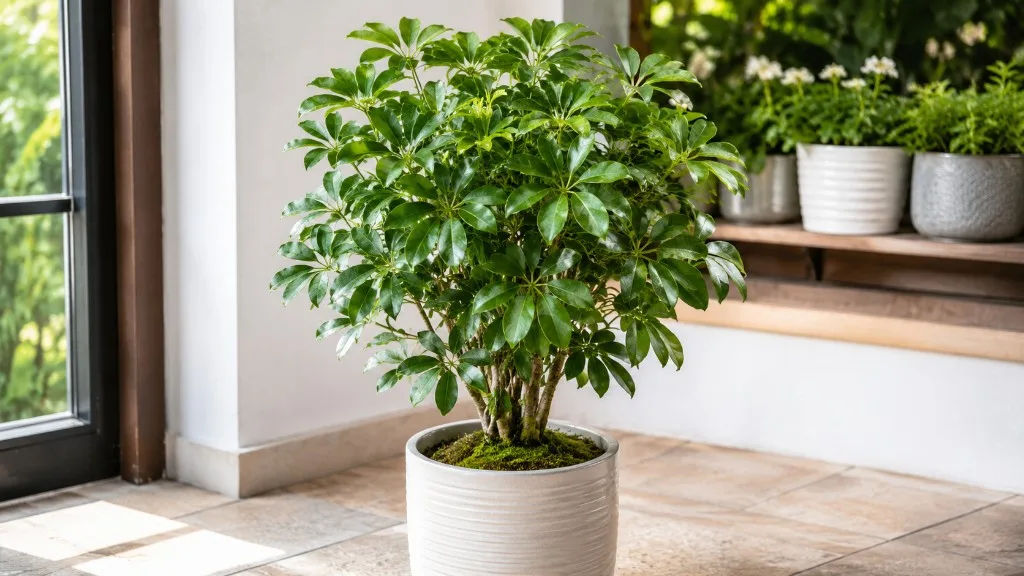
Watering Dwarf Umbrella Tree: Schedule, Checks & Mistakes
Watering Dwarf Umbrella Tree: Schedule, Checks & Mistakes
The dwarf umbrella tree looks indestructible until you water it like a fern. Schefflera arboricola tolerates a missed drink far better than a soggy week, yet most leaf problems - yellowing, sudden drop, limp stems - trace back to how the pot dries, not how often you remember to pour. The fix is not a calendar that says “water every Sunday.” The fix is a short routine: check whether the top inch of soil is dry, water deeply when the root zone is ready, let the pot drain completely, and adjust for season, light, and pot size. This guide gives you the checks, the realistic schedules, the root rot on Dwarf Umbrella Tree prevention steps, and the mistakes that turn a glossy, compact Schefflera into a bare stick in a wet pot.
Why Dwarf Umbrella Tree Watering Confuses Even Experienced Growers
Schefflera sends mixed signals on purpose - or at least it feels that way. Leaves can droop when the plant is genuinely dry. They can also droop when the roots are drowning and cannot move water upward. Yellow leaves can mean too much water, but they can also mean cold drafts, low light, or natural aging of older leaflets. That overlap is why beginners either water on autopilot or freeze up and underwater until the mix turns dusty.
The core confusion comes from treating the dwarf umbrella tree like a moisture-loving tropical that wants constantly damp soil. It is not. Schefflera arboricola evolved in the warm understory of Taiwan and Hainan, where rainfall is frequent but drainage through rocky, organic soil is excellent and roots compete for oxygen between wetting events. Indoors, you recreate that rhythm - a full drink followed by a partial dry-down - not permanent dampness around the stem.
Clemson University’s Home & Garden Information Center notes that root rot usually results from a soil mix that does not drain quickly or overly frequent watering, and that leaf drop can be caused by excessive watering, low humidity, or chilling. (Clemson HGIC) That single pairing - poor drainage plus frequent watering - already explains why your decorative cachepot and your colleague’s Schefflera in a bright office follow different rules even when both get “the same” weekly attention.
The dwarf umbrella tree also changes its water appetite as conditions shift. A plant in strong Dwarf Umbrella Tree light guide on a warm windowsill transpires far more water than the same cultivar sitting in a dim corner. A freshly repotted plant in an oversized pot dries slowly while roots have not yet explored the new volume. NC State Extension notes the species is drought tolerant once established - container-grown plants still need a routine that allows the mix to dry down between waterings so roots access oxygen.
How Much Water Schefflera arboricola Actually Needs
A useful starting principle for dwarf umbrella tree watering is a thorough soak that wets the full root ball, followed by enough dry-down that the top inch of mix - and ideally a bit deeper - loses excess moisture before the next session. Clemson HGIC recommends watering scheffleras thoroughly, then letting the soil dry to half an inch deep before watering again, and never letting a plant sit with water in its saucer. (Clemson HGIC) In practice, the top inch dry check is the fastest daily signal most home growers can use consistently; if your finger still feels cool dampness at one inch depth, wait.
The amount of water per session matters less than how thoroughly you rewet the root ball. A quarter-cup dribbled on the surface every few days often keeps the top wet while the center stays dry - then the plant wilts, you add more sips, and the roots never get a coherent drink. Water until moisture moves through the full depth of the mix and exits the drainage holes. Then stop until the top inch approaches dry again. That cycle - full drink, partial dry-down, full drink - is the rhythm Schefflera prefers.
Clemson HGIC advises watering scheffleras thoroughly, then letting the soil dry to half an inch deep before watering again, and never letting a plant sit with water in its saucer. (Clemson HGIC) Extension guidance and most commercial care sheets converge on the same idea with slightly different depth targets: the surface should not stay continuously wet, and the root zone needs air between sessions. If your mix is very airy with extra perlite, the top inch may dry faster than the center - which is why combining the finger test with a pot-weight check gives a more complete picture than either alone.
Container Schefflera breaks simple weekly math on purpose. A pot - especially a small plastic pot on a warm desk - exposes soil to heat and dry air on all sides. In active growth, many indoor dwarf umbrella trees need water roughly every 7 to 10 days, but that range is a starting guess until you confirm it against your room. Oklahoma State Extension notes that most houseplants should be thoroughly watered and then allowed to nearly dry before the next irrigation - always adjusted by soil feel rather than the calendar. Your plant may land inside or outside those bands depending on pot size, mix, and light.
The Top-Inch Dry Rule: When to Water Dwarf Umbrella Tree
The top inch dry rule is the most reliable default for dwarf umbrella tree watering: press your finger into the mix about one inch deep near the pot edge, not against the stem. If the soil feels cool, clings to your skin, or smears slightly, the root zone still has usable moisture - wait. If the top inch feels dry and crumbly, and the pot feels lighter than it did after your last thorough watering, it is time to water. This single check prevents the two most common failures: watering on a calendar while the mix is still wet, and waiting so long that fine roots desiccate and the plant drops leaf clusters in protest.
Why one inch specifically? That depth sits below the surface crust that dries fastest in heated rooms, but above the main root mass where premature watering keeps the center soggy. Clemson HGIC’s half-inch dry threshold and the common top 1 to 2 inches guidance from houseplant references align on the same decision zone. (Clemson HGIC) For a standard six- to eight-inch indoor pot, one inch is deep enough to be meaningful without requiring you to bury half your finger every time you walk past the plant.
Do not water when only the very surface looks pale and dusty but your finger finds damp particles at depth. Peat-based mixes lie visually - the top dries while the middle stays wet for days. That mismatch is exactly how root rot starts while the grower believes they are being conservative.
Finger Test, Skewer Probe, and Pot Weight
The finger test is the fastest check. Use it at least twice a week during active growth and weekly in winter slowdown. Consistency matters more than precision: the same finger, the same depth, the same spot near the pot wall where roots are less dense.
The pot weight test is the most reliable signal once you learn your container. Lift the pot immediately after a thorough watering and notice the heft. Lift it every few days. A pot that feels dramatically lighter has lost much of its available moisture. Combine weight with the finger test when you are unsure: light pot plus dry top inch equals water; heavy pot plus wilted leaves equals trouble, not thirst.
A wooden skewer or chopstick works as a low-tech backup. Insert it to mid-pot depth, wait sixty seconds, pull it out. Damp wood means wait; dry wood with a light pot means water. A soil moisture meter can help beginners, but treat it as confirmation, not a substitute for learning how your specific mix behaves.
Schefflera has one signal that helps when you are calibrating: slight branch droop when the plant is genuinely dry. NC State Extension lists drought tolerance among the species’ landscape attributes - underwatering on Dwarf Umbrella Tree stress often shows as wilt that recovers after a thorough soak. If droop persists into the next morning despite wet soil, the problem is not underwatering - investigate drainage and root health instead.
How Often to Water Dwarf Umbrella Tree Indoors
Indoor dwarf umbrella tree watering usually falls between every 7 to 10 days during active warm growth and every 14 to 21 days during cooler, slower months, but the honest answer is always “when the top inch of soil is dry.” A Schefflera in bright indirect light near a south-facing window in summer may need water every five to seven days. The same plant in a north-facing office in winter may go two to three weeks between sessions. A small four-inch nursery pot in dry air-conditioned air can surprise you by drying in four or five days. The schedule is a guess until you confirm it against your pot.
Check indoor Schefflera at least twice a week during the growing season. Do not water by default. Run the moisture checks first, then water or walk away. After two weeks in the same spot, you will know whether your plant behaves like a seven-day Schefflera or a twelve-day Schefflera. That personal baseline is more accurate than any blog chart because it accounts for your pot material, your mix, and your light.
Indoor humidity changes the interval more than beginners expect. The dwarf umbrella tree tolerates average to moderate humidity (40–60%) well, but very dry air below thirty percent pulls moisture from leaves faster and can stress the plant - especially alongside spider mites. Do not compensate by leaving the soil constantly wet. High humidity plus soggy mix and weak airflow invites fungal problems at the stem base when leaves stay crowded.
If you moved the plant recently, reset your expectations. New environments change evaporation immediately. Quarantine the first month, check moisture more often than you water, and resist Dwarf Umbrella Tree repotting guide and fertilizing until you understand the dry-down rhythm in the new location.
Seasonal Watering Adjustments for Dwarf Umbrella Tree
Seasonal adjustments matter because the same pot can dry in a few days in bright summer heat and take two to three weeks in a cool, dim winter room. Schefflera tracks temperature, day length, and growth speed more closely than the day of the week. A seasonal framework helps you anticipate change without locking into bad habits.
Spring and Summer Active Growth
In spring and summer, longer days and warmer temperatures push the dwarf umbrella tree into active growth. New leaflets unfold, stems extend, and water use rises. This is when the 7 to 10 day summer range applies as a starting point for many indoor pots - always verified by the top-inch dry check, not assumed from the calendar.
During active growth, the most common summer mistake is not underwatering - it is continuing a winter interval while the plant doubles its transpiration in stronger light. If new growth looks pale, soft, or sparse and the mix is dust-dry at depth, increase check frequency before you increase volume per session. When you do water in summer, water fully. Partial sips in hot weather create alternating drought and surface wetness that stresses roots.
Outdoor Schefflera on a sheltered patio - where frost is not a risk - may need even shorter intervals in peak heat. Wind and reflected heat from paving accelerate drying. Rain does not replace your checks; a brief shower may wet the surface while the root ball stays dry, or a week of cloudy rain may keep the mix wet longer than you expect.
Fall and Winter Slowdown
In fall and winter, cooler nights, shorter days, and lower light slow Schefflera growth. Water use drops sharply. The same weekly habit that worked in July will overwater the plant in January. Stretch the interval toward every 14 to 21 days for many indoor pots, and verify with soil checks rather than memory of summer frequency.
Oklahoma State Extension notes that shorter days in fall and winter naturally slow growth, decreasing water needs while you should continue monitoring soil dampness to determine when to water. Winter overwatering on Dwarf Umbrella Tree is the silent killer because evaporation is low and the mix stays wet near the roots for weeks while the surface looks merely “not dusty.”
Winter mistakes cluster around two extremes: neglecting a small pot near a heating vent that still dries quickly, and watering every week out of habit because the plant “looked fine all summer.” Heat without humidity pulls water from leaves; cold wet roots cannot function. If the plant sits near a window, watch for cold glass chilling the root zone while the room feels warm - slow growth plus slow drying can still end in chronic wet feet if you water on autopilot.
Reduce watering frequency in winter, not thoroughness. When you do water, water fully and drain completely. Hold fertilizer until active growth resumes in spring.
Watering by Pot Size, Light Level, and Humidity
Pot size changes the schedule immediately, often more than season. A four-inch nursery pot dries fast and may need water every five to seven days in summer sun. A ten-inch floor pot holds more buffer and may go ten to fourteen days between sessions in the same room. After repotting into a larger container, expect slower dry-down until roots fill the new volume - many growers overwater freshly repotted Schefflera because they keep the old schedule while unused mix holds moisture like a sponge around the root ball.
Light level is the other major variable. Bright indirect light - the ideal for compact Schefflera shape - increases water use. Medium indirect light or office fluorescent light slows both growth and drying. Low light plus frequent watering is the classic path to yellow leaves and leaf drop because the plant cannot use the moisture it is given. If the pot stays wet longer than ten days in dim conditions, check drainage and consider whether the plant needs more light before you change watering volume.
Humidity modifies leaf stress but does not replace soil checks. Average room humidity suits the dwarf umbrella tree. Very dry air may cause slight leaf edge crisping or invite spider mites; address humidity with grouping, a pebble tray, or a humidifier rather than keeping soil wet. Misting leaves is not a substitute for proper root-zone watering and can leave foliage wet in stagnant air without solving dry soil.
Bonsai-trained Schefflera in shallow pots dries faster than the same plant in a standard nursery container. Shallow soil volume means shorter intervals and more frequent top-inch checks during warm weather.
The Right Way to Water Without Causing Root Rot
Technique matters because root rot prevention starts at the watering can, not after the leaves yellow. The goal is a full drink followed by an appropriate dry-down, not permanently damp soil around the stem.
Water slowly enough for the mix to absorb rather than shed water down the inside wall of the pot. Dry peat sometimes repels water - it runs around the root ball and out the bottom while the center stays dry. If that happens, water in two passes five minutes apart, or bottom-water the pot in a tray until the surface darkens, then drain.
Water until excess runs freely from the drainage holes. That confirms the full root ball received moisture, not just the top inch. Wait until drainage slows, then empty the saucer within thirty minutes. Clemson HGIC is explicit: never let a plant sit with water in its saucer. (Clemson HGIC) Standing water re-saturates the bottom root zone, blocks oxygen, and causes the classic paradox: wilting plant, wet soil.
Aim water at the soil surface rather than showering the crown. Schefflera leaf clusters can trap moisture against the stem when overhead watering is repeated in low airflow. Base-level watering with a narrow spout reduces that risk.
If you use a decorative cachepot, lift the inner nursery pot to water, drain fully, then return it. Watering inside a sealed outer pot without drainage is one of the fastest ways to lose a Schefflera despite attentive care.
Root Rot Prevention for Dwarf Umbrella Tree
Root rot on dwarf umbrella tree is almost always a watering-and-drainage problem, not a mysterious disease. Clemson HGIC states that root rot usually results from soil that does not drain quickly or overly frequent watering. (Clemson HGIC) NC State Extension notes that if the soil is too wet or too dry the leaves will drop off - prevention means letting the top inch dry, using porous mix, confirming drainage holes, and never leaving the pot standing in runoff.
Early prevention signs before roots turn mushy include mix that stays dark and cool at the surface for more than a few days after watering, a sour or stagnant smell from the pot, fungus gnats hovering at the soil line, and new growth that stalls while older leaflets yellow and drop. When several of those appear together, pause watering, inspect the root zone, and improve airflow before the stem softens.
If you must rescue a plant with advanced rot, unpot, trim brown mushy roots back to firm white tissue, repot into fresh well-draining mix - often into a smaller pot if the root mass was reduced - and resume watering only when the top inch dries. Recovery is slow. Expect leaf drop while the root system rebuilds.
Drainage, Saucers, and Cachepots
Drainage holes are non-negotiable for long-term indoor Schefflera. Decorative pots without holes, or holes blocked by roots, gravel layers, or compacted mix, trap water at the bottom where roots breathe least. Gravel at the bottom of a pot does not fix poor mix structure; it often raises the wet zone closer to the root ball.
Saucers are for temporary collection, not permanent storage. Empty them after every watering. If emptying is inconvenient, water at the sink and return the plant only when dripping stops.
Cachepots create the illusion of clean decor while hiding chronic wet feet. If you love the outer look, treat the inner pot as the real home and never add water to the outer shell. Check monthly that the inner pot is not sitting in accumulated condensation.
Oversized pots relative to the root ball hold excess wet mix the roots never reach - a common setup after well-meaning repotting. Match pot volume to root mass plus modest room for growth, not to the height of the foliage.
Signs You Are Overwatering Dwarf Umbrella Tree
Overwatering is the silent killer because the plant looks thirsty while the roots are failing. Watch for these patterns together, not in isolation:
Wilting despite wet soil is the hallmark. Roots damaged by low oxygen cannot transport water, so leaflets droop even though moisture is present. If you respond by adding more water, you accelerate the decline. Clemson HGIC lists leaf drop among outcomes of excessive watering. (Clemson HGIC)
Yellow leaves, often starting with older leaflets while the stem stays firm at first, frequently appear when the root zone stays wet too long. NC State Extension links both over-wet and over-dry soil to leaf drop on scheffleras - watering only when soil feels dry helps prevent these problems.
Sudden leaf drop in clusters - especially after a period of faithful weekly watering in low light - often points to chronic wet feet rather than a single bad session.
Soft stems at the base, a sour smell from the mix, and fungus gnats suggest advanced trouble. Clemson HGIC notes that overwatering decreases oxygen available for root growth and favors root diseases - yellow leaf tips often signal it is time to water less frequently.
If several signs align, stop watering, improve airflow, confirm drainage holes are open, and inspect roots if the plant keeps declining. Mushy brown roots need trimming, fresh mix, and a careful dry-down cycle going forward.
Signs Your Dwarf Umbrella Tree Is Thirsty
Underwatered Schefflera is usually more straightforward. The plant tells you earlier, and recovery is faster if you act before leaflets crisp and drop.
Dry top inch plus a light pot is the clearest combination. The mix crumbles slightly at the surface and the container feels noticeably lighter than after a full watering.
Slight branch droop that improves within hours after a thorough watering suggests genuine drought stress. NC State Extension lists drought tolerance among the species’ strengths - wilt that resolves after a full soak points to thirst rather than root failure.
Dry, shrunken mix pulling away from the pot edge means the root ball went too dry. Rewater in stages if water runs straight through cracks along the wall - first pass to swell the mix, ten-minute wait, second pass to full depth, then drain.
Leaf edges turning crisp on older leaflets after repeated drought cycles indicates the plant is living on boom-and-bust cycles. Schefflera tolerates brief dryness but not chronic neglect. Establish the top-inch dry rhythm instead of occasional floods.
When rehydrating a very dry pot, water until drainage appears, wait ten minutes, water again, then drain completely. Do not leave the plant sitting in the runoff tray.
Soil and Drainage as Hidden Watering Factors
Your watering skill cannot overcome a bad mix. The dwarf umbrella tree wants well-draining potting mix with perlite, slightly acidic around pH 6.0 to 6.5, with enough structure to hold moisture without compacting. Dense, aged indoor mix that has collapsed into a brick will stay wet on top and repel water in the center - the perfect trap for well-meaning weekly watering.
Clemson HGIC links root rot to soil that does not drain quickly. (Clemson HGIC) “Well-drained” in a pot means open holes, elevation from saucer water, and a mix that crumbles when squeezed rather than smearing into a paste. A practical home blend uses standard peat- or coco-based potting mix amended with twenty to thirty percent perlite for Schefflera.
If your pot dries unevenly - wet top, dry core, or the reverse - the plant may be rootbound. A tight root ball channels water down the sides and out the bottom while the center stays dry. Repotting into a slightly larger container with fresh mix often stabilizes watering behavior more than changing your calendar.
Salt buildup from hard tap water or accumulated fertilizer can also mimic drought stress by damaging fine root hairs. If white crust forms on the soil surface and leaf tips brown despite correct watering intervals, flush the pot with plain water until runoff runs clear, or refresh the mix at the next repot.
Water Quality, Temperature, and Timing
Schefflera is not as finicky as some houseplants about water chemistry, but temperature and timing still matter. Room-temperature or tepid water avoids shocking roots on a cold windowsill in winter. Very cold tap water can slow uptake briefly on a heat-loving tropical.
Morning watering is the best default for indoor plants. It aligns with the day’s warmth and gives any incidental splashes on foliage time to dry. If your only reliable time is evening, still prioritize base watering at the soil line and skip wetting the leaf clusters before a cool night.
Let chlorinated tap water sit for an hour if your plant is sensitive, though most Schefflera handle municipal water without drama. Rainwater or filtered water helps in areas with very hard, mineral-rich supplies that leave crust on the mix over time.
Common Dwarf Umbrella Tree Watering Mistakes and Quick Fixes
Mistake: Watering on a calendar. Fix: Use the calendar as a reminder to check the top inch, not as a trigger to pour. Two Schefflera in the same room can differ by a full week depending on pot size and light.
Mistake: Daily sips instead of full drinks. Fix: Water until drainage, then let the top inch approach dry. Sips keep the surface wet and the core thirsty or alternately flooded.
Mistake: Leaving runoff in the saucer. Fix: Empty saucers and cachepots after every watering. Roots need air as much as water. Clemson HGIC warns never to let the plant sit in saucer water. (Clemson HGIC)
Mistake: Ignoring pot size after repotting. Fix: Reset expectations after upsizing. Larger pots dry more slowly until roots explore the volume.
Mistake: Chasing wilt with water without checking. Fix: Wilting plus heavy wet pot means root stress; wilting plus light dry pot means drought. Different problems, different fixes.
Mistake: Using a decorative pot without drainage. Fix: Keep the plant in a holed nursery pot inside the decor shell, or drill drainage. No amount of careful pouring fixes a sealed bottom.
Mistake: Continuing summer frequency in winter. Fix: Stretch intervals when growth slows and light drops. Overwatering in winter causes more Schefflera losses than underwatering.
Mistake: Misting instead of watering. Fix: Misting humidifies leaves briefly; it does not replace root-zone moisture. Check the top inch and water the soil when dry.
Building a Simple Weekly Watering Check Routine
You do not need a spreadsheet. You need a repeatable loop that respects how Schefflera actually behaves.
Twice a week during active growth: Finger-test the top inch. Lift the pot if unsure. Water deeply only when dry at that depth. Empty saucers.
Once a week during winter slowdown: Same checks, longer expected intervals. Do not assume winter means “barely water” - small pots near heating vents still dry on their own schedule.
Once a month: Step back and evaluate overall growth. Are new leaflets firm and glossy? Is yellowing or leaf drop increasing? Adjust your check frequency by a day or two based on what the plant shows, not what a generic chart says.
Pair watering with light reality: Schefflera in bright indirect light uses more water than Schefflera in medium office light. If you move a pot, reset the routine and watch dry-down for two weeks.
After any stress event - repotting, cold draft, pest treatment - reduce watering slightly until new growth confirms the root zone has stabilized. Stressed roots absorb water more slowly.
Conclusion
Watering the dwarf umbrella tree well comes down to principles that never change even when the season does: check that the top inch of soil is dry before you pour, water deeply until the pot drains, empty the saucer, and adjust for light, pot size, and winter slowdown. Many indoor Schefflera land near every 7 to 10 days in summer and every 14 to 21 days in winter as starting ranges, but the finger test and pot weight test matter more than any single schedule. Overwatering and underwatering both cause wilting and yellow leaves, which is why the dry-down cycle - not the calendar - is the skill worth building.
Schefflera rewards consistency, not fussiness. Give it well-draining mix, let the root zone breathe between drinks, and respond to what the plant and pot tell you each time you check. Do that and you will spend less time rescuing rotting roots and more time enjoying the glossy, palmate leaves that make Schefflera arboricola one of the most forgiving statement plants in a bright room - as long as you keep the water moving through the pot instead of pooling around it.
When to use this page vs other Dwarf Umbrella Tree guides
- Dwarf Umbrella Tree overview - Start here for whole-plant context before deep-diving this topic.
- Dwarf Umbrella Tree problems hub - Jump to symptom-specific fix guides when this care topic does not resolve the issue.
- Overwatering on Dwarf Umbrella Tree - Escalate here when watering adjustments are not enough.
- Underwatering on Dwarf Umbrella Tree - Escalate here when watering adjustments are not enough.
- Root Rot on Dwarf Umbrella Tree - Escalate here when watering adjustments are not enough.
Related Dwarf Umbrella Tree guides
- Dwarf Umbrella Tree overview
- Dwarf Umbrella Tree light
- Dwarf Umbrella Tree soil
- Dwarf Umbrella Tree propagation
- Dwarf Umbrella Tree fertilizer
- Dwarf Umbrella Tree repotting
- Overwatering on Dwarf Umbrella Tree
- Underwatering on Dwarf Umbrella Tree
- Root Rot on Dwarf Umbrella Tree
- Wilting on Dwarf Umbrella Tree
- Drooping Leaves on Dwarf Umbrella Tree
- Mold on Soil on Dwarf Umbrella Tree
Related tool
Try the Plant Watering Calculator with dwarf-umbrella-tree pre-selected to estimate needs for your setup.