Leaf Drop on Dwarf Umbrella Tree: Causes, Checks & Fixes
Quick answer
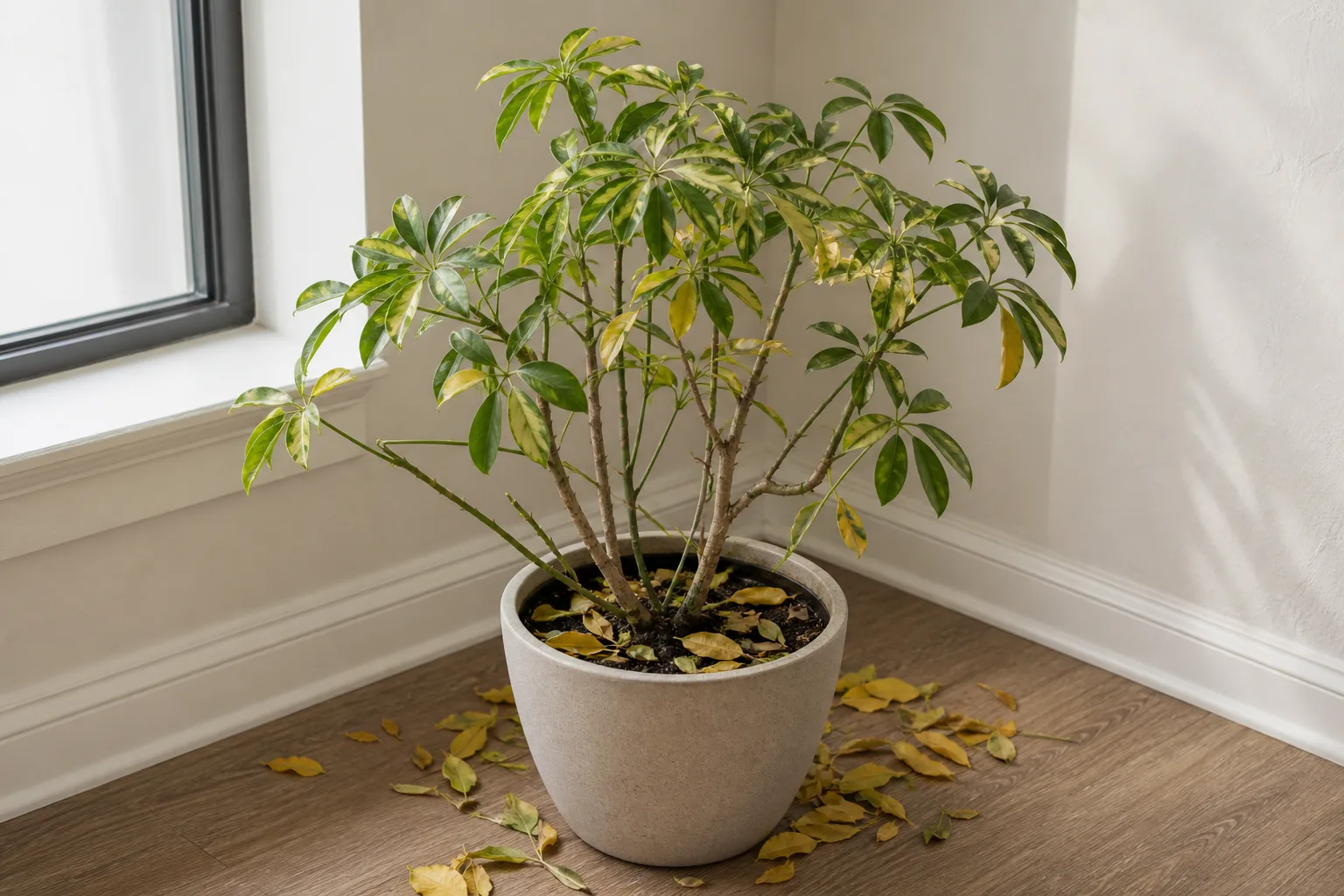
Dwarf umbrella tree often drops entire compound leaf whorls after a move, cold draft, or watering change-not single leaves one at a time. First step: note what changed in the last week, check whether soil is wet or dry, and move the pot to a stable bright spot above about 55°F away from AC vents and winter glass. Do not repot, prune, and fertilize the same week.
Leaf Drop on Dwarf Umbrella Tree: Causes, Checks & Fixes
This guide covers leaf drop on Dwarf Umbrella Tree. See also the general Leaf Drop guide, watering, and light pages for this plant.
Leaf Drop on Dwarf Umbrella Tree: Causes, Checks & Fixes
Quick answer
Dwarf umbrella tree (Schefflera arboricola, also sold as Heptapleurum arboricola) drops entire compound leaf whorls-clusters of seven to nine glossy leaflets on one petiole-when conditions shift faster than this Taiwan-native shrub can adapt. The classic trigger is environmental shock: a recent move, repot, cold draft, dramatic light change, or a sudden watering swing. Less often, overwatering on wet soil, prolonged drought, or low light thinning produce their own shed patterns.
First step: log what changed in the last seven days, then check soil moisture and overnight temperature near the pot. Lift the container to feel wet-heavy versus light-dry. Move the plant to a stable bright spot where nights stay above about 55°F (13°C), away from AC vents and single-pane winter glass. Match water to what you find-do not soak a wet pot or let a dry root ball desiccate during recovery. Do not repot, prune heavily, or fertilize on day one.
Full species context: Dwarf Umbrella Tree overview.
What leaf drop looks like on Dwarf Umbrella Tree
Leaf loss on S. arboricola follows patterns tied to its whorled compound architecture. Read how whorls fall, which whorls go first, and what soil and stems are doing before you treat.
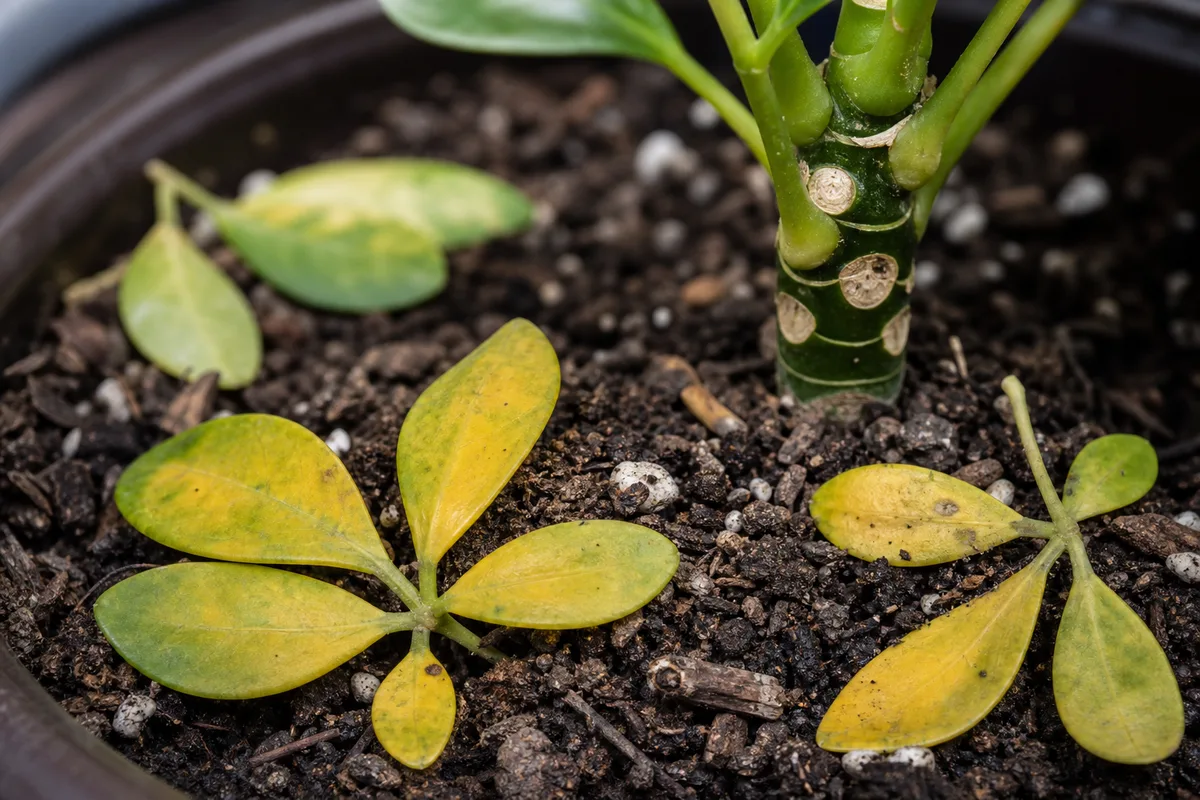
Leaf Drop symptoms on Dwarf Umbrella Tree - compare with healthy tissue on the same plant.
Whole whorls dropping at once after shock (most common)
The signature pattern is multiple complete compound clusters falling within days after moving the pot, opening a winter window, placing the plant under a heat or AC vent, or Dwarf Umbrella Tree repotting guide. Petioles may stay attached briefly, then drop. Soil moisture may look normal-this is temperature or placement shock, not thirst. The newest top whorl often survives if you catch the problem early. Missouri Botanical Garden notes that leaves will drop if soils become too moist or too dry and that cold drafts accelerate defoliation on scheffleras.
Yellow lower whorls on wet soil (overwatering / root stress)
Overwatered plants drop yellow compound clusters from lower stems while upper leaflets look wilted on wet, heavy mix. Pot weight stays high for days; soil may smell sour. Stems soften at the base when root decline advances. This overlaps with yellow leaves on dwarf umbrella tree and overwatering-leaf drop here is the plant reducing water demand because damaged roots cannot supply the canopy.
One or two lower whorls only (normal aging)
On a mature upright stem, one oldest compound cluster at the bottom fades and drops over weeks to months while glossy new whorls open at branch tips. Pot weight is moderate, stems are firm, and no sour smell or fungus gnats appear. This is normal senescence on woody Araliaceae stems-not the mass shock drop that follows a move or cold night.
Pale stretched whorls in dim light (especially variegated cultivars)
In dim offices, upper stems stretch with widely spaced whorls; leaflets look pale before clusters drop. Variegated forms such as Trinette and Gold Capella shed faster in low light because their cream or gold tissue photosynthesizes less efficiently. Soil may stay damp longer than expected-slow metabolism mimics overwatering symptoms. See not enough light on dwarf umbrella tree when leggy internodes precede drop.
Crisp whorls on a light dry pot (underwatering)
Pure drought drop is less common than shock or wet-soil failure but happens when a sunny pot goes dry too long. Expect a very light pot, dusty dry top 2 inches, and crisp leaflets before entire whorls fall. See underwatering on dwarf umbrella tree when drought signs dominate.
Why Dwarf Umbrella Tree gets leaf drop
Schefflera arboricola evolved in warm, humid subtropical Taiwan and Hainan Province where nights stay mild and light stays relatively stable. Indoors, heating cycles, AC blasts, window drafts, and watering schedules that ignore seasonal light trigger defoliation faster than on many foliage plants.
Draft and temperature sensitivity drive most sudden drops. Clemson HGIC advises maintaining temperatures above 50°F for scheffleras; sustained exposure below about 55°F (13°C)-common on winter sills and near frequently opened doors-can strip whorls within days. Missouri Botanical Garden recommends indoor temperatures should not dip below 60 degrees F. for best foliage retention.
Water extremes matter equally. Overwatered roots fail while soil stays wet, and the plant sheds leaves to reduce transpiration demand. Underwatering during active growth causes drop when soils become too dry. Dwarf umbrella tree remembers stress-expect some continued drop for one to two weeks after you fix conditions because leaves formed under the old environment cannot adapt retroactively.
Low light forces rebalancing too. A dim room keeps the plant alive but cannot support the same leaf count as a bright east or filtered south window. Shedding paired with lean toward the glass points to light shock; shedding with wet soil and no stretch points to overwatering in a cooler dim room.
How to confirm the cause
Work through these checks in order. Stop when one pattern clearly dominates.
- Recent change timeline - Repot, move, new window, or watering change in the last two weeks? Mass whorl drop with moderate soil fits environmental shock first.
- Overnight temperature near the pot - Lows below about 55°F with green or dull whorl fall implicate drafts or cold glass. A room thermostat reading warm does not help if cold air pools at the sill.
- Pot weight and top 2 inches of mix - Heavy and wet with yellow lower whorls suggests overwatering or root stress. Light and dry with crisp leaflets suggests drought. Moderate weight after a recent move suggests transitional shock-reduce water because transpiration dropped with light.
- Soil smell and stem firmness - Sour odor with soft tissue at the base suggests advancing root decline-see root rot on dwarf umbrella tree. Firm woody stems support environmental causes.
- New growth and whorl pattern - Newest top whorl still glossy and firm? Shock may be recoverable. Multiple mid-canopy whorls yellowing on wet soil points to roots, not placement alone.
- Light and stretch - Leggy internodes and pale new whorls before drop implicate insufficient light, especially on variegated cultivars.
- Wilting paradox - Wilting on wet soil while whorls drop means roots cannot supply leaflets even though mix is damp-adding water worsens the spiral.
Lookalike quick reference
| Pattern | Soil | Temperature / placement | Whorl appearance | Leading cause |
|---|---|---|---|---|
| Mass drop after move or cold night | Often moderate | Draft, window chill, recent repot | Whole green or dull whorls fall at once | Environmental shock |
| Yellow lower whorls, wet heavy pot | Wet at depth | Cool dim room common | Soft yellow clusters, upper wilt on wet mix | Overwatering / root stress |
| One lower whorl over weeks | Normal | Stable | Single fading cluster, tip growth green | Normal aging |
| Pale stretched whorls, dim room | Damp longer than expected | Low light | Leggy stems, pale leaflets | Insufficient light |
| Crisp whorls, very light pot | Dry top 2 inches | Warm bright spot | Crisp edges before fall | Underwatering |
First fix for Dwarf Umbrella Tree
Stop moving the plant. Place it in a stable bright location, then match water to what the soil actually needs. Make this one correction and wait.
Choose a spot with bright filtered light-east windows or filtered south- and west-facing exposures work well per Missouri Botanical Garden-where nights stay above about 55°F, away from AC vents, heat blasts, and single-pane winter glass. If the plant just moved or soil stays wet and heavy, skip the next scheduled watering until the top 1 to 2 inches of mix dry. A shedding plant in lower light uses less water than it did in a brighter prior location.
If the pot is light and dry, water thoroughly until a little runs from the drainage hole, then empty the saucer. For baseline watering technique, see the dwarf umbrella tree watering guide.
Do not repot, prune heavily, or fertilize on the same day as the placement fix. One environmental correction lets you read the plant’s response over the next fourteen days.
If shock is confirmed (recent move, draft, no wet-soil smell)
Hold location stable for two weeks. Expect some continued drop even when the new site is better-leaves built for the old environment cannot be saved retroactively. New whorls at stem tips within two to four weeks mean stabilization is working.
If overwatering is confirmed (wet heavy pot, sour smell, soft base)
Stop watering immediately. Let the top 2 inches dry completely before the next pour. If stems soften at the base or roots are black and mushy on inspection, follow the overwatering and root rot guides before resuming any schedule.
If underwatering is confirmed (light pot, dry mix, crisp leaflets)
Water thoroughly once, drain completely, then resume checking the top 1 to 2 inches before each pour-see underwatering for dry-down rhythm.
If low light is confirmed (leggy stretch, pale whorls, damp slow-drying mix)
Move to the brightest stable spot you can offer without jumping straight into harsh midday sun. Acclimate over one to two weeks if coming from a dim corner.
Recovery timeline
Shock or placement fix: Expect continued shedding for one to two weeks even when conditions improve. Judge success by stopped acceleration, not zero fallen whorls on day three. New compound clusters at stem tips within two to four weeks in warm bright rooms signal recovery. Winter recovery in cool dim spaces may take six weeks or longer.
Overwatering correction: Yellow whorls already formed will drop rather than re-green. Firm stems and fresh terminal whorls after the mix dries properly are the positive signs. Severe root damage may take six to twelve weeks before consistent new growth.
Normal aging: A single lower whorl dropping over weeks requires no intervention if tip growth stays glossy and firm.
Damaged leaflets do not reattach once fallen. Do not judge recovery by old tissue-watch new whorled growth, stem firmness, and stable watering rhythm.
What not to do
Do not fertilize a shedding plant before correcting the primary stressor-salts add root stress without fixing shock or wet soil. Do not repot, prune heavily, and adjust water on the same day; stacking interventions makes it impossible to read which change helped. Do not soak a wet pot because whorls are falling-overwatering drop worsens when roots already lack oxygen. Do not move the plant repeatedly hunting for a perfect spot; each move resets acclimation. Do not assume thirst when soil is wet and stems wilt-that pattern points to root damage, not drought.
How to prevent leaf drop next time
Match everyday care to how S. arboricola actually grows in your home:
- Water when the top 1 to 2 inches of mix feel dry-not on a fixed calendar. See the watering guide.
- Keep away from doors, single-pane winter windows, and AC vents where nights dip below about 55°F.
- Provide bright filtered light; variegated cultivars need more brightness than solid-green forms.
- Reduce watering somewhat from fall to late winter as growth slows and mix dries slower in cooler rooms.
- Change one variable at a time when adjusting care-water, light, and pot size all at once trigger the shock this species is known for.
- Scout weekly during winter heating season; catch wet topsoil early on the mold-on-soil guide before whorls yellow.
Pet safety during recovery
Dwarf umbrella tree is toxic to cats and dogs according to the ASPCA, with calcium oxalate crystals as the toxic principle. Chewing fallen whorls can cause oral irritation, drooling, and vomiting. Sweep dropped clusters promptly if pets chew foliage, and keep recovering plants out of reach until shedding stops. NC State Extension also lists the species as a problem for cats and dogs.
Related dwarf umbrella tree problems
Leaf drop overlaps with several sibling symptoms on this species:
- Yellow leaves - often precedes drop on wet soil
- Wilting - turgor loss on wet or dry mix
- Overwatering - root-zone saturation driving canopy shed
- Root rot - when soft stems and sour soil confirm decay
- Not enough light - leggy stretch before whorl loss
- Dwarf Umbrella Tree overview - full care baseline
The genus-level guide at leaf drop on Schefflera covers the same species under an alternate slug if you arrived from a different search path.
When to use this page vs other Dwarf Umbrella Tree guides
- Dwarf Umbrella Tree watering guide - Use for routine moisture checks before assuming leaf drop is the main issue.
- Dwarf Umbrella Tree problems hub - Browse all 17 common issues on this species.
- Yellow Leaves on Dwarf Umbrella Tree - Different entry point when symptoms overlap with leaf drop.
- Drooping Leaves on Dwarf Umbrella Tree - Different entry point when symptoms overlap with leaf drop.
- Root Rot on Dwarf Umbrella Tree - Different entry point when symptoms overlap with leaf drop.
Related Dwarf Umbrella Tree guides
- Dwarf Umbrella Tree overview
- Dwarf Umbrella Tree watering
- Dwarf Umbrella Tree light
- Dwarf Umbrella Tree soil
- Yellow Leaves on Dwarf Umbrella Tree
- Drooping Leaves on Dwarf Umbrella Tree
- Root Rot on Dwarf Umbrella Tree
- Not Enough Light on Dwarf Umbrella Tree
- Underwatering on Dwarf Umbrella Tree
- Dwarf Umbrella Tree problems