Low Humidity on Dwarf Umbrella Tree: Causes, Checks & Fixes
Quick answer
Dwarf umbrella tree tolerates average 40–50% indoor humidity better than ferns or calatheas, but forced-air heat below ~30% RH dries leaflet margins and invites spider mites. First step: confirm the top inch of soil is dry before you blame dry air-then move the pot off heating vents and radiators.
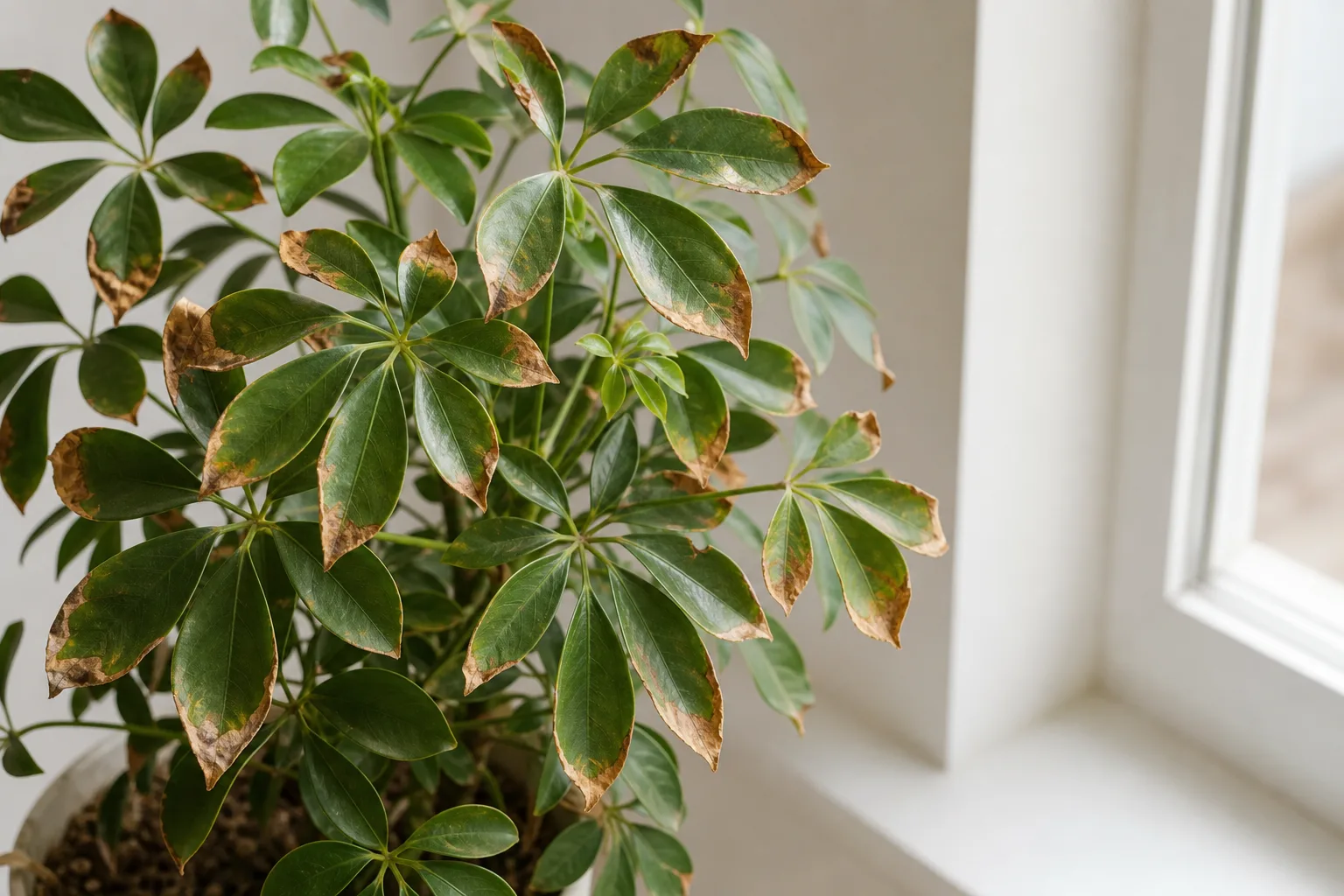
Low Humidity on Dwarf Umbrella Tree: Causes, Checks & Fixes
This guide covers low humidity on Dwarf Umbrella Tree. See also the general Low Humidity guide, watering, and light pages for this plant.
Low Humidity on Dwarf Umbrella Tree: Causes, Checks & Fixes
Quick answer
Low humidity on dwarf umbrella tree (Schefflera arboricola) rarely kills a healthy plant overnight, but very dry indoor air-especially below about 30% relative humidity during forced-air heating-dries outer leaflet margins on compound leaves, can trigger leaf drop when combined with drafts, and encourages spider mites, the most common serious pest on indoor scheffleras according to NC State Extension.
The good news: arboricola is more forgiving than calatheas, ferns, or maidenhair ferns. Most homes at 40–50% RH are adequate; 40–60% is ideal for glossy foliage and mite prevention. You usually do not need greenhouse humidity unless the plant sits in a hot, dry microclimate.
First step: push your finger one inch into the mix near the pot edge. If the soil is genuinely dry and the pot is light, treat underwatering before buying a humidifier. If soil moisture is normal but only leaflet tips and margins on vent-facing leaves look tan and crispy, dry air or draft placement is the more likely culprit-move the pot off the heating register or radiator before stacking other fixes.
Does Schefflera arboricola need high humidity?
Not by rainforest standards. Schefflera arboricola is native to Taiwan and Hainan Province, where warm subtropical conditions include moderate humidity-but the species is drought tolerant once established and adapted to average indoor rooms better than true cloud-forest plants. NC State Extension notes the plant likes high humidity and recommends raising ambient moisture with a pebble tray (pot elevated above the water line), yet the same reference lists drought tolerance among its landscape attributes.
Clemson HGIC lists low humidity among causes of leaf drop on scheffleras, alongside overwatering on Dwarf Umbrella Tree and chilling, and advises keeping plants away from heat vents, radiators, open windows, and air conditioners because hot or cold drafts damage plants. That pairing matters: dry air problems on dwarf umbrella tree are often localized-a pot on a winter window ledge or above a register-not a whole-home humidity failure.
| RH range | What it means for arboricola |
|---|---|
| 40–60% | Ideal band for foliage quality and mite resistance |
| 40–50% | Generally adequate in most heated homes |
| 30–40% | Watch vent-adjacent leaflets; increase scouting for mites |
| Below ~30% | High risk for spider mites and margin crisping on outer leaflets |
Variegated cultivars such as ‘Trinette’ and ‘Gold Capella’ do not need higher humidity than green forms, but their cream or gold leaflet sections show brown edges sooner when air is dry because those tissues transpire differently. They still follow the same RH targets-fix placement and watering before assuming variegation needs special misting.
For baseline care context, see the dwarf umbrella tree overview temperature and humidity section and the watering guide notes on how dry air modifies leaf stress without replacing soil checks.
What low humidity looks like on dwarf umbrella tree
Dry air damage on this species follows the compound-leaf architecture: seven to nine glossy leaflets radiate from each petiole like umbrella spokes. When humidity drops or forced air hits one side of the canopy, outer leaflets and margins desiccate first while the central leaflets and stem stay firm.
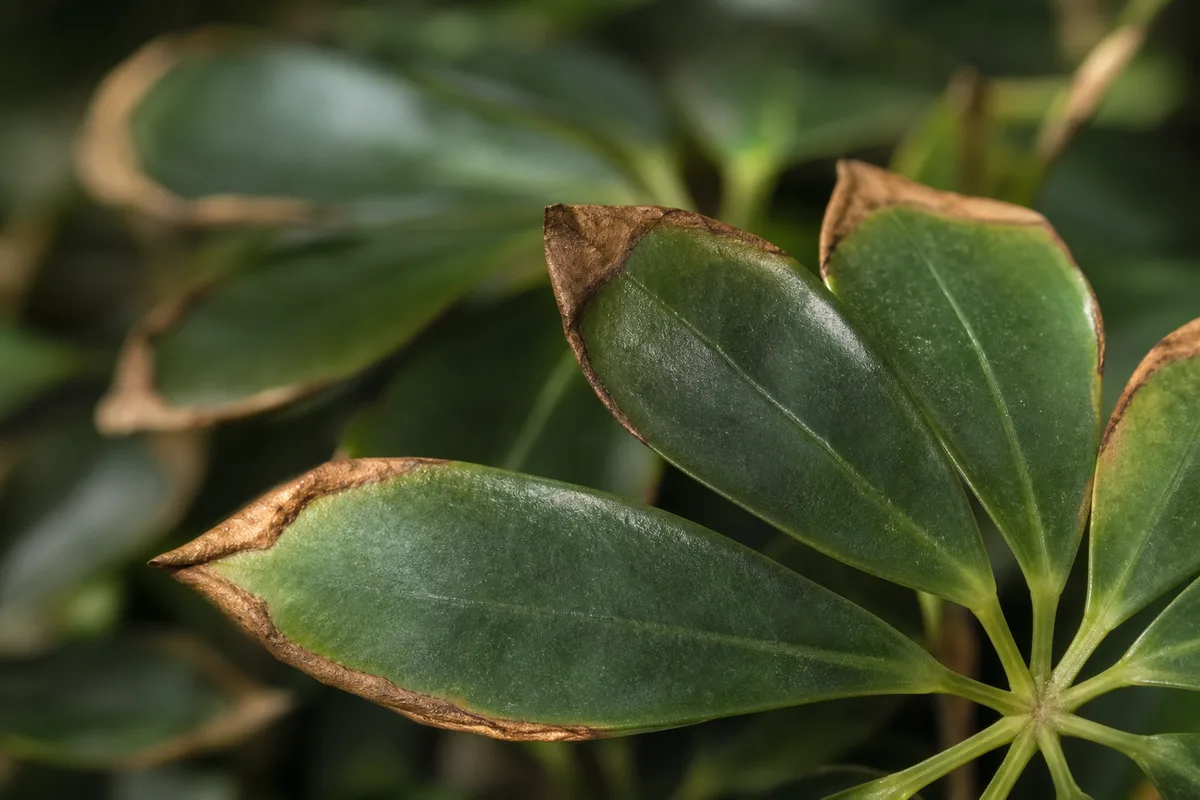
Low Humidity symptoms on Dwarf Umbrella Tree - compare with healthy tissue on the same plant.
Typical dry-air patterns:
- Tan or brown crisp edges on one or two leaflets in a cluster, often the ones closest to a heating vent, sunny glass, or space heater
- Slight upward curl on leaflet tips without the whole petiole drooping
- No crown collapse-stems remain woody and upright unless underwatering or root stress is also present
- Symmetry clues: damage worse on the vent-facing side of the plant; the opposite side looks normal
- Seasonal timing: symptoms appear or worsen within weeks of turning on central heat, often November through February in cold climates
What dry air does not usually do on its own: turn entire compound leaves soft yellow while soil stays wet for days (think overwatering), produce fine stippling and webbing on undersides (think spider mites), or wilt the whole plant with a heavy, damp pot (root failure).
Because each leaflet is small-roughly 1 to 2 inches long on mature dwarf specimens-the brown zone can look like isolated “tips” rather than the long edge burn you see on a peace lily. That scale confuses owners who search for brown tips when the real driver is placement in a dry microclimate.
How to confirm dry air vs. other causes
Work through these checks in order. You are confirming environment, not guessing from one crispy leaflet.
1. Soil moisture and pot weight
Insert a finger one inch into the mix. Dry, light pot with limb droop across multiple whorls points to thirst-see underwatering. Normal moisture with margin-only crisping on vent-side leaflets points to dry air or draft. Clemson HGIC ties schefflera leaf drop to excessive watering, low humidity, or chilling-so eliminate wet-soil problems before raising humidity.
2. Vent, radiator, and AC draft scan
Stand where the pot sits and feel for moving air from registers, portable heaters, or window leaks. Clemson HGIC explicitly warns against placement near heat vents, radiators, open windows, and air conditioners. Schefflera on a winter window ledge touching cold glass can show edge burn from the cold pane even when room RH looks fine on a hygrometer across the room.
Confirmation test: Move the pot at least three feet from the register or off the radiator ledge for ten days without changing watering. If new leaflets on the next whorl open clean while old damage stays put, placement was the fix.
3. Estimate room RH
A simple hygrometer near the plant beats guessing. Winter heating often drops whole-room RH into the 20–30% band. You do not need laboratory precision-if the reading stays below 30% for weeks and outer leaflets crisp, act for mite prevention as well as comfort.
4. Leaflet undersides and tap test
Hold white paper under a suspect leaflet and tap. Moving specks plus stippling mean mites, not humidity alone-switch to the spider mites guide. UC IPM notes that low relative humidity typically found indoors favors mite development, and University of Minnesota Extension states spider mites thrive in dry, warm conditions.
Lookalike symptoms on Dwarf Umbrella Tree
| Symptom pattern | Likely cause | Key differentiator |
|---|---|---|
| Crisp outer leaflet margins, firm stems, normal soil moisture | Dry air / draft | One-sided damage near vent or glass; no stippling |
| Whole whorl droop, light pot, dry soil deep down | Underwatering | Recovers within hours after thorough soak |
| Brown tips on many leaflets, white crust on soil surface | Salt / fertilizer buildup or fluoride in tap water | Even damage on older leaves; flush or repot helps |
| Yellow stippling, fine webbing at petiole bases | Spider mites in dry heat | Tap test shows specks; worsens in warm stagnant air |
| Soft yellow leaves, wet mix, sour smell | Overwatering / root stress | Not a humidity fix-reduce water, check drainage |
Getting the diagnosis right matters because the wrong fix wastes weeks: extra watering does not substitute for humidity, and mist spritzes do not replace moving off a register.
First fix for low humidity on dwarf umbrella tree
Relocate the pot out of forced-air paths before you buy equipment.
Slide the container at least three feet from heating vents, radiators, and blowing space heaters. If it sits on a sunny winter sill, pull it back so no leaflet touches cold glass. This single change often stops new margin burn within one new whorl because you removed the microclimate that was pulling moisture from leaflet edges faster than roots could replace it.
Wait seven to ten days and inspect the newest compound leaf forming at the crown. If margins stay clean, you found the problem. If crisping continues room-wide with RH below 30%, escalate to humidity tools-not heavier watering.
When to raise ambient humidity
Add a cool-mist humidifier, pebble tray, or tight plant grouping when:
- Hygrometer readings stay below ~30% for weeks during heating season
- Margin crisping spreads to multiple whorls despite correct watering and good placement
- You see early mite stippling on leaflet undersides (NC State Extension lists red spider mites as a serious problem on this species)
Humidifier: Run near the plant-not directly on foliage-targeting 40–60% RH in the room or within a few feet of the canopy. NC State Extension recommends a tray of wet pebbles with the water line below the pot bottom; that raises local humidity modestly without waterlogging roots.
Grouping: Clustering several houseplants increases local humidity through transpiration-a useful supplement, not a cure for a pot on a radiator.
Misting: Brief surface moisture does not sustain room RH and can leave wet leaflets in stagnant air, which invites fungal spotting on glossy foliage. Use misting to rinse dust, not as your primary humidity strategy.
Rule out underwatering first
If the top inch of mix is dry and the pot feels light, water thoroughly once and drain the saucer-then reassess in 48 hours. Schefflera is somewhat drought tolerant but repeated dry cycles produce wilt that mimics humidity stress. The watering guide dry-down rhythm is the baseline; humidity fixes sit on top of correct soil moisture, not instead of it.
Recovery timeline
Existing brown leaflet tissue does not turn green again. Damaged margins stay tan until that leaflet is eventually shed or pruned. Judge recovery by new growth:
- 7–14 days after moving off a vent: new leaflets should open without fresh crisping if placement was the main issue
- 2–4 weeks after starting a humidifier in a sub-30% room: outer margins on new whorls stay intact; mite stippling stops spreading if mites were caught early
- One to two new whorls for the canopy to look uniformly glossy again if older damaged leaflets remain on lower stems
If crisping accelerates, soil smells sour, or webbing appears, pause humidity experiments and re-run the lookalike table-root rot on Dwarf Umbrella Tree and mites both worsen when owners keep adding water for “dry leaves.”
What not to do
- Do not overwater because leaflet edges look crispy-confirm soil dryness first. Chronic wet mix kills schefflera roots faster than average winter air.
- Do not rely on daily misting as your only fix; it rarely holds RH above mite-friendly levels in a 20% room.
- Do not leave the pot on a radiator or register while running a humidifier across the room-the local draft wins.
- Do not fertilize stressed foliage to “green it back”-salt buildup can burn leaflet margins and mimic humidity damage (UC IPM lists overfertilization and salt buildup among causes of brown leaf tips).
- Do not ignore stippling-dry air and spider mites often arrive together on this species; treat pests if confirmed.
How to prevent dry-air stress and spider mites next winter
Before heating season:
- Walk the room for vent paths and move scheffleras before leaflets crisp, not after half the whorl is tan
- Place a hygrometer near the plant in November; act if RH trends under 30%
- Scout leaflet undersides monthly when the furnace runs-catch spider mites before webbing spreads across compound leaves
- Keep watering on a check-first rhythm from the watering guide-dry air increases transpiration but does not mean keep soil wet
- Rotate the pot every two weeks so one side does not face a heat source all season
Variegated ‘Trinette’ and ‘Gold Capella’ need the same placement discipline; their pale leaflet sections show edge burn first, which is a visual early warning rather than a need for extra misting.
Return to the dwarf umbrella tree overview for full light, water, and temperature context. If margins stay brown after humidity and placement improve, read brown tips for salt, fluoride, and watering overlap-but only after you rule out dry-air placement and thirst using the checks above.
When to use this page vs other Dwarf Umbrella Tree guides
- Dwarf Umbrella Tree watering guide - Use for routine moisture checks before assuming low humidity is the main issue.
- Dwarf Umbrella Tree problems hub - Browse all 17 common issues on this species.
- Brown Tips on Dwarf Umbrella Tree - Different entry point when symptoms overlap with low humidity.
- Leaf Drop on Dwarf Umbrella Tree - Different entry point when symptoms overlap with low humidity.