Brown Tips on Dwarf Umbrella Tree: Causes, Checks & Fixes
Quick answer
Brown tips on dwarf umbrella tree leaflets are usually environmental-dry indoor air, salt or fluoride from tap water, or inconsistent watering-not fungal disease. First step: move the pot off heating vents and set up a pebble tray before changing watering or reaching for sprays.
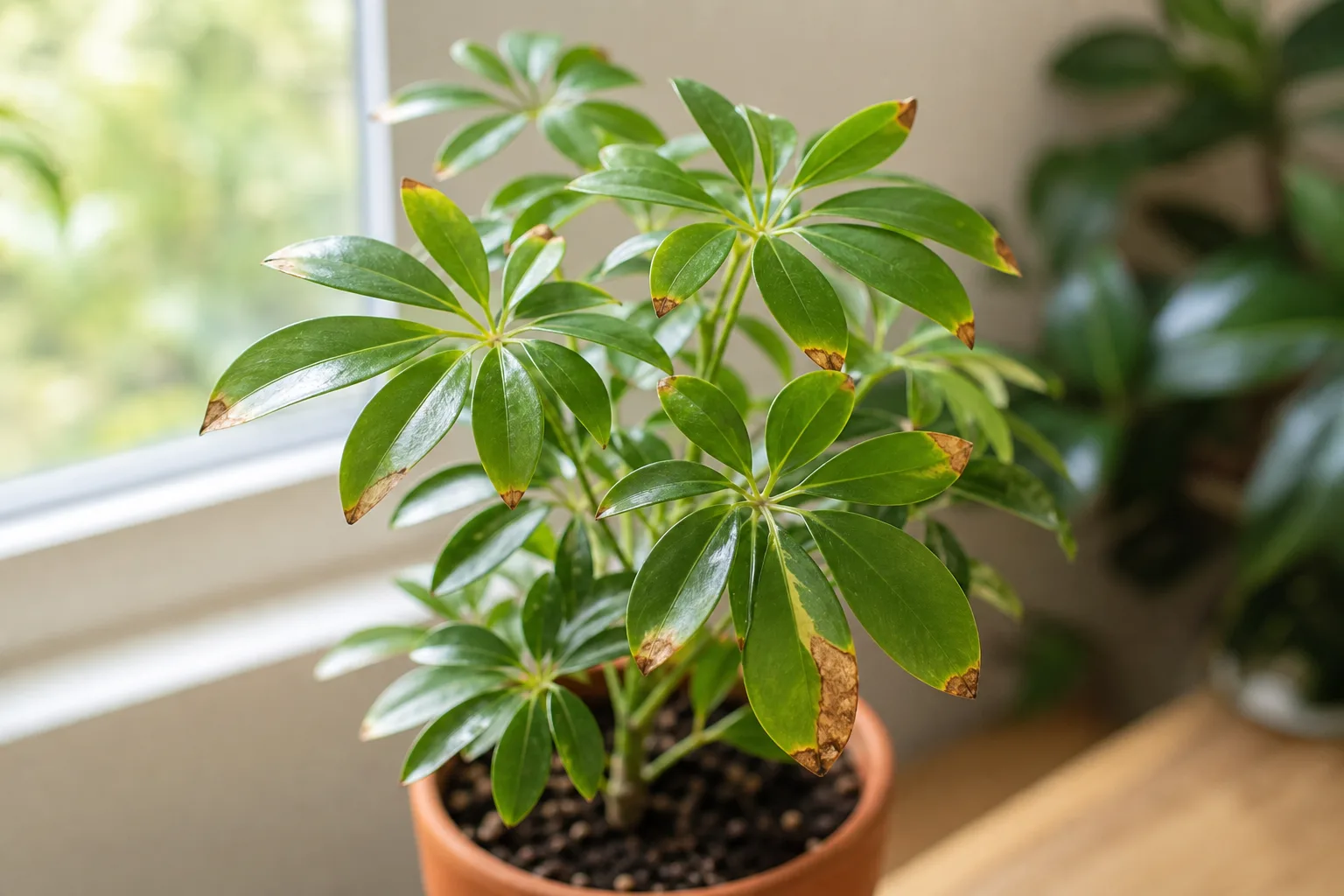
Brown Tips on Dwarf Umbrella Tree: Causes, Checks & Fixes
This guide covers brown tips on Dwarf Umbrella Tree. See also the general Brown Tips guide, watering, and light pages for this plant.
Brown Tips on Dwarf Umbrella Tree: Causes, Checks & Fixes
Quick answer
Brown tips on dwarf umbrella tree (Schefflera arboricola, also sold as parasol plant or dwarf schefflera) are almost always environmental edge burn, not disease. Each compound leaf carries seven to nine glossy leaflets arranged in a whorl; the farthest leaflet margins lose moisture first when humidity drops, tap-water minerals accumulate, or watering swings stress the root zone. NC State Extension notes that if the soil is too wet or too dry the leaves will drop off, and bright, direct light will burn the leaves on houseplants-both patterns overlap with tip browning before whole whorls fail.
First step: move the pot off heating vents or radiators and set up a pebble tray (container elevated above the water line). Dry forced-air microclimates brown outer leaflets within days while the rest of the whorl stays green. Fix placement and local humidity before changing watering rhythm, fertilizing, or treating for disease.
For baseline care, see the dwarf umbrella tree overview and the dedicated low-humidity guide if winter heating is your main suspect.
What brown tips look like on dwarf umbrella tree
Tip burn on this species follows its palmately compound leaf architecture. Damage is usually localized to individual leaflet margins within a whorl, not uniform across every leaf on the plant.
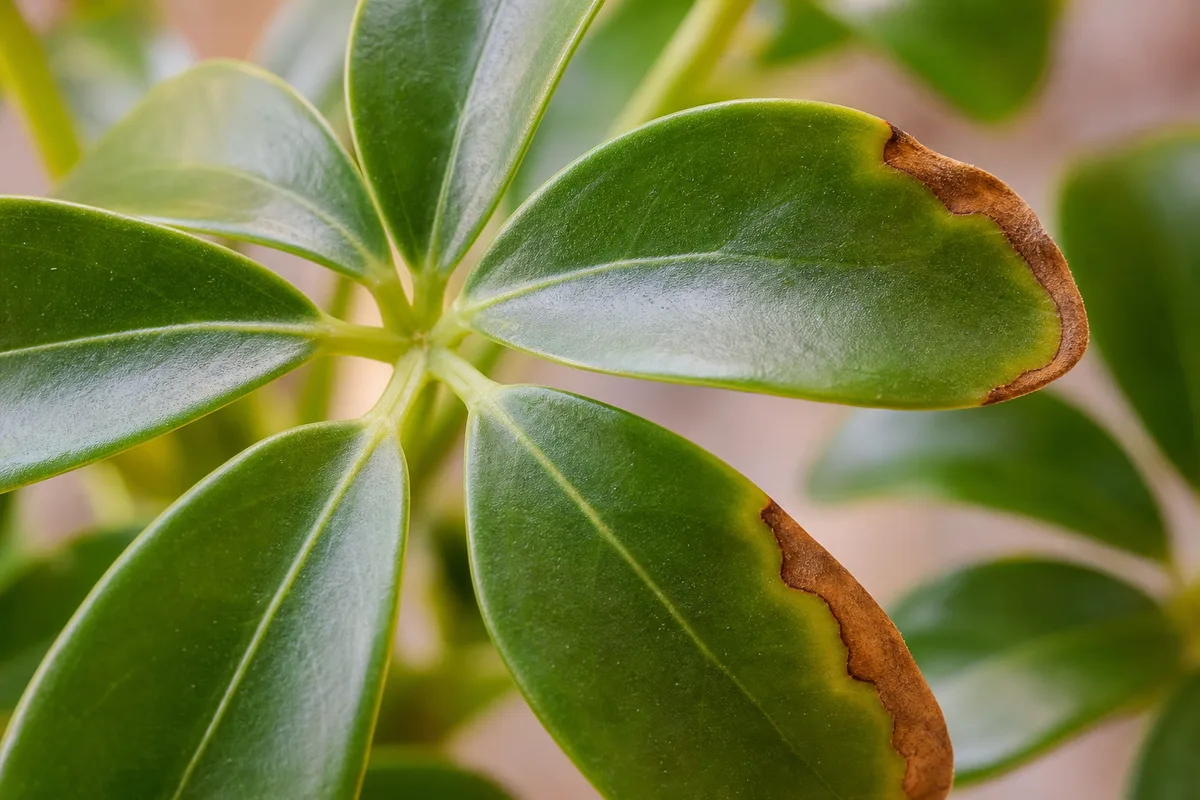
Crisp tan-to-brown leaflet margins on outer edges of a compound whorl while neighboring leaflets stay glossy green - typical environmental tip burn on Schefflera arboricola.
Typical brown-tip patterns:
- Crisp tan-to-dark-brown edges at the very tip or outer margin of one or two leaflets while neighboring leaflets in the same whorl stay glossy green
- Vent-side clustering - leaflets closest to a heating register, radiator, or space heater brown first; interior whorls on the same stem may look fine
- Sun-side scorch - uniform browning or bleaching on leaflets facing an unfiltered south or west window while shaded sides stay green
- Salt-line margins - brown tips appearing gradually across scattered leaflets after heavy feeding or months of hard tap water, sometimes with white crust on the soil surface
Crisp leaflet margins vs. whole-whorl drop: Localized tip necrosis means the vascular supply still reaches most of the leaf-the problem is usually air, water quality, or light at the margin. When entire compound leaves yellow and drop while soil cycles between soggy and bone dry, you are likely in watering-stress territory; see overwatering or underwatering rather than treating tips alone.
Variegated cultivars such as Trinette and Gold Capella show brown edges on cream or gold leaflet sections sooner than solid-green forms because those tissues contain less chlorophyll and transpire differently under stress. The fix is still environmental-brighter filtered light for color maintenance per the light guide, plus stable humidity-not extra fertilizer.
Why dwarf umbrella tree gets brown tips
Schefflera arboricola is a woody evergreen from warm, humid subtropical Taiwan and Hainan Province. Indoors it grows moderately, stores water in its stems and roots, and reacts visibly when care drifts from that baseline. Tip burn usually traces to one of four pathways.
Low winter humidity and draft placement
Heated rooms drop relative humidity just when forced air blasts leaflets nearest vents. NC State Extension states the plant likes high humidity and recommends raising moisture by placing the container on a tray of wet pebbles with the water line below the pot bottom. Clemson HGIC lists low humidity among causes of leaf drop alongside overwatering and chilling, and warns against placement near heat vents, radiators, open windows, and air conditioners because hot or cold drafts will damage plants.
Tap water fluoride and salt buildup
Slow-growing leaflet margins are where minerals from hard tap water and fertilizer concentrate over weeks, especially when you water shallowly and rarely flush the pot. Salt stress pulls moisture away from fine roots and scorches edges furthest from the main vascular supply. This pattern often follows months of the same municipal water rather than a single bad watering.
Watering swings
Arboricola prefers a dry-down cycle: let the upper mix dry, then soak thoroughly. NC State Extension advises to allow the soil to dry out and then thoroughly soak it with water. Chronic overwatering yellows and drops whole whorls; repeated shallow sips keep the center wet while margins on drought-stressed leaflets crisp. Both extremes can precede tip burn on an otherwise stressed plant.
Direct sun scorch
Outdoors, dwarf umbrella tree tolerates some full sun; as a houseplant, bright, direct light will burn the leaves according to NC State Extension. Leaflets moved suddenly from a dim shop shelf to an unfiltered afternoon window often scorch on the sun-facing side within days. Filtered east exposure or sheer-curtained south light matches how extension references describe suitable indoor placement.
How to confirm the cause
Work through these checks in order-one variable at a time-before stacking treatments:
- Placement and season - Did tips appear when heat came on or after the pot moved above a register? Dry air and drafts fit winter vent-side crisping. See the low-humidity guide for RH targets and mite scouting.
- Soil moisture - Insert a finger two inches into the mix. Heavy wet pot with yellowing whorls suggests overwatering; light dry pot with limp compound leaves suggests drought. Normal moisture with margin-only crisping points to air, water quality, or light.
- Light side - Are damaged leaflets on the window-facing side only? Midday sun beams on glossy foliage confirm scorch; adjust per the light guide.
- Feeding and water history - Tips within two weeks of fertilizing, or white crust on soil, implicate salt buildup. Switch to filtered or rainwater before Dwarf Umbrella Tree repotting guide.
- Whole-plant pattern - Scattered crisp tips on firm stems with normal soil usually means environmental burn. Mass drop, soft base, or stippled undersides mean escalate to root, cold, or pest guides.
| Pattern | Likely cause | Next step |
|---|---|---|
| Crisp tips on vent-side leaflets only | Dry air / draft | Move pot; pebble tray or humidifier |
| Brown tips after heavy feeding or white soil crust | Salt buildup | Flush with filtered water; pause fertilizer |
| Sun-facing leaflet scorch; shaded side green | Direct sun | Filter light or move back from glass |
| Yellow whorls + wet heavy soil | Overwatering | Dry-down; inspect roots if spread continues |
| Wrinkled leaflets + dry soil deep down | Underwatering | Deep soak; fix rhythm from watering guide |
First fix for dwarf umbrella tree
Move the pot at least three feet from heating vents or radiators and set up a pebble tray with the container elevated above the water line so roots never sit in standing water.
This single change addresses the most common indoor pattern-dry forced air browning outer leaflet margins while the rest of the whorl stays green-and matches NC State Extension guidance for raising humidity around the plant. Do not mist heavily on stagnant foliage; pebble trays and grouping plants raise local moisture more safely than daily spritzing in poorly ventilated corners.
After 7–10 days, if tips persist on leaflets away from vents:
- Water deeply when the top two inches of mix are dry, then empty the saucer-follow the watering guide dry-down rhythm rather than a calendar schedule
- Switch to filtered, reverse-osmosis, or rainwater for the next four to six waterings if hard tap water is your supply
- Shift back from direct sun if scorch pattern is confirmed
Hold fertilizer, repotting, and pesticide until new growth shows clean margins.
Recovery timeline
Brown or tan necrotic tissue on existing leaflets does not re-green. Recovery is measured by new compound leaves opening with intact margins and no fresh crisping on outer leaflets.
| Severity | What to expect |
|---|---|
| Mild vent-side crisping after placement fix | Stabilization within 1–2 weeks; new whorls clean in 3–6 weeks on average indoor growth |
| Salt or fluoride burn after water-quality switch | Existing tips stay brown; judge by next one to two whorls over 4–8 weeks |
| Sun scorch after light correction | Scorched leaflets remain marked; new growth should emerge without bleaching within 2–4 weeks |
| Combined stress (draft + overwatering) | Whole whorls may drop first; allow 6–10 weeks after soil rhythm stabilizes before expecting full canopy recovery |
If mass whorl drop continues after placement and watering corrections, or stems soften at the base, stop cosmetic trimming and inspect roots-tip burn alone rarely causes that escalation.
What not to do
- Do not increase watering to fix brown tips when soil is already moist-Schefflera is somewhat drought tolerant and overwatering causes leaf drop faster than margin burn heals
- Do not fertilize stressed foliage; salt buildup burns leaflet margins and mimics humidity damage
- Do not stack repotting, heavy pruning, and pesticide on the same day-make one care change, wait a week, read the plant’s response
- Do not assume disease when damage is dry, crisp, and margin-localized without spots, ooze, or spreading lesions
- Do not place the plant in dim corners to “protect” scorched leaves unless direct sun was the confirmed cause-low light produces leggy weak growth with its own leaf problems
How to prevent brown tips next time
- Scan placement before heating season - keep pots off radiator ledges and away from forced-air outlets; target 40–60% RH in the room or within a few feet of the canopy when possible
- Water on a dry-down rhythm - top 1–2 inches dry in small pots, then soak until a little runs from the drainage hole; empty the saucer every time
- Use filtered water in high-fluoride or very hard municipal areas, and flush accumulated salts occasionally if you feed regularly
- Keep bright filtered light - east windows or sheer-filtered south/west exposure; acclimate gradually when moving from low to high light
- Maintain stable temperatures - Clemson HGIC advises nighttime temperatures above 60°F and warns that dead areas form on leaves several days after exposure to excessive cold
- Scout weekly in winter - dry air invites red spider mites, a serious pest on indoor scheffleras per NC State Extension
The same species is covered under the Schefflera brown tips guide if you arrived via the older schefflera slug; care advice is identical for S. arboricola.
Pet safety when trimming damaged foliage
All parts of dwarf umbrella tree are seriously toxic to dogs and cats according to NC State Extension, with calcium oxalate crystals causing intense mouth and throat irritation if chewed. The ASPCA lists Schefflera as toxic to cats and dogs.
When you trim brown leaflet tips, collect debris promptly and keep cuttings out of reach of pets that chew plants. Wear gloves if you have sensitive skin-sap can irritate contact dermatitis-prone hands. If ingestion is suspected, contact your veterinarian or the ASPCA Animal Poison Control Center; this page is not veterinary advice.
When to use this page vs other Dwarf Umbrella Tree guides
- Dwarf Umbrella Tree watering guide - Use for routine moisture checks before assuming brown tips is the main issue.
- Dwarf Umbrella Tree problems hub - Browse all 17 common issues on this species.
- Low Humidity on Dwarf Umbrella Tree - Different entry point when symptoms overlap with brown tips.
- Underwatering on Dwarf Umbrella Tree - Different entry point when symptoms overlap with brown tips.
- Overwatering on Dwarf Umbrella Tree - Different entry point when symptoms overlap with brown tips.