Leggy Growth on Dwarf Umbrella Tree: Causes, Checks & Fixes
Quick answer
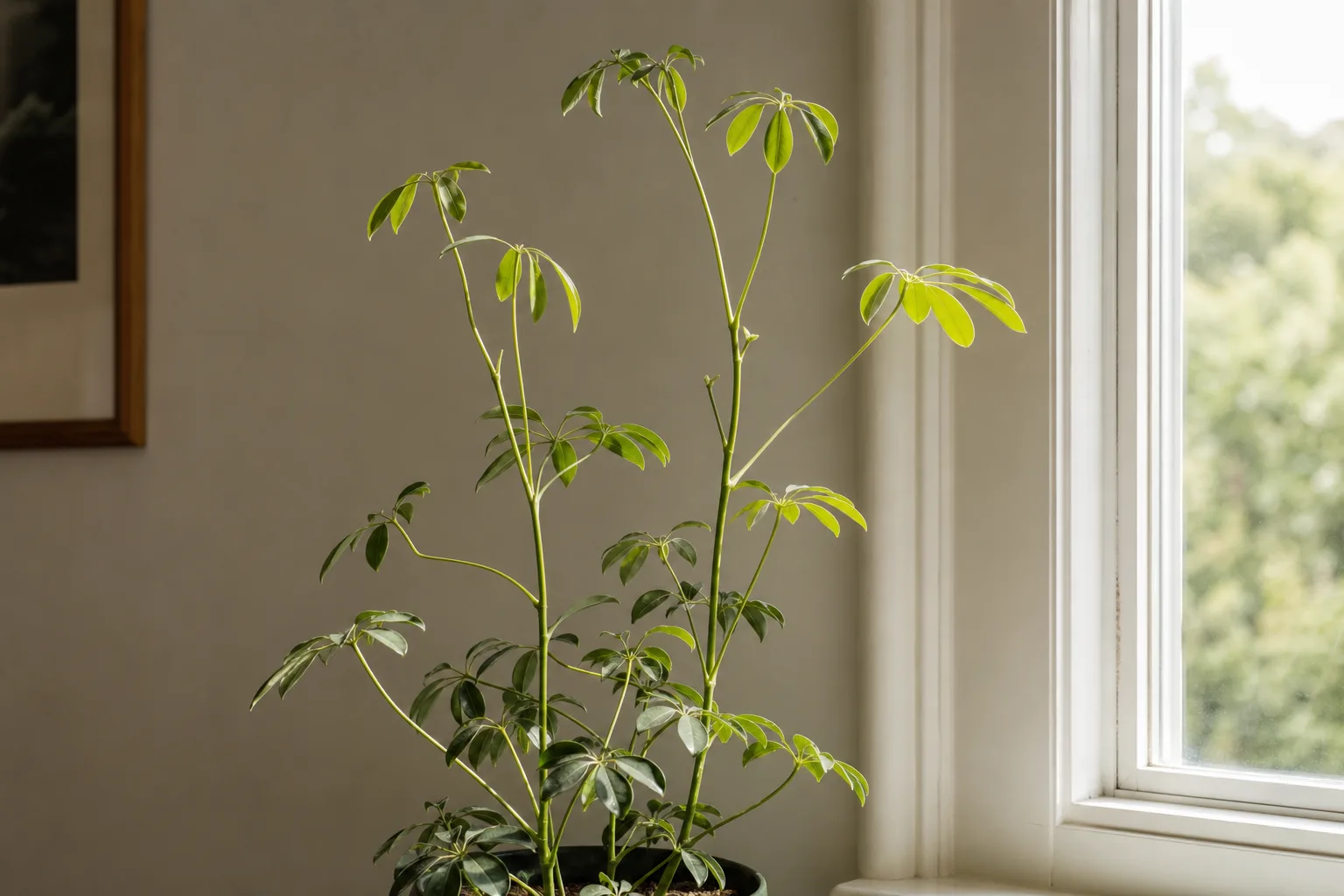
Leggy dwarf umbrella tree growth shows as long naked stem sections between umbrella-shaped leaf whorls, with smaller new leaflets and a crown lean toward the window. First step: move the canopy into bright indirect light within one to three feet of an east window-or see our not-enough-light guide for full placement-then read the next whorl before pruning bare tops.
Leggy Growth on Dwarf Umbrella Tree: Causes, Checks & Fixes
This guide covers leggy growth on Dwarf Umbrella Tree. See also the general Leggy Growth guide, watering, and light pages for this plant.
Leggy Growth on Dwarf Umbrella Tree: Causes, Checks & Fixes
Quick answer
A leggy dwarf umbrella tree (Schefflera arboricola) looks like a small palm on a stick: long bare stem sections between clusters of glossy leaflets, a tiny tuft of leaves at the crown, and often a hard lean toward the brightest window. Each whorl should sit close together like stacked umbrellas. When internodes stretch, the plant is etiolating-growing weak tissue toward insufficient light rather than building a dense shrub.
First step: move the leaf canopy into bright indirect light-typically within one to three feet of an east-facing window, or filtered south or west glass. If placement details, grow lights, or variegated cultivar needs are your main question, use the not enough light guide for the full light-first workflow. On this page the focus is recognizing leggy whorl architecture, confirming stretch versus lookalikes, and managing bare stems after light improves.
Do not repot, fertilize, or chop the entire top on day one. Fix brightness first and read the next whorl of leaves before stacking other changes.
What leggy growth looks like on Dwarf Umbrella Tree
S. arboricola carries compound leaves in whorls-several leaflets radiating from one point like a miniature umbrella at each node. In good light those whorls stack tightly on woody stems. Leggy growth disrupts that pattern in predictable ways:
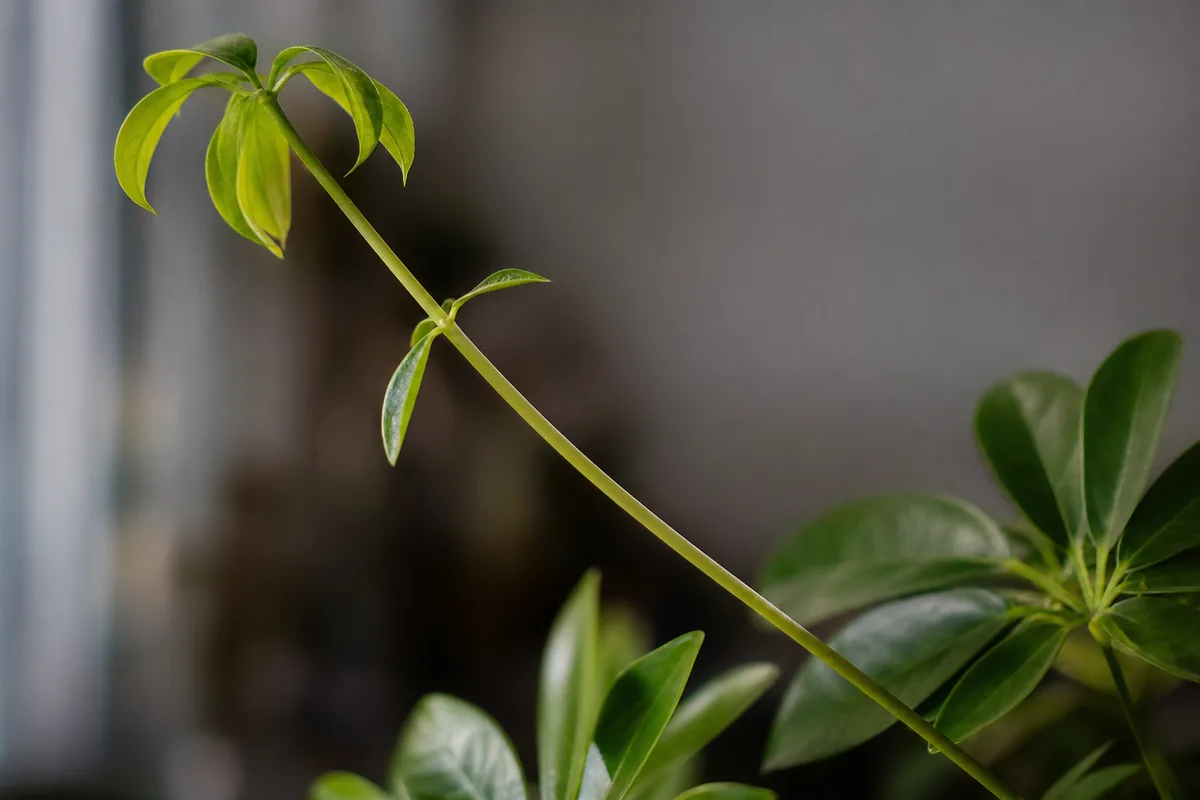
Leggy Growth symptoms on Dwarf Umbrella Tree - compare with healthy tissue on the same plant.
- Wide gaps between whorls on the newest growth-the classic leggy silhouette
- Smaller, thinner new leaflets compared with older whorls lower on the stem
- Long naked stem with foliage concentrated in a small crown tuft
- Persistent lean toward one window or light source
- Gradual loss of lower whorls as the plant sheds leaves it cannot support in dim conditions
- Variegation fade or reversion on Gold Capella, Trinette, and other cream- or gold-splashed cultivars on fresh growth first
- Soft, floppy new stems that struggle to hold the canopy upright
These signs develop over weeks. One slightly pale leaflet after Dwarf Umbrella Tree repotting guide is different from a plant whose last three whorls are all spaced farther apart than the ones below them.
Office fluorescents across a room rarely deliver enough photons at the canopy. The plant may survive, but low light causes leaf yellowing with spindly, weak stems on scheffleras-a pattern Clemson Extension links directly to insufficient brightness, not mystery disease.
Why Dwarf Umbrella Tree gets leggy
Leggy growth on arboricola is almost always etiolation from insufficient light at the canopy. The species is marketed as low-light tolerant, which many owners read as permission for a permanent dim hallway. In reality, dwarf umbrella tree persists in soft light longer than high-light tropicals, but it still stretches when photons at the leaf whorls fall below what compact growth requires.
The whorled architecture makes stretch visually dramatic. Each internode elongates between umbrella clusters, so a few months in a dark corner can leave two or three feet of bare wood with a handful of leaflets at the tip. NC State Extension lists partial shade and dappled sunlight among suitable outdoor exposures; indoors, that translates to bright indirect light at the canopy, not a shelf six feet from glass.
Low light also slows metabolism. Soil stays wet longer because the plant uses less water. Yellow leaves and drop in a dim room are often misread as root rot on Dwarf Umbrella Tree when photons were the primary limiter-a compounding effect this species shows clearly because stretch and wet-soil stress arrive together in the same corners.
Variegated cultivars stretch sooner. Cream and gold sectors lack chlorophyll, so green tissue must photosynthesize harder. Variegated schefflera cultivars need brighter exposure near windows than solid-green plants in the same spot-a detail that explains why a green neighbor looks merely slow while your Gold Capella becomes a bare pole.
Apical dominance adds to the silhouette. Terminal buds on each stem suppress lateral branching, directing energy upward. Without enough light or corrective pruning, you get single long stems with leaves mostly at the top rather than a bushy shrub. That growth habit is normal biology amplified by dim rooms, not a random defect.
Lookalike symptoms to rule out
Before you treat every tall stem as legginess, rule out patterns that need different fixes:
Normal lower-leaf drop - Older whorls near the base naturally shed as the plant ages, but upper internode spacing stays tight and new growth looks firm. No crown lean, no progressive widening of gaps on fresh flushes.
Overwatering in dim light - Multiple mid-canopy leaves yellow at once while soil smells sour or stays wet for weeks. Stretch may be present, but mushy roots or persistent wet mix after you cut back water point to saturation stress layered on low light. See overwatering if wet soil dominates.
underwatering on Dwarf Umbrella Tree - Crisp brown leaflet edges and a lightweight pot with bone-dry mix. Wilting dominates; stretch alone is uncommon without concurrent light deficit.
Spider mites - Fine stippling and webbing on undersides in hot, dry, stagnant corners. Spider mites colonize stressed schefflera foliage; brighter light helps recovery but active colonies need rinsing and humidity adjustment, not light alone.
Cold draft or sudden relocation - Leaf drop after chilling or relocation can follow HVAC vents or a dark new room after shipping. Drop from draft often clears within two weeks if roots are sound; etiolation shows progressive whorl spacing instead.
Nutrient deficiency - Uniform whole-leaf yellowing on old and new foliage with compact internodes and good window placement points elsewhere. Light-starved arboricola almost always shows spacing and size change on new whorls first.
| Pattern | Likely cause | First check |
|---|---|---|
| Wide new whorl gaps + window lean | Leggy stretch / low light | Canopy distance from glass |
| Lower whorls drop; upper spacing normal | Normal aging | Compare only newest flushes |
| Yellow + wet soil + stretch | Low light + overwatering | Soil moisture before light move |
| Stippling + webbing on undersides | Spider mites | Leaf undersides in stagnant corner |
| Compact nodes but pale all over | Nutrient or other stress | Window placement already adequate |
How to confirm the cause
Work through this checklist before repotting or feeding:
- Whorl spacing test - Measure the gap between the last two whorls. If each new flush sits farther from the last than whorls from six months ago, light is likely low regardless of how bright the room feels.
- Canopy-height window distance - Light is read at the top whorls, not the pot rim. Stand where the canopy sits and note compass direction and feet from glass. Indoor light intensity drops sharply with distance from windows.
- Lean direction - Strong tilt toward one window confirms active phototropism-the plant seeking photons.
- Variegation on newest whorls only - Fade starting on fresh leaves while older variegated whorls still look fine points to recent insufficient brightness.
- Soil moisture pattern - Chronic wetness with yellowing in a dim spot suggests slow uptake from low light plus too-frequent watering. Escalate to root inspection only if smell, mush, or wet soil persists after you cut back water.
- Pest check - Clean leaf undersides with no mites support a light diagnosis; stippling means layered pest stress.
Confirmation test: Move to the brightest safe indirect spot you can offer (or switch on a grow light-details in not enough light and the light guide) and wait 10 to 14 days without other major care changes. If the next whorl shows shorter internodes and fuller leaflets, leggy stretch from low light was the limiter.
First fix for Dwarf Umbrella Tree
Move the pot so the leaf canopy sits in bright indirect light-within one to three feet of an east window, or filtered south or west glass-and rotate it a quarter turn so all sides receive similar brightness.
That single placement change addresses the root cause of leggy growth. East exposure is often the safest default: morning sun is bright but cooler than afternoon rays. If east is unavailable, use south or west with sheer curtain or several feet of setback to avoid scorch on variegated tissue.
If your brightest window still produces stretching after two weeks, add a full-spectrum LED grow light six to twelve inches above the upper whorls on a timer for 10 to 12 hours daily. Ceiling room lights illuminate your eyes more than the canopy; the fixture must target the whorls directly. Full specs live on the light guide.
Do not jump from a dark corner to harsh unfiltered west-afternoon sun in one move-bleached patches and crisp brown leaflet tips mean pull back and acclimate over 7 to 14 days.
Step-by-step recovery after light improves
Once placement or supplemental light is corrected:
- Hold watering steady for one week - Brighter light increases dry-down speed; dim light kept soil wet. Check the top half of the mix before each drink rather than keeping an old calendar schedule. Adjust rhythm using the watering guide.
- Rotate the pot weekly - Even indirect rooms deliver uneven brightness. Regular rotation prevents one-sided lean and lopsided variegation fade on schefflera.
- Skip fertilizer until new growth looks firm - Plants in reduced light need less frequent fertilization than those in bright exposure. Feeding a stressed, etiolated plant pushes soft tissue without fixing the energy deficit.
- Prune leggy tops only after compact new whorls form - Cut elongated stems just above a node once the next whorl arrives tight. Arboricola tolerates pruning and branches from nodes below the cut; pruning before light is adequate produces more weak stretch. Technique and safe removal limits are on the pruning guide.
- Acclimate if you increase intensity sharply - Move six inches closer every three to four days, watching for new bleaching-not old blemishes-as the stop sign.
- Adjust winter expectations - The same window delivers fewer photons December through February. If stretch resumes seasonally, add LED hours rather than assuming the plant has failed.
Recovery timeline
Expect to read the next one or two whorls, not overnight change. Within 10 to 14 days of correct placement, new internodes should stay shorter than the leggy section above them. Variegation on fresh leaves may take three to six weeks to sharpen if the cultivar was reverting.
Old elongated stem sections do not shorten-they remain as historical record of dim months. Stretched growth does not revert once formed; success means compact new umbrellas of leaflets and slowed leaf drop.
Lower leaves that yellowed from energy rationing will not green up again. Remove them once the plant holds stable new growth. Full canopy density after severe legginess may take two to three months of adequate light plus optional pinching-not one weekend fix.
Mistakes to avoid
Do not treat “low-light tolerant” as permission for a permanent dim hallway display-that label describes survival, not compact form.
Do not compensate with extra fertilizer in a dark spot. Soft, pest-friendly shoots without fixing etiolation make legginess worse.
Do not overwater because leaves look tired. Low light slows water use; soggy soil compounds stress and mimics other problems.
Do not blast a shade-grown plant onto a west sill in midsummer without acclimation-sun scorch shows bleach and crisp necrotic patches, not long internodes.
Do not prune the entire leggy top before light improves-you may remove the only tissue still photosynthesizing while waiting for the placement change to register.
Do not assume a variegated plant needs the same spot as a solid-green neighbor. Give variegated types one step brighter.
Do not expect bare stem length to shrink after brighter light-only new whorl spacing tells you the fix worked.
How to prevent leggy growth next time
Place green S. arboricola where the canopy receives roughly four to six hours of strong indirect brightness daily, or the equivalent from supplemental LED. Variegated cultivars need a step closer to glass or longer LED run time.
Rotate the pot weekly. Clean windows seasonally. Reassess placement when furniture moves or when outdoor trees leaf out and shade a formerly bright sill.
When buying, choose plants with tight whorl spacing and firm leaflets-not already stretched from shop shade unless you have a bright recovery spot ready.
Use grow lights proactively in north rooms, windowless offices, and from late autumn through early spring if new whorls begin spacing out again.
When to worry
Leggy growth alone is rarely an emergency, but combined stress is. Treat as urgent when:
- Leaves drop weekly while soil stays wet in a dark room-reduce water immediately and improve light within days
- Leggy stems flop and snap because tissue is too weak to support the canopy-stake temporarily while light and optional pruning rebuild structure
- Variegated cultivars revert completely on successive whorls despite your best window-LED supplementation is required, not optional
- Soft, squishy stem base appears-escalate beyond a simple light move toward root assessment
A plant with only a few leaves atop three feet of bare stem can recover with light and pinching, but recovery takes months. Replacement is reasonable if roots are also failing or pests have colonized weak growth.
Conclusion
Leggy growth on a dwarf umbrella tree is visible in the spacing between whorls, not in mystery wilt. Long naked stems with a small crown tuft mean the canopy has been reaching for photons. The first fix is always brighter indirect light at leaf height-then read the next whorl before you prune bare tops or change watering.
Existing stretch does not undo itself; compact new leaflets with normal spacing mean you solved the problem. For window placement, grow-light setup, and variegated cultivar light budgets, pair this page with the not enough light guide. For stem cuts after light stabilizes, use the pruning guide. Return to the dwarf umbrella tree overview for full care context.
When to use this page vs other Dwarf Umbrella Tree guides
- Dwarf Umbrella Tree watering guide - Use for routine moisture checks before assuming leggy growth is the main issue.
- Dwarf Umbrella Tree problems hub - Browse all 17 common issues on this species.
- Not Enough Light on Dwarf Umbrella Tree - Different entry point when symptoms overlap with leggy growth.
- Slow Growth on Dwarf Umbrella Tree - Different entry point when symptoms overlap with leggy growth.
- Leaf Drop on Dwarf Umbrella Tree - Different entry point when symptoms overlap with leggy growth.