How to Prune Schefflera Indoors: Nodes, Timing, and Safe
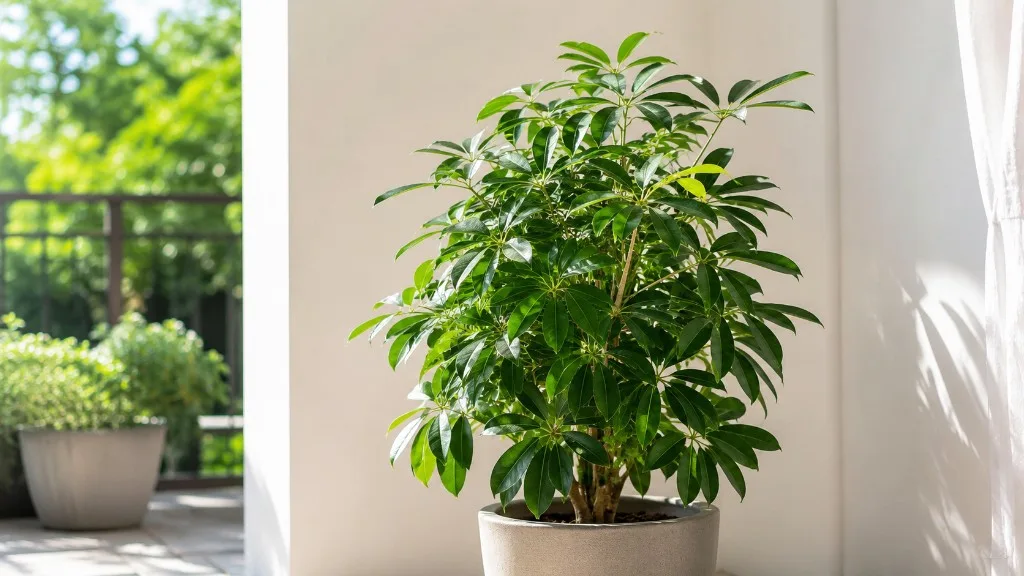
How to Prune Schefflera Indoors: Nodes, Timing, and Safe Cuts
How to Prune Schefflera Indoors: Nodes, Timing, and Safe Cuts
Your Schefflera probably arrived as a compact bush and is now a multi-trunk specimen with bare woody stems climbing toward one window - leaf whorls clustered at the tips while the middle of each trunk looks permanently empty. Start by removing only dead, yellow, or clearly damaged leaflets and stems with clean bypass pruners. That sanitation pass costs the plant almost nothing and shows you which bare sections still carry dormant buds worth waking up.
Reviewed by LeafyPixels Review Board · Author: sai-ananth
This guide targets indoor Schefflera arboricola (dwarf umbrella tree). For full care context - light, watering, and common problems - see the Schefflera overview.
Quick Answer
Prune Schefflera (Schefflera arboricola) for shape and density in late spring through early summer, when the plant is actively growing. Make each shaping cut 6–10 mm (about ¼ inch) above a visible node - the slight swelling where a whorl of compound leaves attaches to the stem. Limit routine shaping to no more than one-third of total foliage per session. Emergency removal of dead, diseased, or pest-damaged material can happen any time. Shortening the terminal tip breaks apical dominance and encourages lateral shoots from nodes below, but pruning alone cannot fix chronic low light - new growth will stretch again in a dim corner.
Which Schefflera Is This Guide For?
Most houseplant Scheffleras sold today are Schefflera arboricola - the dwarf umbrella tree with smaller leaflets and a shrubby indoor habit, often trained on one or two trunks. NC State Extension describes it as a woody evergreen shrub with compound leaves in whorls, typically staying manageable indoors.
Schefflera actinophylla (full-size umbrella tree) grows much larger with broader leaflets and responds to hard cutback on mature outdoor specimens, but indoor pruning follows the same node-above-cut rule at a larger scale. If your plant already touches the ceiling and leaflets are hand-sized, confirm you have S. actinophylla before aggressive reduction - staged cuts matter more on a tall tree.
What Pruning Does for Schefflera
Each stem tip produces auxin that suppresses lateral buds at nodes below. Shorten or remove the tip and side buds often activate, sending out new stems with fresh leaf whorls. That is why tip pinching and stem reduction above nodes produce a denser canopy - unlike plants that only sprout from the base, S. arboricola reliably breaks new shoots along woody stems when cut correctly.
Clemson HGIC notes scheffleras can be pruned just above a leaf to maintain lower height and propagate by cuttings and air layering.
Pruning cannot fix stretch caused by deep shade on its own. If internodes are long and lower leaflets have already dropped, improve light gradually first, then cut remaining stems back toward nodes closer to the pot. Without brighter exposure, new growth will simply stretch again - extension guidance often assumes greenhouse brightness; at 2 m from a north window, expect slower breaks and thinner new whorls even when cuts are placed correctly.
When to Prune Schefflera
Cleanup cuts - dead, fully yellow, or damaged leaflets and stems - can happen any time of year. Shaping cuts - shortening leggy stems, pinching tips, reducing overall height - fit best in late spring through early summer when the plant is actively growing and light levels are rising.
Avoid heavy pruning in late fall and winter when recovery slows indoors. Wait one to two weeks after purchase or repotting before structural work when possible, letting the plant stabilize in its current spot first.
When to delay pruning
Hold structural cuts if the plant was recently moved, repotted, or is actively dropping leaves from cold drafts or a light change. Schefflera is notorious for sudden leaf drop after environmental upheaval, and adding heavy pruning on top of that shock makes recovery slower. Also pause if many leaflets are yellowing at once - that pattern usually points to overwatering or root stress, not a need for scissors. Confirm the top half of soil is drying between waterings and roots are healthy before reshaping a wilted specimen.
Inspect Before You Cut
Walk around the plant and note which stems are purely cosmetic problems versus signs of deeper stress.
Leggy stems and pest signs
Prune for shape when stems extend beyond the desired footprint, new growth shows visibly long internodes, lower sections of stems have lost leaflets leaving bare wood, or individual leaflets are yellow from age rather than widespread decline. Check leaf undersides for fine webbing - red spider mites are a serious problem on schefflera indoors and should be treated before you spread infested trimmings through the canopy. See our spider mites on Schefflera guide for rinse and treatment steps.
The First Cut to Make
Before shortening anything for shape, remove only material that is clearly dead, fully yellow, or damaged. Snip individual damaged leaflets at their base rather than stripping an entire compound leaf when only one leaflet is affected. Cut diseased or pest-infested stems back into firm green tissue, or remove them entirely if the stem is hollow or soft. This sanitation pass reveals which stems are actually worth keeping and prevents you from shaping around tissue that should leave the plant anyway.
Tools, Sanitation, and Pet Safety
Use sharp bypass pruners for woody stems up to finger thickness; floral snips handle soft new tips and individual leaflets. Dull blades crush stems and leave ragged wounds that dry slowly.
Sterilize blades with 70% isopropyl alcohol between plants and after removing any material that looks diseased. Iowa State Extension recommends alcohol or a diluted bleach solution for sanitizing pruning tools between cuts on symptomatic tissue.
Wear gloves when cutting. Schefflera sap may irritate skin, and the plant is toxic to cats and dogs - causing vomiting and oral irritation if chewed - per the ASPCA. Bag trimmings and keep them away from pets and children. If a pet chews leaves or trimmings, contact your veterinarian or the ASPCA Animal Poison Control Center (888-426-4435 in the U.S.) immediately - do not wait for symptoms to worsen.
Where to Cut - Nodes, Whorls, and Leggy Stems
Cut placement determines whether schefflera branches or sits as a bare stub.
Identifying nodes on compound-leaf whorls
On Schefflera arboricola, a node is the slight swelling on the stem where a whorl of compound leaves attaches. Each whorl may carry seven or more leaflets, but the node itself is one point on the stem. Make shaping cuts 6–10 mm above a node at a slight angle, sloping away from the bud side when you can see one. Do not cut mid-internode - the bare stub above the nearest node often dies back without sprouting.
For individual damaged leaflets, snip at the base of the affected leaflet rather than stripping an entire compound leaf when only one leaflet is affected.
Bare woody sections between old whorls still carry dormant buds at each node scar - a common indoor Schefflera pattern after leggy growth. A hard cut back to a lower node on bare wood can still break new shoots during active growth if light and watering are stable afterward.
Tip pinch vs stem reduction vs topping
| Technique | Best for | Cut placement | Recovery speed | Leaf-drop risk |
|---|---|---|---|---|
| Tip pinch | Light maintenance, young soft growth | Remove top whorl or soft tip above highest node | Fastest - days to visible swelling | Low |
| Stem reduction | Leggy branch shortening | Cut to a node two-thirds toward base of that stem | Moderate - 3–6 weeks for shoots | Moderate if one-third limit respected |
| Topping | Single tall trunk height control | Remove terminal section at target height above a node | Moderate; multiple buds may break | Higher if >one-third foliage removed |
Tip pinching removes the top whorl or soft new growth during the growing season for light maintenance and slightly bushier branching. Pinch or snip just above the highest node you want to keep.
For major leggy stems, cut back to a node roughly two-thirds toward the base of that stem, leaving enough remaining foliage on the plant to photosynthesize during recovery. You can also top a tall single trunk at the height where you want new whorls to form - new shoots typically emerge from nodes just below the cut.
How Much You Can Safely Remove
Limit pruning to one-third of total foliage per session. Schefflera stores less reserve than some tough foliage plants and may drop additional leaves after aggressive cuts even when the pruning itself was technically correct. Dead or fully yellow material does not count toward that limit.
For a major reshape, stage work across two sessions spaced several weeks apart during active growth rather than removing half the canopy at once. Missouri Botanical Garden lists Schefflera arboricola among the most popular indoor foliage plants, often grown as a small tree or bonsai subject - a form that tolerates incremental shaping better than a single hard chop.
Step-by-Step Pruning Walkthrough
- Examine the plant from all sides and decide which stems need shortening versus simple cleanup.
- Sterilize pruners with alcohol.
- Remove dead, yellow, and damaged leaflets and stems first.
- Shorten the longest leggy stems one at a time, cutting just above chosen nodes.
- Pinch soft tips if you are maintaining compact shape rather than reducing height.
- Step back between cuts to check balance - schefflera’s whorled leaves make asymmetry obvious once you pause.
- Dispose of trimmings safely away from pets.
- Hold fertilizer for two to three weeks until new shoots appear.
Shaping Forms - Bush, Standard Tree, and Bonsai-Style
Choose a target form before cutting - the same plant can read as a floor bush or a braided-trunk tree depending on which stems you keep.
Multi-stem bush: Leave several trunks at the base and shorten each to different heights so whorls stagger rather than stack in a flat line. Remove only one competing sucker per session.
Standard tree: Select one or two main trunks and remove competing basal shoots over multiple sessions. Shorten the tallest stems to nodes at your target height rather than shearing the entire canopy flat - judicious cuts above individual nodes produce a more natural umbrella silhouette.
Bonsai-style compact: Illinois Extension recommends pinching growing tips to help keep schefflera bushy indoors. Repeat light tip pinches through the growing season rather than one annual hard cut.
Even non-bonsai growers benefit from incremental shaping. A series of moderate cuts across multiple nodes beats one hard chop that removes most of the photosynthesizing surface at once.
Using Healthy Trimmed Stems
Stem tip cuttings with several nodes root in warm, humid conditions - a useful way to reuse material from shaping cuts. Choose healthy stems without pest damage, remove lower leaflets, and root in moist medium with bright indirect light. Air layering works for larger sections you are not ready to remove entirely. Full protocols are in our Schefflera propagation guide.
Aftercare and Recovery Timeline
During active growth in bright indirect light, new side shoots often appear within three to six weeks - a reasonable indoor estimate, not a guaranteed schedule. Clemson HGIC notes schefflera grows most strongly in warm, bright conditions; dim rooms can double that timeline.
A noticeably denser shape may take two to three months as multiple nodes break and fill in. Some leaf drop for one to two weeks after moderate cuts can be normal; continued widespread yellowing or bare stem dieback warrants a care review rather than more cutting.
Maintain humidity above 40% to deter spider mites - Clemson HGIC lists dry indoor air as a mite risk factor. Allow the top half of soil to dry between waterings per our watering guide, and keep temperatures above 16°C (60°F). Hold fertilizer until new growth is visible; feeding a stressed plant right after a hard cut can burn tender shoots.
Mistakes to Avoid
- Cutting mid-internode - bare stubs rarely sprout on woody schefflera stems.
- Pruning during relocation or repotting stress - compounds the leaf drop this species is known for.
- Removing too much at once - shock slows recovery and can defoliate a weakened plant.
- Pruning without improving light - new growth stretches toward the nearest window again.
- Ignoring spider mites before cutting - spreads pests to freshly exposed tissue.
- Skipping gloves and pet-safe disposal - toxic sap and chewed trimmings are a real hazard in pet-accessible homes.
When to Get Help
Contact your local cooperative extension office if repeated pruning fails to produce new shoots despite bright light and stable watering - the issue may be root disease rather than cut placement. If a pet ingests any part of the plant, call your veterinarian or ASPCA Animal Poison Control immediately.
Related Schefflera Guides
- Overview - full indoor care hub
- Leggy growth - fix stretch before or alongside pruning
- Leaf drop - when not to cut
- Spider mites - treat before spreading trimmings
- Propagation - root healthy cuttings from shaping work
One non-obvious takeaway: when a whorl sits slightly off-center on a bare stem, cut the opposite side of the trunk on the next session - alternating cut heights encourages balanced regrowth instead of a lopsided umbrella crown.
This page was reviewed by the LeafyPixels Review Board against NC State, Clemson, Illinois Extension, Iowa State, Missouri Botanical Garden, and ASPCA references, plus LeafyPixels Schefflera care data and practical indoor growing constraints before publication. Author: sai-ananth. Reviewed: 2026-06-17.