Not Enough Light on Schefflera: Causes, Checks & Fixes
Quick answer
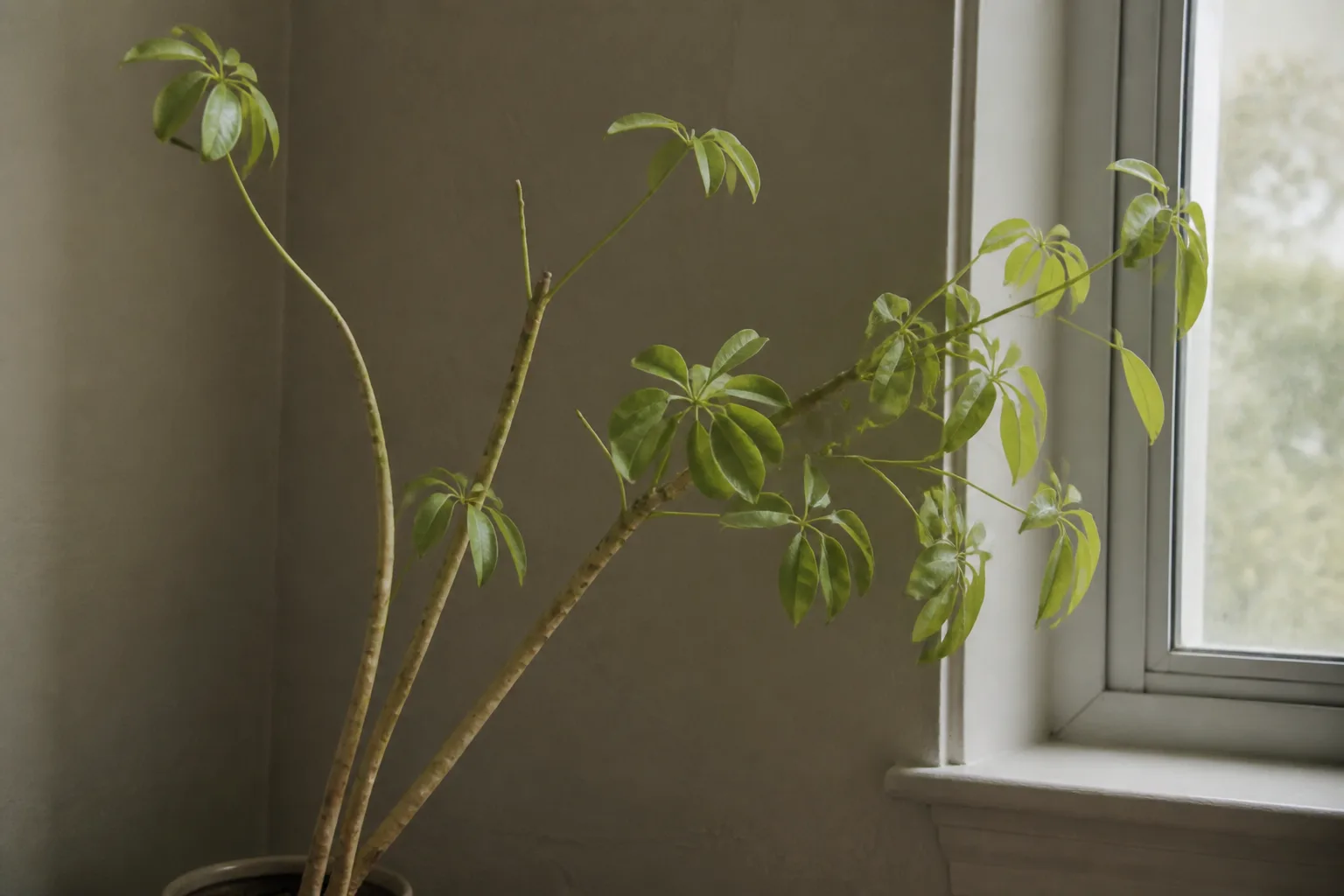
Not enough light makes Schefflera stretch between whorls, lean toward windows, and use water slowly. Move the pot to bright filtered light at an east, west, or south window-three to four hours of curtain-filtered sun daily-not a dim interior corner.
Not Enough Light on Schefflera: Causes, Checks & Fixes
This guide covers not enough light on Schefflera. See also the general Not Enough Light guide, watering, and light pages for this plant.
Not Enough Light on Schefflera: Causes, Checks & Fixes
Quick answer
Schefflera (Schefflera arboricola), the dwarf umbrella tree, is often sold as an adaptable houseplant, but it is not a deep-shade species. Without enough brightness, whorls of glossy leaflets shrink and space apart, stems lean toward the nearest window, and the mix stays wet longer because the plant transpires less. Missouri Botanical Garden recommends bright light at east, west or southern windows in curtain filtered sun (3-4 hours per day)-interior corners and north rooms without supplementation rarely meet that bar.
First step: move the pot to the brightest filtered location you can sustain. An east-facing sill, a spot one to three feet back from a sheer-curtained south or west window, or a grow-light shelf counts. Do not repot, fertilize, or prune heavily until the plant has spent two weeks in better light and you can see whether new whorled growth is firming up.
What not enough light looks like on Schefflera
Low light on Schefflera shows up as structure change across the whole canopy, not a single blemished leaflet. The compound leaves radiate like umbrella spokes from each node-when light is insufficient, the spacing between those whorls tells the story before individual leaflets yellow.
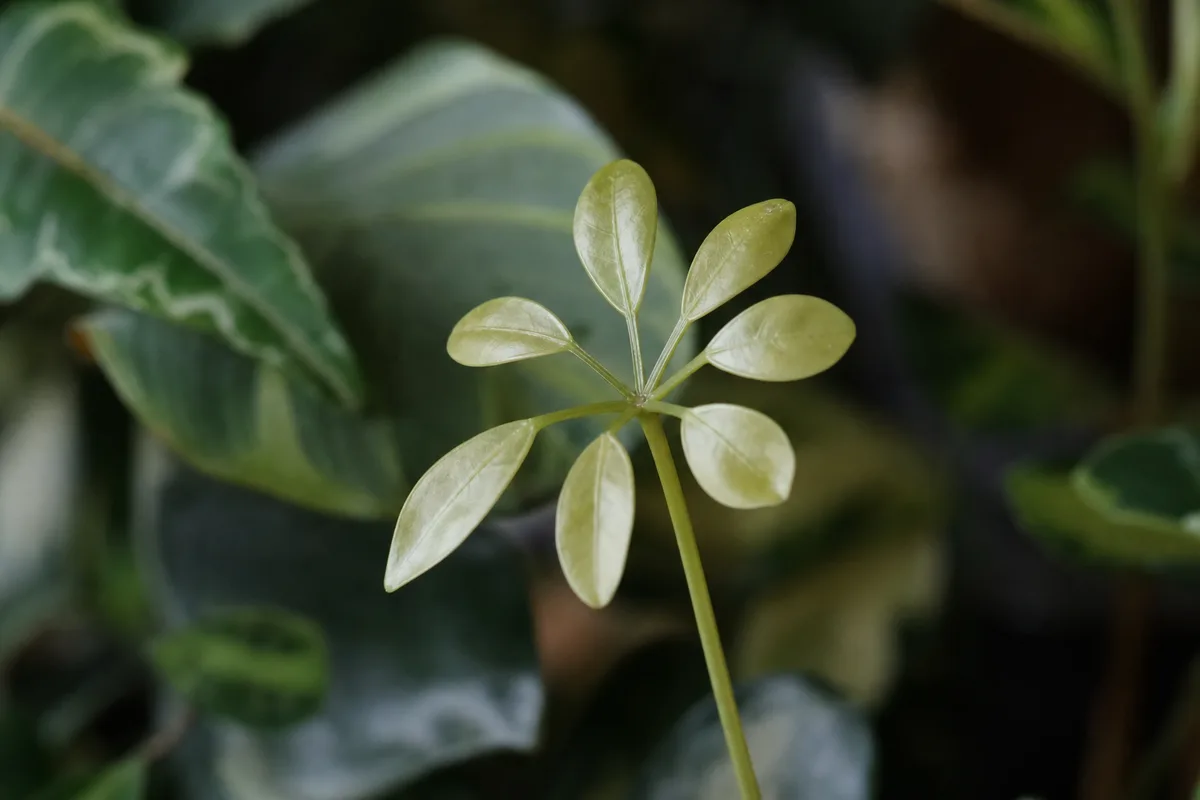
Not Enough Light symptoms on Schefflera - compare with healthy tissue on the same plant.
Typical signs include:
- Long internodes between whorled leaf sets-classic etiolation as the plant stretches for more light
- Smaller, paler, or dull new leaflets compared with older whorls near the top
- One-sided lean with stems thickening only on the window side of the pot
- Sparse lower canopy where older whorls dropped and no replacements formed
- Months without a new top whorl, even during warm weather
- Yellow lower leaves on soil that stays damp for weeks without an obvious watering increase
- Thin weak petioles holding leaflets that look flat instead of glossy
Schefflera tolerates moderate to lower light longer than crotons or fiddle-leaf figs, which is why many plants linger on interior shelves looking “fine” while gradually losing density. By the time stems look top-heavy and bare at the base, light has been insufficient for weeks or months-not days.
Low light also changes watering symptoms. A dim Schefflera transpires slowly, so mix stays damp after your normal soak. Yellow lower leaves, leaf drop, and fungus gnats often trace back to that wet-dry mismatch rather than a mysterious disease. If the pot feels heavy for weeks while stems stretch, suspect light before reaching for fungicide or extra fertilizer.
Variegated cultivars such as ‘Gold Capella’ and ‘Trinette’ show low light stress sooner than all-green plants-variegation often fades when photosynthesis cannot support the white tissue.
Why Schefflera struggles in low light
Schefflera arboricola is native to Taiwan and Hainan Province, where it grows as an evergreen shrub accustomed to bright filtered light rather than deep indoor shade. Indoors it is widely grown as a foliage tree that needs consistent brightness-not the dim tolerance of a snake plant or ZZ plant.
Several traits make Schefflera overview light-sensitive in the slow, quiet way owners miss:
Upright whorled growth magnifies stretch. Each node produces a full umbrella of leaflets. When light is low, the plant extends the stem between whorls rather than building compact side branches. What reads as “needs fertilizer” is usually insufficient photosynthesis at the nodes.
Large compound leaves still need energy. Seven to nine glossy leaflets per whorl demand steady light to maintain size and color. Without enough brightness, the plant prioritizes stem extension over full whorls.
Water use drops in dim corners. Schefflera dislikes sitting in water, but in low light it cannot use moisture quickly. Roots sit in oxygen-poor mix longer-the same pattern NC State extension associates with leggy Schefflera that may have been overwatered and does not get enough light.
Season and window angle matter. Short winter days reduce intensity even when the pot never moved. A spot that worked in June may fall below usable levels by December. Interior walls more than six feet from glass rarely provide enough light for healthy Schefflera growth year-round.
Sudden light changes trigger leaf drop. Schefflera is famous for dramatic defoliation when conditions shift. Moving from deep shade straight onto harsh unfiltered glass causes shock drop as surely as a cold draft-acclimation matters when correcting light.
How to confirm the cause
Work through these checks before changing watering, Schefflera repotting guide, or pruning:
- Light at the plant, not the room - Stand at the pot. Hold your hand between the whorls and the window at midday. A soft, diffuse shadow means usable indirect light-light intensity decreases rapidly with distance from the window; no shadow suggests low light; a sharp dark shadow on the leaves means direct sun that may scorch.
- Distance and direction - Note window orientation and how many feet the pot sits from glass. Place in a southern, western, or eastern exposure with filtered light for 3 to 4 hours daily is the extension target; a spot more than six feet from the brightest window is usually insufficient.
- Growth pattern - Compare newest whorls to mature sets near the top. Smaller, paler, widely spaced new foliage with firm roots and moist (not sour) soil points to light, not rot.
- Soil moisture rhythm - Press into the top 2 inches of mix. If it stays damp two weeks after watering while stems stretch, metabolism is too slow for your current schedule-often because light is low.
- One-sided damage - Bleached or crispy patches on leaflets facing the window suggest too much direct sun, not too little. Stretch on the shaded side with burn on the window side means harsh light on one half.
- Recent moves or season - A plant that looked fine until autumn may simply be receiving fewer hours of daylight in the same spot. Seasonal dimming is still “not enough light” even without a location change.
If the pot is light, mix is dry throughout, and leaflets wrinkle or droop evenly, underwatering on Schefflera may explain wilt better than low light-do not move a thirsty plant farther from the window without checking soil first.
First fix for Schefflera
Move the pot to the brightest filtered location you can sustain.
For most homes that means:
- East windowsill - gentle morning sun, then Schefflera light guide the rest of the day
- One to three feet back from south or west glass with a sheer curtain filtering midday beams
- West exposure with afternoon light softened by a curtain or blind
- Grow light 12 to 18 inches above the canopy for 10 to 12 hours daily if natural windows are insufficient
Make one change: placement. Do not simultaneously repot, fertilize, or soak heavily. Schefflera already drops leaves when stressed; stacking variables hides whether light was the real issue.
If the plant lived in deep shade for months, acclimate over seven to fourteen days rather than jumping straight onto unfiltered south or west glass. Start farther from the window or behind a sheer curtain, then move closer every few days while watching for pale halos or crispy leaflet edges on sun-exposed tissue. Avoid direct sun indoors-bright, direct light will burn the leaves on houseplant Schefflera.
When natural light is insufficient-interior offices, north rooms that stay dim at midday, or short winter days-add a full-spectrum LED grow light above the canopy for 10 to 12 hours daily on a timer. Combine artificial light with the best window you have when possible.
Step-by-step recovery
After the first move to brighter filtered light, follow this order:
- Hold watering steady for one week - Note how fast the top 2 inches of mix dry compared with the old spot. Brighter light usually means faster dry-down; dim corners meant slower use. Adjust only after you see a new rhythm.
- Rotate the pot a quarter turn weekly - Upright stems lean quickly toward glass. Even exposure helps new whorls fill in around the canopy instead of only on one side.
- Wipe dust from leaflets monthly - Clean leaves as needed with a damp sponge so lower whorls intercept usable light instead of shading themselves.
- Wait for new growth before pruning - Give the plant three to four weeks in improved light. If new whorls are firmer and closer spaced, trim the longest bare stems back to a healthy node to encourage side shoots. Prune to control size and improve bushiness once light is adequate.
- Skip fertilizer until growth looks stable - Feed stresses roots that are still rebalancing water use after a light change. Resume half-strength monthly feeding only when new whorls look healthy for two weeks during spring or summer growth.
- Root check only if soil smells sour or stems soften at the base - Low light plus chronic wetness can progress to root stress. If the base feels firm and mix dries normally after the move, leave roots alone.
Recovery timeline
Weeks one to two: The plant may look unchanged or drop a few leaves from the move. Old stretched internodes will not shorten. Watch for firmness in new tip whorls and slightly faster soil dry-down as the first positive signs.
Weeks three to six: New whorled leaf sets should emerge closer together, glossier, and greener than the most recent pale growth. Internode length on fresh stem sections is the metric that matters-not whether old bare stems fill in on their own.
Two to three months: Canopy density improves as side shoots develop from nodes after optional pruning. A plant that looked one-sided should even out if you rotate weekly.
What will not recover: Elongated internodes on old stems, dropped whorls on bare lower sections, and any tissue damaged by secondary root stress. Those stay as history while new growth carries the plant forward.
Worsening signs: Continued yellowing with sour-smelling wet soil, soft stems at the soil line, mass leaf drop after acclimation, or new whorls that stay tiny and pale after six weeks in bright filtered light. Those point to root damage or a spot that is still too dim-recheck distance from glass and consider a grow light.
Lookalike symptoms
- overwatering on Schefflera / root stress - Yellow lower whorls with sour wet mix, often in the same dim corner where the plant uses water slowly. Fix light and dry-down together; inspect roots if the base softens.
- Underwatering - Light pot, dry mix throughout, crispy leaflet edges. Deep soak once, then resume schedule; do not move farther from light.
- Too much direct sun - Bleached, crispy, or brown patches on window-facing leaflets after a sudden move to unfiltered glass. Pull back or filter; this is light stress from excess intensity, not deficiency.
- Cold drafts - Yellowing and drop after a cold night near a window. Indoor temperatures should not dip below 60 degrees F. in winter; warm the spot before blaming light alone.
- Normal winter slowdown - Slower whorl production in short days is expected. Supplement light or wait for longer days; do not overwater to “wake up” a dim winter plant.
What not to do
Do not fertilize heavily to fix pale stretched growth-without photons, nutrients cannot build compact whorls. Avoid moving straight from a dark corner to unfiltered south or west sun; Schefflera burns quickly and may drop half the canopy from shock. Do not water on the old calendar after a big light increase; check soil dryness instead.
Skip repotting on day one unless mix is failing or roots are mushy. Do not assume shade tolerance because Schefflera is labeled easy-too low a light can cause it to become leggy and floppy. Do not ignore a heavy wet pot while tweaking light; stagnant moisture and dim placement compound on this species.
How to prevent low light problems
Place Schefflera where bright filtered light reaches all whorls, not only where the tree looks good decoratively. East windows, filtered south or west rooms, and grow-light stations are the long-term targets-not interior walls far from glass.
Rotate the pot weekly. Re-check exposure at the spring equinox when sun angle increases on windows that were safe all winter. Clean leaflets and windows when grime cuts intensity. In dark homes, run a grow light on a timer through winter rather than accepting etiolation until February.
Pair light awareness with dry-down watering. When you move the plant brighter, expect faster moisture use; when you must keep it in medium light, stretch the interval between soaks. The checkpoint that prevents repeat problems: firm glossy whorls on short new internodes and a pot that dries on a predictable rhythm.
When to worry
Escalate when low light and wet soil overlap: yellowing that spreads up the stem, fungus gnats, soft tissue at the base, or mix that never dries within two weeks of watering. That pattern can become root stress quickly when photosynthesis cannot keep pace with moisture in the pot.
Slow stretch alone-firm stems, no smell, soil drying normally-is not an emergency. Move to better light this week and adjust water next. Sudden leaflet bleach after a placement change needs immediate shade, not more brightness.
Conclusion
Not enough light on Schefflera is a placement problem before it is a disease. The plant tells you with stretched whorls, window-leaning stems, and soil that stays wet too long. Confirm brightness at the pot, move to bright filtered light as the first fix, acclimate if the plant lived in deep shade, and judge recovery by new whorl size and spacing-not by whether old leggy stems shrink back. Get the window right and watering falls into place; stay in a dim corner and no amount of fertilizer will restore the full umbrella canopy you saw at the nursery.
When to use this page vs other Schefflera guides
- Schefflera watering guide - Use for routine moisture checks before assuming not enough light is the main issue.
- Schefflera problems hub - Browse all 18 common issues on this species.
- Leggy Growth on Schefflera - Different entry point when symptoms overlap with not enough light.
- Slow Growth on Schefflera - Different entry point when symptoms overlap with not enough light.
- Yellow Leaves on Schefflera - Different entry point when symptoms overlap with not enough light.