Yellow Leaves on Schefflera: Causes, Checks & Fixes
Quick answer
On Schefflera, yellow leaves are most often from wet roots in low light, sudden cold exposure, or normal aging of older lower leaves. Check soil moisture and pot weight first, then correct one stressor at a time.
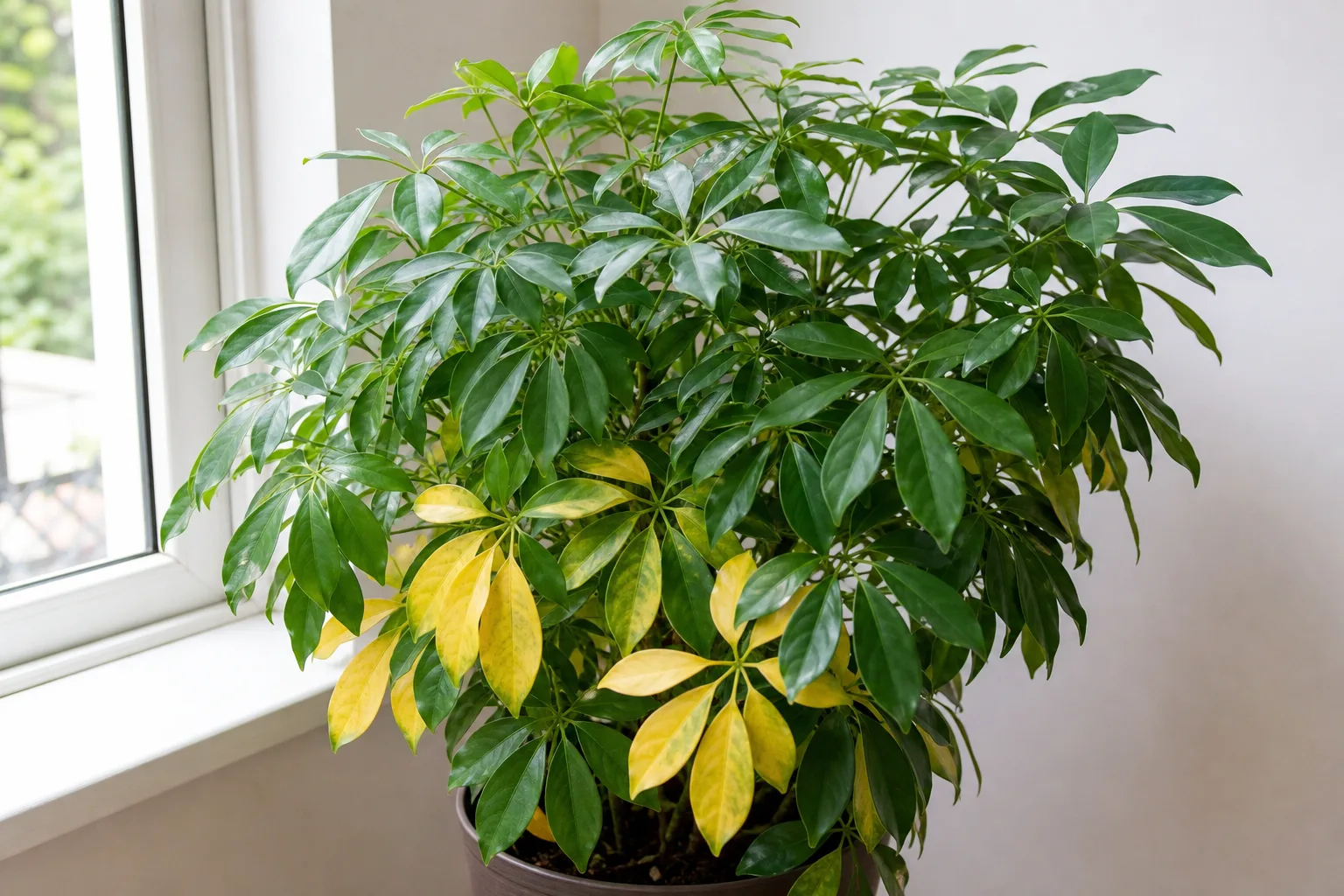
Yellow Leaves on Schefflera: Causes, Checks & Fixes
This guide covers yellow leaves on Schefflera. See also the general Yellow Leaves guide, watering, and light pages for this plant.
Yellow Leaves on Schefflera: Causes, Checks & Fixes
Quick answer
Yellow leaves on Schefflera arboricola (dwarf umbrella plant) usually trace to root-zone stress, not a sudden fertilizer shortage. The most common indoor pattern is overwatering in dim conditions: roots stay too wet, oxygen drops, and lower whorls yellow first while upper palmate clusters may still look glossy.
Monitor when one older lower leaf yellows on an otherwise firm plant with healthy dry-down between drinks. Act today when multiple whorls yellow while the pot stays heavy and wet, stems soften, or leaves droop on soggy mix-that pattern can signal root damage that worsens fast.
Your first check is simple: feel the top 2 inches, then lift the pot. If the mix is still wet and the pot feels heavy several days after watering, pause watering and improve light and airflow before doing anything else.
This page is the yellow-leaf triage hub for the Schefflera cluster. For wet-soil decline, see overwatering or root rot. For a light dry pot with crisp edges, see underwatering. For stretched stems with pale yellow new growth, see not enough light.
Identify your yellowing pattern
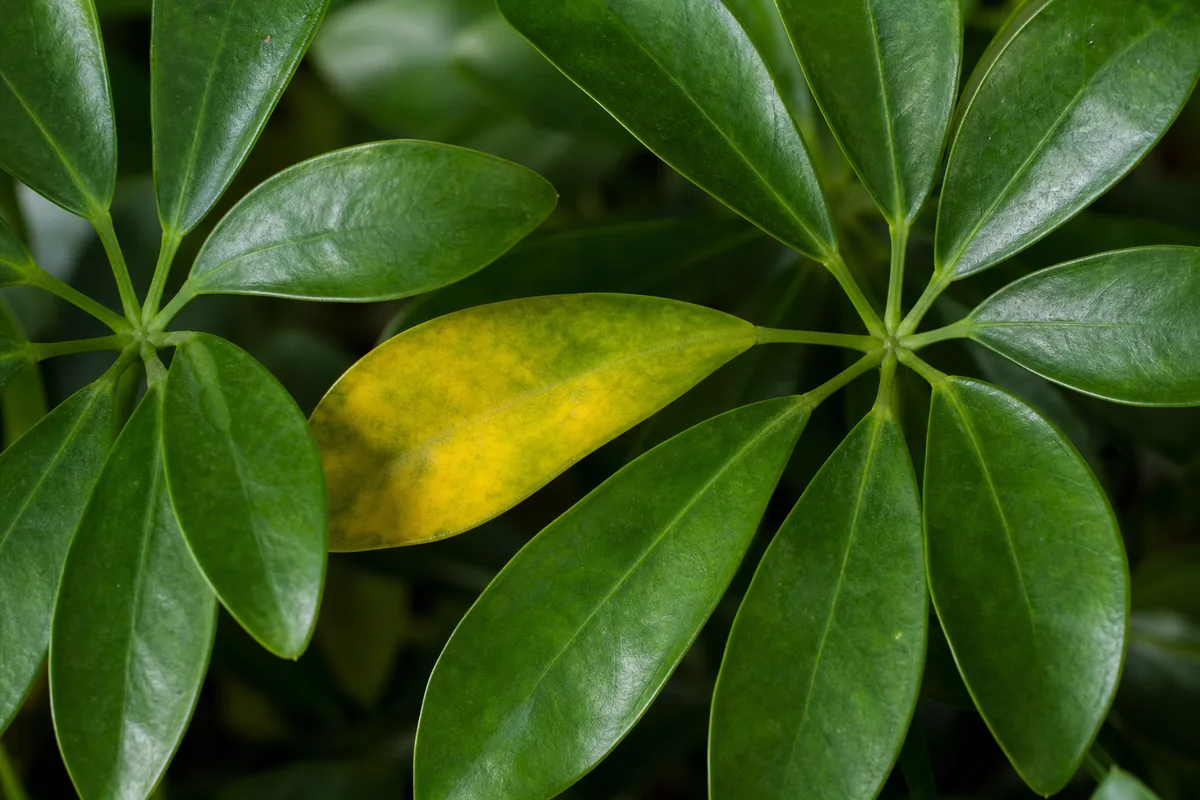
Yellow Leaves symptoms on Schefflera - compare with healthy tissue on the same plant.
Schefflera carries leaves in whorled palmate clusters-seven to eleven glossy leaflets per stalk on mature dwarf plants. Yellowing rarely hits every leaflet at once unless stress is severe. Where yellow appears and how fast it spreads tells you more than leaf color alone.
Normal aging (monitor)
One older lower leaf or leaflet cluster yellows while upper whorls stay firm, glossy, and actively growing. This turnover is common on woody lower stems as the plant pushes new clusters at the tips.
Wet-root pattern (act within 24–48 hours)
Lower whorls yellow first; leaves feel soft before they drop. The pot stays heavy and the top 2 inches remain damp for days-leaf drop can follow when soils are kept too moist. Stems may still feel firm early-do not wait for mushiness if yellowing is climbing the stem on wet mix; root rot often results from overly frequent watering.
Low-light pattern (act this week)
Yellowing spreads slowly with spindly, weak stems and leaf yellowing in low light. Variegated cultivars such as ‘Trinette’ or ‘Gold Capella’ may show pale yellow or cream wash on sectors that lose chlorophyll in dim corners-easy to confuse with drought until you check pot weight.
Cold-stress pattern (act same day)
Yellowing or bronzing appears within days after a drafty night, open window, or HVAC blast. Leaflets may show dead patches on leaves several days after excessive cold. Clemson HGIC advises keeping schefflera above 50°F and away from AC vents.
Drought pattern (act same day)
Pot feels very light; mix is dusty-dry and may pull from the pot wall. Margins crisp before whole leaflets yellow. Upper whorls may droop while stems stay firm-different from wilt-on-wet-soil.
A real wet-root recovery
A variegated dwarf Schefflera in a 6-inch glazed pot was watered on a fixed weekly schedule through a dim winter corner. Two lower whorls turned soft yellow while the top inch stayed wet five days after the last pour. Watering paused, the pot moved to bright filtered east light, and the saucer was emptied after every drink. Fresh yellowing stopped within ten days; one lower whorl was removed. New glossy leaflets opened at the tip three weeks later-typical once roots re-oxygenate.
A real cold-draft rebound
A solid-green umbrella plant on a winter windowsill showed sudden yellow-bronze patches on outer leaflets after two nights below 55°F near the glass. Moved 3 feet inward and away from the frame, yellowing halted on existing tissue within a week. Damaged leaflets were trimmed; new whorls emerged clean two weeks later without Schefflera repotting guide.
Original symptom photos (senescence vs. wet-root yellowing on whorled leaflets; cold-bronze patches on outer leaflets) pending for a future update.
Yellow leaves: symptom decision matrix
Use this table before changing care. Confirmed? means two or more row signals match your plant.
| Symptom pattern | Likely cause | Urgency | First action | Escalate when |
|---|---|---|---|---|
| One lower whorl yellows; upper growth firm; normal dry-down | Normal aging | Monitor 1–2 weeks | Remove yellow tissue; keep current rhythm | Yellowing climbs stem or multiple whorls fail at once |
| Heavy pot, wet top 2 in., soft yellow lower whorls | Overwatering | Same day | Pause water; bright filtered light; empty saucer | Wilt on wet soil, sour smell, or spread past two whorls → unpot |
| Heavy wet pot + wilt + soft stem base | Root rot | Immediate | Stop water; unpot and inspect roots | More than half of roots mushy → trim and repot or discard |
| Light pot, dry mix, crisp margins | Underwatering | Same day | Deep soak until a little drains; empty saucer | No perk in 24 h on light dry pot → check roots |
| Pale yellow + long gaps between whorls, small new leaflets | Low light | This week | Move to bright filtered light 3–4 h daily | No firmer new growth in 3–4 weeks after move |
| Sudden yellow/bronze after cold night or vent blast | Cold stress | Same day | Relocate away from drafts; stable room temps | Widespread drop with soft crown → inspect roots |
| Yellow + droop + wet soil (mixed) | Root damage likely | Immediate | Stop water; unpot within 24 h | Black mushy roots → root-rot workflow |
When two causes seem possible-yellow leaves plus droop on soil that feels neither clearly wet nor dry-start with pot weight and a finger test at 2 inches, then branch using the wilting guide if posture collapse is the main worry.
Confirm the cause in five checks
Work through these in order:
- Moisture at 2 inches - Wet several days after watering points to overwatering. Dusty dry points to drought.
- Pot weight - Heavy and slow to tilt = saturated. Very light = likely underwatered.
- Leaf position - Lower whorls first suggests water or light stress; sudden whole-plant change suggests cold or severe root failure.
- Light and stretch - Long internodes and small new leaflets support low light. Schefflera performs best in bright filtered light with 3–4 hours daily indoors.
- Temperature history - Recent cold window nights or AC drafts support cold stress. Indoor winter temperatures should not dip below 60°F for best health.
Stem and root signals: Soft stems, sour mix smell, or wilt despite wet soil mean unpot now-not another week of monitoring.
First action by likely cause
Pick one correction based on your matrix row. Do not fertilize, repot, and prune all at once.
If too wet: Pause watering until the upper half of the root ball dries. Confirm drainage holes are open and never leave water in the saucer. Move to brighter filtered light so the plant uses water faster without harsh direct afternoon sun.
If too dry: Water thoroughly until a small amount drains, then empty the saucer. Resume when the top 2 inches begin to dry-not on a fixed calendar.
If too dark: Relocate to bright filtered light. Avoid jumping from a dim corner to hot south glass in one step-burn can follow.
If cold-stressed: Move away from windows, doors, and vents. Keep stable room temperatures; Clemson advises above 50°F minimum, while Missouri Botanical Garden recommends indoor winter lows not below 60°F.
If normal aging only: Remove the yellow whorl and watch for two weeks. No other changes needed if upper growth stays firm.
Remove fully yellow whorls so you can see whether new yellowing has stopped. Hold fertilizer until steady new tip growth returns for two weeks.
When to unpot and inspect roots now
Do not wait for cosmetic decline to become crown failure. Unpot within 24 hours when any of these are true:
- Yellowing spreads to a third whorl while mix stays wet
- Stems soften at the soil line
- Mix smells sour or fermented
- Plant wilts or droops heavily while soil at 2 inches is still moist
- You watered recently but the pot has not lightened after a week
Monitor up to two weeks before unpotting when only one lower whorl yellows, stems are firm, dry-down works between drinks, and no sour smell is present.
At inspection, healthy Schefflera roots are firm and pale. Dark, soft, or sloughing roots mean shift to the full root-rot workflow: trim decay with sterile tools, repot into fresh fast-draining mix, and reduce watering during recovery.
Recovery timeline and what improvement looks like
Existing yellow leaflets do not turn green again. Judge recovery by:
- no new yellowing over 2–4 weeks
- firmer stems and upright whorls
- fresh glossy leaflets opening at stem tips
If yellowing accelerates, stems soften, or drop becomes widespread after you corrected one stressor, reassess roots immediately instead of adding water or fertilizer.
If nothing improves in 2–4 weeks despite correct dry-down, light, and temperature: unpot if you have not already, review whether the pot is oversized for winter water use, and cross-check overwatering versus root rot. Persistent pale new growth after a light move may need the not enough light guide.
Prevent yellow leaves from returning
- Water deeply, then allow meaningful dry-down before watering again-Clemson advises letting soil dry to ½ inch deep between drinks for schefflera.
- Use well-drained potting medium rich in organic matter in a pot with drainage holes.
- Keep bright filtered light so water use stays steady through shorter winter days.
- Stay away from cold drafts, radiators, and AC vents.
- Remove yellow leaves as they appear and track new tip growth weekly.
Schefflera is toxic to cats and dogs due to calcium oxalate crystals-bag trimmed leaves and keep plant material away from pets during cleanup. If a pet chews foliage, contact your veterinarian or the ASPCA Animal Poison Control Center; this page is not veterinary advice.
Next-step troubleshooting paths
Route by what you confirmed-not every Schefflera problem link applies to yellow leaves.
| Your outcome after triage | Go here next |
|---|---|
| Heavy wet pot, soft yellow lower whorls, slow dry-down | Schefflera overwatering |
| Mushy roots, sour mix, wilt on wet soil | Schefflera root rot |
| Light pot, crisp edges, hydrophobic dry mix | Schefflera underwatering |
| Stretched stems, pale small new leaflets | Schefflera not enough light |
| Collapse posture but moisture unclear | Schefflera wilting |
| Year-round watering rhythm and seasonal adjustment | Schefflera watering |
| Full care hub | Schefflera overview |
How this guide was created and reviewed
This page targets Schefflera owners diagnosing yellow whorls on palmate clusters-not generic houseplant chlorosis articles. Recommendations were checked against Clemson HGIC schefflera culture and houseplant pest notes, Missouri Botanical Garden Schefflera arboricola Plant Finder guidance, NC State Extension Heptapleurum arboricola indoor culture notes, ASPCA schefflera toxicity listings, and LeafyPixels overview, watering, light, and sibling problem guides for cluster consistency.
Author: sai-ananth · Reviewer: LeafyPixels Review Board · Reviewed: 2026-06-17
Human editors synthesized extension sources with Schefflera-specific diagnostic framing (whorl position, stacked low-light plus winter overwatering, variegated low-light wash). Recovery timelines reflect observed indoor troubleshooting patterns; individual plants vary with pot size, mix, and room conditions.
Conclusion
Yellow leaves on dwarf Schefflera are usually a water, light, or temperature story told through whorl position and pot weight-not a mystery nutrient crisis. One firm lower whorl aging out is normal; multiple soft yellow whorls on a heavy wet pot is not. Check moisture and weight first, fix one stressor, and escalate to root inspection when wet soil and decline travel together. Recovery shows in clean new tip clusters-not re-greened old leaflets.
When to use this page vs other Schefflera guides
- Schefflera watering guide - Use for routine moisture checks before assuming yellow leaves is the main issue.
- Schefflera problems hub - Browse all 18 common issues on this species.
- Overwatering on Schefflera - Different entry point when symptoms overlap with yellow leaves.
- Underwatering on Schefflera - Different entry point when symptoms overlap with yellow leaves.
- Not Enough Light on Schefflera - Different entry point when symptoms overlap with yellow leaves.