Wilting on Schefflera: Causes, Checks & Fixes
Quick answer
Wilting Schefflera with dry soil needs a deep soak; wilting on wet soil means root rot or overwatering. Check moisture deep in the pot before adding more water.
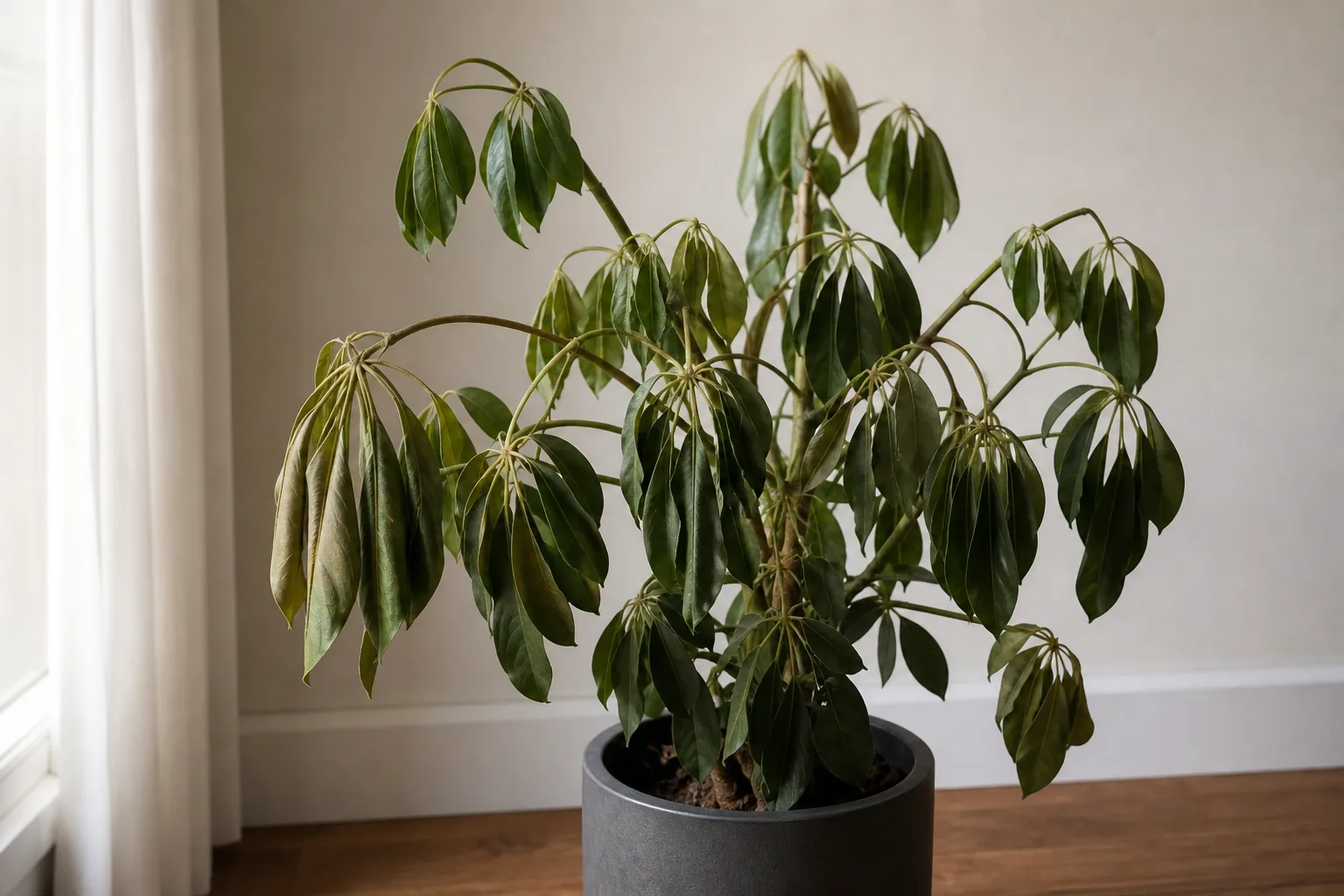
Wilting on Schefflera: Causes, Checks & Fixes
This guide covers wilting on Schefflera. See also the general Wilting guide, watering, and light pages for this plant.
Wilting on Schefflera: Causes, Checks & Fixes
Quick answer
Wilting on Schefflera (Schefflera arboricola) means the plant has lost turgor-the whorled leaflets hang limp because water is not reaching them fast enough. That can happen when the mix is too dry or when roots are too damaged to absorb water even in wet soil. The two look almost identical from above, which is why Schefflera owners often make the wrong fix on the first try.
First step: probe soil moisture 2 inches deep and lift the pot. Dry, lightweight soil with limp compound leaves usually means underwatering on Schefflera. Heavy, wet soil with limp leaves-often paired with yellow lower leaflets or soft stems at the base-usually means overwatering on Schefflera or root rot on Schefflera limiting uptake. Only after that split should you soak, stop watering, or inspect roots.
What wilting looks like on Schefflera
Schefflera carries palmately compound leaves: seven to nine glossy leaflets fan out in a circle from each petiole, giving the umbrella-plant silhouette. When turgor fails, the whole whorl droops together rather than standing stiffly. One wilted stem while neighbors stay firm often means localized root damage or a dry pocket in the mix; widespread limpness across multiple whorls suggests a systemic water-pathway problem.
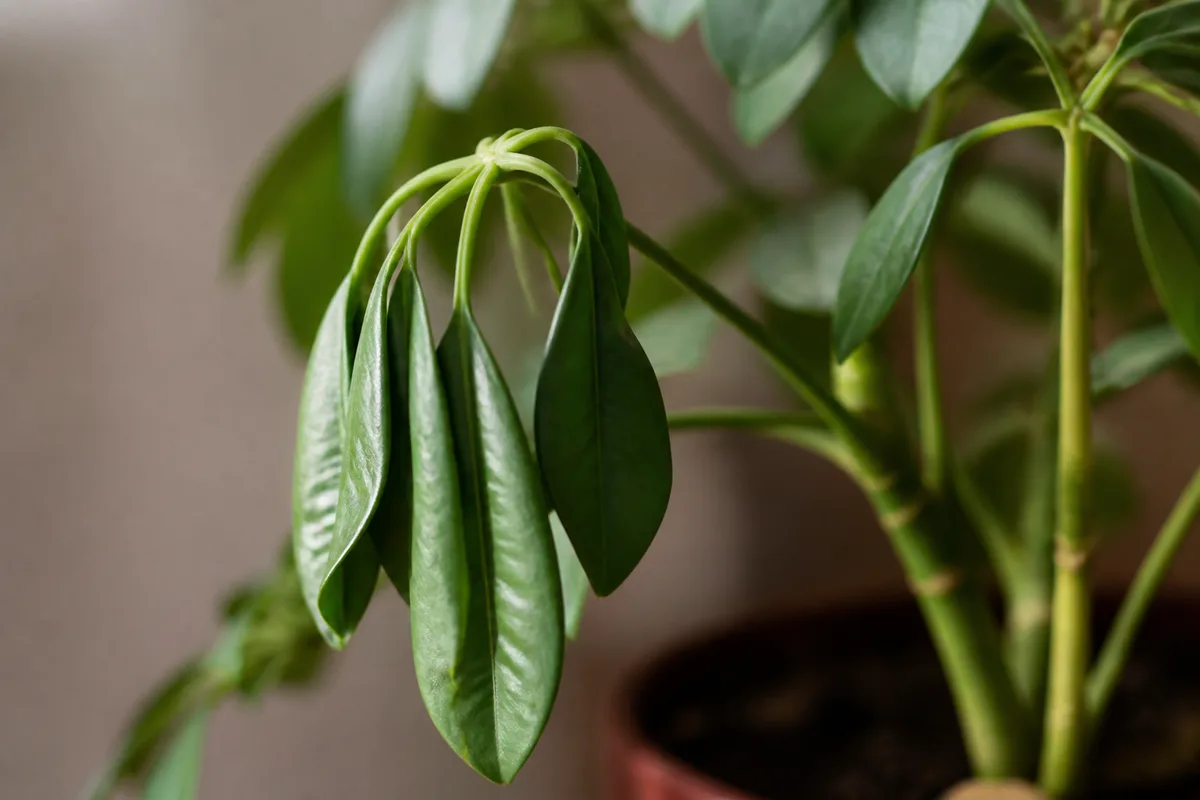
Wilting symptoms on Schefflera - compare with healthy tissue on the same plant.
Early thirst wilt shows limp but still green leaflets, sometimes with soil pulling slightly away from the pot edge and a light, easy-to-lift container. Schefflera tolerates brief dry-downs indoors, but its large leaf surface area loses water quickly once the root ball dries-collapse can look sudden even after only one missed watering cycle.
Wilt from saturated roots is deceptive. Soil can feel damp while every whorl collapses-rotting roots cannot take up water, so the plant behaves as if it is drought-stressed even though the mix is wet. Watch for yellowing lower leaflets, a sour smell from the pot, fungus gnats, and soft or spongy tissue at the base of stems. Advanced cases may show mass leaf drop spreading up the plant, which Schefflera is prone to once a stressor takes hold.
Temporary afternoon wilt is a third pattern: leaflets limp in bright afternoon heat but perk overnight. That points to heat and transpiration stress rather than chronic root failure-especially if soil moisture at depth is appropriate and stems stay firm.
Why Schefflera wilts
Schefflera is a tropical evergreen shrub adapted to filtered light and moderate moisture in its native range-not constantly saturated decorative-pot sludge. Indoors, the same compound leaves that make the plant attractive also transpire heavily in bright light, so the root zone must supply water steadily or turgor collapses fast.
Overwatering and root rot top the list for wet-soil wilt. Excess water reduces oxygen in the mix and damages fine roots, leaving the plant unable to take up water despite damp soil. On Schefflera, shallow frequent watering without dry-down, blocked drainage holes, oversized pots in dim corners, and watering on a calendar instead of soil dryness all keep the root zone anaerobic. Low light slows growth so the plant uses less water-making the same Schefflera watering guide excessive.
Underwatering is the other major cause. Schefflera tolerates some drought, but prolonged dryness collapses turgor before leaf drop begins. Leaves will drop if soils become too moist or too dry; wilting often precedes that drop on thirsty plants. Container specimens in warm rooms with heating vents can dry the top 2 inches within days in summer.
Other Schefflera-specific triggers include:
- Cold drafts and temperatures below 60°F, which damage tropical tissue and reduce root function
- Schefflera repotting guide or root disturbance, which temporarily reduces uptake-Schefflera often wilts briefly after repotting even when care is correct
- Heat and dry air near hot windows or heating vents, increasing transpiration faster than roots supply water
- Hydrophobic dry pockets after the mix pulls away from the pot sides-surface watering runs down the gap without rewetting the root ball
- Spider mites on dry leaf undersides during winter heating season-stippling and webbing weaken leaves before full collapse
- Scale and mealybugs on stems and leaf axils, which drain sap and can wilt affected whorls
How to confirm the cause
Work through these checks in order before changing care:
- Deep soil moisture - Insert a finger or dowel 2 inches into the mix. Dusty and dry throughout suggests thirst. Clinging, cool, wet soil at depth suggests oversaturation or poor drainage.
- Pot weight - Lift the container. Noticeably light weight plus droop fits underwatering; heavy and wet fits root stress.
- Stem firmness - Press the base of wilted stems gently. Firm green tissue is reassuring; spongy or denting tissue with wet soil is a rot warning.
- Whorl pattern - All stems limp points to roots or severe thirst. One branch limp may mean localized rot, mechanical damage, or a dry side of the pot.
- Smell and pests - Sour odor, fungus gnats, or white mold on the surface strengthen a wet-root diagnosis. Check leaf undersides for mites, scale bumps, or mealybug cotton.
- Recent history - New pot, moved window, heat wave, cold draft from an open door, or skipped winter watering all narrow the cause.
- Root inspection - If wet soil pairs with spreading wilt or soft stem tissue, slide the plant out of the pot. Healthy roots are firm and pale; rotted roots are brown, slimy, or collapse when touched.
If the pot is dry, stems are firm, and only leaflets are limp, underwatering is likely-confirm with a deep soak response rather than immediate repotting. If soil is wet and roots are mushy, root rot is confirmed regardless of how recently you watered.
First fix for Schefflera
Stop guessing and split wet wilt from dry wilt using the 2-inch moisture check and pot weight.
Do not water a plant whose mix is already wet at depth-that deepens oxygen loss and rot. Do not let a genuinely dry Schefflera sit limp for days waiting for other fixes. This single diagnostic step determines whether your next action is a thorough soak, a watering pause, or a root inspection.
Hold off on fertilizer, heavy misting, and repotting until you know which side of the moisture line you are on.
Step-by-step recovery
If soil is dry (underwatering)
- Water thoroughly once - Add water until it runs from drainage holes, or bottom-water until the top surface darkens. Empty the saucer afterward.
- Rehydrate stubborn dry mix - If soil has shrunk away from the pot wall, several applications may be needed to rehydrate potting mix that has dried completely.
- Wait for turgor return - Mild wilt often improves within hours; stiffening whorls by the next morning is a good sign.
- Resume dry-down rhythm - Water again only when the top 2 inches are dry, not on a fixed weekly calendar.
If soil is wet (overwatering or root rot)
- Stop watering immediately - Move the pot to Schefflera light guide with good airflow.
- Inspect roots - Unpot and rinse away old mix. Trim brown or mushy roots with clean scissors; keep only firm, pale tissue.
- Check stem bases - Cut away soft rotted sections only if decay is localized and firm tissue remains above; a hollow soft base may not be salvageable.
- Repot into fresh, well-drained mix - Use standard potting mix amended with perlite in a pot with open drainage, sized to the root mass-not much larger.
- Hold water briefly - Let trimmed roots settle in dry mix for several days before the first light watering.
- Pour off saucer water - Never leave the plant standing in collected runoff.
If wilt is heat-related (recovers overnight)
- Filter harsh afternoon sun - Move slightly back from hot glass or add sheer curtain; Schefflera wants bright filtered light, not scorching direct rays indoors.
- Maintain even moisture - Avoid swinging from dry to flooded; check depth before each watering.
- Reduce draft extremes - Keep away from AC blasts and heating vents that desiccate leaflets, and avoid spots where winter temperatures dip below 60°F.
If pests are involved
- Identify the feeder - Mites leave stippling and fine webbing on undersides; scale appears as immobile bumps on stems; mealybugs look like white cotton clusters.
- Rinse or wipe - Shower leaf undersides and stems with plain water to knock down mites and mealybugs before any spray.
- Treat only after confirmation - Persistent colonies may need insecticidal soap on undersides; isolate heavily infested plants until control holds.
Recovery timeline
Thirst wilt on a firm-stemmed Schefflera often shows visible perking within 6–24 hours after a proper soak. Full whorl stiffness across the canopy may take one to two days. Old leaflets that creased severely may not flatten perfectly but new growth should stay firm.
Root rot recovery is measured in weeks, not hours. Expect two to four weeks before wilt stops spreading after trim-and-repot, and four to eight weeks before consistent new whorled leaf sets appear at stem tips during warm active growth. Winter recovery runs slower.
Heat-stress wilt that recovers each morning should stabilize within days once light and moisture swings are reduced.
Repotting shock may cause temporary limpness for one to two weeks with firm stems and balanced moisture-avoid stacking fertilizer and extra water during that window.
Worsening signs: stem softening after dry treatment, blackening at the soil line climbing stems, no perking 48 hours after correct thirst watering, or new wilt on wet soil after repotting-those suggest advancing decay rather than reversible stress.
Lookalike symptoms
- Drooping leaves without full collapse on Schefflera - Often early turgor loss on Schefflera; same moisture check applies.
- Yellow leaves with wet soil on Schefflera - Frequently pairs with wilt when roots fail; inspect before watering more.
- Leaf drop without obvious wilt - Schefflera drops leaves dramatically after drafts, moves, or watering swings; wilt may have been brief before leaves fell.
- Leggy pale growth - Long sparse stems in dim light; fix light first-wilting from thirst may follow if the weak plant dries fast.
- Sticky leaves with ants - Honeydew from scale or aphids, not a moisture problem; inspect stems before changing watering.
What not to do
Do not water more because whorls look limp when soil is already wet at 2 inches depth-that accelerates rot. Avoid moving a wilted plant into harsh direct sun to “dry it out”; filtered bright light is safer. Do not fertilize a wilted Schefflera; salts stress damaged roots. Skip repotting on day one unless wet soil and mushy roots are confirmed-unnecessary disturbance worsens transplant shock on a plant that already reacts strongly to change. Do not mist heavily on wet-soil wilt; focus on drainage and airflow instead.
How to prevent wilting next time
Match watering to how fast your pot dries in your light, not a generic schedule. Allow the soil to dry out and then thoroughly soak it on a consistent rhythm-water when the top 2 inches are dry in summer; stretch intervals in winter when growth slows. Keep Schefflera in bright indirect light with three to four hours of filtered sun daily so the plant uses water predictably. Choose a well-drained mix with perlite, keep drainage holes open, and empty saucers after every watering.
Lift the pot weekly to learn its weight at dry versus moist. Avoid cold drafts and keep indoor temperatures from dipping below 60°F in winter. Scout leaf undersides weekly during heating season for spider mites. After travel or a schedule change, probe depth before assuming thirst. Quarantine new Schefflera and inspect stem firmness early-softness with wet soil is easier to correct before the whole canopy collapses.
When to worry
Escalate immediately if stems dent under light pressure at the base, blackening climbs from the soil line, or unpotting shows mostly mushy roots. Rapid collapse across all whorls on wet, sour-smelling soil needs same-day root surgery or the plant may not recover.
Afternoon limpness with firm stems and balanced moisture can wait for a light or placement tweak. A single limp stem on an otherwise firm plant may need targeted inspection rather than a full repot. Mass leaf drop after a move is alarming but often stabilizes once temperature and light stay steady for two weeks-watch for new firm whorls rather than expecting dropped leaves to return.
Conclusion
Wilting on Schefflera is a water-pathway problem disguised as a watering problem. Confirm wet wilt versus dry wilt with a 2-inch moisture check and pot weight before you act. Thirst responds to one deep soak; rot responds to stopping water, trimming decay, and repotting dry into fast-draining mix. Judge success by firm new whorled leaf sets and solid stems, not by old limp leaflets springing back-and prevent recurrence with dry-down watering in bright, stable light away from cold drafts.
When to use this page vs other Schefflera guides
- Schefflera watering guide - Use for routine moisture checks before assuming wilting is the main issue.
- Schefflera problems hub - Browse all 18 common issues on this species.
- Underwatering on Schefflera - Different entry point when symptoms overlap with wilting.
- Overwatering on Schefflera - Different entry point when symptoms overlap with wilting.
- Root Rot on Schefflera - Different entry point when symptoms overlap with wilting.