Root Rot on Schefflera: Causes, Checks & Fixes
Quick answer
Root rot on Schefflera (*Schefflera arboricola*) follows soil that stays wet too long-especially in winter or low light. First step: stop watering, lift the pot, and unpot if stems soften or the mix smells sour. Trim all mushy roots and repot in fresh airy mix sized to the remaining root mass.
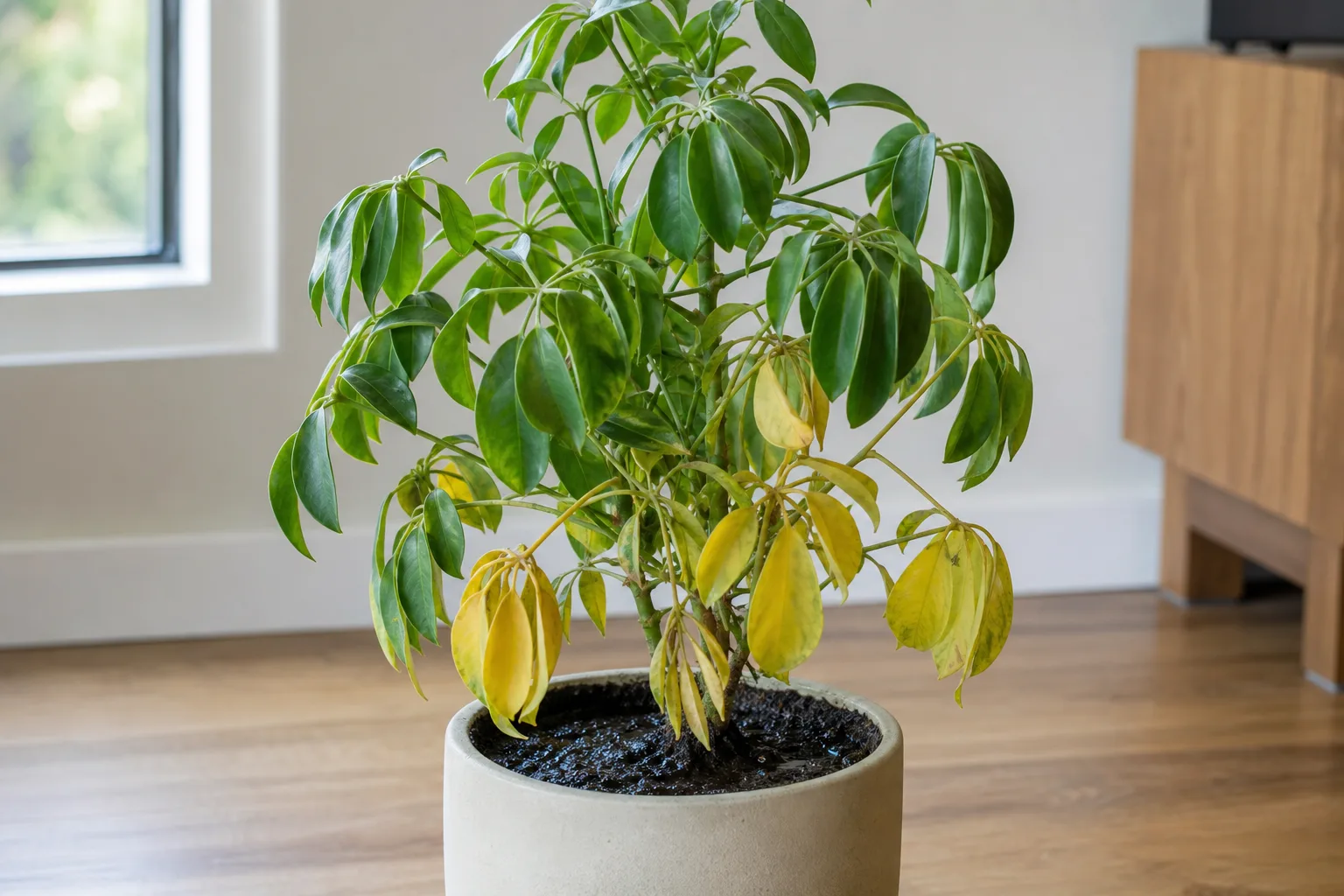
Root Rot on Schefflera: Causes, Checks & Fixes
This guide covers root rot on Schefflera. See also the general Root Rot guide, watering, and light pages for this plant.
Root Rot on Schefflera: Causes, Checks & Fixes
Quick answer
Root rot on Schefflera (Schefflera arboricola, dwarf schefflera or umbrella plant) is almost always a watering and drainage failure-not a mysterious disease that strikes healthy plants. This rainforest understory tree wants deep drinks followed by draining soil. When mix stays saturated for days, roots lose oxygen and decay while the canopy above may still look passable for a week-then Schefflera sheds half its leaflets in a dramatic whorl drop that panics many growers into watering again.
First step: stop watering and lift the pot. If leaflets are limp but the container feels heavy, the top 2 inches of mix are cool and damp, and lower whorls have turned yellow, you are likely facing root failure-not thirst. Unpot only if stems soften at the base, the mix smells sour, or wilting persists on wet soil. For early overwatering before roots fail completely, see overwatering on Schefflera. For the dry-down rhythm that prevents recurrence, see the Schefflera watering guide.
Root rot vs. other Schefflera problems - why wilt on wet soil matters
The diagnostic trap on Schefflera is wilt on wet soil. Owners see drooping umbrella leaflets and reach for the watering can-the opposite of what rotting roots need. When fine roots decay in oxygen-poor mix, they cannot absorb water even though the pot holds plenty. Leaflets droop while soil stays dark and heavy.
Compare four common lookalikes before you act:
| Pattern | Soil / pot | Leaves & stems | Likely cause |
|---|---|---|---|
| Root rot | Heavy, wet, sour smell | Yellow lower whorls on wet mix; limp leaflets; soft stem at soil line; mass leaf drop | Chronic overwatering, poor drainage, cold wet roots |
| Early overwatering | Wet but stems still firm; mild smell | Partial yellowing on lower whorls; no mushy stem base | Wet soil stress before full rot-see overwatering |
| Underwatering | Light, dry top 3 inches | Crispy brown edges; droop that firms after a soak; firm stems | Missed watering-see underwatering |
| Cold draft or sudden move | Often dry or normal moisture | Mass leaf drop after relocation; dead patches on leaflets | Temperature shock below 50°F-see leaf drop |
For the wet-vs-dry wilt split in detail, see wilting on Schefflera. For yellowing without confirmed mushy roots, see yellow leaves.
What root rot looks like on Schefflera
Schefflera signals rotting roots through its whorled leaf architecture-glossy leaflets arranged like umbrella spokes at each stem node. The pattern matters for diagnosis.
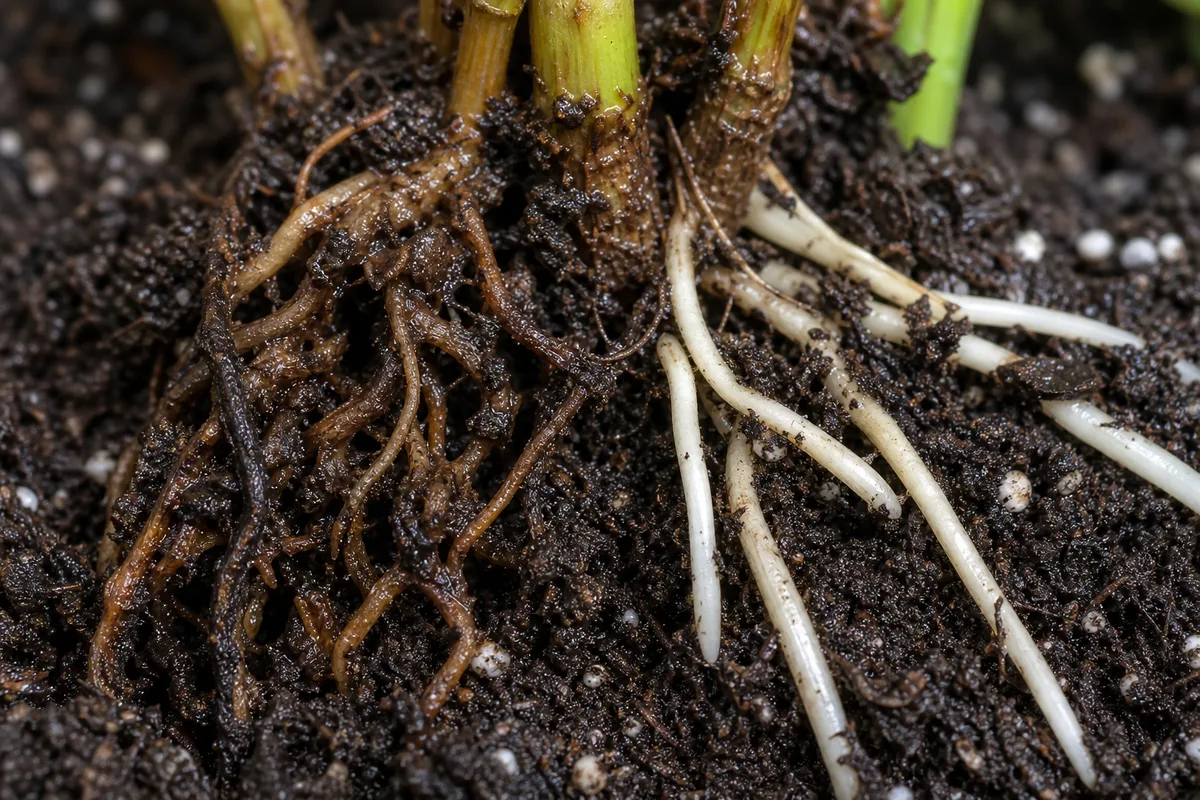
Root Rot symptoms on Schefflera - compare with healthy tissue on the same plant.
Early signs
- Yellow lower whorls while newer tips still look green briefly-damage climbs from the soil line upward
- Limp leaflets despite moist mix-the classic wet-wilt mismatch
- Sour or musty smell when you lift the pot or disturb the surface
- Pot stays heavy days after watering; surface may look dry while the center holds water
- Fungus gnats hovering near damp soil-wet mix habitat; see fungus gnats if pests appear with chronic moisture
Clemson Extension notes that leaf drop can be caused by excessive watering on scheffleras, and that root rot usually results from overly frequent watering or a mix that does not drain quickly.
Advanced signs
- Mass leaf drop-Schefflera is notorious for shedding half its canopy after a watering mistake, relocation, or cold draft combined with wet roots
- Soft, dark tissue at the stem base where it meets soggy mix
- Stems that feel hollow or mushy when pinched at the soil line
- Roots that brown, turn translucent, or slip apart when touched on unpotting
- Black mush climbing stems from the base upward-often irreversible
Judge early recovery by firm stems and new whorled leaf sets at tips, not by old damaged leaflets re-greening. Schefflera rarely restores yellowed leaflets; it replaces them with fresh terminal whorls once roots work again.
Why Schefflera gets root rot
Overwatering, poor drainage, and pot mechanics
Root rot follows soil that stays wet too long combined with mix that does not drain freely. Calendar watering, oversized pots, heavy peat blends, blocked drainage holes, and saucers left full all keep the root zone anaerobic. Clemson HGIC identifies over-watering as the main cause of death for potted plants-and roots surrounded by water cannot take up oxygen.
Nursery Scheffleras often sit in peat-heavy soil in pots generous for the root mass. Extra soil volume holds moisture long after the surface looks dry-the edge dries while the center stays saturated. Repotting into a much larger decorative container “to give it room” worsens the problem.
For mix texture and perlite ratios, see the soil guide. For pot sizing and transplant timing, see repotting.
Calendar watering in winter and low light
From fall through late winter, shorter days and cooler rooms slow Schefflera growth dramatically. The same weekly volume that worked in July keeps the mix waterlogged by February. Missouri Botanical Garden recommends you reduce watering somewhat from fall to late winter for S. arboricola.
Low light slows transpiration. A Schefflera in a dim corner may need water half as often as one on a bright sill-yet both get the same Tuesday reminder. Clemson Extension links low light to leaf yellowing with spindly, weak stems, a lookalike that often overlaps with root rot when the real issue is wet soil in a dark spot.
Cold wet roots below 60°F
Missouri Botanical Garden states indoor temperatures should not dip below 60 degrees F. in winter. Cold potting mix combined with excess moisture slows root function and accelerates decay-especially near drafty windows where Schefflera already reacts with dramatic leaf drop. Clemson Extension notes dead areas form on leaves after excessive cold and recommends maintaining temperatures above 50°F.
Saucers and cachepots without drainage
Never let a schefflera sit with water in its saucer, Clemson HGIC warns. Decorative outer pots that hide drainage holes are a common source of chronic saturation. Empty saucer runoff within 30 minutes after every watering.
How to confirm root rot
Work through these checks in order. You do not need to unpot on day one unless stems are soft or the smell is foul.
- Depth moisture test - Insert a finger or bamboo skewer 2 to 3 inches into the mix in two or three spots. If it comes out cool, dark, and clinging days after watering, the root zone is too wet. NC State Extension advises you allow the soil to dry out and then thoroughly soak dwarf umbrella tree-dry-down is normal care, not crisis-only.
- Pot weight - Lift the container. A heavy pot long after watering confirms retained moisture.
- Leaf pattern - Yellowing from the bottom up on wet soil points to roots. Uniform pale new growth in dry, lightweight soil suggests a different problem.
- Wilting paradox - Wilting is not always a sign to water. When roots are damaged by excess moisture, they cannot supply leaflets even though the mix is wet.
- Smell and drainage - Sour or rotten odor from the drainage hole, or water that sits in the saucer for hours, confirms poor oxygen at the roots.
- Root inspection - Slide the plant from the pot. Healthy roots are firm and pale tan to white. Rotted tissue is brown, black, translucent, or slimy and may slip out of its sheath. Rinse away old mix to see the full extent of damage.
If soil is wet but stems are firm, smell is normal, and only a few lower whorls have yellowed, you may have caught early overwatering-dry-down may be enough. See overwatering on Schefflera for that path. If stems soften or roots are mushy, treat as confirmed root rot and follow recovery steps below.
First fix for Schefflera
Stop watering immediately. Empty the saucer. Move the plant to bright filtered light-not direct hot sun-and assess severity before you pour again.
That single action breaks the cycle of adding moisture to an already saturated root zone. Bright light increases transpiration through Schefflera’s glossy leaflets and helps the mix lose water at a predictable rate without scorching foliage. Do not mist, fertilize, or repot on day one unless you confirm mushy roots or a complete absence of drainage.
After the initial pause, scale actions to severity:
Mild root rot (firm stems, sour smell absent, partial root browning on outer edges):
- Unpot and inspect without aggressively breaking the root ball apart.
- Trim only brown, mushy outer roots with clean scissors sterilized in rubbing alcohol.
- Repot into fresh, airy mix with added perlite in a pot sized to the remaining root mass-not dramatically larger.
- Skip watering for five to seven days after repotting unless the new mix is bone dry at depth.
- Resume watering only when the top 2 inches are dry.
Moderate root rot (widespread yellowing, early mass leaf drop, heavy pot, outer and middle roots mushy):
- Unpot, rinse away old mix, and cut away all soft, dark roots until only firm, pale tissue remains.
- Let trimmed roots air for an hour in a warm, humid room if stems are still firm.
- Repot into fresh mix with excellent drainage-see the soil guide for perlite-bark ratios.
- Remove fully yellow whorls; they will not re-green.
- Hold fertilizer until new terminal growth appears.
Severe root rot (mushy stem base, sour smell, wilting on wet soil, black tissue climbing stems):
- Unpot, rinse away all old mix, and cut away every soft root and any stem that is collapsed or black at the base.
- If multiple stems remain firm above the rot line, treat each as a separate recovery candidate.
- Repot only the salvageable portions into the smallest pot that fits trimmed roots.
- Expect substantial leaf drop during week one-judge progress by firm remaining stems, not leaflet count.
- If the entire stem base is black and mushy with no firm tissue above, recovery is unlikely-replace the plant rather than repot into a larger pot hoping for magic.
When you do water again after recovery begins, deeply water and then allow soils to nearly dry before applying an additional deep watering-Missouri Botanical Garden’s rhythm for S. arboricola. Water until it runs from drainage holes, then discard saucer runoff within 30 minutes.
Recovery timeline
Mild cases with partial outer root trim often stabilize within two to four weeks once dry-down rhythm is restored. Yellow leaflets drop; new whorls at tips tell you roots are working again.
Moderate cases with substantial root removal may take six to twelve weeks before consistent new growth. Schefflera leaf drop can look catastrophic in week one even when the plant will survive-judge progress by firm stems and fresh terminal leaf sets, not by how many old leaflets remain.
Severe root loss can take a full spring-to-summer growing season. Some damaged leaflets and stems never recover cosmetically; prune after stabilization improves shape.
Consider replacing the plant if, after careful root surgery and eight to twelve weeks in corrected care, no new terminal growth appears and remaining stems soften progressively. Schefflera can recover from substantial leaf drop but not from a fully collapsed root system and blackened stem base.
What not to do
Do not water because leaflets look sad without checking soil depth first-the classic error that turns mild overwatering into confirmed rot.
Do not repot into a much larger pot to “fix” drying. Extra soil holds moisture and delays recovery.
Do not mist or increase humidity as a substitute for fixing wet roots. Surface moisture does not help anaerobic soil at the bottom of the pot.
Do not fertilize a stressed, yellowing Schefflera hoping to push new growth. Roots in damaged condition cannot safely process salts.
Do not assume wilting always means dry soil. Watering when roots are rotting can make the problem worse.
Do not leave the plant in a saucer of standing water “so it can drink when it wants.”
Do not place a recovering Schefflera in a dim corner “to rest.” Medium to bright filtered light supports recovery without forcing growth in direct sun.
How to prevent root rot next time
Build a check habit instead of a calendar habit. Touch the mix at 2 inches depth, lift the pot, and only then decide whether to pour. Reduce frequency automatically from fall through late winter when Schefflera growth slows.
Use containers with drainage holes and a mix that includes perlite or bark for good drainage-NC State lists this as a cultural requirement for dwarf umbrella tree indoors.
Place Schefflera in medium to bright filtered light so transpiration matches your watering rhythm. A plant in adequate light dries more predictably than one surviving in a dark hallway.
When repotting, choose the next pot size up only-not a jump to a decorative floor container three sizes larger.
Leaves will drop if soils become too moist or too dry, Missouri Botanical Garden notes for S. arboricola-your goal is the middle path: deep watering followed by real dry-down, not constant dampness.
| Factor | Root rot risk | Better practice |
|---|---|---|
| Winter in dim room | High - slow uptake, wet mix | Extend interval; verify depth, not surface color |
| Bright east/west window | Lower - faster dry-down | Top 1–2 inches dry; typical 7–12 days in active growth |
| Oversized pot | High - excess soil holds water | Size pot to root mass; up-pot only when roots circle |
| Peat-heavy nursery mix | High - stays wet at center | Add perlite at repot; see soil guide |
| Saucer/cache pot | High - roots reabsorb standing water | Empty within 30 minutes; never seal drainage |
When to worry
Treat as urgent when the stem base feels mushy, the mix smells rotten, wilting continues on wet soil, or the plant drops most of its leaflets within a week. Those signs suggest active root decay-continued watering or repotting without trimming dead roots rarely ends well.
Escalate to full root surgery within days if you confirm black mushy roots on inspection. Waiting while watering “lightly” usually converts moderate rot into severe stem-base collapse.
Repotting safety
Schefflera is toxic to cats and dogs if chewed-calcium oxalate crystals irritate the mouth and cause drooling and vomiting. During root inspection and repotting, soil and trimmed tissue are exposed. Keep recovering plants and discarded root material out of pet reach until the pot is sealed and surfaces are cleaned. NC State notes the plant is seriously toxic to dogs and cats and that sap can irritate sensitive skin-wear gloves when trimming extensively.
Conclusion
Root rot on Schefflera is a root-oxygen problem disguised as a leaf problem. Yellow lower whorls, limp leaflets on wet soil, and dramatic half-canopy drop usually mean the mix has stayed wet too long-especially in winter, low light, or cold drafty spots-not that the plant needs another drink. Stop watering, confirm moisture at depth, unpot when stems soften or roots are mushy, trim decayed tissue, and repot into airy mix sized to remaining roots. Firm stems and fresh whorled growth at the tips are the recovery signals worth watching for.
This page was reviewed by the LeafyPixels Review Board against Clemson HGIC, Missouri Botanical Garden, and NC State schefflera references, and our watering, overwatering, and soil guides before publication. Author: sai-ananth. Reviewed: 2026-06-16.
Related guides:
- Overview - full indoor care hub
- Watering - top 2-inch dry-down protocol
- Overwatering - early wet-soil stress before confirmed rot
- Soil - perlite-bark mix that drains fast
- Wilting - wet-soil vs. dry-soil wilt split
- Yellow leaves - bottom-up whorl yellowing patterns
When to use this page vs other Schefflera guides
- Schefflera watering guide - Use for routine moisture checks before assuming root rot is the main issue.
- Schefflera problems hub - Browse all 18 common issues on this species.
- Overwatering on Schefflera - Different entry point when symptoms overlap with root rot.
- Yellow Leaves on Schefflera - Different entry point when symptoms overlap with root rot.
- Wilting on Schefflera - Different entry point when symptoms overlap with root rot.