Fungus Gnats on Schefflera: Causes, Checks & Fixes
Quick answer
Fungus gnats on Schefflera almost always mean the soil surface stays wet too long-usually from watering before the top 2 inches dry or keeping the plant in dim light. First step: stop watering and let the upper mix dry completely before the next drink.
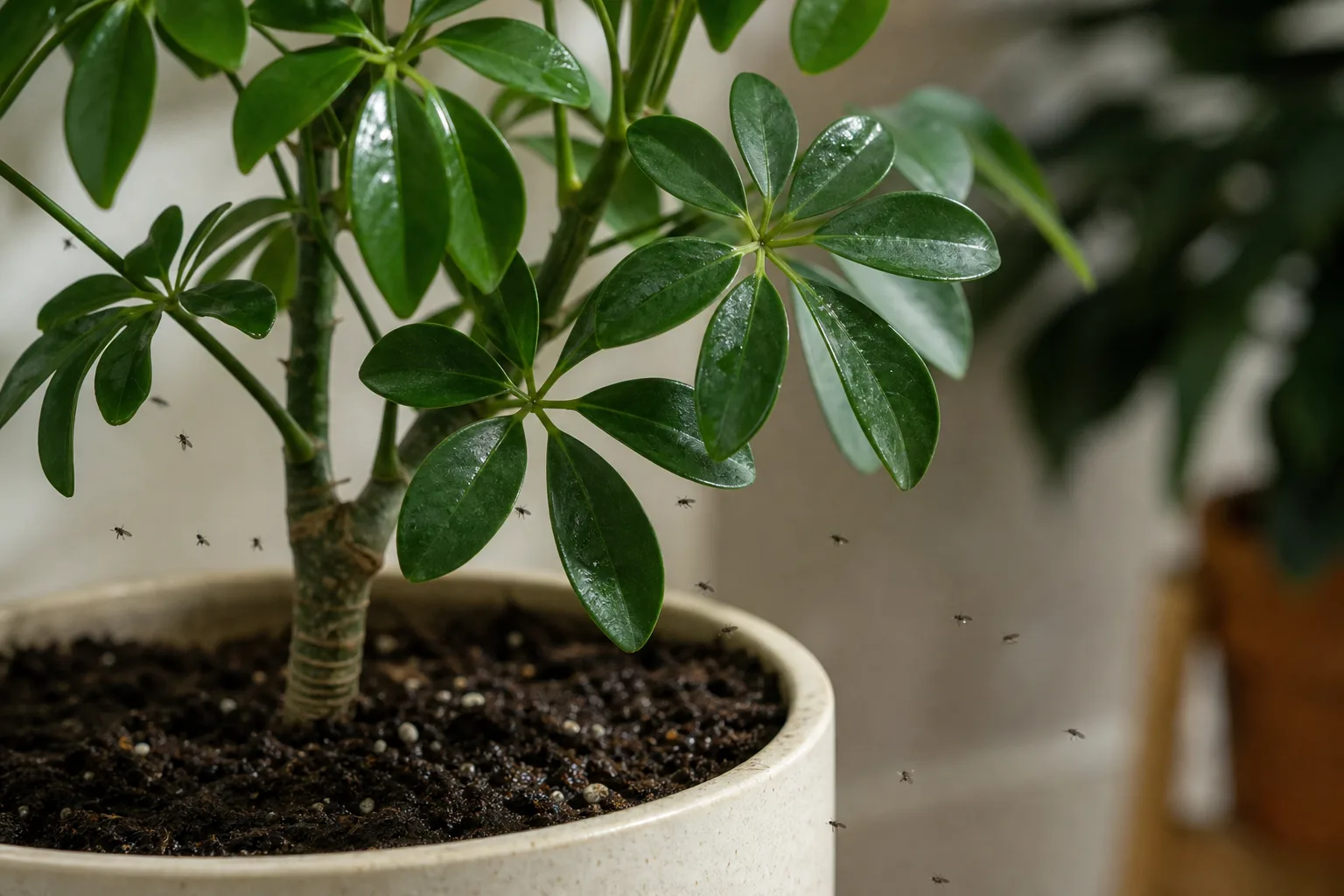
Fungus Gnats on Schefflera: Causes, Checks & Fixes
This guide covers fungus gnats on Schefflera. See also the general Fungus Gnats guide, watering, and light pages for this plant.
Fungus Gnats on Schefflera: Causes, Checks & Fixes
Quick answer
Fungus gnats on Schefflera are a soil-moisture problem, not a leaf disease. The tiny flies breed in damp organic potting mix; their larvae live in the top inch or two of soil and feed on fungi, decaying matter, and sometimes tender feeder roots. Adults are mostly a nuisance, but they tell you the pot is staying wet longer than Schefflera overview prefers.
First step: stop watering and let the top 2 inches of mix dry completely. Schefflera is normally watered on that same dry-down schedule, so gnats usually mean you watered too soon, the pot is in too little light to dry, or the mix holds moisture at the surface. Fix the wet habitat before reaching for sprays.
What fungus gnats look like on Schefflera
On Schefflera, fungus gnats show up around the pot-not on the glossy palmate leaves themselves.
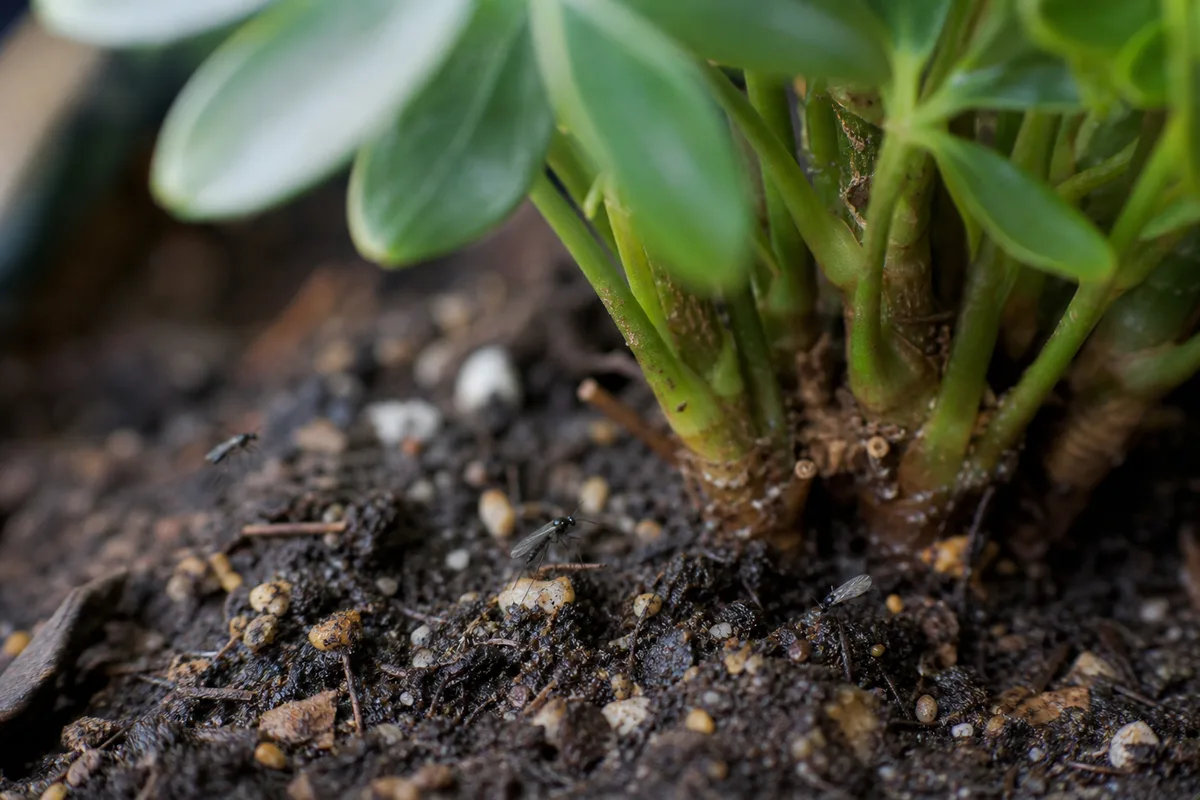
Fungus Gnats symptoms on Schefflera - compare with healthy tissue on the same plant.
Adult flies:
- Tiny dark or grayish flies, about 1/8 inch long, with long legs and a mosquito-like silhouette
- Hover near the soil surface, especially when you water or brush the pot rim
- Often fly toward windows or room lights
- More visible after watering disturbs the mix
Larval signs in soil:
- Thin white or translucent worms in the top layer of potting mix when you scrape the surface gently
- Soil that stays visibly damp on top for several days between waterings
- Sometimes white fungal growth or algae on the soil surface alongside the flies
What Schefflera leaves do-and do not-show:
Healthy umbrella plant foliage stays firm and glossy unless a separate stress is involved. Fungus gnats do not chew holes, leave sticky residue, or cause the mottled patterns you see with spider mites or scale. If leaves yellow or drop while gnats are present, suspect the chronic overwatering on Schefflera that attracted the gnats-not the flies directly.
Gnats often appear together with mold on the soil surface, since both thrive in the same wet, organic top layer.
Why Schefflera gets fungus gnats
Schefflera does not attract gnats because of something unique in its leaves. The combination of how this plant is usually potted, watered, and placed indoors creates ideal breeding conditions when any step slips.
Overwatering before the top 2 inches dry. Schefflera tolerates some drought but dislikes sitting in wet mix. Many owners water on a calendar instead of checking soil depth. Each extra drink keeps the surface moist long enough for female gnats to lay eggs and for larvae to hatch.
Peaty, organic potting mix that holds surface moisture. Schefflera grows well in a peaty well-drained mix, but peat-rich media stays damp at the top even when lower layers have dried somewhat. That upper moisture is exactly where fungus gnat larvae live.
Low light slows drying. Schefflera accepts medium indirect light but dries much faster in bright filtered light. A large plant in a dim corner may take a week or more to lose surface moisture-long enough for multiple gnat generations to build.
Oversized pots and cool seasons. A pot much larger than the root ball holds excess wet mix around the edges. In fall and winter, shorter days slow Schefflera growth and water uptake, yet many owners keep the same watering frequency, leaving the top layer chronically damp.
Introduction from new or outdoor plants. Eggs can arrive in nursery soil on newly purchased plants or on Schefflera brought back inside after summer outdoors. Shared moist conditions let populations spread to nearby pots.
How to confirm the cause
Work through these checks before treating:
- Fly behavior - Gnats rise from the soil when watered and hover near the pot rim. If insects stay on leaf undersides or stems instead, look at spider mites, aphids, or whiteflies.
- Soil moisture depth - Insert a finger to the second knuckle. If the top 2 inches feel cool and clump together days after watering, overwatering is confirmed.
- Pot weight - Lift the container. A Schefflera pot that feels heavy days after a drink is holding too much moisture.
- Larva check - Scrape aside the top half-inch of mix with a spoon. Translucent larvae confirm fungus gnats; no larvae after a week of dry surface cycles suggests adults from a declining population.
- Sticky trap test - Place a yellow sticky card just above the soil. Catching small gnat-like flies within 24–48 hours supports the diagnosis.
- Leaf and stem inspection - Firm whorled leaves and woody stems with no sticky film or webbing mean the plant tissue is not the pest site-soil is.
If traps stay empty, soil dries normally within a few days, and no larvae appear, the flies may be coming from another nearby pot or a drain-not from your Schefflera.
First fix for Schefflera
Let the top 2 inches of potting mix dry completely before you water again.
This single step matches Schefflera’s normal care rhythm and attacks the problem at its source. Dry surface soil kills larvae in the upper layer and makes the pot unattractive for egg-laying females. For a heavily overwatered Schefflera, the first dry cycle may take seven to ten days depending on pot size, light, and season-resist the urge to “help” with a mid-cycle drink.
While the soil dries:
- Move the plant to brighter filtered light if it sits in a dim spot, which speeds drying without shocking the plant
- Remove fallen leaflets and debris from the soil surface so larvae lose an easy food source
- Empty the saucer so the bottom of the mix is not wicking moisture back up
Do not repot, prune heavily, or fertilize during this first dry-down. Schefflera already drops leaves when stressed; stacking interventions makes recovery harder to read.
Step-by-step recovery
After the first dry cycle, continue in this order based on severity:
Mild infestation (a few flies, firm plant)
- Resume watering only when the top 2 inches are dry-every time, not just until gnats fade
- Place yellow sticky traps at soil level to monitor adult numbers
- Expect fly counts to drop over two to three weeks as dry cycles break overlapping generations
Moderate infestation (daily flies, damp soil history)
- Complete the dry-down above, then maintain the 2-inch rule permanently
- Add yellow sticky traps near each affected pot
- Apply a Bacillus thuringiensis israelensis (BTI) drench to the soil surface on the label schedule to target larvae directly
- Scrape and discard the top half-inch of soggy mix if it smells musty, replacing with fresh dry perlite-heavy mix on the surface
Persistent infestation (swarms after four weeks of dry cycles)
- Confirm no pot in the same room is still overwatered-gnats travel
- Consider bottom-watering so roots get moisture while the top inch stays drier
- Repot only if mix is degraded, compacted, or smells sour; use fresh well-draining mix with added perlite and a pot only slightly larger than the root ball
- Continue BTI or beneficial nematode applications on a repeat schedule until traps stay nearly clean for two weeks
Avoid spraying leaves with insecticides for fungus gnats-the pest is in the soil, not the foliage.
Recovery timeline
Fungus gnat life cycles run about two to three weeks at typical indoor temperatures. Because eggs, larvae, and adults overlap, full suppression usually takes two to four weeks of consistent dry surface cycles plus traps or larval treatment.
Signs the fix is working:
- Fewer flies visible when watering
- Sticky traps catching declining numbers each week
- Top inch of mix dries within three to five days after watering
- New whorled leaf sets opening at stem tips on established Schefflera
Signs the problem is worsening:
- Fly numbers rising despite dry surface soil-check neighboring pots
- Soft stems at the base, sour soil smell, or yellowing lower leaves spreading upward-chronic wetness may have damaged roots
- Seedlings or recent cuttings collapsing while adults persist
Damaged old leaves on Schefflera do not recover; judge success by reduced fly activity, stable stems, and fresh growth-not by older leaflets re-greening.
Lookalike symptoms
| What you see | Likely cause | How to tell apart |
|---|---|---|
| Tiny flies from soil when watering | Fungus gnats | Flies emerge from pot, not from leaves; larvae in top mix |
| White insects flying when stems shaken | Whiteflies | Insects come from leaf undersides, not soil surface |
| Fine webbing on leaf undersides | Spider mites | Webbing and stippling on leaves; dry air stress-not soil flies |
| Small flies around kitchen fruit | Fruit flies | Near food waste, not tied to one plant pot |
| Mold on soil without flies | Surface fungi from wet mix | May precede gnats; drying soil helps both |
Mistakes to avoid
- Watering on schedule while gnats are active - Calendar watering keeps the surface wet. Check the top 2 inches every time.
- Spraying the leaves - Foliar insecticides do not reach soil larvae and add stress to Schefflera already coping with wet roots.
- Stopping treatment when adults disappear - Larvae continue in moist mix below the surface. Keep dry cycles and traps for at least three weeks.
- Schefflera repotting guide immediately - Unnecessary repotting shocks Schefflera and can worsen leaf drop unless the mix is clearly failing.
- Bottom-watering without fixing frequency - Bottom-watering helps keep the top dry only if you still allow proper dry-down between sessions.
- Ignoring a dim location - Correcting water alone may not be enough if the pot never dries in low light.
Schefflera care cross-check
Fungus gnats fade when the overall care rhythm matches what this plant needs:
- Light: Bright filtered or medium indirect light so the pot uses water steadily
- Water: Top 2 inches dry before each watering; reduce frequency in fall and winter when growth slows
- Soil: Well-draining mix with perlite; avoid dense, water-retentive peat-heavy blends in low-light spots
- Temperature: Keep above 60°F; cold rooms slow drying and stress the plant
- Debris: Remove dropped leaflets from the soil surface promptly
When these basics align, gnats usually decline without heroic intervention.
How to prevent fungus gnats next time
Prevention is mostly habitat management:
- Check soil depth before every watering-never assume the same interval works year-round
- Use yellow sticky traps as early monitors when moving plants indoors in fall
- Quarantine new plants for two to three weeks before placing them near Schefflera
- Match pot size to the root ball; oversized containers stay wet at the edges
- Improve light before increasing water in winter
A Schefflera in bright filtered light, an appropriately sized pot, and a strict dry-down routine rarely supports a lasting gnat population.
When to worry
A few fungus gnats around an otherwise healthy Schefflera with firm stems is a moisture warning-not a death sentence. Act more aggressively when:
- Fly swarms grow weekly despite dry surface soil
- Soil smells sour or stems soften near the base
- Mass leaf drop follows a period of heavy watering
- Fresh cuttings or small Schefflera seedlings wilt while the mix stays wet
In those cases, inspect roots when repotting is already necessary, trim clearly rotted tissue, and repot into fresh fast-draining mix. Mature umbrella plants with solid root systems recover slowly but reliably once wet conditions end.
When to use this page vs other Schefflera guides
- Schefflera watering guide - Use for routine moisture checks before assuming fungus gnats is the main issue.
- Schefflera problems hub - Browse all 18 common issues on this species.
- Overwatering on Schefflera - Different entry point when symptoms overlap with fungus gnats.
- Mold on Soil on Schefflera - Different entry point when symptoms overlap with fungus gnats.
- Root Rot on Schefflera - Different entry point when symptoms overlap with fungus gnats.