Slow Growth on Schefflera: Causes, Checks & Fixes
Quick answer
Slow growth on Schefflera is often normal in short winter days, but no new whorls for months during warm weather usually means low light, cool rooms below 60°F, or a root-bound pot. First step: confirm the season, then move to brighter filtered light if growth should be active.
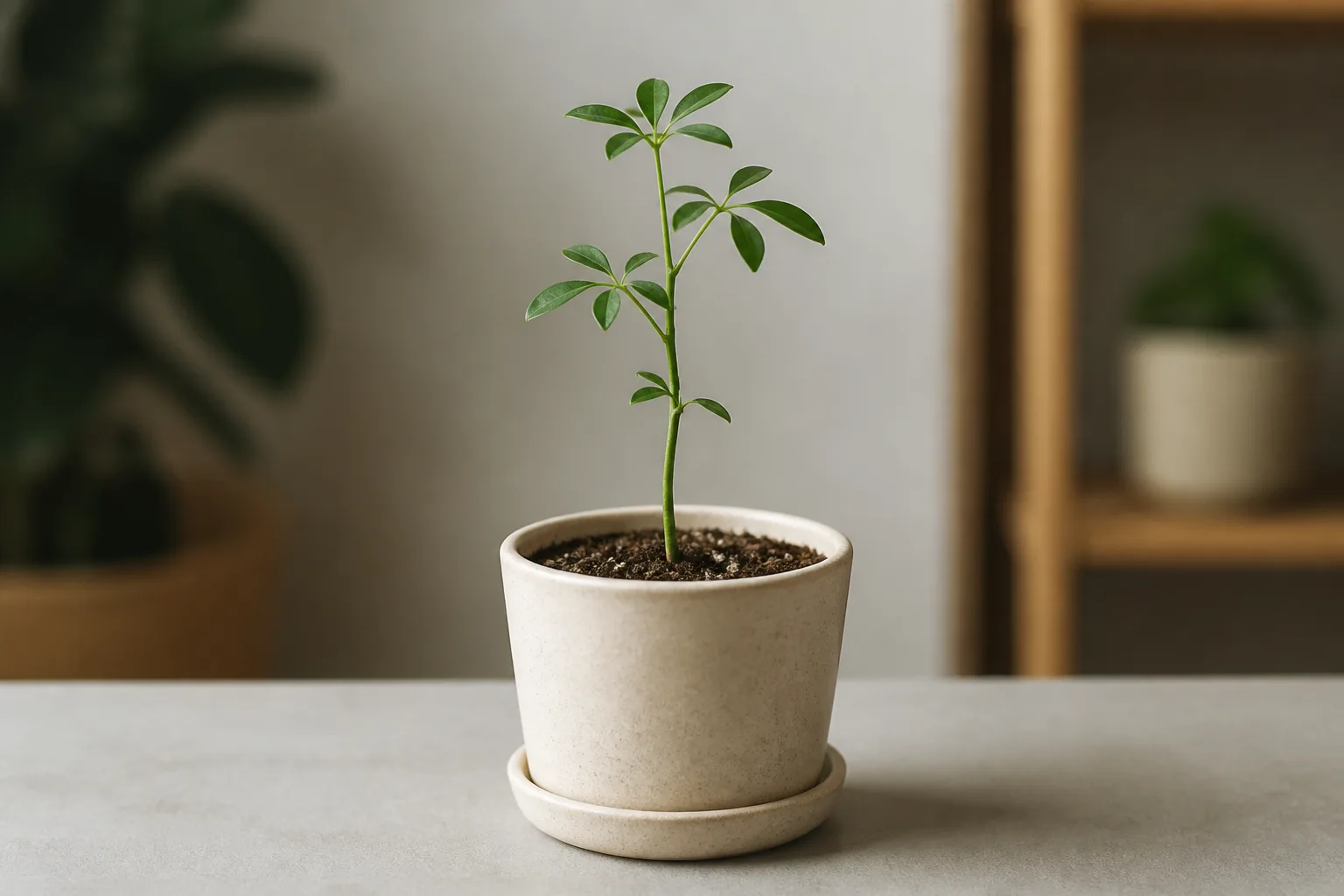
Slow Growth on Schefflera: Causes, Checks & Fixes
This guide covers slow growth on Schefflera. See also the general Slow Growth guide, watering, and light pages for this plant.
Slow Growth on Schefflera: Causes, Checks & Fixes
Quick answer
Schefflera (Schefflera arboricola) is a moderate indoor grower-not as fast as pothos, not as static as a ZZ plant. A healthy specimen pushes new whorled leaf sets every few weeks during warm months. When growth stalls for months while the plant otherwise looks alive, the bottleneck is usually environmental: insufficient light, cool rooms, root congestion, or chronic care stress-not a mysterious disease.
First step: confirm whether the pause is seasonal or abnormal. If it is November through February and foliage stays green with firm stems, slow whorl production is expected-hold watering steady and wait for longer days. If no new whorl has opened in six or more weeks between March and September, move the pot to the brightest filtered location you can sustain at an east, west, or south window before Schefflera repotting guide or fertilizing.
What slow growth looks like on Schefflera
Slow growth on Schefflera is a rate problem, not always a color problem. The compound leaves may stay green while the canopy stops expanding.
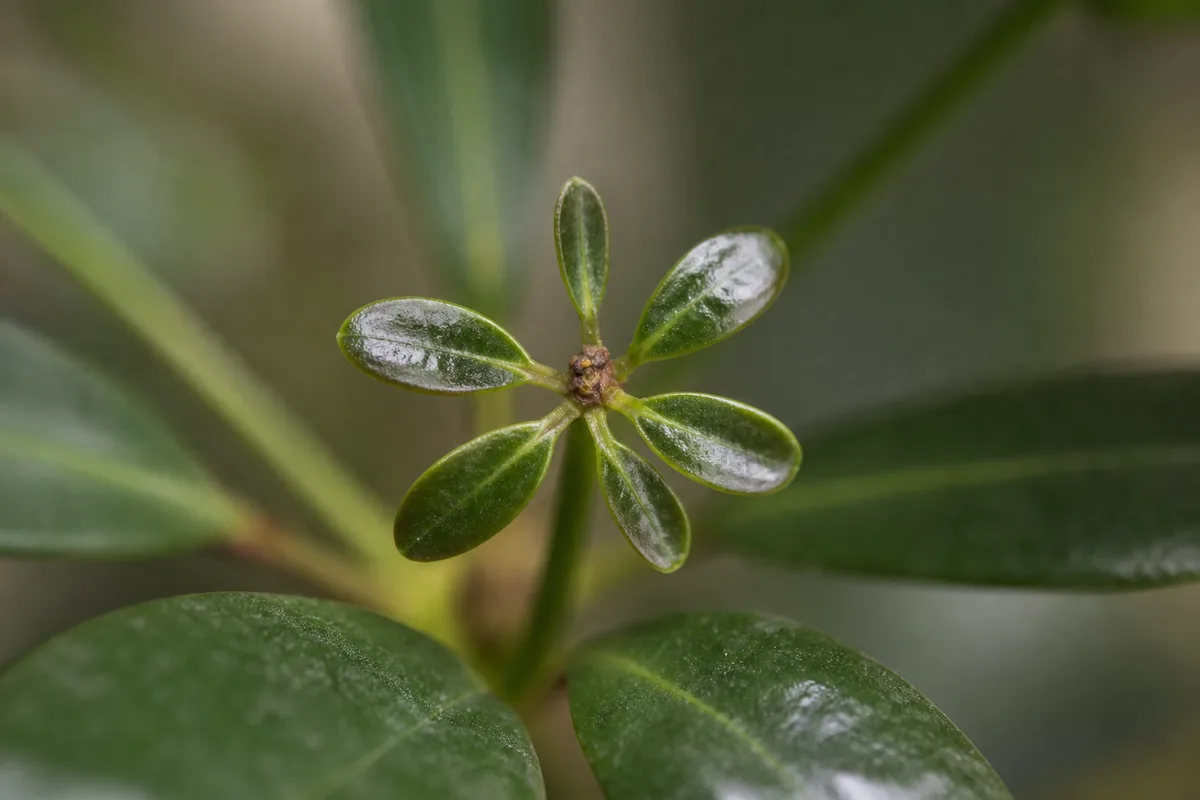
Slow Growth symptoms on Schefflera - compare with healthy tissue on the same plant.
Typical signs include:
- No new whorled leaf sets for many weeks during warm weather, even though older foliage looks fine
- Smaller new leaflets on the latest whorl compared with sets from six months ago
- Long gaps between whorls on upright stems-the plant grows, but barely
- Pot weight unchanged for weeks after your normal Schefflera watering guide
- Roots circling the pot surface or emerging from drainage holes while top growth flatlines
- Months without upward extension while lower whorls gradually drop in dim corners
Slow growth differs from leggy growth, where stems stretch dramatically toward windows. A Schefflera can grow slowly and stay compact in deep shade-it simply produces fewer whorls with smaller leaflets. It also differs from complete dormancy: the plant is alive, firm, and occasionally drops an old leaf, but it is not building new umbrella spokes at the top.
Variegated cultivars such as ‘Gold Capella’ and ‘Trinette’ often stall sooner than all-green plants when light or nutrients run short-the pale tissue costs more energy to maintain.
Why Schefflera grows slowly
Several factors limit Schefflera more predictably than random “bad luck”:
Insufficient light is the most common limiter indoors. Schefflera tolerates moderate light longer than crotons or fiddle-leaf figs, but it still needs bright light at east, west or southern windows in curtain filtered sun to fuel whorl production. Low light can cause leaf yellowing with spindly, weak stems while the plant survives on stored reserves in dim corners.
Cool temperatures and drafts suppress metabolism. Schefflera is tropical foliage. Indoor temperatures should not dip below 60 degrees F. in winter, and Clemson Extension recommends day temperatures between 65 and 75 °F with nighttime temperatures above 60 °F. Prolonged exposure below that range stalls growth even when light is acceptable.
Root-bound pots restrict uptake. Schefflera can live root-bound for a while, but once roots circle densely and water runs straight through, the plant lacks room and fresh substrate to support new whorls. Growth flatlines while the canopy looks unchanged.
Depleted or compacted soil limits nutrients and oxygen. Old peat-based mix breaks down after one to two years. Even with regular watering, roots work harder and top growth slows.
Chronic overwatering on Schefflera in low light stalls the whole system. Schefflera transpires slowly in dim placement. Mix stays wet, root oxygen drops, and the plant redirects energy away from new whorls toward survival. Yellow lower leaves and fungus gnats often appear alongside the growth pause.
Low-level pest pressure drains vigor. Watch for spider mites in dry indoor conditions on leaf undersides during heating season; scale can be a serious problem along petioles and stems. Neither always causes obvious collapse at first-they quietly reduce the energy available for new growth.
Normal seasonal slowdown. Short winter days naturally reduce whorl frequency. Reduce watering somewhat from fall to late winter to match the slower metabolism-provided stems stay firm and you are not overwatering a plant that is using moisture slowly.
How to confirm the cause
Work through these checks in order before stacking fixes:
- Season and calendar - When did the last whorl open? A quiet plant from November through February is often normal. The same silence from April through August warrants action.
- Light at the pot - Stand where the plant sits at midday. A soft diffuse shadow on the whorls means usable indirect light; no shadow suggests a light bottleneck. Note distance from the brightest window.
- Temperature stability - Feel the air near the pot at night. Cold glass, open windows, and AC vents that hit the canopy overnight suppress growth on Schefflera overview.
- Soil moisture rhythm - Press the top 2 inches of mix. If it stays damp two weeks after watering while growth is flat, metabolism is too slow-often from dim light or root stress. If it dries in two to three days but no whorls appear, suspect light or root congestion before underwatering on Schefflera.
- Root and pot check - Slide the plant partway out of the pot. Dense circling roots, little visible soil, and water that exits immediately suggest root-bound conditions. Mushy roots or sour smell point to rot, not simple slow growth.
- Pest scan - Inspect leaf undersides and stem joints with a hand lens. Fine webbing, stippling, sticky residue, or immobile bumps explain slow growth without obvious wilting.
- Recent changes - Repotting, a big move, or a heat-wave relocation can pause growth for two to four weeks. Distinguish post-change rest from chronic stagnation.
If the plant is firm, soil dries on a predictable schedule, and the calendar explains the pause, you may not need intervention-just adjusted expectations through winter.
First fix for Schefflera
Move the pot to brighter filtered light if growth should be active and no environmental shock explains the pause.
For most homes that means:
- An east windowsill with morning sun and Schefflera light guide the rest of the day
- One to three feet back from south or west glass with a sheer curtain filtering midday beams
- A full-spectrum grow light 12 to 18 inches above the canopy for 10 to 12 hours daily if natural windows are insufficient-NC State recommends filtered light for 3 to 4 hours daily as the baseline for houseplant Schefflera
Make one change: placement. Do not simultaneously repot, fertilize, or increase watering. Schefflera drops leaves when stressed; stacking variables hides whether light was the real limiter.
If it is clearly winter rest-firm stems, stable foliage, short days-skip the move and reduce watering slightly to match slower use instead of forcing growth with feed or extra moisture.
Step-by-step recovery
After improving light (or confirming seasonal rest), follow this order:
- Hold watering steady for one week - Brighter light usually means faster dry-down. Adjust only after you see how the top 2 inches behave in the new spot.
- Warm the microclimate - Move the pot away from cold glass and drafty vents. Stable warmth supports whorl production once light is adequate.
- Rotate the pot weekly - Even light helps new whorls fill around the canopy instead of only on one side.
- Repot in spring if roots are circling - Repot overcrowded plants one size up with fresh, peaty well-drained mix. Root-bound Schefflera often resumes growth within three to four weeks after repotting if stems and roots were firm going in.
- Feed lightly only after growth restarts - Fertilize scheffleras regularly at half strength during active whorl production; plants growing in reduced light will need less frequent fertilization than those in bright light-not while stressed, newly repotted, or in winter rest.
- Treat pests if confirmed - Rinse leaf undersides and treat spider mites or scale before expecting a growth spurt. Feeding a pest-drained plant will not produce whorls.
Recovery timeline
Weeks one to two: The plant may look unchanged or drop a few leaves after a light move. Watch for firm new tip tissue and slightly faster soil dry-down as early positive signs.
Weeks three to six: New whorled leaf sets should emerge closer together and glossier than the most recent pale or tiny growth. That fresh whorl frequency is the metric that matters.
Two to three months: Canopy height and density improve as side shoots develop. A root-bound plant repotted in spring often shows the clearest jump in this window.
What will not recover: Old elongated internodes, dropped lower whorls, and any tissue damaged by secondary root rot on Schefflera. Those stay as history while new growth carries the plant forward.
Worsening signs: Continued yellowing with sour wet soil, soft stems at the base, mass leaf drop after acclimation, or new whorls that stay tiny and pale after six weeks in bright filtered light. Recheck roots, pests, and whether the spot is still too dim.
Lookalike symptoms
- Normal winter slowdown - Fewer whorls in short days with firm green stems. Wait or supplement light; do not overwater to “wake” the plant.
- [Not enough light / leggy growth on Schefflera on Schefflera](/plants/schefflera/leggy-growth/) - Indoor plants can become spindly or “leggy” as they stretch to reach for more light. Long gaps between whorls and window-leaning stems on Schefflera fit this pattern; light is the primary fix.
- Overwatering / root stress - Yellow lower whorls, sour wet mix, fungus gnats. Fix dry-down and inspect roots if the base softens-not fertilizer.
- Underwatering - Light pot, dry mix throughout, crispy leaflet edges. Deep soak once; do not move farther from light.
- Nutrient deficiency - Pale new growth on old depleted soil after light and watering are already correct. Feed at half strength during active growth only.
- Spider mites or scale - Stippling, webbing, or sticky residue with flat growth despite good light. Treat pests before expecting new whorls.
Mistakes to avoid
Do not fertilize heavily to force whorls-without adequate light and healthy roots, nutrients cannot build new umbrella sets and may burn stressed tissue.
Do not repot on day one unless roots are circling or mix is failing. Unnecessary repotting pauses growth further on Schefflera.
Do not overwater a dim, quiet plant to stimulate growth. Slow metabolism plus wet mix invites root stress and leaf drop.
Do not expect summer growth rates in January. Seasonal slowdown is normal; the mistake is treating dormancy like a deficiency.
Do not upgrade to an oversized pot hoping for faster growth. Excess soil volume stays wet longer and can slow roots further.
How to prevent slow growth
Place Schefflera where bright filtered light is realistic year-round, not only where the tree looks good decoratively. Re-check window intensity each spring when sun angle increases.
Repot every one to two years-or when roots circle and water runs through instantly-using peaty well-drained soil mix with added perlite. Feed lightly during active growth only after watering rhythm is stable.
Keep temperatures consistently warm, rotate the pot weekly, and clean leaves as needed with a damp sponge so lower whorls photosynthesize efficiently. Scout leaf undersides during winter heating season before mites drain vigor silently.
Track whorl frequency monthly rather than reacting only when the plant looks sparse. One new set every three to five weeks in summer is healthy; none in eight weeks during warm weather is a signal to act.
When to worry
Escalate when slow growth pairs with sour wet soil, soft stems at the base, mass leaf drop after a move, or spreading pest signs. Those patterns can progress to root loss or canopy collapse quickly on Schefflera.
A firm, green plant that simply rests through winter is not urgent. A plant that has not grown since last spring while sitting in a dim, constantly damp pot is-fix light and dry-down this week.
Conclusion
Slow growth on Schefflera is often a solvable bottleneck, not a death sentence. Confirm whether the pause matches winter rest or abnormal stagnation, then address the most likely limiter-usually light during active months, or root space and warmth when light is already adequate. Judge success by new whorl size and frequency, not by whether old bare stems magically fill in. Get the growing conditions right and Schefflera resumes the steady umbrella-by-umbrella climb that made you buy it in the first place.
When to use this page vs other Schefflera guides
- Schefflera watering guide - Use for routine moisture checks before assuming slow growth is the main issue.
- Schefflera problems hub - Browse all 18 common issues on this species.
- Not Enough Light on Schefflera - Different entry point when symptoms overlap with slow growth.
- Leggy Growth on Schefflera - Different entry point when symptoms overlap with slow growth.
- Yellow Leaves on Schefflera - Different entry point when symptoms overlap with slow growth.