Schefflera Watering Guide: Schedule, Checks & Fixes
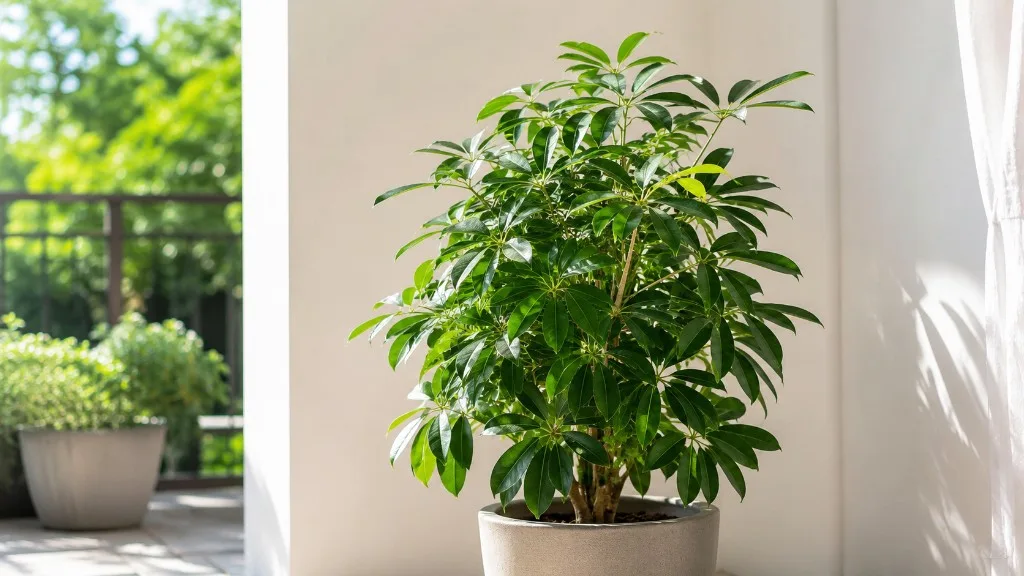
Schefflera Watering Guide: Schedule, Checks & Fixes
Schefflera Watering Guide: Schedule, Checks & Fixes
When Schefflera leaflets droop, most growers reach for the watering can - but the same wilted look appears when roots are rotting in wet soil and when the mix is genuinely dry. That paradox is why umbrella plants frustrate people who follow a fixed weekly schedule. The fix is not a better calendar; it is learning to read moisture at depth, pot weight, and whether yellow leaves feel soft on a heavy pot or crispy on a light one.
Reviewed by LeafyPixels Review Board · Author: sai-ananth
This guide covers indoor Schefflera arboricola (dwarf umbrella tree) and Schefflera actinophylla (full umbrella tree). For light, soil, and full care context, start with the Schefflera overview.
Quick Answer
Water Schefflera when the top 1 to 3 inches of potting mix are dry - many homes land near 7 to 12 days in spring and summer and 14 to 21 days in fall and winter, but only as a check reminder, not a rule. Soak until water runs from drainage holes, empty the saucer, and never let the pot sit in runoff. Clemson HGIC advises watering thoroughly, then letting soil dry to ½ inch deep before the next drink - a conservative lower bound if you tend to overwater. Missouri Botanical Garden recommends deep watering followed by allowing soils to nearly dry before the next soak, with reduced frequency from fall through late winter. If leaflets wilt on wet, heavy soil, suspect overwatering or root rot - not thirst.
Dwarf Umbrella Tree vs. Schefflera: Which Watering Page?
Same plant, two URLs. Retail tags often say “dwarf umbrella tree” while botanical slugs say Schefflera arboricola. LeafyPixels publishes watering guidance under both schefflera (this page - genus hub for S. arboricola and S. actinophylla) and dwarf-umbrella-tree (cultivar-focused S. arboricola detail). Use this page for species comparison, wilting-in-wet-soil diagnosis, and links to the full Schefflera care cluster. The dwarf-umbrella-tree URL adds cultivar notes (‘Gold Capella’, bonsai pots) without changing the core dry-down rule: check depth, soak, drain, wait.
Why Schefflera Watering Is About Rhythm, Not a Calendar
A Tuesday phone reminder is fine as a prompt to inspect the pot - it is a poor substitute for deciding whether to pour. A schefflera in a bright living room with forced-air heat may need water every five to seven days in midsummer. The same species in a cool north-facing office might go two to three weeks between drinks in January. Pot material, soil texture, root mass, humidity, and how much new growth the plant pushes all change the interval.
What makes schefflera forgiving - and confusing - is that it tolerates brief drought better than chronic wet feet. Growers who hear “don’t overwater” give tiny sips every few days, keeping the surface damp while the center stagnates. Others skip checks, let the plant wilt repeatedly, then flood it. Both fail because they ignore whether the root zone has had time to exchange gases between drinks.
The rhythm you want: one full wetting event, a real dry-down, then another drink only when checks agree. Illinois Extension stresses that wilting can indicate either underwatering on Schefflera or overwatering - soil testing separates the two better than foliage alone.
Worked example: calibrating one pot
An 8-inch plastic nursery pot of S. arboricola in a north office (moderate indirect light, 68°F, forced-air heat) was watered weekly in January because “houseplants get watered on Fridays.” Lower leaflets turned soft yellow; the pot still felt heavy ten days after the last drink; a skewer at 3 inches pulled out cool and dark. The grower switched to a 2-inch dry-down check and stretched the interval to 18 to 21 days in winter. Yellowing stopped within three weeks; new pale-green tips appeared by late February when day length increased. The lesson: calendar frequency was wrong for low transpiration in cool soil, not because the plant “hated” office life.
How Schefflera Uses Water Indoors
Schefflera evolved as an understory tree in humid tropical forests - Taiwan and Hainan for S. arboricola, northeastern Australia and New Guinea for S. actinophylla. Rainfall is heavy but forest soils drain quickly through litter and root competition. Indoors, roots expect oxygen between waterings, not permanent saturation.
During active growth - typically spring through early fall when light is stronger - schefflera pushes new palmate leaves and uses water faster. In cooler, dimmer months, metabolic demand drops even if the plant still looks green. Cold potting mix slows root uptake, which is why winter overwatering is so common.
Rainforest Roots in a Container
Container culture compresses everything. A six-inch pot holds a fraction of wild soil volume, so errors show in days. When you water, you fill pore spaces; as mix dries, air re-enters - and that air is non-negotiable for root function. Re-watering before the center begins to dry keeps pores waterlogged. Fine roots die first, rot spreads, and foliage shows stress that mimics thirst while soil stays wet.
Depth matters more than surface color. A dusty top can hide damp soil two inches down in peat-heavy mix. A dark surface on chunky bark mix can look wet while the core is already dry. NC State Extension instructs growers to allow soil to dry out, then thoroughly soak - the indoor translation of rainforest edge drainage.
Edge-dry, center-wet trap: In oversized pots, mix at the rim dries while the root ball center stays soaked. Check near the middle of the root mass, not only at the edge, or you will water again into already-wet soil.
Dwarf Schefflera vs. Umbrella Tree
Most indoor scheffleras are Schefflera arboricola - compact, often multi-stemmed, leaflets typically under four inches. NC State notes indoor specimens usually reach 4 to 6 feet in containers. Schefflera actinophylla grows larger with bigger leaflets and higher transpiration when mature. Illinois Extension describes the full umbrella tree as reaching 8 feet indoors under good conditions; S. arboricola is smaller and often easier in average homes.
Both follow the same dry-down logic. A large actinophylla in active growth can empty a pot faster than a desk-sized arboricola. Adjust interval, not method.
How Often to Water Schefflera
There is no honest universal answer in days. Water when the top 1 to 3 inches of mix are dry - for many homes, roughly 7 to 12 days in spring and summer and 14 to 21 days in fall and winter, only if light, temperature, and pot match an average indoor setup.
Clemson’s ½-inch dry-down is a useful lower bound for heavy-handed waterers. Many growers use top 2 inches dry as a practical middle ground for well-draining indoor mix with drainage holes. Pick a threshold, apply it consistently, and adjust from plant response: persistent wilting with dry soil means shorten the interval; yellow lower leaves with wet soil means lengthen it.
| Season / condition | Typical dry-down interval | Notes |
|---|---|---|
| Spring–summer, bright indirect light | 7–12 days | Active new leaflets at tips |
| Fall–winter, normal indoor heat | 14–21 days | Slower uptake; verify depth, not surface |
| Recently repotted (larger pot) | Often 2–3 weeks+ | Extra soil holds moisture until roots fill in |
| Small pot, warm room, strong light | 5–8 days | Track pot weight closely first month |
| Low-light office corner | 18–28 days possible | Pair less water with brighter placement if possible |
The table is a starting framework, not a schedule. Your first month with a new schefflera should focus on learning this pot’s weight and dry-down speed.
The Best Moisture Check Before You Pour
Combine two or three signals so surface appearance cannot fool you: finger or skewer at depth, pot weight, then - if you own one - a moisture meter as secondary confirmation.
Finger or knuckle test: Insert your index finger to the second knuckle (roughly 2 inches) in a medium pot. Cool, clinging mix means wait. Dry mix that falls away cleanly means proceed. In large pots, use a bamboo skewer - push deep, wait thirty seconds, pull out. Damp skewer means damp soil at depth.
Pot weight: Lift the pot right after a thorough watering and notice the heft. Lift again every few days. When it feels noticeably lighter than right after a soak - in practice, many growers describe this as clearly lighter, not a precise percentage - the root ball has lost substantial stored moisture. Weight is especially reliable when the top inch lies about dryness.
Moisture meter: Read at 2 to 3 inches depth, not at the surface. Calibrate against finger and weight for the first few weeks. Chunky mixes can read differently than peat-heavy soil.
Finger, Skewer, and Pot-Weight Tests
Build a habit: check before every pour, even when you are confident. Schefflera leaves droop slightly when dry and when roots are rotting in wet soil - the fix depends entirely on which condition you have. The skewer-and-weight combo prevents watering because the plant looked sad, and skipping water because only the top looked dry while the core was soaked.
Umbrella-leaflet diagnostic: Soft yellow lower leaflets + heavy wet pot + musty smell → stop watering, inspect roots. Crispy brown edges + light dry pot + dry skewer at depth → soak once, drain fully, then resume dry-down checks.
Step-by-Step: How to Water Schefflera Properly
Once checks say the plant is ready, water for even saturation, not a quick splash.
- Use room-temperature water. Clemson indoor watering guidance recommends water between roughly 62 and 72°F - cold shocks warm roots.
- Water slowly and evenly across the surface until free drainage from bottom holes. If mix dried completely and pulled from pot walls, make several passes or bottom-water once to re-expand the ball.
- Stop when the saucer fills. Wait ten to fifteen minutes, then empty the saucer completely. Clemson HGIC is explicit: never let schefflera sit with water in its saucer.
- Remove decorative cachepots without drainage during watering, or water in the sink and return the plant only after dripping stops.
- Note date and weight while learning the rhythm - a log, not a calendar command.
Bottom watering - setting the pot in a tray for twenty to thirty minutes so mix wicks upward - works occasionally for very dry, pulled-away soil. Illinois Extension notes sub-irrigation is valid when done with full drainage afterward. For routine care, top watering with saucer emptying is simpler.
Avoid misting as a substitute for soil watering. Light foliar mist does not hydrate roots and can leave wet spots on crowded leaflet clusters when airflow is poor.
Self-watering pots and globe spikes: Schefflera tolerates brief dry spells better than constant moisture. Passive reservoirs that keep mix continuously damp often trigger the edge-dry/center-wet trap in peat blends. If you use them, verify depth moisture weekly with a skewer - do not trust the reservoir indicator alone.
Seasonal Watering Adjustments
Schefflera’s water use tracks growth phase, not temperature alone. Longer days and warmer rooms in spring increase demand; shorter days and slower metabolism in fall and winter reduce it even if your thermostat stays at 70°F.
Spring and Summer Active Growth
From roughly March through September in temperate climates - earlier under grow lights - expect faster dry-down as new palmate leaves unfold. Many scheffleras need the 7-to-12-day range in bright indirect light and well-draining mix. Active growth shows as lighter green new leaflets at tips and sometimes increased uptake within forty-eight hours after a thorough drink.
If you fertilize during this window, continue only on a plant that is already watering correctly. Nutrients do not fix waterlogged roots. Outdoor summer shelter increases demand sharply - check daily at first until you learn the new rhythm.
Fall and Winter Slowdown
From late fall through winter, extend the interval even when the top inch dries quickly. Heated indoor air pulls surface moisture, but cold roots absorb slowly. Many scheffleras need 14 to 21 days or longer between drinks in winter, especially in cool rooms or north windows. Missouri Botanical Garden recommends reducing watering somewhat from fall to late winter.
Low light + heavy watering warning: A dim corner slows transpiration while the grower interprets dull leaves as thirst. If yellowing progresses and the pot feels heavy days after watering, stop pouring - improve light modestly if possible and verify depth moisture before the next drink.
Resist watering because leaves dropped - seasonal shedding of a few older leaves can be normal. Adding water to a plant that is not using it worsens root stress. Confirm depth moisture, draft exposure, and winter light levels first.
Overwatering vs. Underwatering: Quick Comparison
| Signal | Overwatered Schefflera | Underwatered Schefflera |
|---|---|---|
| Leaflets | Soft yellow, often lower leaves first | Drooping; crispy brown edges on older leaves |
| Stems at soil line | Mushy, dark, may smell sour | Firm; may look slightly shrunken |
| Pot weight | Heavy days after watering | Noticeably light when lifted |
| Soil at 2–3 inches | Cool, clings to skewer; may smell musty | Dry; skewer pulls out clean |
| Wilting | Common despite wet soil (root failure) | Common with dry soil; firms after one soak |
| Insects / surface | Fungus gnats, white mold on mix | Rare unless stress is chronic |
| First action | Stop watering; inspect roots; see root rot | Soak thoroughly once; drain; resume dry-down checks |
Clemson HGIC notes root rot usually results from mix that does not drain quickly or overly frequent watering. Underwatering is more recoverable - but repeated drought still costs leaves and fine roots.
For chronic wet-soil decline beyond in-page recovery steps, escalate to the dedicated overwatering and root rot guides rather than repotting on autopilot.
Water Quality, Temperature, and Humidity
Schefflera is not the most fluoride-sensitive houseplant, but poor water quality combined with low humidity can show as brown leaflet tips when watering is otherwise correct. Room-temperature filtered or settled tap water is fine for most homes. Illinois Extension suggests letting tap water sit if chlorine or fluoride is a concern.
Temperature: Missouri Botanical Garden recommends keeping indoor scheffleras above 60°F (15°C) in winter. Clemson HGIC lists 65 to 75°F days and above 60°F nights. Below that, extend dry-down further. Avoid pots where cold window glass chills the root zone overnight.
Humidity: Schefflera appreciates moderate to high humidity - NC State notes high humidity and pebble trays as helpful. Typical indoor ranges (often roughly 40 to 60% in heated homes - a practical estimate, not a species-specific mandate) support even transpiration. Dry winter air increases leaf water loss without speeding root uptake in cold soil, so tip browning may appear even when your interval is technically correct. Fix the watering rhythm first; pebble trays help at the margins.
Pot Size, Soil, and Drainage Effects
Watering and potting are one conversation split in two. No drainage holes - or a cachepot holding runoff - undoes perfect timing. Use functional holes or drill them. For full mix recipes and repot timing, see the Schefflera soil guide rather than duplicating blend detail here.
Soil texture sets dry-down speed: peat-heavy mix holds moisture longer; chunky bark-perlite blends dry faster. Missouri Botanical Garden recommends a peaty well-drained soil mix for containers - moisture retention without waterlogging.
Pot size relative to roots matters after repotting. Freshly upsized containers hold extra soil roots cannot yet explore; that soil stays wet longer. Expect slower dry-down for weeks to months after repotting. A root-bound plant in a too-small pot may need water frequently but still benefits from a timely move into a container only one size up - not a huge jump that stores excess water.
Plastic pots retain moisture longer than unglazed terra-cotta, which breathes through walls. Adjust checks when you change pot type.
Common Schefflera Watering Mistakes
Most failures repeat a short list:
- Calendar watering without checking soil - the single most common error
- Letting the plant sit in saucer water or a filled cachepot
- Watering on a summer schedule all winter
- Tiny frequent sips that never fully hydrate the root ball
- Ignoring pot weight after repotting into a much larger container
- Chasing yellow leaves with more water when soil is already wet and soft
- Pairing low light with heavy watering because the plant “looks unhappy”
- Using a moisture meter only at the surface on chunky mix
- Repotting into dense garden soil that holds water too long indoors
- Misting instead of fixing dry-down rhythm
Schefflera rewards boring consistency. Pick a check method, apply a dry-down threshold, empty the saucer every time, and change one variable at a time when troubleshooting.
Recovering from Watering Problems
If you catch early overwatering - slight yellowing, musty smell, but stems still firm - stop watering, move to brighter indirect light if the plant was in dim conditions (to speed modest evaporation), and increase airflow. Slip the root ball out and inspect. Trim black, mushy roots with clean shears. Repot into fresh, well-draining mix in a pot with holes, same size or slightly smaller if you removed significant root mass. Wait until new mix dries to your usual threshold before watering again - usually several days to a week.
For advanced root rot - widespread mushy roots, soft stems at the base, foul odor - propagation from healthy stem cuttings above damaged tissue may be the salvage path. Firm green stems with nodes can root in moist perlite or water when the parent root system is gone. Success is not guaranteed.
Underwatered scheffleras recover more readily. Soak thoroughly, drain fully, and wait for firmness to return to leaflets over twenty-four to forty-eight hours. If many leaves dropped, do not flood daily - return to normal dry-down checks once the plant stabilizes.
If symptoms persist after watering is corrected, inspect light, pests, and soil structure - but fix water first. It is the variable you control most directly and the one implicated in most indoor decline cases extension guides describe.
Conclusion
Schefflera watering comes down to one repeatable loop: verify moisture at depth, soak when the upper 1 to 3 inches of mix are dry, drain completely, and stretch the interval when growth slows in fall and winter. Remember the wilting paradox - sad leaflets on a heavy wet pot mean roots failing in stale soil, not a request for more water. Remember the edge-dry trap in oversized containers. Learn your pot’s weight, use the comparison table when unsure, and treat any calendar interval as a reminder to inspect - not a command to pour. Get those checks right and schefflera stays upright and glossy; get them wrong and no amount of misting substitutes for roots that can breathe between drinks.
When to use this page vs other Schefflera guides
- Schefflera overview - Start here for whole-plant context before deep-diving this topic.
- Schefflera problems hub - Jump to symptom-specific fix guides when this care topic does not resolve the issue.
- Overwatering on Schefflera - Escalate here when watering adjustments are not enough.
- Underwatering on Schefflera - Escalate here when watering adjustments are not enough.
- Root Rot on Schefflera - Escalate here when watering adjustments are not enough.