Drooping Leaves on Schefflera: Causes, Checks & Fixes
Quick answer
Drooping umbrella whorls on Schefflera arboricola almost always trace to water imbalance or recent shock-not permanent damage. First step: lift the pot and check whether the top 2 inches of soil are dry or wet before you add water or try to dry the mix down.
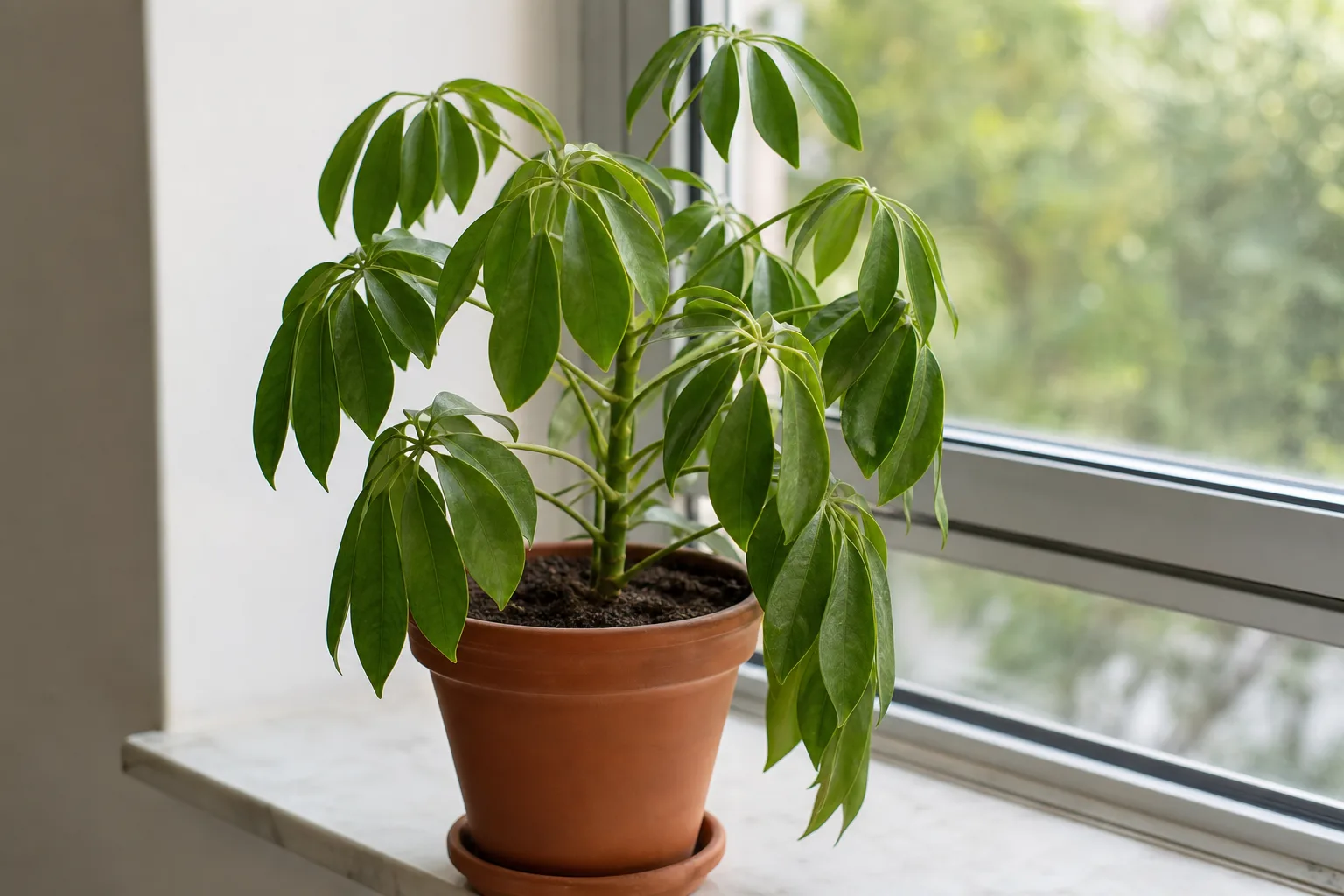
Drooping Leaves on Schefflera: Causes, Checks & Fixes
This guide covers drooping leaves on Schefflera. See also the general Drooping Leaves guide, watering, and light pages for this plant.
Drooping Leaves on Schefflera: Causes, Checks & Fixes
Quick answer
Angled umbrella whorls on dwarf Schefflera (Schefflera arboricola) mean turgor has dropped-the compound palmate leaves hang from stiff petioles that have gone limp. That is usually fixable: chronic underwatering, overwatering that has damaged roots, or environmental shock after a move or cold draft. Tall umbrella tree (S. actinophylla) shows the same droop patterns but transpires faster through larger leaflets; the dry-vs-wet split still applies.
First step: lift the pot and check the top 2 inches of soil before you water. A light, dry pot needs a deep soak. A heavy, wet pot needs a dry-down-not another drink. For baseline watering rhythm, see the Schefflera watering guide. Guessing wrong is the fastest way to turn temporary droop into leaf drop or root rot.
Drooping vs. wilting on Schefflera
These symptoms overlap on umbrella plants, but they answer different questions.
Drooping is the earlier signal: whole whorls angle downward while leaflets stay mostly green and stems above the soil line usually feel firm. Owners notice petioles losing stiffness before the plant looks fully collapsed. This page owns that gradual sag and the pot-weight decision tree.
Wilting is deeper collapse-faster slack across multiple whorls, wet-soil cases progress toward yellow lower leaflets and soft stem bases sooner, and recovery takes longer once uptake fails. If stems are already mushy at the soil line or the canopy looks collapsed rather than merely hanging, use the wilting guide for systemic failure. Stay here when you need to split dry droop from wet droop before the problem escalates.
| Your main question | Start here | Use instead |
|---|---|---|
| ”Why are my umbrella whorls hanging at an angle?” | This page - dry vs. wet droop, shock, recovery | - |
| ”The whole plant collapsed fast on wet soil” | Brief wet-soil checks below | Wilting - acute collapse |
| ”Soil stays damp and lower whorls yellow” | Overwatering droop section | Overwatering - chronic wet feet |
| ”Stems are mushy and mix smells sour” | When to worry section | Root rot - trim and repot rescue |
What drooping leaves look like on Schefflera
Healthy Schefflera holds seven to nine glossy leaflets outward on stiff petioles, each whorl radiating like spokes from a central hub. Drooping changes that geometry-the entire leaf set hangs at a sharper angle from the stem while color often stays green.
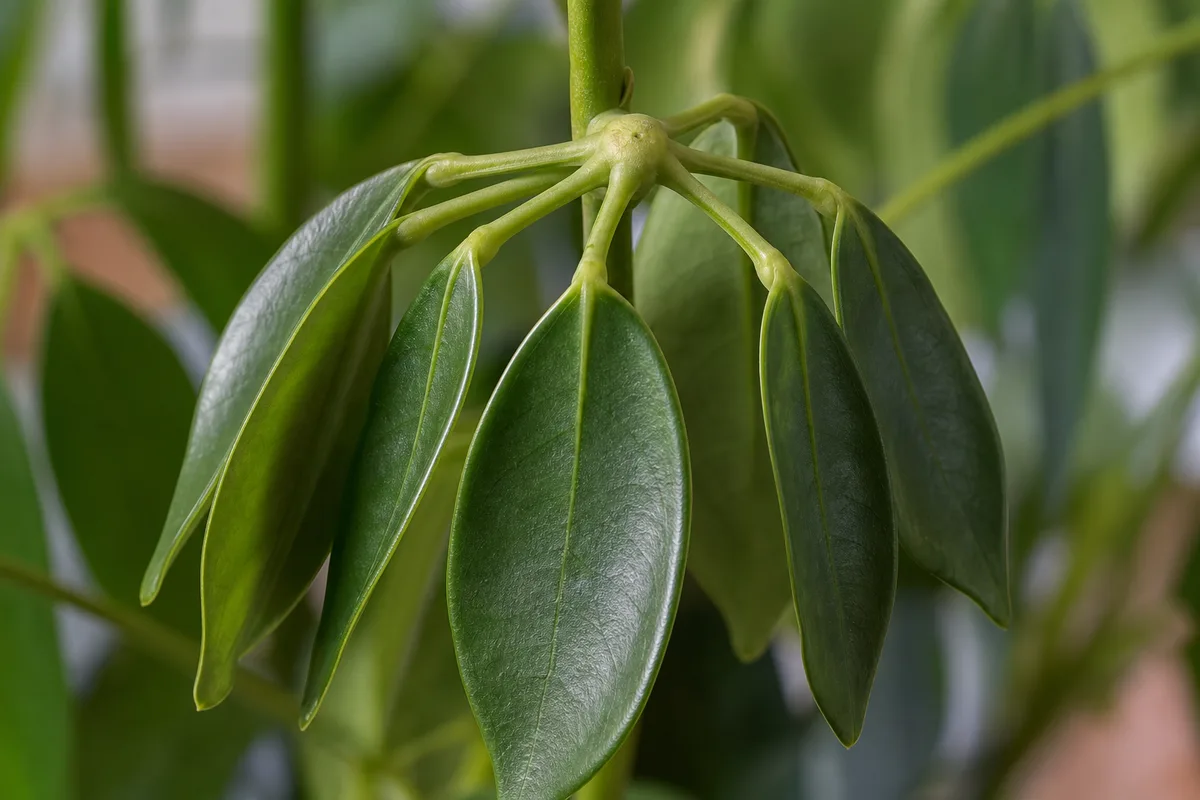
Drooping Leaves symptoms on Schefflera - compare with healthy tissue on the same plant.
Schefflera does not wilt as dramatically as a peace lily, but its large leaf surface area means moisture stress shows up fast-especially in small nursery pots under bright summer windows. Variegated cultivars such as ‘Trinette’ and ‘Gold Capella’ dry the mix faster in bright light; they can droop sooner than all-green plants on the same watering calendar.
Typical drought droop
- Whole whorls angle downward while leaflets stay green
- Petioles feel limp but stems above the soil line remain firm
- Pot feels noticeably light; soil is dry 2 inches down
- Leaf edges may crisp later if drought continues
- Plant often perks up within hours after a thorough watering
Typical overwatering or root-stress droop
- Lower whorls sag while upper growth may still look upright briefly
- Soil stays damp for many days; pot feels heavy
- Lower leaflets turn yellow before they droop
- Sagging persists or worsens after you water
- Sour smell from the drainage holes suggests rotting roots
Shock-related droop
- Drooping appears within a day of moving the pot, opening a winter window, or repotting
- Leaf color stays green; no obvious pest coating
- Newest top whorl may stay firmer than older sets
- Often paired with upcoming leaf drop if the stress continues
Worked example: A 6-inch nursery pot on a bright south windowsill missed one summer watering cycle. The owner lifted the pot-it felt feather-light. Soil 2 inches down was dusty dry. Every whorl hung at a sharp angle but leaflets stayed green and stem bases felt firm. One bottom-water soak for 30 minutes, full drain, and saucer emptied. Whorls regained stiffness within 12 hours. That is classic drought droop, not root failure.
Why Schefflera leaves droop
Drooping is a turgor problem: leaf cells lose internal water pressure and can no longer hold leaflets rigid. On Schefflera, the most common reasons fit its care profile as a tropical understory tree grown in a pot.
Underwatering
Schefflera tolerates brief drought better than chronic wet feet, but it still needs regular deep watering during active growth. When the root ball dries completely-common in undersized pots, hot south windows, or after an owner swings too cautious following a leaf-drop scare-roots cannot supply water fast enough. Large compound leaves droop first because they transpire heavily.
Hydrophobic peat mix makes this worse. Surface water runs down the pot sides while the center stays dust-dry, so the plant looks watered while roots starve. Full thirst branch: underwatering on Schefflera.
Overwatering and root damage
Saturated soil suffocates fine roots. Damaged roots cannot absorb water even when the mix is wet, so foliage droops exactly like a thirsty plant-one of the most confusing mismatches in houseplant care. Root rot usually results from a soil mix that does not drain quickly or overly frequent watering. On Schefflera, yellow lower leaves and persistent sag on wet soil are classic warning signs. Chronic wet-feet detail: overwatering on Schefflera.
Environmental shock
Schefflera reacts dramatically to sudden change. Cold drafts, AC blasts, heat vents, and relocation can trigger droop before leaves drop entirely. Hot or cold drafts will damage plants. The plant sheds foliage to reduce water demand when root function slows from chilling or when light levels shift abruptly. Indoor temperatures should not dip below 60 degrees F. in winter.
Low light and weak structure
Insufficient light does not usually droop a healthy Schefflera overnight, but long-term dim placement produces spindly stems with weak petioles. Those plants sag under their own weight and droop faster when any water stress hits. Low light can cause leaf yellowing with spindly, weak stems.
Pests in dry indoor air
Spider mites colonize leaf undersides in heated winter rooms. Heavy feeding disrupts leaf function and can accompany limp, stippled foliage. Mealybugs, scale insects and mites are common pests of scheffleras. Watch for spider mites in dry indoor conditions. Drooping from pests usually comes with visible insects, webbing, or sticky residue-not isolated limp leaves on an otherwise clean plant.
How to confirm the cause
Work through these checks in order. Each step narrows the diagnosis before you commit to watering or repotting.
- Pot weight - Lift the container off the saucer. Light and dry points to underwatering. Heavy and wet points to overwatering or poor drainage.
- Soil probe at 2 inches - Insert a finger or bamboo skewer 2 inches deep in two spots. Dusty dry throughout confirms drought. Clinging damp soil that smells sour suggests root stress.
- Timing - Did droop follow watering, a move, repotting, or a cold night near a window? Shock patterns appear within 24 to 48 hours of the event.
- Leaf pattern - All whorls drooping evenly on dry soil favors thirst. Lower yellow whorls on wet soil favor root failure. One-sided droop may mean heat or draft exposure on that face of the plant.
- Stem firmness - Soft, mushy tissue at the soil line is a red flag for rot. Firm green stems with limp leaves usually mean reversible water imbalance.
- New growth check - A firm newest whorl at the stem tip means the plant still has functional roots. No new growth for weeks on a sagging plant needs a root inspection.
- Pest scan - Examine leaflet undersides and stem joints with a hand lens. Webbing, scale bumps, or cottony clusters mean pests are contributing.
If dry soil and light weight confirm drought, proceed to the soak fix. If wet soil and heavy weight confirm saturation, stop watering and read the recovery steps below-do not repot on day one unless stems are mushy or the smell is strong.
First fix for Schefflera
If the pot is light and soil is dry 2 inches down: water deeply until excess runs from the drainage holes, then empty the saucer.
Use room-temperature water and wet the entire root ball-not a small top sprinkle. If soil has pulled away from the pot walls, bottom-water for 30 minutes in a sink, then let the pot drain fully. Allow the soil to dry out and then thoroughly soak it with water on future cycles rather than giving shallow sips every day. Match that rhythm to the watering guide dry-down checks.
If the pot is heavy and soil stays damp: stop watering immediately and move the plant to brighter filtered light with good airflow.
Do not add water hoping leaves will perk. Let the top half of the mix dry before the next drink. Never let a plant sit with water in its saucer. If drooping continues past one week on drying soil, inspect roots for brown mushy tissue-see root rot on Schefflera for trim-and-repot steps.
Only one of these paths applies. Mixing them-watering a wet plant or withholding from a dry one-deepens the stress.
Step-by-step recovery
Recovering from underwatering
- Soak until water exits drainage holes; discard saucer runoff.
- Wait 6 to 24 hours and check whether whorls regain stiffness.
- Resume the top-2-inch dry check before the next watering-do not panic-water daily.
- Trim only leaflets that stay crispy and brown after turgor returns; green drooping leaflets often recover.
- If soil repels water, replace the top inch with fresh mix or repot into well-draining soil at the next appropriate window-not as an emergency day-one move unless roots are otherwise healthy. Mix detail: Schefflera soil guide.
Recovering from overwatering
- Stop watering and improve light at bright light at east, west or southern windows in curtain filtered sun.
- Increase airflow around the pot; remove decorative cache pots that trap moisture.
- After the top 2 inches dry, water lightly only if stems stay firm and no sour smell develops.
- If sagging persists past 7 to 10 days on appropriately drying soil, unpot and inspect roots. Trim mushy roots with sterile pruners, repot into fresh well-draining mix, and withhold fertilizer until new growth appears.
- Remove yellow leaves as they appear-they will not re-green.
Recovering from shock droop
- Move the plant to a stable bright spot away from doors, vents, and single-pane winter glass.
- Keep indoor temperatures above 60°F and avoid further relocation for at least two weeks.
- Water on the normal dry-down schedule-do not compensate with extra drinks.
- Expect some leaf drop; watch for fresh whorls at stem tips as the sign recovery is working.
Recovery timeline
Simple drought droop often improves within 6 to 24 hours after a full soak-typical indoor observation, not a guarantee. Shock-related droop may take 3 to 14 days to stabilize once placement stays constant. Root-stress droop can take 2 to 6 weeks-recovery shows as firm stems and new upright whorls, not the old sagging leaflets re-stiffening.
Leaves that turn yellow or crispy during the episode usually drop rather than recover. That is normal. Judge success by new growth and stable watering rhythm, not by saving every old leaflet.
Lookalike symptoms to rule out
Use this table when prose descriptions blur together:
| Pattern | Pot weight | Leaf color | Stems | Smell | First move |
|---|---|---|---|---|---|
| Drought droop | Light | Green, limp whorls | Firm | None | Deep soak, drain saucer |
| Overwatering droop | Heavy | Yellow lower whorls first | Usually firm early | None yet | Stop watering; improve light |
| Shock droop | Normal for recent care | Green | Firm | None | Stable placement; normal rhythm |
| Root rot | Heavy | Yellow, dropping whorls | Soft at base | Sour | Root rot guide - unpot, trim |
Wilting is acute collapse from the same water stresses but often looks more collapsed than angled. The diagnostic path is identical-check moisture first-but wilting on wet soil escalates to stem softening faster. See wilting on Schefflera when collapse outpaces angled droop.
Leaf drop may follow drooping on Schefflera rather than appearing alone. If whole whorls fall while stems stay firm, environmental shock or moisture extremes are likely. Leaves will drop if soils become too moist or too dry. Escalation detail: leaf drop on Schefflera.
Leggy growth from chronic low light produces sparse, stretched stems that sag under weight. Fix the light; droop from weak structure clears slowly as new compact growth forms.
Brown tips without droop point to humidity or salt stress, not root failure. Brown tips on otherwise firm upright whorls need a different fix-humidity and watering quality-not emergency repotting.
Mistakes to avoid
Do not water automatically when leaves droop. Wilted leaves may indicate the soil is too dry or too wet-opposite treatments apply.
Do not repot, prune heavily, and fertilize in the same week. Schefflera hates stacked changes and may drop half its canopy in response.
Do not leave the plant in a saucer of standing water after a corrective soak. That reverses drought recovery and invites rot.
Do not place a drooping plant in direct midday sun to “perk it up.” Bright, direct light will burn the leaves on a stressed umbrella plant. Filtered light supports recovery.
Do not mist as a substitute for proper root-zone watering. Surface moisture does not fix turgor loss in the leaflets.
Do not propagate from stems with active rot without confirming firm tissue above the decay zone.
Schefflera care cross-check
While recovering, align the basics with the Schefflera overview:
- Light: Bright filtered sun for 3 to 4 hours daily at east, west, or southern windows.
- Water: Deeply water and then allow soils to nearly dry before the next deep drink. Reduce watering somewhat from fall to late winter.
- Temperature: Keep indoor temperatures above 60°F; avoid hot or cold drafts.
- Humidity: 40 to 60% is adequate; increase humidity with a pebble tray if leaf edges crisp during heating season.
- Drainage: Well-draining potting mix with perlite; pot must have drainage holes.
How to prevent drooping next time
Check the top 2 inches of soil and pot weight before every major watering-not the calendar. In bright summer conditions, small pots may need water weekly; in cool winter rooms, the same plant may go two to three weeks between drinks.
Keep placement stable. If you must move the plant, do it gradually toward brighter light over several days rather than one sharp shift.
Scout leaf undersides weekly during winter when heating dries indoor air.
When repotting, choose a container only one size larger with fresh well-draining mix. Oversized pots stay wet too long and set up the wet-soil droop cycle.
When to worry
Escalate care when:
- Drooping persists more than 48 hours on wet soil despite dry-down efforts
- Stems soften at the soil line or collapse
- Soil smells sour or roots look brown and mushy when inspected
- More than a third of whorls drop within a week
- New growth stops entirely for a month while the canopy sags
A Schefflera with firm roots and a healthy top whorl almost always recovers once the correct water rhythm returns. Advanced decay needs the root rot rescue path-cuttings from firm upper stems are a last resort, not a first response to a droopy Tuesday. If rot is severe after 48 hours on wet soil, contact your local cooperative extension office for hands-on diagnosis help.
Related Schefflera guides
- Overview - species biology and indoor care hub
- Watering - top 2-inch dry-down protocol
- Wilting - acute collapse and wet-soil uptake failure
- Overwatering - chronic wet feet before confirmed rot
- Root rot - mushy roots, trim, and repot rescue
- Leaf drop - mass whorl loss after moisture extremes
- Soil - perlite-amended mix that drains fast
How we wrote and verified this guide: Recommendations were checked against Clemson HGIC, Missouri Botanical Garden, and NC State Heptapleurum arboricola references cited inline, plus LeafyPixels watering, wilting, and root rot guides for cluster consistency. Author: sai-ananth. Reviewer: LeafyPixels Review Board. Methodology: plant problem guidance is reviewed against botanical references, extension resources, and LeafyPixels plant-care data before publication. Claims validation: claims-validator-v1 pass with inline external links documented below. Last reviewed: 2026-06-17.
Conclusion
Drooping on Schefflera is a geometry change before it is a death sentence-angled umbrella whorls mean turgor dropped, not that every leaflet is lost. Lift the pot, probe 2 inches deep, and split dry from wet before you pour. Dry gets one thorough soak with a drained saucer; wet gets a pause, better light, and possibly a root inspection. Firm new whorls at the stem tips tell you recovery is working; sour soil and soft stems tell you to open the root-rot guide instead.