Low Humidity on Curry Leaf Plant: Causes, Checks & Fixes
Quick answer
Curry leaf plant (*Murraya koenigii*) prefers roughly 50–70% relative humidity - dry winter indoor air below about 40% RH causes crispy leaflet tips, stalled shoots, and spider mite outbreaks even when watering is correct. First step: measure humidity at canopy height with a hygrometer, then run a room humidifier before changing your watering rhythm.
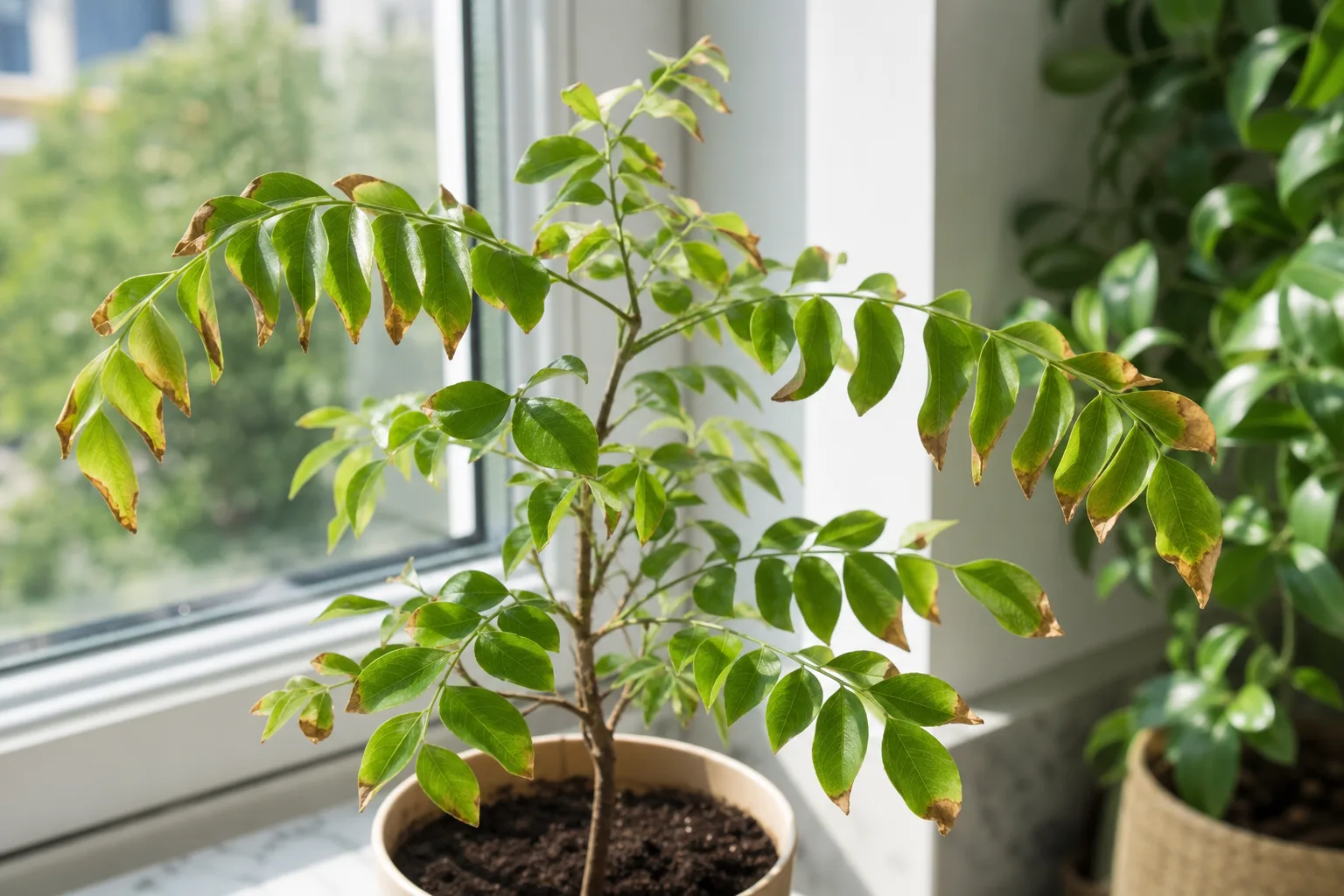
Low Humidity on Curry Leaf Plant: Causes, Checks & Fixes
This guide covers low humidity on Curry Leaf Plant. See also the general Low Humidity guide, watering, and light pages for this plant.
Low Humidity on Curry Leaf Plant: Causes, Checks & Fixes
Quick answer
Low humidity on curry leaf plant - Murraya koenigii (curry patta, sweet neem) - shows up when indoor air is drier than this tropical Rutaceae tree can replace through the roots alone. Curry leaf evolved in warm, humid forests of the Indian subcontinent and Sri Lanka, and our curry leaf overview targets 50–70% relative humidity during indoor winter months when heating dries the air.
First step: measure relative humidity at canopy height with a hygrometer, then run a room humidifier. Target roughly 50–60% RH at leaflet level when you can; many specimens tolerate ~40% in active summer growth, but winter heating commonly drops whole rooms into the 20–30% range - where individual leaflets crisp at the tips and spider mites multiply in the same dry microclimate.
Do not flood the pot to fix dry-air symptoms. When soil is already moist at 3–5 cm depth and leaflet edges still brown, extra water raises root-stress risk without fixing air moisture. Our curry leaf watering guide explains the wet-dry rhythm that pairs with humidity fixes.
What low humidity looks like on Curry Leaf Plant
Murraya symptoms from dry air differ from ferns or calatheas because the foliage is glossy, pinnate compound leaves - a central rachis with many small leaflets - not single broad panels. Damage often starts at individual leaflet tips and margins, not across every leaflet at once.
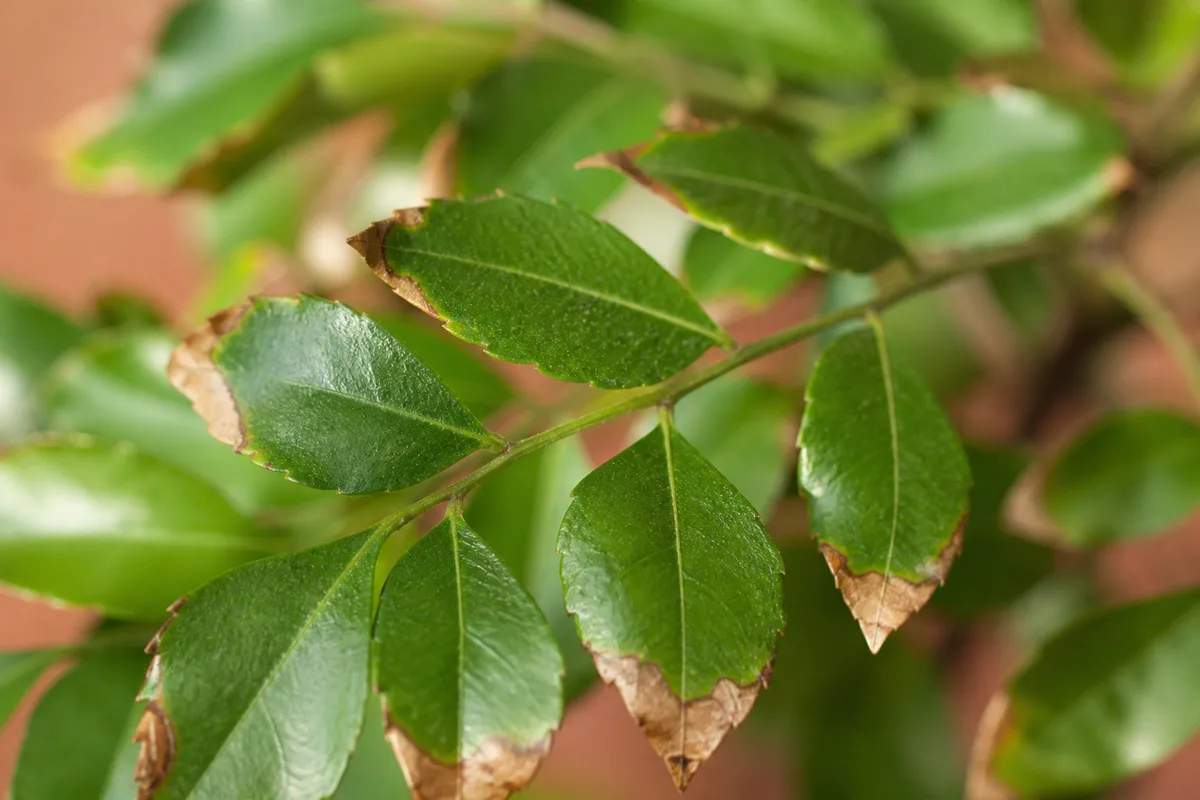
Low Humidity symptoms on Curry Leaf Plant - compare with healthy tissue on the same plant.
Early dry-air stress
- Tan or brown crispy tips on one or a few leaflets within a compound leaf while the rachis and neighboring leaflets stay green
- Upward curl or inward roll along leaflet margins while a finger at 3–5 cm depth still reads cool and damp
- New shoots slow to expand - tender leaflets emerge small, stiff, or with burned edges in heated winter rooms
- Increased crisping on the side facing a heat vent, radiator, fireplace, or hot winter window glass
- Leaflets feel papery at the margin while the mid-leaflet zone stays firm and glossy
Established dry-air damage
- Widespread brown tips across multiple compound leaves, often clustered on one side of the canopy
- Stalled spring-like flushes in winter - new rachis growth browns at the tip and aborts before leaflets fully expand
- Fine stippling on leaflet undersides if spider mites move in behind prolonged dry air
- Premature yellowing and drop of whole compound leaves when cold dry air combines with temperatures below about 15°C (59°F) - overlapping normal dormancy but accelerated by heat blasts
What is normal dormancy - not low humidity alone
Curry leaf plant may shed most foliage during cool-season rest when nights fall below about 15°C (59°F) - a pattern described in our overview and common on overwintered container specimens. That drop often leaves bare woody stems while roots stay firm. Dry-air damage during active warmth hits newest leaflet margins in heated rooms and looks like tip burn on green foliage with no cold trigger - or crisping on one vent-facing side while the rest of the canopy stays intact.
Symptom patterns to recognize
Pattern A - tip burn near a heating vent with moist soil: Individual leaflets show tan papery edges while the rachis stays green. A finger inserted 3–5 cm into the mix feels cool and damp; the pot still has moderate weight. The leaflet surface closest to a floor vent or radiator shows the worst crisping. This is the classic low-humidity lookalike for underwatering on Murraya.
Pattern B - mite stippling in a dry winter room: Pale dots appear on leaflet undersides, sometimes with fine webbing between leaflets on the same rachis. Room RH near the canopy reads below 35% after heat has been running for weeks. Humidifier intervention and leaflet rinsing target this directly - see spider mites if webbing spreads.
Why Curry Leaf Plant struggles in dry indoor air
Murraya koenigii evolved as a small tropical tree in humid subtropical forests - warm year-round moisture, not desert air. Indoors, the plant still pushes substantial leaf surface area on each compound leaf that loses water through transpiration, especially under the six to eight hours of direct sun curry leaf needs for healthy harvest regrowth.
Compound leaflets and high transpiration demand
Each compound leaf carries many small glossy leaflets along a slender rachis. Four Winds Growers notes that container curry leaf trees need consistent warmth and that moisture stress shows first on leaflet margins in dry homes. More total leaflet area per shoot means more water lost to dry air per hour, even when roots are healthy - unlike thick succulent leaves that store water internally.
Winter heating desiccation
Forced-air heat, wood stoves, and radiator ledges drop indoor RH fast. UMN Extension notes humidity levels are low inside during winter months and recommends pebble trays, grouping plants, or humidifiers for humidity-loving tropicals. Curry leaf is not as finicky as a fern, but months below ~40% RH still crisp leaflet margins on architectural foliage - especially on plants overwintering indoors after summer balcony sun.
The drought-tolerant root trap
Established Murraya roots tolerate dry spells better than constantly wet soil - a pattern our watering guide emphasizes. Soil can stay adequately moist while air desiccates leaflet edges. Growers see brown tips and assume underwatering - then soak an already-damp pot and invite root rot. Dry-air damage on curry leaf often pairs with moist mix and a moderately heavy pot, the opposite of underwatering.
Bright light amplifies the problem
Strong window sun or grow lights increase transpiration. A curry leaf in full direct sun dries its leaflet margins faster when RH is low - especially on the window-facing side. Humidity fixes and vent clearance matter more on bright sills than in dim corners where the plant would stall for other reasons.
Mite preference in dry rooms
Spider mites prefer warm, dry environments with low humidity - UMN Extension lists them as the top winter houseplant pest when indoor air dries out. Murraya’s small leaflets are easy mite targets in the same heated rooms that cause tip burn, so dry air and pest pressure often arrive together.
How dry is your room? Hygrometer check
Room thermostats measure temperature, not humidity at the leaves. Before Curry Leaf Plant repotting guide, heavy pruning, or changing fertilizer, measure RH where the foliage actually sits.
- Place a hygrometer 15–30 cm (6–12 inches) above the pot rim at canopy height - not on the floor or across the room.
- Log readings morning and evening for two to three days after heat kicks on.
- Below ~40% RH at the leaves during active growth strongly supports dry-air stress on Murraya.
- Below ~30% RH in winter heating season is a common trigger for leaflet tip crisping and mite outbreaks.
- Target band: 50–60% RH at canopy height when you can maintain it - aligned with the 50–70% humidity target on our curry leaf overview.
Also map local dry zones: forced-air vents, radiator tops, fireplace proximity, and drafty winter glass. Damage clustered on one side of the plant usually traces to a microclimate drier than the rest of the room.
Lookalike symptoms to rule out
| What you see | Likely cause | Where to read more |
|---|---|---|
| Crisp leaflet tips with moist soil and RH below 40% at canopy | Low humidity | This page |
| Dry mix throughout, light pot, whole compound leaves limp | Underwatering | Underwatering |
| Sharp brown lines on margins with white soil crust | Fertilizer or tap-water salt burn | Brown tips |
| Yellow soft leaves on wet mix, sour smell | Overwatering / root stress | Overwatering |
| Yellowing between veins on new leaflets, green veins remain | Iron chlorosis in alkaline soil | Yellow leaves |
| Fine stippling plus webbing on leaflet undersides | Spider mites (often with dry air) | Spider mites |
| Whole-canopy leaf drop below 15°C with bare stems | Cold dormancy (may mix with dry air) | Overview |
Underwatering - Whole compound leaves go limp and thin; mix pulls from pot sides; pot feels light. Rehydrate once per the watering guide, then drain - crisping from drought usually involves dry soil at depth, not damp mix with only tip burn on individual leaflets.
Salt and fertilizer burn - Brown margins with white crust on the pot rim often trace to hard tap water or heavy feeding. Flush the pot with plain water and see whether new leaflets clear even before humidity fully stabilizes. Our brown-tips guide covers the salt overlap.
Cold dormancy - Dramatic leaf drop when nights stay cool is often normal winter rest, not a humidity failure alone. Keep roots lightly moist, maintain warmth above about 15°C when possible, and wait for spring shoots - do not overwater a bare dormant plant.
How to confirm low humidity is the cause
Work through these checks before stacking multiple care changes:
- Hygrometer at canopy height - Sustained readings below 40% RH near leaflets support dry-air stress; aim to raise toward 50–60% and watch the next compound leaf emerge.
- Soil moisture at 3–5 cm depth - If mix is cool-damp and pot weight is moderate but leaflet tips crisp, suspect air moisture first. If bone dry throughout, underwatering may be primary or compounding.
- Vent and window audit - Note radiators, HVAC outlets, and hot afternoon glass. One-sided damage pattern strongly implicates a local dry zone.
- Inspect the newest rachis - Firm new growth with burned leaflet tips in moist soil screams humidity gap. Soft mushy tissue at the base points to rot - not this page.
- Seasonal timing - Symptoms that appear or worsen within weeks of turning on central heat fit winter desiccation even if summer care was fine.
- Mite cross-check - Tap a leaflet over white paper; moving specks or webbing mean treat pests alongside humidity per spider mites.
- Salt cross-check - White crust on soil surface or pot rim can stack on humidity stress. Flush before assuming humidifier alone will fix every margin.
If RH stays above 50%, soil cycles normally per the watering guide, and new compound leaves expand with clean margins, low humidity is unlikely the main issue - look at salt burn, cold dormancy, or root problems instead.
First fix for Curry Leaf Plant
Run a cool-mist or ultrasonic humidifier within 1–2 metres of the plant until canopy-level RH reaches roughly 50–60%.
Size the unit for the room, not just the pot - mature curry leaf specimens fill meaningful window space. Keep it running through the dry period (typically winter heating season), not for ten minutes after you notice damage. Murraya responds to average conditions over days, not a single moisture spike.
While humidity climbs:
- Leave watering rhythm alone unless soil is genuinely dry at 3–5 cm depth - do not compensate for crisp leaflet edges by keeping mix constantly wet.
- Move the pot off radiator covers and out of direct heat blasts. Bright sun is fine; hot forced air on leaflet margins dries tissue faster than roots can replace.
UMN Extension recommends pebble trays and grouping plants when winter humidity is low - useful as supplements, but heated living rooms usually need the humidifier as the primary fix.
Step-by-step recovery (humidifier fix ladder)
After the humidifier is running, add steps in this order - most effective first:
- Room humidifier - Best sustained fix for winter dryness. Empty and clean the tank weekly to avoid mineral buildup in the mist stream.
- Relocate away from dry microclimates - Pull the pot at least 60–90 cm (2–3 feet) from forced-air vents and hot glass. Cold window sills at night plus dry heat from below is the worst combination for overwintered Murraya.
- Group with other tropicals - Shared transpiration raises local RH a few points. It supplements a humidifier but rarely replaces one in a heated living room.
- Pebble tray - Set the pot on stones above - not in - water so evaporation boosts moisture near the base. Combine with the humidifier rather than expecting the tray alone to fix 25% RH winter air.
- Rinse leaflet undersides - If mites appear, shower or wipe undersides with lukewarm water before oil sprays - especially important if you harvest leaves for cooking. Isolate before heavy treatments.
- Flush salts - If white crust on the pot rim accompanies tip burn, run plain water through the mix at two to three times pot volume before blaming humidity alone.
- Trim only fully dead margin tissue - Snip crispy brown leaflet edges with clean scissors once RH stabilizes. Partial damage can stay until the leaflet is replaced naturally.
Hold repotting, fertilizer, and major harvest pruning until one or two new compound leaves expand cleanly for two to three weeks.
Recovery timeline
Humidity corrections show in new growth, not old leaflets. Within one to two weeks of stable 50–55% RH, the next rachis should push leaflets with less tip burn. Cleaner margins on fresh growth may take two to four weeks during slow winter conditions.
Already brown or crispy leaflet tips will not turn green again on the same tissue - judge success by the next compound leaf, not repaired old leaflets. A full flush of clean-looking foliage may take one growing season as older damaged leaves age out, especially if the plant also went through cool dormancy.
If margins keep spreading while RH reads adequate, reassess brown tips (salt burn), spider mites, or overwatering before assuming humidity was the only factor.
What not to do
Do not overwater to fix dry-air crisping when soil is already moist - curry leaf tolerates dry spells better than constantly wet roots, and soggy mix with dry air still produces edge burn.
Do not mist once daily and assume the problem is solved. Brief leaf wetting evaporates in minutes on small leaflets and can leave mineral spots if tap water sits on glossy foliage.
Do not blast the plant with extra fertilizer to green up humidity-stressed leaflets. Feed only after new growth looks stable in spring or summer per our fertilizer guide.
Do not relocate the pot daily between rooms hunting humidity. Stable conditions beat bouncing between a dry living room and a steamy bathroom unless light in both spots meets Murraya’s full-sun needs.
Do not confuse normal winter dormancy leaf drop with humidity failure and keep overwatering a bare plant - that invites root rot.
Do not apply heavy oils without rinsing if you cook with the leaves - treat pests with harvest timing in mind.
How to prevent low humidity stress next time
Run a humidifier from the first cold snap, not after widespread crisping. A hygrometer at canopy height gives early warning when RH slides under 45%.
Place curry leaf where bright light and acceptable humidity can coexist - a sunny room with a humidifier often works better than a hot south sill directly above a radiator.
Keep pots off vent paths and fireplace hearths. UC Master Gardeners note that curry leaf grows well indoors with full sun and medium water - pairing that light demand with dry heat is the winter paradox many growers miss.
Group Murraya with other plants to buffer microclimates through winter. Match watering to the watering guide - slower winter rhythm, but faster leaflet desiccation from heat is the seasonal mismatch to watch.
Inspect newest shoots weekly through heating season. One brown tip on a single old leaflet is cosmetic; repeated failed flushes mean the environment still needs work.
When to worry
Treat as urgent when:
- Multiple new rachis shoots brown and stall within one week despite moist soil
- Crisping spreads across the whole canopy while RH already reads above 50%
- Soft stems at the base, sour smell, or limp wilt with wet mix - that is root rot, not humidity alone
- Fine webbing and stippling cover several compound leaves - dry air may have invited spider mites
Lower urgency when a few leaflet tips brown after the first heating cycle and new growth stays clean once a humidifier runs. Curry leaf in average homes often shows minor winter edge wear; judge health by the newest compound leaf, not every older leaflet.
Curry Leaf Plant care cross-check
Low humidity fixes work best when the rest of the routine supports steady transpiration:
| Factor | Dry-air risk when wrong |
|---|---|
| Humidity | Winter heat below 40% RH at canopy |
| Light | Strong sun + dry air accelerates leaflet crisping |
| Water | Overwatering wet soil while air stays arid |
| Temperature | Cold sill + dry heat compounds leaf drop |
| Placement | Vents, radiators, hot window glass |
Cross-link your routine: overview hub for 50–70% humidity targets and dormancy patterns; watering for seasonal wet-dry cycles; light for full-sun placement; brown tips when mineral burn overlaps; underwatering when the pot is genuinely light and dry.
Related Curry Leaf Plant problems
- Brown tips - tap-water and fertilizer salt burn overlapping with dry-air crisping
- Spider mites - stippling and webbing that often follow dry winter rooms
- Underwatering - limp whole compound leaves when mix is bone dry throughout
- Wilting - limp foliage when wet-soil and dry-pot branches diverge
- Yellow leaves - chlorosis and cold stress that can stack with dry air
- Curry leaf plant overview - Murraya biology, 50–70% humidity target, and baseline care
When to use this page vs other Curry Leaf Plant guides
- Curry Leaf Plant watering guide - Use for routine moisture checks before assuming low humidity is the main issue.
- Curry Leaf Plant problems hub - Browse all 16 common issues on this species.
- Brown Tips on Curry Leaf Plant - Different entry point when symptoms overlap with low humidity.