Spider Mites on Curry Leaf Plant: Causes, Checks & Fixes
Quick answer
Spider mites on curry leaf plant bronze small glossy leaflets along the rachis in hot, dry indoor air-especially after a summer balcony pot moves to a heated windowsill. First step: isolate the pot and rinse every leaflet underside with lukewarm water before any spray, since leaves are harvested for cooking.
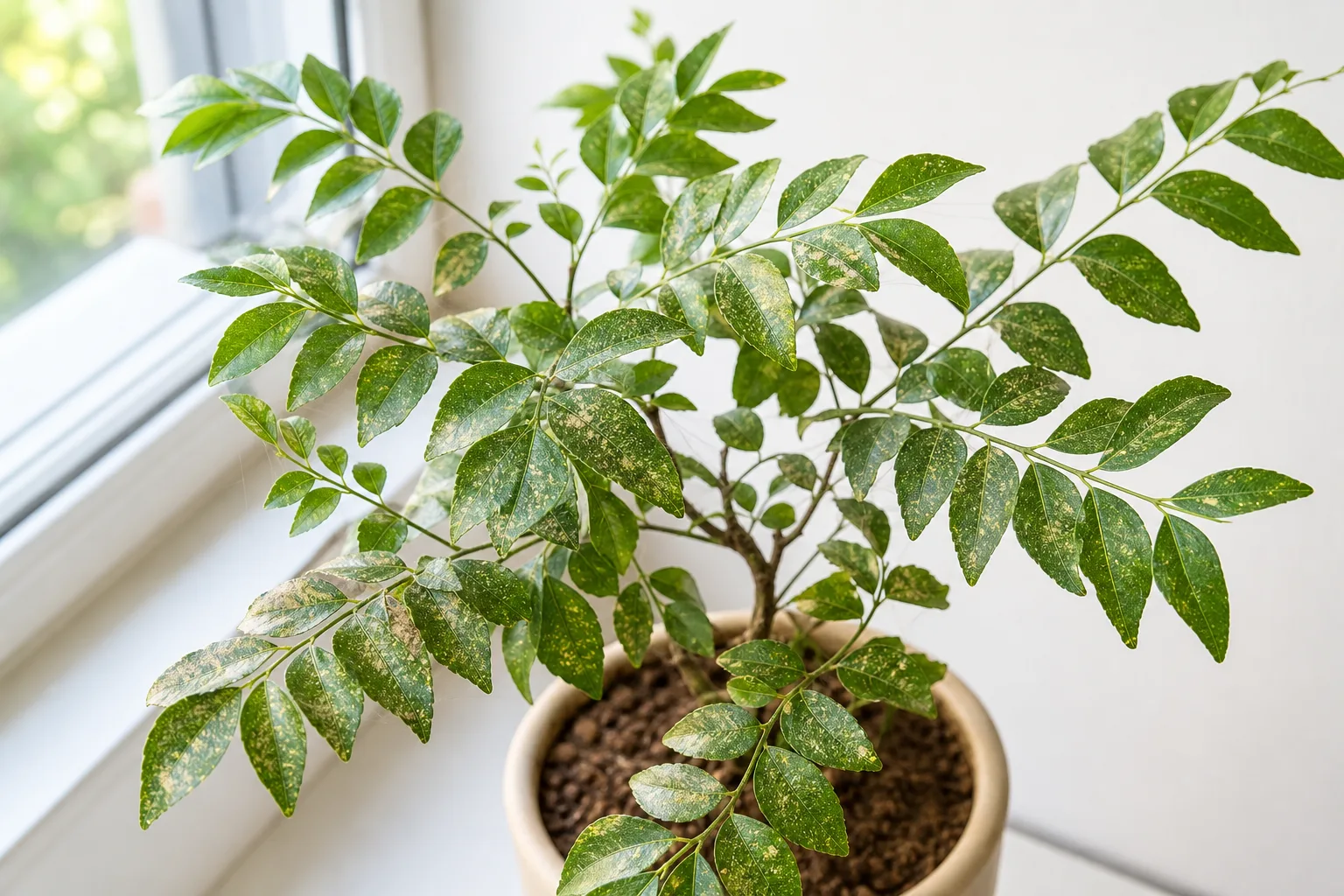
Spider Mites on Curry Leaf Plant: Causes, Checks & Fixes
This guide covers spider mites on Curry Leaf Plant. See also the general Spider Mites guide, watering, and light pages for this plant.
Spider Mites on Curry Leaf Plant: Causes, Checks & Fixes
Quick answer
Spider mites on curry leaf plant (Murraya koenigii) are tiny sap-sucking arachnids that colonize the undersides of narrow, glossy leaflets along each compound leaf’s central rachis. Because you harvest these leaves for cooking, start with the gentlest fix that actually knocks mites off the foliage.
First step: move the pot away from other kitchen herbs and rinse every leaflet underside with a strong stream of lukewarm water. Hold each pinnate leaf flat and spray from below so water reaches the tight spaces between leaflets where mites hide. Let foliage dry in bright light the same day-curry leaf tolerates a hard rinse better than most broad-leaf herbs.
If stippling spreads or fine webbing appears between leaflets after two or three rinses spaced three to four days apart, move to insecticidal soap or horticultural oil labeled for edible herbs-never household dish soap. Treat early; bronzed leaflets lose the aromatic oils that make this Rutaceae shrub worth growing.
What spider mites look like on Curry Leaf Plant
Curry leaf foliage is pinnately compound-many small, glossy leaflets arranged along a slender rachis-so mite damage looks different from broad-leaf houseplants like fiddle-leaf fig or pothos.
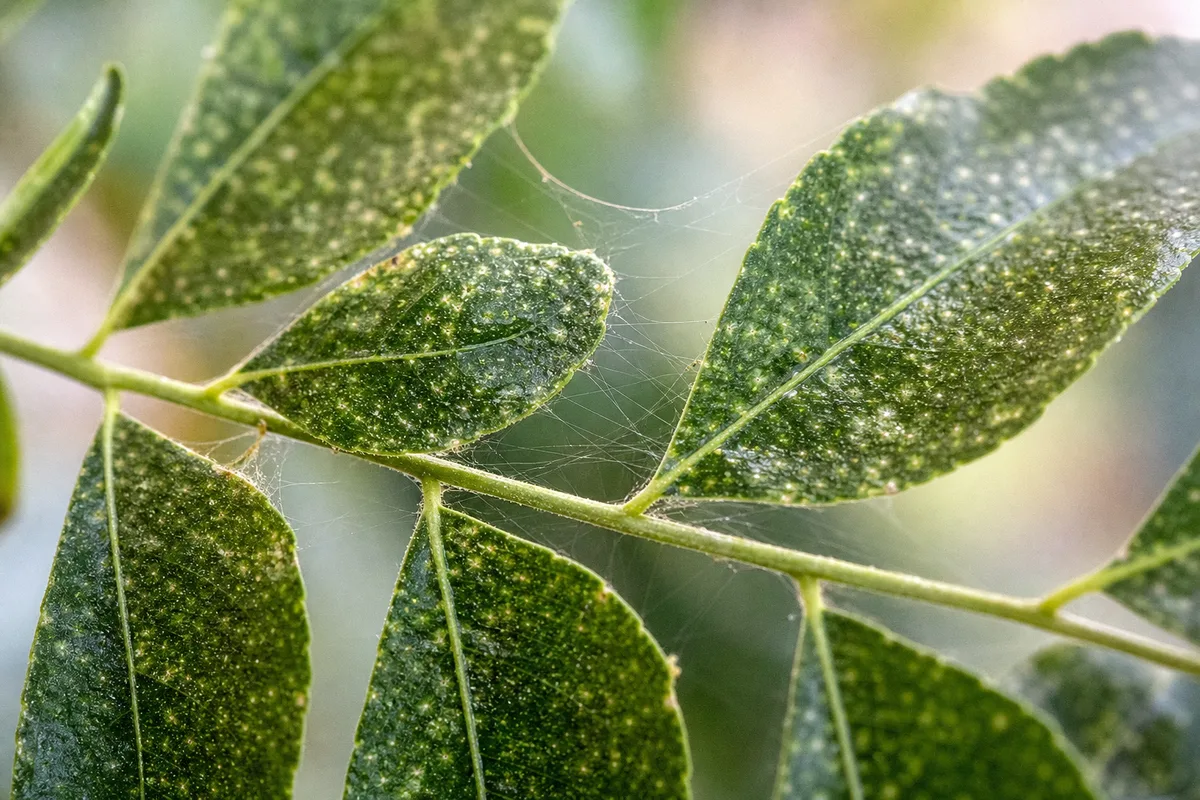
Spider Mites symptoms on Curry Leaf Plant - compare with healthy tissue on the same plant.
Typical spider mite signs:
- Pale yellow or white stippling dots on individual leaflets, visible best when you hold a leaf up to light
- Bronze or dull cast spreading across one side of a compound leaf while neighboring leaflets stay dark green
- Fine silk webbing strung between leaflets, at the rachis base, or bridging leaflet tips on heavy infestations
- Tiny moving specks on white paper after tapping a suspect leaf-mites are less than 1/20 inch long and nearly invisible without a hand lens
- Crisp, curled leaflet edges on advanced damage; heavily fed leaflets may drop while the woody stem stays firm
- Loss of strong curry aroma when you crush bronzed leaflets-aromatic oils decline as cells are drained
What healthy curry leaf looks like for comparison:
- Firm dark-green leaflets with a sharp fragrance when rubbed between fingers
- Uniform color along each rachis without scattered pinprick dots
- No silk threads between leaflets
The narrow leaflet size makes early stippling easy to miss until a whole compound leaf bronzes. Inspect the newest flushes first-mites often establish on tender rachis tips before older harvestable leaflets show obvious damage.
Why Curry Leaf Plant gets spider mites
Curry leaf is a warm-climate Rutaceae shrub that wants full sun and steady root moisture. That combination creates a specific indoor risk: a south-facing windowsill delivers the light the plant needs, while winter heating and dry forced air pull moisture from small leaflets faster than the root ball can replace it. Spider mites reproduce rapidly in hot, dusty, dry conditions and are a listed pest on curry tree per RHS guidance on Bergera koenigii.
Most outbreaks on potted curry leaf trace to placement, not random bad luck:
- Winter move indoors - Balcony trees that were pest-free all summer often show mites within weeks of entering a heated room. Outdoor pots brought inside can carry small colonies that explode in dry winter air.
- Radiator and vent microclimates - Hot dry air directly above a heat register desiccates leaflet margins within days, which favors mites even when you water the pot correctly. See the low-humidity guide when brown tips appear without stippling.
- Compound-leaf architecture - Mites feed on undersides along the rachis where spray coverage is hardest to achieve; missed pockets let populations rebound after a single rinse.
- Harvest pruning side effect - Cutting back flushes for the kitchen opens tender new tissue that mites colonize quickly if humidity stays low.
Stress from the opposite direction-chronically wet soil or dim light on a kitchen sill-does not cause mites directly, but weakened plants recover more slowly once feeding drains sap from leaflet cells.
Confirm mites vs. thrips, low humidity, cold damage, and winter dormancy
Work through these checks in order before spraying anything on edible foliage.
| What you see | Likely cause | Key difference |
|---|---|---|
| Pinprick stippling + fine webbing + moving specks on paper | Spider mites | Damage scattered on leaflets; webbing at rachis bases |
| Silvery scrape marks, black specks, no webbing | Thrips | Linear scars; insects are elongated, not round dots |
| Uniform brown dry tips, no dots or webbing | Low humidity / underwatering on Curry Leaf Plant | Whole leaflet margins crisp; see brown tips |
| Whole leaflets yellow and drop in a cool room | Winter dormancy | No stippling, no webbing, no moving specks; stems stay woody |
| Dark water-soaked patches after a cold snap | Cold injury | Tissue collapses fast; not gradual bronze stippling |
| Soft pear-shaped clusters on new rachis tips | Aphids | Sticky honeydew, not silk webbing-see aphids |
| White cottony masses in leaf axils | Mealybugs | Stationary fluff, not moving stippling-see mealybugs |
Numbered confirmation steps:
- Stippling pattern - Mites leave scattered light dots on individual leaflets. Uniform yellowing of every leaflet on a cool windowsill points to dormancy, not pests.
- Webbing check - Lift a compound leaf and look along the central rachis on the underside. Fine silk threads between leaflets strongly suggest mites; thrips and humidity damage do not produce webbing.
- White-paper tap test - Hold white paper under a leaflet and tap the leaf sharply. Slow-moving specks that crawl across the paper confirm live mites. Static dust or mineral spots do not move.
- Hand-lens scan - Eight-legged oval bodies, eggs like tiny droplets, and cast skins on the underside confirm mites when stippling is still light.
- Room context - Warm dry air near a heater plus a plant recently moved indoors fits mites. A pot below 15°C (59°F) dropping leaflets without dots fits normal winter rest-curry leaf drops foliage in colder microclimates rather than from mite feeding. Reduce water per the watering guide, do not spray pesticides.
- Stem firmness - Dormant curry leaf sheds foliage but keeps firm woody stems. Mite-heavy plants still have firm stems too, but remaining leaflets show bronze stippling rather than clean yellow drop.
If you confirm stippling with webbing and moving specks on warm dry plants, you have spider mites-not a nutrient deficiency or fungal leaf spot.
First fix for Curry Leaf Plant
Rinse the plant thoroughly with a strong stream of lukewarm water, targeting every leaflet underside and rachis base.
This single step knocks mites off without leaving residues on harvestable leaves. Small potted plants fit in a sink with a sprayer; larger balcony trees need a hose nozzle held 12 inches from the canopy. Forceful water sprays on undersides reduce spider mite numbers on garden and houseplants. Repeat every three to four days for two to three weeks-mite generations turn over quickly in warm rooms.
While rinsing:
- Isolate the pot from other kitchen herbs until you see no live mites for seven days.
- Slip a bucket under the pot to catch dislodged mites and keep them off clean plants below.
- Angle each compound leaf to open the spaces between narrow leaflets-flat spraying from above misses the underside colonies.
- Avoid rinsing when the plant is drought-stressed or in direct midday sun on hot days; stressed foliage is more prone to scorch.
If rinsing alone fails after two to three weeks, apply insecticidal soap or horticultural oil labeled for herbs and vegetables. Soaps and oils kill by contact and have no residual activity, so coverage matters more than product strength. Coat every leaflet underside until the solution drips-missed mites inside dense compound leaves survive and repopulate within days. Repeat every five to seven days for three cycles. Spray in late evening so leaves dry overnight, and avoid treating drought-stressed plants when temperatures exceed 90°F.
Harvest hold: when leaves are safe to cook again
Plain water rinses alone: harvest once foliage is dry and a white-paper tap test shows no moving specks.
After insecticidal soap or horticultural oil: wait at least 24 hours after spray dries-48 hours if you applied heavy coverage-before picking leaflets for cooking. Many insecticidal soaps and horticultural oils are labeled for food crops with a zero-day pre-harvest interval once dry, but waiting one to two days lets surface residues break down and matches how most cooks handle sprayed kitchen herbs. Rinse harvested leaflets again under tap water before adding them to a dish, as you would for any garden produce.
Do not reach for systemic insecticides like imidacloprid on a plant you eat. Systemics move through sap and can persist in tissue-unacceptable for culinary foliage even when label wording seems permissive.
Step-by-step recovery
Once the first rinse or soap application is done, follow this sequence:
- Days 1–21 - Water rinse every three to four days. Inspect rachis tips with a lens after each session. Bag and discard any compound leaf so heavily webbed that spray cannot penetrate between leaflets.
- Day 7 check - If stippling spreads to new flushes, add insecticidal soap or horticultural oil on alternating rinse days-not both on the same day.
- Humidity support - Run a humidifier or pebble tray near the pot during winter heating season. Dry indoor air increases pest pressure on foliage without replacing the need for direct spray contact on mites.
- Harvest routing - Cook from lower, untreated leaflets only after you verify they are mite-free; pause harvests from sprayed flushes until the hold period passes.
- Escalation threshold - If webbing coats most new growth after three soap/oil cycles, prune back the worst stems, continue rinsing, and consider whether the pot’s winter placement above a heat source needs to change before the spring flush.
Recovery timeline
Expect visible improvement within one to two treatment cycles if you reach all hidden colonies between leaflets.
- After first rinse - Many mites drop immediately; new stippling should stop appearing on the same leaflets within days.
- Week 1–2 - Light bronze may not reverse on affected leaflets, but neighboring leaflets stay clean. Webbing should thin noticeably.
- Week 3–4 - New flushes along branch tips should open with firm green leaflets and no fresh dots. If mites reappear only on one rachis, continue rinsing another week before adding products.
- Month 2+ - Strip bronzed leaflets for disposal or compost away from healthy pots; woody stems remain. Spring warmth and longer days usually push a cleaner harvest flush once humidity and spray cycles stay consistent.
Judge success by clean new growth, not by old leaflet color. Curry leaf rebounds quickly from tip pruning when roots are healthy and the plant sits in full sun.
What not to do
- Do not spray household dish soap or detergent. Homemade soap sprays can burn leaves and leave unsafe residues on edible foliage.
- Do not assume broad insecticides kill mites. Pyrethroid sprays often miss mites and can trigger population spikes by killing predators. Use soaps, oils, or products labeled for mites.
- Do not harvest and cook leaflets the same day you spray-even organic contact products need time to break down on the surface.
- Do not treat a dormant, leaf-dropping plant for mites without confirmation. Cool-room yellowing without stippling or webbing is often normal winter rest, not a pest outbreak.
- Do not let dense compound-leaf canopies stay wet overnight in a cool room. Curry leaf has smooth glossy leaflets, not fuzzy foliage-but overhead watering late in the day on a cold windowsill can encourage secondary fungal spotting. Rinse in morning or early afternoon so leaflets dry before night.
- Do not fertilize heavily while fighting an active infestation. Soft new nitrogen-rich shoots give surviving mites fresh tissue; hold feeding until new growth emerges clean.
Curry Leaf Plant care cross-check
Spider mites exploit dry leaflet air, but chronic reinfestation often tracks back to placement and seasonal moves.
- Light - Curry leaf needs six or more hours of direct sun. A dark kitchen corner weakens leaflets without preventing mites; the usual problem is bright sun plus dry heat, not low light alone.
- Watering - Water when the top 3–5 cm of mix dries. Overwatered pots in dim corners grow soft tissue; chronically dry pots add drought stress that increases mite damage severity.
- Humidity - Target 40–60% relative humidity near the canopy in heated rooms. Grouping pots slightly helps, but do not pack herbs so tight that you cannot inspect both sides of each rachis.
- Seasonal moves - Inspect thoroughly before bringing outdoor pots inside for winter; that transition is the most common entry point for mite explosions on balcony-grown curry leaf.
- Airflow - Space pots so dry heater plumes do not hit the canopy directly.
For the full seasonal rhythm, see the curry leaf overview and watering guide.
How to prevent spider mites next time
Prevention on an edible shrub is mostly about early detection and humidity around the canopy-not constant spraying.
- Quarantine new plants and cuttings for two weeks before placing them beside your main harvest plant.
- Scout leaflet undersides weekly during the first six weeks after any outdoor-to-indoor move; early detection keeps minor colonies from bronzing whole compound leaves.
- Rinse leaflets monthly with plain water during active growth to dislodge the first few mites before they reproduce.
- Raise winter humidity with a humidifier or pebble tray when heating runs-mites thrive in the same dry air that crisps leaflet tips.
- Keep the pot off radiator ledges while still giving direct sun from a window; redirect heat away from the canopy.
- Avoid pyrethroid sprays for other pests on curry leaf unless mites are ruled out-residual insecticides can flare mite populations by removing predators.
When to escalate - and when it is dormancy, not mites
Most curry leaf spider mite problems resolve with persistent rinsing and one round of contact sprays. Escalate when:
- Webbing coats most new flushes and bronzing spreads across multiple stems within a week
- Mites reappear on three consecutive soap/oil cycles despite improved humidity
- You need harvestable leaves within days and cannot wait out a three-week spray cycle-in that case, prune bronzed stems hard, rinse remaining wood, and cook from verified clean lower leaflets while new growth establishes
- The whole canopy crisps and drops leaflets in warm dry air even after treatment-check roots for rot secondary to stress, not just mites
When it is dormancy, not mites: If the room stays cool (often below 15°C), leaflets yellow and drop cleanly without stippling, webbing, or paper-test specks, the plant is likely in winter rest. Reduce watering, avoid pesticides, and wait for longer days. Mites, by contrast, need warm dry air and leave bronze dots on leaflets that remain attached.
Replacing a severely weakened young plant is sometimes faster than nursing woody stems that no longer produce aromatic leaflets. For established trees, hard tip pruning after mite control often produces a cleaner, bushier harvest plant within one warm season.
When to use this page vs other Curry Leaf Plant guides
- Curry Leaf Plant watering guide - Use for routine moisture checks before assuming spider mites is the main issue.
- Curry Leaf Plant problems hub - Browse all 16 common issues on this species.
- Low Humidity on Curry Leaf Plant - Different entry point when symptoms overlap with spider mites.
- Slow Growth on Curry Leaf Plant - Different entry point when symptoms overlap with spider mites.