Brown Tips on Curry Leaf Plant: Salt, Cold & Light Checks
Quick answer
Brown tips on curry leaf plant (*Murraya koenigii*) usually mean salt buildup from hard tap water or fertilizer, underwatering in full sun, cold damage below about 15°C, insufficient direct light, iron chlorosis in alkaline soil, or sudden sun scorch. First step: check soil moisture at 3–5 cm depth and inspect the newest compound leaf - if white crust rings the pot rim, flush the mix with plain water before changing light or fertilizer.
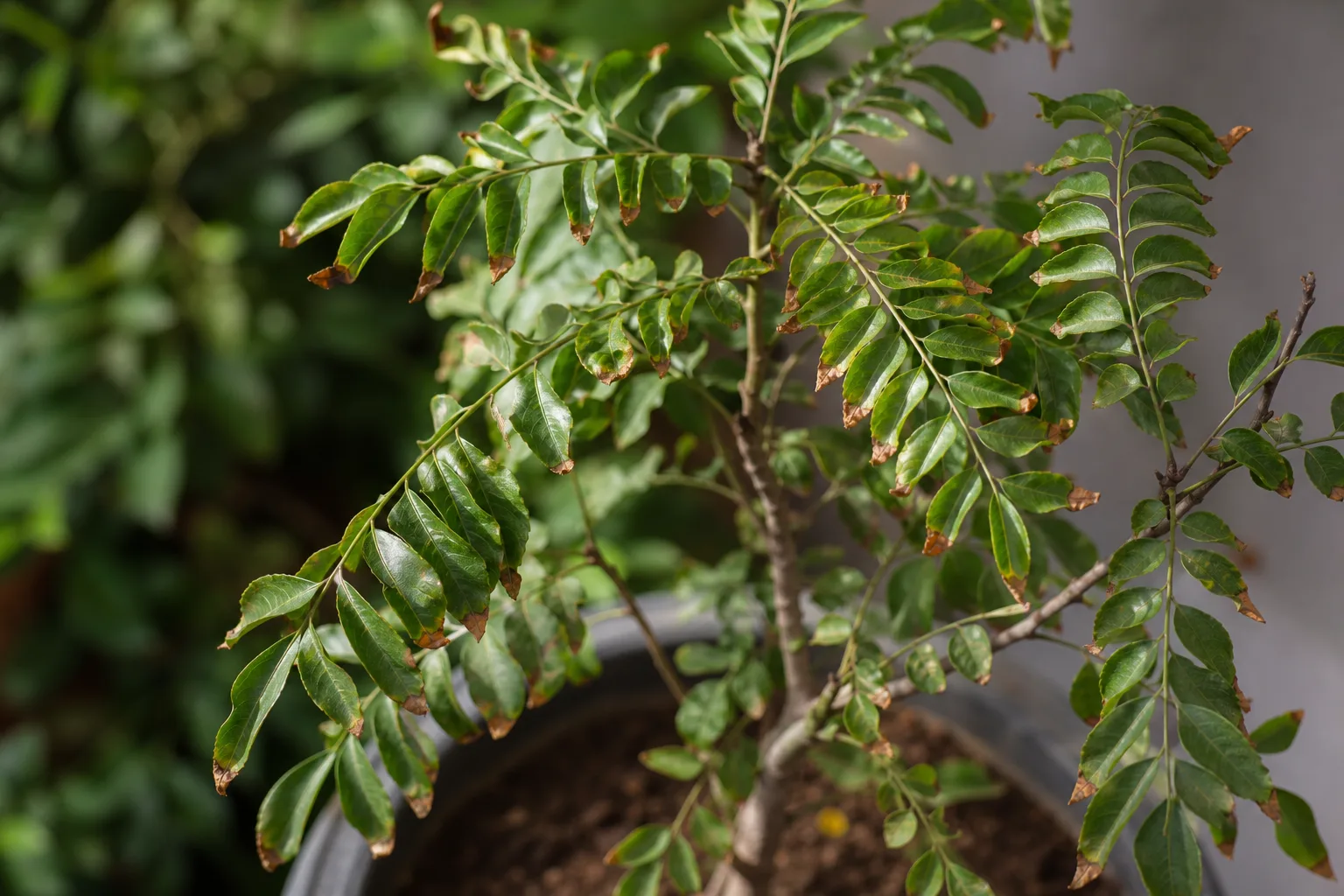
Brown Tips on Curry Leaf Plant: Causes, Checks & Fixes
This guide covers brown tips on Curry Leaf Plant. See also the general Brown Tips guide, watering, and light pages for this plant.
Brown Tips on Curry Leaf Plant: Causes, Checks & Fixes
Quick answer
Brown tips on curry leaf plant - Murraya koenigii (curry patta, kadi patta, sweet neem) - almost always trace to environmental stress this sun-loving Rutaceae tree cannot hide. Unlike a pothos in the same room, Murraya runs on six to eight hours of direct sun daily, fast summer transpiration in small compound leaflets, and roots that tolerate dry spells better than waterlogged soil. When any of those variables slip - salt in hard tap water, drought in a hot window, cold below about 15°C (59°F), weak winter light, alkaline iron lockout, or sudden outdoor sun without acclimation - damage shows first at individual leaflet tips and margins on compound leaves.
First step: check soil moisture at 3–5 cm depth and inspect the newest compound leaf before changing anything. If white mineral crust rings the pot rim or soil surface, flush the mix with plain water at two to three times pot volume and let it drain fully - that is the safest opening move for salt or fertilizer burn. If the pot is light and mix is dry throughout with limp whole leaves, water thoroughly once per our watering guide. If nights are cool and growth has stalled, warmth and light correction come before more water or feed.
Brown tissue on old leaflets will not green up again. Success means the next rachis pushes leaflets with clean margins.
What brown tips look like on curry leaf plant
Murraya foliage is pinnate - a central rachis carrying many small glossy leaflets. Brown-tip stress usually hits one or several leaflets within a compound leaf before the whole canopy fails, which helps separate causes.
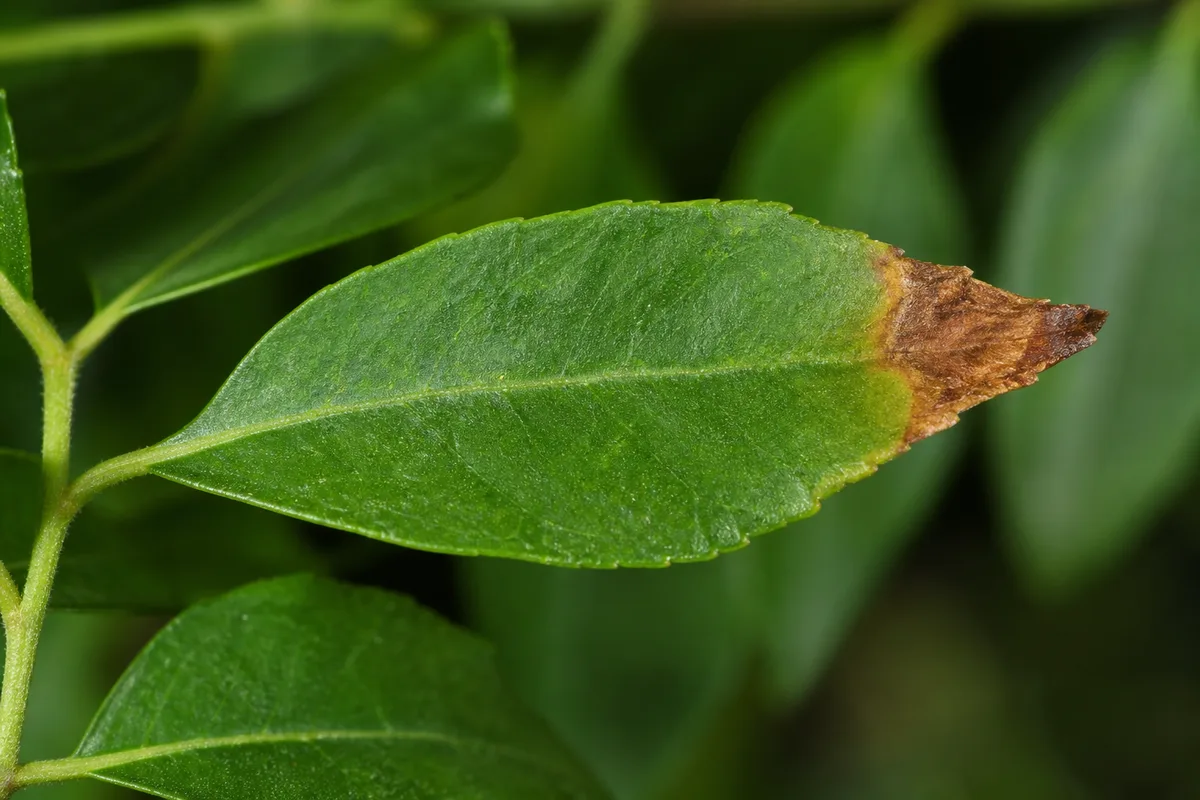
Brown Tips symptoms on Curry Leaf Plant - compare with healthy tissue on the same plant.
Salt or fertilizer burn
- Sharp tan-to-brown lines along leaflet margins, sometimes with a pale yellow band inside the brown edge
- White or chalky crust on the pot rim, soil surface, or saucer after hard tap water or heavy synthetic feeding
- Damage often oldest leaflets first, spreading inward on heavily fed specimens
- New shoots may emerge with burned tips even when lower leaves look acceptable - salt stress tracks recent feeding or unchanged hard-water routine
PlantVillage specialists note that Murraya koenigii is sensitive to salt accumulation and waterlogging - tip burn from excess minerals is a documented pattern on this species, not generic houseplant boilerplate.
Underwatering in warm, full-sun conditions
- Crisp brown tips on multiple leaflets while the whole compound leaf feels thin and limp
- Pot feels light; mix pulls from sides; finger at 3–5 cm reads bone dry
- Worst on small pots in midsummer harvest cycles when transpiration outpaces root uptake
- Recovery within hours of a thorough soak if roots are still firm - unlike salt burn, which persists until salts flush out
Cold damage and winter dormancy browning
- Brown or blackened leaflet tips appearing when nights drop below about 15°C (59°F) - overlapping the cool-season leaf drop our overview describes
- Damage clustered on window-facing leaflets or cold-sill specimens overwintering indoors
- May coincide with whole-canopy leaf drop leaving bare woody stems - normal dormancy on healthy roots, but crispy margins on remaining green leaflets signal cold draft or dry heat stacked on chill
- Symptoms that appeared in winter and cleared when temperatures rose strongly suggest temperature stress, as growers reported on PlantVillage Murraya threads
Insufficient light (leggy growth plus pale crisp tips)
- Long bare stems, small pale leaflets, and brown crispy tips on weak new growth in dim winter rooms
- Plant may sit far from glass or under short winter days without supplemental grow light despite “bright indirect” advice that does not meet Murraya’s full-sun profile
- Misting or extra water does not fix tip burn when the core issue is photon deficit - see our not enough light guide
Iron deficiency in alkaline soil
- Yellowing between green veins on newest leaflets, sometimes with brown scorch at tips as stress compounds
- Common in containers watered for years with alkaline hard tap water without Curry Leaf Plant repotting guide - Rutaceae relatives share this pattern per UF/IFAS citrus iron-chlorosis guidance
- Distinct from uniform drought crisping: soil may be moist, pot weight normal, yet new growth stays pale and marginal burn follows chlorosis
Sun scorch after sudden light increase
- Bleached or crispy patches on sun-facing leaflets after moving from a dim shop or indoor winter spot to harsh outdoor midday sun without acclimation
- UC Master Gardeners recommend protecting young curry leaf from direct summer sunburn in hot microclimates - full sun is correct, but gradual hardening over one to two weeks prevents photooxidative burn
- Differs from underwatering: scorch hits exposed leaflet faces on firm, well-watered plants after a light shock
Why curry leaf gets brown tips (not generic houseplant advice)
Murraya koenigii evolved as a small tropical tree in warm, bright forests of the Indian subcontinent and Sri Lanka. It is not a shade-tolerant foliage plant. Three biology facts explain why tip burn shows up faster here than on a pothos in the same room:
High transpiration per leaflet. Each compound leaf carries many small glossy leaflets with substantial edge surface area. In full direct sun, water exits leaf margins quickly when roots cannot keep pace - underwatering crisping appears at tips first.
Salt sensitivity in containers. Closed pot systems concentrate minerals from tap water and fertilizer. Four Winds Growers emphasizes slightly acidic, well-drained mix for container curry leaf - alkaline drift plus salt buildup burns margins before the whole plant yellows.
Cold and dormancy mismatch indoors. Murraya drops foliage in colder microclimates and stalls below about 15°C. Growers who keep summer watering rhythm on a cool, leaf-dropping plant invite root stress; growers who interpret every winter brown tip as drought and soak a dormant pot invite rot - both produce margin damage.
Harvest interaction. Moderate pinching above nodes encourages bushier shoots. Stripping entire branches bare during heat or salt stress removes leaf area the tree needs to recover, so tip burn on remaining shoots can look worse after aggressive kitchen harvests even when the original trigger was environmental.
How to confirm the cause
Work through this checklist in order - each step narrows the fix before you stack treatments:
- Newest compound leaf - Yellow between green veins on new leaflets points to iron chlorosis; uniform crisp brown tips on firm pale new growth points to light or salt; limp thin whole leaves point to drought.
- Soil moisture at 3–5 cm - Bone dry and light pot = underwatering. Cool-damp with tip burn only = salt, humidity, or light issue - not more water. Wet heavy mix with soft yellow leaves = overwatering - stop watering before flushing salts.
- Pot rim and soil surface - White crust = salt or hard-water minerals; flush before fertilizer or iron chelate.
- Temperature and season - Nights below 15°C, bare stems, or recent move indoors for frost? Cold dormancy or draft damage - warmth and reduced watering, not midsummer soak schedule.
- Light hours and placement - Count direct sun on the canopy. Leggy stems with weak tips in a dim room = insufficient light, not humidity alone. Sudden outdoor move with bleached sun-facing leaflets = scorch - shade gradually, then rebuild sun over 7–14 days.
- Recent feeding - Heavy synthetic dose or crusty soil after monthly feeding? Salt burn - flush and halve fertilizer per our fertilizer guide.
- Leaflet undersides - Fine stippling or webbing with tip damage? Spider mites in dry winter air - rinse and treat pests alongside environmental fixes.
- Room humidity at canopy - Moist soil but crispy tips only near a heating vent? See low humidity overlap - humidifier before flooding the pot.
If two causes fit - common pairings are salt plus dry winter air or cold plus overwatering - fix the highest-risk item first (flush salts or correct wet roots), then reassess new growth for two weeks before the second change.
Lookalike symptoms to rule out
| What you see | Likely cause | Where to read more |
|---|---|---|
| Sharp brown margins with white pot-rim crust | Salt or fertilizer burn | This page |
| Crisp tips, light pot, limp whole compound leaves | Underwatering | Underwatering |
| Brown tips on remaining leaflets during cool leaf drop | Cold damage / dormancy stress | Overview |
| Leggy stems, pale small leaflets, weak crisp new tips | Insufficient direct light | Not enough light |
| Yellow between veins on new leaflets, green veins remain | Iron chlorosis in alkaline soil | Yellow leaves |
| Bleached crispy patches after sudden outdoor sun | Sun scorch | Light guide |
| Tip burn with moist soil and RH below 40% at canopy | Low humidity (often stacks with salt) | Low humidity |
| Fine stippling plus webbing on undersides | Spider mites | Spider mites |
| Soft yellow leaves on wet mix, sour smell | Overwatering / root stress | Overwatering |
Normal aging - A single lower leaflet with a dry tip on an otherwise vigorous plant is often senescence. Remove it and watch the next flush. Worry when multiple new rachis shoots repeat the pattern week after week.
First fix - match one action to your diagnosis
Do one targeted correction first so you can read the plant’s response. The opening move depends on what the checklist showed:
If salt crust or recent heavy feeding → flush the pot
Run plain room-temperature water through the mix at two to three times the pot volume, let it drain completely, and empty the saucer. Repeat once after the mix partially dries if crust was heavy. Hold fertilizer for four to six weeks. Switch toward rainwater, filtered, or distilled water for routine watering if hard tap water left white deposits - especially in small containers that concentrate minerals.
If bone-dry mix and light pot → water thoroughly once
Soak until a little runs from the drainage hole, then drain. Do not leave the pot in standing water. Recheck at 3–5 cm depth before the next drink per our watering guide.
If cold nights, draft, or winter dormancy → warm and dry down
Move off the cold sill, block HVAC blasts, and reduce watering while growth is slow - roots need less moisture when the plant is resting. Do not interpret leaf drop below 15°C as a call for daily watering.
If leggy pale growth in dim light → add direct sun or grow light
Move to the sunniest spot or add a full-spectrum grow light 30–40 cm above the canopy for 12–14 hours in winter. Misting will not substitute for photons on Murraya.
If interveinal yellowing on new leaflets → iron chelate, not more nitrogen
Apply soil-drench iron chelate appropriate for your mix pH per UF/IFAS iron guidance for citrus-family plants - flush salts first if crust is also present. Extra nitrogen fertilizer worsens chlorosis lockout.
If sudden outdoor scorch → partial shade and acclimate
Pull back from harsh midday sun for one to two weeks, then increase direct exposure gradually. Firm, well-watered plants recover new clean leaflets once light intensity matches what roots can support.
Recovery timeline - what success looks like on compound leaves
Old browned leaflet tissue does not repair. Judge progress by new rachis growth:
- Salt flush or corrected watering: Cleaner leaflet margins on the next compound leaf often appear within two to four weeks in warm bright active growth.
- Light correction: New shoots may stay small for one flush, then size up once photon supply stabilizes - allow three to six weeks indoors through late winter.
- Cold damage: Recovery waits for spring warmth above 15°C and lengthening days; bare dormant sticks may need several weeks before new shoots break.
- Iron chelate: New leaflets should show greener tissue between veins on the second or third flush after soil application - not overnight.
A full canopy of undamaged-looking foliage may take one growing season as older stressed leaves age out - especially if the plant also went through winter dormancy.
What not to do
Do not fertilize a stressed Murraya before you know whether salt, iron, drought, or cold is driving the tips - feeding on salt-burned or dormant roots worsens margin burn.
Do not keep watering because leaflets look tired when soil at 3–5 cm is already wet - curry leaf declines in waterlogged conditions and tip symptoms can persist on soggy roots.
Do not mist instead of fixing light or salts - brief humidity spikes do not replace six-plus hours of direct sun or a proper flush.
Do not move the plant daily between rooms or blast it from a dim corner to harsh outdoor sun in one step - acclimate over 7–14 days when increasing intensity.
Do not stack repotting, heavy pruning, iron chelate, pesticide, and fertilizer on the same weekend. One care correction at a time.
Do not strip entire branches for harvest while the plant is recovering from salt burn or winter stress - moderate pinching only until new growth is clean.
How to prevent brown tips next time
- Water with lower-mineral sources when possible, or flush every few months in hard-water regions.
- Feed at quarter to half label strength monthly in active growth only - see fertilizer guide.
- Match watering to light and season: top 3–5 cm dry before soaking; much less in winter dormancy per watering guide.
- Give six to eight hours of direct sun indoors or out - pair with a grow light in short winter days per light guide.
- Keep nights above about 15°C when actively growing; protect from frost entirely.
- Maintain slightly acidic mix and repot before alkaline tap water locks iron for years.
- Run a humidifier when winter heat drops RH below 40% at canopy - see low humidity for the wet-soil versus dry-air split.
- Harvest moderately - pinch above nodes, leave leaf area for recovery after stress episodes.
- Inspect newest shoots weekly - one old tip is cosmetic; repeated failed flushes mean the environment still needs adjustment.
When to worry
Treat as urgent when:
- Multiple new rachis shoots brown and abort within one week despite corrected watering
- Soft stems at the base, sour-smelling mix, or wilt with wet soil - likely root rot, not tip burn alone
- Fine webbing and stippling spread across compound leaves - spider mites need treatment before environmental tweaks alone will work
- Whole-canopy collapse after frost exposure - Murraya is not frost-hardy; inspect cambium and roots immediately
Lower urgency when a few older leaflet tips brown but new compound leaves emerge with clean margins after one targeted fix. Cosmetic edge wear on bottom leaflets during a heating season is common; health tracks the newest growth.
Curry leaf plant care cross-check
Brown tips rarely exist in isolation. Align the full routine:
| Factor | Tip-burn risk when wrong |
|---|---|
| Water quality / salts | Hard tap water, heavy feed, no periodic flush |
| Moisture rhythm | Drought in full sun, or winter overwatering on dormant roots |
| Light | Dim winter room, or sudden scorch without acclimation |
| Temperature | Cold sill, frost, or drafts below 15°C |
| Soil pH | Alkaline mix → iron chlorosis with marginal burn |
| Humidity | Dry heated air crisping tips on moist soil |
| Harvest | Heavy stripping during environmental stress |
Cross-link your routine: overview hub for Murraya biology and dormancy; watering for seasonal rhythm; fertilizer for salt overlap; yellow leaves for chlorosis; low humidity for dry-air crisping with damp soil.
Related curry leaf plant problems
- Yellow leaves - iron chlorosis and cold stress overlapping with tip burn
- Low humidity - crispy tips on moist soil in dry winter rooms
- Underwatering - limp compound leaves when the pot is genuinely dry
- Wilting - wet-soil versus dry-pot branches when leaflets droop
- Not enough light - leggy pale growth with weak crisp tips
- Spider mites - stippling and webbing behind dry indoor air
- Curry leaf plant overview - full-sun baseline, dormancy, and harvest context
When to use this page vs other Curry Leaf Plant guides
- Curry Leaf Plant watering guide - Use for routine moisture checks before assuming brown tips is the main issue.
- Curry Leaf Plant problems hub - Browse all 16 common issues on this species.
- Low Humidity on Curry Leaf Plant - Different entry point when symptoms overlap with brown tips.
- Underwatering on Curry Leaf Plant - Different entry point when symptoms overlap with brown tips.
- Overwatering on Curry Leaf Plant - Different entry point when symptoms overlap with brown tips.