Overwatering on Curry Leaf Plant: Causes, Checks & Fixes
Quick answer
On curry leaf plant (Murraya koenigii), overwatering shows up as yellowing and limp leaves while soil stays wet - especially indoors in winter when growth slows. Stop watering, lift the pot to confirm weight, and let the top 3–5 cm dry before the next soak. If the stem base softens, inspect roots before repotting.
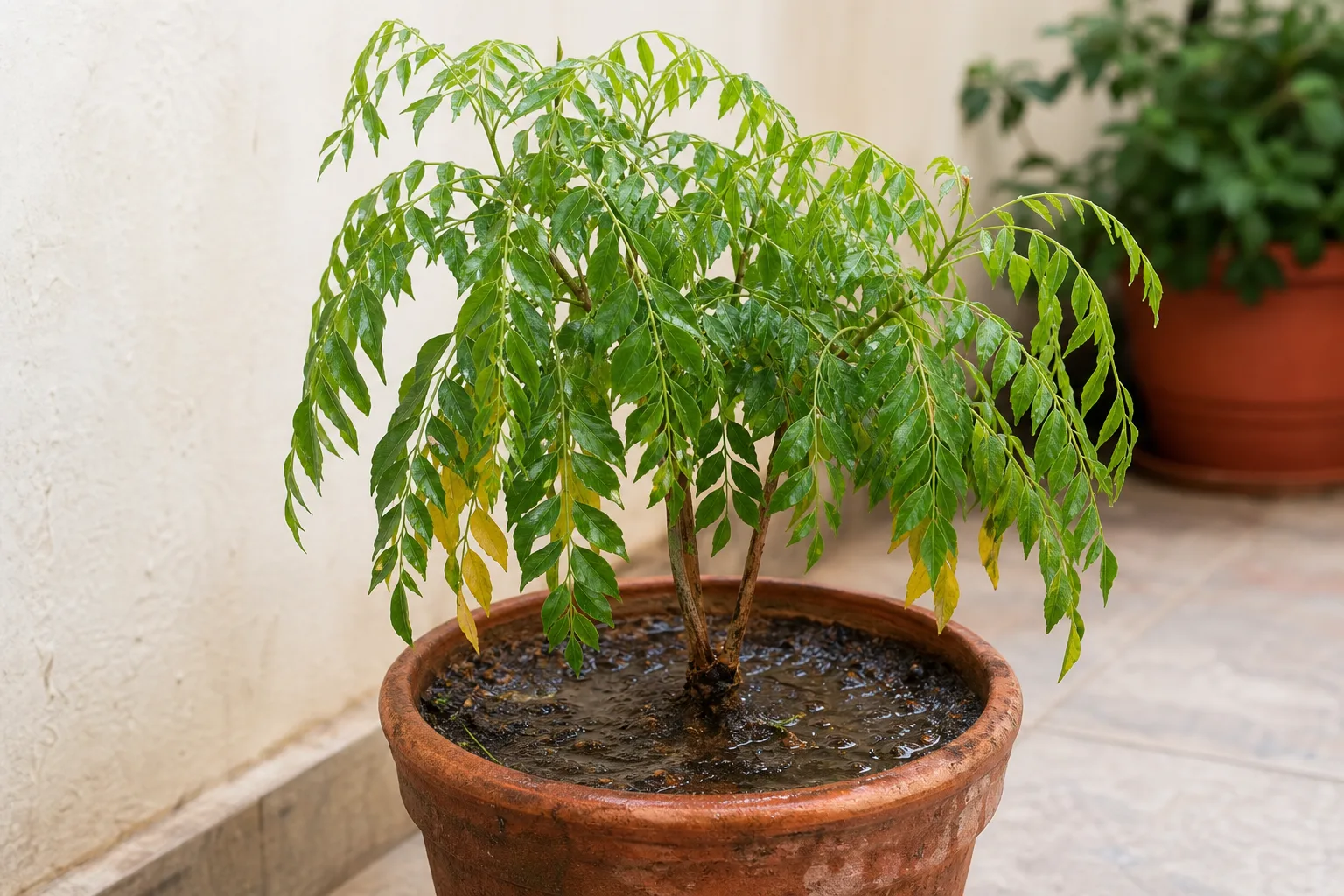
Overwatering on Curry Leaf Plant: Causes, Checks & Fixes
This guide covers overwatering on Curry Leaf Plant. See also the general Overwatering guide, watering, and light pages for this plant.
Overwatering on Curry Leaf Plant: Causes, Checks & Fixes
Quick answer
If your curry leaf plant (Murraya koenigii, kadi patta or sweet neem) has yellowing leaflets, limp stems, or clustered leaf drop while the pot still feels heavy, stop watering - that is the first and most important step. Push your finger or a dry skewer 3–5 cm into the mix near the pot edge. Wet, cool soil at that depth combined with a soft or dark stem base points to overwatering, not a need for more water.
This tropical tree-like herb from the Indian subcontinent and Sri Lanka wants steady moisture during active growth and a real dry-down between drinks. It tolerates drought better than constantly wet soil, yet chronic wet feet suffocate roots and invite rot - especially indoors in winter when metabolism slows and the classic trap is watering because leaves are falling.
What overwatering looks like on Murraya koenigii
Overwatering on curry leaf shows up in the root zone before every leaf tells the full story. Early signs include soil that stays damp several days after the last soak, lower leaflets turning yellow while mix remains cool and wet, and a pot that feels heavy when lifted. Leaf clusters may hang limp even though you watered recently - damaged roots cannot move water upward, so the plant wilts with wet soil.
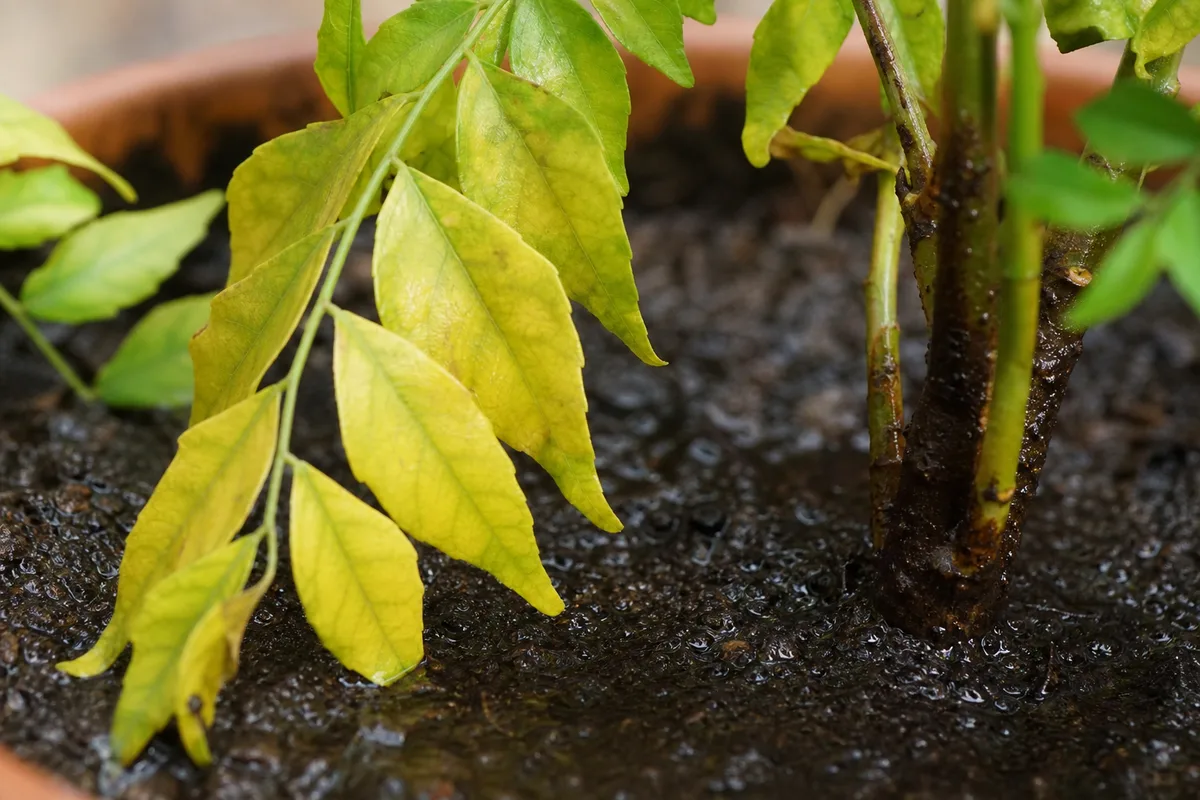
Overwatering symptoms on Curry Leaf Plant - compare with healthy tissue on the same plant.
Because Murraya carries odd-pinnate compound leaves - many small leaflets along one midrib - the canopy can look dramatically limp when only a few leaflets lose turgor, even before the whole branch collapses. That visual trick makes owners reach for the watering can when roots are already drowning.
As damage progresses, watch for:
- Soft, dark tissue at the stem base where it meets the soil line
- Clustered leaf drop without prior crisp dryness at leaf edges
- Sour smell from the drainage hole or when you slip the plant from its pot
- White or green algae on a chronically moist soil surface
- Fungus gnats hovering at the pot rim - larvae thrive in always-damp upper mix
- Mushy brown roots on inspection - healthy Murraya roots are firm and pale, not translucent slime
During active summer growth in bright light, healthy stems feel woody and firm. An overwatered plant may still look partially green while roots decay below. Yellowing alone is not enough to confirm the diagnosis - iron-deficiency chlorosis with dark green veins can appear on dry soil. The combination of wet mix plus soft stem base or persistent wilt is the pattern Missouri Botanical Garden warns about: root rot may occur if soils are kept too damp.
Why curry leaf plant gets overwatered
Murraya evolved for a warm, seasonal monsoon rhythm - generous moisture when actively growing, then drier rest when cool weather arrives. Container growers break that rhythm with habits that keep roots saturated year-round.
The winter dormancy trap (primary indoor failure mode)
When days shorten and room temperatures drop, curry leaf slows sharply or drops much of its foliage. UC Master Gardeners recommend medium water with soil allowed to dry between waterings; in winter, let the top 2.5 cm (one inch) dry before the next drink to prevent root rot during low-uptake periods. Many indoor growers see yellowing leaves, assume thirst, and keep watering on a summer schedule - turning normal dormancy into anaerobic soil.
Leaf drop in winter on firm stems with dry soil at depth is often normal dormancy - the species is evergreen in warm zones but will drop leaves in colder microclimates. Leaf drop while soil stays wet for a week is the overwatering pattern. The fix for the first is sparse watering and better light; the fix for the second is to stop soaking entirely until the root zone dries.
Calendar watering and heavy mix
Watering every Sunday regardless of season ignores how fast your pot dries. High-peat or fine coir mixes without enough perlite or coarse sand retain water in the pot core while edges look dry - a classic path to rot with “but I only watered weekly.” Curry leaf prefers well-drained, slightly acidic mix that drains within minutes after a thorough soak, not hours.
Oversized pots and poor drainage
Curry Leaf Plant repotting guide into a much larger container “to help drying” usually makes things worse - extra soil volume holds more water than a small root mass can use. Pots without holes, saucers left full after watering, and decorative cachepots that trap runoff keep roots in standing moisture. A recently purchased plant in dense nursery mix may also stay wet longer in your dim kitchen than it did on a bright greenhouse bench.
In deep nursery pots, top watering can leave the bottom third saturated while the surface looks merely damp. If chronic wetness persists after you cut frequency, slip the plant out once and check whether the lower half of the root ball stays clumped and cool - that pattern often needs a lighter repot or bottom-up dry-down awareness, not more surface pours.
Weak winter light slowing evaporation
Overwatering paired with low light is especially dangerous on Murraya. The plant transpires slowly, mix stays wet longer, and roots suffocate while the grower interprets pale leaves as need for more care. Move to the brightest available window or reduce water - often both - before changing fertilizer. See not enough light if the canopy stays sparse after watering is corrected.
Post-harvest and summer heat exceptions
During active growth with regular harvest cuts, regrowth increases water pull within days - but that is not permission to keep soil constantly moist. The rhythm remains full soak, then dry-down to 3–5 cm depth. Black plastic nursery pots on hot balconies can dry in 48 hours; the same pot in a cool north window in January may need two to three weeks between drinks. Match checks to the current season, not memory from July.
How to confirm the cause
Work through these checks in order before repotting, fertilizing, or trimming:
- Pot weight - Lift the container now. Heavy and wet supports overwatering; light and dry points to underwatering or dormancy instead.
- Soil moisture at depth - Surface color lies. Insert a finger or dry skewer 3–5 cm into the mix. Cool, clinging moisture at that depth means wait - even if leaflets look slightly limp at midday.
- Stem-base firmness - Pinch the main stem at the soil line. Firm and woody supports mild overwatering caught early. Soft, dark, or yielding tissue means rot may be active - urgent.
- Season and recent watering history - Winter leaf drop on dry soil differs from summer wilting on wet soil. Count how many days the mix has stayed damp since your last pour.
- Drainage and smell - Blocked holes, standing saucer water, or a sour odor from the pot strongly confirm chronic wetness.
- Root spot-check (optional) - If the stem base is soft or leaves keep declining after ten days of dry-down, gently slip the plant out. Mushy brown roots confirm advanced overwatering; firm pale roots with wet mix suggest you caught the problem before major decay.
If the pot is light, soil is dry at depth, and stems are firm, overwatering is unlikely - investigate drought, heat wilt, or wilting from another cause before soaking.
Symptom lookalike comparison
| What you observe | Soil / pot | Stem base | Likely cause | First move |
|---|---|---|---|---|
| Yellowing and leaf drop in cool months | Dry at 3–5 cm; pot light | Firm, pliable | Winter dormancy | Reduce water; improve light - see watering guide |
| Limp leaflets, heavy pot | Wet at depth for days | Firm (early) or soft (late) | Overwatering | Stop watering; dry-down |
| Gradual downward hang over days | Wet or dry varies | Usually firm | Slow moisture drift, weak light, harvest stress | See drooping leaves |
| Midday limpness, evening recovery | Dry at depth; pot light | Firm | Heat wilt / dry-down window | Verify again evening; soak if still dry |
| Crisp brown leaf edges, light pot | Very dry below 5 cm | Firm | Underwatering | One thorough soak, full drain |
| Wilting despite wet soil | Heavy, sour-smelling | Soft, dark | Overwatering → root rot | Stop water; inspect roots |
| Yellow leaves, dark green veins | Usually dry | Firm | Nutrient / pH issue | Fix water first; see yellow leaves |
The first fix to try
Stop watering. Do not give another drink until you have checked soil at 3–5 cm depth and assessed stem-base firmness. This single pause prevents rot from spreading and gives you a clear baseline.
Move the pot to the brightest spot available with good airflow so remaining moisture evaporates faster. Empty any saucer or cachepot immediately. Do not stack repotting, heavy pruning, fertilizer, or pesticide sprays on the same day - one correction at a time makes it obvious what helped.
If the stem base is still firm after the mix dries completely through the top 3–5 cm, you likely caught overwatering early. Resume watering only when depth and pot weight confirm dryness, then soak thoroughly until water runs from every drainage hole and empty the saucer within thirty minutes. Follow the soak-and-dry rhythm in the curry leaf watering guide.
Step-by-step recovery when roots are damaged
When the stem base softens, soil smells sour, or a root check reveals mushy tissue, escalate beyond a simple dry-down:
- Unpot gently - Slide the plant out and brush away wet mix. Work over newspaper; avoid pulling living roots.
- Trim only dead tissue - With a clean, sharp blade, cut away brown, translucent, or slimy roots until you reach firm, pale material. If the stem base is mushy, cut back to firm wood. Sterilize the blade between cuts.
- Air-dry - Let the root ball and any stem cuts sit in shade with good airflow for 24–48 hours so surfaces callous. Do not water during this step.
- Repot into fresh, airy mix - Use a well-drained blend with perlite or coarse sand in a pot only slightly larger than the trimmed root mass, with open drainage holes. Do not jump to a big decorative pot.
- Hold water initially - Wait five to seven days after repotting before the first light soak, unless leaflets show severe wilt on an already-dry root ball.
- Resume sparingly - When you water again, soak evenly, drain fully, then wait until the top 3–5 cm dries before the next drink. Judge progress by new shoots at nodes, not by old yellow leaves re-greening.
If more than half the root mass is mushy and the stem base collapses with no firm tissue left, saving the plant is unlikely. Take healthy cuttings from firm upper stems only if green wood remains - see the propagation guide - and dispose of severely rotted material.
Recovery timeline and what to watch
Mild overwatering caught while the stem base is still firm often stabilizes within one to two weeks once watering stops and the mix dries. Yellow leaflets may not green up again, but firm new leaf clusters at branch tips confirm recovery.
Moderate cases with partial root loss take several weeks to a few months, especially over winter when growth is slow. Expect older leaves to continue yellowing and dropping while roots rebuild. Do not fertilize until new growth looks normal - feeding stressed roots worsens salt buildup in wet mix.
Severe rot with extensive stem-base damage may take a full growing season to know whether the plant survived, and cosmetic scarring on the trunk is permanent.
Improvement signs: firming stem base, new shoots emerging, pot weight cycling predictably between heavy-after-soak and light-before-next-drink, and soil drying to target depth on a realistic schedule for the season.
Worsening signs: spreading soft tissue up the stem, wilt spreading to newest growth within 48 hours despite dry-down, or foul smell returning after repot - treat as urgent and consider disposal if no firm wood remains.
What not to do
Do not water because leaflets look limp without checking soil first - wilting with wet mix is the classic overwatering trap on Murraya. Do not fertilize a waterlogged plant hoping to push green leaves. Salts stress damaged roots further.
Do not repot into a much larger container or dense garden soil to “fix” drainage - both keep the core wet longer. Do not mist leaves as a substitute for correcting root-zone moisture; brief leaf wetting does not replace a proper dry-down cycle.
During winter dormancy, withhold both extra water and feed regardless of how bare the branches look - unless depth checks confirm genuine dryness, not surface appearance alone.
How to prevent overwatering next time
Match watering to the season, not the calendar. In active summer growth with strong light, water when the top 3–5 cm is dry and the pot feels noticeably lighter - often every two to three days on small containers in Curry Leaf Plant light guide. In winter slowdown indoors, stretch to once every ten to twenty-one days or longer, watering only when deep mix is dry and stems show early wilt rather than on a fixed schedule.
Dry-down snapshot (January, indoor grower): An 8-inch black nursery curry leaf on a north-facing kitchen windowsill at 18–20°C needed eighteen days between thorough soaks once leaf drop slowed in dormancy - the pot felt light only when a skewer came out clean at 5 cm depth, not when the surface looked pale. Watering on a former summer “every Sunday” schedule had kept the core soggy while edges looked dry.
Use well-drained, slightly acidic mix and a pot sized to the root mass. Always empty saucers after watering. Give full sun to part shade during active growth so the mix cycles between wet and dry quickly - dim corners slow evaporation and amplify winter rot risk.
Learn your pot’s dry-down rhythm during the first month after purchase: weigh the container when freshly watered versus dry, or note how many days pass before the skewer is dry at 5 cm. That personal baseline beats any generic blog schedule.
When leaves yellow in winter, read soil moisture before leaves. Dry at depth with firm stems means hold steady with sparse water. Wet at depth means pull back - even if the plant looks “thirsty.” For the full seasonal framework, see the curry leaf watering guide.
Inspect the stem base when you water during active growth. Firm woody tissue and new buds mean your rhythm is working. Softening at the base is an early alarm - cut water before rot spreads into the whole trunk.
When to worry
Treat overwatering as urgent if the stem base softens, the soil smells sour while leaves collapse, or wilt spreads to newest growth within 48 hours despite pausing water. Those signs mean rot may be moving into the main stem - act the same day with unpotting and trim, not another dry-down hope cycle.
Slow yellowing on a firm stem with soil drying normally on schedule can wait for a watering adjustment. Wet soil plus soft stem base should not wait through another watering cycle.
If you are unsure whether tissue is firm or mushy, unpot and look at the roots. A five-minute inspection prevents weeks of guessing and can save the plant when rot is still localized. When most roots are mushy and the crown gives way under gentle pressure, recovery is unlikely - focus on firm cuttings if any healthy upper wood remains, and review prevention before replacing the plant.
For chronic failure after two repot-and-trim attempts, contact your local extension office or Master Gardener program - especially when the plant is an edible kitchen herb and you want confirmation before discarding a mature specimen.
When to use this page vs other Curry Leaf Plant guides
- Curry Leaf Plant watering guide - Use for routine moisture checks before assuming overwatering is the main issue.
- Curry Leaf Plant problems hub - Browse all 16 common issues on this species.
- Root Rot on Curry Leaf Plant - Different entry point when symptoms overlap with overwatering.
- Yellow Leaves on Curry Leaf Plant - Different entry point when symptoms overlap with overwatering.
- Wilting on Curry Leaf Plant - Different entry point when symptoms overlap with overwatering.
Related Curry Leaf Plant guides
- Curry Leaf Plant overview
- Curry Leaf Plant watering
- Curry Leaf Plant light
- Curry Leaf Plant soil
- Root Rot on Curry Leaf Plant
- Yellow Leaves on Curry Leaf Plant
- Wilting on Curry Leaf Plant
- Fungus Gnats on Curry Leaf Plant
- Mold on Soil on Curry Leaf Plant
- Drooping Leaves on Curry Leaf Plant
- Curry Leaf Plant problems