Underwatering on Curry Leaf Plant: Causes, Checks & Fixes
Quick answer
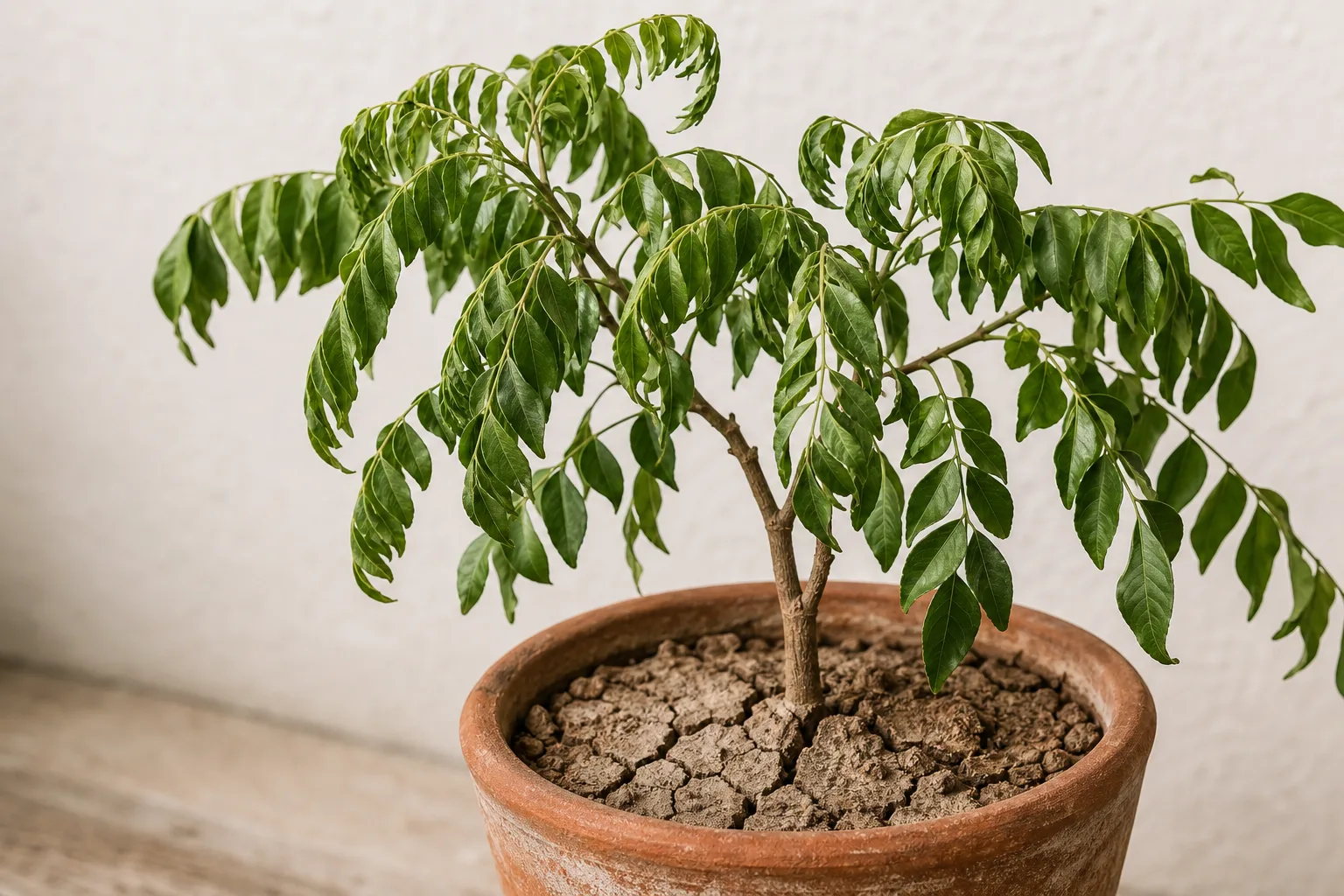
On curry leaf plant (Murraya koenigii), underwatering shows as a light pot, dry mix 3–5 cm down, and limp glossy leaflets with firm stems - not soft wet soil. First fix: one thorough soak until water drains, empty the saucer, then wait for the top 3–5 cm to dry before watering again. In cool months, gradual leaf drop on dry soil is often winter dormancy, not thirst.
Underwatering on Curry Leaf Plant: Causes, Checks & Fixes
This guide covers underwatering on Curry Leaf Plant. See also the general Underwatering guide, watering, and light pages for this plant.
Underwatering on Curry Leaf Plant: Causes, Checks & Fixes
Quick answer
Underwatering on curry leaf plant (Murraya koenigii, also called kadi patta or sweet neem) means the root zone stayed dry too long for the plant’s current growth phase - not that you forgot one Tuesday. The classic pattern is a noticeably light pot, mix dry 3–5 cm deep, and limp glossy leaflets along still-firm woody stems. Soil may pull away from the pot wall after vacation neglect or a heat wave on a small balcony container.
First fix: one thorough soak until water runs from every drainage hole, then empty the saucer within thirty minutes. Do not water again until the top 3–5 cm dries and the pot loses weight. If leaves are dropping in a cool room on dry soil but pliable stems, suspect winter dormancy before you rescue-soak - see the watering guide for the seasonal rhythm.
| What you notice first | Urgency | Likely branch | First move |
|---|---|---|---|
| Entire canopy collapsed on bone-dry soil in summer heat | High - same day | Active drought / heat wilt | One thorough soak, drain fully |
| Light pot + dry 3–5 cm + limp leaflets + firm stems (warm season) | Medium | Underwatering | Soak once; resume soak-and-dry rhythm |
| Gradual yellow drop + firm stems + cool room | Low - not thirst | Winter dormancy | Reduce water; improve light - do not soak |
| Heavy wet pot + limp leaves + soft stem base | High | Overwatering / root rot | Stop water - see root rot |
| Dry soil + gap along pot wall; water runs straight through | Medium | Hydrophobic mix | Bottom-water or submerge per extension method below |
Scope note: This page is the dry-pot and drought-stress hub for container Murraya. If the whole plant wilts on wet soil, start with wilting and overwatering. If leaflets only droop gradually without a light pot, see drooping leaves.
Underwatering vs. wilting vs. winter dormancy on curry leaf plant
Curry leaf growers often land on several symptom pages at once. These three patterns share limp foliage but need different first fixes.
| Pattern | Pot / soil | Stem base | Timeline | Start here? |
|---|---|---|---|---|
| Underwatering | Light; dry 3–5 cm deep | Firm, woody | Hours to days in active heat | Yes - this page |
| Wilting (wet side) | Heavy; damp for days | May soften or darken | Sudden collapse on wet mix | Wilting · overwatering |
| Winter dormancy | Dry at surface; may be dry at depth | Pliable; buds dormant | Weeks in cool months | Adjust watering - do not rescue-soak |
| Heat wilt (approaching dry) | Lightening; dry by evening check | Firm | Midday only; perks up overnight | Verify depth; soak if still dry at night |
Underwatering means the root ball lost moisture faster than roots could supply the canopy. Winter leaf drop on firm stems in a cool room is often normal rest - Gardener’s Path notes that temperatures in the high 50s °F and below can trigger dormancy and leaf fall; reduce irrigation so soil dries about one inch deep between waterings rather than soaking because branches look bare.
What underwatering looks like on Murraya koenigii
Healthy curry leaf holds stiff, glossy compound leaf clusters along woody stems. Underwatering removes that stiffness without the sour smell or soft stem base that signals rot.
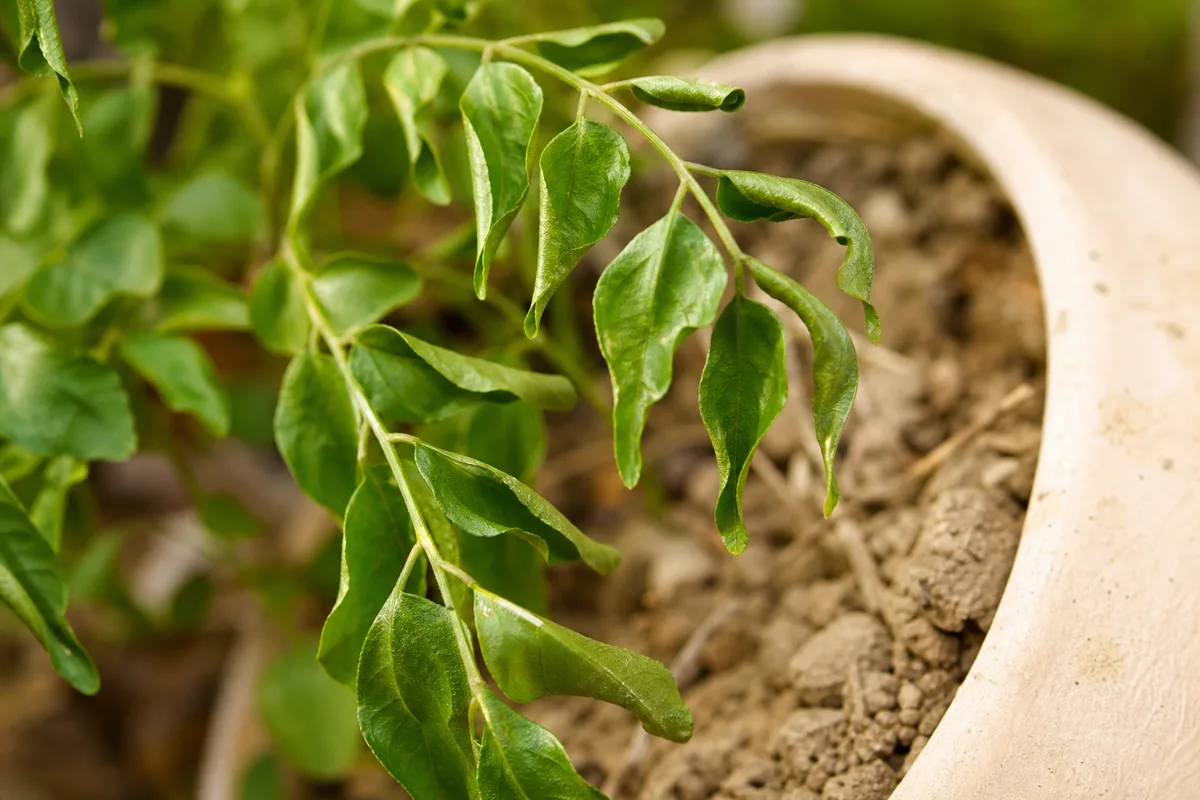
Underwatering symptoms on Curry Leaf Plant - compare with healthy tissue on the same plant.
Leaf and stem signals
Limp, soft leaflets that hang downward while stems at the soil line stay firm and green-brown point to drought stress or heat wilt, not root failure. Photo reference: limp glossy pinnate leaflets on a noticeably light pot with firm woody stems-original images pending.
Crisp brown edges on older leaflets often appear after repeated dry-down cycles - those margins rarely green up again. Midday limpness that perks up by evening on dry soil is common in full sun to part shade during summer; verify depth before soaking twice the same day.
Sudden full collapse on a light pot after a hot weekend on a balcony is the urgent underwatering picture. Gradual yellowing and leaf drop over weeks in a cool indoor room on dry soil is often winter dormancy, not the same emergency - stems stay alive at nodes even when the canopy looks bare. Photo reference: gradual yellow leaf drop on firm woody stems in a cool overwintering room-original images pending; do not confuse with summer drought collapse.
Soil and pot clues
Lift the container. A light, almost hollow feel compared to right after watering is your fastest clue. Mix is dry 3–5 cm down when you probe near the pot edge - surface color alone lies, especially on peat-based blends. Soil shrunk away from the pot wall with a visible gap means the mix went hydrophobic after long neglect; water may run down the sides without wetting the root ball.
Small black nursery pots on concrete in peak summer can reach critical dryness in 24–48 hours. Larger established plants in deep containers forgive longer gaps, but chronic dryness still reduces leaf quality and slows regrowth after harvest.
What underwatering does not look like
Underwatering is not limp leaves on heavy, wet soil - that pattern points to overwatering or root rot. It is not soft, dark tissue at the stem base. It is not sour-smelling mix with fungus gnats hovering at the surface. And winter leaf drop on firm stems in a cool room is often normal dormancy, not automatic proof you should pour daily.
Why curry leaf plant gets underwatered
Murraya evolved in the warm, seasonal rhythm of the Indian subcontinent and Sri Lanka - steady moisture during active growth and a real dry-down between drinks. Container life breaks that rhythm in predictable ways.
Heat and small pots outpace the calendar
Curry leaf in six or more hours of direct sun transpires aggressively. A compact pot on a hot patio dries far faster than a “once a week” rule suggests. Established plants tolerate semi-drought better than oversaturation - which makes growers underestimate how fast a small container can cross from “fine” to wilted in peak heat.
Fear of rot after past overwatering
Many indoor growers who lost leaves to winter soggy soil swing too far the other way. They skip checks through dormancy, interpret normal leaf drop as thirst, or wait until the whole canopy collapses before soaking. Murraya forgives dry spells better than wet feet, but weeks of bone-dry mix during active summer growth still damages leaf clusters and delays regrowth.
Post-harvest regrowth pulls more water
Harvesting leaf clusters reduces transpiration briefly, then stimulates new shoots that increase water demand within days. Skipping checks after a heavy pick is a common path to limp regrowth on an otherwise healthy plant.
Hydrophobic mix after vacation neglect
Peat-heavy blends that dry completely can repel water. You pour from the top and see runoff while the core stays dusty. The plant reads as underwatered even though you “watered” - the fix is staged soaking per UC Master Gardeners hydrophobic-soil guidance, not more calendar pours.
Young plants and fresh repots
Seedlings, rooted cuttings, and recently repotted plants have smaller root volumes and less drought tolerance than a woody established specimen. The same dry interval that a three-year-old tree shrugs off can wilt a young plant in forty-eight hours.
How to confirm underwatering vs. lookalikes
Work through these checks in order. Stop when the pattern is clear.
- Pot weight - Light and dry supports underwatering; heavy and damp rules it out.
- Moisture at depth - Insert a finger or skewer 3–5 cm into the mix. Dry at depth on a light pot confirms drought stress.
- Stem-base firmness - Firm, woody tissue at the soil line supports dry-side stress. Soft, dark, yielding tissue means stop - suspect rot, not thirst.
- Soil smell - Musty or sour odor on wet mix points away from underwatering.
- Season and temperature - Cool months with gradual yellow drop and pliable stems often mean dormancy. Temperatures below about 50°F (10°C) can stress tropical foliage; dormancy leaf drop is common when nights stay in the high 50s °F or lower indoors per Gardener’s Path.
- Recent care - Vacation absence, heat wave, or heavy harvest narrows the timeline.
| What you find | Urgency | Likely cause | First action |
|---|---|---|---|
| Light pot + dry 3–5 cm + limp leaflets + firm stems (warm season) | Medium | Underwatering / heat wilt | One thorough soak, drain fully |
| Heavy wet pot + limp leaves + soft stem base | High | Overwatering / root rot | Stop water - see root rot |
| Dry soil + gradual yellow drop + firm stems (cool months) | Low | Winter dormancy | Reduce water; improve light - do not soak |
| Dry soil + wilt 1–2 weeks after repot | Medium | Repot stress | Stabilize; light soak only when dry at depth |
| Dry soil + midday limpness that recovers by evening | Low–medium | Heat wilt on approaching dry | Verify depth; soak if still dry at night |
| Wet soil + yellowing without prior crisp dryness | High | Overwatering swing | Pause water - see overwatering |
| Dry gap at pot wall; runoff without moist core | Medium | Hydrophobic mix | Bottom-water or submerge; see recovery section |
For overlapping limp-leaf intent, also see wilting and drooping leaves. Yellow leaves without full turgor collapse may need a different branch of the decision tree.
The first fix to try
Give one thorough soak until water runs freely from every drainage hole, then empty the saucer within thirty minutes. That is the entire first action - no Curry Leaf Plant repotting guide, no fertilizer, no pruning marathon on day one.
Water evenly across the surface until the root ball is saturated. If water races through a gap along the pot wall, the mix may be hydrophobic - set the pot in a tray of water for twenty to thirty minutes so the mix wicks moisture upward, then lift it out and let it drain completely. Do not leave the container submerged for days.
Place the plant in its brightest stable spot after soaking. Recheck pot weight the next morning. Resume watering only when the top 3–5 cm is dry and the pot feels noticeably lighter - roughly every two to three days in active summer growth for many containers, and once every one to two weeks or longer in winter slowdown, per the curry leaf watering guide.
If the pot was heavy or damp while leaves looked limp, do not soak - you are on the wet side. Switch to the overwatering protocol instead.
Step-by-step recovery
Standard dry-pot rehydration
After the first soak and drain, wait for the top 3–5 cm to dry before the next full watering. UC Master Gardeners recommend medium water with soil allowed to dry between waterings - the same soak-and-dry cycle prevents the overcorrection soak that causes winter rot.
Heat wilt on firm stems often firms within hours to one day. Missed-watering collapse on an otherwise healthy root ball usually shows new turgid leaflets within one to two days. Judge success by new growth at nodes, not by old crisp edges re-greening.
Hydrophobic mix after long neglect
When soil has pulled away from the pot wall, top watering alone may not work. UC Master Gardeners list four reliable rehydration methods for peat-based potting mix that has dried out:
- Bottom-water - Set the pot in a shallow tray until the surface darkens and feels moist, often one hour or more, then drain fully.
- Submerge - For severe dryness, dunk the whole pot until air bubbles stop rising, then lift out and drain.
- Slow trickle - For large containers, water slowly enough that mix absorbs instead of channeling down the sides.
- Repeat staged soaks - Two controlled wet-dry cycles beat one flood that runs out the drainage holes without wetting the core.
Avoid leaving the pot sitting in standing water overnight. Check after an hour or two and remove it once hydrated.
After heavy harvest
If you picked most of the canopy and regrowth looks limp on a light pot, soak once, then check weight every one to two days while new shoots expand. Regrowth phase dries small pots faster than the pre-harvest rhythm suggested.
When underwatering overlapped with partial root damage
If stems stayed firm but leaves do not improve three days after a confirmed dry-pot soak, some root tips may have desiccated during the dry spell. Hold water until the top 3–5 cm dries, soak again, and watch for new white root tips when you next inspect. Severe cases with advancing stem softness need the root rot path - underwatering rarely softens the stem base unless rot followed an overwatering swing.
Recovery timeline and what to expect
| Situation | Typical improvement window | What “recovered” looks like |
|---|---|---|
| Heat wilt on dry soil, firm stems | Hours to 1 day | Leaflets stiffen by evening or next morning |
| Weekend neglect on a balcony pot | 1–2 days | New firm leaf clusters; old crisp edges remain |
| Two-week vacation dry-down | 3–7 days | New shoots at nodes; some lower leaf loss permanent |
| Chronic summer neglect | 2–4 weeks | Gradual canopy refill; woody stems may stay bare lower down |
Recovery checkpoint (editorial note, June 2026): On a balcony-grown Murraya in a 6-inch nursery pot, a single missed watering during a 95°F weekend produced full midday leaflet collapse on bone-dry mix; one bottom-water soak for 45 minutes followed by full drainage restored turgor on most clusters within 18 hours, with crisp lower margins unchanged - matching the heat-wilt row above.
Signs you are winning: pot weight cycles normally between soaks, stems feel firm at the base, new glossy leaflets open, and limpness does not spread to additional branches.
Signs the problem is worsening: stem base softens after your soak, soil stays wet for a week without drying, sour smell develops, or no new growth appears after two weeks of corrected rhythm. Advanced base rot cannot always be reversed - take firm cuttings if the trunk is lost.
Lookalike symptoms
Normal winter leaf drop - Gradual yellowing and shedding on pliable stems in a cool room is often dormancy when soil is dry at the surface. UC Master Gardeners note that curry leaf drops leaves in colder microclimates; hold sparse water rather than daily rescue cups.
Overwatering after a dry spell - Guilt-watering daily after one drought episode keeps mix soggy and invites root rot faster than honest dryness.
Repot stress - Wilting one to two weeks after repotting on dry soil may mean disturbed roots, not chronic neglect. Stabilize light and water lightly when depth checks confirm dryness.
Low humidity edge crisping - Very dry indoor air can brown leaflet margins while the pot still feels moderately heavy. See low humidity if edges crisp without a light, dry pot.
Mistakes to avoid
Do not water daily after one dry spell - Murraya roots need oxygen between soaks, and daily cups in cool weather cause root rot faster than honest drought. Do not mist instead of soaking; surface moisture does not rehydrate a dry root ball. Do not soak a cool, leaf-dropping plant in winter just because the top inch looks dry - winter leaf drop is often normal dormancy, not thirst. Do not repot, prune hard, and fertilize the same week a stressed plant finally got water. Do not interpret midday limpness as automatic emergency without checking whether turgor returns by evening on approaching-dry soil.
How to prevent underwatering without causing rot
Build a check habit, not a calendar. In active growth with strong light, probe 3–5 cm deep and lift the pot - water when that zone is dry and weight has dropped. In winter, reduce irrigation sharply even when leaves yellow and fall; water only when deeper mix is dry and the pot is light, sometimes every two to three weeks in a cool room. Gardener’s Path recommends letting soil dry about one inch deep between winter drinks when dormancy has started.
Use well-drained, slightly acidic mix in a pot with open drainage holes. Match pot size to the plant - oversized pots stay wet too long; undersized pots dry in a day on a hot patio. After vacation, schedule a staged soak before the mix turns hydrophobic. For the full seasonal framework, see the curry leaf watering guide and overview.
When to worry
Treat underwatering as urgent when the entire canopy collapses on bone-dry soil in active summer heat - a same-day soak prevents desiccation damage to fine roots.
Treat it as not urgent when stems stay pliable, buds sit dormant, and leaves drop gradually in cool months - hold sparse water and improve light instead of rescue-soaking.
Escalate to root inspection when stems soften at the base, soil smells sour after your soak, or no new growth appears after two weeks of corrected soak-and-dry rhythm on a plant that was dry, not wet. Those patterns suggest rot or another failure mode, not simple thirst. Contact your local extension office or Master Gardener program if you are unsure whether a bare overwintered plant is resting or dying.
Related curry leaf problems
- Overview - species hub and seasonal care context
- Watering - soak-and-dry rhythm, winter reduction, finger tests
- Overwatering - wet-soil patterns that mimic thirst
- Root rot - soft stem base and sour soil escalation
- Wilting - wet-vs-dry collapse triage
- Drooping leaves - gradual sag without urgent dry-pot collapse
- Yellow leaves - chill, iron, and moisture overlap
- Brown tips - margin burn after repeated dry cycles
- Low humidity - crisp edges on a moderately heavy pot
- Fungus gnats - wet-soil follow-up after overcorrection
This URL is the dry-pot and drought-stress hub for the curry leaf cluster. Sibling pages go deeper on one branch; start here when the pot feels light and mix is dry 3–5 cm deep.
Conclusion
Curry leaf underwatering is a light pot with dry mix 3–5 cm deep and limp leaflets on firm stems - fixed with one thorough soak and full drainage, then returning to the soak-and-dry rhythm from the watering guide. Winter gradual leaf drop on dry soil with pliable stems is usually dormancy, not thirst; rescue-soaking cool bare plants is how root rot starts indoors. When water runs down the pot sides without wetting the core, use bottom-watering or submersion per extension guidance instead of daily top pours. If stems soften, soil sours, or growth stalls after two weeks of corrected care, switch to the root-rot path - drought stress alone rarely mushifies the stem base.
FAQs
Is my curry leaf dropping leaves from underwatering or winter dormancy?
Check pot weight and stem firmness together. Winter dormancy on overwintered Murraya usually brings gradual yellowing and leaf drop over weeks while stems stay pliable and buds sit dormant at nodes - even when soil is dry at the surface. True summer underwatering collapses leaflets within days on a noticeably light pot with mix dry 3–5 cm deep. Do not soak a cool, leaf-dropping plant just because the top looks dry; that is how winter root rot starts.
How can I confirm underwatering on curry leaf plant?
Lift the pot - it should feel much lighter than right after a soak. Push a finger or dry skewer 3–5 cm into the mix near the pot edge; if that zone is dusty and dry, underwatering is likely. Stems at the soil line should still feel firm. Wet, heavy soil with limp leaves rules out drought and points to overwatering or root rot instead.
How long can Murraya koenigii go without water on a hot balcony?
Established curry leaf tolerates brief dry spells better than constantly wet soil, but a small black nursery pot in full summer sun can dry within 24–48 hours. Young or recently repotted plants are less forgiving. If leaflets wilt midday on a light pot, one deep soak usually firms them within hours - do not let the plant sit bone-dry for weeks during active growth or leaf quality and regrowth suffer.
Will damaged curry leaf leaves recover after underwatering?
Crisp brown edges on older leaflets usually stay damaged; judge recovery by new shoots and firm, glossy leaf clusters opening at nodes. Heat wilt on dry soil often improves within hours to one day after a proper soak. Chronic neglect that browned most of the canopy may take two to four weeks before you trust new growth again.
What should I avoid after rehydrating an underwatered curry leaf plant?
Do not water daily out of guilt - that swings straight into overwatering and root rot, especially in cool months. Do not mist instead of soaking the root zone; surface moisture does not rehydrate a shrunken root ball. Do not repot, prune heavily, and fertilize the same week. Make one correction - a thorough soak with drainage - then resume the soak-and-dry rhythm from the watering guide.
When to use this page vs other Curry Leaf Plant guides
- Curry Leaf Plant watering guide - Use for routine moisture checks before assuming underwatering is the main issue.
- Curry Leaf Plant problems hub - Browse all 16 common issues on this species.
- Wilting on Curry Leaf Plant - Different entry point when symptoms overlap with underwatering.
- Brown Tips on Curry Leaf Plant - Different entry point when symptoms overlap with underwatering.
- Yellow Leaves on Curry Leaf Plant - Different entry point when symptoms overlap with underwatering.