Yellow Leaves on Curry Leaf Plant: Causes, Checks & Fixes
Quick answer
Yellow leaves on curry leaf plant often mean cold dormancy, wet roots, iron lockout in alkaline soil, or too little sun-not a generic houseplant deficiency. First step: note whether new leaflets show green veins on yellow tissue, whether soil is wet or dry at 3–5 cm depth, and whether nights recently dropped below about 15°C (59°F).
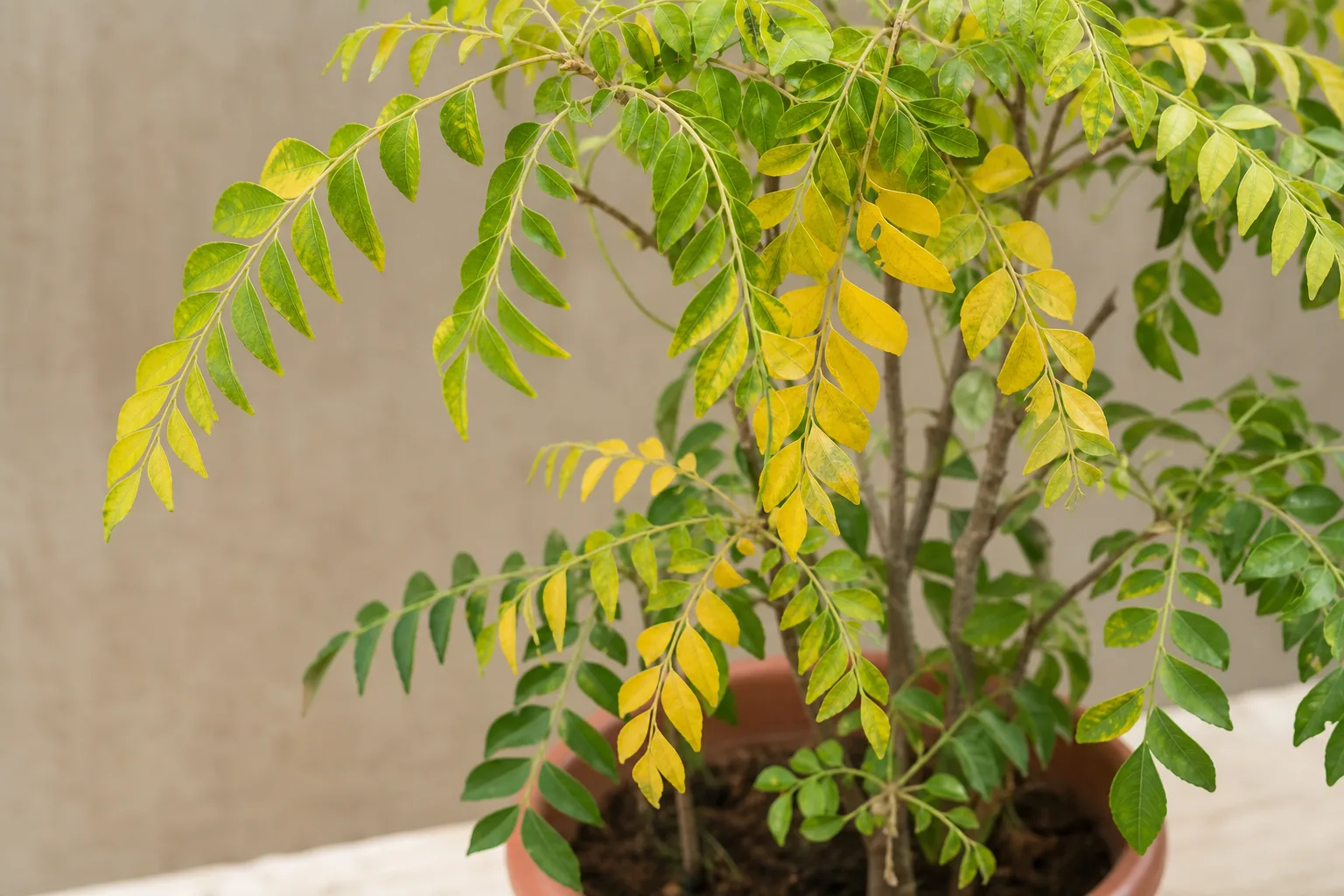
Yellow Leaves on Curry Leaf Plant: Causes, Checks & Fixes
This guide covers yellow leaves on Curry Leaf Plant. See also the general Yellow Leaves guide, watering, and light pages for this plant.
Yellow Leaves on Curry Leaf Plant: Causes, Checks & Fixes
Quick answer
Yellow leaves on curry leaf plant (Murraya koenigii, kadi patta) are a symptom pattern on woody stems with pinnate compound leaflets-not a single disease. This Rutaceae tree-herb wants full sun, warm roots, and slightly acidic well-drained soil. When any of those drift, leaflets yellow in ways that look similar from across the room but need different fixes.
The three patterns Murraya growers see most often:
- Winter dormancy - mass yellowing and leaf drop after nights fall below about 15°C (59°F) while stems stay firm
- Iron chlorosis - yellow new leaflets with green veins when soil pH rises above the 5.5–6.5 range curry leaf prefers
- Root-zone stress - yellow lower leaflets on wet heavy soil (overwatering) or crisp yellow leaves on dry light soil (drought)
First step: press your finger 3–5 cm into the mix and note pot weight. Wet and heavy with limp yellow leaflets points to overwatering. Dry and light with papery yellow leaflets points to underwatering. If soil moisture looks fine but new leaflets show green veins on yellow tissue, suspect iron lockout before adding nitrogen fertilizer. If many leaves dropped after a cold spell and stems are still woody and pliable, suspect dormancy-not root death.
Full species context: curry leaf overview.
What yellow leaves look like on curry leaf plant
Murraya koenigii grows as a woody shrub or small tree with pinnate leaves-one central rachis carrying many small glossy leaflets. Yellowing shows on individual leaflets or whole compound leaves along a branch, not as a flat rosette crown like a succulent. Matching the pattern saves a week of wrong fixes.
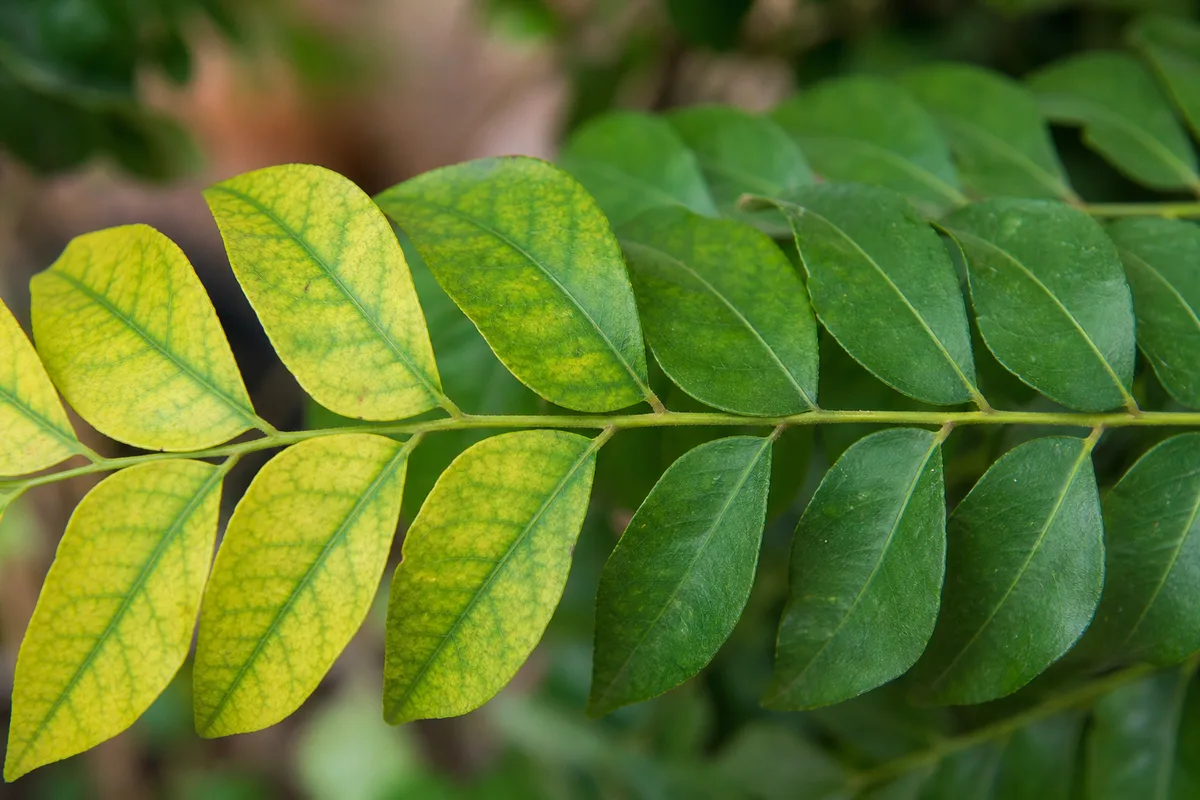
Yellow Leaves symptoms on Curry Leaf Plant - compare with healthy tissue on the same plant.
Winter dormancy and cold stress:
- Many leaflets yellow and drop within days after a cold snap, drafty window night, or move to an unheated porch
- Often follows nights below 15°C (59°F); UC Master Gardeners note dramatic leaf drop below about 10°C (50°F)
- Stems remain firm and woody at the base; no sour smell from the pot
- Plant may look bare but buds sit dormant at nodes until warmth returns
Iron chlorosis (alkaline soil / hard water):
- New leaflets turn yellow between green veins-classic interveinal chlorosis
- Older leaflets may stay darker green longer
- Often develops after months of hard alkaline tap water or exhausted potting mix
- Gardener’s Path notes curry leaf is prone to iron deficiency, especially when soil pH drifts above the 5.6–6.0 sweet spot
Overwatering and root stress:
- Lower leaflets yellow first, sometimes across several compound leaves on the same woody branch
- Soil stays wet for days; pot feels heavy; may smell sour near drainage holes
- Leaflets may look limp or dull while mix is moist-see overwatering and root rot
- Common in cool dim rooms where summer watering rhythm continues through winter
Underwatering and drought:
- Leaflets turn uniform yellow or tan, feel thin and papery
- Soil pulls from pot walls; pot is noticeably light
- Often on hot balconies where a small container dries in one sunny day-see underwatering
Insufficient light:
- Pale yellow-green leaflets on long bare stems between leaf pairs
- New shoots stay small; weeks without harvest regrowth
- Not the same as iron chlorosis-veins are not prominently darker green on new tissue
- Curry leaf needs six to eight hours of direct sun during active growth; dim indoor corners produce leggy pale growth-see not enough light
Natural aging on lower woody branches:
- One or two oldest compound leaves fade slowly over months on lower woody stems
- New shoots at branch tips and upper nodes stay green and aromatic
- Normal on established plants; not a crisis if regrowth after harvest continues
Scale and pest lookalikes:
- Sticky residue on leaflets, sooty mold, or clusters of bumps on stems can yellow leaflets indirectly
- Fine stippling with webbing suggests spider mites in dry winter air-see spider mites
Why curry leaf plant gets yellow leaves
Cold dormancy and temperature swings
Murraya koenigii evolved in the warm seasonal rhythm of the Indian subcontinent and Sri Lanka. Indoors in temperate climates, it often drops most foliage when nights fall below about 15°C (59°F)-a dormancy response, not automatic proof of root failure. Gardener’s Path notes leaves may yellow and fall when weather cools, with dormancy below about 40°F as long as hard frost has not hit.
Cold window sills, air-conditioning vents, and unheated porches trigger yellowing faster than a missed watering because roots in cold mix absorb poorly even when moisture looks adequate.
Iron chlorosis in alkaline soil
Curry leaf belongs to Rutaceae-the citrus family-and shares its sensitivity to high soil pH locking out iron. In alkaline conditions, iron forms compounds roots cannot absorb; new growth shows yellow tissue with green veins while older leaflets may stay green. The RHS recommends slightly acidic, moisture-retentive but well-drained compost for container culture-roughly pH 5.5–6.5.
Hard tap water, lime-heavy garden soil in pots, and repeated balanced fertilizer without pH awareness push alkalinity upward over months. Adding nitrogen when iron is locked out often worsens the chlorosis because iron uptake competes with other nutrients in stressed roots.
Overwatering, especially in winter
Missouri Botanical Garden notes Murraya has poor tolerance for waterlogged conditions. Saturated mix drives anaerobic root decline; lower leaflets yellow while soil stays dark and heavy. This pattern spikes when growers maintain summer watering frequency after the plant enters cool-season slowdown-exactly when roots need a real dry-down between drinks per the watering guide.
Underwatering in hot sun
Curry leaf tolerates dry spells better than wet feet once established, but chronic drought in a small pot on a hot balcony yellows leaflets from the edges inward. A sun-loving plant in six or more hours of direct light transpires heavily; a missed soak on a 35°C afternoon can yellow leaflets within days.
Low light indoors
Murraya is not a shade houseplant. Weak light produces elongated stems with small pale leaflets that read as yellow-green stress. This overlaps with leggy growth and is fixed by more direct sun or supplemental grow lights-not by extra water.
Natural senescence
On mature woody branches, oldest compound leaves senesce as new shoots extend from upper nodes. One fading leaflet cluster on a heavily harvested lower branch is normal if new aromatic shoots keep forming after you pick leaves.
How to confirm the cause
Work through these checks in order. One strong pattern match beats stacking fertilizer, Curry Leaf Plant repotting guide, and watering changes on the same day.
- Temperature history - Did nights recently drop below 15°C (59°F)? Is the pot on a cold sill or near an AC vent? Firm woody stems with mass leaf drop after cold → dormancy likely.
- Soil moisture at 3–5 cm - Wet heavy pot with limp yellow lowers → overwatering. Dry light pot with crisp yellow → drought. Use the finger test from the watering guide.
- Vein pattern on newest leaflets - Yellow blades with distinct green veins on new growth → iron chlorosis; test or refresh soil pH per the soil guide.
- Light exposure - Count direct sun hours on the leaves. Long bare stems with pale small leaflets and no green-vein pattern → insufficient light; see light guide.
- Root smell and stem firmness - Sour odor, soft dark base, wet mix for a week → inspect for root rot. Firm stems with dry soil after dormancy → wait for spring warmth.
- Which leaves yellow - Bottom woody branches only, slowly → aging. Widespread on wet soil → roots. New tips with vein pattern → iron.
- Harvest regrowth signal - No new shoots for weeks after picking, despite warm bright conditions, suggests ongoing stress-not normal leaf turnover.
Symptom comparison table
| Pattern | Likely cause | First direction |
|---|---|---|
| Mass drop after cold snap; firm woody stems | Winter dormancy / cold stress | Reduce water; warm bright spot; wait |
| Yellow new leaflets, green veins; alkaline mix | Iron chlorosis | Chelated iron; acidify soil; pause nitrogen |
| Yellow lower leaflets; wet heavy soil; sour smell | Overwatering / root stress | Stop watering; check drainage; inspect roots |
| Crisp yellow leaflets; dry light soil | Drought | Deep soak; adjust summer rhythm |
| Pale small leaflets; long bare stems | Low light | Move to full sun or add grow light |
| One old compound leaf fading slowly; green new shoots | Natural aging | Remove spent leaves; continue normal care |
| Sticky stems; bumps on woody branches | Scale / pests | Isolate; treat pests-not a soil fix |
First fix for curry leaf plant
Apply one primary correction based on your confirmed pattern-do not fertilize, repot, and soak on the same day.
If soil is wet and the pot feels heavy: Stop watering until the top 3–5 cm dries. Empty the saucer. Confirm drainage holes are open. Remove fully yellow mushy leaflets. Do not fertilize waterlogged roots. If yellowing spreads with sour smell, inspect roots per root rot.
If soil is dry and the pot is light: Water thoroughly until a small amount drains, wait ten minutes, water once more if the root ball was shrunken, then discard runoff. That single correction fixes many summer balcony yellowing episodes.
If new leaflets show green veins on yellow tissue: Apply chelated iron foliar spray or soil drench per product label-iron sulfate or chelate is standard for curry leaf iron deficiency. Refresh or repot into slightly acidic mix rather than adding more balanced nitrogen feed. See fertilizer guide for Rutaceae feeding rhythm.
If mass yellowing followed a cold spell and stems are firm: Move to the warmest bright spot available. Reduce watering to occasional sips when deep mix is dry-dormant roots absorb slowly. Do not rescue with daily watering; wet cold soil is how dormancy turns into rot.
If stems are leggy and pale in a dim corner: Move to six or more hours of direct sun or add a full-spectrum grow light before changing fertilizer. Acclimate over seven to ten days if moving from shade to harsh terrace sun.
Step-by-step recovery
After the first fix, follow the branch that matches your diagnosis.
Overwatering recovery
- Let mix dry to moist-not-wet at 3–5 cm depth before the next full soak.
- Improve airflow and light so the pot dries faster-dim cool rooms prolong saturation.
- Trim fully yellow compound leaves on woody stems to reduce pest hiding spots.
- Resume watering rhythm only when top layer dries on schedule.
Iron chlorosis recovery
- Apply chelated iron; repeat per label until new leaflets emerge green.
- Top-dress with compost or repot into fresh acidic-leaning mix if pH is above 7.0.
- Water with rainwater or filtered water if hard tap water is the chronic driver.
- Resume half-strength Rutaceae-appropriate feed only after new growth greens up.
Drought recovery
- Soak thoroughly; bottom-water ten to twenty minutes if hydrophobic mix repels water.
- Shift to daily moisture checks in peak summer sun on small pots.
- Shade from harsh midday heat only until turgor returns-curry leaf still wants strong light.
Dormancy recovery
- Hold sparse watering through cool months even if the plant looks bare.
- When nights stay above 15°C and days lengthen, new shoots should break from nodes within two to four weeks in good light.
- Resume light feeding only when active growth is visible.
Low-light recovery
- Relocate or supplement light per the light guide.
- Pinch leggy tips after light improves to force branching and fresh leaflets.
Recovery timeline
Overwatering: Yellowing often stops spreading within 3–7 days once soil oxygen returns. New green leaflets at shoot tips within one to three weeks if roots were not rotted.
Iron chlorosis: New growth should show reduced vein contrast within one to two weeks after chelated iron and pH correction. Old yellow leaflets do not re-green.
Drought: Leaflets firm and yellowing halts within 24–48 hours after a thorough soak if roots are intact.
Cold dormancy: Bare stems may stay leafless for weeks in winter; spring flush of new compound leaves within two to four weeks after warmth and light return is normal success.
Low light: New shoots after relocation should look darker green and more compact within two to three weeks-not overnight.
Judge success by new leaflet color and shoot extension, not by old yellow blades re-greening.
What not to do
- Do not increase watering on a cold dormant plant-wet roots in a cool room invite rot that mimics dormancy until stems soften.
- Do not apply nitrogen fertilizer on green-vein chlorosis-iron lockout worsens with the wrong nutrient.
- Do not assume yellow leaves always need feed-overwatering and winter drop are more common than deficiency.
- Do not repot into a larger pot to “fix drying” when soil is already wet-oversized pots stay soggy longer.
- Do not confuse dormancy with death-firm woody stems after leaf drop often leaf out again in spring.
- Do not treat curry leaf like a low-light kitchen herb-shade produces pale leggy yellowing no amount of misting fixes.
How to prevent yellow leaves on curry leaf plant
- Match watering to season - generous soaks when top 3–5 cm dries in summer; sparse drinks in winter dormancy per watering guide.
- Provide full sun - six to eight hours of direct light during active growth; supplement in winter if needed (light guide).
- Keep soil slightly acidic - target pH 5.5–6.5 with well-drained mix; refresh every one to two years (soil guide).
- Watch new growth for vein pattern - early iron chlorosis is cheaper to fix than a fully stalled plant.
- Protect from cold drafts - move indoors before nights approach 12°C (54°F) in marginal climates.
- Feed lightly in warm months only - half-strength every four to six weeks when shoots are active; pause in dormancy (fertilizer guide).
- Remove spent lower compound leaves on woody branches to keep airflow and pest checks easy.
When to worry
Likely rest, not emergency:
- Mass leaf drop after identifiable cold exposure
- Firm woody stems; no sour soil smell
- Dry soil at depth during winter indoors
Act within days:
- Wet soil for a week with spreading yellow and soft stem base
- Sour smell from drainage holes
- Mushy roots when you slip the plant from the pot
Hard limits:
- Frost exposure - Murraya is not frost-hardy; damage below 0°C (32°F) can kill tissue
- Sustained below 10°C (50°F) - severe leaf drop and stalled growth per UC Master Gardeners guidance
- No new shoots by late spring after warm bright conditions return - reassess roots, pH, and light together
Yellow leaves on curry leaf plant become manageable when you read vein pattern, soil moisture, and temperature history together-then fix one cause at a time.
Conclusion
Yellow leaves on Murraya koenigii trace to dormancy, iron chlorosis, root moisture, drought, or low light-each with a distinct pattern on woody pinnate stems. Green veins on yellow new leaflets mean iron and pH, not more nitrogen. Wet heavy soil means pause watering before feeding. Cold-triggered mass drop on firm stems means winter rest. Check soil at 3–5 cm, count direct sun hours, and watch new shoot color after your first fix. Recovery is measured on fresh green leaflets, not on blades that already turned yellow.
When to use this page vs other Curry Leaf Plant guides
- Curry Leaf Plant watering guide - Use for routine moisture checks before assuming yellow leaves is the main issue.
- Curry Leaf Plant problems hub - Browse all 16 common issues on this species.
- Overwatering on Curry Leaf Plant - Different entry point when symptoms overlap with yellow leaves.
- Underwatering on Curry Leaf Plant - Different entry point when symptoms overlap with yellow leaves.
- Not Enough Light on Curry Leaf Plant - Different entry point when symptoms overlap with yellow leaves.