Curry Leaf Plant Light Needs: Sun, Windows, and Signs
Curry Leaf Plant Light Needs: Sun, Windows, and Signs
Curry Leaf Plant Light Needs: Sun, Windows, and Signs
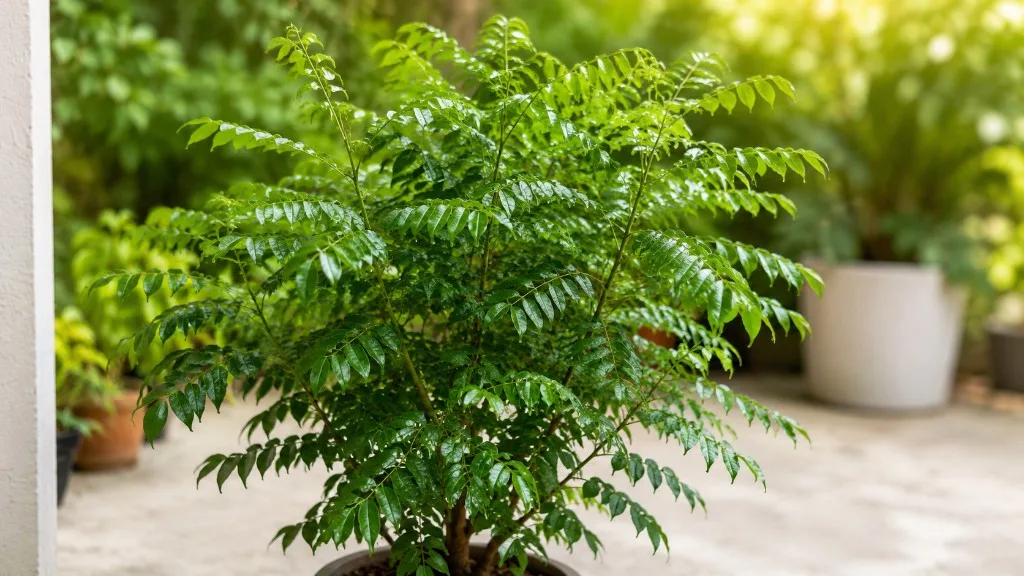
Curry leaf plant light is not a minor detail - it is the main reason an otherwise healthy Murraya koenigii produces leaves you actually want to cook with. The curry leaf tree is grown for harvest, not for passive decoration. Outdoors in its native range across the Indian subcontinent and Sri Lanka, it lives in strong tropical sun and pushes out firm, narrow, highly aromatic leaflets on woody stems. Indoors in a temperate home, the same species often survives in a bright corner while quietly losing the essential oils that give curry leaves their signature citrus-pine punch. You can keep the plant alive with moderate light. You cannot keep the flavor without serious brightness.
The practical target for most growers is full sun outdoors - at least six hours of direct sunlight daily, and ideally eight during the active growing season. Indoors, place the pot in the brightest south- or west-facing window you have, pressed close enough that leaves receive real photons, not just ambient room glow. When natural light falls short - which it does for most northern-latitude winters - add a full-spectrum LED grow light running roughly twelve to sixteen hours a day, positioned twelve to twenty-four inches above the canopy depending on fixture intensity. Judge success by new growth: compact internodes, deep green mature leaves, and a noticeable aromatic snap when you crush a fresh leaflet between your fingers.
This guide covers how much sun Murraya koenigii needs, which windows work indoors, how to acclimate without leaf drop, when grow lights become mandatory, seasonal moves between patio and windowsill, and the warning signs that tell you light - not watering - is the real problem.
Why Light Drives Leaf Flavor and Growth in Murraya koenigii
Murraya koenigii belongs to Rutaceae, the citrus family. Like many Rutaceae trees, it evolved under high light intensity in warm, frost-free climates. Light fuels photosynthesis, which builds the carbohydrates and structural tissue behind new shoots. It also drives secondary metabolite production - the essential oils, phenolics, and flavonoids that make curry leaves worth growing instead of buying dried flakes from a spice aisle.
Research on M. koenigii leaf chemistry shows that bioactive content, including essential oil fractions, varies with growth stage and environmental conditions (Frontiers in Plant Science - bioactive diversity in Murraya koenigii). While most home growers will not run GC-MS analysis on their balcony harvest, the practical takeaway is consistent across horticultural and culinary sources: leaves grown under strong light smell sharper and feel oilier than leaves stretched out in a dim dining-room corner. A plant can photosynthesize enough to stay green in moderate indoor light while still producing foliage that tastes flat - because the aromatic fraction never fully develops.
Light also controls architecture. Curry leaf plants naturally form a small tree or large shrub, reaching roughly 60–120 cm in pots and far taller in ground plantings. Adequate sun keeps internodes short and leaflets dense along each compound leaf. Weak light produces the opposite: long, bare stems reaching toward the glass, smaller leaflets, and a plant that looks tired even when you water on schedule. For a harvest crop, leggy growth is not cosmetic. Sparse foliage means fewer pickings per square foot of windowsill real estate.
Finally, light and water are linked. A brightly lit curry leaf plant transpires faster, dries its pot on a predictable rhythm, and processes nutrients actively during warm months. A dim plant sits in wet mix longer, roots breathe less, and yellowing leaves get blamed on mysterious “overwatering on Curry Leaf Plant” when the real issue is insufficient energy capture. Fix light first when growth stalls; watering adjustments follow.
How Much Sun Curry Leaf Plant Needs
Curry leaf plant sunlight requirements sit at the high end of what most houseplant guides recommend - because Murraya koenigii is not a typical houseplant. Missouri Botanical Garden lists it as full sun to part shade, noting that container plants overwintered in St. Louis should sit in bright light at east, south, or west windows (Missouri Botanical Garden - Murraya koenigii). UC Master Gardeners recommend full sun to partial shade, with six to eight hours of direct sun daily for outdoor specimens.
For flavor-focused growers, interpret “part shade” as a heat-management tool in scorching afternoon sun, not permission to park the plant in a shaded porch all summer. Part shade keeps the plant alive. Full sun builds the leaf quality you planted it for.
Full Sun Outdoors and Bright Indoor Minimums
Outdoors in USDA Zones 10–12, curry leaf trees belong in full sun with well-drained, organically enriched soil. In cooler zones, treat outdoor placement as seasonal: move the container to a sunny patio or south-facing garden spot from late spring through early fall, then bring it indoors before frost.
Indoors, “full sun” rarely exists unless you have unobstructed south glass. The indoor equivalent is the brightest direct-light window available plus honest proximity - typically within 30–60 cm of the pane, with no sheer curtain diffusing the beam into pretty but weak light. A plant five meters into a “bright” living room is not receiving bright light by Murraya standards; it is surviving on leftovers.
Minimum workable indoor baseline without supplemental lighting: four to six hours of direct sun through glass on south or west exposures, or a very strong east window in summer. Below that threshold, expect slow growth, thinner leaflets, and declining aroma within a few months. Most northern-latitude indoor growers need grow lights for at least part of the year to hold quality.
Measuring Real Light Exposure at Home
You do not need expensive equipment to estimate light, but you do need to stop guessing from how bright the room feels to human eyes. Our eyes adapt; plants do not.
Shadow test: At midday on a clear day, hold your hand above the plant. A sharp, dark shadow with defined edges suggests strong direct sun. A faint, fuzzy shadow means bright indirect at best - often insufficient for vigorous curry leaf production.
Duration log: Pick a typical sunny day and note when direct sun first hits the pot and when it leaves. Add partial direct patches only at half value. If the total is under six hours outdoors or four hours through glass, plan on supplementation or a new location.
New-growth test (most reliable): Over two to three weeks in a candidate spot, watch the newest compound leaf at the stem tip. Firm, properly sized leaflets on a short petiole mean adequate light for that season. Stretching between leaves, pale young leaflets, or stalled tips mean the spot fails - regardless of how good it looks on day one.
Phone light-meter apps convert readings to foot-candles or lux. They are imprecise but useful for comparing windows. A south window at midday often exceeds 5,000 lux on the sill; a north window may sit below 1,000. Curry leaf plants want the high end for active growth.
Best Window Placement for Indoor Curry Leaf
Window choice matters because curry leaf plant indoor light quality changes more across exposures than across watering schedules. The pot is usually small enough to move - use that advantage.
Place the container so foliage receives light, not just the pot rim. Curry leaf plants often lean toward the glass; rotate the pot a quarter turn weekly once growth is stable to keep the canopy even. Avoid radiators, fireplace mantles, and HVAC vents that desiccate leaves while giving the illusion of a good display location.
Ranking South, West, East, and North Exposures
South-facing windows (Northern Hemisphere): Best default for winter and year-round ambition. Expect the strongest daily dose of direct sun. In summer, watch for overheating against hot glass - a slight pullback at peak afternoon or a sheer screen during heat waves can prevent scorch without sacrificing overall intensity.
West-facing windows: Excellent for afternoon and evening sun. Strong in summer; can be harsh in desert climates where late-day heat spikes. Ideal for growers who lack south glass but have unobstructed western exposure.
East-facing windows: Good morning sun, softer than west. Works well in hot climates where afternoon blast would crisp leaflets. In winter, east alone is often marginal for flavor-grade growth unless supplemented.
North-facing windows: Poor long-term choice for Murraya koenigii. The plant may hold older leaves for a while, but new growth will stretch and aromatics will fade. If north is your only option, plan on grow lights - not optional decor, but required equipment.
Second-floor windows and skylights can outperform ground-floor south glass if unobstructed. Bay windows and garden windows outperform flat panes because light enters from multiple angles. Outdoor obstructions - neighbor buildings, deciduous trees, porch roofs - matter more than compass direction on paper.
Direct Sun Tolerance and Safe Acclimation
Yes - curry leaf plant direct sunlight is not only tolerated but preferred once the plant is hardened to it. Nursery stock and mail-order plants often arrive from greenhouse conditions with soft foliage. Moving that plant from a shaded bench to a blazing south patio in one afternoon is how people conclude the species is “delicate.” It is not delicate about sun; it is delicate about sudden change.
Leaves formed under lower light contain less structural protection against UV and desiccation. Expose them gradually and they toughen. Skip acclimation and you get bleached patches, crispy margins, and sometimes heavy leaf drop - stress that looks like too much sun but is really too much too fast.
Gradual Moves Without Leaf Drop
Use this protocol whenever you increase light significantly - indoor to outdoor, dim window to south glass, or winter windowsill to summer patio:
- Start in partial morning sun (east exposure or dappled shade) for three to five days if moving outdoors.
- Add one to two hours of stronger midday or afternoon sun every three to four days, watching newest leaves for bleaching.
- Keep watering steady - do not let the pot dry to bone on day one outdoors, but avoid compensating stress with extra water in soggy mix.
- Pause fertilizer until new growth looks normal under the higher light level.
- Hold at the target exposure for two weeks before judging success; old damaged leaves will not recover, but new leaflets should emerge firm and green.
Indoor acclimation from a middle shelf to the window sill is gentler but still deserves a week of gradual proximity - move the pot closer every two days rather than jumping overnight.
If you see bleached white patches on sun-facing leaflets, pull back one exposure level for a week, then resume the ramp more slowly. Scorched leaves do not heal; let the plant replace them.
When Indoor Windows Fall Short
Most curry leaf tree light needs are met outdoors in summer and fail indoors in winter - not because growers are careless, but because winter combines short photoperiod, weaker solar angle, and cloudy stretches. A plant that thrived on a south sill in August may receive half the daily photon dose by December in Chicago, Minneapolis, or London.
Signs your window is no longer enough:
- Progressive leaf drop starting from the interior of the canopy, not just old lower leaves
- Yellowing on leaves that are not old enough to senesce naturally
- No new shoots for six or more weeks despite warm room temperatures
- Spider mite flare-ups - dry, dim conditions favor pests on stressed Rutaceae foliage
- Waterlogged pot because transpiration collapsed while you kept the summer Curry Leaf Plant watering guide
At that point, “find a brighter window” may not exist in your floor plan. Grow lights become the correct tool, not a hobbyist upgrade.
Grow Lights: What Works for Curry Leaf Plant
Curry leaf plant grow light setups do not need commercial greenhouse budgets. They do need consistency and enough intensity to replace missing sun hours, not a dim accent lamp that turns on when you remember.
Full-spectrum LED grow lights are the default recommendation: energy-efficient, low heat relative to older HID fixtures, and suitable for long daily runtimes. Fluorescent shop lights or T5 fixtures work for maintenance-level winter survival but may sit at the lower end for pushing dense, aromatic new growth unless you cluster tubes close to the canopy.
Hours, Distance, and Fixture Types
Photoperiod: Run supplemental lights twelve to sixteen hours daily during low-natural-light months. A simple timer prevents accidental under- or over-lighting. You can split photoperiod - morning timer on before work, off mid-afternoon - but total daily hours matter more than one continuous block.
Distance: Position LEDs roughly twelve to twenty-four inches above the top of the canopy. Closer increases intensity but raises heat on leaf surfaces; farther reduces effectiveness. If leaflets curl upward or feel hot to the touch after hours under the fixture, raise the light or reduce hours.
Wattage guidance: Small countertop trees in 20–30 cm pots often do well with 20–40 watt LED grow panels marketed for houseplants. Larger specimens or multi-plant shelves need proportionally more coverage area - measure by canopy footprint, not pot diameter.
Integration with windows: Best results combine maximum natural window light plus timed supplementation rather than choosing one. Let the plant see real sun when available; fill the gap when it is not.
Replace bulbs or diodes on schedule per manufacturer life ratings. Aging LEDs drift down in output long before they go dark; weak winter growth on an old fixture sometimes traces to light fade, not plant decline.
Seasonal Light Changes and Winter Strategy
Murraya koenigii slows in cool, short days even indoors. It is not fully dormant like a temperate deciduous tree, but metabolism drops. Winter light strategy has two goals: prevent dieback and hold enough foliage to rebound in spring - not necessarily to produce harvest-grade leaves in January.
From late fall through early spring:
- Maximize window exposure - move the pot to the brightest south or west sill; remove obstacles outside the glass if possible.
- Run grow lights on the twelve- to sixteen-hour schedule even if the plant is not visibly growing.
- Reduce watering as transpiration falls; dim plants in wet mix rot while leaves yellow.
- Avoid Curry Leaf Plant repotting guide or heavy pruning during the darkest weeks unless correcting an emergency.
- Do not fertilize until new spring growth appears under stronger light.
When days lengthen in late winter, increase watering slightly before you increase feed - the plant will show you when light and water are aligned by firm new tips.
Outdoor Summer Placement and Heat Protection
Summer is when curry leaf plants repay your winter patience. Outdoor full sun on a patio, balcony, or garden edge accelerates growth and improves leaf flavor faster than any fertilizer tweak. Use wheels or a plant caddy if you move pots seasonally.
In hot, dry climates - Arizona afternoons, desert southwest, heat-wave weeks anywhere - manage excess sun and heat, not light quantity. Strategies:
- Morning-to-midday full sun, then light afternoon shade from 2–4 p.m. during extreme heat
- Shade cloth at 20–30% over the pot, not a dark indoor corner mislabeled as shade
- Avoid black plastic pots that cook roots on paved surfaces
- Increase watering frequency without keeping soil constantly saturated - bright outdoor plants dry fast
The RHS notes full sun or partial shade for container culture - that range makes sense here: full sun is the default; part shade is afternoon heat insurance, not a permanent low-light home.
Bring plants back indoors before frost; UC Master Gardeners advise protecting young trees from frost in colder microclimates. Cold damage shows up as blackened leaflets and stalled recovery even after warmth returns. Acclimate back down in light when moving indoors for winter - sudden reduction after outdoor summer can also trigger leaf drop, so step the plant closer to its winter window over a week.
Warning Signs of Insufficient Light
Low light is the most common indoor curry leaf failure mode. The plant does not always die quickly; it lingers, drops flavor, and frustrates cooks who expected a kitchen herb.
Watch for these signals on new growth first:
- Leggy stems with long gaps between leaf pairs, often leaning hard toward the window
- Smaller, thinner leaflets on new compound leaves compared to older outdoor-grown foliage
- Pale yellow-green young leaves that never deepen to the mature forest tone
- Slow or stalled shoot tips during warm months when the plant should be pushing
- Interior leaf drop while the outer shell looks superficially fine
- Flat aroma when crushed - the clearest harvest-quality warning
- Persistent soggy soil because the plant is not using water at the rate you supply
A table for quick scanning:
| Symptom | Likely light issue? | What to do first |
|---|---|---|
| Long bare stems | Yes | Move to brighter window; add grow light |
| Tiny new leaflets | Yes | Increase hours of direct sun or LED time |
| Yellow new leaves (not just old) | Often | Brighten location; then reassess watering |
| Musty soil, no growth | Often | Brighten and reduce watering together |
| No smell when crushed | Yes | Full sun block outdoors or stronger LEDs |
| Only lower old leaves yellow | Maybe not | Check natural senescence and watering first |
Do not confuse one old leaf yellowing at the base with systemic low light. Curry leaf plants shed older leaflets periodically. The pattern matters: yellowing climbing upward into new tissue is a red flag.
Warning Signs of Excess Sun or Heat Stress
Too much light usually appears as too much, too fast or heat without hydration, not as a fundamental intolerance of sun. Symptoms include:
- Bleached white or tan patches on sun-facing leaflets, especially after a sudden move
- Crispy brown margins that feel dry, not mushy
- Upward curling or folding of leaflets during peak midday hours
- Sudden mass leaf drop within 48–72 hours of a placement change
- Wilting at midday despite moist soil - root zone overheating on hot pavement
- Blackened leaf tips combined with very hot pot surfaces
These signs call for shade or acclimation retreat, not abandonment of sun altogether. Pull the plant to morning sun only for a week, verify pot and root zone temperature, and resume the gradual ramp. Leaves with bleached patches will not revert; wait for replacement flush.
Heat stress and sun stress overlap. If you fix exposure but the plant still wilts on a 40°C balcony, address root zone heat - elevate the pot, use lighter containers, or shift to afternoon shade while keeping morning full sun.
How Light Affects Watering and Recovery
Every curry leaf plant light change rewires watering. Brighter exposure increases transpiration and nutrient demand; dimmer exposure reduces both. The mistake is keeping a calendar schedule while light shifts seasonally.
Moving brighter: Check soil moisture every day for the first two weeks. Water when the top 3–5 cm dries, which may mean every two to three days in summer sun instead of weekly winter intervals. Do not flood a stressed plant; maintain the same dryness cue, just expect faster drying.
Moving dimmer: Stretch intervals immediately. Wet mix in low light suffocates roots and produces yellow leaves that look like nutrient deficiency. Let the top layer dry longer before watering.
Recovery after leaf drop: Hold stable bright light - do not yo-yo the plant between rooms. Water modestly. Skip fertilizer until new shoots are visible. Curry leaf plants can rebound from harsh light mistakes if the root system stayed healthy; patience matters more than aggressive intervention.
Link light corrections to harvest rhythm: pick lightly during recovery so the plant retains photosynthetic surface, but do not avoid all pruning if leggy stems need shaping once new growth firms up.
Common Curry Leaf Plant Light Mistakes
The failures that show up repeatedly are predictable:
- Treating it like a low-light foliage houseplant - pothos rules do not apply to Murraya koenigii
- Judging light by room brightness instead of photons on the leaf surface
- Placing the pot across the room from a window because it “looks better” there
- Moving outdoor summer plants indoors in one step without light reduction acclimation
- Moving greenhouse nursery stock to full patio sun in one afternoon without hardening
- Skipping grow lights in winter while wondering why leaves yellow and drop
- Keeping summer watering frequency in winter dim conditions
- Equating survival with success - the plant lives but leaves taste like green paper
- Using decorative lamps instead of grow fixtures with known output
- Changing light, water, fertilizer, and pot simultaneously so you cannot read which fix worked
The through-line: change light first, one variable at a time, and read the newest leaves.
Step-by-Step Light Position Test
When you are unsure whether a spot works, run a structured two-week trial instead of debating foot-candles theoretically.
- Photograph the plant - whole habit plus a close-up of the newest compound leaf.
- Place the pot at the candidate location, as close to the glass or fixture as practical without touching hot pane.
- Log direct sun hours or grow-light timer settings daily.
- Water only when the top 3–5 cm dries, adjusting as drying speed changes.
- Do not repot, fertilize, or prune during the trial unless pests appear.
- Day 14: Compare new growth to the day-one photo. Shorter internodes, larger leaflets, and stronger aroma mean success. Stretching or yellow new tissue mean try the next brighter option.
- Commit or move - once a spot passes, leave the plant there long enough for a full flush of new foliage before harvesting heavily.
This test works for comparing two windows in the same apartment, or for deciding whether your LED setup is strong enough to replace missing winter sun.
Conclusion
Curry leaf plant light requirements are straightforward and strict: Murraya koenigii needs bright light and full sun for best leaf flavor and growth. Outdoors, aim for six to eight hours of direct sun during the active season. Indoors, claim the brightest south or west window you have, keep the pot close to the glass, and add full-spectrum LED supplementation when winter or floor plan limits real sun. Acclimate every major move gradually, judge results by newest leaflets not old damage, and treat weak aroma as a light problem before you chase fertilizer or repotting.
Too little light produces leggy stems, pale tissue, interior leaf drop, and bland harvests. Too much sun too fast produces bleaching, crisp margins, and shock drop - fixable with retreat and slower hardening. Light and watering move together; brighten a spot and you will water more often, dim it and you must slow down. Run the two-week position test when in doubt, and remember why you grow Curry Leaf Plant overview: not just to keep a Rutaceae tree alive, but to pick leaves that actually smell and taste like curry leaf should.
When to use this page vs other Curry Leaf Plant guides
- Curry Leaf Plant overview - Start here for whole-plant context before deep-diving this topic.
- Curry Leaf Plant problems hub - Jump to symptom-specific fix guides when this care topic does not resolve the issue.
- Not Enough Light on Curry Leaf Plant - Escalate here when light adjustments are not enough.
- Leggy Growth on Curry Leaf Plant - Escalate here when light adjustments are not enough.
Related Curry Leaf Plant guides
- Curry Leaf Plant overview
- Curry Leaf Plant watering
- Curry Leaf Plant soil
- Curry Leaf Plant propagation
- Curry Leaf Plant fertilizer
- Curry Leaf Plant repotting
- Not Enough Light on Curry Leaf Plant
- Leggy Growth on Curry Leaf Plant
- Curry Leaf Plant problems
Related tool
Try the Plant Problem Diagnosis Tool with curry-leaf-plant pre-selected to estimate needs for your setup.