Root Rot on Curry Leaf Plant: Causes, Checks & Fixes
Quick answer
Root rot on curry leaf plant (Murraya koenigii) is decayed roots in chronically wet mix - especially when winter dormancy leaf drop meets continued watering indoors. First fix: stop watering, unpot, and inspect roots. Trim mushy tissue, air-dry 24–48 hours, then repot into fresh airy mix sized to remaining roots.
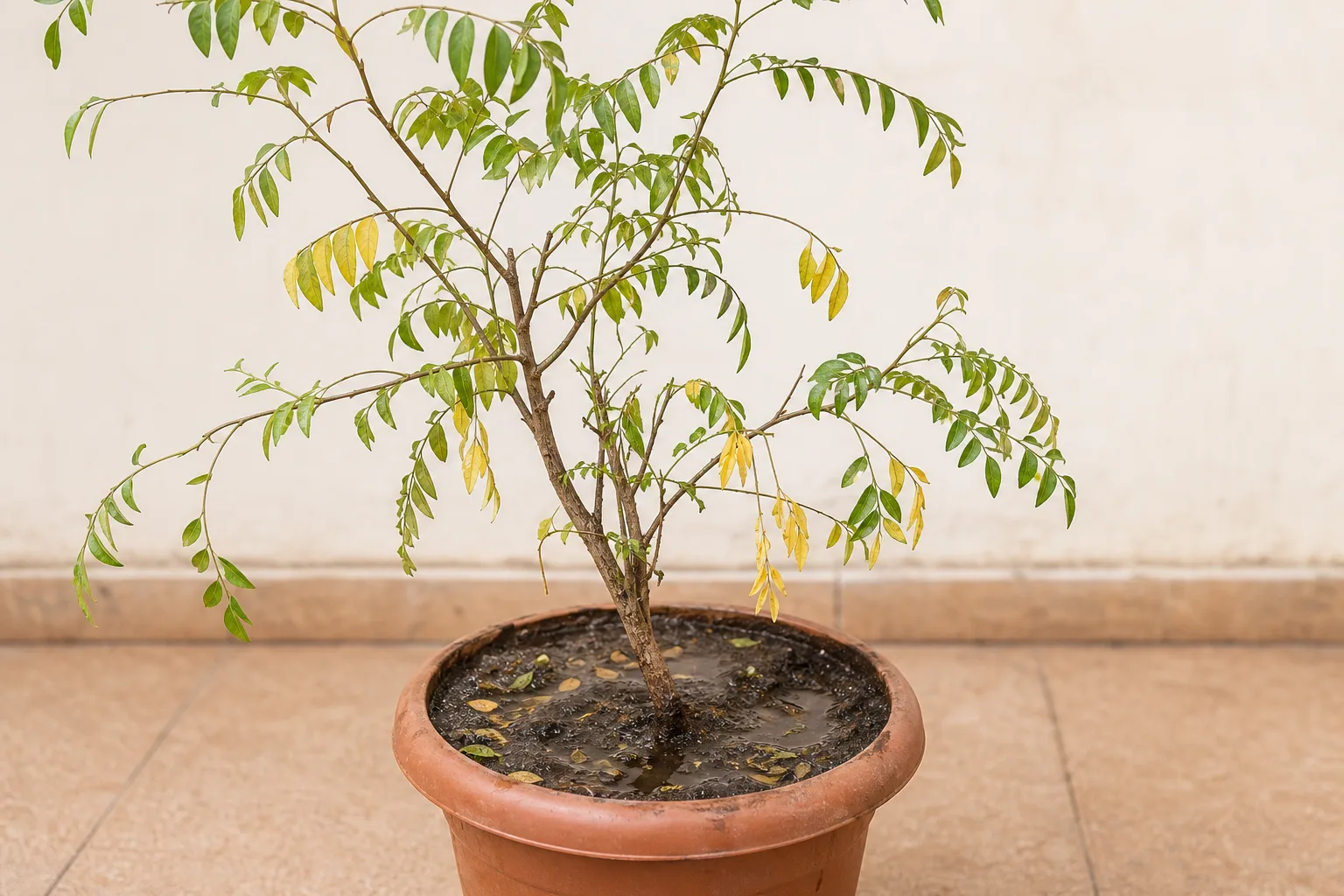
Root Rot on Curry Leaf Plant: Causes, Checks & Fixes
This guide covers root rot on Curry Leaf Plant. See also the general Root Rot guide, watering, and light pages for this plant.
Root Rot on Curry Leaf Plant: Causes, Checks & Fixes
Quick answer
Root rot on curry leaf plant (Murraya koenigii, kadi patta or sweet neem) is root tissue decay in soil that stays too wet too long - not a random leaf disease. This tree-like Rutaceae shrub with pinnate compound leaves evolved for warm monsoon seasons and a real dry-down between drinks. When an overwintered container sits in a cool dim room where metabolism slows but watering continues, roots lose oxygen and opportunistic fungi attack weakened tissue. The classic indoor pathway is winter dormancy leaf drop plus wet soil.
First fix: stop all watering immediately. Unpot within 24–48 hours if mix smells sour, the woody stem base softens at the soil line, or leaflets stay limp on heavy wet soil after you pause water. Do not repot blindly or fertilize a failing plant. If roots are mushy, trim to firm tissue, let cut surfaces air-dry, and repot into fresh airy mix in a pot sized to what remains. If the main trunk is total loss but basal suckers are still firm, propagate offsets instead.
For early wet-soil stress before roots decay, start with the overwatering guide. This page covers confirmed or strongly suspected root decay - mushy roots, sour smell, soft stem base on saturated mix.
Root rot vs. overwatering vs. winter dormancy
These three situations share yellowing and leaf drop on Murraya but need different urgency.
| Situation | Soil / pot | Stem base | Roots (if checked) | Start here |
|---|---|---|---|---|
| Winter leaf drop, firm woody stems | Dry at 3–5 cm; pot light | Firm, pliable | Firm pale (if inspected) | Watering guide - sparse winter drinks |
| Wet soil, yellow leaflets; roots not yet inspected | Heavy, cool for days | Firm (early) or soft (late) | Unknown | Overwatering - stop water, dry-down |
| Unpot reveals brown mushy roots or sour mix | Heavy, sour-smelling | Soft, dark at soil line | Mushy, translucent | This page - trim and repot |
| Wilting despite wet soil | Heavy | Softening woody base | Often mushy | This page - act within days |
Overwatering is the cause; root rot is the result. Catching wet soil while roots are still firm belongs on the overwatering page. Confirmed mushy roots, sour mix, or a soft lignified trunk base belongs here.
What root rot looks like on Murraya koenigii
Curry leaf shows stress on its pinnate leaf clusters and woody upright stems before the whole plant collapses. Unlike a rosette succulent, Murraya drops older leaflets from lower branches first while upper foliage may still look partially green - but the diagnostic pattern is always tied to wet mix and failing roots below, not crown-only decay.
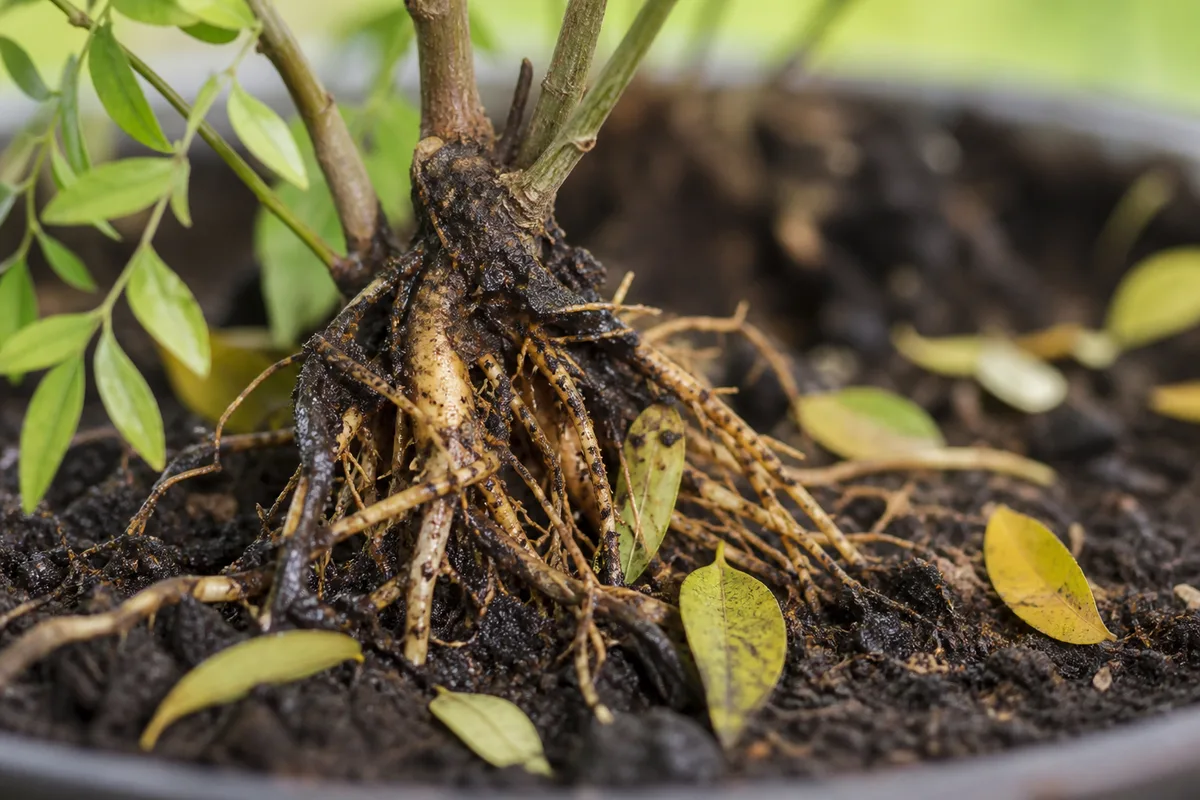
Root Rot symptoms on Curry Leaf Plant - compare with healthy tissue on the same plant.
Early root rot signs
- Lower leaflets turn yellow or pale while mix stays cool and wet at 3–5 cm depth
- Leaf clusters hang limp despite a heavy pot - not a light, dry container
- Pot stays noticeably heavy many days after the last watering
- Mix smells sour or musty at drain holes
- Fungus gnats hover when soil stays continuously wet
Advanced root rot signs
- Soft, dark tissue at the woody stem base where it meets the soil line - healthy Murraya trunks feel firm and lignified
- Whole-branch collapse while mix remains damp
- Unpotting reveals brown, translucent, or slimy roots instead of firm pale tissue
- White mold or algae on the soil surface after prolonged saturation
What healthy vs. rotted Murraya roots look like
When you rinse away wet mix, healthy Murraya feeder roots are firm, pale cream to tan, and hold their shape when you gently tug. Rotted roots feel spongy or hollow, turn brown or translucent, and may peel away from the central root mass. A sour smell from the root ball confirms decay even before you see color change. Pinch the woody stem at the soil line at the same time: firm lignified bark supports salvage; soft, dark, yielding tissue means rot has reached the trunk and you should prioritize sucker propagation.
What root rot is not: limp leaflets on a light, dry pot with firm woody stems point to underwatering or heat wilt, not decay. Bare branches in a cool room with dry soil at depth are often normal winter dormancy - the species is evergreen in warm zones but will drop leaves in colder microclimates. The wet-wilt paradox - limp foliage with saturated mix - is the hallmark of failing roots that can no longer absorb water.
Why curry leaf plant gets root rot
Root rot is almost always a culture problem - watering frequency, pot size, drainage, light, and seasonal rhythm - not a random infection arriving from nowhere.
Winter dormancy is the usual indoor trigger
When days shorten and room temperatures drop into the high 50s °F and below, Murraya slows sharply or drops much of its foliage. Missouri Botanical Garden recommends allowing soil to dry between waterings on container Murraya; in winter, reduce irrigation so soil dries to about 2.5 cm (one inch) deep between waterings to prevent root rot during low-uptake periods. Many indoor growers see bare branches, assume thirst, and keep watering on a summer schedule - turning normal dormancy into anaerobic soil.
Leaf drop on firm woody stems with dry soil at depth is dormancy. Leaf drop while soil stays wet for a week is the rot pathway. The fix for the first is sparse watering and brighter light; the fix for the second is to stop soaking entirely until the root zone dries, then inspect.
Container vs. in-ground risk
UC Master Gardeners note that some gardeners find Murraya grows more vigorously in the ground than in containers. In warm outdoor climates, in-ground plants drain through native soil profiles and monsoon-season rainfall is followed by drying air. Container plants overwintered in cool indoor rooms face the opposite trap: a small soil volume that holds moisture for weeks while transpiration drops. Indoor root rot is overwhelmingly a container and winter-watering failure mode, not a field-grown tree disease.
Heavy mix, oversized pots, and calendar watering
Murraya prefers well-drained, slightly acidic mix that drains within minutes after a thorough soak. High-peat or fine coir without enough perlite or coarse sand retains water in the pot core while edges look dry. Repotting into a much larger container “to help drying” usually makes things worse - extra soil volume holds more water than a small root mass can use. Watering every Sunday regardless of season ignores how fast your pot dries in a July balcony versus a January kitchen.
Cool rooms and weak winter light
Overwatering paired with low light is especially dangerous on this sun-loving species. The plant transpires slowly, mix stays wet longer, and roots suffocate while the grower interprets pale leaflets as need for more care. A curry leaf in full sun for six or more hours on a hot balcony may dry a small container in forty-eight hours; the same pot in a cool north window in December may need two to three weeks between drinks. See not enough light if the canopy stays sparse after watering is corrected.
Oxygen-starved roots
When soil stays saturated, roots growing in waterlogged soil may die because they cannot absorb the oxygen needed to function normally. Damaged roots cannot move water to leaflets even when you water faithfully - which is why the plant wilts on wet soil. Missouri Botanical Garden notes root rot may occur if soils are kept too damp on Murraya koenigii.
How to confirm root rot
Work through these checks in order. One unpot inspection beats weeks of guessing from yellow leaflets.
- Pot weight - Heavy and wet supports root trouble. Light and dry points to dormancy or underwatering instead.
- Soil moisture at depth - Surface color lies. Insert a finger or dry skewer 3–5 cm into the mix. Cool, clinging moisture at that depth with limp leaflets means oversaturation or failing roots.
- Stem-base firmness - Pinch the main woody stem at the soil line. Firm and lignified supports early overwatering caught before major decay. Soft, dark, or yielding tissue means rot is active - urgent.
- Smell - Sour or foul odor at drain holes strongly suggests decay in the root zone.
- Season context - Winter bare branches on dry soil differ from summer wilting on wet soil. Count how many days mix has stayed damp since your last pour.
- Unpot and rinse - Slide the plant out gently. Shake or rinse away wet mix. Healthy roots are firm and pale with fine feeder roots; rotted roots are mushy, brown, or translucent.
- Sucker check - Press basal shoots at the soil line. Firm suckers with pale roots may salvage even when the main trunk fails.
| Finding | Diagnosis | Next step |
|---|---|---|
| Firm pale roots, wet mix only | Early overwatering stress | Overwatering dry-down |
| Some mushy roots, firm stem base | Root rot - moderate | Trim and repot (below) |
| Mostly mushy roots, firm upper wood | Advanced rot | Trim + repot or propagate suckers |
| Soft woody stem on sour wet mix | Critical | Propagate firm suckers immediately |
First fix: stop the wet cycle
Stop watering immediately. That single action matters more than repotting on day one.
- Empty all standing water from saucers, cachepots, and decorative outer pots.
- Move to the brightest available spot with good airflow so remaining moisture evaporates faster - avoid harsh direct sun on a fully defoliated stressed plant until watering stabilizes.
- Unpot within 24–48 hours if mix smells sour, the stem base softens, or limpness persists on wet soil after you stop watering.
- Do not fertilize. Do not water because leaflets look wilted when mix is already wet - wilting with wet mix worsens decline, not underwatering.
Repotting without inspecting roots hides the damage. Inspection without stopping water keeps decay active.
Step-by-step recovery
When the stem base softens, soil smells sour, or a root check reveals mushy tissue, escalate beyond a simple dry-down:
1. Unpot and assess
Remove the plant from its pot. Rinse or gently shake away old mix so you can see the full root system and any basal suckers. Note how much tissue is firm versus mushy and whether the woody stem base is still solid. Work over newspaper; avoid pulling living roots.
2. Trim all decayed tissue
Using clean, sharp scissors or a blade, cut away every brown, black, slimy, or hollow root until you reach firm, pale tissue. If the woody stem base is mushy, cut back to firm lignified wood. Remove soft lower leaf clusters that will not recover. Sterilize blades between cuts if rot is advanced.
If you removed more than half the root mass, expect a longer recovery and keep mix barely moist afterward.
3. Air-dry cut surfaces
Lay the trimmed plant on clean paper towels in bright indirect light for 24–48 hours so root cuts callus and surface moisture evaporates. This reduces reinfection when you repot. Skip air-drying only if roots were barely touched and the stem base was not involved.
4. Repot into fresh airy mix
Choose a clean pot with open drainage holes sized to remaining roots - not a larger decorative container. Fill with fresh well-drained blend with perlite or coarse sand per the soil guide and repotting guide. Do not reuse sour mix or an unsterilized pot that held rotted roots.
5. Water cautiously during recovery
Do not soak a freshly trimmed plant. Lightly moisten the new mix if it is dusty, then wait five to seven days before the first careful drink if major roots were removed. When you resume, soak evenly, drain fully, and wait until the top 3–5 cm dries before the next drink. Empty the saucer within thirty minutes.
6. Judge success by new growth
Old yellow leaflets rarely green up again. Recovery means firm new shoots at nodes, stable pot weight between waterings, and no spreading softness at the stem base. Follow the seasonal rhythm in the curry leaf watering guide once new growth looks normal.
When to propagate suckers or cuttings instead
If roots are nearly total loss but basal suckers or firm lower shoots still have lignified stems and pale roots, salvage the plant through propagation rather than forcing the main trunk to reroot from a hollow base.
- Brush soil from sucker connection points at the base of the plant.
- Cut each firm sucker free with a sterilized blade, keeping as much sucker root as possible.
- Pot suckers directly into moist airy mix per the propagation guide. For upper stems only, take semi-hardwood cuttings from firm green wood if no suckers remain.
- Discard the rotted main trunk if the crown is soft throughout - keeping it risks spreading decay to healthy shoots.
UC Master Gardeners list propagation via root suckers or cuttings for Murraya koenigii. Suckers with intact roots routinely succeed when rot is caught before softness reaches every shoot.
Recovery timeline
Mild rot after trim and repot - Mix stabilizes within one to two weeks. New leaf clusters return over several weeks in warm bright indoor conditions (roughly 20–24°C / 68–75°F); cool rooms below 15°C slow root regeneration noticeably.
Moderate rot with major root removal - Expect a longer wait before confident new growth, especially over winter when metabolism is slow. Keep mix barely moist and resist the urge to water because the canopy looks bare.
Severe woody stem involvement - Soft tissue at the soil line on chronically sour mix may be fatal for the main plant. Propagate firm suckers within days.
Improvement signs: firming stem base, new shoots emerging at nodes, pot weight cycling predictably between heavy-after-soak and light-before-next-drink, sour smell fading, and fungus gnat activity decreasing.
Worsening signs: softness climbing the woody trunk, crown collapse despite dry-down, wilt spreading to any new shoots within 48 hours, or no firm new leaves after a full warm-season month in bright conditions.
What not to do
Do not water because leaflets look limp without checking soil first - the wet-wilt trap is the classic Murraya failure mode. Do not fertilize a waterlogged or freshly trimmed plant hoping to push green leaves; salts stress damaged roots further.
Do not repot into a much larger container or dense garden soil to “fix” drainage - both keep the core wet longer. Do not mist leaflets as a substitute for correcting root-zone moisture. Do not increase winter watering because the plant looks bare during dormancy.
Do not reuse contaminated mix. After advanced rot, scrub pots to remove all soil debris, then soak in a one-part bleach to nine-part water solution for at least ten minutes before rinsing thoroughly. When rot was severe or the pot is porous unglazed clay that held sour mix, discarding the container is often safer than risking reinfection. Sterilize blades between cuts on advanced rot.
How to prevent root rot next time
Match watering to the season, not the calendar. In active summer growth with strong light, water when the top 3–5 cm is dry and the pot feels noticeably lighter - often every two to three days on small containers in full sun. In winter slowdown indoors, stretch to once every ten to twenty-one days or longer, watering only when deep mix is dry.
Use well-drained, slightly acidic mix and a pot sized to the root mass. Always empty saucers after watering. Give full sun to part shade during active growth so the mix cycles between wet and dry quickly.
Inspect the stem base when you water during active growth; softening at the soil line is an early alarm. If two trim-and-repot attempts fail on the same plant within a season, contact your local extension office or Master Gardener program before discarding a mature kitchen herb - propagation salvage may still be worthwhile.
Related curry leaf guides
- Overview - species context, varieties, and baseline care
- Watering - seasonal dry-down rhythm and winter dormancy
- Overwatering - early wet-soil intervention before rot
- Wilting - wet-wilt vs dry-wilt pattern checks
- Underwatering - light pot and firm stem lookalike
- Propagation - sucker and cutting salvage after crown loss
- Soil - acidic, well-drained mix for container Murraya
- Repotting - pot sizing and timing after root trim
- Fungus gnats - persistent wet-soil follow-up
- Not enough light - sparse canopy after watering is corrected
- Yellow leaves - multi-cause yellowing beyond rot
FAQs
My curry leaf dropped all leaves in winter - is it root rot or dormancy?
Often dormancy, not rot. Murraya commonly sheds foliage when nights fall below about 15°C while stems stay pliable and soil is dry at 3–5 cm depth. Root rot is more likely when leaves fall while mix stays wet for a week, the pot feels heavy, roots smell sour, or the woody stem base softens at the soil line. Do not increase winter watering because the canopy is bare - that is the primary indoor rot trigger.
How can I confirm root rot on Curry Leaf Plant?
Unpot the plant and rinse away wet mix. Healthy Murraya roots are firm and pale; rotted roots are brown, translucent, or slimy and may smell sour. Wilting on heavy wet soil, soft tissue at the woody stem base, and clustered yellowing on damp mix support the diagnosis even before you unpot.
Can I save a curry leaf plant if the main stem is soft but side shoots are firm?
Often yes via propagation salvage. If basal suckers or lower side shoots still have firm wood and pale roots, detach and pot them separately following the propagation guide. Discard the rotted main trunk if the crown is hollow - keeping it risks spreading decay to healthy shoots.
When is root rot urgent on Curry Leaf Plant?
Act within 24–48 hours when the woody stem base softens at the soil line, mix smells strongly sour while the whole plant collapses, or more than half the root mass is mushy on inspection. Delay turns trim-and-repot cases into sucker-only salvage.
How do I prevent root rot on Curry Leaf Plant next time?
In winter slowdown, water only when deep mix is dry - often every ten to twenty-one days indoors - not on a summer calendar. Use well-drained slightly acidic mix, empty saucers after every soak, and give full sun during active growth so the pot cycles moisture. Check stem-base firmness when you water.