Drooping Leaves on Curry Leaf Plant: Causes, Checks & Fixes
Quick answer
On curry leaf plant (Murraya koenigii), drooping leaves usually develop gradually over days-not a sudden collapse. The top three causes are overwatering during winter dormancy on heavy wet soil, underwatering during active summer growth, and insufficient light weakening stems indoors. First step: lift the pot, check soil moisture 3–5 cm deep, and note whether stems feel firm or soft at the base.
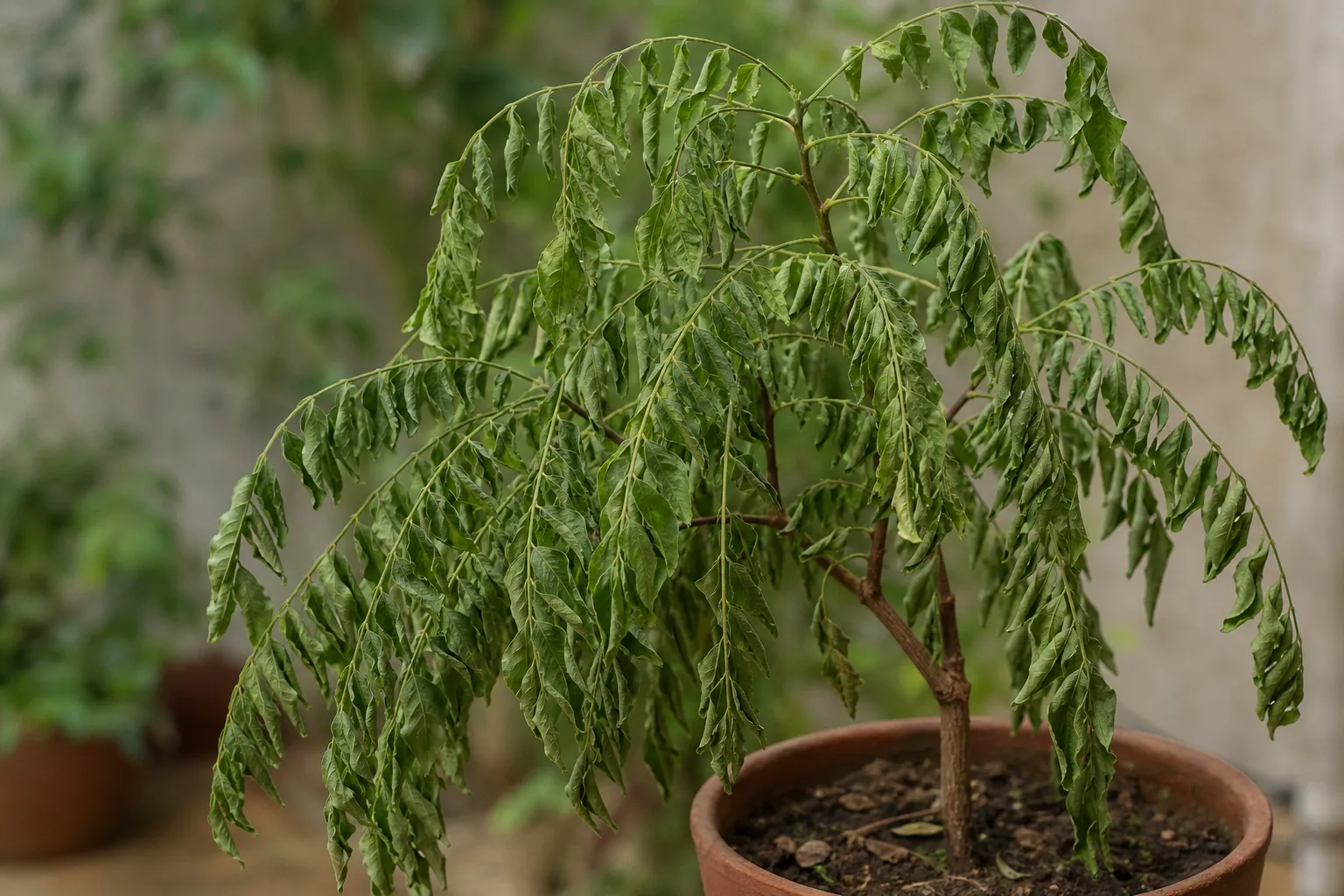
Drooping Leaves on Curry Leaf Plant: Causes, Checks & Fixes
This guide covers drooping leaves on Curry Leaf Plant. See also the general Drooping Leaves guide, watering, and light pages for this plant.
Drooping Leaves on Curry Leaf Plant: Causes, Checks & Fixes
Quick answer
When curry leaf plant (Murraya koenigii, kadi patta) develops drooping leaves, the odd-pinnate leaf clusters hang at a downward angle over days to weeks-stems may still feel firm, and the plant often still looks alive even when tired. That gradual slump is different from wilting, where turgor collapses fast and leaflets go soft within hours. On this tropical tree-like herb from the Indian subcontinent and Sri Lanka, drooping usually traces to a slow mismatch between water, light, and season-not a single dramatic event.
The three patterns Murraya growers see most often: limp foliage on heavy wet soil during cool indoor months (overwatering through dormancy), midday or gradual hang on light dry soil during active growth (underwatering on Curry Leaf Plant or heat stress), and weak, stretched stems in a dim room (insufficient light). Post-repot limpness and heavy harvest on one branch are common secondary causes.
First step: lift the pot and push your finger 3–5 cm into the mix near the edge. Heavy and damp means pause watering and check the stem base. Light and dry during warm months means one thorough soak, then drainage. That wet-vs-dry split prevents the mistake that turns gradual droop into root rot.
Drooping vs. wilting vs. winter leaf drop
Curry leaf has overlapping symptom pages because owners describe the same plant differently. Use this guide when leaves angle downward gradually and the problem built over several days-not when the whole canopy collapsed overnight.
| What you see | Timeline | Likely meaning | Start here? |
|---|---|---|---|
| Drooping leaves | Days to weeks; gradual downward hang | Slow moisture imbalance, weak light, harvest stress, top-heavy growth | Yes |
| Wilting | Hours to 1–2 days; soft limp leaflets | Acute turgor loss, root failure, heat wilt, cold shock | See wilting |
| Winter yellowing and drop | Weeks in cool months; stems pliable | Normal dormancy on overwintered plants | Adjust watering - do not soak |
Drooping is a posture change you notice when comparing this week to last week. Wilting is an emergency collapse-run the pot-weight test there first if leaves went limp today. Winter leaf drop on firm stems in a cool room is often dormancy; UC Master Gardeners note that curry leaf is evergreen in frost-free climates but drops foliage in colder microclimates.
What drooping looks like on Murraya koenigii
Healthy curry leaf holds its compound leaf clusters at a slight upward angle along woody stems. Drooping removes that lift: leaflets hang downward, petioles may curve, and the canopy looks heavy even before individual leaflets feel mushy.
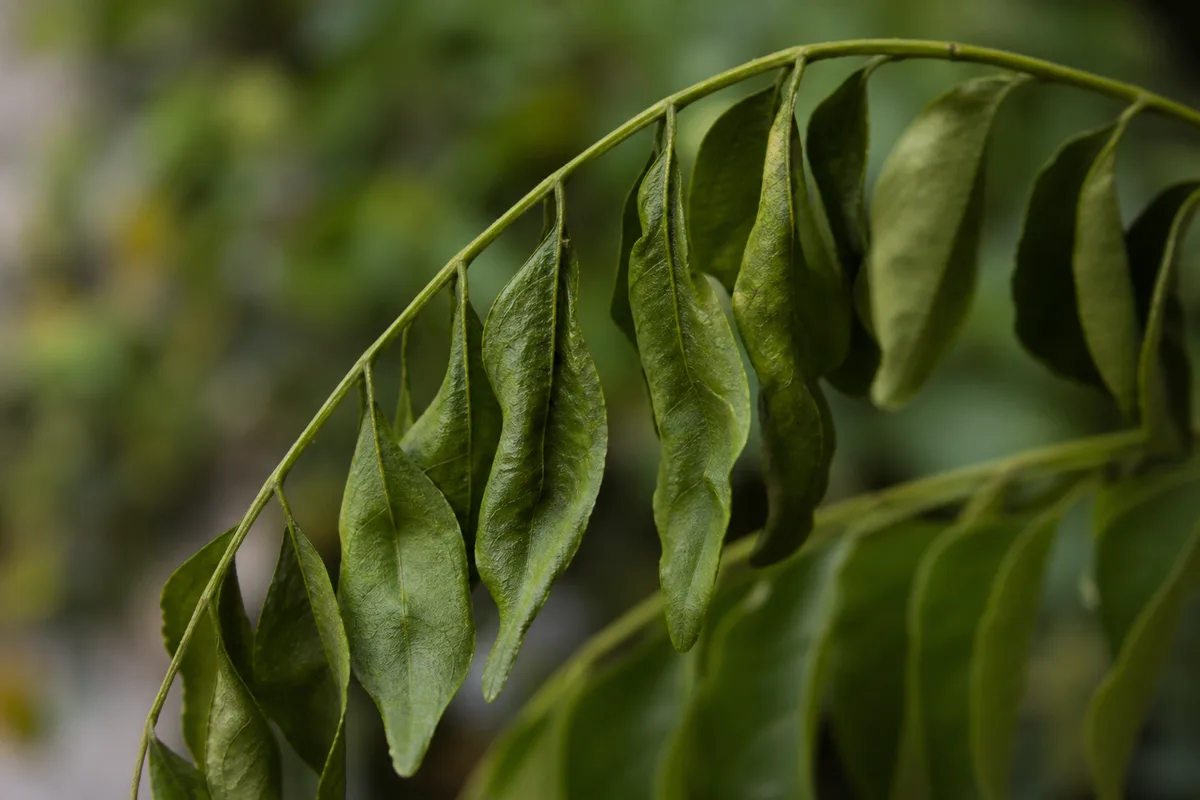
Drooping Leaves symptoms on Curry Leaf Plant - compare with healthy tissue on the same plant.
Context separates the main patterns:
Gradual droop on wet, heavy soil (overwatering / early root stress) - Mix stays cool and damp for days. The pot feels heavy when lifted. Lower leaflets may yellow slowly. Stems at the soil line may feel slightly soft before full collapse. This pattern worsens in cool indoor rooms when roots absorb slowly during dormancy. Missouri Botanical Garden warns that root rot may occur if soils are kept too damp.
Midday or gradual droop on dry, light soil (underwatering / heat stress) - The pot feels noticeably lighter. Mix is dry 3–5 cm down. Stems stay firm and green-brown at the base. In full sun to part shade, leaflets may hang at noon on soil approaching dry but recover by evening-that is often a normal dry-down signal, not disease.
Weak, stretched droop in low light - Sparse stems reach toward a window. Leaflets are pale, smaller, or spaced far apart. Soil moisture may be adequate, yet the plant looks tired because photosynthesis and stem strength lag. Murraya needs bright direct light for much of the day during active growth-not generic “bright indirect” in a north-facing corner.
Post-repot limp - Drooping within one to two weeks of repotting, especially after heavy watering right after disturbance. Stems stay firm; roots are temporarily less efficient. See repotting for recovery rhythm.
Single-branch droop after harvest - One woody stem hangs while others stay upright. Heavy picking stimulates regrowth that pulls water; the branch may droop until roots catch up. Check weight sooner after harvest weeks.
Winter dormancy droop with leaf drop - Gradual yellowing, shedding, and slight hang on pliable firm stems in short-day cool rooms. Often normal-not thirst. Adding water because leaves are falling is how indoor Murraya fails in winter.
Why curry leaf plant gets drooping leaves
Murraya evolved for warm seasons with real dry-down between drinks and slower metabolism in cool months. Container life breaks that rhythm when growers water on a calendar, keep saucers full, or grow in dim rooms.
Overwatering during winter dormancy (primary indoor failure)
UC Master Gardeners recommend medium water with soil allowed to dry between waterings; in winter, reduce irrigation so soil dries to about 2.5 cm (one inch) deep between waterings. When mix stays wet in cool months, roots lose oxygen and uptake slows. Leaves droop gradually while soil remains damp-a pattern many owners misread as thirst. Cool rooms plus moisture make this worse after normal leaf drop.
Underwatering during active growth
Curry leaf tolerates dry spells better than constantly wet soil, but extended dryness in bright summer heat still pulls leaf clusters downward. Small nursery pots on hot balconies can dry in 48 hours. Here the pot is light, stems stay firm, and one deep soak usually reverses the droop within hours to a day.
Insufficient light indoors
Murraya is a sun-loving tropical herb. In dim indoor conditions, stems weaken and leaf clusters hang even when watering is technically correct. Gardener’s Path notes that mature plants need full sun; indoor specimens often need the brightest south or west window available. Leggy stretch plus droop is a light problem before it is a water problem.
Repot and root disturbance
Curry leaf is sensitive to root disturbance. Repotting-especially into a much larger pot with heavy watering-temporarily reduces water uptake. Gradual droop with firm stems within two weeks of repot usually reflects shock, not immediate rot surgery.
Harvest stress and regrowth pull
Regular harvest removes foliage and stimulates new shoots. A heavily pruned branch may droop until the root system matches the new top growth. This is usually temporary if soil moisture and light are otherwise correct.
Early root rot (urgent if stem base softens)
When gradual droop on wet soil progresses to a soft dark stem base or sour smell, root rot may be active. Drooping leaves become the early warning before full wilting collapse. Act before the trunk fails.
Lookalike symptoms to rule out
Acute wilting - If leaflets went limp and soft within hours, use the wilting guide first. Drooping is slower; wilting is faster.
Yellow leaves without pronounced hang - Yellowing alone may mean chill, overwatering, or nutrient stress. Drooping specifically means downward posture-run the pot-weight test before stacking fixes.
Leggy growth vs. moisture droop - Long, thin stems with pale leaflets in a dim room are not enough light, not necessarily drought. Move to brighter sun before increasing water.
Normal winter leaf drop - Gradual shedding on pliable stems in a cool room is often dormancy. Reduce water; do not interpret bare branches as automatic thirst.
| Pattern | Pot weight | Stem base | Soil 3–5 cm | First branch |
|---|---|---|---|---|
| Overwatering droop | Heavy | Firm → soft if rot advances | Damp days | Stop water; inspect base |
| Underwatering droop | Light | Firm | Dry | Deep soak if warm season |
| Low-light droop | Normal | Firm | Variable | Move to brighter sun |
| Repot shock | Normal–heavy | Firm | Often wet after repot | Stabilize; one fix at a time |
| Dormancy droop | Light–normal | Pliable, firm | Dry at depth | Sparse water; better light |
| Root rot (urgent) | Heavy | Soft, dark | Wet, sour | Stop water; inspect roots |
How to confirm the cause
Work through these checks in order. Stop when the pattern is clear.
- Pot weight - Lift the container now. Heavy and wet supports overwatering; light and dry supports drought or heat droop.
- Soil moisture at depth - Insert a finger or dry skewer 3–5 cm into the mix near the pot edge. Surface color lies; depth and weight tell the truth.
- Stem-base firmness - Pinch the main stem where it meets the soil. Firm and woody supports drought, light stress, repot shock, or dormancy. Soft, dark, or yielding tissue supports rot-urgent.
- Timeline - Did droop build over weeks (light, chronic overwater) or days after repot/harvest (shock, regrowth)?
- Season and temperature - Cool months with gradual leaf drop and firm stems often mean dormancy. Do not increase water.
- Light exposure - Dim room with stretched stems and pale leaflets points to insufficient sun before water changes.
- Branch pattern - One branch only suggests harvest or localized wet pocket; whole plant suggests systemic care.
- Pest scan - Stippling, webbing, or stickiness on new growth points to spider mites or aphids before assuming moisture error.
First fix for curry leaf plant
Lift the pot and check moisture 3–5 cm deep before you change anything else. That single test separates opposite fixes-no repotting, fertilizer, or pesticide until you know wet from dry.
If the pot is light and mix is dry at depth during active growth, water thoroughly until excess drains from every hole, empty the saucer within thirty minutes, and place the plant in its brightest spot. Recheck weight the next morning. Midday droop that already recovered by evening may need no extra soak.
If the pot is heavy or mix is damp while leaves droop, do not water. Move the plant to warm, bright conditions with good airflow and let the mix dry. If the stem base softens after seven days of dry-down, unpot and inspect roots-see root rot for the full path.
If soil moisture is normal but stems are stretched and pale, move to brighter sun before adding water. Murraya rarely droops from thirst when the pot still feels heavy.
Make one care correction at a time so you can read the plant’s response over the next week.
Step-by-step recovery by cause
Dry-soil droop with firm stems
Water evenly across the surface until the root ball is saturated and water runs freely from drainage holes. Avoid leaving the pot in a full saucer. Within several hours to one day, leaf clusters should sit slightly higher if roots are healthy. Resume the soak-and-dry rhythm from the watering guide.
Wet-soil droop without soft stem base yet
Stop watering immediately. Improve light and airflow. Let the top 3–5 cm dry fully before the next light drink. Watch the stem base daily-softening means escalate to root inspection.
Wet-soil droop with soft stem base (root rot path)
Stop all watering. Unpot and inspect roots. Healthy Murraya roots are firm and pale; rotted roots are brown, black, or mushy. Trim rot to firm tissue, air-dry, repot into well-drained, slightly acidic mix. Recovery takes weeks to months-judge by new shoots, not old drooped leaflets.
Low-light droop
Move gradually to the brightest location you can provide-south or west window, or supplemental grow light. Do not jump from deep shade to scorching outdoor sun without hardening off. Expect two to four weeks before new growth looks firm.
Repot shock droop
Hold off on heavy watering for three to five days after repotting. Keep warm, bright, stable conditions. Mild droop should ease as new white root tips appear.
Harvest-related branch droop
Water when the top 3–5 cm dries-possibly sooner than usual for a week after heavy picking. Avoid harvesting more from the drooping branch until it firms.
Recovery timeline and success signs
Drought or heat droop on firm stems often shows improvement within hours to one day after a proper soak. Low-light droop may take two to four weeks after brighter placement. Repot shock often eases within two to four weeks. Root rot recovery is slow: expect four to eight weeks minimum if the stem base stayed partially firm.
Signs you are winning: leaf clusters sit higher, new shoots emerge at nodes, droop does not spread to additional branches, and soil dries at a normal pace between waterings.
Signs the problem is worsening: stem base softens, darkening climbs from the soil line, leaves yellow in clusters while mix stays wet, or no new growth after a month of corrected care.
Damaged leaflets that yellowed on wet soil may not fully re-stiffen-watch new growth instead.
What not to do
Do not pour water on every drooping curry leaf. Wet-soil droop gets worse with more water. Do not increase winter watering because leaves are dropping-that turns dormancy into rot season. Do not repot, prune heavily, and fertilize on the same day when the plant is already stressed. Do not leave a drooping Murraya in deep shade and assume thirst-check light first when the pot feels normal weight. Do not confuse gradual droop with acute wilting; if collapse happened today, see wilting instead.
How to prevent drooping leaves next time
Grow curry leaf in well-drained mix in a pot with open drainage holes. Give full sun to part shade during active growth. Water only when the top 3–5 cm is dry and the pot has lost noticeable weight; frequency changes with season, not the calendar. In autumn and winter, reduce water sharply even if foliage drops-allow deeper dry-down between soaks. Empty saucers after every watering. Lift the pot when you water so weight checks become habit before leaf clusters hang. For the full seasonal rhythm, see the curry leaf watering guide, light guide, and overview.
Curry leaf care cross-check
| Care factor | Active growth (warm, bright) | Winter dormancy (cool, short days) |
|---|---|---|
| Water | When top 3–5 cm dry; pot lighter | When deep mix dry; often 10–21 days |
| Light | Full sun to part shade; brightest window | Same brightness helps; do not darken |
| First droop signal | Light pot, firm stems | Wet pot on calendar watering |
| Wrong fix | Skipping checks in heat | Soaking because leaves fell |
When to worry
Treat drooping as urgent when the stem base feels soft, soil smells sour while leaves hang lower each day, or droop spreads to newest growth within a week despite pausing water. Those signs suggest rot may be consuming the trunk. Slow gradual droop on firm stems during a heat wave is less alarming-verify pot weight before soaking. Single-branch droop after harvest on firm stems is usually manageable. Curry leaf forgives brief dryness far more often than it survives repeated sogginess.
When to use this page vs other Curry Leaf Plant guides
- Curry Leaf Plant watering guide - Use for routine moisture checks before assuming drooping leaves is the main issue.
- Curry Leaf Plant problems hub - Browse all 16 common issues on this species.
- Underwatering on Curry Leaf Plant - Different entry point when symptoms overlap with drooping leaves.
- Overwatering on Curry Leaf Plant - Different entry point when symptoms overlap with drooping leaves.
- Root Rot on Curry Leaf Plant - Different entry point when symptoms overlap with drooping leaves.